
By Sienna Lamond, ’26
Staff Writer
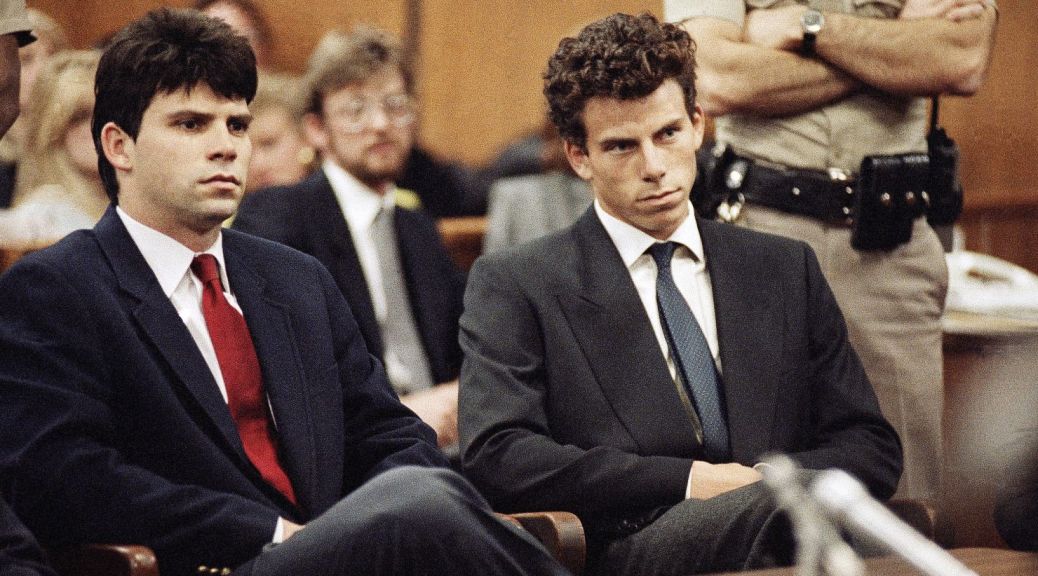
On August 20, 1989, José and Kitty Menendez were murdered in their Beverly Hills, Calif., home. Their sons, Joseph Lyle Menendez and Erik Galen Menendez, were hysterical and devastated. As police began to investigate, what they found was astonishing. On March 8, 1990, Lyle Menendez was arrested for the murder of his parents, and days later, so was Erik.
The brothers’ family hired Leslie Abramson, one of the best criminal defense attorneys in the area. She got a story out of the boys that no one had ever heard before; a story of betrayal and tragedy. Erik admitted to Abramson that his father had been molesting him from the time he was a child until the week before he killed him. And worse, according to Erik, his mother knew the whole time and didn’t do anything to stop it. This, Abramson argued, is what pushed 18-year-old Erik and 21-year-old Lyle to murder their parents.
The original trials took place back in the 1990s, and the brothers were sentenced to life in prison without the possibility of parole. But some recent events have gotten conversations about the case and the brothers stirring again. Los Angeles County’s former District Attorney, George Gascón, released a statement in October recommending that the brothers be eligible for parole immediately. This is an effect of new evidence and the press’s reinvigorated interest in the case due to shining Tinseltown herself: Hollywood.
A true-crime drama series released on Netflix in October called Monsters: The Lyle and Erik Menendez Story may have been a catalyst for these new developments. The show received massive amounts of attention for its incredible costumes, set, script, and, most importantly, impressive actors. Cooper Kotch, who took on the role of playing Erik, emulated the character’s pain and emotion in a one-take 45 minute episode titled “The Hurt Man,” which captured and stunned audiences nationwide. Due to the theatrically impressive nature of the 9-episode sequence, it commanded attention from the press and social media. In the ’90s when the case was first being publicized, the public’s attention on the event and the brothers swayed the atmosphere in court. The media lost interest in the case after the first trial was declared a mistrial; that is thought to be one factor that may have impacted the brothers’ ultimate sentence. Now that the brothers are back in the public eye, general feelings of sympathy, hope, and justice are igniting in the people, which could mean good things are to come for them both.
While in prison, it is my belief that Lyle and Erik have proven that they rebuke the title of the Netflix series; they are not monsters. Both brothers have worked for over 30 years to better themselves, others, and their community. Erik received an Associate’s Degree in Sociology and Social and Behavioral Sciences from UC Irvine, started a meditation group in prison, and he and Lyle started several support groups for inmates, including a group for inmates with physical disabilities and a general group therapy program. Meanwhile, Lyle received a Bachelor of Arts degree, also from UC Irvine, founded the Adverse Child Rehabilitation program in 2016, and founded the Greenspace Project, in which inmates had the opportunity to paint murals, which raised $250,000. Furthermore, the brothers’s family asks to bring them home. Their aunt, Joan Vandermolen stated in an AP News post, “They have grown, they have changed, and they have become better men, despite everything that they’ve been through. It’s time to give them the opportunity to live the rest of their lives free from the shadow of their past.” In addition, prison guards and fellow inmates express that Lyle and Erik are far from dangerous criminals, and instead are more like friendly neighbors. Cooper Kotch, the aforementioned star of the TV series about the brothers, visited Erik in prison and spoke on the experience in a press-tour interview promoting the show. He explained how he felt the same way as almost everyone who knows the brothers personally, and he believes they should be given a second chance.
If the brothers were so innocent the first time, why were they convicted and sentenced to life? To that, I answer that they weren’t so innocent. They certainly didn’t seem very innocent. While the prosecution maintained their charge of first-degree murder throughout the court proceedings, the brothers’ defense changed. At first, the brothers pleaded not guilty when their lawyer was Robert Shapiro, whose name you may recognize from his defense of OJ Simpson in his murder trial. The family eventually fired Shapiro and, instead, hired Leslie Abramson. When their lawyers switched, so did their plea, which the prosecution used to their advantage. On top of that, the brothers lied throughout the months following their parents deaths. Their family’s therapist recorded them confessing to everything except the whole base of their defense: the sexual abuse. Furthermore, not a single man on the jury voted in favor of the brothers’ story, leading to the conclusion that most men would not be sympathetic to their tragic tale of sexual abuse. In court, the question arose that if the brothers were being truthful about the sexual abuse, why didn’t they speak up sooner? Why didn’t they admit to the abuse while confessing to their therapist? Why lie about the murders in the first place? Why never tell anyone? These questions eventually resulted in the defense team losing the second trial and the brothers just narrowly avoiding the death penalty.
The 1990s were a very different time from now. Social, psychological, and scientific studies have been conducted to provide us with answers to not only this case, but all those that resemble this one as well. Why did they do it? The answer is in your head–literally. “Childhood is a pivotal time for brain development,” writes the Integrative Life Center, “The effects of physical abuse and neglect can disrupt this development.” The ILC goes on to describe all the ways in which an individual’s brain is affected developmentally when that individual experiences abuse in any form during childhood. Teenagers and young adults are known for being reckless, irrational, and irresponsible, and this is completely developmentally appropriate. The parts of the brain responsible for processing emotions and making decisions, the amygdala and the prefrontal cortex, are not fully formed until a person is around 25 years old. When childhood abuse is added to the equation, the growth of these crucial parts of the brain is stunted and brain maturity is reached much later in life. Taking this into account, not only were Lyle and Erik younger than the typical age for brain maturity, but their abuse further affected their ability to process emotions and make rational decisions. The Los Angeles Times wrote in a 1993 article, when the case was being tried, “By age 18, traumatized severely by 12 years of abuse, Erik Menendez was racked by overriding feelings of powerlessness, hopelessness, helplessness and fear . . . when he and his brother sensed violence on the night of Aug. 20, 1989, it was as if he was on autopilot when they blasted away at their parents.”
Despite new understanding about the impact of abuse on children, the brothers are still serving time in Richard J. Donovan Correctional Facility in San Diego, Calif. After over 30 years, they may get a second chance. The brothers maintain their defense that they were sexually and emotionally abused their whole lives, which leads to the belief that this story of tragedy and betrayal is the truth. While murder is unacceptable, so is manipulation, molestation, and abuse of a child. Lyle and Erik spent their whole childhoods feeling trapped and afraid in the place they were supposed to feel comfortable and relaxed. Given modern knowledge and the time since the whole cascade of events occured, it is within the realm of possibility for the brothers to see freedom again. Is justice imprisoning abuse victims, or is it setting murderers free? The situation begs the question that every individual must ask themselves: are the Menendez brothers the villains of the story, or have they been victims all along?
 The Hawk