


The Context Behind Crisis in Venezuela

By Jolie Coviello, ’27

Staff Writer

Oftentimes, having a deeper understanding of a nation’s history allows us to understand why it takes certain actions in the present. Venezuela is one nation in particular with a long and tumultuous history, which must be taken into account to understand the current political situation. 
It’s easy to see why many Venezuelans anticipate reform with the capture of President Nicolás Maduro by the US military, which was ordered by President Trump in early January. In fact, a 2017 poll by Datanálisis, a respected Venezuelan research firm, showed that 80 percent of Venezuelans desired Maduro’s removal. President Maduro has caused great harm to his nation’s economy, government, and people since taking office in 2013. Due to the severe economic debilitation, persistent social unrest, and blatant election fraud under Maduro’s administration, conditions nationwide have worsened. Venezuela is experiencing one of the largest displacement crises in the world as millions try to escape terrible living conditions. Over 80 percent of Venezuelans live in poverty under a socialist government. The murder rate of natives has increased to 91 percent, surpassing that of the most dangerous cities in the world. According to research by the United Nations Refugee Agency, over 23 percent of the population has fled the country since Maduro was elected into office. 
News, PBS. “Venezuela Approves Amnesty Bill, Paving Way for Release of Hundreds of Political Detainees.” PBS News, 20 Feb. 2026, http://www.pbs.org/newshour/world/venezuela-approves-amnesty-bill-paving-way-for-release-of-hundreds-of-political-detainees.

News, PBS. “U.S. And Venezuela Agree to Reestablish Diplomatic Ties in Major Shift after Maduro’s Ouster.” PBS News, 6 Mar. 2026, http://www.pbs.org/newshour/world/u-s-and-venezuela-agree-to-reestablish-diplomatic-ties-in-major-shift-after-maduros-ouster.

Black History Month: Learning From the Past

By Charlize Coviello, ’29

Staff Writer

Carter G. Woodson (1875-1950) | BlackPast.org
Carter G. Woodson

The story of America cannot be told without the voices, struggles, and achievements of Black Americans. The idea of Black History Month was suggested by historian Carter G. Woodson in 1926. As the son of former slaves, Woodson aimed to challenge the erasure of Black history in education by establishing a dedicated period for celebrating Black contributions to the American story. As a Harvard-trained historian, he launched this initiative under his organization, The Association for the Study of Negro Life and History, now known as the Association for the Study of African American Life and History. Originally, the commemorative week was chosen to coincide with the birthdays of Abraham Lincoln, Feb. 12, and Frederick Douglass, Feb. 14. The celebration was expanded to the entire month of February in 1976, during the U.S. bicentennial year. That year, President Gerald Ford urged Americans to “seize the opportunity to honor the often neglected accomplishments of Black Americans.”

Abraham Lincoln

As the president who signed the Emancipation Proclamation on January 1, 1863, Lincoln’s impact on the history of Black freedom cannot be understated. In addition to “freeing slaves,” Lincoln also authorized the enlistment of approximately 190,000 African-American men into the Union Army. Though even today the battle against prejudice and racism still rages, and segregation along with Jim Crow laws persisted nearly a century after emancipation, Lincoln’s actions represented a great step toward equality. 

Frederick Douglass

Frederick Douglass was born Frederick Augustus Washington Bailey in February, 1818, in Talbot County, Maryland, to an enslaved mother and an unknown white father. Separated from his mother as an infant and raised by his grandmother, he was sold to the Auld family in Baltimore at age 8. Despite laws against it, Sophia Auld taught him the alphabet. He subsequently taught himself to read and write, viewing literacy as a path to freedom. As a teenager, he was sold to notorious slave breaker Edward Covey, where he suffered intense physical abuse before fighting back. In 1838 he disguised himself as a sailor to escape, later settling in New Bedford, Massachusetts with his new wife. Douglass became the most important leader of the movement for African American Civil Rights in the 19th century, gaining fame for his incisive anti-slavery writings and speeches. He published famous anti-slavery newspapers like the “North Star,” advising presidents and championing women’s suffrage and civil rights. His brilliant speeches and writings provided a powerful counter-narrative to pro-slavery arguments, making him an essential figure of history. During the Civil War he advised President Lincoln on emancipation and the treatment of Black soldiers. He fought for voting rights for African Americans and women, holding positions including US Marshal for the District of Columbia and Minister Resident to Haiti. He died in 1895 in Washington D.C., remaining an active, influential advocate for human rights until his final day. 

Of the many figures we celebrate in Black History Month, some of the most familiar include Harriet Tubman, Martin Luther King Jr., and Rosa Parks. They all significantly contributed to American as well as Black history.

Harriet Tubman

Harriet Tubman was a civil rights pioneer, abolitionist, and courageous American humanitarian. Born into slavery in Dorchester County, Maryland, around March 1822, she was the fifth of nine children and was hired out at age six, often enduring physical abuse and neglect. At age 12, an overseer threw a heavy iron weight that struck her head, causing severe seizures, headaches, and narcolepsy that lasted her entire life. In 1849, facing the threat of being sold, she fled to Philadelphia using the Underground Railroad. Over the next decade, she made approximately 13 trips back to Maryland, liberating family members and friends. She guided approximately 70 enslaved people to freedom. She traveled in disguise, moved by night, and relied on a network of safe houses. She later served in the Civil War as a nurse and scout for the Union army, and was the first woman to lead an armed assault during the Combahee River Raid, freeing over 700 people. After the war, she settled in Auburn, New York, supported women’s suffrage alongside Susan B. Anthony, and helped care for the elderly. In 1913, she passed away from pneumonia and was buried with military honors.

Martin Luther King Jr.

Martin Luther King Jr. was born in Atlanta, Georgia on Jan. 15, 1929. His father was an early civil rights leader who protested voting discrimination. As a gifted student he entered Morehouse College at age 15, later earning a sociology degree, a Bachelor of Divinity from Crozer Theological Seminary, and a Ph.D. in Systematic Theology from Boston University. Dr. King was a leader of the Civil Rights Movement. He’s famously known for his “I Have a Dream” speech at the March on Washington, helping pass landmark legislation like the Civil Rights Act of 1964 and the Voting Rights Act of 1965. He helped lead the Montgomery bus boycott, which led the Supreme Court to rule segregated public buses unconstitutional, and he was awarded the Nobel Peace Prize in 1964 for his commitment to achieving racial equality and justice through nonviolent means. Dr. King was assassinated on April 4, 1968 in Memphis, Tennessee by James Earl Ray.

Rosa Parks

Rosa Parks, born Rosa Louise McCauley on February 4, 1913, was an activist known as the mother of the civil rights movement. She grew up experiencing strict Jim Crow segregation and intense racism, witnessing activities of the Klu Klux Klan as well as lynchings. She attended the private Industrial School for Girls and later the Alabama State Teachers College for Negroes. On December 1, 1955, in Montgomery, Alabama, she famously refused to give up her bus seat to a white passenger, violating segregation laws. Her arrest sparked the 381 day Montgomery Bus Boycott, a pivotal, successful protest that helped end public transportation segregation. As a result of the boycott, the Supreme Court ruled that segregated buses were unconstitutional, marking a major victory for the civil rights movement. Before her 1955 arrest, she was an active member of the NAACP, serving as the secretary of the Montgomery Branch from 1943 to 1956. She traveled to Alabama to investigate documented cases of sexual assault and racial violence against Black individuals. When Parks was arrested for disorderly conduct after refusing to move to the back of the bus, she later stated she was not tired physically but rather “tired of giving in” to segregation. Due to death threats and difficulty finding work in Alabama, she moved with her husband to Detroit, Michigan, in 1957, where she continued fighting racism in the North. She was awarded the Presidential Medal of Freedom in 1996 and the Congressional Gold Medal in 1999. Parks passed away on October 24, 2005 in Detroit. 

Black History Month is not just about remembering the past — it is about understanding how that past shapes our present and inspires our future. By studying and celebrating these historical figures, we can learn how to face problems of injustice and intolerance that still trouble society today.

Beauty Is Not A Filter

By Makenna Larson, ’29

Staff Writer

Beauty is one of those words everyone thinks they understand, but no one can fully define. In today’s society, beauty is usually shown to us through social media, magazines, and celebrities. Women, specifically, are constantly told what is considered pretty and what is not. Whether it’s clear skin, a certain body type, or a new hairstyle you “have to try,” these ideas turn into what people call “beauty standards.” Even though they are everywhere and are considered normal, they end up making girls feel less — a problem society needs to address.

Society often treats beauty like a checklist. If you are pretty enough to meet the expectations, you are considered attractive. The problem is that this checklist keeps changing. What is trendy one year is “out” the next, which makes it impossible for anyone to ever meet the standards in place. Instead of feeling proud of who they are, many girls feel pressured to constantly fix themselves.

Beauty standards especially affect women because they are taught from a young age that how they look matters more than who they are. Compliments are often about appearance first, not personality, kindness, or intelligence. Over time, this can make girls believe their value depends on meeting these standards, which can end up making them focus on how they look instead of how they act.

The reason beauty standards will never make women feel fulfilled is because they are based on comparison. There will always be someone who looks different, taller, smaller, clearer, or more “perfect” according to society. Fulfillment doesn’t come from trying to look like someone else. It comes from feeling accepted and confident as yourself, which standards don’t allow.

True beauty is personal and different for everyone. It includes confidence, uniqueness, and being comfortable in your own skin. Until society stops treating beauty like a rulebook and starts treating it like something individual, many women will continue to feel like they are chasing something they can never reach. Maybe the real problem isn’t how women look, but how narrowly society defines beauty in the first place.

featured image: https://www.betimeful.com/blogs/effects-of-social-media-on-body-image

The Dangers of Logical Fallacies

By Emma Hersey, ’29

Staff Writer

Whether debating the best holiday movie or an important social issue, it’s important to support our arguments with sound reasoning. However, logical fallacies – an error in reasoning that has plagued debaters since the days of Aristotle – can stymie the best of us. How do we ensure we avoid logical fallacies, which lead to unreliable conclusions, emotional manipulation and deviations from the truth due to false assumptions? Let’s start by diving into the two types of fallacies: material and verbal.

Material fallacies are when the main point or assumptions in a sentence are flawed instead of the structure of the sentence. Verbal fallacies are sentences that use ambiguity to trick people with the double meanings of the stressed words.These two fallacies are important to be aware of because they can cause weakened arguments and lead to misconceptions. To test your understanding of these two types of fallacies, you can take this quiz. Once you submit your answers, you can check to see what you got right. 

Through these logical fallacies, many people are tricked into formulating shaky arguments, and making incorrect conclusions about the situation at hand. An unsound argument is when you make a claim that fails in its logical structure, or has a piece of information that is questionable to be true. Two types of arguments that fall under logical fallacies are the loaded question fallacy and the ad hominem fallacy. The loaded question fallacy puts the responder in a situation where the answers of “yes” or “no” are both wrong or contradictory. The question “are you always this disrespectful?” is one example; if you answer “yes,” then it proves that you are aware that you are disrespectful, but if you answer “no,” then you are admitting that you usually are disrespectful but you just aren’t as bad at this given moment. These questions lead to unreliable conclusions.

The ad hominem fallacy judges people based on what they do instead of the information they offer. Attacking the person because of their past actions and not the argument at hand creates distorted conclusions. If you do not believe in the actions of the person, then what is it that will push you to believe the words coming out of their mouth? People often have the tendency to judge people based on their clothing, with a negative response to poorly dressed individuals and a positive response to people who are decked out in luxurious brands. Sadly, someone can be speaking complete lies and the audience will take to heart everything they say just because they believe they are competent due to the clothes on their body.

There are several other kinds of fallacies too:

Appeal to Emotion –  Have your parents ever said to you, “You have to finish your dinner because there are starving children in the world that could use that food?” That’s an appeal to emotion, which manipulates a person’s feelings and coerces the receiver to accept this formulated conclusion. Through this fallacy, people are misled and manipulated by their emotional response and thus change their actions based on it. When your parents deliver the line about “staving kids,” it makes you want to sit back down and finish your food because of the human response of empathy. Even if you argue about the food at first, your body will respond to a change in emotion and will cause you to finish the food out of guilt for the other children out there. 

Slippery Slope – An example of this is when an adult says, “If you don’t do your homework, you’ll fail the class. If you fail the class, you won’t graduate. If you don’t graduate, you won’t get into college or a good job, and you’ll end up poor and homeless.” This fallacy supposes that if you do A, it will cause a chain reaction that not only causes B, but causes C and D too. Many parents use this fallacy to control their children because they believe that it will coerce their children into obeying their instructions. Once children hear how bad life can get if they don’t do a certain thing, parents might believe, they will steer away from the action. But sometimes this can have the opposite effect and make children even more rebellious.

Bandwagon – This fallacy implies that who is making the statement is crucial for its believability. Many stores use the bandwagon effect when marketing products. By paying influencers to positively review the products, the store makes the product seem popular, and that entices shoppers to try it for themselves. When someone uses the bandwagon fallacy, they are putting the claim of a good product on an item just because of its growing popularity, not its actual performance. 

Appeal to Nature – This fallacy tricks your brain into believing something is better because it is natural, rather than unnatural. The word “natural” has positive connotations, while “unnatural” is associated with poisons and pesticides. A common marketing tool is to put the words “all natural” on the package because people will believe that anything “natural,” or from the earth, is automatically healthy. When grocery items are labeled organic, it makes many people more inclined to buy them, even though it’s not clear what definition of “organic” the store is using. 

Logical fallacies are a big part of our world, leading to unreliable conclusions, emotional manipulation, and deviations from the truth because of false assumptions. It is easy to be swayed by other people and what they are voicing, but being aware of logical fallacies will help you avoid being manipulated. If you want to know more about logical fallacies, check out this link.

Series May Be Over, But Debate Rages On

By Mrs. McHugh

HHS Librarian & The Hawk advisor

Spoilers Ahead!

An estimated 3.7 million households viewed the series finale of Stranger Things within a week of its New Year’s Eve release. Another million people watched it in movie theaters, an epic event for a television show. As the conclusion of the Netflix series becomes one of the streaming service’s hottest creations, one thing is clear: the only thing more popular than watching it is debating it.

Within minutes of the finale’s end, social media lit up with reviews and rehashes from TV critics and fans alike. Some praised the episode for bringing the team back together for the final battle, choosing awesome music in key moments, and ending with the next generation of players around the Dungeons & Dragons table. Others, though, expressed disappointment with what they felt were plot holes and lazy writing in a show they had spent a decade of their life watching. It felt like a betrayal to fans already upset with the three-year wait between seasons four and five, and the drawn-out release of the series’ final eight episodes. Some viewers went so far as to speculate that the finale was really a mind trick by the villain, Vecna, and a hidden episode with a more satisfying ending would be released (there was not). The Duffer Brothers, who created the show, gave countless interviews trying to explain their choices, and Netflix released a two-hour “making of” documentary in an effort to appease fans (it did not).

The stars of Stranger Things in season three

Since its 2016 premiere, I’ve loved the science fiction adventure show about a group of friends who discover a girl with special powers. Steeped in 1980s nostalgia, the show brought alive memories of my adolescence, and I felt the mythology was complex but not convoluted. Watching the cast grow up reminded me of the years I spent following the transformation of Harry Potter and friends from Sorcerer’s Stone to Deathly Hallows, something rare and special in entertainment.

After watching the finale, I was content with the ending. I was emotionally invested throughout the two hours, gasping – and then cheering – when Steve fell and was rescued, tearing up during Hopper’s heart to hearts with El, laughing at Murray and Robin’s one-liners, and ugly crying when Mike and El were forced to say goodbye. I liked the long epilogue which revealed that the characters we loved would be okay. I didn’t even mind the ambiguity around El’s fate; I was happy to believe. But as I started hearing the criticism, I felt some of it was valid. Where the demodogs when the gang fought Vecna in the abyss? Why was Vecna/Henry Creel’s backstory shortchanged for a play most fans wouldn’t have the chance to see? How did the gang get away with killing all those soldiers? And what was the deal with the terrible wig worn by Nancy in the epilogue?

I’ve watched several shows where a disappointing ending threatened to sour me on the whole series – Lost, the original Dexter (although the latest incarnation was a bit redemptive). But I don’t count Stranger Things among them. Maybe the creators were rushed, or got lazy, or tried to milk the series for too long. Maybe they could have made better choices for the final episodes. But TV for me is entertainment and escape, and despite any flaws, the Stranger Things finale provided that. It is a series I’ve rewatched several times in anticipation of new seasons, and can envision returning to in the future.

Even at Hanover High School, debate about the show raged for weeks after the finale. You couldn’t mention it and not get a passionate earful about what worked and what didn’t. Some longtime fans from our school community share their reactions below.

Season four fan-favorite Eddie Munson

Mr. Henderson, HHS English teacher (who dressed up as Eddie Munson last Halloween): “The ending was exactly what it needed to be. It was one that honored the ’80s nostalgia that it so carefully created, while also giving a compelling story. In the end, it was one that did something rare in a phone-in-hand watching environment: it made the viewer think. Do you believe? Do you not? There’s no simple answer, spelled out for viewers over and over. What’ll we remember? I think we’ll remember a few things. Friends don’t lie. Hellfire lives. Keep running up that hill. And, I don’t think we’re done with the world of Hawkins. Call it a suspicion that it could be . . . a never-ending story.”

Gianna Steber, freshman: “Before I watched the finale, I’d heard some of the criticisms and started feeling negatively about it. But then I loved it. I thought it was a very good ending that replayed what happened at the beginning and started a new chapter with Mike’s sister and her friends. I believe the rumor that the finale script wasn’t finished and the writers used AI, but It didn’t bother me.”

Jameson Bryan, senior: “I thought it was kind of disappointing. The kids spent years fighting Vecna and they killed him in like 10 minutes; that was a major letdown. Everyone was nervous about a big death, like Steve, but then the only one who died was Kali and that wasn’t much of a shock. I think Mike and El’s relationship was undeveloped; there could’ve been a better ending for them. The epilogue was too long; they could have made that 20 minutes and made the fight scene longer. I liked how, at the end, the show had a full-circle moment and ended with Holly and her friends as the little kids playing D&D. Despite these complaints, I thought season 5 was good overall and I still think the show was great. It was just one bad episode out of like 40.”

Mr. Wade, HHS music teacher: “I think with a show that big, that’s gone on for so long, it’s hard to close in a way that’s satisfying for everybody. But I personally enjoyed it. I loved Will’s storyline, and how the show came full circle by starting and ending in the basement.”

The friends embrace after Will comes out

Whether you liked the Stranger Things finale or not, there’s no ignoring that it was a phenomenon not often repeated: a pop culture event that brought millions of people together in anticipation and left most of them talking about it afterward. Fans can argue endlessly about whether the finale was good, but the fact that so many people cared is one undeniable measure of its success.

Special Olympics Swim Team is Rewarding Volunteer Experience

By Siena Oliver, ’27

Opinions Editor

Each winter, from January through late April, the PAC Penguins Special Olympics Swim Team returns for another season. Every Sunday morning from 10:00-11:30 at the Emilson YMCA in Hanover, the team gathers to practice. High school volunteers work with swimmers on a variety of goals, including improving swim strokes, building endurance, comfort level in the water, and offering overall encouragement. At the end of the season, after many weeks of practice, all of the swimmers come together for a culminating swim meet hosted at a nearby college pool. With a banquet/party to celebrate at the end, the Penguins’ swim season is jam packed with activity and fun. This team offers exercise, community, competition, and friendship to local swimmers with special needs. It also provides volunteers with the opportunity to not only earn community service hours, but also build meaningful connections with swimmers, volunteers, and coaches alike, while making a difference in a way that is rewarding and very enjoyable. 

Founded in 1968, Special Olympics is an organization that holds training and competition in a variety of sports for children and adults with intellectual disabilities. According to its mission statement, the program gives participants “continuing opportunities to develop physical fitness, demonstrate courage, experience joy and participate in a sharing of gifts, skills and friendship with their families, other Special Olympics athletes and the community.”

I joined as a volunteer during my freshman year of high school, and enjoyed it so much I have returned every year since. I love meeting new swimmers at the beginning of the season, but I always especially look forward to reconnecting with returning swimmers who I’ve gotten to know in previous years. My role as a volunteer varies from week to week, but most often I am either overseeing a lane and offering encouragement and swimming tips, or getting in the water to work one-on-one with a swimmer who I’ve been helping for several seasons. I enjoy all of the different aspects of helping with the Penguins swim team, but one of the most powerful parts of this type of volunteer work is seeing the direct, positive impacts that volunteers can have on someone else. From week to week, and especially from year to year, the impacts that volunteers can have on the swimmers are visible. Helping someone learn a stroke they had been struggling with, or gain comfort with a skill they had previously been nervous about is a great feeling.

Volunteering with the Penguins has become a weekend activity that I genuinely enjoy and look forward to each year. It is an amazing opportunity for high school students to make connections with people in their communities, work with swimmers of all different ages and abilities, and, yes, fulfill their community service requirements. For anyone with an interest in swimming, teaching, meeting new people, making a difference in their community, I would highly recommend becoming a volunteer for the PAC Penguins Special Olympics Swim Team.

For more information on being a volunteer, visit the Special Olympics website or reach out to Sue Gaspar through the PAC Penguins website.

Tutoring Program Helps Students Make Connections

By Jenna Clasby, ’27

Staff Writer

During the summer, I was trying to figure out what ways I could help others, while also preparing for college, and maintaining a balance between school work and volunteering. One day, I found Connect Me, which offers free tutoring to students throughout the world, and I knew that I wanted to be a part of it.

Connect Me Tutoring was founded in October 2020, largely because of a problem in education at that time. The COVID-19 pandemic caused schools to close, causing fear and apprehension about getting sick. This made it very hard for a lot of students to benefit from office hours and other tutoring programs. Mehmet Tascioglu, the founder, was a high school student then during the COVID-19 pandemic and wanted to do something to help. He wanted to create Connect Me Tutoring to provide tutoring to students who needed it, and he wanted it to be free so that all students, regardless of economic status, could receive tutoring aid.

What started as a small effort to help people in the Metro-Detroit area, with only 15 students, became something big. Connect Me got help from student volunteers, and from being featured on news stations, like FOX 2 Detroit. This helped Connect Me become well-known across the country, leading to an influx of student tutors from several states. Because of this, Connect Me became a nonprofit organization that is still growing fast and working on making education fair for everyone. Over the past five years, Connect Me has become a student-run nonprofit that gives free tutoring in the United States, with hundreds of volunteers and leaders who help out. Connect Me matches students in kindergarten through the 12th grade with high school and college tutors who have been interviewed. They have had tens of thousands of one-on-one tutoring sessions, and Connect Me has helped students in over 40 states and 12 countries. Connect Me has been talked about by news outlets like USA Today, ABC, CBS, and Fox News. They even got an award from NBC called the “Making a Difference” Award in 2021 for their contributions to education by providing free learning for any student who signs up.

The success of Connect Me comes from its leaders and volunteers who really care about what they do, which you can find on Connect Me’s website. These tutors work with the students online to help them with their schoolwork, prepare for tests, etc. Connect Me does this to make sure everyone can learn no matter what, and to have students become leaders where they live.

When I first joined in August, I was apprehensive about becoming a tutor because I wasn’t sure if my students would like me or if I could help them. I didn’t know what to expect at first. But after every tutoring session with my students, I felt better about myself and gained confidence that I knew what I was doing. Confidence has been a struggle in my life, and I’m really glad that Connect Me helped me push my limits. I have had some great experiences, and one of the best things I have done is tutor students from all over the world. Currently, I am tutoring a student in Malaysia and one in North Carolina. This has allowed me to gain a better understanding of what goes on in other parts of the world. For example, Malaysia doesn’t follow Daylight Saving Time, which caused a pretty frantic, yet funny moment in email exchanges with my student!

Through Connect Me, I have met some really inspiring leaders. One moment that really stands out was when I was interviewed by Aahana Jain for Connect Me. Aahana is the Director of Partners, meaning she makes connections with other organizations to expand Connect Me’s impact.  She was so outstanding and kindhearted to me for the whole interview because I was really nervous. My time with Connect Me has been great for me as a person and for buttressing my college applications. I have learned a lot of teaching skills and styles, and I feel more confident now because of these experiences. Since I want to work in education or something related, working with Connect Me has been an invaluable opportunity. It has taught me how much of a difference students can make when they help each other, and that is something that I think is very valuable in the divided world we live in today.

Today, Connect Me is really about people helping each other. It is a group of students from all around the world. When students volunteer for Connect Me, they get things like community service hours, a chance to be a leader, and the opportunity to make a difference in the lives of others. All of this helps students become more well-rounded individuals, and it makes a real difference in the world.

For more information about the program:

 Connect Me, 248-270-5844, info@connectmego.org

Wicked: A Remarkable Transformation from Stage to Screen

By Emily Davis, ’27

Entertainment Editor

For more than two decades, Wicked has soared over Broadway as one of the most beloved musicals of all time. The $1.2 billion grossing musical, based on Gregory Maguire’s novel Wicked: The Life and Times of the Wicked Witch of the West, reimagines the land of Oz long before Dorothy’s farmhouse ever fell from the sky. Now, with Wicked making a leap from stage to screen in a two-part film adaptation, longtime fans and first-time viewers alike are noticing key differences between the Broadway production and the movies – differences that reflect both the demands and possibilities of cinema. 

At its core, Wicked tells the story of an unlikely friendship between two young women at Shiz University: Elphaba, a brilliant but misunderstood green-skinned social outcast, and Glinda, a popular and ambitious socialite. As they go through university, they are pulled into the turmoil of Oz, and their paths diverge. Elphaba becomes known as the so-called “Wicked Witch of the West” while Glinda rises as a symbol of goodness. The story challenges the audience to question who gets labeled as wicked and why, emphasizing the themes of friendship, power, prejudice, and truth versus propaganda. The central plot remains intact in both the Broadway show and film versions. However, the way the story is told, and how deeply it is explored, changes significantly on screen. 

One of the most noticeable differences between the Broadway production and the movie is the scale of which it can be physically executed. The stage version relies on imaginative sets, lighting, and choreography to suggest the world of Oz, asking the audience to fill in parts with their imaginations. The films, in contrast, fully realize Oz through picturesque landscapes, cityscapes, and elaborate visual effects. Locations that are briefly suggested on stage, such as Shiz University or the Emerald City, are expanded into realistic environments in the movies, giving the story a more cinematic feel. 

The Broadway musical runs just under three hours, including intermission. To avoid rushing the story, the film adaptation is split into two parts, Wicked and Wicked: For Good. This allows for the movie to spend more time developing characters and relationships. Elphaba’s isolation and moral awakening, for example, are explored with greater attention to detail, while Glinda’s transformation from self-centered student to public figure feels more gradual and complex. Secondary characters and political tensions also receive more attention and build up than they do on stage. 

While the iconic songs such as “Defying Gravity” and “Popular” remain central, their presentations differ. On stage, these numbers are designed for live performances, often emphasizing big vocals and theatrical technique. In the movies, songs are more closely integrated into the narrative, sometimes feeling more realistic, with close-ups and quieter moments that are unable to be executed in a large theater. Additionally, the films make small but noticeable adjustments to dialogue and pacing to align with a movie audience, while the Broadway version maintains a faster rhythm driven by live performance energy. 

Despite these differences, both versions of Wicked share the same story. Whether experienced under Broadway lights or on the big screen, the story asks the audience to reconsider the labels of good and evil. The movies do not replace stage production; instead, they reinterpret it, using film’s unique tools to deepen and broaden a story that has already proved its power. 

Plummer Named ‘Head Hawk’

By Samuel Frattasio, ’27

News Editor

Hanover High School will see a familiar face step into a new role this spring, as longtime educator and curriculum director Matthew Plummer prepares to succeed retiring Principal Matthew Mattos in April. Mr. Plummer, or “Plum” as students and staff call him, was a 1985 HHS graduate who has spent more than three decades serving the school as both a teacher and administrator. He was formally announced as the next principal in a December message to families from Superintendent Matt Ferron. 

For many in Hanover, Mr. Plummer’s selection represents a choice for both continuity and growth at the high school. At the January 7th School Committee meeting, he emphasized that even a strong school like HHS should “continue to look for ways to improve,” outlining priorities such as reviewing the NEASC accreditation report, exploring potential changes to the schedule, and expanding courses in financial literacy, communications, and artificial intelligence. He also shared a long-term goal of building a working greenhouse on campus that could support science classes and serve as a space where “any student who really wants to can can go pick up a carnation or a mum and bring it home to their parents,” underscoring his belief that “it’s always about the students” and that the school’s job is to create as many opportunities as possible for them to shine. 

As the school looks ahead to this transition, the community is also taking time to recognize the impact of Principal Mattos’ tenure. Since stepping into the role in 2021, he has guided the building through the post-pandemic period, overseeing major initiatives while maintaining a steady, student-centered focus. Under his leadership, HHS introduced the Vision of the Graduate framework, Mission Mondays, the Friday music challenge, and other traditions that have helped define the school’s culture and strengthen a sense of community. Colleagues and families credit his thoughtful transition planning with positioning HHS for a smooth change in leadership this spring, and many express a deep appreciation for the way he has kept students at the center of every decision. 

As we move into this next chapter, the change from Mr. Mattos to Mr. Plummer signals both gratitude and optimism about the future. With a “homegrown” principal focused on student opportunity and a community eager to support him, the school appears well-positioned to build on its strengths while continuing to evolve. 

References

Evans, Justin. “‘Homegrown’ Leader Matthew Plummer Named Next Principal of Hanover High.” South Shore News, 15 Jan. 2026, 

“Upcoming Leadership Change at Hanover High School 12/18/25.” Hanover Public Schools, 18 Dec. 2025, 

Senior Spotlight: Highlighting Members of the Class of ’26

By Bradlee Dowling & Sienna Lammond, ’26

Co-editor in Chief and Staff Writer

This year, The Hawk will profile some of the truly special students in the Class of 2026. Each issue, we’ll ask several seniors about their Hanover High School experience to get to know a little bit more about them before they head off into the world. The chosen seniors showcase excellence, whether as a team captain, award winner, club leader, or academic achiever. Read our previous profiles at Senior Spotlight.

Haley Ray

Haley Ray has been in Hanover schools since preschool, so she’s fully grown up here. One thing that has remained constant throughout her time here has been sports. Haley has been playing soccer and basketball since elementary school and has continued doing so throughout her entire time at Hanover High School. Although she does not do as much art and crafting as she did in middle school, one thing that she definitely learned in high school has been confidence. As she got older, she became less shy and more comfortable in class.

Her favorite class was history, specifically her sophomore year with Mr. Perry. Having it first period made it easier to wake up in the mornings, especially since Mr. Perry had such enthusiasm and excitement for the subject every day. Aside from her academic life, Haley’s favorite moments in high school involved attending pep rallies! She has enjoyed watching her classmates compete, cheering them on, and having school spirit. One of her proudest moments is when she made it into the National Honor Society this year.

Outside of school, Haley is currently working at Playa Bowls in Hanover. When looking ahead, Haley is planning on going to college and studying business. Haley’s favorite years of high school were her sophomore year and her senior year. If she had the chance to go back and do her high school experience all over again, she would take more challenging courses and join more clubs. The most important lesson from life so far is that you should not take your time for granted because high school flies by much faster than you think.

Jameson Bryan

Jameson Bryan has been in Hanover schools all her life! One thing that she has always done from elementary through middle school and even now is doodling on her papers. What has changed for Jameson from elementary to high school is how she feels about school. In high school, she has taken school much more seriously and studied much harder than she had ever before. She says she definitely misses not having to think about grades!

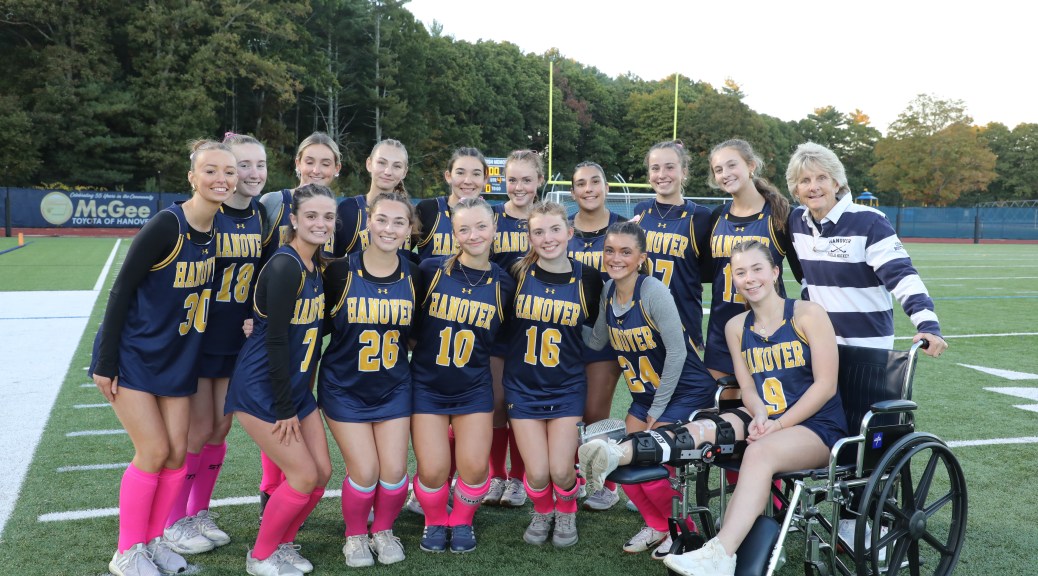
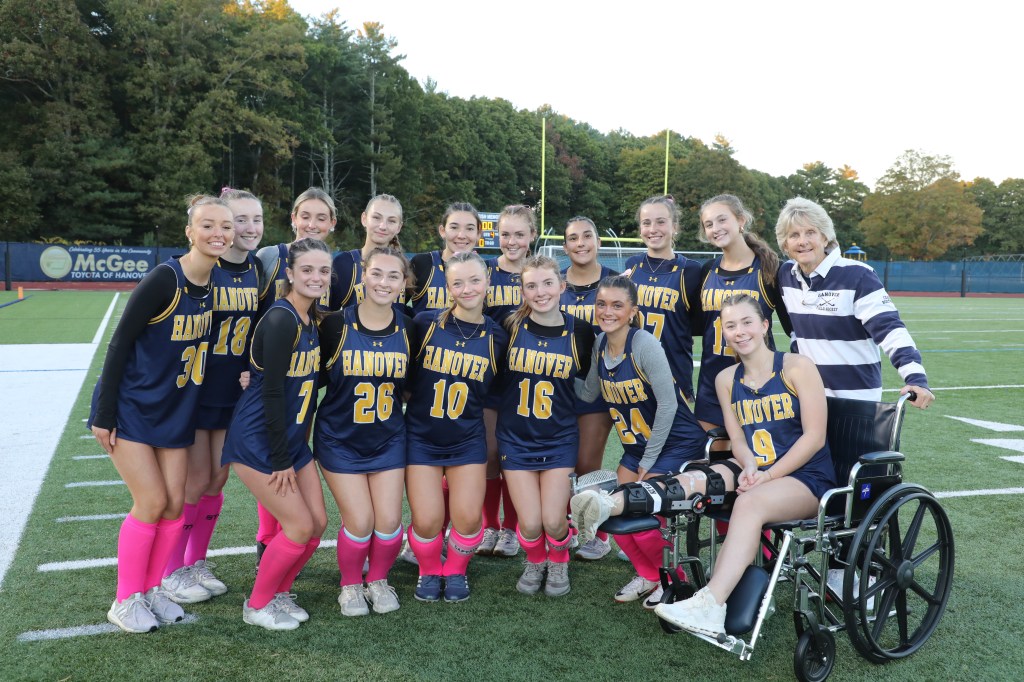
Her favorite teacher is Mrs. P because she is always so welcoming and encouraging, which has made a huge difference for Jameson’s outlook on the school environment. Outside of the classroom, Jameson’s favorite high school activity has been field hockey. She also plays lacrosse and works during the week, and something she is especially proud of is her ability to balance school, sports, work and life.

Planning to attend college next year, Jameson says she has learned a lot from high school, especially about the importance of hard work and responsibility. This will surely stick with her in the future. Jameson’s favorite year of high school has been senior year. If Jameson had a chance to redo her years at HHS, she would have done a few things differently. For example, she would have gotten more involved in clubs and would have tried a little harder in freshman year. Jameson learned one big thing from high school: not to take everything too seriously and to enjoy the little things in life.

Bryan Collins

Bryan Collins moved to Hanover from Weymouth just before starting kindergarten. Back in elementary and middle school, Bryan had a deep passion for Boston sports. Throughout high school he has stayed true to his favorite teams: the Patriots, Celtics, Red Sox and Bruins.

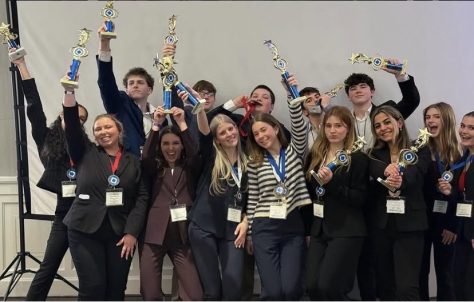
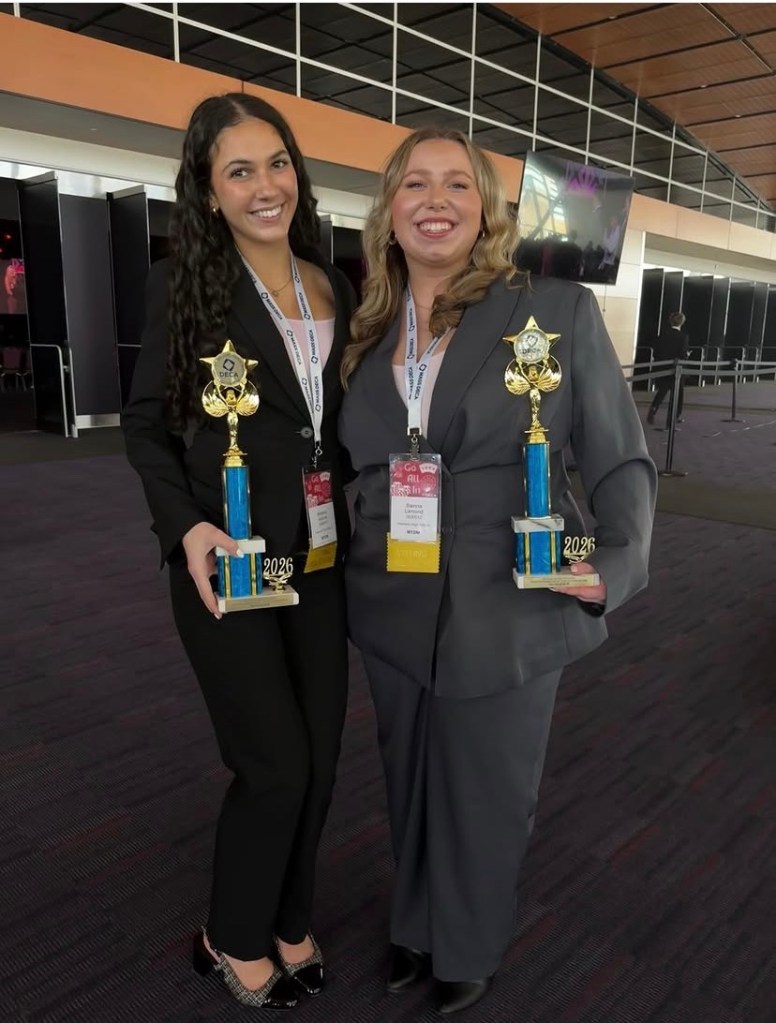
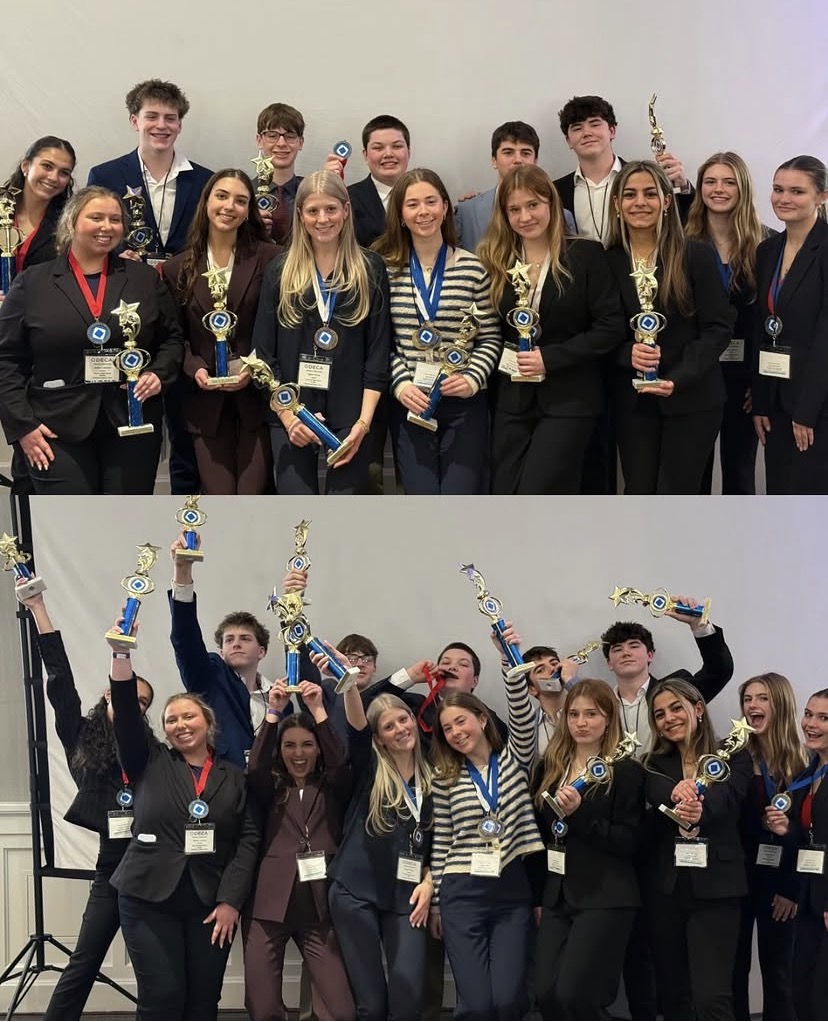
At HHS, Bryan found interest in business. “Before hgih school, the aspect of business kind of seemed boring to me. But after taking a couple of accounting classes with Mrs. P, I realized that there are so many interesting ways that business can be used.” This realization led him to DECA, a business club at HHS. There, his passion for business flourished as he competed at the district conference in January with his partner Leo Galvin and qualified fo rthe state competition in March.

Once he entered high school, Bryan let go of playing baseball. He shares that he misses it but never enough to pick it back up. “However,” he adds, “I did decide that this spring I will be managing our varsity baseball team to revive that old interest of mine.”

Bryan’s favorite class that he’s taken in high school is Sports and Society with Mr. Molloy. “This has been my favorite class because one of my biggest passions is sports and every single day our class goes into deep conversation about what is going on in the sports world and how sports everywhere are affecting our society.” His favorite teacher is Señora Curtis. He has taken her Spanish classes the past three years, from college prep Spanish 3 to AP Spanish 5. “I was not the best Spanish student going into her class a few years ago,” he confesses, “but the confidence she had in me to keep improving by far makes her my favorite teacher in the whole entire school.”

Bryan’s favorite high school activities he’s taken part in  have been football, basketball, DECA, “and Bible Club with Sam Light.” After high school, Bryan will attend Xavier University. There, he will major in finance and minor in sports management. “High school has influenced my choice of a future career path because of the many business opportunities I have engaged in here, along with the strong sports atmosphere we have at the school.” His proudest accomplishment thus far? “Advancing to states in the DECA competition,” he says.

One thing people may not know about Bryan is his active community engagement with IMPACT Sports. “With IMPACT, I have been able to teach children with disabilities how to play basketball.” He explains that this is one of his favorite out-of-school activities, “since mentoring these kids always brightens my week.”

His favorite year of high school has been senior year. He describes, “the best part of senior year has not even hit and I have been having the most fun!” If given the opportunity to do high school over again, the only thing he would change would be procrastinating much less. And finally, one lesson Bryan has learned during high school is that, “overthinking can ruin any aspirations you have if you don’t just go for it.”