
By Danny, Campbell, ’27
Staff Writer
So I bet most of you are aware of the fact that on November 6th, the people of Massachusetts voted in favor of getting rid of MCAS as a graduation requirement. I personally believe this was a great decision, since it means that students won’t have to worry about not getting their diploma for scoring poorly on it. However, I think we still have to take the standardized tests seriously because of how much they still can affect students and our school.
The MCAS, or Massachusetts Comprehensive Assessment System, is a series of standardized tests created in 1993. Starting in third grade, all students take tests in English Language Arts and Math. A Science, Technology and Engineering exam is given in grades five and eight. Civics is administered to 8th graders and biology is given to 9th graders. Passing the tests had been a requirement for a diploma in Massachusetts, while schools used the data to evaluate teaching and learning. After the vote, the graduation requirement has been removed, but schools are still giving the tests to collect information.
But how did this movement to remove the MCAS graduation requirement get onto the ballot in the first place? You see, this movement was started by a mom in Lexington and the Massachusetts Teachers Association because they felt like MCAS was unfair to students who don’t take tests well. The movement was further spread by Adriana Mason and another mom from Hanover who helped to get the word out locally and get the question on the ballot.
One of the main concerns that went into having MCAS as a graduation requirement is the belief that students with special needs are treated unfairly by the system. I can relate to this concern from personal experience; while I was in elementary and middle school, I was given extra support in my classes to address my needs. However, when you are taking the MCAS, you are not allowed to have the same extra support you have had for the entire year. This would cause issues for students, who might have to take the high school tests repeatedly to finally earn a passing grade and qualify for their diploma. Teachers were forced to spend a lot of time each year preparing students for MCAS. It is either that or risk having students unprepared for test day.
Between 2003 and 2024, 400-450 students left HHS without their diploma, according to Mason. This large number has to do with their MCAS grades, and many of the students impacted were students with disabilities. Most students with disabilities already have hard lives, and not being able to get their diploma made their lives unfairly harder. Without a diploma, your job opportunities are reduced. You cannot go to college or into the military, and you cannot become a police officer or firefighter. Thankfully, with this law passing, students who graduated HHS from the 2003-2024 are able to now receive their diploma.
With all of that being said, and with the ELA test taking place at the high school this week, it leads me back to my question, “should we still be worried about the MCAS?” I will say once more that I am beyond glad that this law has passed, and I have NO complaints about this vote. However, as a sophomore, it feels very anti-climactic after being told numerous times since middle school that the 10th grade MCAS was the extremely important one that would determine whether or not I received a diploma. Now, the test feels just like an extra thing to do.
Still, my final verdict is that while MCAS shouldn’t be treated AS seriously as it was in previous years, I do believe students should still try to do well. The test results will be used to check in on how students are doing in school, and to make sure that teachers are successfully providing instruction in important skills. All of this can now be done without stressing out students yearround.
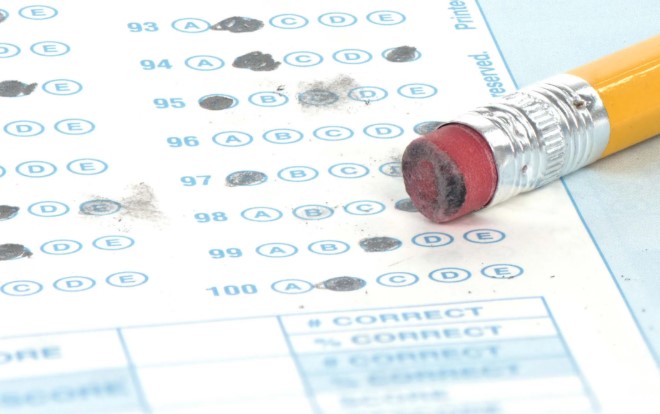
featured image: https://www.boston.com/news/education/2021/09/21/mcas-scores-2021-pandemic/
 The Hawk