
By Danny Campbell, ’27
Staff Writer
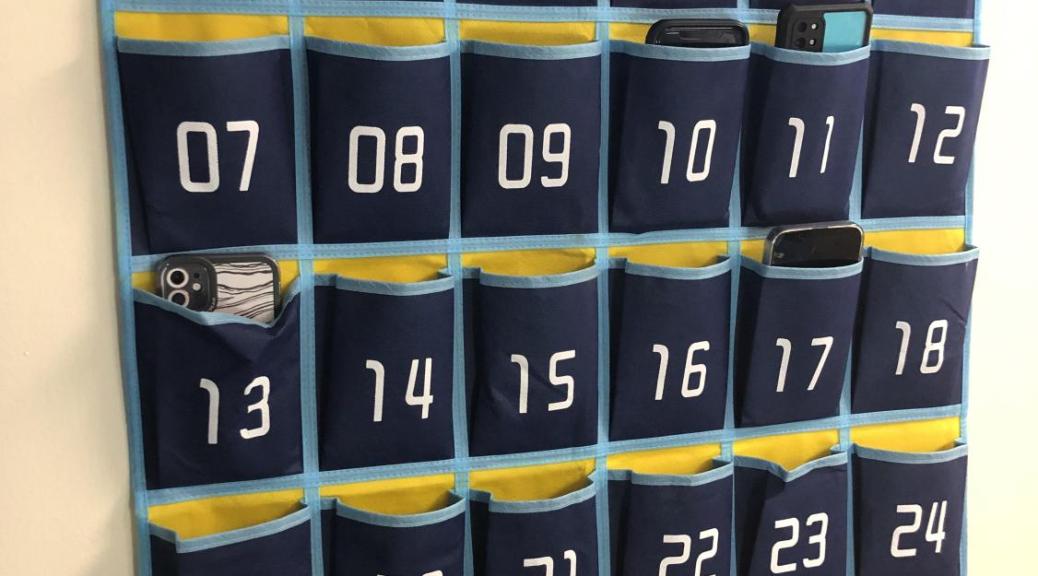
Most likely, everyone has an opinion about the Hanover High School student cell phone policy by now, since we’re into its second year. To minimize distractions, the handbook restricts students from using cell phones in class without the teacher’s permission. Most teachers require students to place their phones in the classroom “phone hotel” (better known, in my opinion, as the “prison”), or keep them in student backpacks. This is enforced with varying levels of strictness depending on the teacher. The policy, implemented by district administration and approved by School Committee, is part of a state and nationwide trend toward restricting cell phone use in schools. I personally think the cell phone “hotels” are a waste of time. They not only show distrust of students, but also could lead to safety issues.
In the last few years, cell phones have become a major part of our lives, and nearly everyone in the United States now has a phone that they use frequently. I can almost guarantee that you – the person reading this page – have spent large chunks of time only on your phone, letting a platform like YouTube, TikTok, Instagram or games consume hours of your day. Many have fallen victim to it, admit it! This is why school districts across the country started limiting or restricting cell phones in school. The Massachusetts legislature is considering a bill this year to ban students from using cell phones and other personal electronic devices during the school day. Most teachers think that getting rid of the phones in class will automatically make the students pay more attention to them during their lessons. Other supporters of the policies feel limiting phones will reduce bullying and improve students’ mental health.
But we need to note three things about these arguments. First of all, NOT every single student in the school is tied to their cell phone! This is a very big thing that I feel people completely ignore when discussing whether or not to restrict phones. There are students who only bring their phones to check the time, text important people during their downtime, or keep in contact with their parents during school hours. So restricting our only form of outside communication is very unfair for those of us who barely take them out.
Secondly, the policy can cause safety problems during an emergency. Imagine that a fire or some other catastrophic event happens that could lead to school being evacuated. If students are as attached to their phones as administrators seem to think, the first thing they’ll do in an emergency is try to get their phones from the “hotel.” This could cause injuries and a delay in getting students out of the building quickly.
Finally, having to put phones in a classroom “hotel” makes it possible for students to forget them when the bell rings for dismissal. This means students have to interrupt their next class to come back and retrieve them, or wait until the next day to pick them up if school is over. It could even lead to theft of the often expensive devices.
I think a better approach to the cell phone issue would be to teach students how to use the technology responsibly. This could be taught in a unit for middle school health class, during Mrs. McHugh’s library sessions, or through auditorium presentations like the ones we have about topics like drug abuse and lockdown drills. Students need to be taught the benefits of moderating screen time to take care of their mental health. If we can do this, there won’t be the need for phone “hotels.”
 The Hawk