
By Michael DeLuca, ’29
Staff Writer
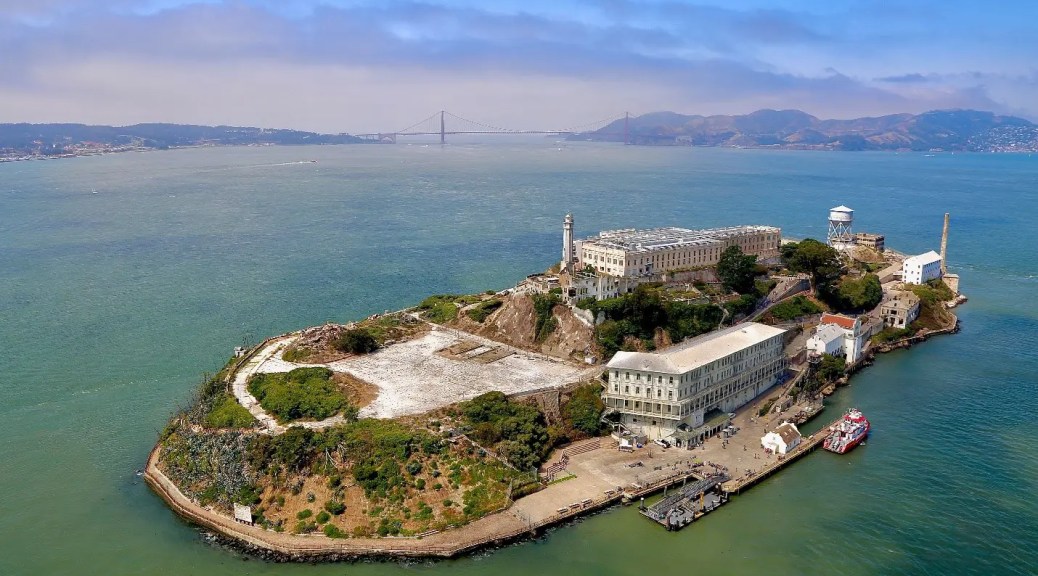
I’m sure you have heard of Alcatraz, aka “The Rock;” a prison where the worst of the worst were sent; a prison located on an island in the middle of the fast-moving, freezing-cold San Francisco Bay; a prison that was made to be inescapable. Well, maybe inescapable is the wrong word.
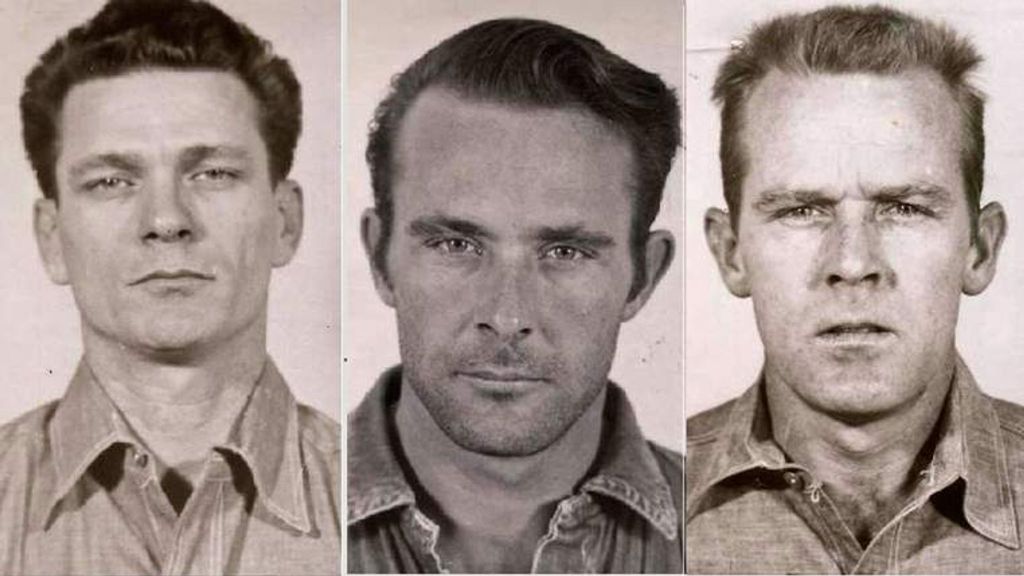
One night on June 11, 1962, brilliant mastermind Frank Morris and brothers John and Clarence Anglin were able to do the impossible: escape Alcatraz. But how did they do it? And what happened after they did?
Background
First built as a fortress and military prison in the 1850s, Alcatraz became a federal maximum-security prison in 1934. The 22-acre island prison housed notorious criminals like gangster Al Capone before closing in 1963 because it was too expensive to maintain. The surrounding saltwater was corrosive to the prison’s concrete walls. While open, it was the site of more than a dozen unsuccessful escape attempts, with most prisoners stymied by the remote location about 1.5 miles from the closest land.
Morris, born on September 1, 1926, arrived at Alcatraz in January of 1960. He was sent there for a 14-year sentence after being convicted of bank robbery. Prior to his time at Alcatraz, Morris was able to escape multiple other prisons as he was highly intelligent and very resourceful. Shortly after Morris’ arrival, John Anglin was transferred to Alcatraz. Born on May 2, 1930, Morris was serving a 35-year sentence for bank robbery. A few months later, in January of 1961, John Anglin’s brother, Clarence, joined them. Born May 11, 1931, Clarence Anglin faced a 15-year sentence for bank robbery and multiple prison escape attempts. There was another prisoner, Allen West, born March 25, 1929, who was involved in the escape, but his attempt was unsuccessful. The four men all knew each other from other prisons. They were conveniently in adjoining cells and could communicate regularly and plan their escape.
The Preparation
So exactly how did they escape their cells? Well, each prison cell had a small vent at the bottom of the back wall. The men came up with the idea to pry out the vent, and widen the preexisting hole, as the normal hole was way too small for any of them to fit through. At night, the gang used modified spoons and a homemade drill made from a vacuum cleaner motor to slowly chisel away at the wall around the hole. As you can imagine, they didn’t want anyone to notice what they were doing or hear their digging. Morris came up with an idea. Every night from 5:30 to 7, the prisoners had music hour, so during this time one of the men would loudly play an accordion to cover up the noise. Another man would keep watch to make sure that no guards noticed anything. This indeed worked and after several months each man had successfully carved out a big enough hole for him to climb through.
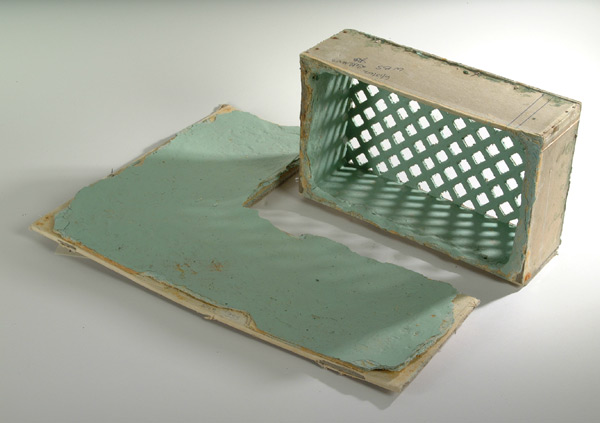
Due to the routine room inspections done on the prisoners’ cells, the gang needed a way to cover up the holes they were making. They stole paint from the art room and used cardboard, soap and notebook covers to make a fake wall that perfectly matched the vents they carved out. The result was brilliant, and the guards never suspected a thing.
On the other side of the vent, within the prison wall, was a very small corridor where there were numerous pipes. The pipes acted as ladders for the men to climb up and led to an area above the cells. This is where the men planned on doing all of their work to escape and store their materials. The only problem was the entire front half of the area had cell bars on it, making it visible to any guard. So what would they do? Well, Morris only knew about this spot because he had a job painting the ceilings and sweeping the floors there. He was able to maneuver a plan to cover the bars with blankets in order to hide their work. Morris came up with the clever idea that every time he would sweep there, he would sweep some of the dust out the cell bars and onto the guards’ polished hallway below. When the guards started complaining of the mess, he suggested the solution to cover the bars with blankets so the dust couldn’t fall through. Morris did this job as slowly as possible so the guards would keep the blankets up there until the day the gang could finally escape. Every time the men would climb up, they would have to make as little noise as possible, as any tiny noise would echo throughout the entire cell block, alarming the guards. But the men were very skilled and did not make any loud noises, and the guards never caught them.
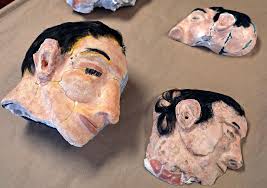
Every night, a guard would walk the cell block hall to check in each cell to make sure nobody was out of bed. If a guard walked past the cells of Morris, West, and the Anglin brothers and saw that they weren’t there, an alarm would be triggered and a search would begin. That is where possibly the most genius part of this whole escape comes into play. The four men crafted fake heads using a combination of soap, toilet paper, concrete dust, toothpaste and paint, again stolen from the art room, to make highly realistic heads that matched their own. They would put the fake heads in their beds and make it appear that the men were sleeping. For the hair of the heads, they used real human hair. One of the Anglin brothers had a job at the prison barber shop and would secretly collect the fallen hair to put on the fake heads. The heads took months of hard work, and the result was astonishing.
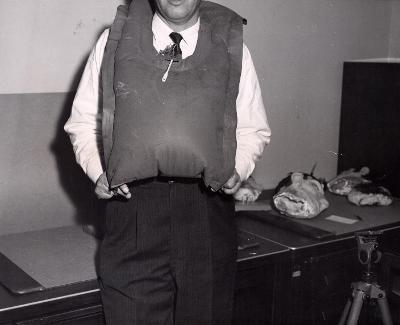
Finally, the men had to find a way to overcome the hardest part of their escape, traveling across the fast-moving, freezing-cold San Francisco Bay. Now you know that Morris was highly intelligent, so he researched sea survival books from the prison library. Morris looked into how life vests were made, and he came up with the idea to steal multiple rain coats, and glue them together to create life vests and a raft. The men ended up stealing over 50 rain coats and glued them together using waterproof glue that indeed made life vests and a raft! But they needed a way to inflate them. Remember the accordion from earlier? They modified it, transforming it into a homemade pump. As the final detail, the men built simple paddles using plywood and screws.
The Escape
The day had finally come for the four men to escape, June 11, 1962. But the men did not just pick any random day. You see, the San Francisco Bay current was highly unpredictable and would not just take the men to shore every day. If they weren’t careful, the current could bring the men anywhere in the ocean. But Frank Morris knew this. He again used the books in the library to study the current and figure out the perfect day that the current would bring them directly to shore, and that day, he figured out, was June 11. But it would still be challenging.
So the night had come, the guards had called “lights out” and it was the time for the men to escape. Each man took out their fake head and positioned it in their bed to make it appear that they were asleep. Then they took out their fake vent to escape their cell. Remember earlier how I said Allen West was unable to escape? Well, this was because on the night of the escape, his vent got stuck and when he couldn’t remove it, Morris and the Anglin brothers left him behind. The three men climbed up to the platform where they had been storing their materials and picked up their raft, life vests, and paddles. The men climbed to the roof of Alcatraz and scaled the prison walls, perfectly navigating them in a way that no guard towers would be able to spot them (Morris had been studying the outside of the prison for weeks to figure out the perfect route). Next, they climbed down the rocky island to the cold bay, put on their life vests, and then climbed into the raft and rowed away. They were finally free.
The Outcome
What happened next is unknown. Officials back then speculated that the three men drowned in the bay, but no bodies were ever found. The FBI eventually talked to West about the plan and he gave extensive information, getting time off his sentence for cooperating, but the information was not enough to figure out if the three men made it to shore. There were reported sightings of the men in the years after, and rumors they made it to South America, but none of that was ever confirmed. So what do you think? Do you think they drowned in the bay or froze to death? Or do you believe they made it to freedom? If anyone were to successfully complete an escape from The Impenetrable Rock, it would definitely be the Anglin brothers, and the brilliant mastermind, Frank Morris.
 The Hawk