
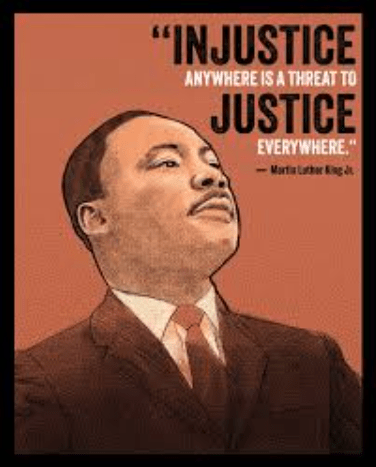
By Charlize Coviello, ’29
Staff Writer
The story of America cannot be told without the voices, struggles, and achievements of Black Americans. The idea of Black History Month was suggested by historian Carter G. Woodson in 1926. As the son of former slaves, Woodson aimed to challenge the erasure of Black history in education by establishing a dedicated period for celebrating Black contributions to the American story. As a Harvard-trained historian, he launched this initiative under his organization, The Association for the Study of Negro Life and History, now known as the Association for the Study of African American Life and History. Originally, the commemorative week was chosen to coincide with the birthdays of Abraham Lincoln, Feb. 12, and Frederick Douglass, Feb. 14. The celebration was expanded to the entire month of February in 1976, during the U.S. bicentennial year. That year, President Gerald Ford urged Americans to “seize the opportunity to honor the often neglected accomplishments of Black Americans.”
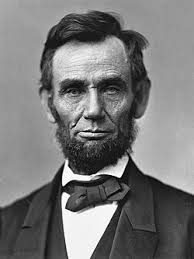
As the president who signed the Emancipation Proclamation on January 1, 1863, Lincoln’s impact on the history of Black freedom cannot be understated. In addition to “freeing slaves,” Lincoln also authorized the enlistment of approximately 190,000 African-American men into the Union Army. Though even today the battle against prejudice and racism still rages, and segregation along with Jim Crow laws persisted nearly a century after emancipation, Lincoln’s actions represented a great step toward equality.
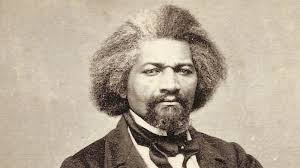
Frederick Douglass was born Frederick Augustus Washington Bailey in February, 1818, in Talbot County, Maryland, to an enslaved mother and an unknown white father. Separated from his mother as an infant and raised by his grandmother, he was sold to the Auld family in Baltimore at age 8. Despite laws against it, Sophia Auld taught him the alphabet. He subsequently taught himself to read and write, viewing literacy as a path to freedom. As a teenager, he was sold to notorious slave breaker Edward Covey, where he suffered intense physical abuse before fighting back. In 1838 he disguised himself as a sailor to escape, later settling in New Bedford, Massachusetts with his new wife. Douglass became the most important leader of the movement for African American Civil Rights in the 19th century, gaining fame for his incisive anti-slavery writings and speeches. He published famous anti-slavery newspapers like the “North Star,” advising presidents and championing women’s suffrage and civil rights. His brilliant speeches and writings provided a powerful counter-narrative to pro-slavery arguments, making him an essential figure of history. During the Civil War he advised President Lincoln on emancipation and the treatment of Black soldiers. He fought for voting rights for African Americans and women, holding positions including US Marshal for the District of Columbia and Minister Resident to Haiti. He died in 1895 in Washington D.C., remaining an active, influential advocate for human rights until his final day.
Of the many figures we celebrate in Black History Month, some of the most familiar include Harriet Tubman, Martin Luther King Jr., and Rosa Parks. They all significantly contributed to American as well as Black history.
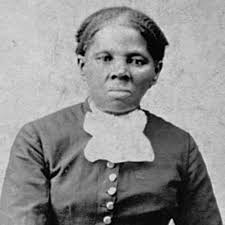
Harriet Tubman was a civil rights pioneer, abolitionist, and courageous American humanitarian. Born into slavery in Dorchester County, Maryland, around March 1822, she was the fifth of nine children and was hired out at age six, often enduring physical abuse and neglect. At age 12, an overseer threw a heavy iron weight that struck her head, causing severe seizures, headaches, and narcolepsy that lasted her entire life. In 1849, facing the threat of being sold, she fled to Philadelphia using the Underground Railroad. Over the next decade, she made approximately 13 trips back to Maryland, liberating family members and friends. She guided approximately 70 enslaved people to freedom. She traveled in disguise, moved by night, and relied on a network of safe houses. She later served in the Civil War as a nurse and scout for the Union army, and was the first woman to lead an armed assault during the Combahee River Raid, freeing over 700 people. After the war, she settled in Auburn, New York, supported women’s suffrage alongside Susan B. Anthony, and helped care for the elderly. In 1913, she passed away from pneumonia and was buried with military honors.
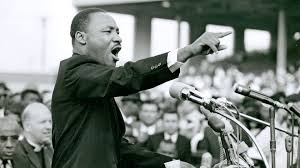
Martin Luther King Jr. was born in Atlanta, Georgia on Jan. 15, 1929. His father was an early civil rights leader who protested voting discrimination. As a gifted student he entered Morehouse College at age 15, later earning a sociology degree, a Bachelor of Divinity from Crozer Theological Seminary, and a Ph.D. in Systematic Theology from Boston University. Dr. King was a leader of the Civil Rights Movement. He’s famously known for his “I Have a Dream” speech at the March on Washington, helping pass landmark legislation like the Civil Rights Act of 1964 and the Voting Rights Act of 1965. He helped lead the Montgomery bus boycott, which led the Supreme Court to rule segregated public buses unconstitutional, and he was awarded the Nobel Peace Prize in 1964 for his commitment to achieving racial equality and justice through nonviolent means. Dr. King was assassinated on April 4, 1968 in Memphis, Tennessee by James Earl Ray.
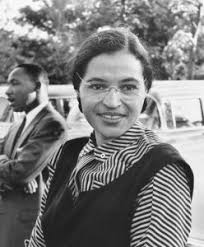
Rosa Parks, born Rosa Louise McCauley on February 4, 1913, was an activist known as the mother of the civil rights movement. She grew up experiencing strict Jim Crow segregation and intense racism, witnessing activities of the Klu Klux Klan as well as lynchings. She attended the private Industrial School for Girls and later the Alabama State Teachers College for Negroes. On December 1, 1955, in Montgomery, Alabama, she famously refused to give up her bus seat to a white passenger, violating segregation laws. Her arrest sparked the 381 day Montgomery Bus Boycott, a pivotal, successful protest that helped end public transportation segregation. As a result of the boycott, the Supreme Court ruled that segregated buses were unconstitutional, marking a major victory for the civil rights movement. Before her 1955 arrest, she was an active member of the NAACP, serving as the secretary of the Montgomery Branch from 1943 to 1956. She traveled to Alabama to investigate documented cases of sexual assault and racial violence against Black individuals. When Parks was arrested for disorderly conduct after refusing to move to the back of the bus, she later stated she was not tired physically but rather “tired of giving in” to segregation. Due to death threats and difficulty finding work in Alabama, she moved with her husband to Detroit, Michigan, in 1957, where she continued fighting racism in the North. She was awarded the Presidential Medal of Freedom in 1996 and the Congressional Gold Medal in 1999. Parks passed away on October 24, 2005 in Detroit.
Black History Month is not just about remembering the past — it is about understanding how that past shapes our present and inspires our future. By studying and celebrating these historical figures, we can learn how to face problems of injustice and intolerance that still trouble society today.
 The Hawk