

By Sophie Bunar, ’27
Staff Writer
“There may be times when we are powerless to prevent injustice, but there must never be a time when we fail to protest.”
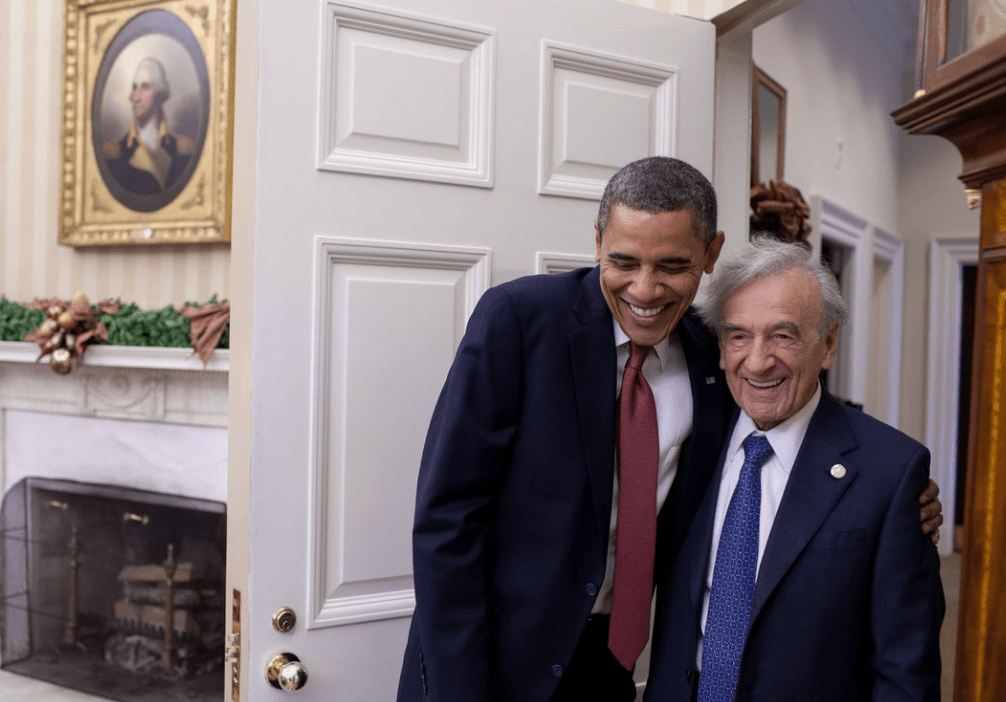
These are the words of Romanian-born activist Elie Wiesel, a noted Holocaust survivor who has dedicated his life to advocating for human rights and fighting intolerance. He is most commonly known within school systems for his memoir Night, which described his life as an adolescent when he survived the Auschwitz and Buchenwald concentration camps.
Wiesel’s speech “The Perils of Indifference” delivers a profound warning about the dangers of apathy in the face of human suffering. Delivered at the White House in 1999, the speech emphasizes that indifference (an absence of concern or empathy) is more harmful than hatred because it enables oppression and tyranny to persist unchallenged. Wiesel recounts how, during the Holocaust, the world’s indifference allowed atrocities to unfold. He stresses that indifference dehumanizes both the victim and the bystander. “In denying their humanity, we betray our own,” Wiesel says.
Wiesel warns that indifference allows injustice to flourish, creating a dangerous silence that enables violence and oppression. When people choose not to speak out or act against wrongdoing, they become complicit in the suffering of others. This message resonates deeply today, as many witness the ICE raids and the notably tragic losses of Renée Good and Alex Pretti, yet remain silent. Although many in Minneapolis, as well as across the nation, have stood up against this outrage, those who refuse to protest or even acknowledge these events perpetuate a cycle of harm, making indifference a form of passive acceptance.

In standing up against oppression, protest becomes more than just an act of defiance; it is a vital expression of dignity, compassion, and solidarity. Additionally, it honors the humanity of those affected and challenges systems that devalue human lives. As Wiesel’s life and words remind us, the fight against intolerance and violence requires courage from all of us—not just to confront hatred, but to resist the quiet force of indifference.
In this era, in this moment, choosing to raise our voices, join protests, or simply bear witness is a way to ensure that history does not repeat its darkest chapters. As Wiesel states in his speech, “Together we walk towards a new millennium, carried by profound fear and extraordinary hope.”
Works Cited
Stuart, Tessa. “Minneapolis ICE Shooting Protests: Photos from Vigils across the U.S.” Rolling Stone, 8 Jan. 2026, http://www.rollingstone.com/politics/politics-pictures/minneapolis-ice-shooting-protests-photos-1235496024/renee-nicole-good-killing-protest/. Accessed 4 Mar. 2026.
White House Archived. ““In the Face of Evil, We Must Summon Our Capacity for Good.” — @POTUS on Elie Wiesel: Http://Go.wh.gov/C9asbs.” X (Formerly Twitter), 2026, x.com/ObamaWhiteHouse/status/749389707650314240. Accessed 4 Mar. 2026.
Wiesel, Elie. “The Perils of Indifference.” Americanrhetoric.com, 12 Apr. 1999, http://www.americanrhetoric.com/speeches/ewieselperilsofindifference.html.
 The Hawk
This article is fantastic! It’s so well written, informative, and inspiring. Indifference in our society is a very important topic.
LikeLike