
By Avery Bridson, ’27
News Editor
Gen Z is considered by many to be the first to grow up on social media. Born from the mid-90s to early 2010s, this generation consumes more content each day than any other. When the government of Nepal tried to ban 26 major social media platforms, the young adults of the country did not sit by quietly. They took to the streets to protest what they called censorship and authoritarian rule.
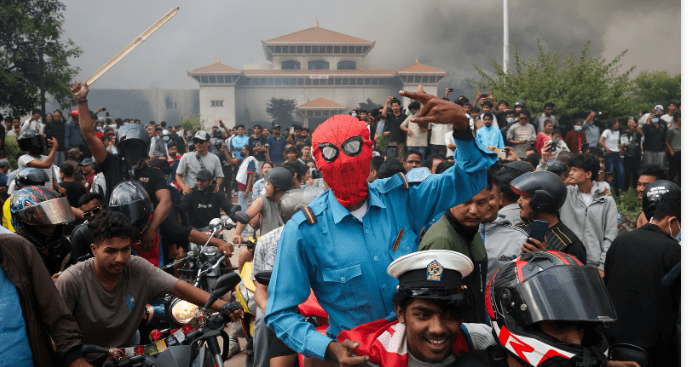
The government of Nepal made the decision to ban the social media platforms, including Facebook, Instagram, and YouTube, in September. The ban was implemented after the app owners refused to comply with the request to register with the Nepali government and limit information. Officials argued that the move was about ‘sovereignty and regulation,’ not censorship, but the citizens thought differently. They felt that their democracy and freedom of expression were just temporary privileges. This led to protesters peacefully gathering to argue against the government’s decision. However, it quickly escalated to violence and destruction.
On September 8, police shot at the protesters near the Parliament building, causing at least 19 deaths, including a 12-year-old child, and over 100 injuries. The next day, thousands of young protesters stormed the parliament building. They destroyed the interior, ransacking valuables and setting rooms on fire. The prime minister’s house was also set on fire, leading to his resignation. The power vacuum was filled by Sushila Karki, Nepal’s first female prime minister, who holds a zero-tolerance policy on government corruption and political censorship. The social media ban and national curfew were lifted shortly after, with Karki pledging to end corruption and respond to the demands of the people.
This issue is not unique to developing countries like Nepal. Recently in Mexico, thousands of members of Gen Z organized through social media in massive protests against crime and corruption. Similar protests have occurred in the past two years from Bangladesh and Kenya to Italy and Peru. For students anywhere, this story demonstrates how youth activism online can translate into political change for the better.
 The Hawk