

By Gabriella DeLuca, ’27
Staff Writer
On April 22nd, our country will celebrate the 56th anniversary of the world’s largest environmental movement: Earth Day. On this day, billions of people across the globe come together to honor the planet we call home. From attending protests to planting trees, and even contacting elected officials about environmental policies, this movement has inspired many to take action and promote environmental protection. Yet, how did this celebration begin? And how can the public support the environment and show appreciation to planet Earth?
The History of Earth Day
In the decades leading up to the first Earth Day in 1970, our environment was in a devastating state. In urban cities across the country, pollution from automobiles and factories filled the air with smoke, raw sewage and oil spills flowed down the streets, and pesticides threatened to end the life of Earth’s most beautiful creatures. Deforestation reached unprecedented levels, and dangerous toxins turned the once fresh and pure air into a dark, suffocating smog. Our planet faced a grim future.

Despite these ecological tragedies, many individuals were largely unaware and detached from the environmental issue. Far too consumed by materialism and a desire for wealth, the majority of Americans became largely oblivious to the devastating impact their industrial endeavors were having on the planet. However, a few brave and dedicated individuals who recognized the need for action spoke out and inspired a movement for environmental change.
The Environmental Pioneers



As industrialization in the United States accelerated in the mid-20th century, so did the use of chemicals and pesticides due to their ability to boost agricultural production. However, with this practice came a devastating cost to the Earth and its living creatures. This threat of environmental disaster inspired marine biologist and nature writer Rachel Carson to write her world-renowned book, Silent Spring, which exposed the dangers that pesticide use, specifically DDT, posed for the Earth and all its creatures. Silent Spring, published in 1962, emphasized the need to protect the natural world, arguing that instead of industrial pursuits and economic success, “the real wealth of the Nation lies … in the resources of the Earth: soil, water, forests, minerals and wildlife.” Her scientific work, which sold over 500,000 copies in more than 20 different countries, is widely regarded as the first foundational act of modern environmental activism, and is credited with galvanizing the conservation movement in the United States.
Largely influenced by Carson’s Silent Spring and the 1969 Santa Barbara oil spill, Wisconsin Senator Gaylord Nelson was propelled to address the environmental crisis. Witnessing how both the public and the federal government were failing to address the environmental issue, Nelson organized a national demonstration to raise awareness about the importance of protecting the environment. Nelson recruited Denis Hayes, a prominent American environmentalist, to coordinate the nation’s very first Earth Day in 1970. In order to maximize student participation in the movement, Hayes chose to hold the event on April 22nd, which fell between Spring Break and final exams. The first Earth Day inspired over 20 million people throughout the country to protest against the impact of industrial development and the government’s failure to address the present environmental destruction. This national demonstration resulted in unprecedented success, leading to the creation of the United States Environmental Protection Agency (EPA), as well as legal mechanisms to protect the environment, such as the National Environmental Education Act and Clean Air Act. In addition, and due in large part to Carson’s profound influence, the usage of DDT was banned. Earth Day continued to grow and became a global holiday in 1990.

Continuing the Legacy
We only get one Earth, one planet to support life today and for centuries to come, which is why it is vital that we protect it. Despite the remarkable success of environmental pioneers such as Rachel Carson and Gaylord Nelson, many activists argue there is still more work to be done to continue to honor the legacy created for us.
Today, global warming is accelerating at an unprecedented rate. With the increased emission of fossil fuels into the atmosphere, the future of our Earth is at stake. According to deputy executive secretary and climatologist Ko Barret, “Between 2015 and 2025, we experienced the hottest 11 years on record.” This rapid increase in global temperatures is only expected to increase in the years ahead, posing a significant threat to life and Earth’s biodiversity. This has caused activists around the world to urge the community to take action in order to reverse the effects of global warming and save our planet Earth. Below are some of the most effective ways of getting involved in our modern environmental movement.
Reduce, Reuse & Recycle
The “Three Rs” refers to the foundational principle of waste management: Reduce, Reuse, and Recycle. This principle is crucial to protecting the Earth and is one of the easiest ways to take care of our planet. The first part of this principle is reducing the amount of material we use. Some of the simplest ways to do this include buying household goods in bulk to reduce the amount of plastic packaging used and choosing digital alternatives over paper options. By reducing the amount of material we consume, we significantly reduce the amount of waste that needs to be recycled and sent to landfills. The second step in this principle is reusing materials and products. This means opting for reusable alternatives over single-use options, such as using reusable water bottles, utensils, and shopping bags. This actively conserves precious natural resources and protects wildlife habitats that are being threatened by the increased use of consumer goods. The last, and probably the most important part of this principle, is recycling. Recyclable materials include, plastic bottles, aluminum cans, cardboard, and glass containers. Recycling these discarded materials significantly limits the amount of waste produced, and thus helps to conserve Earth’s resources.
Plant a Garden
Considering how much we take from the natural world, planting a garden allows us to add something to it, and support the planet’s biodiversity. The addition of plants, flowers, and fruits to the natural environment significantly improves air quality, which is being increasingly threatened by global warming. Since plants take in carbon dioxide through photosynthesis, this reduces the carbon in the atmosphere and helps to mitigate global warming. The leaves of trees and plants also help to remove harmful dust particles from the air, which can be detrimental to Earth’s living creatures. Additionally, planting a garden helps to reduce runoff and conserve water, which limits harmful chemicals from entering bodies of water that are dangerous to wildlife. This also benefits the soil by adding moisture and nutrients to enhance its overall health and value. Planting a garden with plenty of fruits and nutrients helps support pollinators and other creatures, such as birds, bees, and butterflies, who rely on fresh vegetation to live.

Conserve the Earth’s Water Supply
Did you know that only about 3 percent of the earth’s water is fresh water? And that only about 0.5 percent of that fresh water is available due to a large majority being locked in glaciers and ice caps or highly polluted? As the population on Earth continues to increase, we need to be aware of the importance of conserving our planet’s water supply before it is too late.
In today’s society, with the rising usage of artificial intelligence, our water supply is facing a new threat. This is due to the fact that the data centers that control large AI models require significant amounts of power to run the advanced form of technology. In turn, this immense power causes the emission of large amounts of heat, which requires vast cooling systems to counteract the heating process. These cooling systems often rely on an abundant supply of freshwater, which threatens our environment’s water supply, which is already low.
Other than limiting AI usage, other great ways to conserve water include, turning off the faucet when brushing your teeth, shortening the length of your showers, and running the dishwasher and washing machine only when fully loaded. In addition, it is important to dump leftover ice from your drinks in the sink, rather than in the trash. This habit saves water by allowing it to re-enter the water supply and not be lost in the garbage.
Support Your Local Farmers Market
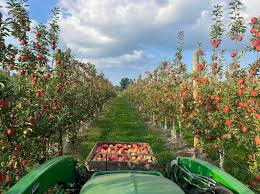
Another simple yet effective way to support the environment is by shopping at your local farmers market. Purchasing locally grown produce allows farmers to continue practicing sustainable agriculture, which is healthier for the environment than conventional farming. This is due to the fact that large-scale producers typically use an abundance of pesticides and chemicals that are harmful to the environment. Also, products sold at local farmers markets travel shorter distances compared to imported goods, and thus release less transportation- related pollution.

The Hanover Farmers Market in our hometown opens for its 6th season in May of this year. The market will be open from 10:30am – 1:30pm on the third Sunday of each month from May to October. This year, organizers are planning to hold this event on the green at Hanover Crossing. To learn more about our local farmers market click the link.
Join Environmental Clubs
If you are interested in more ways to help the environment, you should consider joining an environmental club. Our school offers Dirty Works Club, Eco-Club, and Green Team, which all make a positive impact on our community!
Supporting the environment can make a difference in our own lives and for generations to come. Considering all the amazing things our planet does for us, every day should be Earth Day!
Works Cited
“The History of Earth Day.” Earth Day, 2024, http://www.earthday.org/history/.
United Nations. “Actions for a Healthy Planet.” United Nations, United Nations, http://www.un.org/en/actnow/ten-actions.
United States Geological Survey. “The Distribution of Water On, In, and above the Earth.” Usgs.gov, 25 Oct. 2019, http://www.usgs.gov/media/images/distribution-water-and-above-earth.
US EPA. “EPA History: Earth Day | US EPA.” US EPA, 14 Mar. 2019, http://www.epa.gov/history/epa-history-earth-day.
Zewe, Adam. “Explained: Generative AI’s Environmental Impact.” MIT News, Massachusetts Institute of Technology, 17 Jan. 2025, news.mit.edu/2025/explained-generative-ai-environmental-impact-0117.


















 The Hawk