By Ryan Costello, ’27
Staff Writer/Social Media Editor
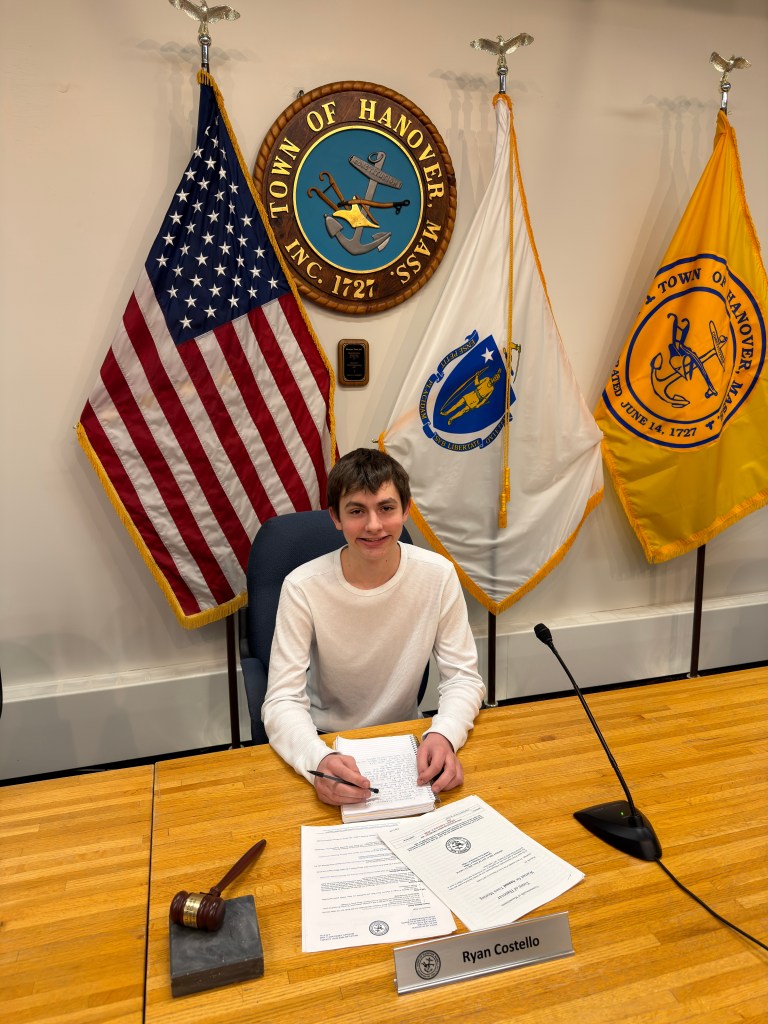
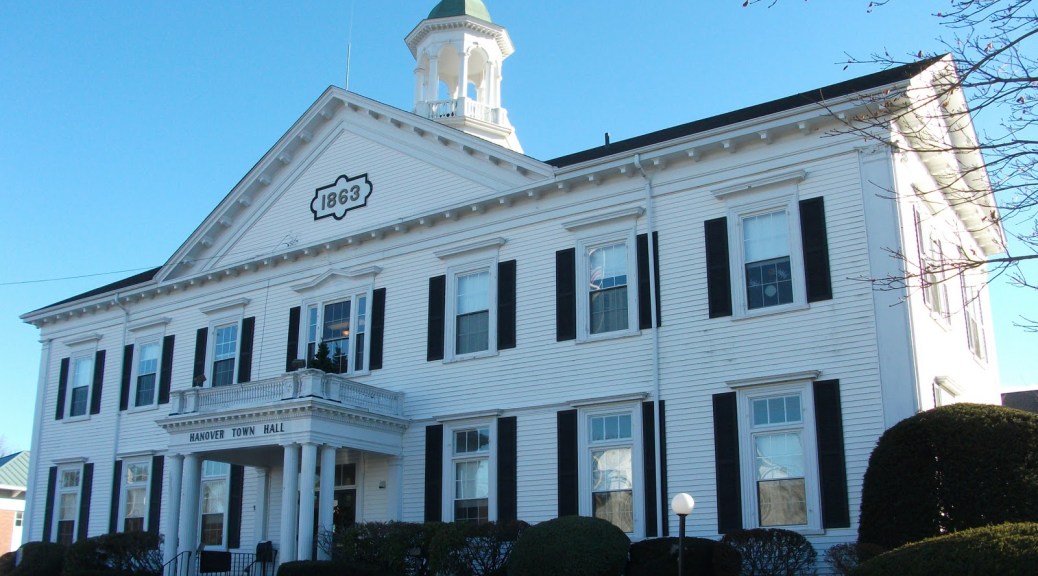
After three months as an intern in the Hanover municipal government, I have learned a surplus of knowledge of its functions and operations. Working with Town Manager Joe Colangelo, I have been assigned tasks and projects that have broadened my understanding of local government. I have had the privilege of attending various meetings, such as the Select Board, Advisory Committee, Conservation Commission, and Bylaw Review Committee. I have read and discussed the Town Manager Act and Hanover General Bylaws to understand why we have certain rules, regulations, and a complex system of government in place. I learned key administrative and organizational skills to help me in the workforce. I’ve even encountered challenging subjects involving the town’s budget with an override and levy limit. Since students are impacted by the decisions of the town government and will eventually have their own say, I wanted to share a quick rundown of some municipal operations.
The Special and Annual Town Meeting is the gathering of registered Hanover voters who weigh in on articles proposed to address different concerns. It is where people make decisions on spending taxes and other rules that guide town operations. The elected Town Moderator directs the meeting in a fair and orderly fashion, guiding the public comments and the voting procedure to make sure everything runs smoothly. Some items that people vote on are the budget, spending, bylaws, and zoning. This is a direct form of democracy in which the people use their legislative power to vote for an article (aye) or against an article (nay). The Annual Town Meeting occurs on a yearly schedule, while a Special Town Meeting is called as needed to address urgent issues that cannot wait. This year’s Special and Annual Town Meeting is set for Monday, May 4, beginning at 7 pm in the Hanover High School auditorium.
The Advisory Committee is a nine-member group appointed by the Town Moderator that represents the legislative body of the town and guides voters on their decisions on proposed articles. Many articles are submitted by town officials or departments, but constituents can also submit articles in the form of a petition. With enough signatures — 10 for the Annual Town Meeting and 100 for the Special Town Meeting — the article can be presented to the Town Meeting. This year, there is a petition for an article led by Lexie Schiller, a junior at Hanover High School, that would create a new section in our bylaws to reduce the use of single-use plastic bags.
The Town Manager is the chief executive officer of the town and is appointed by the Select Board. This position is usually held by someone with experience in business administration or public management. They are in charge of all non-elected department heads, including the appointment of the Police and Fire Chiefs. They also ensure that all the policies adopted by the Select Board are carried out effectively. The Town Manager directs the town’s administrative functions, including preparing the annual town budget alongside the Budget Director to ensure the town is financially stable. If the Select Board sets a vision or policy for the town, the Town Manager is the one who executes it.
The Select Board, made up of five at-large members, is the elected leadership of the executive branch of the Hanover government. They establish the overall policy and priorities of the town and have the ability to hire and remove, if necessary, the Town Manager. The Select Board reviews and approves budgets before they go to Town Meeting to be voted upon. They grant different business licenses and permits for possessions such as alcohol. The Select Board acts as a bridge between the residents and town officials. They create the Annual and Special Town Meeting warrants for the legislative branch to consider. They are elected for a three-year term and run during the Annual Town Election in May. The Select Board, like some other committees, has a Chair and a Vice Chair. The Chair runs the meetings and is the spokesperson of the Select Board. The Chair also guides the group’s decisions on issues and is in direct contact with the Town Manager. Meanwhile, the Vice Chair supports the Chair and runs the meetings when the Chair is absent.
After reading all of this information, you may wonder, how does this impact me? Well, many high school students are at voting age or close to it, and therefore have a say in Town Meeting or at the polls. The decisions made in municipal government can impact students, as has been felt in recent budget votes and overrides. Snow days are determined by the Department of Public Works in cooperation with the Superintendent of Schools and the Town Manager. Voters can impact decisions on new parks, police cruisers, sidewalks, and town bylaws. If you want to engage in the decisions made in this town, I encourage you to fulfill your civic duty by listening to what is going on and voting when you’re eligible. Volunteering is welcome at Town Hall or other public facilities if you want to get more involved. If you have an issue with something, do not be afraid to reach out. Everyone has a voice in this town, so let it be heard.


 The Hawk