All posts by soliver27d212e08a11

Fall Musical Combines Improv, Audience for Unique Hit

By Siena Oliver, ’27

Opinions Editor

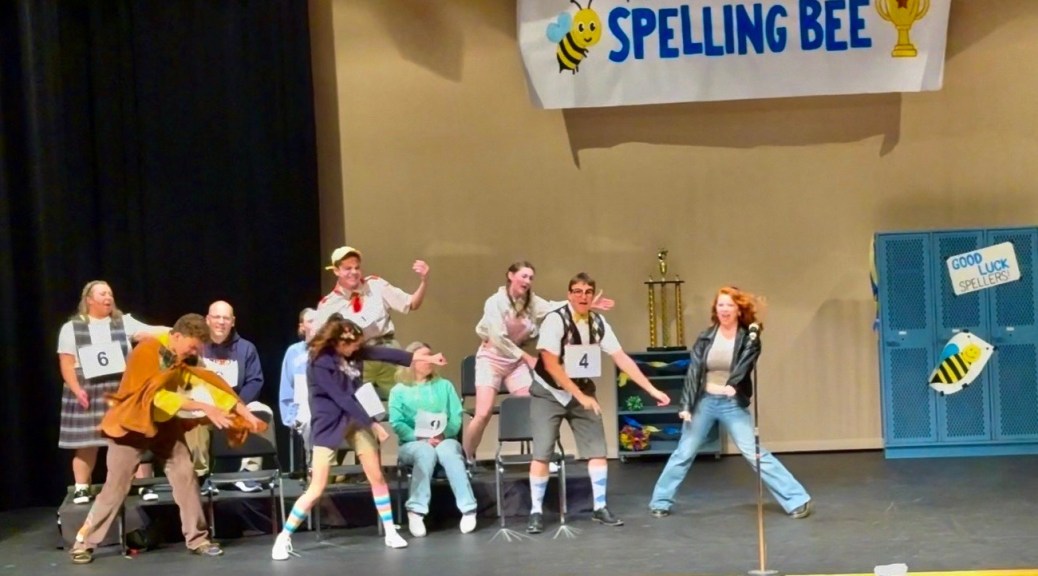
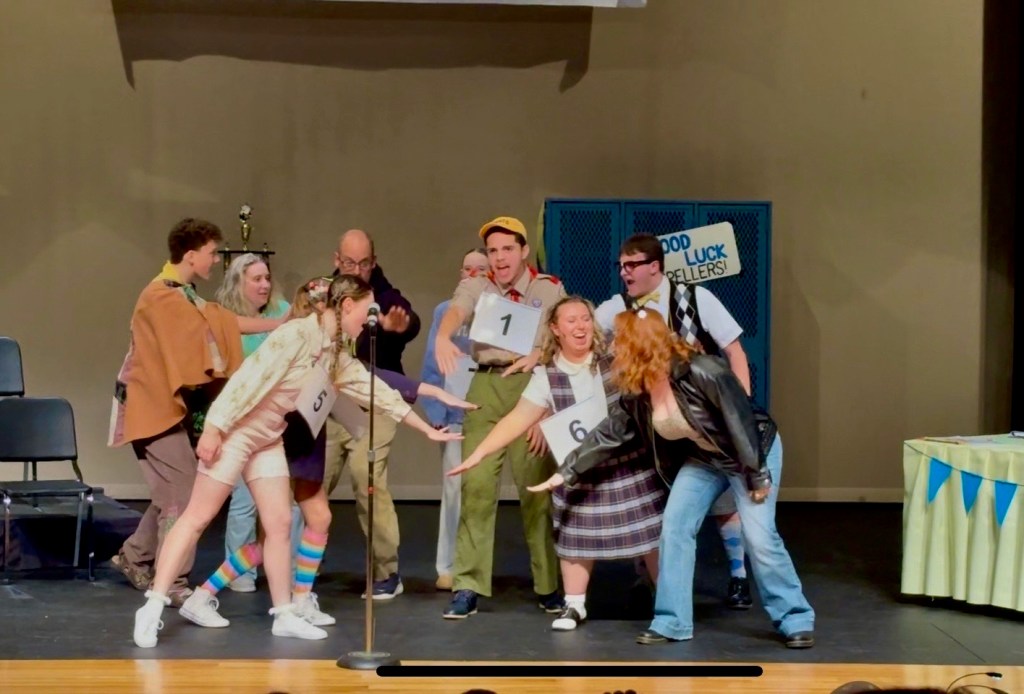
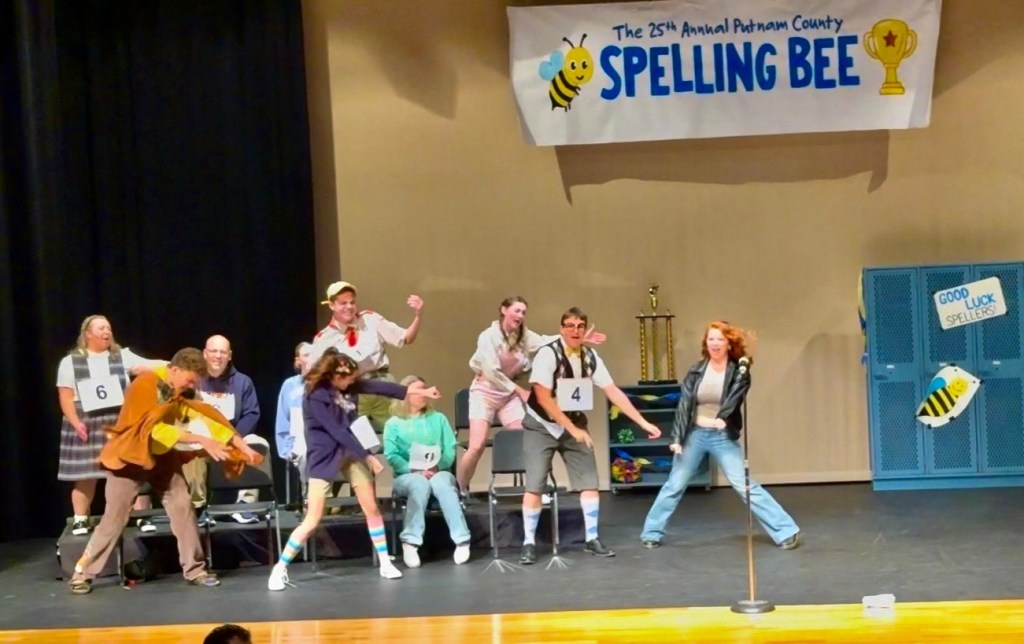
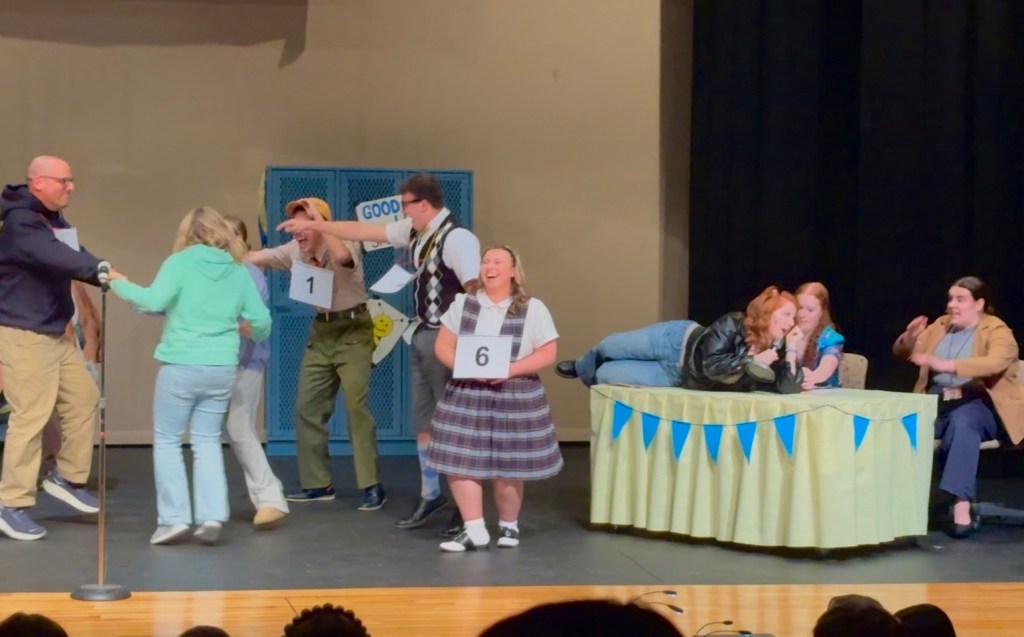
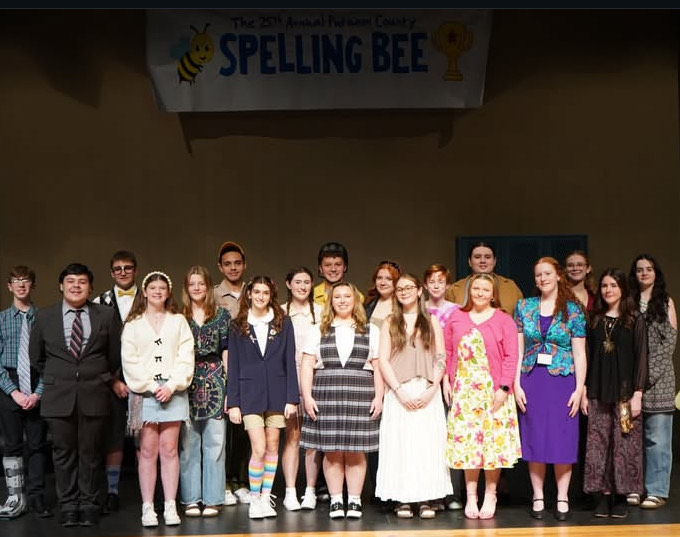
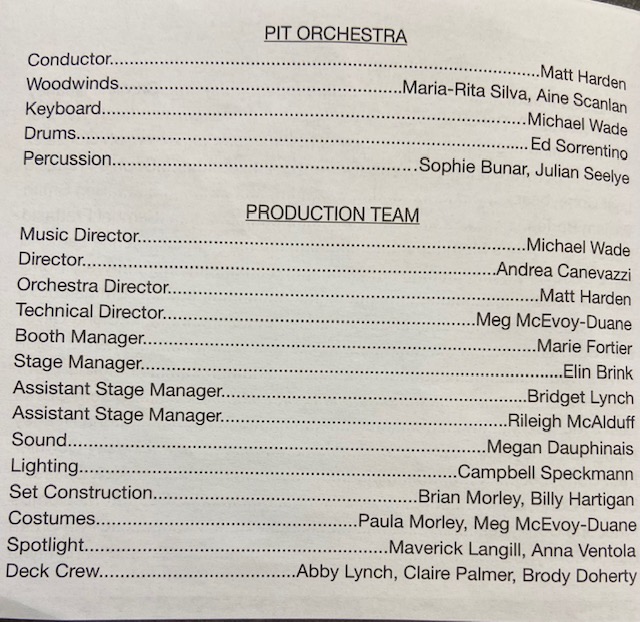
Hanover High School’s 2025 musical production was a huge hit! Rehearsed during the fall, and performed three nights before Thanksgiving, The 25th Annual Putnam County Spelling Bee starred 19 Hanover High School students, with help from many more in the crew and the musical pit (cast, crew and pit lists in photo gallery below).

This musical, as its name suggests, is a comedic and highly dramatized take on an average school county spelling bee. Premiering on Broadway in 2005, it follows six children, each with different quirks and backstories, and three adults throughout the duration of the Bee. While there are several things that make this show unique, even in the world of musical theatre, one notable difference is its use of timing and setting. While many musicals have stories that span days or longer in just one show, The 25th Annual Putnam County Spelling Bee seems to happen in real time. There are no time skips, set changes, or aging characters. The musical lasts just under two hours, and so does the spelling bee it depicts. This, along with the remarkable level of audience interactivity and cast improvisation, allow audience members to feel especially present when attending the musical.

In addition, and perhaps most uniquely, the show is always changing, and even includes volunteers who are participating the the Bee in real time. Every single production of The 25th Annual Putnam County Spelling Bee will vary greatly, even those preformed by the same cast and crew from night to night. This is because the show relies heavily on both the actors’ improvisation and audience volunteers. At the beginning of each performance, four volunteers are called up to the stage from the audience. They, in many cases, have no formal acting experience whatsoever. These volunteers are welcomed to the stage, then treated like every other “contestant” (actor) in the Bee. As the show goes on, the characters, along with the audience volunteers, are given words to spell in front of the crowd. Improvisation is utilized by the onstage actors when the volunteers are called up to spell a word, and to determine their reaction depending on if the word is spelled correctly or not.

As a member of the cast for the HHS production, this show was a one-of-a-kind experience. Seeing the musical come together for opening night, and be received so well by each of our audiences, was such a treat. The 25th Annual Putnam County Spelling Bee is a hilarious yet touching show that incorporates elements I had not previously seen in a musical. Being a part or this production and connecting with the amazing cast, crew, and pit members, is an experience I will never forget.

Maverick Langill, who has worked behind the scenes of many HHS shows and was part of this crew, shared a similar sentiment. “Even though at times it was stressful, it was an amazing show to be part of. I would work crew for this show every year if I could.”

Click on the images below to enlarge.

The Titanic Exhibit: Photo Gallery

By Siena Oliver, ’27

News Editor

Titanic: the Artifact Exhibition showcases authentic items recovered from the doomed ship, the stories behind those objects, full-scale replicas of different parts of the ship, and even an interactive element. Members of The Hawk staff attended a special preview of the exhibit sponsored by Headliners in Education, a nonprofit devoted to student journalism.

One of the largest ships built in its time, the Titanic was deemed unsinkable until it struck an iceberg on its first trip from England to New York City and sank in the icy Atlantic on April 15, 1912. More than 1,500 of the estimated 2,220 passengers and crew died.

Upon arrival, participants of the self-guided tour were assigned paper boarding passes that gave information on a real Titanic passenger; at the end of the tour, the passenger’s fate was revealed. Throughout the tour, visitors strolled past glass cases filled with real items lost in the tragedy, from money to clothing to parts of the vessel itself. Detailed descriptions explained the artifact, who it belonged to and when it was brought by divers from the ocean depths. On the walls, plaques detailed the lives of different passengers and described varied aspects of the voyage of the Titanic.

In addition to the artifacts, there were recreations of the Titanic’s opulent first-class room and cramped third-class cabin as well as one of its majestic grand staircases. Video screens provided footage of diving expeditions and more detail on the pain-staking preservation of the artifacts. A chilled model iceberg allowed visitors to feel the water temperature that escaping passengers would have encountered when the ship went down.

Below is a photo gallery showcasing pictures of the exhibition taken by Hawk editors Siena Oliver, Emily Davis, and Sam Frattasio. For more information on the exhibit, which runs at the Castle Park Plaza in Boston through June 1 before travelling to other cities, visit its website.

Money recovered from the Titanic wreckage.
Pieces of the Titanic ship recovered from the wreckage.

Featured image: The sinking of the Titanic depicted in Untergang der Titanic (translation: “Sinking of the Titanic”), a 1912 illustration by Willy Stöwer

“Harry Potter: The Exhibition”

By Siena Oliver, ’27

News Editor

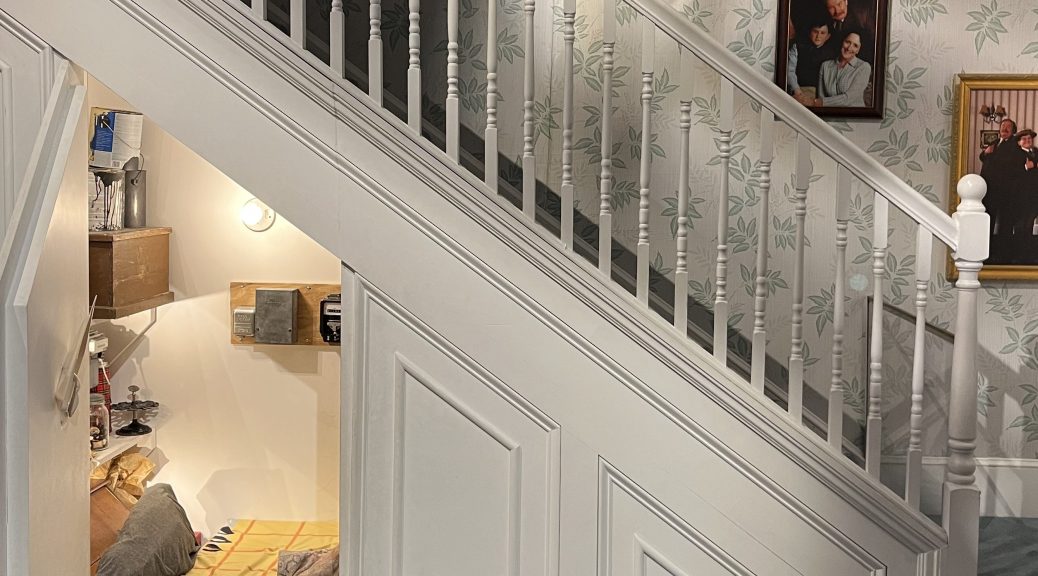
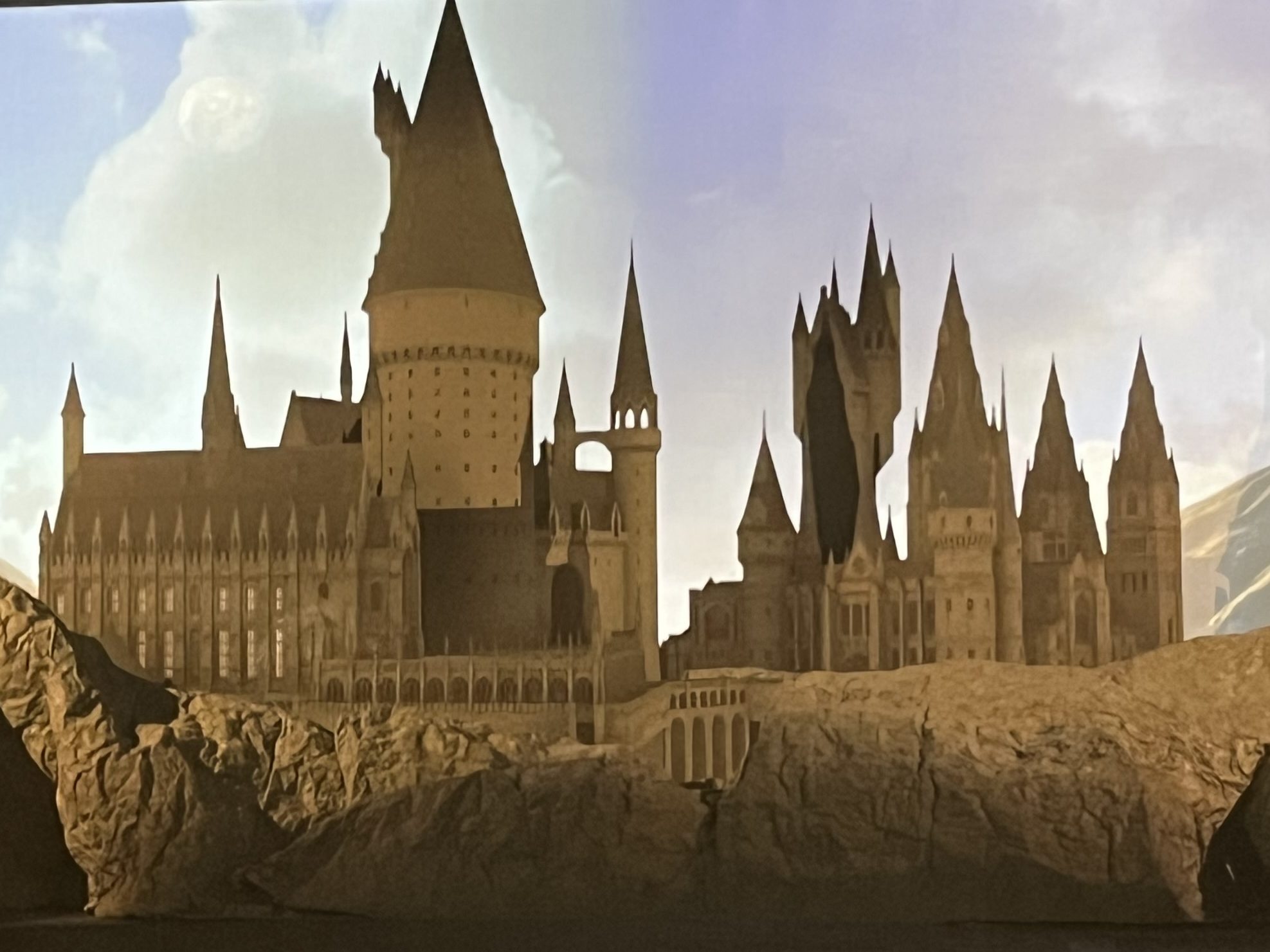
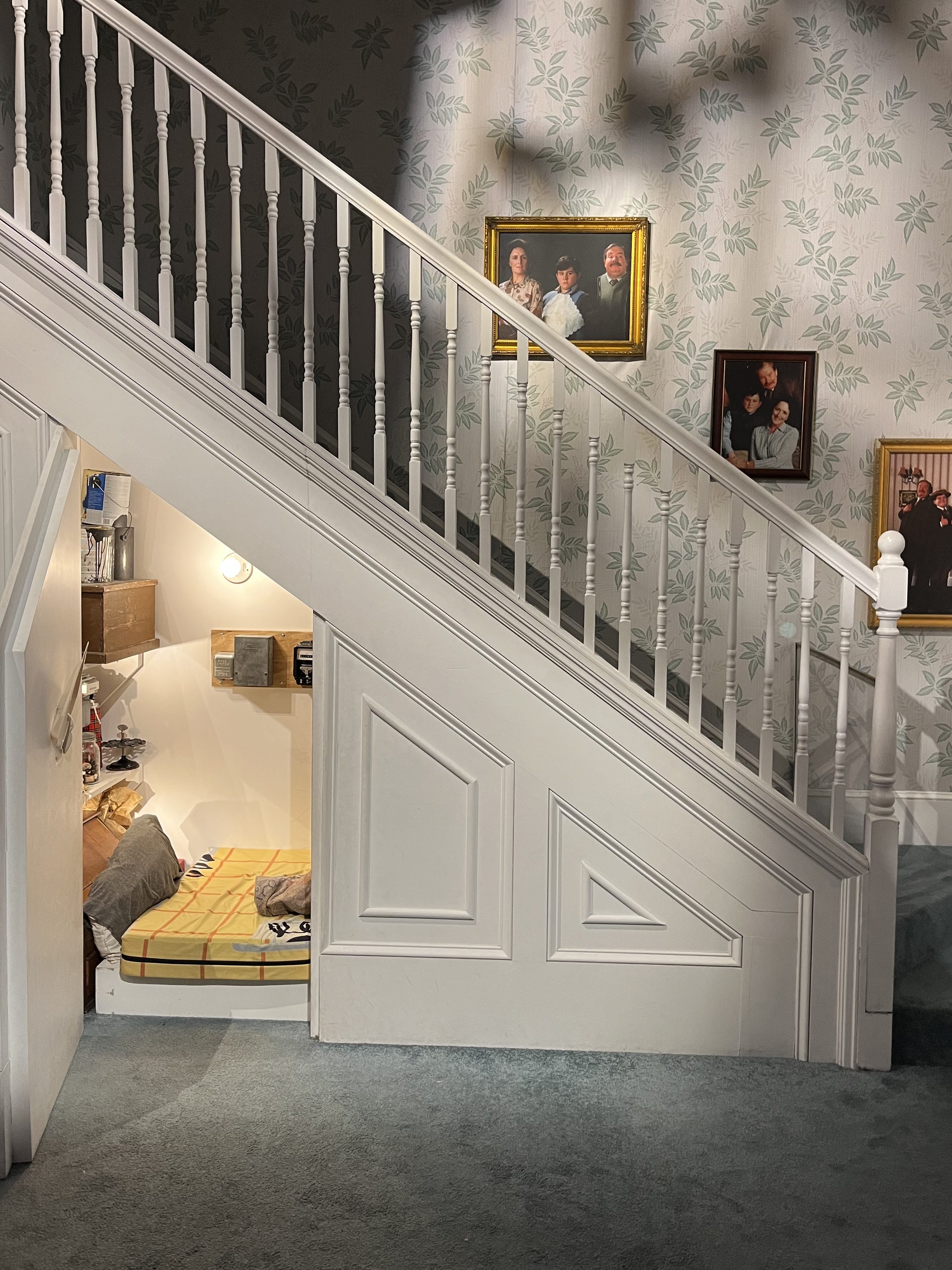
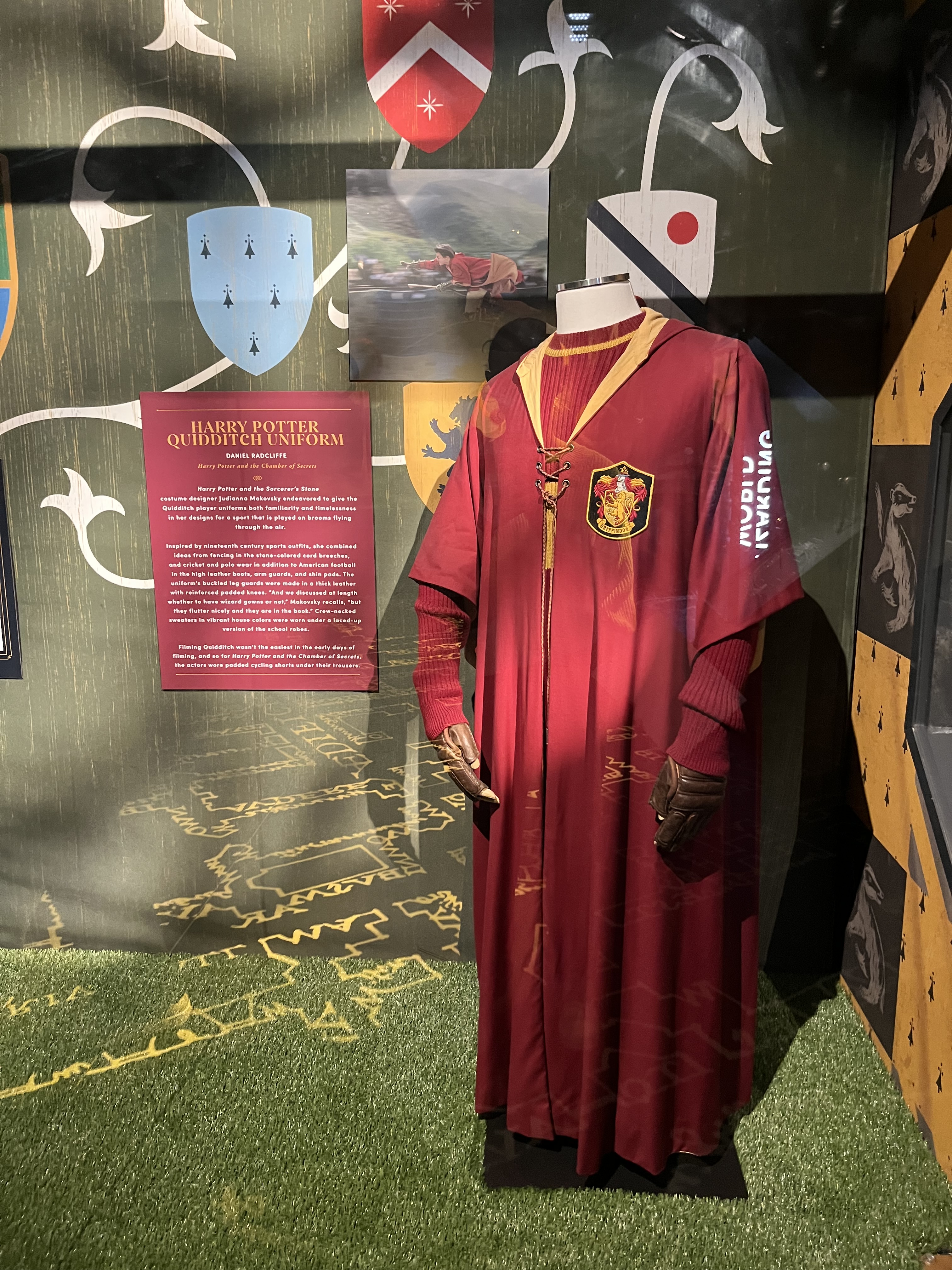
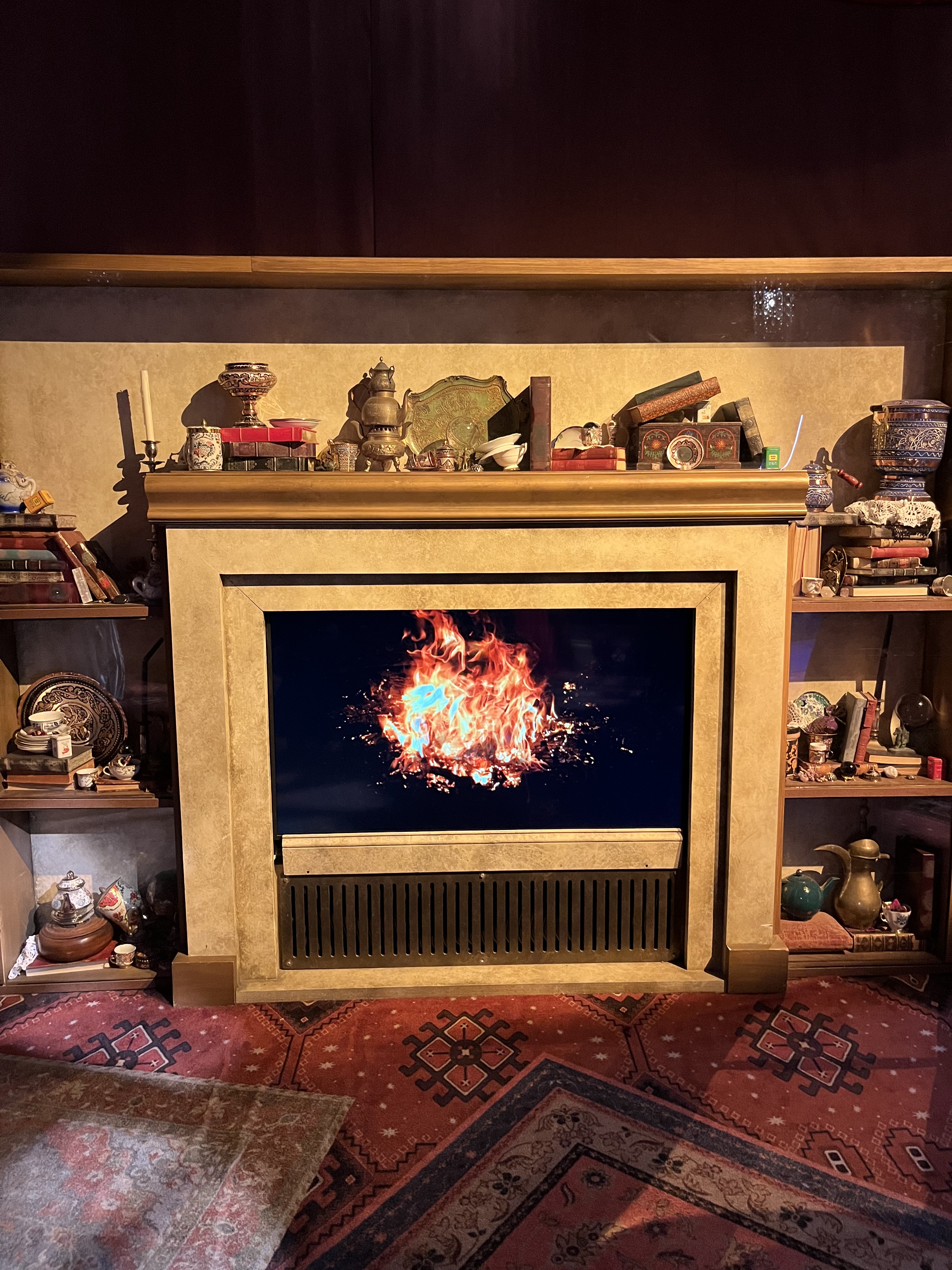
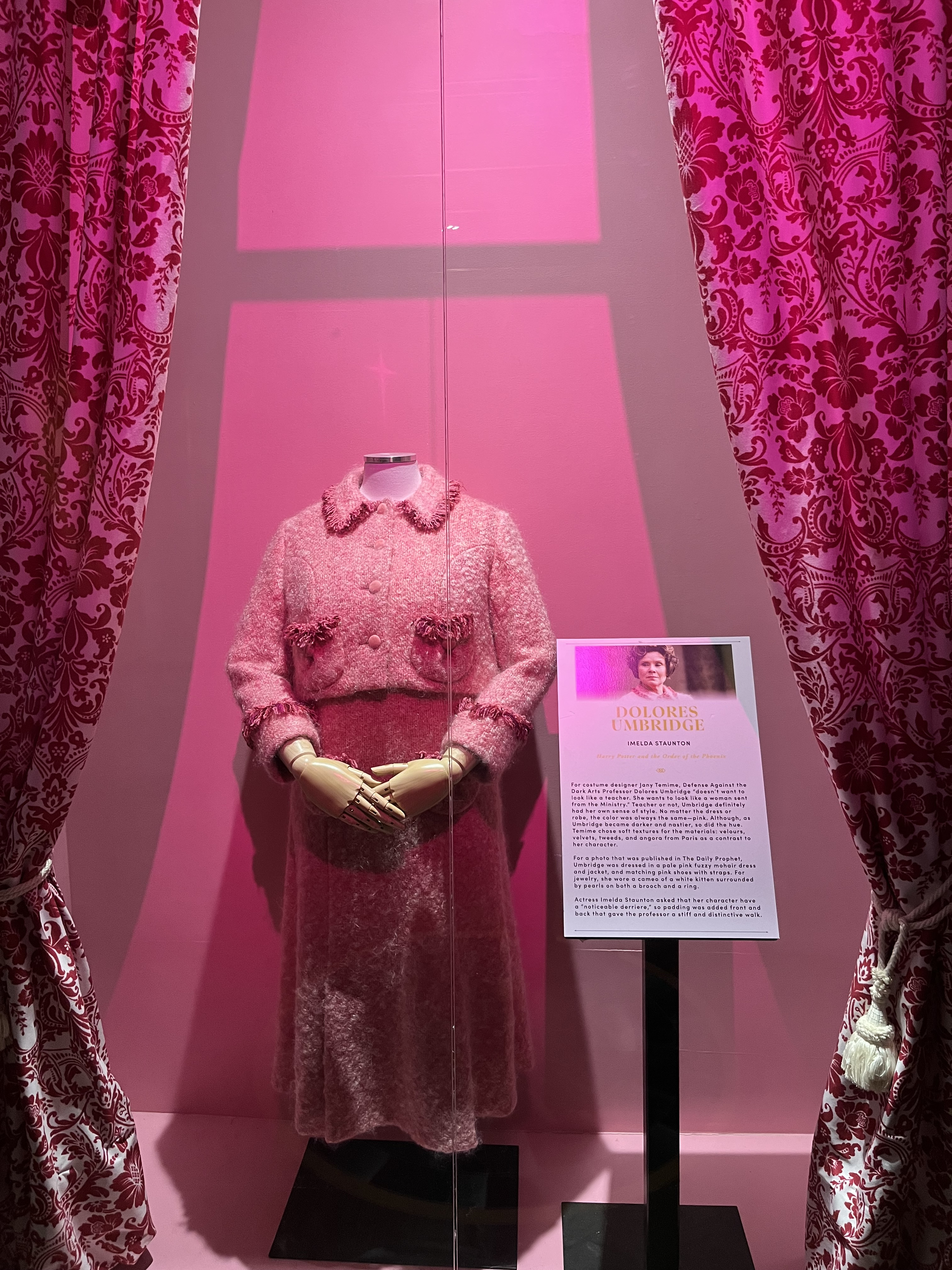
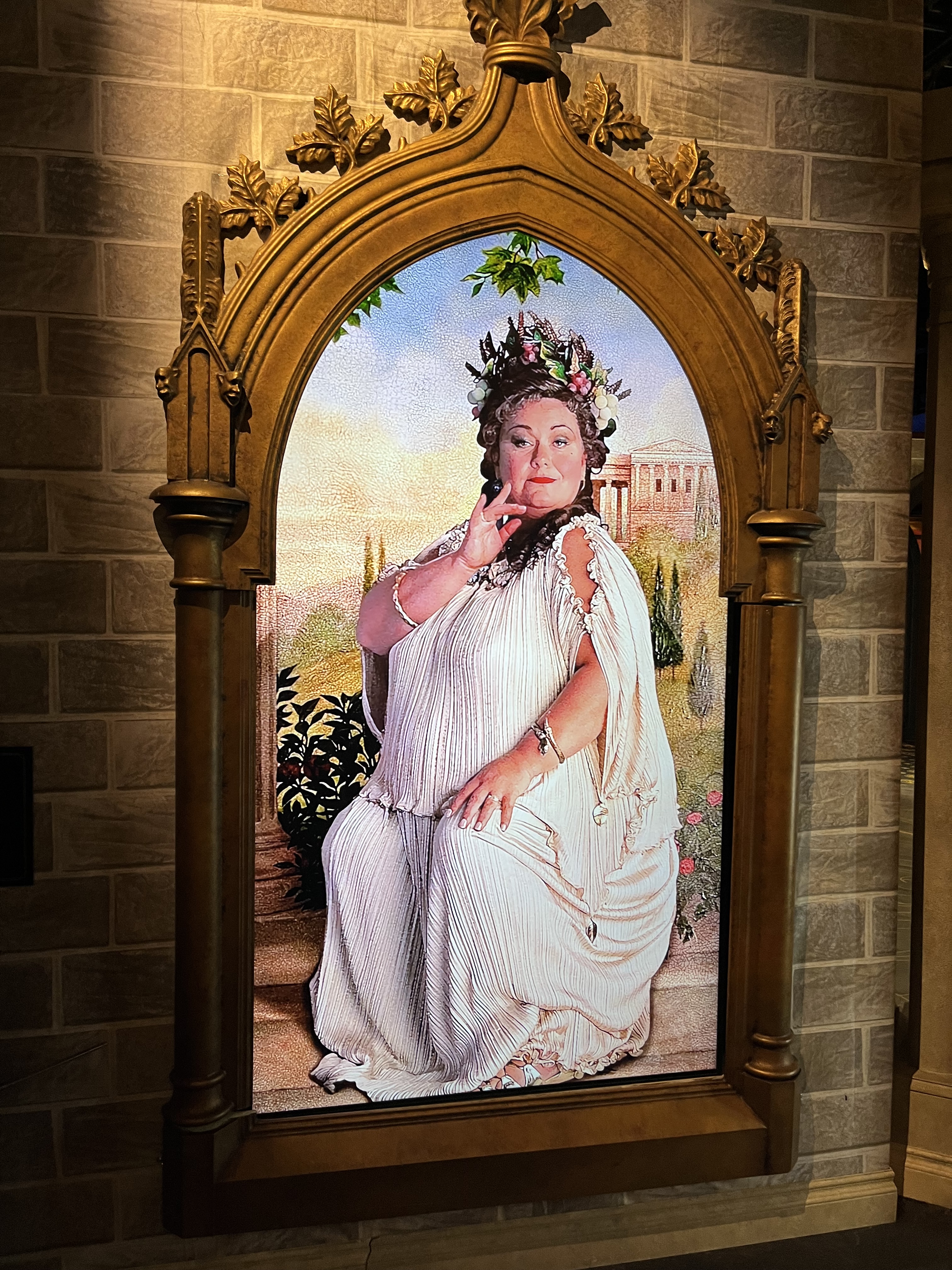
For fans of the iconic Harry Potter books and movies, Harry Potter: The Exhibition, produced by Imagine Exhibitions, gives an interactive and behind-the-scenes view of the Wizarding World. The self-guided tour showcases real props and costumes used in the Harry Potter movies, allows visitors to experience the magic of different rooms like the Hogwarts Great Hall and the Forbidden Forest, and even has a gift shop and Butterbeer waiting at the end. The exhibition is located in Cambridge, Mass., until April 27.

At the beginning of the tour, participants are given a bracelet to act as their “wand” and are encouraged to create an online profile for themselves, which includes their preferred Patronus, wand type, and Hogwarts House. Throughout the exhibition there are several opportunities to scan the bracelet and participate in an interactive activity such as potion-making or scoring in Quidditch. The House Points earned by completing these activities are displayed at the end of the tour.

There are over 20 different Harry Potter themed galleries included, and participants are allowed to take the self-guided tour at their own pace. Despite this, the tour is not overly expansive, and probably won’t take any more than an hour to an hour and 30 minutes to walk through, which can be seen as both a pro and a con. While young children may not get as bored or easily distracted, the relatively short length means that the tour is not extremely large or detailed, and some die-hard Harry Potter fans may be left wanting more.

When visiting the exhibition myself, in a preview for student journalists sponsored by Headliners in Education, two elements stood out the most: the real movie props included in glass cases throughout and the aforementioned interactive activities. Each gallery – dedicated to a specific scene, room, or character from the movies – showcased different props or costumes. It was cool to see the recognizable items and know that they were the actual pieces used during filming. 

In an interview, Katie Restuccia, Director of Sales and Marketing at Imagine Exhibitions, explained the process of securing real movie props for their interactive tour. “All of it came from the Warner Bros. archive,” Restuccia said. “I think it’s just a matter of getting licensed through Warner Bros.” Patrice Cleaves, Senior Director of Sales and Marketing at Imagine Exhibitions, emphasized that the tour is about the Harry Potter films, not the books. “Our exhibition is literally focused and licensed with Warner Bros. for the movies,” she said.

Overall, Harry Potter: The Exhibition is an exciting and magical experience for fans of all ages. The self-guided tour, and interactive games along the way, allow participants to feel as if they are part of the Harry Potter movies, and create an overall positive and engaging experience. Harry Potter fans, you may want to see this before it’s gone!

The exhibit runs at CambridgeSide in Cambridge through April 27, with tickets starting at $25. For more information on the exhibit or to purchase a ticket, visit https://harrypotterexhibition.com/

The Wonderful Life of Ants

By Siena Oliver, ’27

News Editor

Throughout the span of human evolution, there have been great strides made in the areas of technology and science. Individualism has also become an important part of many societies, and has helped lead to many of those innovations. One constant throughout all of this, though, has been conflict. In the form of wars, political strife, or just general disagreements, conflicts have hindered the progress of humans, making it almost impossible to efficiently accomplish even simple community-based goals. The definition of conflict, as seen in the Merriam-Webster dictionary, is “to be different, opposed, or contradictory: to fail to be in agreement or accord.” This suggests that it is possible to avoid conflict by compromising and communicating. These skills, which seem to be hard for humans to use effectively, come naturally to ants. 

Ants, like humans, have populations living almost everywhere around the world. Unlike humans, though, ants are not often engaged in debates or conflicts; according to the National Wildlife Federation, they are able to make meaningful progress in accomplishing goals for the good of their entire community. The collaboration we see in ants provides an obvious contrast to the way that humans live. One of the most valued concepts in human society is freedom: of speech, religion, to protest and disagree. All of these freedoms, laid out in the constitutions of the U.S. and many other countries, are vital in maintaining personal autonomy and expression, and protecting individuals from an overreach of government power. But freedom also opens the doors to conflict. For the U.S, 2021 was a time defined by protests and social change. During the year, many individuals in the U.S. exercised their rights and freedoms by participating in protests and movements for causes such as Black Lives Matter, pro- and anti-vaccination, LGBTQ+ issues, and more. Many of these movements were successful and peaceful, but some instances –such as the politically charged riot against the capitol on January 6th — ended up turning violent. In a 2021 article from the Pew Research Center, 81 percent of Americans felt that the country was “more socially divided” than ever before. This shows that, while valuable, freedoms of opinion and speech can lead to conflict and division. To be clear, I am not proposing that we get rid of human rights. However, it would be beneficial to recognize that, while humans are free to have differing opinions, and these opinions can lead to positive change, our differences should not come at the cost of progress and collaboration. After all, if humans cannot agree on even simple issues, how are we supposed to make meaningful progress in any area?

In an ant colony, each individual helps to make up a part of a larger system. Worker ants, who constitute the biggest part of the colony system, divide up chores such as finding food, creating and defending the nest, and even raising the young, according to Time Magazine. They do all of this in exchange for the protection and benefits of the work of others. Humans, however, tend to follow an ‘every man for himself’ system, where each person focuses on their own goals and survival rather than that of the group. For many, the average lifestyle consists of going to work, and then buying food and other necessities with the money earned from working in order to sustain themselves until the next time they are paid. This system allows for upward mobility in social and economic classes, but because of the need for self-subsistence and self betterment, humans are often more inclined to focus on those personal goals rather than those of the overall community or world. Imagine the potential if humans, like ants, worked together for the betterment of the community as a whole. For an ant, it is easy; it is in their nature to work collectively, but for humans, working together is a choice. The question is, why not choose ‘every man for every man’ rather than ‘every man for himself?’ If we can put our differences aside to accomplish a goal, important progress may be made. 

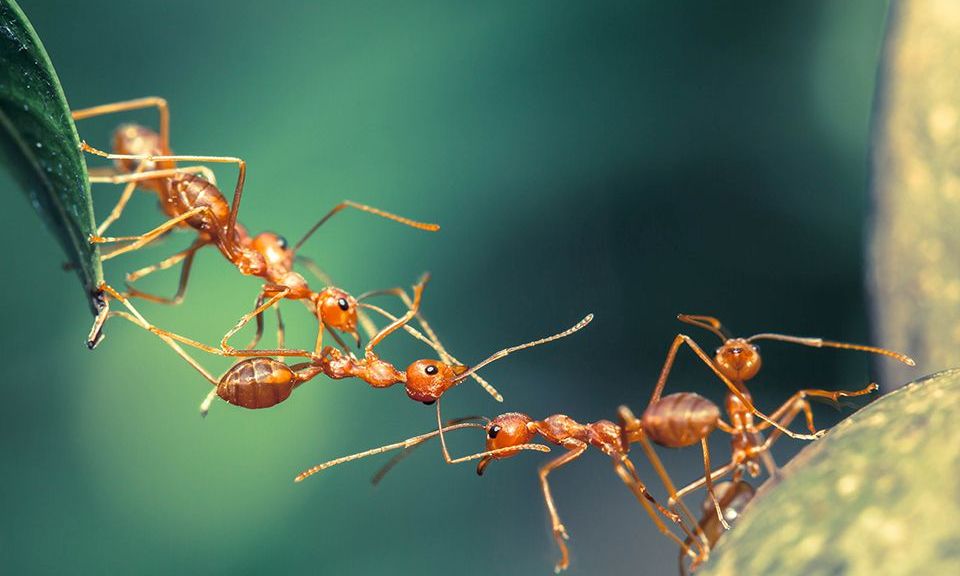
As a species, ants are exceptionally good problem solvers and teamworkers. They are notoriously good at carrying objects much heavier than themselves, but when a piece of food or an object is too large for an ant to carry by itself, a group forms to help. A study published in the Journal of Experimental Biology shows that, when working together, ants can easily transport objects weighing up to 1900 times the mass of a singular ant back to their nest. This collaboration ensures that difficult tasks and problems are easily and efficiently resolved. Humans are capable of leveraging teamwork to complete difficult tasks just like ants, but, often, individual interests or opinions get in the way of working together — especially when a problem is high stakes or very large. Currently, climate change is a problem at the forefront for many people. Climate change is a global issue that requires nations to work collaboratively, but, due to conflicting priorities or political disagreements, progress is moving slowly. A report from the United Nations states that this lack of collaboration has been a barrier to achieving important climate goals. Just as ants work together to solve challenges, humans must use a similar approach to solve large global issues, such as global warming, where individual efforts alone are not enough. 

Think of the world like an ant hill: no different colonies or separate nests, just one large home that needs protection from its residents in order to survive. Think of humans as ants, working together to solve challenges and ensure the health of every other ant in their hill. Ants are often looked at by humans as small and inconsequential, but these small creatures may just be the key to the prosperity and survival of the human race. By setting aside individual interests and opinions, and focusing on the greater good, humans can overcome conflict and make progress on pressing global issues. So, perhaps it’s time for humans to take a closer look at the life of an ant, and apply their collaborative ways to our own lives. 

Sources

“Ants.” National Wildlife Federation, http://www.nwf.org/Educational-Resources/Wildlife-Guide/Invertebrates/Ants#:~:text=Most%20species%20live%20in%20soil,than%2010%20times%20their%20weight.&text=Ants%20use%20their%20keen%20senses%20to%20communicate%20with%20colony%20members. Accessed 1 Jan. 2025.

Blanchard, Heather Campbell and Benjamin. “What Ants Can Teach Us about Working Together.” Time, Time, 17 Feb. 2023, time.com/6256519/ants-working-together-ant-man-and-the-wasp-quantumania/.

“Conflict Definition & Meaning.” Merriam-Webster, Merriam-Webster, http://www.merriam-webster.com/dictionary/conflict. Accessed 1 Jan. 2025.

Devlin, Kat. “People in Advanced Economies Say Their Society Is More Divided than before Pandemic.” Pew Research Center, Pew Research Center, 23 June 2021, www.pewresearch.org/global/2021/06/23/people-in-advanced-economies-say-their-society-is-more-divided-than-before-pandemic.

“Inadequate Progress on Climate Action Makes Rapid Transformation of Societies Only Option – UNEP.” UN Environment, http://www.unep.org/news-and-stories/press-release/inadequate-progress-climate-action-makes-rapid-transformation. Accessed 1 Jan. 2025.

Jeb.Biologists.Org, jeb.biologists.org/content/222/17/jeb206821. Accessed 1 Jan. 2025.

“A New Era of Conflict and Violence.” United Nations, United Nations, http://www.un.org/en/un75/new-era-conflict-and-violence. Accessed 1 Jan. 2025.

The Protests and Unrest That Defined 2021 – The Washington Post, http://www.washingtonpost.com/world/interactive/2021/protests-world-year-review/. Accessed 1 Jan. 2025. 

Two Powerful Reads: The Crucible and Born a Crime

By Siena Oliver, ’27

News Editor

The Crucible 

This year in English class I read The Crucible, a play by Arthur Miller that details the events of the Salem Witch trials. The play is set in a fictionalized version of Salem, and tells the story of several main characters, including the Proctors, the Danforths, a group of girls lead by Abigail Williams, and Reverends Parris and Hale. The story begins with two little girls who have mysteriously fallen ill after being seen dancing in the woods. Within hours, rumors of witchcraft have run rampant throughout the heavily religious town. These religious-based fears lead to many unfounded accusations, and courtroom persecutions, of different townspeople who are believed to be witches.

The Crucible explores themes of guilt, justice, and loyalty, and warns about the dangers of mass hysteria and corruption in the courts. The play is an allegory for the period of McCarthyism in the 1950’s, which the author, Miller, was directly involved in. During this time, the fear of Communism in the United States led to rampant accusations and Congressional hearings. One especially interesting choice Miller made was to include small bits of extra information relating to, but not in, the play,  during the overture and in between acts. 

Personally, as is the case with many books assigned in school, it was not my favorite. That’s not to say it was bad, but I don’t love reading plays in general. Overall, I thought the story was interesting and it was a great book to have discussions on in class, but the fact that it was a play made it harder for me to enjoy. 

Born a Crime: Stories from a South African Childhood

Born a Crime by Trevor Noah is actually another book I read for my English summer reading this year, but I had read it on my own beforehand and already loved it. The book is a memoir about Noah’s experience living in South Africa as a child of mixed-race during Apartheid. This era in history, from 1948 to the early 1990s, was tumultuous because of the country’s legalized discrimination against Blacks. The book is made up of stories from different times in his childhood, and is told in a comedic tone. Themes include family, religion, and race, and Noah does a great job of balancing serious topics with humor. 

In my opinion, this book is amazing, especially in audiobook form. I have both read the book and listened to it, and, while both versions are great, the audiobook, narrated by Trevor Noah himself, is hilarious. I would recommend this book to anyone and everyone. Even if you dont think it’s your type of book, if you try it out I’m sure you’ll end up loving it. 

Trick or Treating for Teens, According to Parents

by Siena Oliver, ’27

News Editor

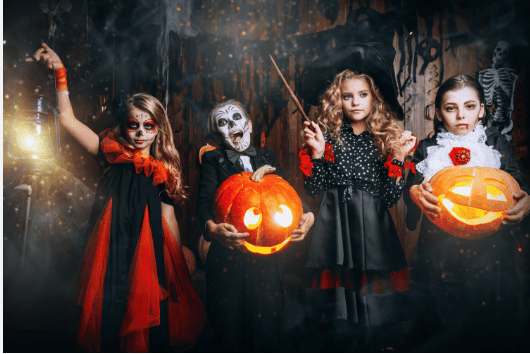
According to a recent survey by CBS News, 25 percent of people say that Halloween is their favorite holiday. Despite this, many give up on the tradition of trick or treating at some point during their teenage years. This tends to happen for a few reasons, including embarrassment over participating in a ‘childish’ activity, social pressure to stop, and interest in other activities such as parties or hanging out with friends. As a high schooler myself, I too have elected to stop trick or treating. Instead I will be handing out candy at my door, which still allows me to dress up and enjoy the festivities. The motivations for children to stop trick or treating are fairly straightforward, but their parents’ views on that decision are a bit more varied. 

The two graphs below show information taken from an informal survey of eight Hanover High School parents comparing the ages their children stopped trick or treating to the age they believe it is best to stop trick or treating. 

While many parents seemed to agree that sometime in high school is, in fact, the right age to stop participating in the tradition, most also expressed sadness that their children had given up trick or treating.

“Like a part of their childhood was lost forever,” said the mother of junior Sienna Lamond. 

Adam Oliver, another parent in the Hanover community, said he was perfectly fine with older kids trick or treating around the neighborhood. “As long as they’re not interfering with the younger kids having fun,” he said.

The rest of the parents surveyed echoed this statement, agreeing that older groups of teenagers trick or treating is only a problem when they decide to cause mischief or be disrespectful. 

While parents and their kids seem to agree on the general age that it is appropriate to stop trick or treating, that decision has as much of an impact on the adults who are watching their children grow up, as on the kids themselves. As grandmother Kathy Kacergis put it, “you have to keep the spirit of fun things alive,” which sums up the bittersweet sentiment of the parents on this topic.