
By Sophia Weiner, ’27
Staff Writer
Every year around March 17, many people wear green, go to parades, and celebrate St. Patrick’s Day. But do they know what the holiday is really about? St. Patrick’s Day honors Saint Patrick, the patron saint of Ireland, who is known for spreading Christianity throughout the country in the 5th century. Over time, and with the migration of the Irish to America, the holiday has grown into a mix of history, culture, and fun traditions. Many of the symbols we associate with St. Patrick’s Day – like leprechauns, shamrocks, and pots of gold – actually have deeper meanings connected to Irish culture and stories.
One of the most well-known symbols of St. Patrick’s Day is the leprechaun, a small and mischievous fairy from Irish folklore. Leprechauns are usually recognized as tiny, old, bearded men dressed in green who enjoy playing tricks on people. According to legend, they are shoemakers who hide their gold at the end of the rainbow. If someone is able to catch a leprechuan, the creature is supposed to grant three wishes in exchange for its freedom. Even though leprechuans are not directly connected to Saint Patrick himself, they became part of the holiday because they come from traditional Irish stories.
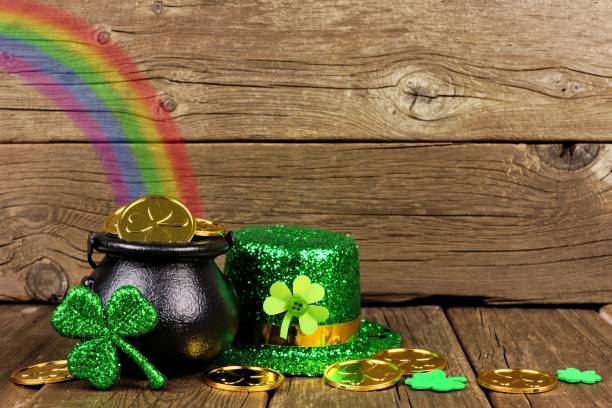
The idea of a pot of gold at the end of a rainbow also comes from Irish folklore. The legend says that leprechauns hide their gold in pots and keep it only at the end of the rainbow, which is nearly impossible to actually reach. This symbol of the pot of gold represents luck and the idea of chasing something valuable or magical, even if you may never reach it. Over time, the pot of gold became another fun and recognizable symbol of St. Patrick’s Day, even though it is more connected to folklore than the real history of Saint Patrick.
The shamrock is one of the most important symbols of St. Patrick’s Day because it connects directly to Saint Patrick. It is a small three leaf clover that, according to legend, Saint Patrick used to explain the idea of the Holy Trinity, which in Christian faith represents the Father, the Son, and the Holy Spirit. Because of this, the shamrock became a symbol of Irish identity and religion. Today, people throughout the world wear shamrocks or the color green on St. Patrick’s Day to show pride in Irish culture and take part in the tradition.
Overall, St. Patrick’s Day is more than just wearing green and going to annual parades. While the holiday started as a way to honor Saint Patrick, it has grown to include Irish traditions, myths, and symbols that make the holiday more fun and exciting today for people around the world. Understanding where these symbols come from helps us see that St. Patrick’s Day is not just about luck or leprechauns, but also about history, culture, and how traditions can change over time.
 The Hawk