Category Archives: Opinion

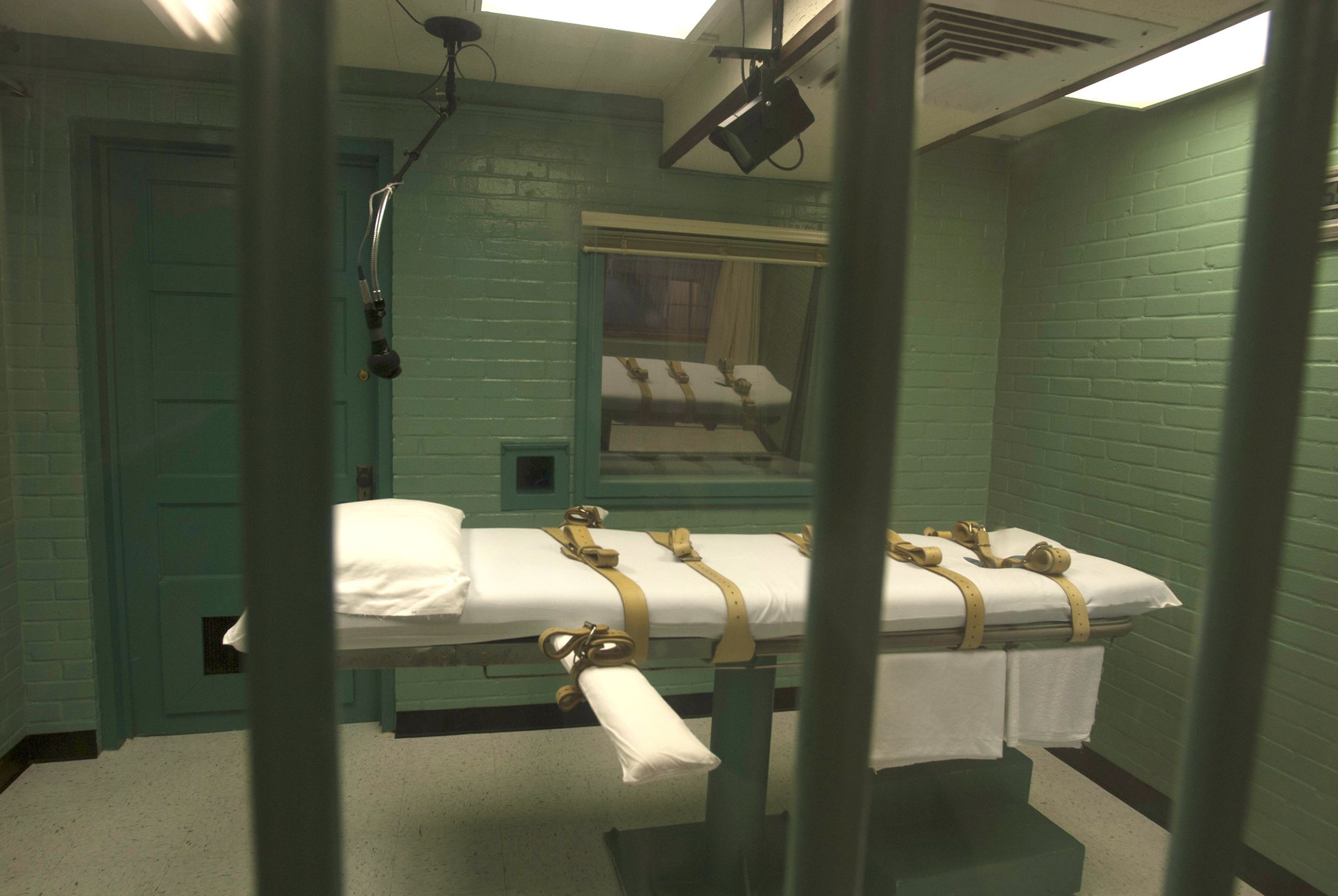
Should We Still Use the Death Penalty?

By Ryan Costello, ’27

Staff Writer

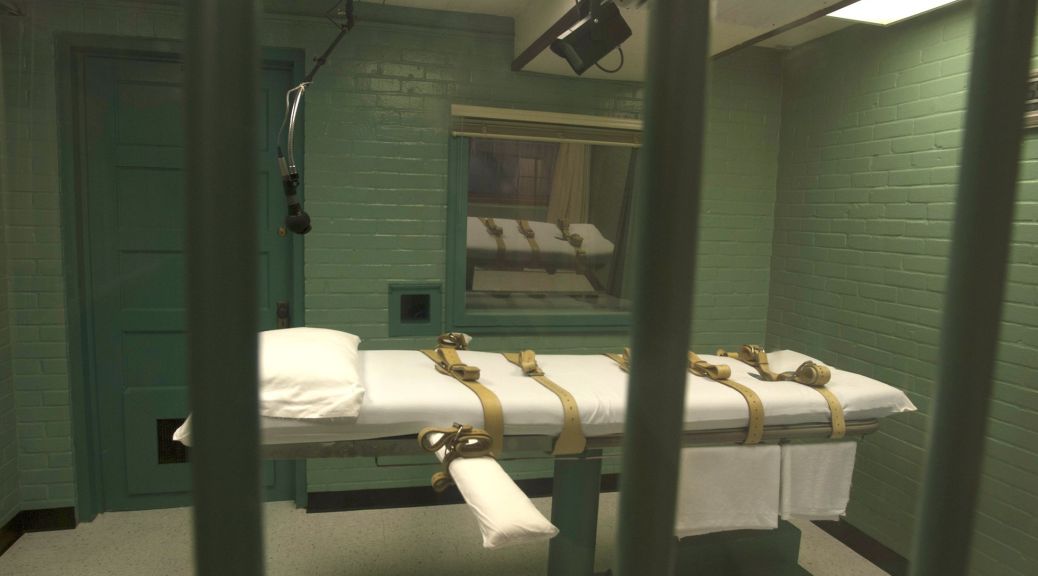
The death penalty is one of the most controversial and troubling punishments in modern society. While some argue that it provides justice to victims’ families or prevents future crimes, a deeper look shows that capital punishment fails in many ways.

One of the strongest arguments against the death penalty is the possibility of executing innocent people. Courts and juries have made mistakes. The Innocence Project, a nonprofit that works to exonerate people who are wrongly convicted, claims that since 1973, more than 190 people in the United States have been sentenced to death, often after spending decades behind bars for crimes they did not commit. DNA testing and improved investigative techniques have proven there can be many errors in the legal system. Once someone is executed, there is no way to correct such a mistake. No judicial system can reverse such a permanent punishment.

Another argument is that it is more expensive and more time consuming to use the death penalty than to sentence someone to life in prison. The death penalty is more expensive than life in prison because death penalty cases require longer trials, more lawyers, and years of appeals. Housing inmates on death row also costs more due to higher security needs, ultimately costing an average of $1 million taxpayer dollars per inmate. An inmate can sit on death row for as long as 20 years.

Some people believe that the death penalty is beneficial because it holds people accountable for their heinous actions and provides justice to victims and their families. While there may be some truth to this, the negatives hold more of an impact.

That is why the 27 states where capital punishment remains legal should do away with the procedure. The cost, in terms of taxpayer money and potentially life-ending mistakes, is too high to pay.

Featured image: https://d.newsweek.com/en/full/326540/rtr3hrgi.jpg

Should Cell Phone Hotels Be ‘Closed’?

By Danny Campbell, ’27

Staff Writer

Most likely, everyone has an opinion about the Hanover High School student cell phone policy by now, since we’re into its second year. To minimize distractions, the handbook restricts students from using cell phones in class without the teacher’s permission. Most teachers require students to place their phones in the classroom “phone hotel” (better known, in my opinion, as the “prison”), or keep them in student backpacks. This is enforced with varying levels of strictness depending on the teacher. The policy, implemented by district administration and approved by School Committee, is part of a state and nationwide trend toward restricting cell phone use in schools. I personally think the cell phone “hotels” are a waste of time. They not only show distrust of students, but also could lead to safety issues.

In the last few years, cell phones have become a major part of our lives, and nearly everyone in the United States now has a phone that they use frequently. I can almost guarantee that you – the person reading this page – have spent large chunks of time only on your phone, letting a platform like YouTube, TikTok, Instagram or games consume hours of your day. Many have fallen victim to it, admit it! This is why school districts across the country started limiting or restricting cell phones in school. The Massachusetts legislature is considering a bill this year to ban students from using cell phones and other personal electronic devices during the school day. Most teachers think that getting rid of the phones in class will automatically make the students pay more attention to them during their lessons. Other supporters of the policies feel limiting phones will reduce bullying and improve students’ mental health.

But we need to note three things about these arguments. First of all, NOT every single student in the school is tied to their cell phone! This is a very big thing that I feel people completely ignore when discussing whether or not to restrict phones. There are students who only bring their phones to check the time, text important people during their downtime, or keep in contact with their parents during school hours. So restricting our only form of outside communication is very unfair for those of us who barely take them out.

Secondly, the policy can cause safety problems during an emergency. Imagine that a fire or some other catastrophic event happens that could lead to school being evacuated. If students are as attached to their phones as administrators seem to think, the first thing they’ll do in an emergency is try to get their phones from the “hotel.” This could cause injuries and a delay in getting students out of the building quickly.

Finally, having to put phones in a classroom “hotel” makes it possible for students to forget them when the bell rings for dismissal. This means students have to interrupt their next class to come back and retrieve them, or wait until the next day to pick them up if school is over. It could even lead to theft of the often expensive devices.

I think a better approach to the cell phone issue would be to teach students how to use the technology responsibly. This could be taught in a unit for middle school health class, during Mrs. McHugh’s library sessions, or through auditorium presentations like the ones we have about topics like drug abuse and lockdown drills. Students need to be taught the benefits of moderating screen time to take care of their mental health. If we can do this, there won’t be the need for phone “hotels.”

Why Federal Cuts Could Change The Face of Education

The Department of Education is at risk of being dismantled after the President signed a March executive order to reduce national debt and limit federal overbearance on schooling. Following this action, the Supreme Court allowed the current administration to fire more than 1,000 government employees – half the department’s workforce. The Department of Education is responsible for billions of dollars in student loans and funding for public schools, which allows millions of American students to get their education. The department also enforces civil rights laws that protect many vulnerable students. What will the future look like for students?

“We are going to be returning education, very simply, back to the states, where it belongs…”

President Donald Trump, Executive Order 14242, “Improving Education Outcomes by Empowering Parents, States, and Communities”

The President claims eliminating the Department of Education will not take away from “K-12 students, students with special needs, college student borrowers, and others who rely on essential programs.” However, according to the executive order, quite the contrary will happen: those involved with the department will continue their affairs as usual, but educational authority will be restored to the states. The department costs more than $10 million per year to run, according to President Trump, an egregious amount for an office that “does not educate anyone.” In addition, he points to reading and math scores which he claims are near historic lows across America, with over 70 percent of 8th graders nationwide below proficient. This is further proof, the President argues, that the current federal Department of Education is not working.

But the department manages a significant amount of money, including $1.6 trillion in student loan debt. President Trump claims the loans will simply be managed by another federal department: Treasury, Commerce or the Small Business Administration. Critics of the plan fear there will be delays or disruptions to loans that will interrupt or terminate borrowers’ educational plans. And the department is responsible for enforcing civil rights laws in federally funded schools, including anti-discrimination laws protecting vulnerable populations. Just this month, according to the Associated Press, officials have had to rehire dozens of workers from the department’s Office for Civil Rights to handle a backlog of discrimination complaints (more than 200 were laid off in the spring). How will these matters be processed without the federal department? In addition, the department funds special education services for students with disabilities and foreign-born residents, including immigrants, refugees, asylum seekers, and more. This helps all parties receive an individualized education suited to their needs. Critics of the executive order argue that eliminating the department will affect the quality and equality of education.

According to conservatives, there is a trend of “indoctrination” of liberal ideologies within the American education system. For example, there is significant public backlash against alleged incorporation of subjective topics into college curricula, such as a professor’s personal take on the current administration, how they believe politics could be improved, and criticism of viewpoints that are not their own. This perceived agenda in an educational environment is a significant motivator for Trump’s executive order to eliminate the department as a sort of reform and reprimand. But by taking away the department, significant funding for public schools disappears, along with legal protections, and that loss negatively affects teachers and students alike.

Despite President Trump’s executive order, Congress would need to approve the elimination of the department, and that would require the cooperation of Democratic lawmakers in addition to proponents of Trump. Many Americans wonder whether it is likely that such a bill could pass, and there are potential constitutional and moral concerns from both sides. Multiple federal laws relating to education, such as those protecting people with disabilities, would need to be reevaluated to ensure no federal authority is breached in this process. Teachers unions, parent groups and other education advocates are fighting the move in court.

Many Americans continue to debate this issue and the implications of a future without the Department of Education: What does this mean for oversight of local educational agencies? What happens to federally funded educational programs? What about the billions in higher education grant funding? 

Works Cited

Babinski, Leslie. Policy 360 Episode 165 with Leslie Babinski. sanford.duke.edu/sites/default/files/165_Transcript_Leslie_Babinski.pdf. Accessed 14 Oct. 2025.

“Educational Resources for Immigrants, Refugees, Asylees and Other New Americans.” U.S. Department of Education, 2015, http://www.ed.gov/teaching-and-administration/supporting-students/educational-resources-for-immigrants-refugees-asylees-and-other-new-americans.

Faguy, Ana. “What Does the US Education Department Do – and Can Trump Truly Dismantle It?” BBC, 15 Nov. 2024, http://www.bbc.com/news/articles/c79zxzj90nno.

“Improving Education Outcomes by Empowering Parents, States, and Communities.” Federal Register, 25 Mar. 2025, http://www.federalregister.gov/documents/2025/03/25/2025-05213/improving-education-outcomes-by-empowering-parents-states-and-communities.

Preede, Ken. “Abolishing the Department of Education: Can It Happen and How Would It Impact Schools?” Parkerpoe.com, 2024, http://www.parkerpoe.com/news/2024/12/abolishing-the-department-of-education-can-it-happen-1.

School, Sanford. “Explainer: What Dismantling the Department of Education Really Means [Podcast].” Sanford School of Public Policy, 24 Mar. 2025, sanford.duke.edu/story/explainer-what-dismantling-department-education-really-means-podcast/.

Trump, Donald. “Improving Education Outcomes by Empowering Parents, States, and Communities.” The White House, 20 Mar. 2025, http://www.whitehouse.gov/presidential-actions/2025/03/improving-education-outcomes-by-empowering-parents-states-and-communities/.

U.S. Department of Education. “Statement on President Trump’s Executive Order to Return Power over Education to States and Local Communities.” U.S. Department of Education, 20 Mar. 2025, http://www.ed.gov/about/news/press-release/statement-president-trumps-executive-order-return-power-over-education-states-and-local-communities.

Walker, Tim. “How Dismantling the Department of Education Would Harm Students | NEA.” Nea.org, National Education Association, 4 Feb. 2025, http://www.nea.org/nea-today/all-news-articles/how-dismantling-department-education-would-harm-students.

Immorality and Dangers of Vigilante Justice

By Billy Hersey, ’27

Editor in Chief

Vigilante justice, or taking the law into one’s own hands, has been happening in the United States since before its founding. When imagining what vigilante justice looks like, people may picture a headstrong hero that roots out corruption, but the only difference between a terrorist and vigilante is public opinion. For example, to a Patriot, the winning of the American Revolution was a triumph and celebration of freedom. However, to a Loyalist, the war was a disaster that caused the loss of their lands and their displacement to Canada.

Vigilante justice can cause harm to innocents. This was notably done by the Sons of Liberty in years before the Revolution when tax collectors were frequently tarred and feathered as an act of defiance against the British Crown. To be tarred and feathered was painful, humiliating, and often left people scarred or burned. Whether the actions of the Sons of Liberty were justified is left to the individual to decide, but at least in my opinion, innocent people should never be hurt for political gain.

Of course, rooting out corruption in society sounds great, but before acting, people need to consider all perspectives on the issue and the veracity of the information they read or hear on the subject. A lot of times, people who commit these acts are manipulated and turned radical by the podcasts, videos or social media from which they form their political opinions. In some cases, these people are also mentally unstable, which, when paired with propaganda, can heavily influence people toward making bad decisions. Though there certainly is corruption in the government, people need to trust in the courts and our justice system. All people are entitled to a fair trial in front of a jury; whether the defendant is guilty or not, to deny that right is a crime in itself. When vigilantes strike, they are acting as judge, jury, and executioner.

The most recent example of vigilante justice was the murder of Turning Point USA leader Charlie Kirk, who was shot to death during an appearance on a college campus in September. Kirk was a determined and strong debater who was credited with gathering support for conservatism among younger voters. Kirk swayed public opinion against abortion, gun control and countless other issues. Kirk’s opponents may point out that the legislation and ideas he preached appealed mostly to white men, causing more harm than good, especially to the detriment of women and minority groups. This leaves Kirk’s legacy uncertain; however, he was a vocal advocate of peaceful free speech and political debate who deserves respect for his courage to create change. Many people in both political parties said kind words on social media and emphasized the immorality of political violence, but others celebrated the actions of the clearly troubled shooter, who was arrested days later. Reactions to Kirk’s death were more evidence of the growing political divide in this country. Even if you don’t agree with what Kirk stood for, you should at least recognize he was human and didn’t deserve the death chosen for him.

The December 2024 murder of United Healthcare CEO Brian Thompson also begs the question of vigilante or murderer. Of course, most people would agree that murder is wrong, yet upon hearing of Thompson’s death, many celebrated. United Healthcare is notorious for having one of the highest percentages of claim denials among all health insurers. By denying claims for expensive but possibly life-saving care, critics argue, this corporate giant is indirectly responsible for the deaths of thousands. Though Thompson isn’t completely to blame for the company’s policy that seems to put profits over human lives, he could have tried to make change. As a CEO he certainly had some power to enact at least small reforms, but any change that would have hurt the company’s bottom line would have likely been vetoed by the company’s board. Still, that doesn’t excuse the actions of alleged shooter, who is awaiting trial. Killing one man doesn’t bring back all the people killed by claim denial. Premeditated murder and crimes in the heat of anger don’t bring justice. If people truly want to make lasting change they should confront corporate giants in the courts. If the alleged shooter had done this, Brian Thompson’s children would still have a father.

The attack on the US Capitol on January 6, 2021 could be considered another example of people trying to take the law into their own hands. Armed, right-wing protestors gathered in front of the building after a rally by Donald Trump, the outgoing president at the time, who had been pushing the narrative that the 2020 election had been “stolen” and Joe Biden was not the rightful winner. Against overwhelming evidence and ballot recounts in multiple states, Trump and his supporters insisted the election had been stolen and their country was in danger. With Trump’s call to action in their ears, the protestors marched to the Capitol, where tensions quickly escalated and the rally turned to a riot. Police forces stationed at the Capitol to maintain peace were easily overwhelmed, and rioters entered, intent on harming members of Congress and disrupting the certification of Biden’s election. This event is largely regarded as a stain on American history, and the multitudes of people injured as well as the 10 people whose deaths were related to the attack are proof of the dangers of propaganda. Some, including President Trump and some Republican officials, still believe that there was election fraud and praise these domestic terrorists as heroes and true Americans.

Wherever you stand ideologically, vigilante justice must stop. Although the battle to change government policy can be long and riddled with opposition, we have systems in place to create change. People can petition their representatives or senators and they can peacefully protest. This type of violence only strengthens the determination of the opposition. Assassination attempts on President Trump and Charlie Kirk have only widened the ideological divide and furthered political polarization. One House representative, Marjorie Taylor Greene, has even expressed desire for a “national divorce” along party lines! Unfortunately, hatred between liberals and conservatives is strong, but one issue that should have bipartisan support is ending political violence. Silencing people over ideological disagreements is primitive and contradicts the values upon which this country was founded.

Works cited

BBC. “Capitol Riots Timeline: What Happened on 6 January 2021?” BBC News, 2 Aug. 2023, http://www.bbc.com/news/world-us-canada-56004916.

“Charlie Kirk’s Legacy Deserves No Mourning.” The Nation, 12 Sept. 2025, http://www.thenation.com/article/politics/charlie-kirk-assassination-maga/.

Dorning, Courtney, et al. “There’s Anger behind the Internet’s Reactions to the Death of UnitedHealthcare CEO.” NPR, 10 Dec. 2024, http://www.npr.org/2024/12/10/nx-s1-5223471/theres-anger-behind-the-internets-reactions-to-the-death-of-unitedhealthcare-ceo.

Huo Jingnan. “People Are Losing Jobs due to Social Media Posts about Charlie Kirk.” NPR, 13 Sept. 2025, http://www.npr.org/2025/09/13/nx-s1-5538476/charlie-kirk-jobs-target-social-media-critics-resign.

Klee, Miles. “UnitedHealth Is Sick of Everyone Complaining about Its Claim Denials.” Rolling Stone, 9 Feb. 2025, http://www.rollingstone.com/culture/culture-news/unitedhealth-defends-image-claim-denials-mangione-thompson-1235259054/.

Maag, Christopher, et al. “UnitedHealthcare CEO Shooting: What We Know about Brian Thompson’s Killing.” The New York Times, 4 Dec. 2024, http://www.nytimes.com/2024/12/06/nyregion/unitedhealthcare-brian-thompson-shooting.html.

Maloy, Mark. “Tarring and Feathering.” American Battlefield Trust, 16 Mar. 2023, http://www.battlefields.org/learn/articles/tarring-and-feathering.

Rattray, Kate. “Clio.” Clio, 8 Dec. 2024, http://www.clio.com/blog/procedural-justice/.

“Who Was Charlie Kirk? What We Know about the Shooting and the Suspect.” Al Jazeera, 11 Sept. 2025, http://www.aljazeera.com/news/2025/9/11/who-was-charlie-kirk-what-we-know-about-the-shooting-and-the-suspect.


A Wake Up Call: President Trump’s Impact on Health Care

By Maverick Langill, ‘27

Staff Writer

If you rely on Medicaid, federally funded health care or the Affordable Care Act, or just can’t afford the ridiculous bills that pile up from the use of our world-renowned health care system, you’re in for a wild ride. On July 4th, President Donald Trump signed a budget bill reducing all federally funded health care programs by 25 percent. Our health care system has been struggling for a while now, and Trump’s “Big Beautiful Bill” has exacerbated the already rough conditions faced by health care workers and patients. In the few months since it was signed, the bill has already resulted in:

  • Shortages of nurses and doctors
  • Rising prescription drug costs
  • Privacy and data risks from the integration of AI into recordkeeping systems

The recently ended government shutdown lasted a record 43 days partly because of health care issues, as Democrats in Congress fought to extend tax credits they argued help keep insurance affordable for millions. The shutdown ended with Republicans promising to vote on the issue, but many fear that is a token gesture since the party has enough votes to reject it.

Although our health care system is not perfect and there are disparities in care and treatment outcomes based on race, ethnicity, sex, and socioeconomic status, the Affordable Care Act and Medicaid have provided lifesaving care. Many people with disabilities depend on these programs to pay for medicine, treatment and even basic living expenses because they are unable to work. Others apply for benefits because of an accident or injury that keeps them out of work. But Trump’s “Big Beautiful Bill” — which he promises will cut taxes and wasteful spending while diverting funds to national security and immigration enforcement — decimates this support. According to the Disability Law Center, the bill makes it harder to secure and maintain disability benefits, imposes unrealistic work requirements, and cuts benefits while raising prices at the same time.

Despite Trump’s constant campaigning to the working class, it seems he could care less about what happens to most of us. Even before this budget bill, the Trump administration paved the way for many states to reduce reproductive rights for women. One of the more troubling stories from recent months is that of Adriana Smith, a Georgia nurse who was six weeks pregnant when she had a stroke in February. She was pronounced braindead. But since Georgia law prohibits abortion after six weeks excluding medical emergencies, the hospital and state argued they were legally obligated to keep Adriana “alive” until the baby was viable. This was against her family’s wishes. Our society has made a horrific, almost dystopian turn for the worse, putting moral ideas over the health and safety of women and children.

Trump also has pushed American medical research back by decades. He cut funding for kids’ cancer research, and just as scientists were figuring out the cure to AIDS, he cut that budget too. The president showed how little he understands science when he cut funding to “transgender mice.”  What our president was supposed to know was that scientists are studying Transgenic Mice, which are not used for transgender operations, as Trump suggested, but for research into gene function, human disease and new therapies. The mice are genetically modified by injecting DNA into a fertilized mouse egg, which is then implanted into a surrogate mother. Once born, these mice serve as invaluable research tools, with the altered DNA becoming part of every cell. So you see, there’s a big difference between transgenic mice and transgender people, but Trump certainly doesn’t get that. Yet he’s making decisions that impact the health of millions.

On the topic of transgender people, it’s hard to ignore the executive orders that Trump has issued that limit the rights of the LGBTQ community. In terms of health care, the president has attacked gender affirming care, which includes everything from getting your hair and nails done to undergoing testosterone injections and reconstructive surgery. He has decreed that no federal funding can be used in hospitals, government offices and schools to even discuss gender, let alone perform gender affirming care. He’s working double time to try to legislate trans people out of existence.

If you think these issues don’t impact you because you are not disabled, LGBTQ, a woman, or someone with health concerns, think again. As history shows, governments and people in power go after the rights of minorities first, and then slowly target other groups. What’s happening in health care will affect you whether you’re rich or poor, disabled or able bodied, cis or trans, man or woman. It’s time to wake up and protect yourself and your community against these injustices.

How Much Does Gratitude Cost This Year?

By Mae Evans, ’27

Staff Writer

Turkeys, table settings, matching napkins, travel, desserts—the checklist of gratitude has never looked so expensive. Thanksgiving was built on simplicity, or at least that’s the myth we tell ourselves while scrolling through sales and calculating oven times. It’s supposed to be about pausing, appreciating, giving thanks—but somewhere between the grocery cart and the group photo, the holiday turned into a production. Gratitude now feels like a performance: the curated table, the perfectly browned turkey, the caption that insists “so thankful for everyone in my life.” 

We’re not giving thanks—we’re staging it. 

The irony is that Thanksgiving preaches humility while thriving on excess. We consume until we’re full, then talk about how grateful we are. We buy our way into meaning because it’s easier than sitting in silence and feeling it. It’s easier to measure love in portion sizes than in presence. For a holiday about appreciation, it depends heavily on abundance. Gratitude becomes something you perform with purchases—a kind of moral receipt that says, I’ve done enough to feel thankful

But when the table is cleared, the receipts crumpled, and the leftovers cooled in the fridge, what’s left that actually matters? Maybe the point isn’t to strip the holiday down, but to notice what would remain if we did. Without the desserts, matching napkins, or endless refills, could we still recognize the feeling we were trying to buy? Every year, we’re asked, “What are you thankful for?” Maybe the harder, more revealing question is the one we never say out loud: “What would still matter if everything else was gone?” 

Will AI Take Over The World?

By: Emma Hersey, ’29

Staff Writer

The concept of Artificial Intelligence, or AI, has been around for a long time, dating back to around the 1950s. It started with just chatbots on your computer, and now you can create original images, text, videos and more. The world has changed significantly due to AI, but as with all progress, it can have a downside. AI has already done much good, but what damage will follow close behind?

Recently, AI has been very popular among students. It is a quick and easy way to get your work done without having to think too hard on your own. But using AI to complete your work will only cause harm to yourself. Getting your work done is important, but there is no point in homework if you don’t complete it yourself. Using AI doesn’t help you to know the material and actually learn it. The grading system has become more uptight because of the increase in AI usage. AI checkers can be controversial because they are programmed to see em dashes (a long horizontal dash that emphasizes a claud) and Oxford commas (the comma before “and” or “or” in a list) as indicators of AI. But in fact, these are just basic grammar tools. Now, people who use Oxford commas and em dashes might be flagged down by a teacher for the use of AI.

With the recent popularity and interest in AI, there has been a surge in the abilities that these tools can accomplish in a matter of seconds. Due to the complex code behind AI, it has been able to take the place of many jobs, thus putting humans out of work. Jobs such as editing, manufacturing, bookkeeping, customer service and graphic design are among those impacted by AI. If someone wanted to use AI to write and sell a book, it would be possible. AI tools can write the chapters, edit the pages, create the cover, have it published and manufactured, keep track of its financial standing. If there are any problems with the customers, AI can accommodate them. These five jobs listed are all part of the process that goes into creating and selling a book. If the decrease in jobs for humans remains steady, AI could displace 6-7 percent of the population’s current jobs. 

AI has become a staple of everyday life, to the point that some people don’t even realize they’re using it. To be able to predict things, AI uses your past actions and creates a pattern to follow to anticipate what will happen next. Google, autocorrect, face recognition and personalized recommendations are all examples of the AI that is integrated into your everyday life. When you pick up your phone and unlock it with Face ID, turn on a recommended playlist based on your prior listening, and use automatic correction in Google search, these are all ways that AI works behind the scenes. While many debate the use of AI in school and the workplace, it is hard to argue that we haven’t benefitted from the increased efficiency and personalization.

AI allows tasks that require human intelligence to be completed via computer; it helps with problem-solving, decision-making, etc. Though this is created by computers and loads of complex data coding, the system is not perfect and leaves room for misinterpretation. Most people in this world do not have a higher level of intelligence than AI, but human thinking will always be superior. This idea of higher human thinking is shown when making important court decisions. AI can always present wrong output, and that can put the client’s freedom and privacy at risk. Information coming out of AI would be expected to be correct, but there can always be AI hallucinations in which it presents false evidence to set forth. It is also risky to put in the information of your client for the AI to do its job, because that would be a breach of confidentiality of the client. This now gives the people managing and overseeing the program information about your client. That information that you put in will also be remembered by the system. AI is not a perfect system and cannot always be trusted; this is why the human brain will always be superior regarding AI.

AI is everywhere, even in places that you don’t expect it. There are many benefits that come with using AI, but it also has its drawbacks. The use of this technological tool is enabling cheating and lowering the integrity of education. It is impacting the job market. In the future, its reach could be even more extensive than it already is. AI has become a fundamental part of our world, but will it get to a point where it is the world? When considering the seemingly limitless potential of technology, we must think about not just what AI can do, but what it should do. AI is just at the beginning of its full potential, so what will the world look like when AI reaches its full capacity? What will the world look like? Will there still be humans? Will AI take over? We are only at the advent of our journey to figure out this question.

 Works Cited

Balto. “Examples of AI in Everyday Life.” Balto, 2 July 2021, www.balto.ai/blog/how-ai-already-impacts-our-lives-in-unforeseen-ways/

Goldman Sachs. “How Will AI Affect the Global Workforce?” Goldmansachs.com, 13 Aug. 2025, www.goldmansachs.com/insights/articles/how-will-ai-affect-the-global-workforce.

Marr, Bernard. “5 Reasons Why Artificial Intelligence Really Is Going to Change Our World | Bernard Marr.” Bernard Marr, 2 July 2021, bernardmarr.com/5-reasons-why-artificial-intelligence-really-is-going-to-change-our-world/.

Thomson Reuters. “Key Legal Issues with Generative AI for Legal Professionals.” Thomson Reuters Law Blog, 1 Mar. 2024, legal.thomsonreuters.com/blog/the-key-legal-issues-with-gen-ai/

Urwin, Matthew. “AI Taking over Jobs: What to Know about the Future of Jobs.” Built In, 15 May 2025, builtin.com/artificial-intelligence/ai-replacing-jobs-creating-jobs

Does the MCAS Still Matter?

By Danny, Campbell, ’27

Staff Writer

So I bet most of you are aware of the fact that on November 6th, the people of Massachusetts voted in favor of getting rid of MCAS as a graduation requirement. I personally believe this was a great decision, since it means that students won’t have to worry about not getting their diploma for scoring poorly on it. However, I think we still have to take the standardized tests seriously because of how much they still can affect students and our school.

The MCAS, or Massachusetts Comprehensive Assessment System, is a series of standardized tests created in 1993. Starting in third grade, all students take tests in English Language Arts and Math. A Science, Technology and Engineering exam is given in grades five and eight. Civics is administered to 8th graders and biology is given to 9th graders. Passing the tests had been a requirement for a diploma in Massachusetts, while schools used the data to evaluate teaching and learning. After the vote, the graduation requirement has been removed, but schools are still giving the tests to collect information.

But how did this movement to remove the MCAS graduation requirement get onto the ballot in the first place? You see, this movement was started by a mom in Lexington and the Massachusetts Teachers Association because they felt like MCAS was unfair to students who don’t take tests well. The movement was further spread by Adriana Mason and another mom from Hanover who helped to get the word out locally and get the question on the ballot.

One of the main concerns that went into having MCAS as a graduation requirement is the belief that students with special needs are treated unfairly by the system. I can relate to this concern from personal experience; while I was in elementary and middle school, I was given extra support in my classes to address my needs. However, when you are taking the MCAS, you are not allowed to have the same extra support you have had for the entire year. This would cause issues for students, who might have to take the high school tests repeatedly to finally earn a passing grade and qualify for their diploma. Teachers were forced to spend a lot of time each year preparing students for MCAS. It is either that or risk having students unprepared for test day.

Between 2003 and 2024, 400-450 students left HHS without their diploma, according to Mason. This large number has to do with their MCAS grades, and many of the students impacted were students with disabilities. Most students with disabilities already have hard lives, and not being able to get their diploma made their lives unfairly harder. Without a diploma, your job opportunities are reduced. You cannot go to college or into the military, and you cannot become a police officer or firefighter. Thankfully, with this law passing, students who graduated HHS from the 2003-2024 are able to now receive their diploma.

With all of that being said, and with the ELA test taking place at the high school this week, it leads me back to my question, “should we still be worried about the MCAS?” I will say once more that I am beyond glad that this law has passed, and I have NO complaints about this vote. However, as a sophomore, it feels very anti-climactic after being told numerous times since middle school that the 10th grade MCAS was the extremely important one that would determine whether or not I received a diploma. Now, the test feels just like an extra thing to do.

Still, my final verdict is that while MCAS shouldn’t be treated AS seriously as it was in previous years, I do believe students should still try to do well. The test results will be used to check in on how students are doing in school, and to make sure that teachers are successfully providing instruction in important skills. All of this can now be done without stressing out students yearround.

featured image: https://www.boston.com/news/education/2021/09/21/mcas-scores-2021-pandemic/

The Wonderful Life of Ants

By Siena Oliver, ’27

News Editor

Throughout the span of human evolution, there have been great strides made in the areas of technology and science. Individualism has also become an important part of many societies, and has helped lead to many of those innovations. One constant throughout all of this, though, has been conflict. In the form of wars, political strife, or just general disagreements, conflicts have hindered the progress of humans, making it almost impossible to efficiently accomplish even simple community-based goals. The definition of conflict, as seen in the Merriam-Webster dictionary, is “to be different, opposed, or contradictory: to fail to be in agreement or accord.” This suggests that it is possible to avoid conflict by compromising and communicating. These skills, which seem to be hard for humans to use effectively, come naturally to ants. 

Ants, like humans, have populations living almost everywhere around the world. Unlike humans, though, ants are not often engaged in debates or conflicts; according to the National Wildlife Federation, they are able to make meaningful progress in accomplishing goals for the good of their entire community. The collaboration we see in ants provides an obvious contrast to the way that humans live. One of the most valued concepts in human society is freedom: of speech, religion, to protest and disagree. All of these freedoms, laid out in the constitutions of the U.S. and many other countries, are vital in maintaining personal autonomy and expression, and protecting individuals from an overreach of government power. But freedom also opens the doors to conflict. For the U.S, 2021 was a time defined by protests and social change. During the year, many individuals in the U.S. exercised their rights and freedoms by participating in protests and movements for causes such as Black Lives Matter, pro- and anti-vaccination, LGBTQ+ issues, and more. Many of these movements were successful and peaceful, but some instances –such as the politically charged riot against the capitol on January 6th — ended up turning violent. In a 2021 article from the Pew Research Center, 81 percent of Americans felt that the country was “more socially divided” than ever before. This shows that, while valuable, freedoms of opinion and speech can lead to conflict and division. To be clear, I am not proposing that we get rid of human rights. However, it would be beneficial to recognize that, while humans are free to have differing opinions, and these opinions can lead to positive change, our differences should not come at the cost of progress and collaboration. After all, if humans cannot agree on even simple issues, how are we supposed to make meaningful progress in any area?

In an ant colony, each individual helps to make up a part of a larger system. Worker ants, who constitute the biggest part of the colony system, divide up chores such as finding food, creating and defending the nest, and even raising the young, according to Time Magazine. They do all of this in exchange for the protection and benefits of the work of others. Humans, however, tend to follow an ‘every man for himself’ system, where each person focuses on their own goals and survival rather than that of the group. For many, the average lifestyle consists of going to work, and then buying food and other necessities with the money earned from working in order to sustain themselves until the next time they are paid. This system allows for upward mobility in social and economic classes, but because of the need for self-subsistence and self betterment, humans are often more inclined to focus on those personal goals rather than those of the overall community or world. Imagine the potential if humans, like ants, worked together for the betterment of the community as a whole. For an ant, it is easy; it is in their nature to work collectively, but for humans, working together is a choice. The question is, why not choose ‘every man for every man’ rather than ‘every man for himself?’ If we can put our differences aside to accomplish a goal, important progress may be made. 

As a species, ants are exceptionally good problem solvers and teamworkers. They are notoriously good at carrying objects much heavier than themselves, but when a piece of food or an object is too large for an ant to carry by itself, a group forms to help. A study published in the Journal of Experimental Biology shows that, when working together, ants can easily transport objects weighing up to 1900 times the mass of a singular ant back to their nest. This collaboration ensures that difficult tasks and problems are easily and efficiently resolved. Humans are capable of leveraging teamwork to complete difficult tasks just like ants, but, often, individual interests or opinions get in the way of working together — especially when a problem is high stakes or very large. Currently, climate change is a problem at the forefront for many people. Climate change is a global issue that requires nations to work collaboratively, but, due to conflicting priorities or political disagreements, progress is moving slowly. A report from the United Nations states that this lack of collaboration has been a barrier to achieving important climate goals. Just as ants work together to solve challenges, humans must use a similar approach to solve large global issues, such as global warming, where individual efforts alone are not enough. 

Think of the world like an ant hill: no different colonies or separate nests, just one large home that needs protection from its residents in order to survive. Think of humans as ants, working together to solve challenges and ensure the health of every other ant in their hill. Ants are often looked at by humans as small and inconsequential, but these small creatures may just be the key to the prosperity and survival of the human race. By setting aside individual interests and opinions, and focusing on the greater good, humans can overcome conflict and make progress on pressing global issues. So, perhaps it’s time for humans to take a closer look at the life of an ant, and apply their collaborative ways to our own lives. 

Sources

“Ants.” National Wildlife Federation, http://www.nwf.org/Educational-Resources/Wildlife-Guide/Invertebrates/Ants#:~:text=Most%20species%20live%20in%20soil,than%2010%20times%20their%20weight.&text=Ants%20use%20their%20keen%20senses%20to%20communicate%20with%20colony%20members. Accessed 1 Jan. 2025.

Blanchard, Heather Campbell and Benjamin. “What Ants Can Teach Us about Working Together.” Time, Time, 17 Feb. 2023, time.com/6256519/ants-working-together-ant-man-and-the-wasp-quantumania/.

“Conflict Definition & Meaning.” Merriam-Webster, Merriam-Webster, http://www.merriam-webster.com/dictionary/conflict. Accessed 1 Jan. 2025.

Devlin, Kat. “People in Advanced Economies Say Their Society Is More Divided than before Pandemic.” Pew Research Center, Pew Research Center, 23 June 2021, www.pewresearch.org/global/2021/06/23/people-in-advanced-economies-say-their-society-is-more-divided-than-before-pandemic.

“Inadequate Progress on Climate Action Makes Rapid Transformation of Societies Only Option – UNEP.” UN Environment, http://www.unep.org/news-and-stories/press-release/inadequate-progress-climate-action-makes-rapid-transformation. Accessed 1 Jan. 2025.

Jeb.Biologists.Org, jeb.biologists.org/content/222/17/jeb206821. Accessed 1 Jan. 2025.

“A New Era of Conflict and Violence.” United Nations, United Nations, http://www.un.org/en/un75/new-era-conflict-and-violence. Accessed 1 Jan. 2025.

The Protests and Unrest That Defined 2021 – The Washington Post, http://www.washingtonpost.com/world/interactive/2021/protests-world-year-review/. Accessed 1 Jan. 2025. 

Twelve-hour TikTok Ban, Months of Uncertainty

By Danny Campbell, ’27

Staff Writer

Normally I don’t like diving crazy deep into political topics (I actually hate politics strongly, and I’d be much happier without it in my life), but the argument over banning the app TikTok has been boggling my mind since 2022. With it now partially banned in the U.S, I felt like weighing in on the debate.

You are probably aware that on Jan. 19, the bill to have the popular social media app TikTok permanently banned in the U.S. went into effect . . . for 12 hours. Last April, Congress cited national security concerns to pass a law banning the app in this country if it wasn’t sold by its Chinese owner. But when Donald Trump became president on Jan. 20, he signed an executive order delaying the law for 75 days, even though he himself tried to have TikTok banned back in 2020! So while the app now works for current users, it can’t be downloaded by new users — or anyone who deleted it when they heard the ban was coming.

But why ban TikTok and not other social media platforms like YouTube or Instagram? Politicians have been talking about a ban since 2020 because of major security concerns regarding its owner, ByteDance. Like all social media and websites we use, TikTok collects user data. But since it’s owned by a Chinese company, it has to hand over that data to the government, the Chinese Communist Party. The CCP and the U.S. government aren’t exactly the best of friends. Lawmakers and the U.S. Department of Justice argue that TikTok could be used by the Chinese government to spread misinformation and that user data could be misused. Critics of a ban say there’s no proof the CCP has done anything wrong and a ban violates free speech. The law was challenged all the way to the Supreme Court, who on Jan. 17 ruled in favor of a potential ban if the company isn’t sold.

So where do things stand now? President Trump, tech innovator Elon Musk and others are talking about having an American company or even the U.S. government buy TikTok, or at least half of it. ByteDance has long said the app is not for sale. So what will happen on April 5, when the 75-day executive order expires, is up in the air. TikTok says its 170 million American users spent nearly an hour a day on the app in 2024, according to the BBC News.

I, for one, have never once used TikTok and at first I saw why the government wanted to ban it. But then I wondered, what is the Chinese government going to do with user data? If you think about it, the only people the Chinese government really wants to keep an eye on is those who work for the U.S. government. In this case, banning the app from government devices is a smart move and should be enough. In my opinion, a larger ban is not needed for ordinary users. The worst thing that the app can do is reduce our attention spans.

Right now, it’s anybody’s game. According to CNN, Americans since the ban have started downloading an app by the name of Xiaohongshu, also known as RedNote, another Chinese-owned social media platform. If the U.S government is concerned about the CCP getting Americans’ data from TikTok, RedNote is probably far worse, and would also likely be banned. Banning social media is a very slippery slope, because if the U.S bans TikTok and other ByteDance products like CapCut, what’s next? If this is considered constitutional, the U.S can ban basically anything it deems dangerous. 

In addition to TikTok, many other Chinese-owned companies are used by Americans, including video game makers. Tencent is a Chinese conglomerate that owns a small portion of Epic Games (the creators of Fortnite) and much larger portions of Supercell (the makers of Clash Of Clans) and Riot Games (League Of Legends). With the law to ban TikTok, the U.S. government could go after companies like these. The situation is a disaster.