Tag Archives: 2024-2025

Twelve-hour TikTok Ban, Months of Uncertainty

By Danny Campbell, ’27

Staff Writer

Normally I don’t like diving crazy deep into political topics (I actually hate politics strongly, and I’d be much happier without it in my life), but the argument over banning the app TikTok has been boggling my mind since 2022. With it now partially banned in the U.S, I felt like weighing in on the debate.

You are probably aware that on Jan. 19, the bill to have the popular social media app TikTok permanently banned in the U.S. went into effect . . . for 12 hours. Last April, Congress cited national security concerns to pass a law banning the app in this country if it wasn’t sold by its Chinese owner. But when Donald Trump became president on Jan. 20, he signed an executive order delaying the law for 75 days, even though he himself tried to have TikTok banned back in 2020! So while the app now works for current users, it can’t be downloaded by new users — or anyone who deleted it when they heard the ban was coming.

But why ban TikTok and not other social media platforms like YouTube or Instagram? Politicians have been talking about a ban since 2020 because of major security concerns regarding its owner, ByteDance. Like all social media and websites we use, TikTok collects user data. But since it’s owned by a Chinese company, it has to hand over that data to the government, the Chinese Communist Party. The CCP and the U.S. government aren’t exactly the best of friends. Lawmakers and the U.S. Department of Justice argue that TikTok could be used by the Chinese government to spread misinformation and that user data could be misused. Critics of a ban say there’s no proof the CCP has done anything wrong and a ban violates free speech. The law was challenged all the way to the Supreme Court, who on Jan. 17 ruled in favor of a potential ban if the company isn’t sold.

So where do things stand now? President Trump, tech innovator Elon Musk and others are talking about having an American company or even the U.S. government buy TikTok, or at least half of it. ByteDance has long said the app is not for sale. So what will happen on April 5, when the 75-day executive order expires, is up in the air. TikTok says its 170 million American users spent nearly an hour a day on the app in 2024, according to the BBC News.

I, for one, have never once used TikTok and at first I saw why the government wanted to ban it. But then I wondered, what is the Chinese government going to do with user data? If you think about it, the only people the Chinese government really wants to keep an eye on is those who work for the U.S. government. In this case, banning the app from government devices is a smart move and should be enough. In my opinion, a larger ban is not needed for ordinary users. The worst thing that the app can do is reduce our attention spans.

Right now, it’s anybody’s game. According to CNN, Americans since the ban have started downloading an app by the name of Xiaohongshu, also known as RedNote, another Chinese-owned social media platform. If the U.S government is concerned about the CCP getting Americans’ data from TikTok, RedNote is probably far worse, and would also likely be banned. Banning social media is a very slippery slope, because if the U.S bans TikTok and other ByteDance products like CapCut, what’s next? If this is considered constitutional, the U.S can ban basically anything it deems dangerous. 

In addition to TikTok, many other Chinese-owned companies are used by Americans, including video game makers. Tencent is a Chinese conglomerate that owns a small portion of Epic Games (the creators of Fortnite) and much larger portions of Supercell (the makers of Clash Of Clans) and Riot Games (League Of Legends). With the law to ban TikTok, the U.S. government could go after companies like these. The situation is a disaster.

The Decline of Mainstream “News”

By Samuel Frattasio, ’27

Opinions Editor

It’s safe to say that many were surprised by the results of the 2024 U.S. Presidential Election. Among those taken aback were left-wing broadcasters from networks such as CNN and MSNBC, who spent months leading up to the election accusing the now-President, along with his family and political allies of various transgressions. While opinions on these accusations may vary, two crucial questions arise: Is such rhetoric necessary? Should broadcasters not strive to maintain impartiality? The evidence suggests otherwise. This perceived lack of objectivity is most definitely contributing to the struggles many mainstream television networks face today. This includes declining ratings and multi-department layoffs. In the case of MSNBC, there is an uncertain future. Their prime audiences are turning to information online, often from the popular social media platform X, formerly known as Twitter, newer outlets, and podcasts.

To understand this phenomenon, we have to address how we got here. The mainstream media, or “Legacy Media,” began in the 1900s, broadcasting from radios. Televisions were introduced in the 1940s. Families across America would gather every evening in the parlor to watch the nightly news. This was when the news wasn’t divisive, before the negative commentary and constant back and forths as seen today. Back then, the news was simple, with straight facts and barely any opinions. Fast forward to the present day, and it seems you can’t turn on the news and just watch the news. It’s ALWAYS negative. As the mainstream media’s prime audiences scatter, they need to find a solution fast or it may be too late.

Is this rhetoric really necessary?

It’s not difficult to research a topic like this. A quick look at a few news programs and the key points become clear. For instance, I recently watched Morning Joe and The Rachel Maddow Show on MSNBC. Both cover much of the same material but with slightly different styles. Yet, they both lean heavily on the same rhetoric. Take Joe Scarborough and Mika Brzezinski from Morning Joe, for example. They’ve spent countless episodes attacking anyone who supports Republican ideologies, only to meet with Trump after the election results were in. Many saw this as an attempt to pander to him or preserve their jobs, further alienating their own audience. As for Rachel Maddow, a seasoned broadcaster and arguably the most popular figure on MSNBC, her nightly show blends current events, pop culture, and political guests. However, she’s been criticized repeatedly for a hypocritical and subjective approach to reporting. Despite trying to cater to her left-leaning viewers, many of them are leaving. It’s clear that people are tired of the constant arguing, the rhetoric, and the misinformation, that’s often found on these networks—and they’re turning elsewhere.

It’s important to recognize that right-wing networks have been equally guilty of bias. Take Fox News, for example. The network has faced its own share of criticism for promoting divisive rhetoric, especially surrounding the 2020 election. However, lately, viewers have been flocking to conservative outlets, and it’s clear that these networks are benefiting from a model that prioritizes partisanship. Whether left-wing or right-wing, the focus on political division and entertainment at the expense of objectivity has become a standard across much of the mainstream media.

Why aren’t broadcasters impartial?

I genuinely believe that most journalists strive to present the facts without letting their personal biases influence their reporting. This is generally true for many centrist networks like CBS, ABC, and NBC, which have historically been trusted for their more neutral coverage. According to a 2020 Pew Research Center study, 67 percent of Americans say that “journalists should aim to be neutral and unbiased in their reporting.” Unfortunately, the same can’t always be said for networks like CNN, Fox News, or MSNBC, where partisanship often colors their coverage. In fact, a Pew Research Center report from 2019 found that 60 percent of Democrats trust CNN, while 60 percent of Republicans trust Fox News, highlighting the ideological divides in modern media. Even within centrist outlets, subjectivity can creep in. Take Kristen Welker, for example, the moderator of NBC’s Meet the Press. Welker has publicly stated that her goal is to present the facts and nothing but the facts, yet, at times, her reporting seems to be influenced by her personal opinions rather than pure, impartial facts. Similarly, Margaret Brennan of CBS’s Face the Nation, and other broadcasters at ABC, have occasionally been critiqued for leaning into more subjective tones, especially when covering political topics.

In my view, it’s impossible to completely escape bias, and some argue that it makes news more entertaining, but in today’s deeply polarized world, can we afford to let personal beliefs dominate the news cycle? In a society already torn apart by division and hostility, the need for impartial, fact-based journalism is more crucial than ever. While no one is perfect, news presenters have a responsibility to set aside their personal beliefs, or at least strive for balance, when reporting the news. It’s not too much to ask. In fact, the public demands it. According to a 2021 Gallup poll, trust in media has plummeted to record lows—only 36 percent of Americans say they have a “great deal” or “fair amount” of trust in the media. This decline in trust can be attributed to growing concerns about bias and partisanship. What’s happening now is that audiences are turning to other forms of media—like podcasts, independent news outlets, and social media—where they feel they can get a more “unfiltered” or “honest” perspective. So, is it too much to ask journalists to put aside their personal opinions and simply present the facts? I don’t think so.

So where is everyone going?

The answer is podcasts, social media, and online news websites. On the popular platform TikTok, news influencer Dylan Page emerged as a leading source for election night coverage. His videos announcing election updates garnered over one million engagements and 6 million views, according to the Columbia Journalism Review. Currently, more than half of U.S. adults turn to social media for at least some of their news, as revealed in a Pew Research study from September. Furthermore, about half of TikTok users under 30 rely on the platform for news, while 79 percent of Instagram users aged 49 and under catch breaking news as it unfolds on the site, according to the Columbia Journalism Review.

Online news is especially convenient for younger generations of voters. In the lead-up to the election, President Trump made a guest appearance on The Joe Rogan Experience, which attracted around 40 million views, surpassing the viewership of last year’s World Series. Similarly, former Vice President Kamala Harris appeared on the Call Her Daddy podcast, amassing over 7 million views. These appearances not only amplified their voices but also led many viewers to cement who they would vote for. It is widely believed that President Trump’s appearance on Rogan’s podcast helped push the President across the finish line with undecided voters.

For mainstream media to stay relevant, they must shift their focus from entertaining to prioritizing facts and accuracy. Since November, many major news outlets have had to make significant layoffs; they should take notes on the simplicity of online media.

Ultimately, I hope for a return to a time when watching the news wasn’t a source of anxiety, when discussions weren’t dominated by shouting matches, and when people could respectfully disagree and still get along.

“The most important thing is to be accurate, to be fair, and to be honest. That’s what you’re supposed to do in this business.”
– Tom Brokaw, former anchor of NBC Nightly News

The Menendez Brothers: Villains or Victims?

By Sienna Lamond, ’26

Staff Writer

On August 20, 1989, José and Kitty Menendez were murdered in their Beverly Hills, Calif., home. Their sons, Joseph Lyle Menendez and Erik Galen Menendez, were hysterical and devastated. As police began to investigate, what they found was astonishing. On March 8, 1990, Lyle Menendez was arrested for the murder of his parents, and days later, so was Erik.

The brothers’ family hired Leslie Abramson, one of the best criminal defense attorneys in the area. She got a story out of the boys that no one had ever heard before; a story of betrayal and tragedy. Erik admitted to Abramson that his father had been molesting him from the time he was a child until the week before he killed him. And worse, according to Erik, his mother knew the whole time and didn’t do anything to stop it. This, Abramson argued, is what pushed 18-year-old Erik and 21-year-old Lyle to murder their parents.

The original trials took place back in the 1990s, and the brothers were sentenced to life in prison without the possibility of parole. But some recent events have gotten conversations about the case and the brothers stirring again. Los Angeles County’s former District Attorney, George Gascón, released a statement in October recommending that the brothers be eligible for parole immediately. This is an effect of new evidence and the press’s reinvigorated interest in the case due to shining Tinseltown herself: Hollywood.

A true-crime drama series released on Netflix in October called Monsters: The Lyle and Erik Menendez Story may have been a catalyst for these new developments. The show received massive amounts of attention for its incredible costumes, set, script, and, most importantly, impressive actors. Cooper Kotch, who took on the role of playing Erik, emulated the character’s pain and emotion in a one-take 45 minute episode titled “The Hurt Man,” which captured and stunned audiences nationwide. Due to the theatrically impressive nature of the 9-episode sequence, it commanded attention from the press and social media. In the ’90s when the case was first being publicized, the public’s attention on the event and the brothers swayed the atmosphere in court. The media lost interest in the case after the first trial was declared a mistrial; that is thought to be one factor that may have impacted the brothers’ ultimate sentence. Now that the brothers are back in the public eye, general feelings of sympathy, hope, and justice are igniting in the people, which could mean good things are to come for them both.

While in prison, it is my belief that Lyle and Erik have proven that they rebuke the title of the Netflix series; they are not monsters. Both brothers have worked for over 30 years to better themselves, others, and their community. Erik received an Associate’s Degree in Sociology and Social and Behavioral Sciences from UC Irvine, started a meditation group in prison, and he and Lyle started several support groups for inmates, including a group for inmates with physical disabilities and a general group therapy program. Meanwhile, Lyle received a Bachelor of Arts degree, also from UC Irvine, founded the Adverse Child Rehabilitation program in 2016, and founded the Greenspace Project, in which inmates had the opportunity to paint murals, which raised $250,000. Furthermore, the brothers’s family asks to bring them home. Their aunt, Joan Vandermolen stated in an AP News post, “They have grown, they have changed, and they have become better men, despite everything that they’ve been through. It’s time to give them the opportunity to live the rest of their lives free from the shadow of their past.” In addition, prison guards and fellow inmates express that Lyle and Erik are far from dangerous criminals, and instead are more like friendly neighbors. Cooper Kotch, the aforementioned star of the TV series about the brothers, visited Erik in prison and spoke on the experience in a press-tour interview promoting the show. He explained how he felt the same way as almost everyone who knows the brothers personally, and he believes they should be given a second chance.

If the brothers were so innocent the first time, why were they convicted and sentenced to life? To that, I answer that they weren’t so innocent. They certainly didn’t seem very innocent. While the prosecution maintained their charge of first-degree murder throughout the court proceedings, the brothers’ defense changed. At first, the brothers pleaded not guilty when their lawyer was Robert Shapiro, whose name you may recognize from his defense of OJ Simpson in his murder trial. The family eventually fired Shapiro and, instead, hired Leslie Abramson. When their lawyers switched, so did their plea, which the prosecution used to their advantage. On top of that, the brothers lied throughout the months following their parents deaths. Their family’s therapist recorded them confessing to everything except the whole base of their defense: the sexual abuse. Furthermore, not a single man on the jury voted in favor of the brothers’ story, leading to the conclusion that most men would not be sympathetic to their tragic tale of sexual abuse. In court, the question arose that if the brothers were being truthful about the sexual abuse, why didn’t they speak up sooner? Why didn’t they admit to the abuse while confessing to their therapist? Why lie about the murders in the first place? Why never tell anyone? These questions eventually resulted in the defense team losing the second trial and the brothers just narrowly avoiding the death penalty.

The 1990s were a very different time from now. Social, psychological, and scientific studies have been conducted to provide us with answers to not only this case, but all those that resemble this one as well. Why did they do it? The answer is in your head–literally. “Childhood is a pivotal time for brain development,” writes the Integrative Life Center, “The effects of physical abuse and neglect can disrupt this development.” The ILC goes on to describe all the ways in which an individual’s brain is affected developmentally when that individual experiences abuse in any form during childhood. Teenagers and young adults are known for being reckless, irrational, and irresponsible, and this is completely developmentally appropriate. The parts of the brain responsible for processing emotions and making decisions, the amygdala and the prefrontal cortex, are not fully formed until a person is around 25 years old. When childhood abuse is added to the equation, the growth of these crucial parts of the brain is stunted and brain maturity is reached much later in life. Taking this into account, not only were Lyle and Erik younger than the typical age for brain maturity, but their abuse further affected their ability to process emotions and make rational decisions. The Los Angeles Times wrote in a 1993 article, when the case was being tried, “By age 18, traumatized severely by 12 years of abuse, Erik Menendez was racked by overriding feelings of powerlessness, hopelessness, helplessness and fear . . . when he and his brother sensed violence on the night of Aug. 20, 1989, it was as if he was on autopilot when they blasted away at their parents.”

Despite new understanding about the impact of abuse on children, the brothers are still serving time in Richard J. Donovan Correctional Facility in San Diego, Calif. After over 30 years, they may get a second chance. The brothers maintain their defense that they were sexually and emotionally abused their whole lives, which leads to the belief that this story of tragedy and betrayal is the truth. While murder is unacceptable, so is manipulation, molestation, and abuse of a child. Lyle and Erik spent their whole childhoods feeling trapped and afraid in the place they were supposed to feel comfortable and relaxed. Given modern knowledge and the time since the whole cascade of events occured, it is within the realm of possibility for the brothers to see freedom again. Is justice imprisoning abuse victims, or is it setting murderers free? The situation begs the question that every individual must ask themselves: are the Menendez brothers the villains of the story, or have they been victims all along?

Two Powerful Reads: The Crucible and Born a Crime

By Siena Oliver, ’27

News Editor

The Crucible 

This year in English class I read The Crucible, a play by Arthur Miller that details the events of the Salem Witch trials. The play is set in a fictionalized version of Salem, and tells the story of several main characters, including the Proctors, the Danforths, a group of girls lead by Abigail Williams, and Reverends Parris and Hale. The story begins with two little girls who have mysteriously fallen ill after being seen dancing in the woods. Within hours, rumors of witchcraft have run rampant throughout the heavily religious town. These religious-based fears lead to many unfounded accusations, and courtroom persecutions, of different townspeople who are believed to be witches.

The Crucible explores themes of guilt, justice, and loyalty, and warns about the dangers of mass hysteria and corruption in the courts. The play is an allegory for the period of McCarthyism in the 1950’s, which the author, Miller, was directly involved in. During this time, the fear of Communism in the United States led to rampant accusations and Congressional hearings. One especially interesting choice Miller made was to include small bits of extra information relating to, but not in, the play,  during the overture and in between acts. 

Personally, as is the case with many books assigned in school, it was not my favorite. That’s not to say it was bad, but I don’t love reading plays in general. Overall, I thought the story was interesting and it was a great book to have discussions on in class, but the fact that it was a play made it harder for me to enjoy. 

Born a Crime: Stories from a South African Childhood

Born a Crime by Trevor Noah is actually another book I read for my English summer reading this year, but I had read it on my own beforehand and already loved it. The book is a memoir about Noah’s experience living in South Africa as a child of mixed-race during Apartheid. This era in history, from 1948 to the early 1990s, was tumultuous because of the country’s legalized discrimination against Blacks. The book is made up of stories from different times in his childhood, and is told in a comedic tone. Themes include family, religion, and race, and Noah does a great job of balancing serious topics with humor. 

In my opinion, this book is amazing, especially in audiobook form. I have both read the book and listened to it, and, while both versions are great, the audiobook, narrated by Trevor Noah himself, is hilarious. I would recommend this book to anyone and everyone. Even if you dont think it’s your type of book, if you try it out I’m sure you’ll end up loving it. 

The NFL Rookie Race: Who Will Win First-Year Honors?

By Luke Curran, ’27

Staff Writer

As the 2024-25 NFL playoffs approach, various rookies from this year’s draft have shown potential and development on both sides of the ball. Players such as Caleb Williams of the Chicago Bears and Jayden Daniels of the Washington Commanders have handled their roles as starters since week one, displaying their talents and abilities to make decisions on and off the field. Other notable rookies have progressed throughout the season. However, the question remains: which rookie will emerge as the best?

When analyzing the development of the inexperienced, one clear sign is often statistics. Among NFL rookie quarterbacks, Denver’s Bo Nix leads the bunch with 2,842 passing yards and an impressive 17 touchdowns. Not far behind him, Caleb Williams, Jayden Daniels, and the Patriots’ own Drake Maye trail, throwing 1500+ passing yards and scoring more than 10 touchdowns each.

Another essential factor in determining this tightly contested race is the team surrounding each player. When examining each situation closer, many of these rookies have conveyed their talents, even while facing several issues around them. This is especially evident with Drake Maye in New England, where the team has struggled to a 3-10 record so far.

While the race for the NFL’s Rookie of the Year award is still a toss up, each contender presents a unique skillset to their team and has performed highly in their position. Whether in leading the squad as a quarterback or making impressive turnovers on defense, these rookies have shown they have bright futures ahead.

The Rookie of the Year will be announced on the eve of Super Bowl LIX, which will be played in New Orleans on Feb. 9.

Cedar Street Cafe: a Sweet Spot at HHS

By Bradlee Dowling, ’26

Staff Writer

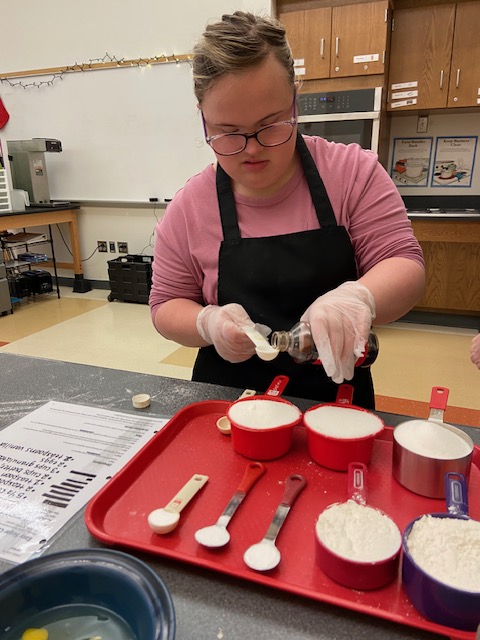
At the heart of Hanover High School is a hub of hard-working students dedicated to serving the school community with warm baked goods and coffee: Cedar Street Café. This beloved café has a unique origin story: for many years, students in the RISE and POST programs have been making treats to sell to teachers at Cedar School. About three years ago, HHS Principal Mr. Mattos approved bringing the operation here, where its weekly shop has flourished.

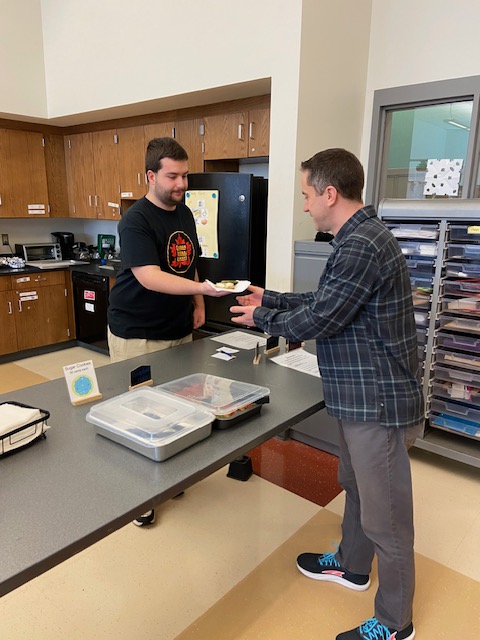
The RISE and POST programs at HHS work with special needs students from ages 14-22 on academics, life skills and social/communication skills. The programs are run by Mr. O’Hare and Ms. Melone, assisted by a team of paraprofessionals who help tailor learning to each student’s needs. Ms. Mann and Ms. Drinkwater, the paras helping run the cafe on a recent visit, explained that the goal is to teach students about handling money and providing excellent customer service. They also shared that their favorite aspect of the café is the interaction between the students and their peers.

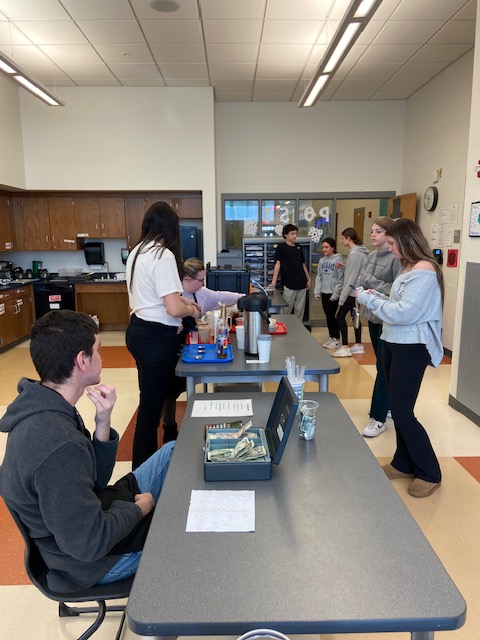
Students and teachers in the RISE and POST programs typically shop for the week on Mondays and bake the treats on Tuesdays and Wednesdays. When Thursday comes around, three students manage the café out of room 111. One takes orders, another prepares the coffee and packs baked goods, and the third handles transactions. As a student myself, I can confidently say that Cedar Street Café brings joy to everyone’s day. The moment the announcement is made over the loudspeaker, half the class rushes to the café. When they return, they’re all smiles, carrying delicious treats.

Now, you’re probably wondering what’s on the menu. Ms. Mann says that the blueberry cake and coffee cake are not only her personal favorites but also a fan favorite among students. However, the café offers so much more: cookies, lemon cake, pumpkin bread, coffee, blondie brownies, regular brownies and sugar cookies have been up for sale. One thing everyone knows about Cedar Street Café is its love for seasonal treats! In the fall, they serve pumpkin-flavored goodies; in the winter, they offer holiday cookies and hot chocolate; and in the spring, lemon bread becomes the go-to treat.

The café is always looking for new ideas, and the teachers encourage students to share suggestions. If you have a specific treat in mind, submit your ideas using the Google Form linked below! Keep in mind, the café operates as cash-only to give students valuable hands-on experience in handling money and practicing essential math skills.

Cedar Street Café is more than just a place to grab a snack—it’s a bright spot in the day for students and staff alike, and a cornerstone of our school community.

To submit suggestions on items to offer: https://forms.gle/Jrkrjr5qD4hP5Ys36

Powder Puff: More than a Game

By Bella Ciccolo, ’26

Staff Writer

The Powder Puff is a longstanding school tradition where Junior and Senior girls have the opportunity to face one another in a football game, coached by members of the varsity football team. This year’s contest between the “Spidey Seniors” and “Jackpot Juniors” took place near Thanksgiving and was very competitive. It’s become precedent that the Seniors dominate and win every year. However, the Juniors posed a potential threat to this legacy.

Tess Madden put the Juniors on the scoreboard first with a touchdown. The Seniors’ shocked expressions made it clear that they had expected the traditional easy victory and were caught off guard. But the Spidey Seniors quickly regained their composure, responding with two touchdowns of their own. The Class of 2025 gained the lead and shifted the momentum in their favor.

This intense rivalry between the teams was evident by the loud, energetic atmosphere. It was a tight game with lots of calls from the referees which the Seniors were able to capitalize on. Despite not having any formal practice or preparation leading up to the game, the Spidey Seniors were able to turn situations to their advantage. In contrast, the Juniors took a more strategic approach, holding a practice the night before the game. During this practice the Jackpot Juniors created their foundation of plays, lineups, and, most importantly, teamwork. However, the lack of preparation on the Seniors’ part didn’t seem to hinder their performance.  When asked if the Juniors should have won, Finley Nadeau, a Class of 2026 running back, simply replied, “Yes,” highlighting the value of her class’s preparation and teamwork.

The Junior O-Line prepares at practice.
The Juniors wide receiver line poses at practice.

Ultimately, the Seniors won the game but the Juniors put up a strong fight. Powder Puff’s meaning extends beyond the final score—it’s an opportunity to strengthen the sense of community within each class. For many, like Hope Miller, a Junior wide receiver, the experience was just as much about the friendships as the competition. She shared that she was “looking forward to playing with her friends,” highlighting the spirit of unity. Powderpuff is a unique experience to branch outside of your circle and make friends within your class.

Spidey Seniors – Class of 2025
Jackpot Juniors – Class of 2026

Check out a photo album and video taken for HPS by Mrs. Monahan:

Powder Puff Album

Powder Puff Video

Cheer Squad Makes History with State Crown

By Emily Davis, ’27

Sports Editor

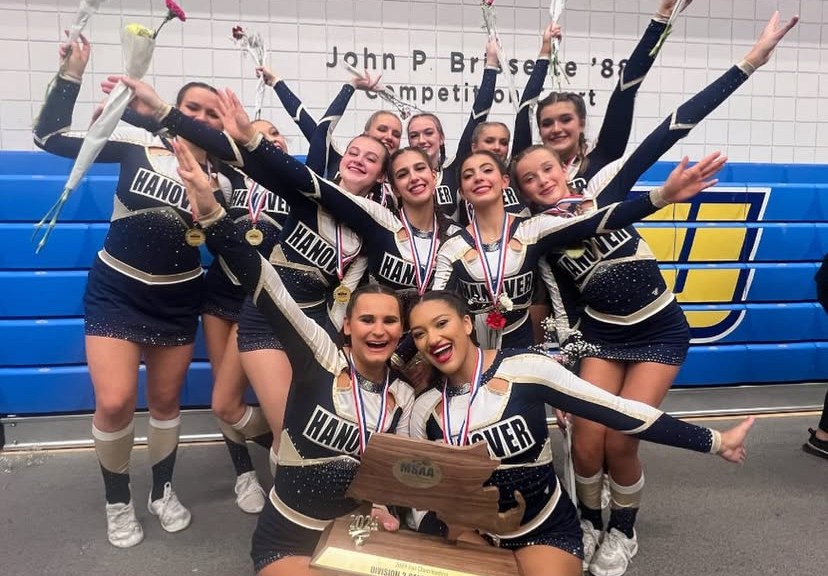
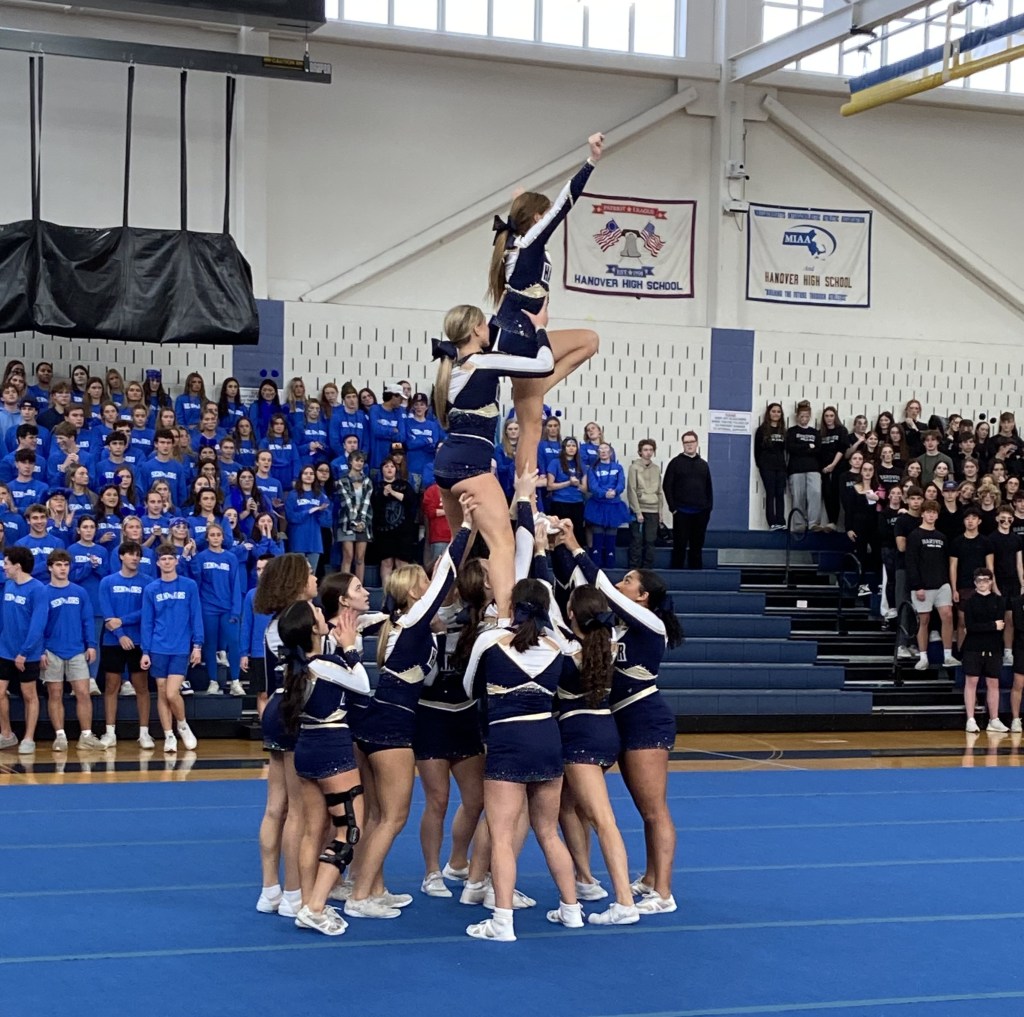
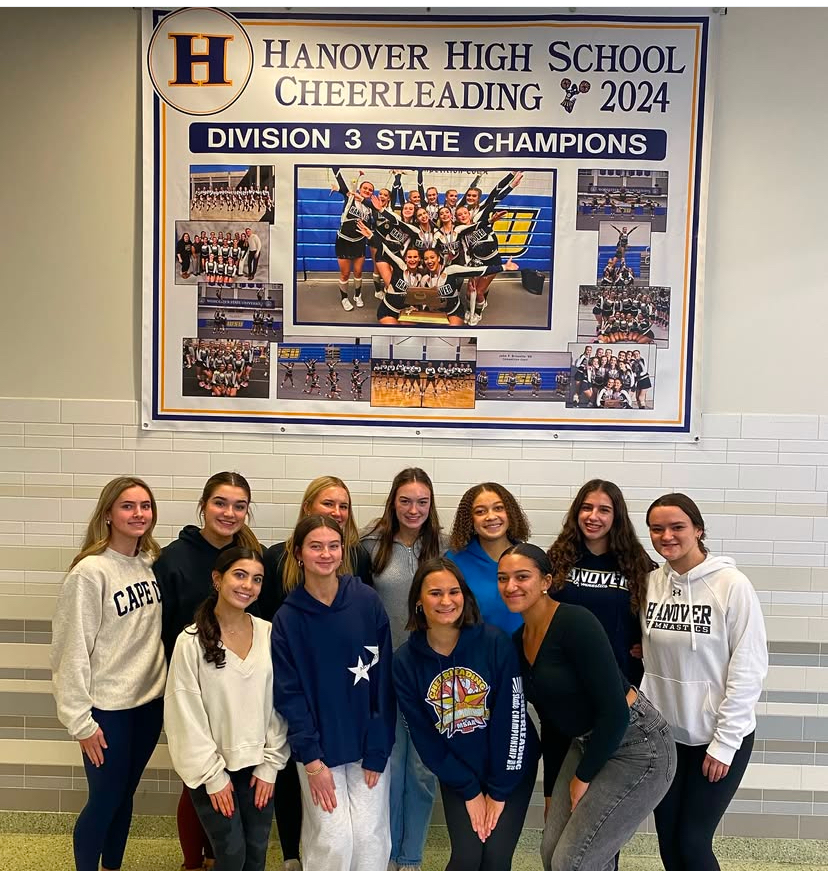
The Hanover High School Competition Cheer team won first place in the MSAA Division 3 State Championship on Nov. 24, the first state title for the team in school history. Their score of 94.7 was 1.5 points higher than the second place finisher and the highest score HHS Cheer has ever received.

En route to the state title, the squad was named Patriot League Champions and event Grand Champions on Nov. 6. They continued their winning streak at the 2024 MSAA South Regional Championship, surpassing their recent scoring record to win that crown as well. 

Senior captains Izzy Latessa and Lily Chiappini both agreed that this year was a dream come true. The success of the team comes from more than just an excellent routine; as Chiappini stated, it comes from, “the strong bonds we built and the heart and soul we put into everything we did.”

“Winning states has shown us,” Chiappini added, “that when we believe in each other and want it, we can win it!”

The squad performs during the Homecoming Week pep rally in October.
The Competition Cheer team poses in front of the new state title banner in the HHS cafeteria.


Art: A Cornerstone of Education

By Sophie Bunar, ’27

Staff Writer

“Education isn’t just about feeding the brain. Art and music feed the heart and soul.” ~ Julie Garwood

Art and music surround us, bringing humanity to our computed, monotonous lives. They allow free expression, enjoyable experiences, and even a future career for many. Here in Hanover, we strive to create a place where students can find companionship, acceptance, and invaluable skills. However, with the overwhelming town budget struggles forcing cuts to art and music this year – and threatening more for next year – the voice of our community needs to be louder than ever. To better understand the importance of art and music curricula, I interviewed several educators and students.

“The arts programs here at Hanover are the most important parts of our public schools,” said Dante Heffron, senior drum major of The Pride of Hanover Marching Band. “These programs provide a sense of belonging for students and also provide a place for students to explore their skills or learn new ones.”

Even if they may not excel in other subjects, many students find their strength and community through the arts. Everybody is different and distinctively skilled, but a group that works together and embraces these differences is what many students need to succeed both in school and in life. Just as Hanover High School band director and music teacher Matthew Harden explained, “Not every young person is an athlete or scholar in the traditional sense; however, music and art speak the language of emotion, connection, and community.” Providing students with a place where they can express themselves on a level that surpasses standardized academics is essential within any school system.

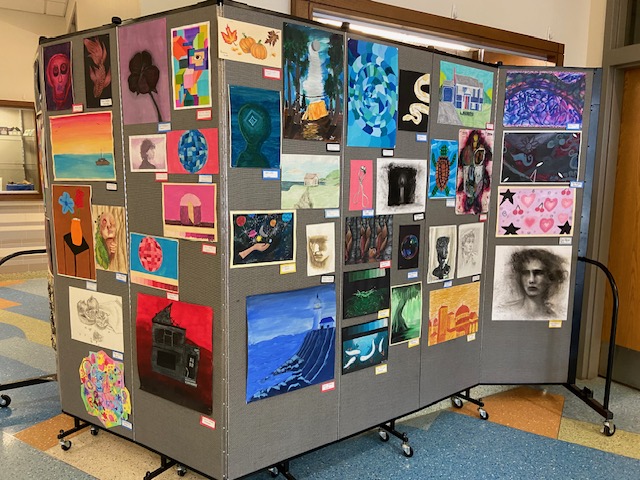
Work created by HHS students in 2D and 3D art courses

The arts are also significant because of their ability to foster community and friendship within educational environments. Many students meet their lifelong friends in school, especially in programs like music and art, which are close-knit and inclusive. “People you meet in your band or in your section of AP Art tend to be people who you become so connected to,” said Sadie Hofford, chorus and music educator. “In VOX and Chorus, I watch students help and support each other every single day in big and small ways.”

Art and music programs are also important because individuals involved in the arts work hard to make sure that people of all races, genders, and backgrounds are welcome and feel welcome. “Art transcends racial, socio-economic, cultural, and political boundaries while also calling upon each artist to reflect on their audience’s backgrounds and interpretation,” commented Mr. Harden, describing the diversity within the arts programs. It is crucial that students feel connection and belonging during their years in school because it helps to stimulate positive social skills and provides relationships that will prove useful in their years after graduating.

Another reason why the arts programs are indispensable in our schools is because of the advancing technology and increasing use of AI in our ever-changing world. “In a world of instant gratification and artificial intelligence, the arts foster long-term investment and dedication,” said Mr. Harden. “The arts challenge us to see the humanity in each other—to find empathy and cohesion amidst apathy and divisiveness.” Because of the influx of artificial intelligence within education systems, people are finding easy ways to complete assignments and pass their classes. However, the arts are some of the few programs where students cannot cheat. They require perseverance, humanity, and diligence. A robot cannot play a song or create a painting that has feelings and meaning behind it; only people can do that.

Work created by students in 2D art classes.

Just as technology evolves, our society evolves, oftentimes causing disharmony and even leading to periods when the people controlling the technology thrive while those under them face tribulation. The art community currently is facing immense adversity with the use of AI, stealing from artists, and creating “art” by data-scraping the Internet in order to provide entertainment that can be shared across social media. As Maria-Rita Silva, a sophomore at HHS, said: “In a world where capitalism, materialism, overconsumption, and the lack of creativity have captivated so many lives, we cannot let the arts die, and to deprive Hanover High School of the arts will take away the opportunity to engage in such a beautiful thing from thousands of current and future students.” By cutting or eliminating the arts, one takes away humanity and pure expression, which is far beyond the understanding of computers.

Many may argue that the arts are complicated, time-consuming, and unnecessary, especially during the early years of education. However, they fail to understand that art is humanity’s way of creating a legacy, of solidifying their presence far into the uncertainty that is our future. “It is not suprising to me that at every level we educate our students with visuals, from counting apples in kindergarten to drawing complex organic systems in anatomy. We are, after all, a sight-centered species,” said HHS art teacher Mr. File. “Ever since we began to coalesce into societies, whether in caves or early towns and cities, humans have been trying to create visual evidence they existed. The historical version of ‘File was here’ echoed throughout human existence.”

The arts have always resulted from mankind, starting from the very moment we evolved into what we are. When you observe art such as cave drawings, Beethoven’s symphonies, or Van Gogh’s paintings, one fact remains true: it doesn’t matter what one has, it matters what one gives, and the arts are gifts that influence our society forever. Teaching this in our schools strengthens the interest in and appreciation of art and all that results from it.

As Mr. Harden said, “A comprehensive and sequential education in the arts is essential for a myriad of reasons.” Art provides students with an expressive environment, a diverse community, and unfathomable knowledge of humanity and emotion. To take away the opportunity of participating in such an influential phenomenon from those in any level of education is to take away the individualism and soulfulness that society could use more of.

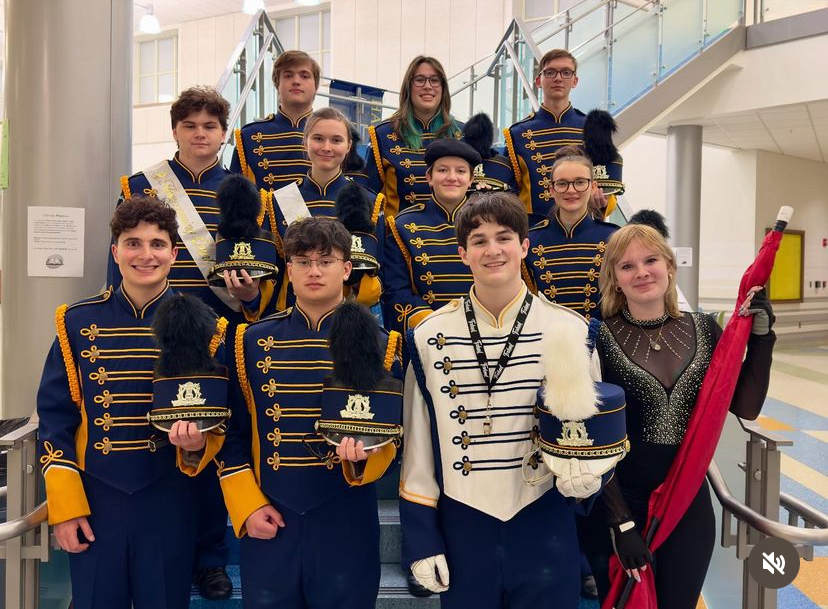
HHS seniors in the Band and Color Guard

Budget Woes: The New Face of HHS

By John Owens, ’28

Staff Writer

On the morning of September 3rd, the sun rose to greet the residents in the town of Hanover. Autumn signaled its approach, as leaves danced in the air, swishing and sliding as they fell to the ground.  The turning of the leaf, the changing of the season, symbolized a new beginning for everyone, but especially for those who attend Hanover High School. With the failure of a funding initiative in May, students woke to the blaring of their alarm clocks and the bright light of a new day, along with the realization that their lives have changed for the rest of their high school careers.

Flashback to early May, when there’s a high chance you heard about a potential vote that would determine the “fate of Hanover.” Rumor of the vote spread like wildfire throughout the town, and some students were confused by or unaware of the reason for the vote. On the evenings of May 5 and 6, hundreds of citizens of Hanover gathered in the high school auditorium to voice their opinions about the town budget proposed for the subsequent year. The town was asking for about $6 million in additional funding for multiple departments, according to the town website. If approved, taxes would be raised, costing the average homeowner about $1400 a year.

Residents had to decide whether they would put this proposal to a town-wide vote in a special election. Those in attendance voted in favor of a special election May 18. But on that day, residents worried about higher taxes and rising costs voted by a large margin to reject the tax increase. Town departments were forced to reduce their budgets, cutting down on many programs and job positions.

This would be felt most harshly in the schools, which had asked for about $2.7 million of the additional funds. The school department is responsible for helping students become the future leaders of society. A comfortable and safe atmosphere for students is important for the schools of Hanover to uphold the motto of giving all students the chance “to soar and succeed without limits.” But according to information on the Town of Hanover website, the override failure would lead to more than 25 teachers being laid off, classroom sizes increasing by 20 percent, and electives for students being reduced. Opportunities for teaching and career exploration would decrease, supporters of the override feared, while behavior issues would increase.

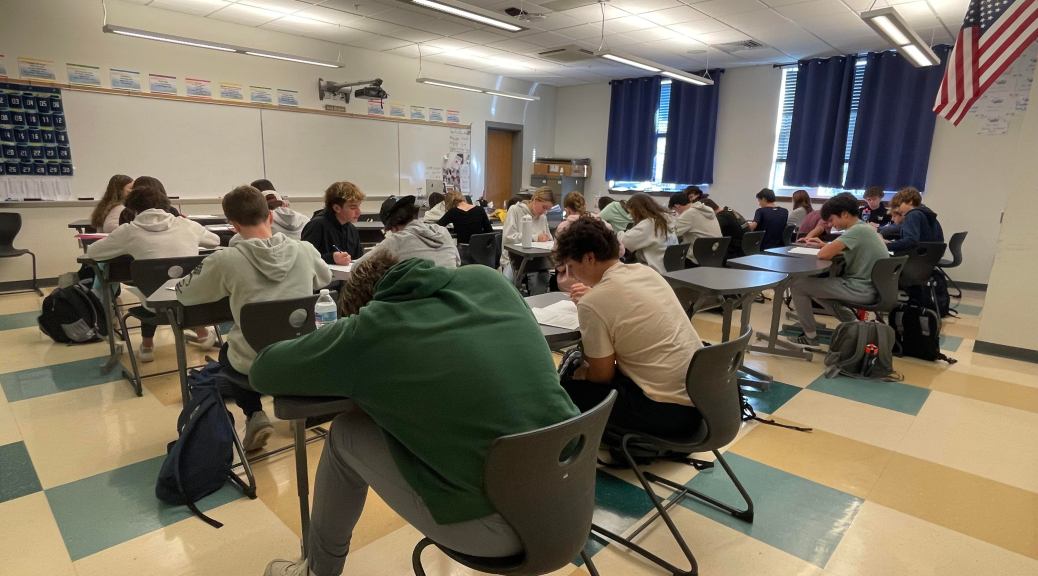
Now that we are a few months into the school year, the wounds inflicted by the override failure have become more evident at HHS. The void left by the budget cuts looms in the empty classrooms that once were used to teach Hanover students, or classrooms bursting at the seams. According to Steve Henderson, President of the Hanover Teachers Union, there are fewer courses being offered at the high school, and the ones being offered are overcrowded. There is also aging technology that cannot be replaced and field trips and extracurriculars that have been canceled. Seniors, in their last year, no longer have the same class choices and opportunities they have grown to expect, he said, and freshmen coming into school have “an uncertain horizon ahead of them.” 

Teachers are unable to spend as much time with students because of larger class sizes and caseloads, and their relationships with students are suffering, Mr. Henderson said. “Teachers are in a very trying position, and will continue to advocate for students.”

The opportunity to collaborate with other students and to create the arts that represent HHS is a gift to many. HHS strives in the arts and thrives when it comes to amazing performances by the chorus, band and drama programs. However, the Fine Arts department has changed because of the override failure. Matt Harden, music teacher and band director, said major impacts from the override include the loss of supplies and programs and the shifting of teachers to courses they have never taught before. The high school also lost its drama teacher, which has greatly impacted the face of the popular Drama program, he said.

“There will be a ripple effect for a long time,” he said. “My goal every day is to limit how much of an impact there is.”

It is necessary to understand the central causes that brought the town to this financial position. According to the town of Hanover website, “similar to many Massachusetts communities, the cost of providing services to the community has outpaced the revenue growth allowed under Proposition 2½ .” This means that the town’s tax revenue – its profits – aren’t keeping up with its expenses. The money in the town’s coffers also has been impacted by the expiration of federal Covid-19 grants and general inflation.

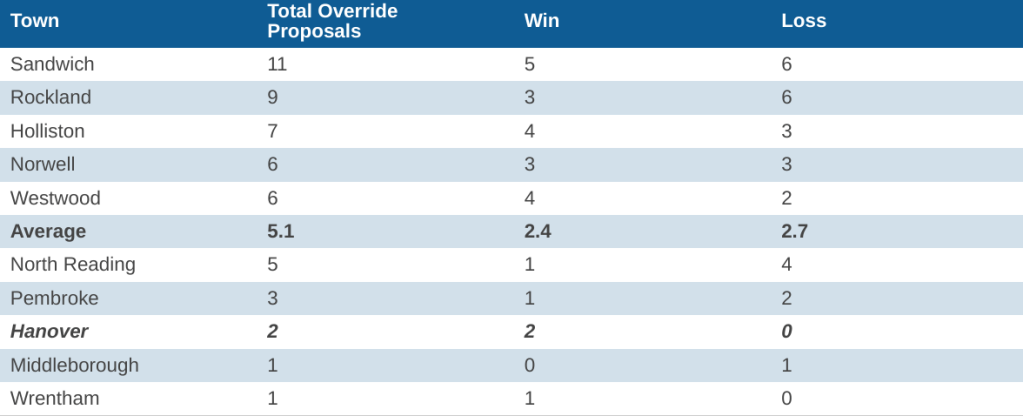
Rising expenses have not only impacted our town, but other comparable towns such as Sandwich, Rockland, Norwell and Westwood. Based upon a Municipal Data Bank, created by the Massachusetts Department of Revenue, towns like ours have asked for an average of 5.1 overrides since 1990 and more requests have failed than succeeded. Sandwich alone has asked for an override 11 times. Hanover has sought two tax overrides since 1990, both of which passed.

Hoping to heal from the wounds being nursed this year, school and town officials are already deep into planning the budget for next year. They are preparing three different budget proposals and pursuing another override vote. The “level funding” school budget would maintain the current level of reduced funding, resulting in more cuts due to rising expenses, according to school officials’ budget presentations. The “level services” budget would include funding to cover those rising expenses to maintain what we have this year. The “restore 24” budget would restore the funding cut last spring, returning many positions and programs that have been reduced. 

If only the “level funding” is approved, officials say, bussing, sports, clubs and course offerings at HHS could be even further impacted. The school we know and love, that the community cheers for on the playing field and on stage, could become unrecognizable. “Our identity is defined by the schools,” said Mr. Henderson.

It is a gift that HHS still maintains its core factors, its students and staff. The relationships that students and teachers have built over the years make HHS a welcoming place. It is hard to imagine what will happen if another override fails.

For more information on the town and school budget: https://www.hanoverschools.org/district/budget-planning