
By Sophie Bunar, ’27
Staff Writer
“Education isn’t just about feeding the brain. Art and music feed the heart and soul.” ~ Julie Garwood
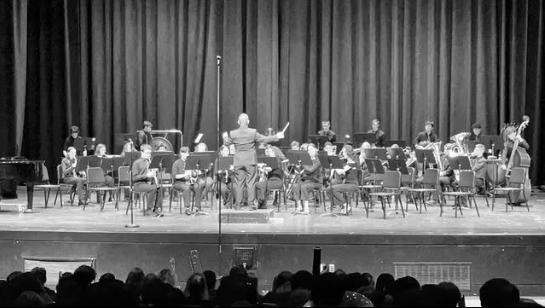
Art and music surround us, bringing humanity to our computed, monotonous lives. They allow free expression, enjoyable experiences, and even a future career for many. Here in Hanover, we strive to create a place where students can find companionship, acceptance, and invaluable skills. However, with the overwhelming town budget struggles forcing cuts to art and music this year – and threatening more for next year – the voice of our community needs to be louder than ever. To better understand the importance of art and music curricula, I interviewed several educators and students.
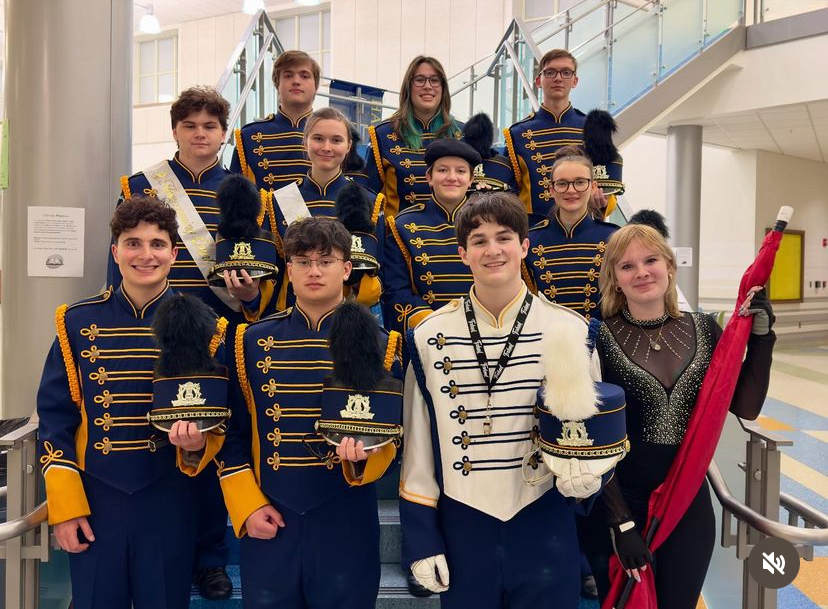
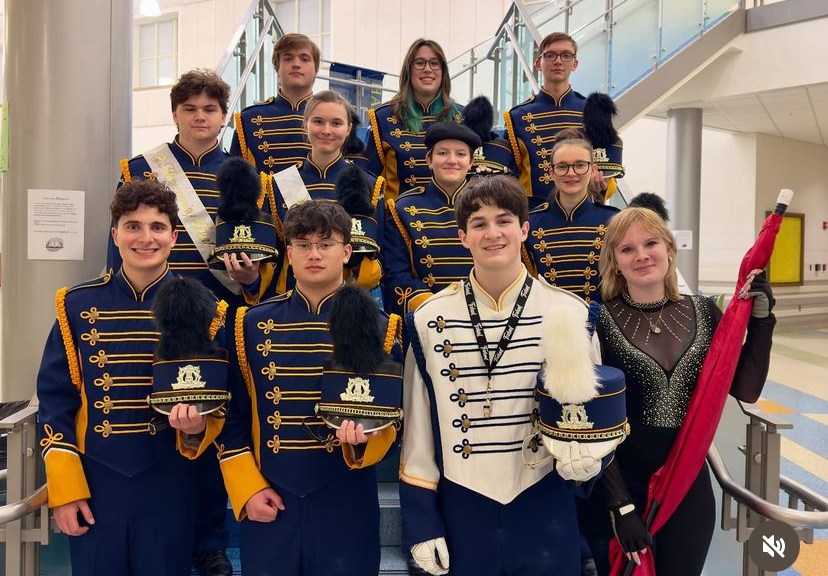
“The arts programs here at Hanover are the most important parts of our public schools,” said Dante Heffron, senior drum major of The Pride of Hanover Marching Band. “These programs provide a sense of belonging for students and also provide a place for students to explore their skills or learn new ones.”
Even if they may not excel in other subjects, many students find their strength and community through the arts. Everybody is different and distinctively skilled, but a group that works together and embraces these differences is what many students need to succeed both in school and in life. Just as Hanover High School band director and music teacher Matthew Harden explained, “Not every young person is an athlete or scholar in the traditional sense; however, music and art speak the language of emotion, connection, and community.” Providing students with a place where they can express themselves on a level that surpasses standardized academics is essential within any school system.
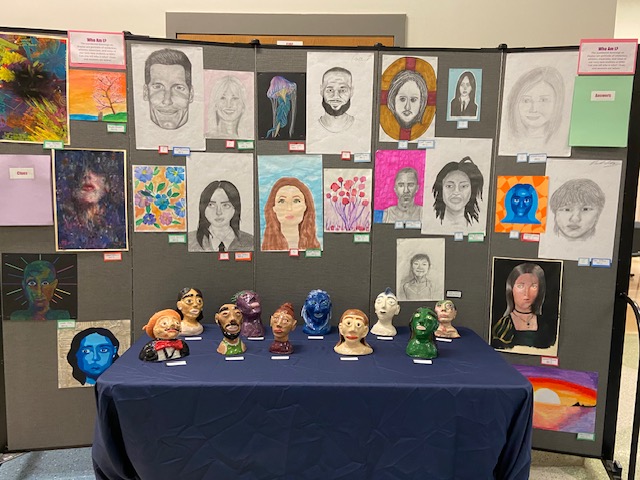
The arts are also significant because of their ability to foster community and friendship within educational environments. Many students meet their lifelong friends in school, especially in programs like music and art, which are close-knit and inclusive. “People you meet in your band or in your section of AP Art tend to be people who you become so connected to,” said Sadie Hofford, chorus and music educator. “In VOX and Chorus, I watch students help and support each other every single day in big and small ways.”
Art and music programs are also important because individuals involved in the arts work hard to make sure that people of all races, genders, and backgrounds are welcome and feel welcome. “Art transcends racial, socio-economic, cultural, and political boundaries while also calling upon each artist to reflect on their audience’s backgrounds and interpretation,” commented Mr. Harden, describing the diversity within the arts programs. It is crucial that students feel connection and belonging during their years in school because it helps to stimulate positive social skills and provides relationships that will prove useful in their years after graduating.
Another reason why the arts programs are indispensable in our schools is because of the advancing technology and increasing use of AI in our ever-changing world. “In a world of instant gratification and artificial intelligence, the arts foster long-term investment and dedication,” said Mr. Harden. “The arts challenge us to see the humanity in each other—to find empathy and cohesion amidst apathy and divisiveness.” Because of the influx of artificial intelligence within education systems, people are finding easy ways to complete assignments and pass their classes. However, the arts are some of the few programs where students cannot cheat. They require perseverance, humanity, and diligence. A robot cannot play a song or create a painting that has feelings and meaning behind it; only people can do that.
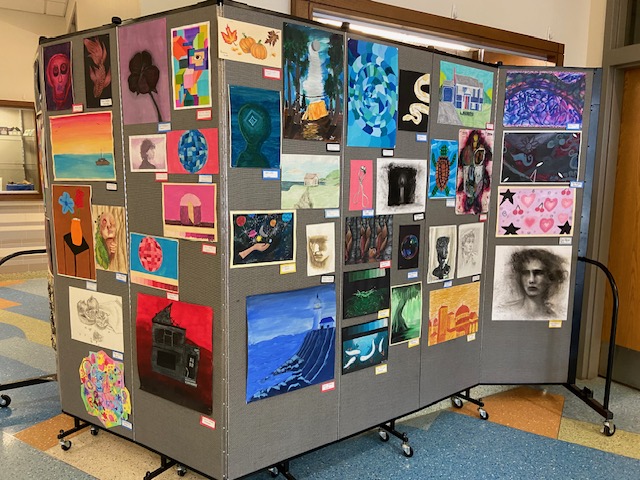
Just as technology evolves, our society evolves, oftentimes causing disharmony and even leading to periods when the people controlling the technology thrive while those under them face tribulation. The art community currently is facing immense adversity with the use of AI, stealing from artists, and creating “art” by data-scraping the Internet in order to provide entertainment that can be shared across social media. As Maria-Rita Silva, a sophomore at HHS, said: “In a world where capitalism, materialism, overconsumption, and the lack of creativity have captivated so many lives, we cannot let the arts die, and to deprive Hanover High School of the arts will take away the opportunity to engage in such a beautiful thing from thousands of current and future students.” By cutting or eliminating the arts, one takes away humanity and pure expression, which is far beyond the understanding of computers.
Many may argue that the arts are complicated, time-consuming, and unnecessary, especially during the early years of education. However, they fail to understand that art is humanity’s way of creating a legacy, of solidifying their presence far into the uncertainty that is our future. “It is not suprising to me that at every level we educate our students with visuals, from counting apples in kindergarten to drawing complex organic systems in anatomy. We are, after all, a sight-centered species,” said HHS art teacher Mr. File. “Ever since we began to coalesce into societies, whether in caves or early towns and cities, humans have been trying to create visual evidence they existed. The historical version of ‘File was here’ echoed throughout human existence.”
The arts have always resulted from mankind, starting from the very moment we evolved into what we are. When you observe art such as cave drawings, Beethoven’s symphonies, or Van Gogh’s paintings, one fact remains true: it doesn’t matter what one has, it matters what one gives, and the arts are gifts that influence our society forever. Teaching this in our schools strengthens the interest in and appreciation of art and all that results from it.
As Mr. Harden said, “A comprehensive and sequential education in the arts is essential for a myriad of reasons.” Art provides students with an expressive environment, a diverse community, and unfathomable knowledge of humanity and emotion. To take away the opportunity of participating in such an influential phenomenon from those in any level of education is to take away the individualism and soulfulness that society could use more of.
 The Hawk