
By Paulina Leskow, ’24
Staff Writer
“Please, don’t worry so much. Because in the end, none of us have very long on this Earth. Life is fleeting.”
– Robin Williams
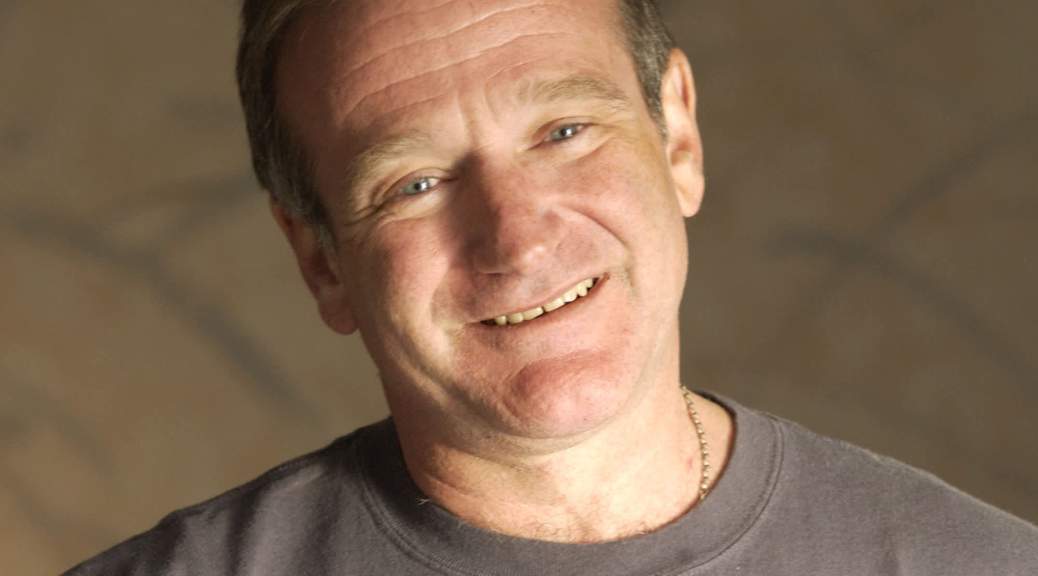
Father. Actor. Comedian. Born in 1951. Died in 2014. There are hundreds of thousands of actors in the world, so you may wonder, “what makes Robin Williams so special?” Why is he the one, out of all people, that I so desperately want to speak with? Robin Williams was not only a world-renowned actor, but he was also a good man who was deeply affected by addiction and depression, leading to his tragic downfall. If I was given the chance, I would talk to him about his life, his career, his struggles, and in every way I could, I would show him how important he was to the world.
When thinking of historical figures, people tend to envision political figures such as George Washington, Susan B. Anthony, or Martin Luther King Jr. These people have all played important roles in our nation’s history. However, I believe that historical figures consist of more than just war heroes, civil rights activists, and politicians. Many impactful historical figures were artists, scientists, authors, musicians, and actors. I was quick to decide that I would choose an actor as a figure to talk to, but why? Better yet, why would I even consider Robin Williams an historical figure? For starters, Robin Williams has starred in several performances and represented a variety of characters that have affected many on a personal level. From iconic movies like Jumanji and Mrs. Doubtfire to comedies like Flubber and Night at the Museum, Robin Williams was very successful in his establishment of character and emotion, which allowed audiences to unlock the depths of their imaginations. Using his performing skills, he knew how to effectively appeal to his audiences and portrayed his roles in ways that many would characterize as unforgettable.
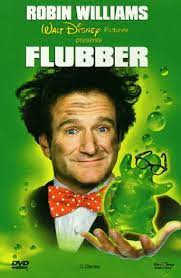
One of my earliest childhood memories was watching Flubber with my siblings. For those who don’t know, Flubber tells the comedic, fictional story of a scientist who experiments with the creation of a rubber-like substance while simultaneously enduring crazy adventures and unique situations in an effort to win over the girl of his dreams. It is a simply hilarious film and I recommend it to anyone who hasn’t seen it or to anyone who is simply in need of genuine, feel-good, comedic relief in their life. Robin Williams’ strong performance in the film is what made Flubber especially memorable to me. I most clearly recall in the movie a quote he said that went: “I know I love her, Weebo. Every neuron in my limbic system is saturated with phenylethylamine. That triggers euphoria, elation, exhilaration. Truth is, Weebo, I’m not absent-minded because I’m selfish, crazy or inconsiderate. I’m absent-minded because I’m in love with Sara.” To me, this was such an unbelievably powerful quote that painted a beautiful picture of what love truly is. Williams successfully embodies the character’s love of science and incorporates distinct scientific processes into portraying how he feels, all while presenting an entirely raw and personal account of his deep love for the girl. It was these memorable quotes and movies like Flubber that drew me to the comedic, loving, and powerful characters portrayed by Robin Williams.
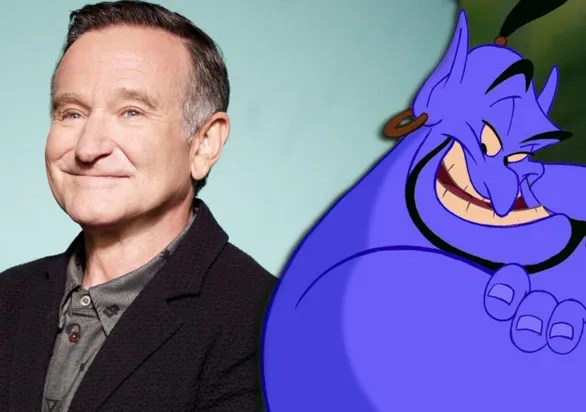
Arguably, one of Robin Williams’s most significant and well known roles consisted of his vocal portrayal of the Genie in the 1992 Disney animated film Aladdin. From this movie, I formed a rather personal connection to Robin Williams when I was in the fourth grade. In school that year, Aladdin Jr. was selected as our musical, and I was lucky enough to land the role of the Genie. In preparation for the show, I recall that my method of practicing for the role was rewatching clips of the Genie from the movie. I most vividly remember looking back and constantly listening to his use of different voices in the song Prince Ali, noting how Robin Williams used the power of his voice to convey different emotions, actions, and thoughts. I was inspired by his successful performance and hoped to someday be as talented of a performer as he was. That was truly what inspired me to continue to be involved in productions, and looking back it seemed to have indirectly influenced my decision to dedicate myself and my life to the world of theater, as I intend to study performing arts as my major in college.
Robin Williams has impacted a multitude of aspects of my life, and I did not realize until recently how large of an impact this would have on my future. Thanks to Robin Williams, I really know who I am and am confident in who I want to be when I grow up. If given the chance to meet him, I would want to learn more about what contributed to his success as an actor. Specifically, one of the significant questions I would ask would be how much practice and effort he had to put into his roles, and what methods he used to be able to embody his unique characters so well. Learning about what it takes to succeed in the world of performing arts from this world-renowned actor, I know, would help me further enhance my acting abilities and improve my chances of success in the future.
Not only is Robin Williams seen as an historical figure in the world of acting, he also is viewed as a significant figure in the field of mental health. In the 1980s, he overcame an addiction to drugs and alcohol which had fueled his early career. After his death in 2014, Williams was diagnosed with Lewy Body Dementia, the second most common type of dementia after Alzheimer’s disease, according to the Mayo Clinic. It is caused by protein deposits that develop in nerve cells in the brain, impacting brain regions that are involved in thinking, movement, and memory. This condition likely exacerbated Robin Williams’ lifelong struggle with depression as well as impacted his ability to create and perform, leading to his death by suicide.

In a conversation with him I would ask how and why he masked himself as being strong, when on the inside he was really broken. Was there a specific moment where he was able to realize he had depression? Did he talk to anyone about it or have to suffer in silence as many celebrities, and people, do today? How did internal and external influences affect his thoughts, emotions, and actions? But before all that, I would ask if, right then and there, he was doing alright. Knowing that he suffered from these difficulties, it would have been so important for Williams to have an effective and trusted support system, or at least to have people in his life who truly cared about him. Though he did not know me, he could have potentially found help in talking to someone like me, someone who cared about him and wanted to help him through his depression. Of course I am not saying that I would have cured his mental illnesses, but perhaps for even a moment, I could have helped make him feel like he was valued for the person he was and for all he contributed to the world.
Despite all of his struggles, his positive outward personality and his feel-good performances helped many people struggling with mental health problems. Many recall the kinetic energy that Williams put out in his life, and his jokes inspired people to realize that joy, laughter, and happiness can be found in their world. And though he suffered from poor mental health and death by suicide resulting from depression, his best qualities will always be remembered. Robin Williams left a light shining in this world that can never fade away.
 The Hawk