
By Gabriella DeLuca, ’27
Staff Writer
5 minutes. 154 bullets. 26 deaths.
In only five minutes – the same amount of time it takes to respond to a text message, make a to-do list, or brew a cup of coffee – 26 innocent lives were lost. In just a matter of minutes, dozens of families across Newtown, Connecticut, were forever fractured. In just five minutes, the nation as a whole was forced to face a grim new reality—one with 26 bright, innocent lights extinguished far too soon.
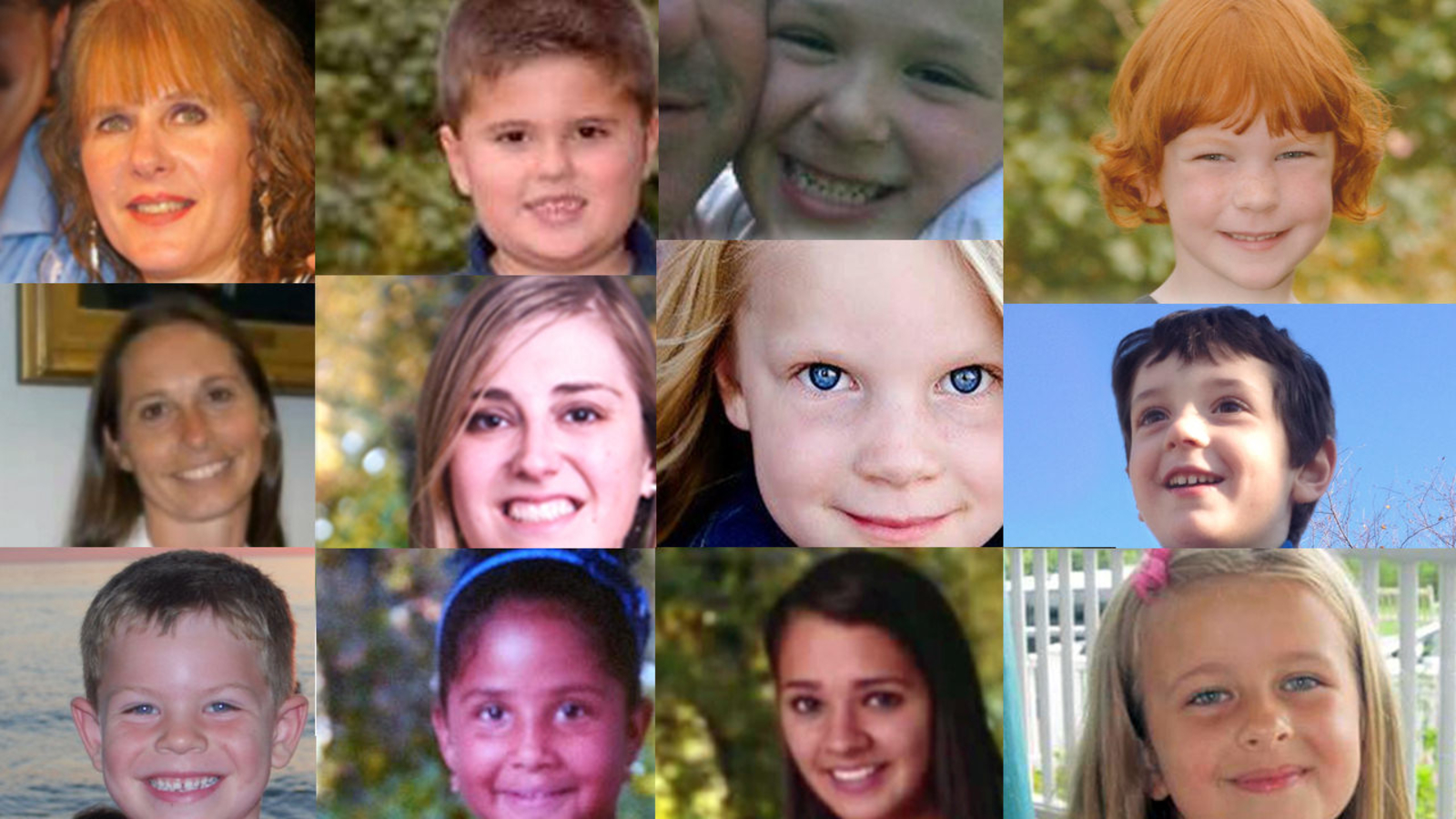
Because of the violence that took place at Sandy Hook Elementary School, Olivia Engel, a girl who loved to laugh, never got to share another joke with her little brother.
Avielle Richman, an adventurous girl who rarely missed out on a chance to have fun, never got to embark on another adventure.
Jesse Lewis, a boy who loved spending time with his grandmother, never got to make the gingerbread house he had been looking forward to making with her for months.
Daniel Barden, who loved spending time at the beach with his family, would never ride another wave again.
And Rachel D’Avino, a beloved teacher at Sandy Hook, never got the chance to say yes to her best friend’s proposal.
All this happened in under five minutes. Yet, the warning signs were visible long before the first shots were fired. In the days leading up to this tragedy, something could have been done to prevent these 26 lives from being cut devastatingly short. In less than five minutes—the same fleeting amount of time it took for the shooting to occur—a warning sign could have been identified, an insight been reported to a trusted adult, or the National Crisis Center been notified. But this intervention did not occur, and the result was the loss of these innocent lives.
The Sandy Hook Elementary School shooting took place on the morning of December 14th, 2012, and left the world to face a reality plagued by this brutal act of violence. However, instead of allowing this tragedy to define them, several family members whose loved ones were lost in the shooting united to turn “tragedy to transformation” in an effort to ensure such a catastrophe would never happen again.
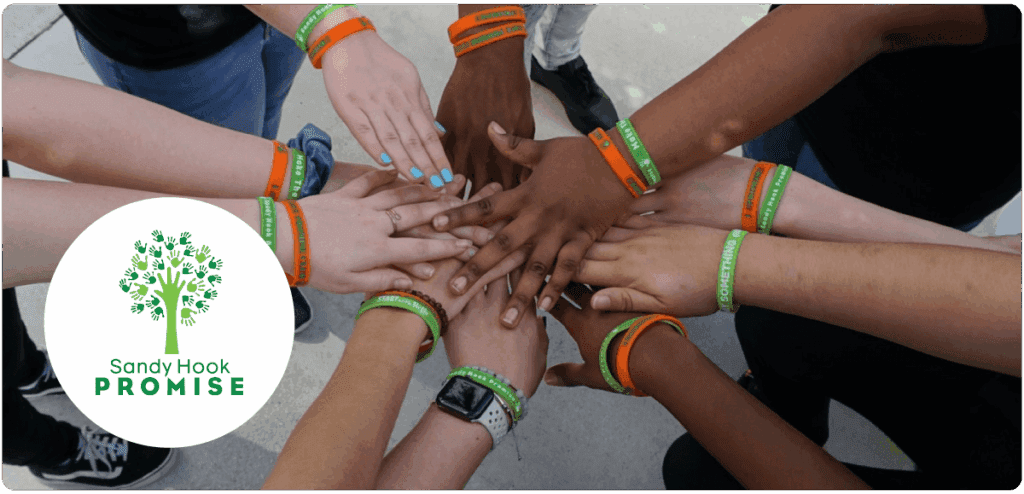
Officially founded on January 14th, 2013, exactly one year and one month after the shooting, the Sandy Hook Promise Foundation was created. This nonprofit organization pledged to protect the children of America from gun violence in honor of the lives lost at Sandy Hook. With a staff of more than 100 people, including co-founder and CEO Nicole Hockley, as well co-founder Mark Barden, who both lost their children in the shooting, this foundation is dedicated to spreading its message to communities nationwide, starting at the student level.
This past March, our school was visited by Keeley Rogers, a presenter from Sandy Hook Promise, who shared the foundation’s powerful and inspiring message with students. One of Rogers’ most important points was how to prevent tragedies like the one that occurred at Sandy Hook before they even begin. In over 80 percent of school shootings, according to the organization, at least one other person had knowledge of the perpetrator’s plan but failed to report it. This highlights the importance of recognizing warning signs of violence and the true value of reporting these threats to a trusted individual.
One of the most common warning signs of violence includes isolation or sudden withdrawal from social interactions, including communication with friends and family, Rogers said. This is concerning as it shows that this person no longer finds the same comfort in engaging with the people they had once enjoyed spending time with, hinting that something greater is occurring internally. Another warning signal is extreme mood changes, such as excessive irritability, hostile behaviors, and bullying. This can also include the expression of thoughts of harming themselves or others, which suggests that the person is suffering severe psychological distress and needs immediate intervention. The last warning sign is an interest in school shootings, guns, and other forms of weaponry, as it demonstrates that this person may be truly considering committing an act of violence.
These warning signs can be witnessed in person, on social media, or through other online platforms, Rogers shared. According to Sandy Hook Promise, if you witness any of these signs, there are three important steps you can take, the first being to tell a trusted adult. A trusted adult is defined as a reliable and caring individual over the age of 18. This can be a teacher, a parent, a coach, a relative, or any other person whom you trust to make you feel safe, heard, and respected. The second step you can take, if you do not feel comfortable telling someone in person or wish to remain anonymous, is to use an online reporting system. On our Hanover Public School’s homepage, under the See/Say Something icon, you can report potential threats or dangerous activities that pose a risk to our school community. Once this form is filled out and submitted, it is sent to our School Resource Officer, Officer John Voelkel, as well as your school’s current principal. The third step you can take when witnessing a potential threat is contacting the Sandy Hook Promise National Crisis Center, which offers 24/7 access to a trusted adult. This can be done by filling out a message in the Say Something Anonymous Reporting System that can be reached by clicking this link.
As a nation, Rogers said, we can come together to honor the victims of gun violence by preventing further tragedies like the one that occurred at Sandy Hook Elementary School. If we all unite to protect innocent lives from being taken, we can effectively turn an instance of tragedy into a future of transformation.
To learn more about the Sandy Hook Promise or to get involved in the organization, click this link.

