Category Archives: Entertainment

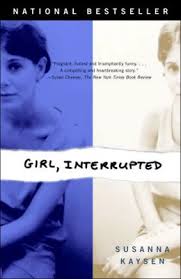
Book Review: Girl, Interrupted Reveals True Meaning of “Crazy”

I recently read this book as an outside read for my English class and devoured the short work in a matter of days. Author Susanna Kaysen uncovers the true meaning of “crazy” in her memoir Girl, Interrupted, which has also been made into a movie starring Winona Ryder. By age 18, Kaysen had attempted suicide by swallowing 50  aspirin at once, had an affair with her high school English teacher, and completely given up on school. Her parents preferred to remain happily oblivious to the pain that their daughter was in and sent her to a psychiatrist for help. The doctor, who Kaysen never acknowledges by name, suggests her admittance to McLean Mental Hospital just outside of Boston after only 20 minutes of evaluation. McLean has a history of employing modern methods for “curing” mental illness, and has treated some of America’s most influential figures including Sylvia Plath, Robert Lowell, James Taylor, and Ray Charles. Susanna complies with this request because she no longer cares the path that her life takes, in fact, there is very little that can evoke an emotional response from her.

During her almost two years spent at the hospital, Kaysen forms important bonds with her fellow patients and has her eyes opened to how many different forms that mental illness can take. One of her close friends is treated with electrotherapy once a week, and another prides herself on the number of times she has been able to escape the hospital. Most surprising to the reader is the fact that the majority of these patients are not all that different from the average teenager. Many parents during the 1960s chose to shut their children up in mental institutions and boarding schools if they exhibited any “abnormal” behavior. Rather than working with their children to get to the root of what was really going on, these parents chose to take an “out of sight, out of mind” approach that in turn just made their kids feel more isolated and helpless. As Susanna flourished with the support and organization she had so needed before, she began to realize that everyone is a little crazy in their own way, and without society’s labels and stereotypes, we are all just people trying to live our lives.


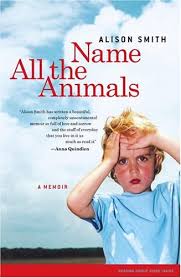
Review: Author Shares Struggle with Grief After Brother’s Death

When Alison Smith was 15, her beloved older brother Roy was killed in a car accident. She and her brother were so close growing up that their mother combined their names into the knickname “Alroy.” Grief tore her apart, shattering her deep religious faith and sending her into a physical and emotional tailspin. The memoir Name All the Animals details that struggle.

In the question-and-answer section at the end of the book, I learned that Alison was an adult when she began writing it. An aspiring novelist, she was looking for a book idea when her professor said “write about yourself.” She recalled thinking that nothing significant had ever happened to her. I share this because, after reading the book, I was haunted by Smith’s grief and couldn’t believe that she had recovered so thoroughly that she wasn’t still living with that sorrowful weight every day.

In fact, that would be my only criticism of the book: it ended too soon. After describing three years of grief so raw that she disconnected from her peers; saved half of every meal for her lost brother; and found solace in a relationship that her school and parents would never understand, let alone condone, Alison hit bottom. Believing there was no way to end the grief, she considered joining her brother. Thankfully, she did not follow through and the realization she had that day began the difficult journey toward peace. But I wanted to know more about how she carried on. We were with her for three years of sadness and despair, and I wanted to be with her for more of the healing. I feel like that would have given me more closure.

Despite that, Name All the Animals is a beautifully honest and vivid account. It’s 300 pages, but once you pick it up, it is hard to put down.

Review: ‘Into the Wild’ and ‘The Wild Truth’ Explore Young Man’s Fatal Quest

Chris McCandless was a 24-year-old college grad from an affluent family when he cut ties with everyone he knew and spent two years roaming the country. He gave away his trust fund, burned the rest of his cash, and lived as a self-described  tramp before trekking into the wilderness of Alaska. About 100 days later, in the fall of 1992, he was found starved to death in an abandoned bus.

Into the Wild, by Jon Krakauer, is the fascinating story of Chris’ fatal quest to find the simple beauty in life. As he did with his nonfiction books Into Thin Air (about climbing and dying on Mount Everest) and Under the Banner of Heaven (about the deadly extremes of Mormon fundamentalism), the author crafts a factual, yet engaging, narrative. His work often reads more like a story than a nonfiction book. For Into the Wild, Krakauer dove into research and tracked down sources across the country to create a multi-layered portrait of his subject. He brought in historical context of other people who have communed with or disappeared in nature while trying to “find themselves.”  He also described his own experiences as an outdoor adventurer to try to understand why Chris would abandon his family and a potentially secure future. He explored whether Chris was an arrogant idiot who was unprepared for the wilderness, a noble soul looking for a pure life, or a troubled escapee running from a dysfunctional family.

When I first finished the book, published in 1996, I wasn’t sure which I thought Chris was. Krakauer hinted at some troubles in Chris’ childhood, the worst being the two wives and families that his father kept simultaneously, and his parents’ obsession with materialism. But I wasn’t sure that was reason enough to justify the break that Chris made from his family and friends. I wasn’t sure until I read The Wild Truth, the 2014 book written by Chris’ sister, which gives more insight into their terrible childhood. Now I have a better understanding of what Chris was trying to leave behind.

In The Wild Truth, Carine McCandless describes the physical and emotional abuse that she and her older brother, Chris, endured growing up: the brutal fights, the endless manipulations, parents who seemed to care more about appearances than reality, confusion over their father’s two families. In some ways, this memoir of survival and recovery reminded me of A Child Called It or The Glass Castle. Writing it helped Carine deal with a lot of her own issues and also explained in more detail why her brother took off. It was his journey of healing, a way to shake off the scars of his upbringing and find peace and truth.

What I found most fascinating about Carine’s book, however, was the glimpse that it gave us into how journalists tell stories. Krakauer wrote Into the Wild twenty years earlier with a lot of help from Carine. But though she shared her family’s dark secrets with Jon at that time, she asked him not to put them in his book. She said she was trying to protect her parents in the hope of salvaging their relationship. Perhaps it is the former journalist in me, but the whole time I read Carine’s book, I wondered how Jon could write nonfiction about Chris but not include it. I understand he was respecting a source’s wishes, and that happens a lot. But what a challenge he must have faced, only being able to hint at the troubled family life that likely drove Chris on his journey. Ethically, did Krakauer do the right thing? I’m not sure. Carine said she wrote this book to set the record straight – many people thought Chris an arrogant fool for dying in the wild. This book did that for me, but also left me wanting a memoir from Krakauer about his life as an adventurer and writer.

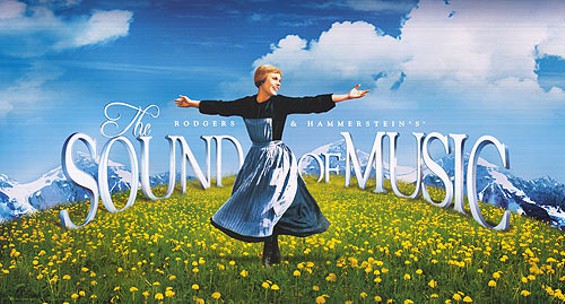
The Sound of Music…More Like the Sound of Success!

Hanover High’s production of The Sound of Music kicked off Friday night with a sold-out audience and fantastic performance. After seeing Romeo and Juliet earlier this year I was well aware that Mr. Plummer was an effective directer as well as a drama teacher, but he really out did himself this time. The costumes were amazing and very true to the movie (can you say play-clothes made of curtains?!), and senior Mary McWilliams did an amazing job as the hair and make-up extraordinaire. The sets were also very well done and allowed for a quick transition from one scene to the next…not to mention a few musical numbers that took place on the stairs.

The production began in the abbey, where the nuns sang in their angelic voices as they gathered for prayers. Madison Fitzpatrick led as the Mother Abbess singing in her beautiful operatic soprano, and her reverend posse included Katie Scott as Sister Berthe, Hannah Kirby as Sister Margaretta, and Kayla Maslow as Sister Sophia. These ladies nailed their performance of the song Maria, and as one of my favorite scenes in the movie, I knew that I was in for a treat.  Then we finally meet Maria, but let me tell you, it was definitely worth the wait. Hayley Ardizzoni was the center that this musical revolved around and she played her part like and absolute professional. Not only her vox-trained pipes but also her facial expressions and general aura contributed to making her the perfect person for this role. After her introductory solo The Sound of Music, Maria is told by the Mother Abbess that she is basically much to happy to live in the Abbey, and has even been caught singing in the gardens (oh, the horror). Instead, she will become the new governess for Captain von Trapp’s brood of seven children, a number she didn’t look too psyched about.

Despite being the cause for tears of many a governess, the von Trapp children were an immediate success from the second that they marched in when the audience broke into laughter. Maria sassily lets the Captain, played by senior Zach McAurthur, know that she, or the children for that matter, will not be summoned by a whistle, and once he has left she begins breaking the rules once again when it comes to singing. I suppose this is alright when you have a voice like Hayley’s, however, and soon she has the children in a rousing chorus of Do-Re-Mi. In the following scene on the infamous terrace, we learn a few important things: Macy Hohenleitner (who plays Liesl) would probably win best supporting role if we were at the Oscars, Brennan Taylor makes a mean Rolf and has the voice to match, and Ms. Bossong could quit her job at any time and become a successful choreographer. All is going well for the family, the children are getting over their fear if lightning storms with the help of sing-a longs in Maria’s bed, they are getting to play outside wearing curtains, when the Captain returns with his new lady, Elsa. Lindsey Glover became this role, with her slightly upturned nose and stick-straight posture, she played Elsa even better than I could have imagined. The kids like Elsa, but they like Maria more, although not as much as Captain von Trapp. Things get pretty heated when the two dance at a party, and the children’s perfect rendition of So long, Farewell has a double meaning as Maria boots it back to the Abbey to escape her feelings for the Captain.

Act two begins with Max, a friend of Georg von Trapp’s, trying to coax a Do-Re-Me out of the now depressed children. Max, played by senior Thomas O’Connor,  was one of my favorite characters with his bravado personality, quick come-backs for everything, and even perfect German mustache. The kids are overjoyed when Maria comes back and they celebrate by (can you guess?) singing My Favorite Things. The situation gets even better when Elsa and Georg (who has a pretty amazing voice himself) sing Ordinary Couple, a song I had never heard before but really enjoyed, and realize they are not an ordinary couple because they are both so stinking rich. Elsa hands over her engagement ring which soon finds a new place on Maria’s finger. Sadly, their honeymoon comes to a disastrous end upon their arrival back home, when Nazis Mike Nimeskern and Stephen Pallotta  demand Georg immediately report for duty at the army base. Thankfully, Max has entered the family in a singing festival, where they preform some of their greatest hits. Zach McArthur knocks Edelweiss out of the park, and the performance of So Long, Farewell is even better than the first time (it that’s even possible). After the festival, the family escapes to the Abbey and then on to Switzerland. The musical ends with Maddie Fitzpatrick working her magic with the the song Climb Every Mountain…she even hit The Note.

Just watching this production I could see how much time and effort had gone into it from all aspects of production. The efforts did not go to waste, for the rest of the audience shared my opinion and when the cast took their bows not a single person in the house was sitting. Of course, none of this would have been possible without the musicians who played perfectly the entire night. I can’t even imagine learning to play one song so well, let alone keep it up for hours! Congratulations to anyone involved with the play, you earned yourselves and A+ in my book.

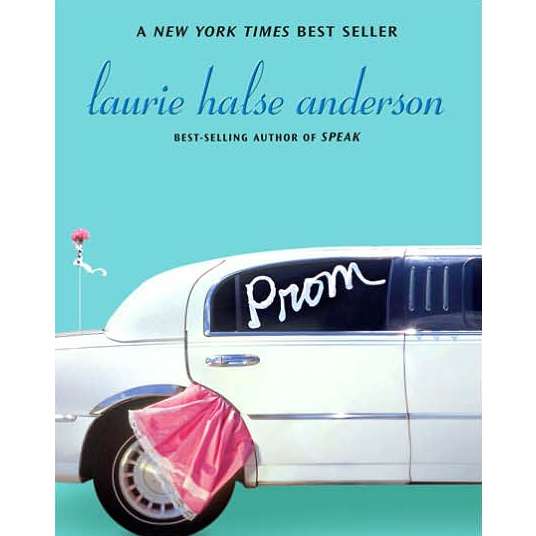
Review: Girl Who Hates Prom Tries to Save It When Teacher Steals Money

High school senior Ashley may be in the minority, but she hates the idea of prom. The thought of spending all that money and getting all decked out is – to her – not only a waste, but ridiculously fake. But to her best friend Nat and a bunch of other girls, the prom is an event they’ve been dreaming of, the one good thing in a life of crummy minimum wage jobs, dysfunctional families, and uncertain hopes for the future.When a teacher is arrested for stealing all the money raised to pay for the prom just days before the big event, Nat and her planning committee are distraught. That’s when Ashley steps up to help. Tough, no-nonsense Ashley throws herself into planning a new, cheaper prom for her class. With honesty, humor and some well-placed pastry bribes, Ashley works to save the dance. In the process, she changes her mind about the prom, her family and her future.

Written by Laurie Halse Anderson, Prom is a fun, quick read. It’s not as serious as her most well-known book, Speak, about a student who is raped at a high school party. But the characters are likeable, “normal” kids — ones who may not get straight As or want to go to college, but ones who may have a reserved seat in detention or are saving pennies from working at McDonald’s to buy a car. The plot is simple and moves fast, and the ending is a happy one (unusual for books that I read!).

I recommend this book for anyone who doesn’t like to read. I think it may change your mind.

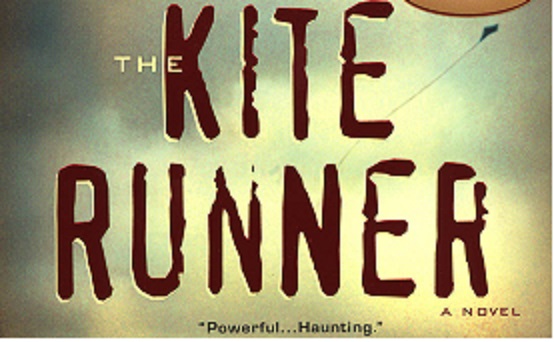
Review: “Kite Runner” is Haunting Look at Childhood in Afghanistan

The Kite Runner, written by Khaled Hosseini in 2003, is not a new book, but it’s one that I’m embarrassed to say I hadn’t gotten around to reading until now. Once I started it, though, I couldn’t put it down.

The book follows Amir, who grew up the privileged son of a successful businessman in the relatively peaceful time before the monarchy was overthrown in 1973. The ethnic and religious discrimination that tears apart the country today was strong even then, but Amir was spared. The servant boy who worked in his home, Hassan, was not. While Hassan and his father were treated like family in Amir’s home, they were mistreated in the wider community. This was a challenge for Amir, who grew up with and played daily with Hassan; their friendship was hindered by society’s expectations. When the boys are 12, a tragic incident drives a wedge in their relationship and forces Hassan and his father to leave Amir’s home. Amir is wracked with guilt for the rest of his life, through his family’s escape when the Soviets invade Afghanistan in 1979 and his adulthood in America.

Many years later, a family friend still in Afghanistan contacts Amir, now a married man and published author. That phone call forces Amir to return to modern day, war-torn Afghanistan. He must face the devastation of his childhood homeland and, if he has the courage, right the wrong he committed against Hassan.

The glimpse into the culture and history of Afghanistan was eye-opening, revealing the history and consequences of deeply rooted differences that still divide the country. The book widened my understanding of and empathy for the generation that grew up after Amir, the children who never knew life without gunfire, bombs and war. It helped me understand that no matter how long our soldiers are in the country trying to rebuild it and keep peace, the fighting and intolerance have been around longer. Those differences are not easily overcome.

But even without that historical element, the story of friendship, betrayal, courage and redemption was riveting. Amir is the main character and tells the story, and while he is not always likeable, he is very realistic. He has the petty jealousies of a child, the yearning for his father’s approval, and the cowardice of not speaking up for himself and his friend Hassan. He struggles with the transition to America and with coming to terms with his past.

The story gets its name, The Kite Runner, from the person who outruns all of his competitors to retrieve the last and most valued kite knocked out of the annual kite fighting competition. With kite strings coated in glass, the contest is painful but the winners are granted highest honors. Hassan was Amir’s kite runner, willing to do anything for the person he considered more his friend than master. As a child, Amir could not return that loyalty. To find out if he can as an adult, you have to read the book.

While the book is often heartbreaking, it ends on a hopeful note. I recommend this to anyone interested in historical fiction and global issues. I also think anyone who likes a good story about friendship, betrayal and redemption will also enjoy it. It’s 371 pages and can be a little slow at the beginning, but it’s worth sticking with it.

Binge On Something Healthy!: Shows To Watch

You know what’s so dope?  Avoiding problems in my life and watching TV shows whose characters have more interesting lives than I do. So dope, trust me. In recent years, TV has become more than just schlock to numb your brain. Many would argue it has become the new form of artistic media replacing movies for quality, creativity, and tone. There’s no denying that shows have become even more of a fixture in people’s lives in the past years. With Netflix, Hulu, Amazon Prime, and On Demand, there are so many options at one’s disposal that it can be daunting. Don’t worry, I got you. I’ve spent many wasted hours watching TV and I feel immense shame for it. But at least I can guide you guys to some good shows right? . . . I’m so lonely.

Let’s start with the basics: any show that you’ve heard about but you still need to watch. People talk about them for a reason.

Breaking Bad: Imagine if Mr. Decie decided that he couldn’t support his family being a teacher anymore. Now imagine he also has an illness where the meds cost an immense amount of money. Then picture me as a burnout who loves shouting profanities. Now imagine we join up and make a meth empire with his chemistry expertise and my street smarts. Would you watch that? If so, you will like Breaking Bad.

Parks and Recreation:  This show is so awkwardly funny and I can’t stop watching. Amy Poehler is spot-on as the mostly insane park manager. Even though I’m only three episodes in, I can tell it’s good.

The Office: Hey, did you know this show was funny? If no, please remove yourself from my presence forever. Steve Carrell, Rainn Wilson, John Krasinski and the rest of the cast are perfect for the show’s slow, awkward tempo. (The producer is the same as Parks and Rec so it has a similar feel.)

American Horror Story: The only show in recent history that can make me uncomfy from just its intro. Each season is its own story with only the actors returning and nothing else. So far they’ve given us a dandy murder house, a demon/alien/psycho asylum, witches be b*tches, and a circus freak show. The upcoming season is in a hotel and features Lady Gaga. How wonderful.

The lesser knowns: Shows that might have gone under your radar, but should be on your radar.

Peaky Blinders:  First point . . . The main characters have razorblade hats, SECOND POINT . . . they have sick hair cuts. THIRD FU%^ING POINT . . .  It’s a really complex gangster show taking place in early 1920s Birmingham, England, focusing on the Peaky Blinders gang’s rise to the top of the criminal underworld through murder, treachery, and quick thinking. The main character is a cold heartless leader, while both brothers are maniacs, doing whatever– and I do mean whatever — it takes to help their brother.

It’s Always Sunny In Philadelphia:  The main characters of this show have become more and more scumbaggish with each season and it’s amazing. It follows four friends and Danny Devito running a bar and just . . .just  barely functioning in society. They bumble through the most awful situations with no tact or class. It’s brilliant, plz watch plz.

The Sopranos: Another gangster show or more specifically, the Italian mob. This show follows Tony Soprano, an overweight, incredibly damaged, and ruthless crime boss and his life, family, and “job” (waste disposal). It’s set in New Jersey so you really get the depressed feel that plagues Tony, and anyone who lives in New Jersey for that matter. It’s an interesting tale of a man with plenty of exterior power, control, influence. But in truth, he’s falling apart episode by episode… and so is his life. THE FEEL GOOD SHOW OF THE CENTURY.

That’s my list of things I’ve spent hours of my life on. Instead of forwarding myself in education, I watch TV. I do this for you people. Hope you’re happy.

Beautiful GIRLS

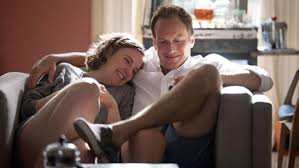
If any on you have ever viewed a television show on HBO, you know that they often feature naked women.  A lot of naked women.  HBO’s GIRLS is no different.  However, one aspect is.  The women on this show look like women that you see every day.  None of them conform to what the entertainment industry deems as beautiful.  Let me make it clear that when I say “entertainment industry beautiful” I do not believe that this is a legitimate definition of beauty, but I’ll get into that later.  Recently, on this show the star (and head writer and director and also she’s only 28), Lena Dunham, engaged in explicit acts with the actor Patrick Wilson.  Wilson absolutely fits the description “entertainment beautiful.”  He is tall, muscular and has a jawline that could cut granite.  After the episode aired, and audiences had seen an eyeful of these characters, there were some shocking reviews.  Real journalists, with actual journalism degrees, tore this episode apart because they found Dunham’s writing wildly unrealistic.  They claimed that a guy like that could never go for a girl who looks like that.

This statement is ludicrous for a number of reasons.  The first one being the absurd idea that a woman’s only worth is determined by the way she looks.  Are the attributes of this character immediately discarded simply because she is not a size two with bright skin, and shiny hair?  The fact that people find the idea of a handsome man having sex with a woman who is less hot than him unrealistic is simply horrifying.  There are many, many examples of female “10s” hooking up with male “5s” in television and movies.  If you need proof, look at every raunchy, high school-themed comedy that has come out in the past 20 years.  Every time one of these movies comes out, there are no comments on the sexual eligibility of these male characters.  So why are female characters subjected to this kind of judgement?  The negative reviews of this demonstrate the fact that, in our culture, it is absolutely normal to view a man as more than a body, but ridiculous to look at a woman for the whole woman that she is.

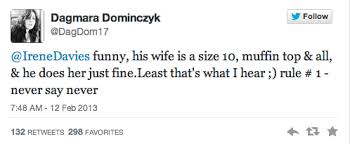
The second problem I have with these reviews is this: who the hell has the right to say that Lena Dunham is not beautiful?  Who has the right to determine the beauty of another?  Despite what we are led to believe by the Internet, there is no one standard for beauty.  Someone cannot be too fat or too skinny to be beautiful.  Someone can not be too pale or too dark, too tall or too short.  I don’t mean to preach, but I despise the fact that we are continually encouraged to view our bodies as inadequate.  If you still believe that a guy like Patrick Wilson will not get with a girl like Lena Dunham, then I suggest you read this tweet from Wilson’s wife.

Unknown

This issue is very important to me because I believe that it provides a single example of a major issue in our country.  We are bombarded with images and statements that enforce negative opinions of ourselves.  We are set up to feel inadequate and inferior, when in reality the only thing to be ashamed of is claiming that a guy like that could never get with a girl like her.  I am not going to tell you that real beauty is on the inside because I am sure that wonderful message is being spread by mothers everywhere, but I am going to tell you that no one has the right to judge your beauty.  That privilege is yours, and yours alone.


Staff Opinions on 50 Shades of Grey

For this edition, the newspaper staff is going to try out a new type of article for you guys: a group movie review of none other than Fifty Shades of Grey. Everybody had their own opinion on this fine cinematic creation and after much debate at our meeting, we all had to share our views with you guys. Comment below if you agree (or even disagree) with our expert opinions.

DRaab: Hearing about this movie was enough for me to vow to never actually see this movie in any way, shape, or media format. The movies I enjoy the most and the ones I like to see have at least some basis in reality. The mark of good fiction is that it is realistic enough that you can really imagine it happening. From what I have heard, Fifty Shades miserably fails that test. It portrays an abusive “fantasy” relationship between Anastasia and Christian that I cannot possibly condone. Words that come to my mind to describe the movie are: morally outrageous, repugnant, and vile filth.

Lauren Bilton: On February 15th, a few of my friends and I went to view this “must-see” movie of 2015. I would not go nearly as far as DRaab to call it “vile filth,” but it surely is a risqué movie. I may be a sucker for rom-coms and movies about love, but I promise you this isn’t any love story. Don’ get me wrong, I didn’t hate the movie; I actually ended up liking it more than I had expected to. Before seeing the movie, I had read the first 50 pages of the novel, unaware of the storyline. Let me tell you: pages 1-50 of the book are completely clean. So here I am sitting in the theater anticipating the movie, thinking “how bad could this be?!” But about 20 minutes into the movie, I realized why people were making such a big deal about it. How are they even allowed to make a movie based solely off of sexual relations and abuse?? The “R” rating is no joke. In Fifty Shades of Grey, Anastasia Steele is a journalism student whose life changes the minute she meets Christian Grey. I will choose to end my review there.

Eric Carey: Honestly, such a steamy flick. I was sweating throughout the whole movie. It was just so mmmmm perfect. Don’t even get me started on the guy who played Christian Grey. O-M-G, can you say hunk? Hunk. There, I said it for you. I often see myself as Anastasia trapped in a rugged, tall, good looking body. On the inside, I’m a beautiful 21-year-old who is attracted to a masochistic weirdo into BDSM. Seriously, the book, the movie, and anything relating to this hot garbage of a franchise should be eradicated. I didn’t watch the movie, but I’ve read some hilarious quotes from the book and I don’t know how anyone can read such schlock without dying laughing.  I got to the word “inner goddess” and it was goodnight, Irene for me, I was done. Yeah this sucks so…. yeah.

Callie MacDonald: An open letter to Anastasia Steele:

Dear Anastasia Steele,

First of all, you have a beautiful name.  I am sorry that people will refrain from naming their children Anastasia for the next five years, out of fear that people will think they are naming their sweet angels after a Fifty Shades character.  Second of all, you need to stop shaking so much.  You look like you are going to pass out the entire movie.  I mean, yeah, I would be intimidated too in the majority of those scenes, but in one scene you were working in a hardware store and looked as though you might pass out.  Pull yourself together!  Third, I do not know why you bite your lip so much, it seems like a rather unnatural habit.  Lastly, you seem like an intelligent girl, you could have a good journalism career in the future, so I advise you to get out of this abusive relationship, no matter how hot Jamie Dornan is.

With love,

Callie.

Andrea Bilton
Sitting in the theater awaiting the start of Fifty Shades of Grey, I expected what anybody was bound to expect when viewing such a controversial movie. I expected a lot of heavy nudity, a slight violence factor, and graphic sexuality that pushed the brink of what is usually permitted on the big screen. But after the movie came to an end and the final credits rolled across the screen, my expectations were vastly underwhelmed. The movie was surprisingly tame, considering all of the harsh criticism surrounding it for being overtly sexual and inappropriate. I had never read the book, however I’ve heard from many about how graphic and almost disturbing the unconventional sex scenes are. However, when brought to life in the cinema, the sex scenes were brief and subtle, showing no more nudity than would be suitable for an adult romantic comedy. And the violence, although jarring in such a romantic and sexual context, was definitely not as heavily involved as I anticipated. In fact, the movie threaded the concepts of BDSM in as merely supplements to the romantic storyline- the movie was not focused primarily on these elements as many people assume. The directors of Fifty Shades of Grey definitely made the right choice of focusing the movie on the storyline and romance between the two characters of Christian Grey and Anastasia Steele, rather than jolting the audience with graphic sexual encounters as the book supposedly does. I entered the movie expecting to laugh at the overkill of violence and sexuality, but I left very shocked by the lack of explicit nature and touched by the love story portrayed onscreen. If you haven’t seen the movie yet, don’t be deterred by all of the hype and controversy. I promise you the movie is much tamer than it seems.

Documentaries: Netflix CAN Make you Smarter!

The age of Netflix: it was the best of times, it was the worst of times. As I’m sure any fellow binge-watcher can attest, there is almost no better feeling than curling up with a cozy blanket and the first three seasons of any TV series. Too much of a good thing can be dangerous, however, and I’ll be the first to admit that finding out whether Mr. So-and-so gets the girl can often come at the expense of other, ahem, more educational activities (that next episode button is just so conveniently placed!). On a recent snow day I was feeling really guilty about all of the brain cells I had killed staring blankly at a screen, so I decided to search for something to watch that would actually enrich my knowledge. I stumbled across the documentary section of this fateful website and was immediately surprised and pleased. Now, I know what you’re thinking: documentaries are meant to be watched when you need something to help you fall asleep and usually fall into the category of vicious animals/cool nature, Americans are fat, or semi-inspirational biographies. In reality, there are hundreds of films about almost anything you can imagine. I watched just three of the first few options that I saw, and am so glad I chose to open my eyes up to the world we live in rather than indulge in the trash TV shows I could have wasted my time on. Here are a few of the documentaries I would recommend:

Girl Rising

This 2013 documentary was directed by Academy Award-nominated Richard E. Robbins and follows the stories of nine girls around the globe as they fight the oppression they face in their society. The girls themselves are featured, and their stories are told by actresses including Meryl Streep, Anne Hathaway, and Selena Gomez. As HHS seniors learned when they watched the movie here last fall, each of the girls faces her own unimaginable challenges. Sokha in Cambodia was born an orphan and grew up picking through the village dump for scraps of metal. But when she receives an education, Sokha works to teach other girls in her community and attends youth leadership conferences around the world including Washington DC. Wadley is just 8 years old when her native Haiti is struck by the huge 2010 earthquake that forced half the population to live in tent camps and shut down her school. But Wadley refuses to give up her education and starts a school in the tent camp itself. Suma in Nepal is forced into bonded labor at the age of 6 to help support her family, and spends her childhood working for a variety of “masters.” When Suma is taught to read, however, she glimpses a brighter future and makes her way to helping herself and other girls to freedom. Yasmin in Egypt is sexually assaulted but rather than hiding in shame she tells her story to the world to illuminate a problem, and Ethiopian Azmera refuses to marry at the age of 13 in order to continue her studies. A girl named Ruksana in India lives with her family on the streets so they can afford an education, while Senna in Peru uses poetry to bring beauty to her desolate mining town. Mariama lives in war-torn Sierra Leone, but stars on her own radio show and helps girls with real-life problems. Finally, Amina in Afghanistan is a child bride but pushes the limitations of a male-dominated society. Each of these stories is true, and all are equally amazing.

The Dark Matter of Love

dark matterFourteen year old Cami Diaz and her family live in a suburban Wisconsin town not too different from good ole’ Hanover, MA. The Diaz family has always wanted more children, but after being unable to conceive for over a decade, they decided to adopt Masha, 11, and twins Marcel and Vadim, 5, from an impoverished area of Russia. Having never experienced parental love, it is unclear whether Masha and the twins will be able to reciprocate the love the Diaz family plans to give the children. The family works with developmental psychologists at the University of Virginia School of Medicine to learn more about the bond parents and children share to help these children to know they are valued and cared for. This documentary is about the psychological and scientific explanations of love, but also follows the orphans as they experience a collision of cultures and become part of a family for the first time.


Food, Inc.

food incDid you know that the average American meal travels 1,500 miles before reaching your plate? Would you believe it if I told you there was some form of corn in every meal you ate? Food, Inc. focuses all about the corporate side of American food consumption. Almost all of the chicken we eat comes from one of two huge corporations, and cows, pigs, and poultry are being genetically engineered as we speak to provide customers with more bang for their buck. The documentary features interviews from farmers to CEOs, and even gives viewers a glimpse into meat-packing factories, industrial hen houses, and Midwestern farms. I found this movie fascinating but also pretty terrifying . . . let’s just say I only ate salads for a few days after watching. If you’re really big on meat, I’d steer clear of this one, you may never want to look at a filet mignon again!