Tag Archives: 2024-2025

Students Rally for Spirit Week

By The Hawk staff

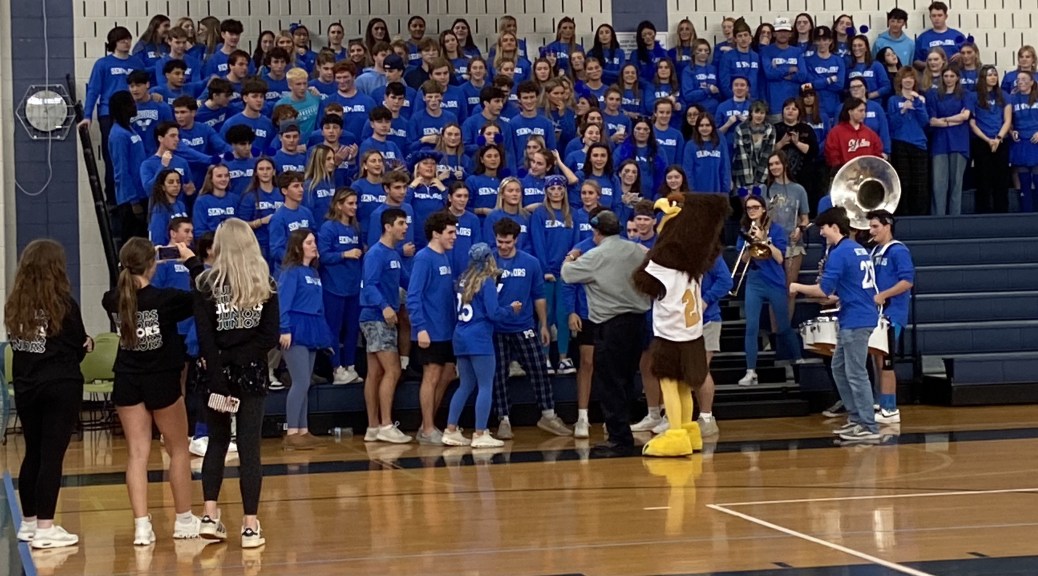
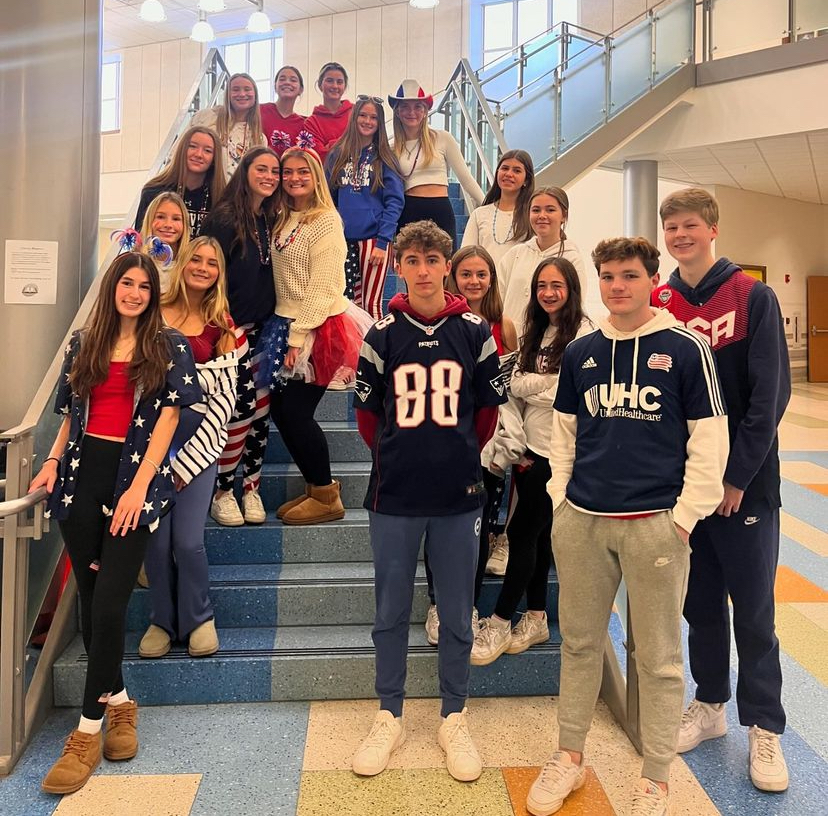
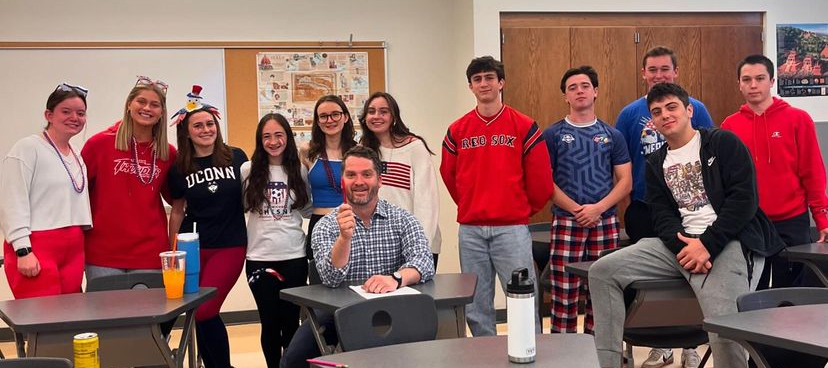
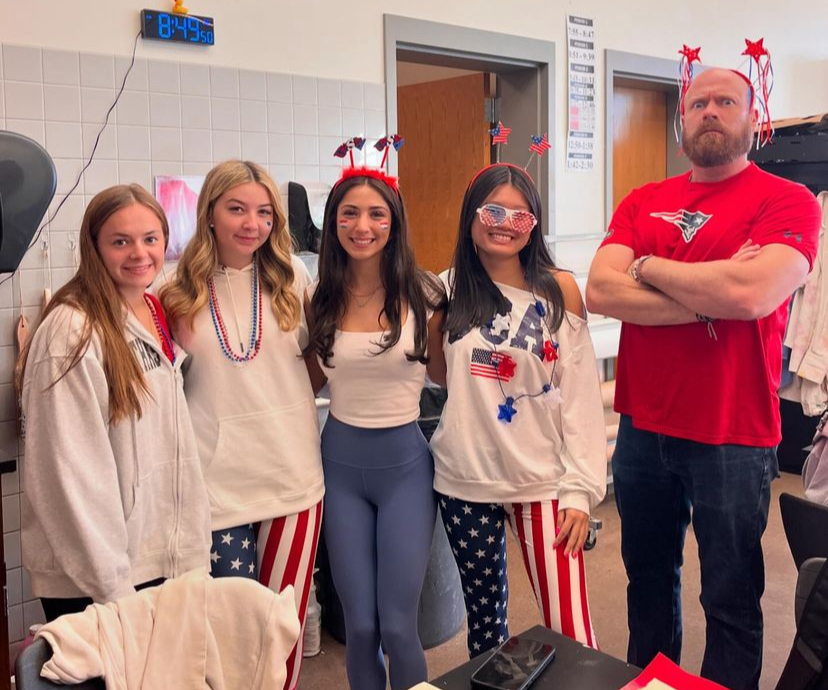
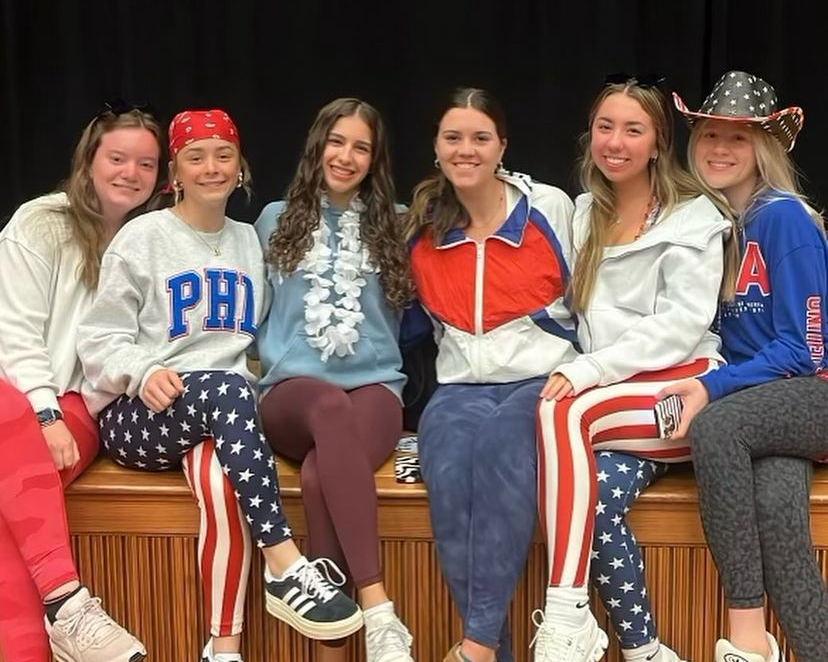
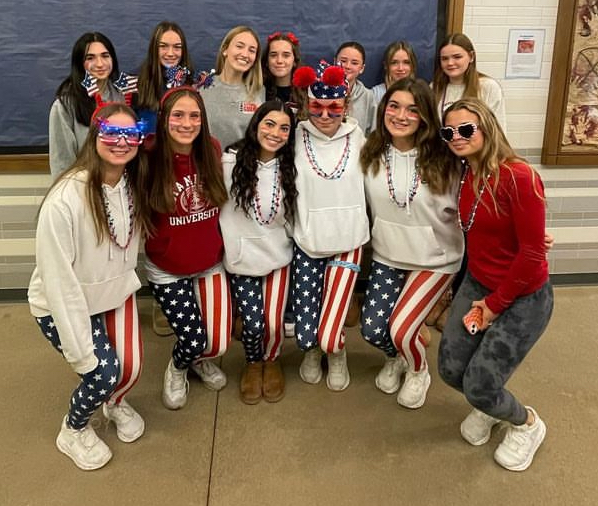
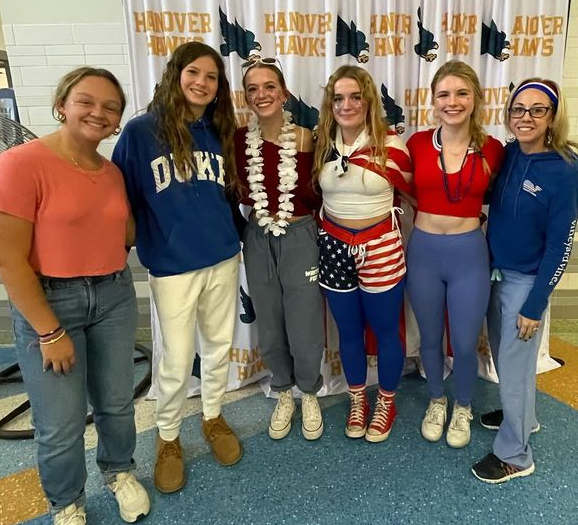
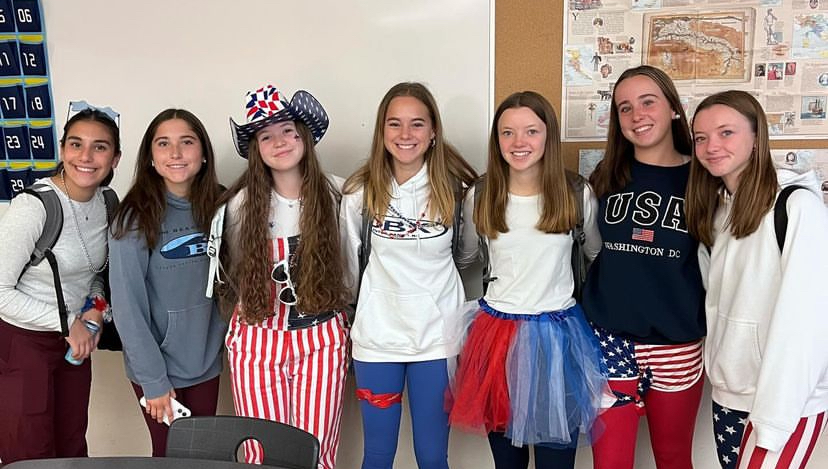
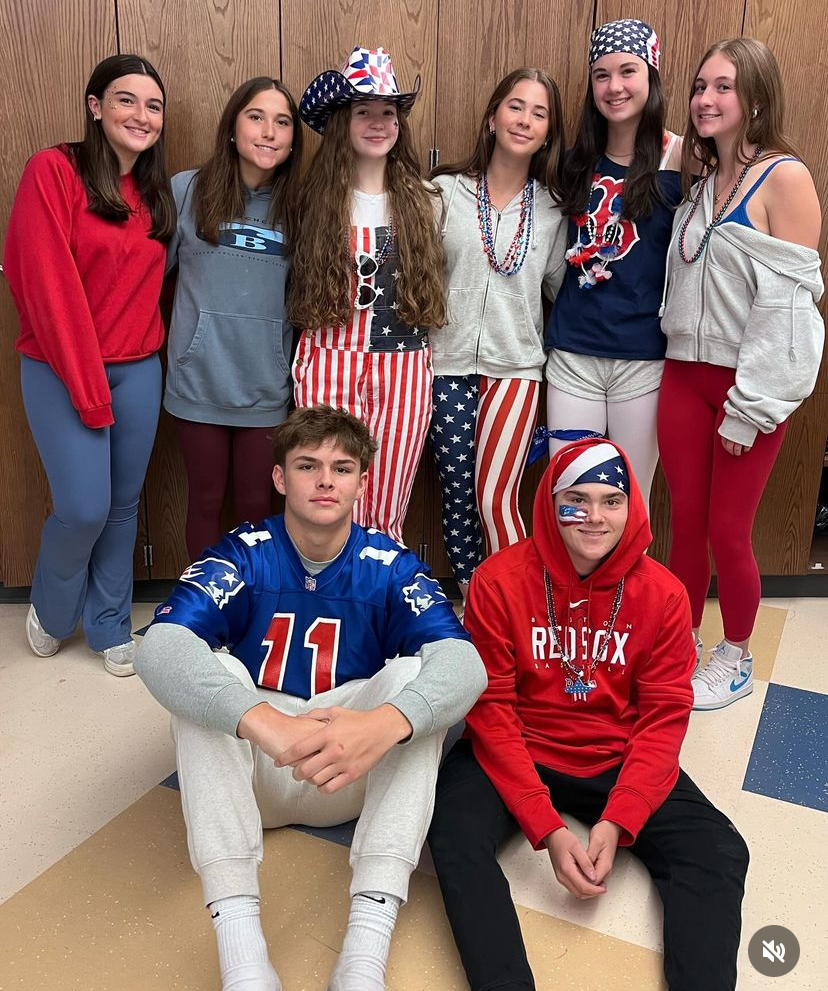
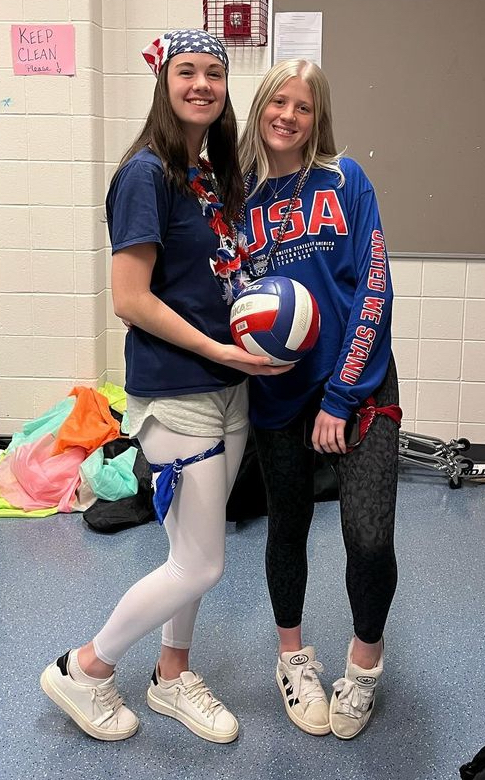
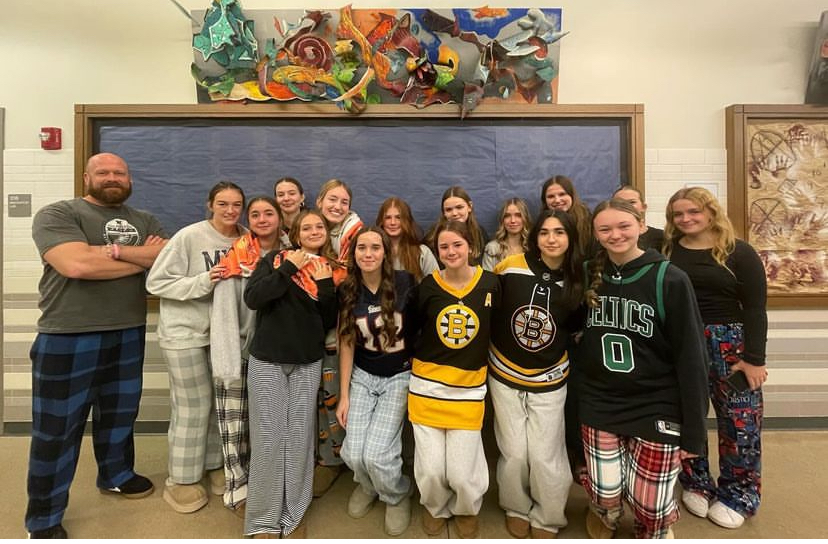
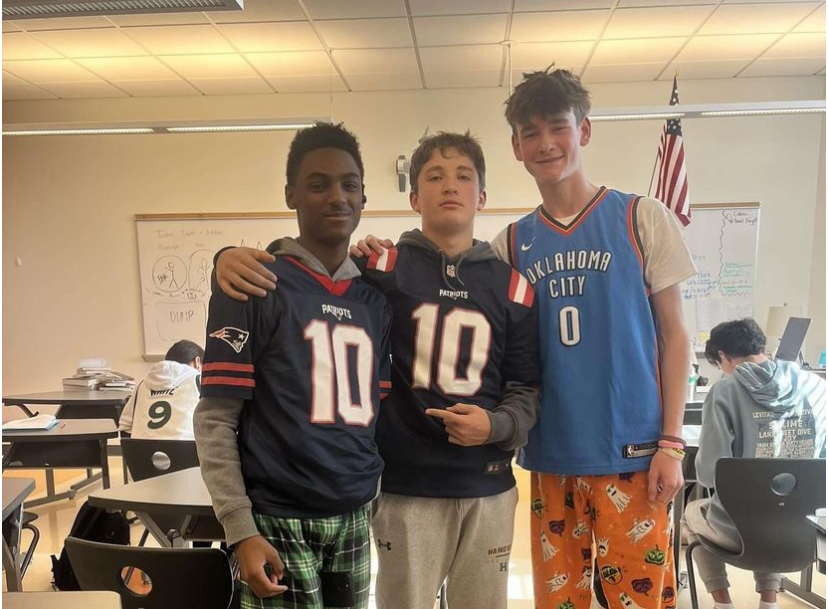
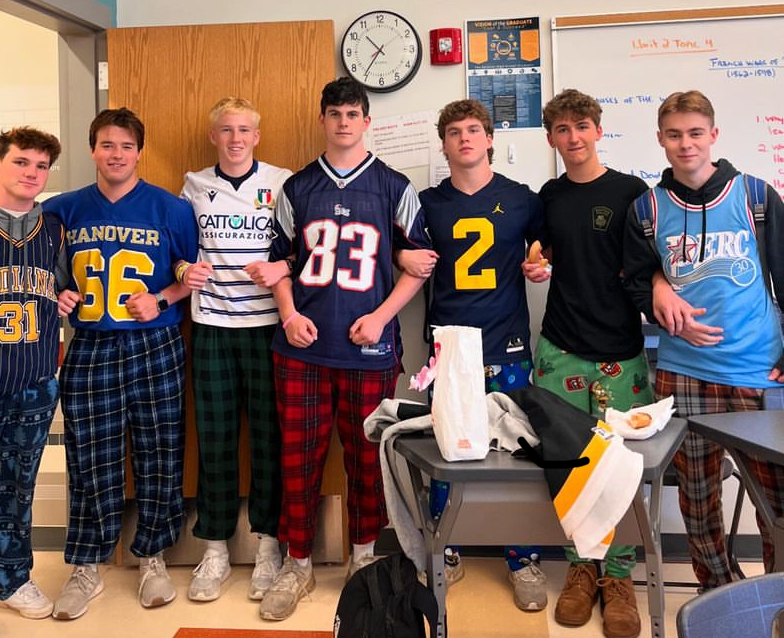
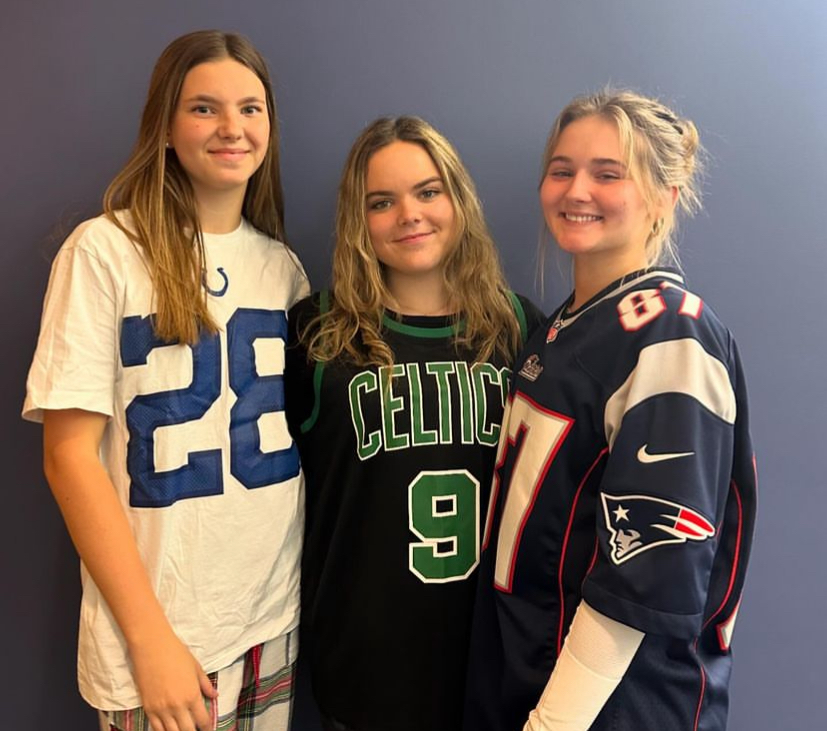
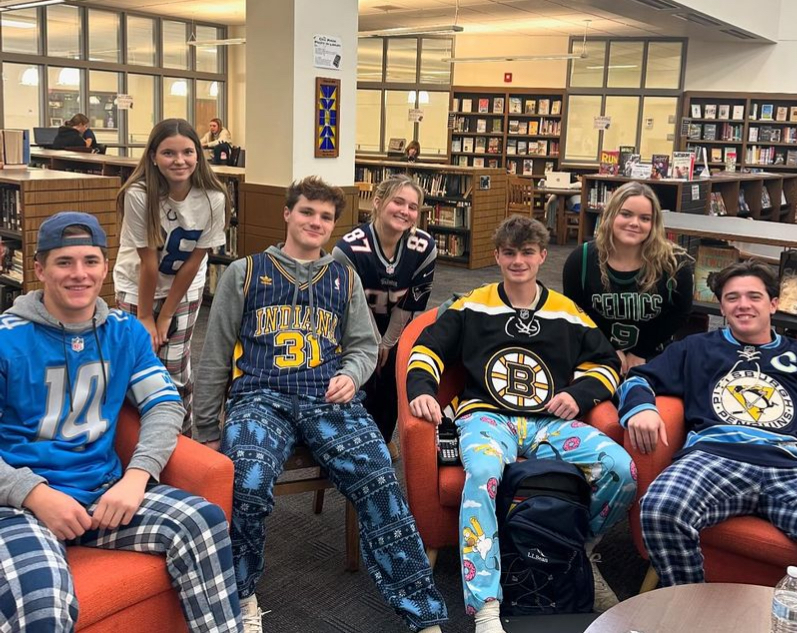
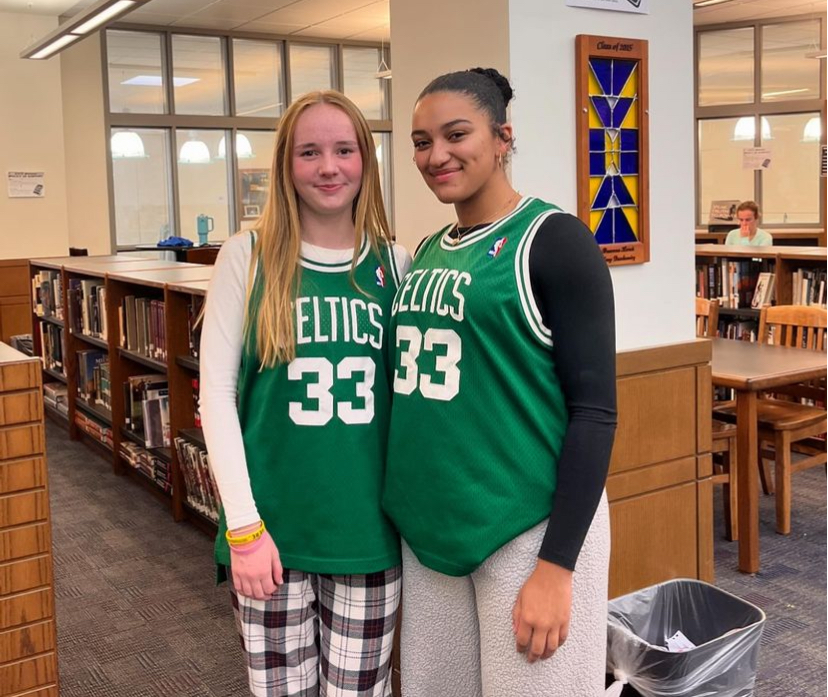
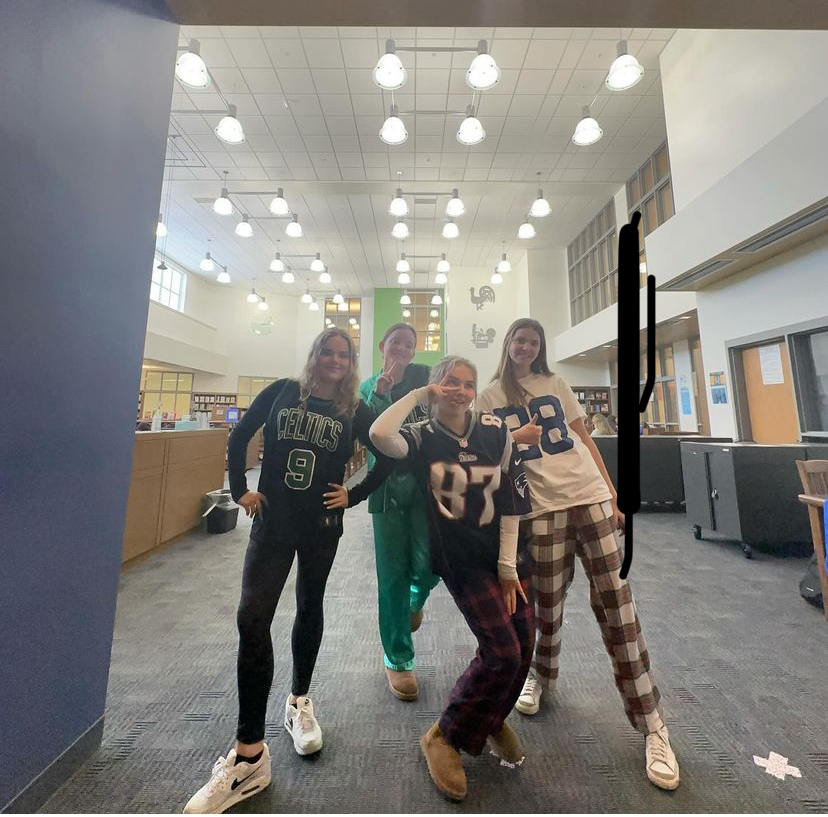
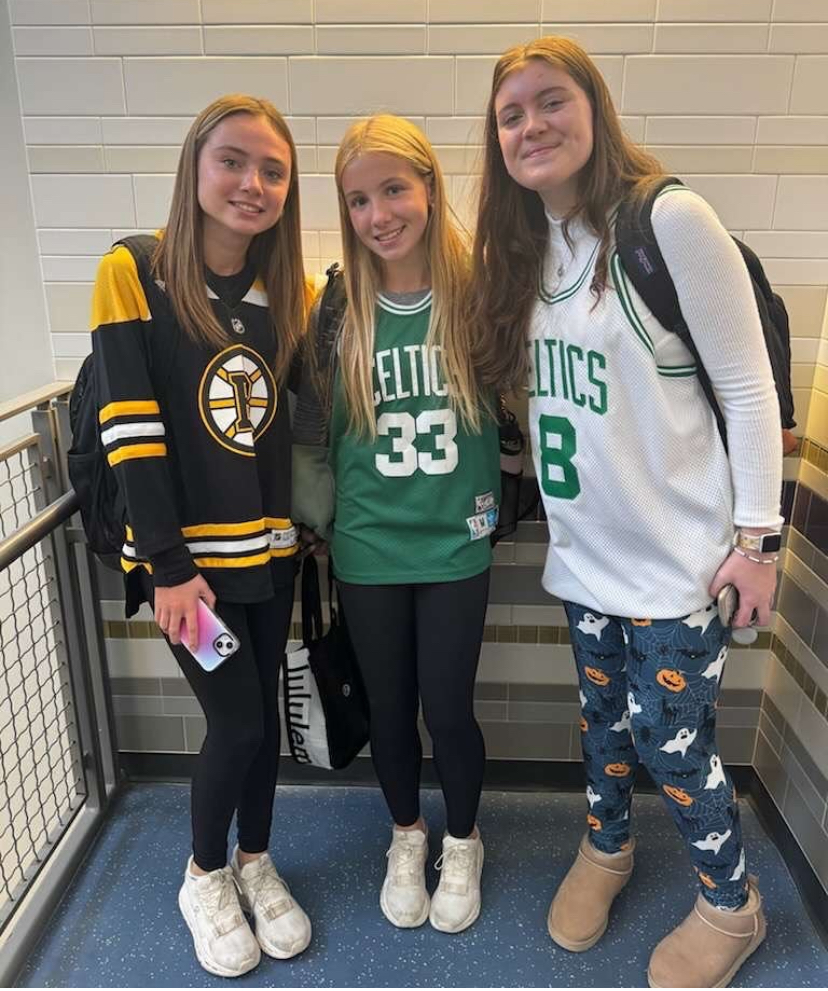
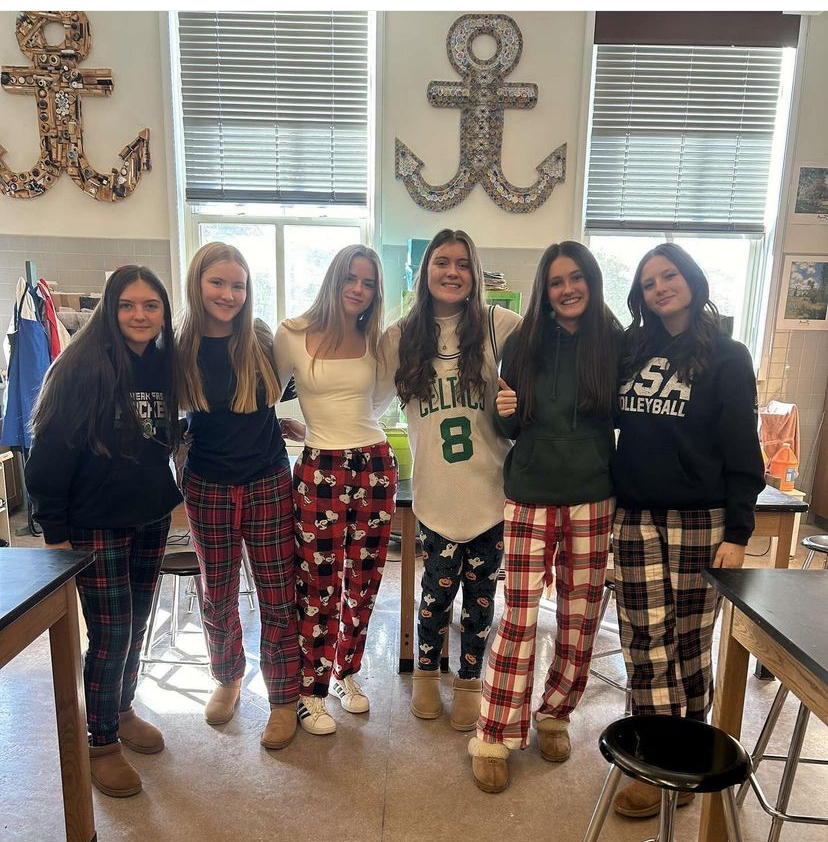
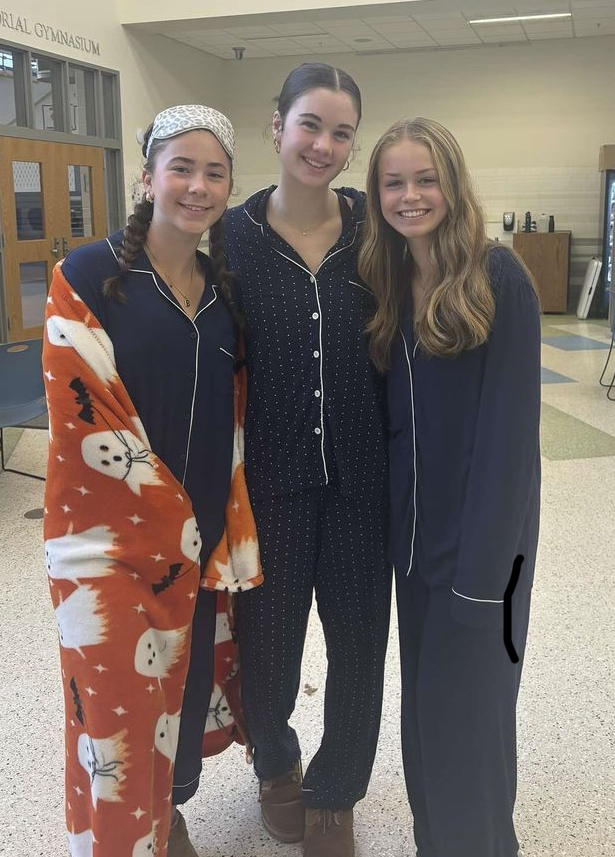
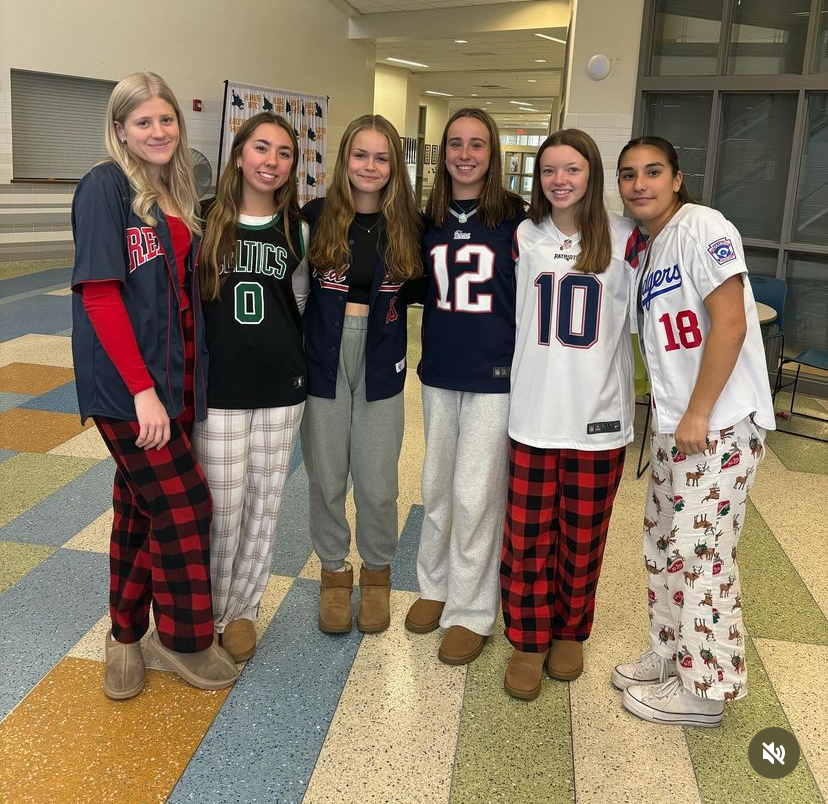
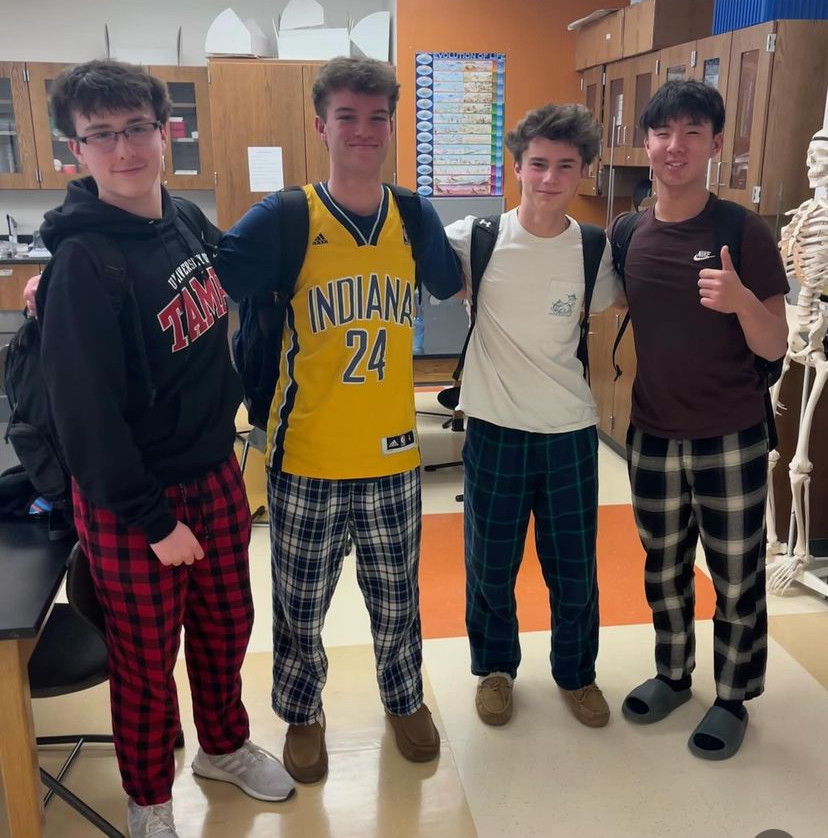
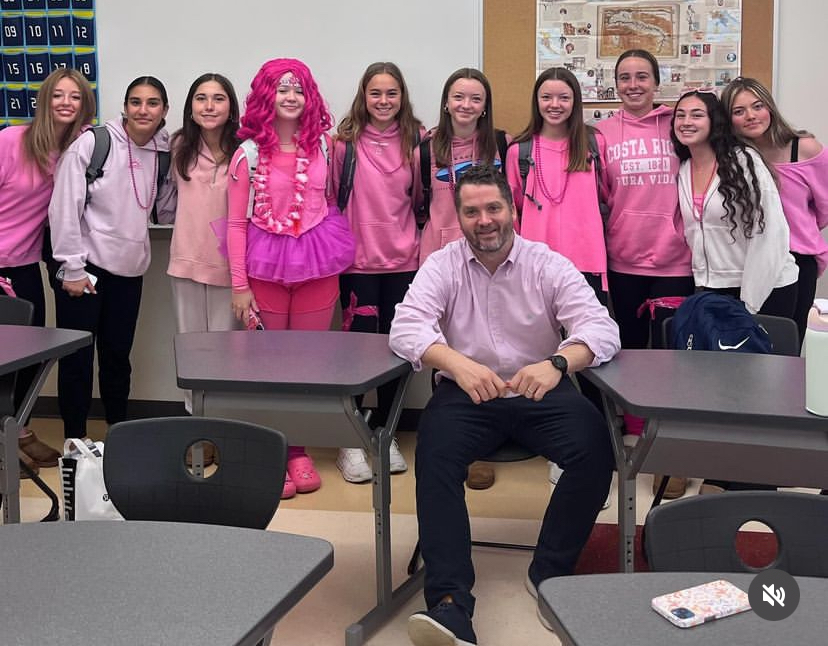
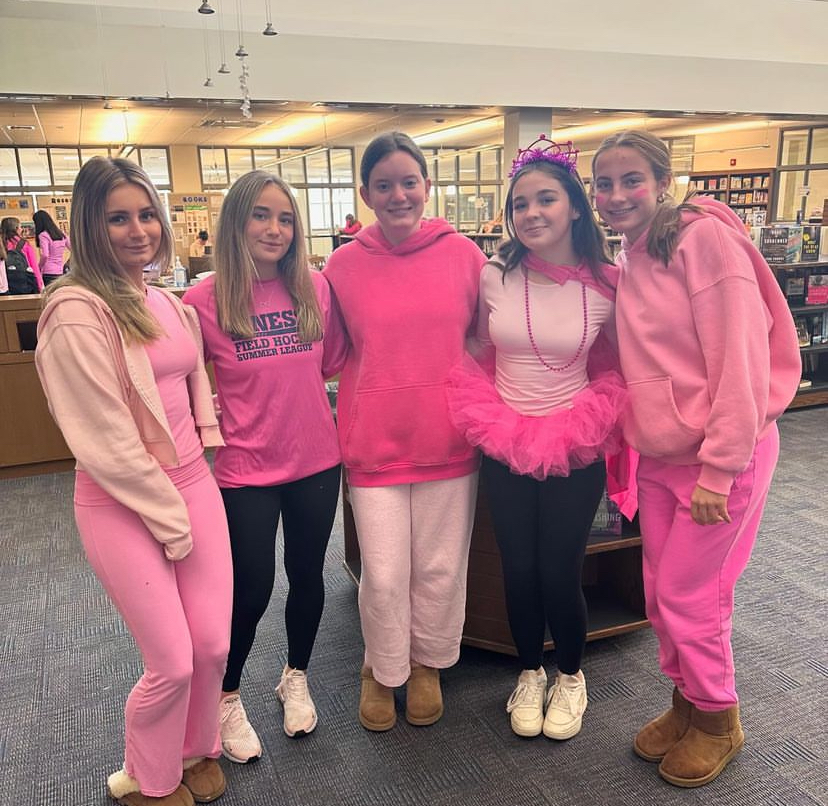
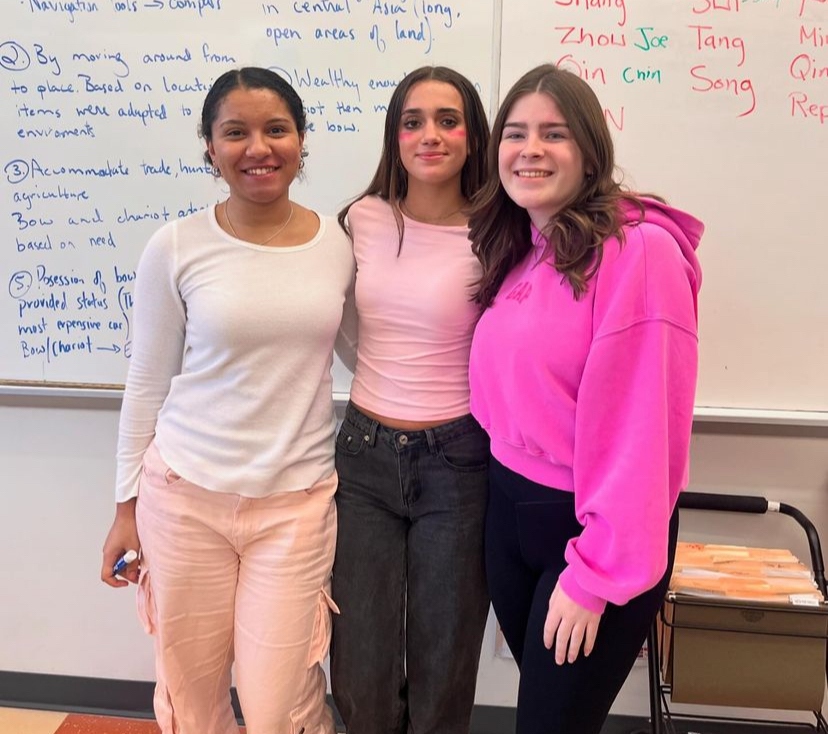
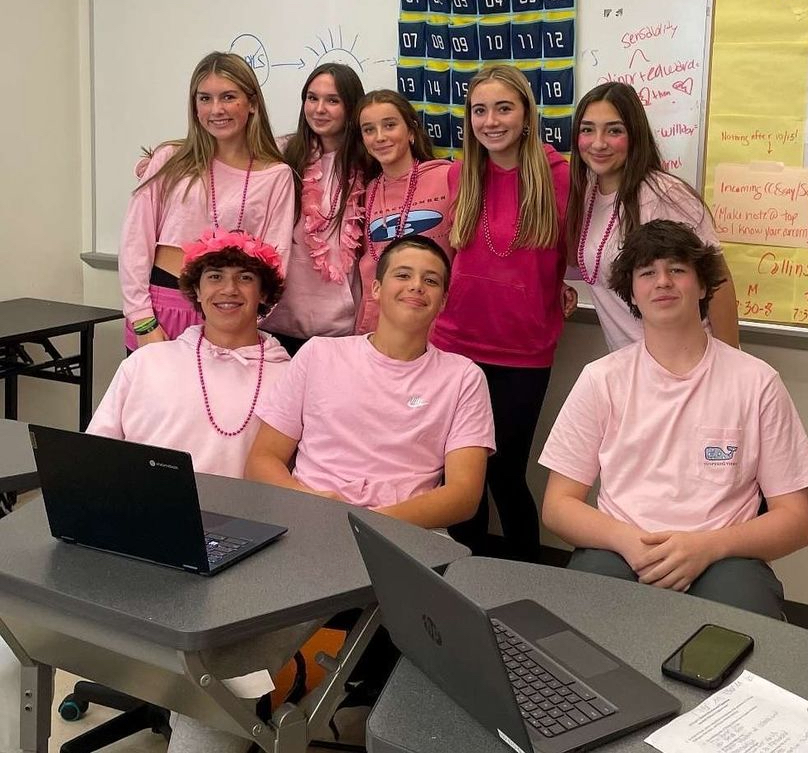
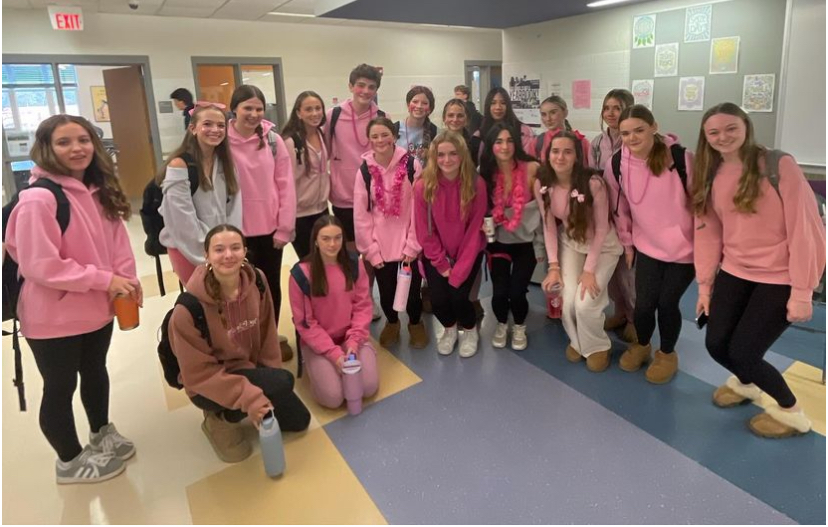
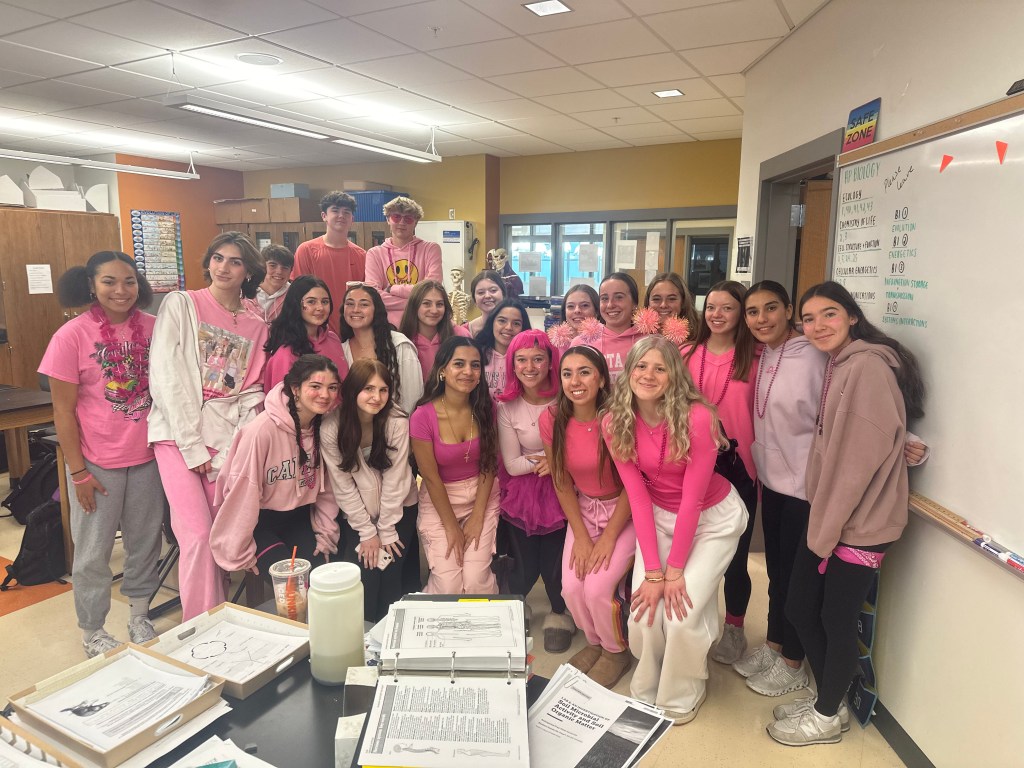
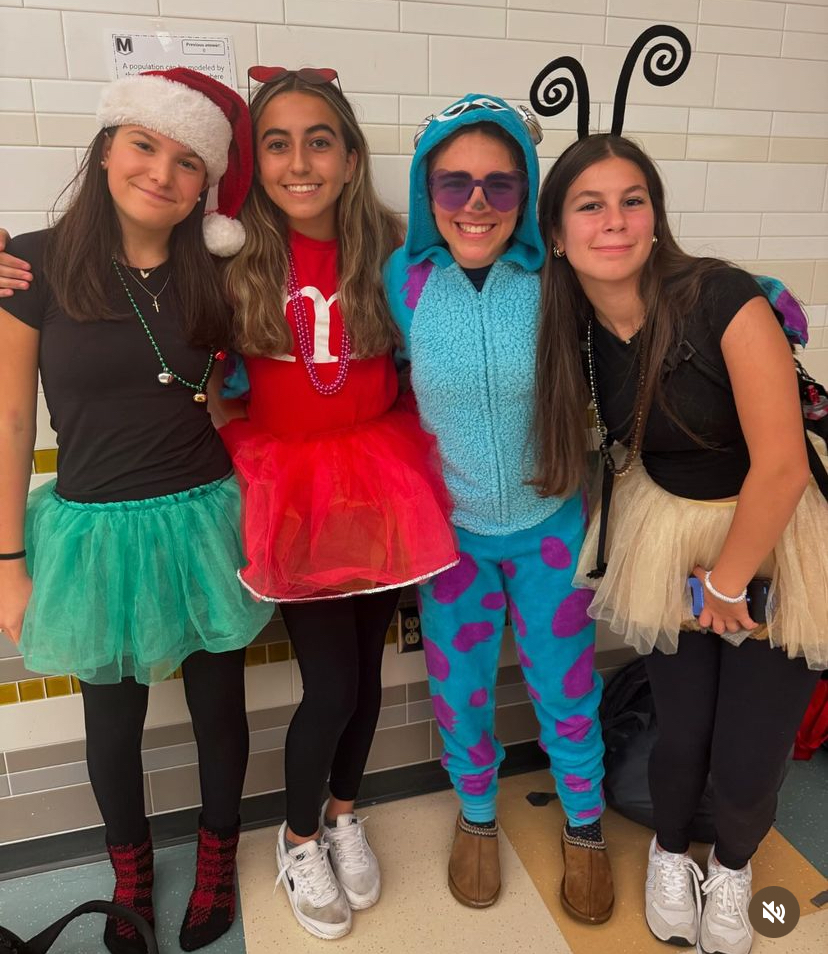
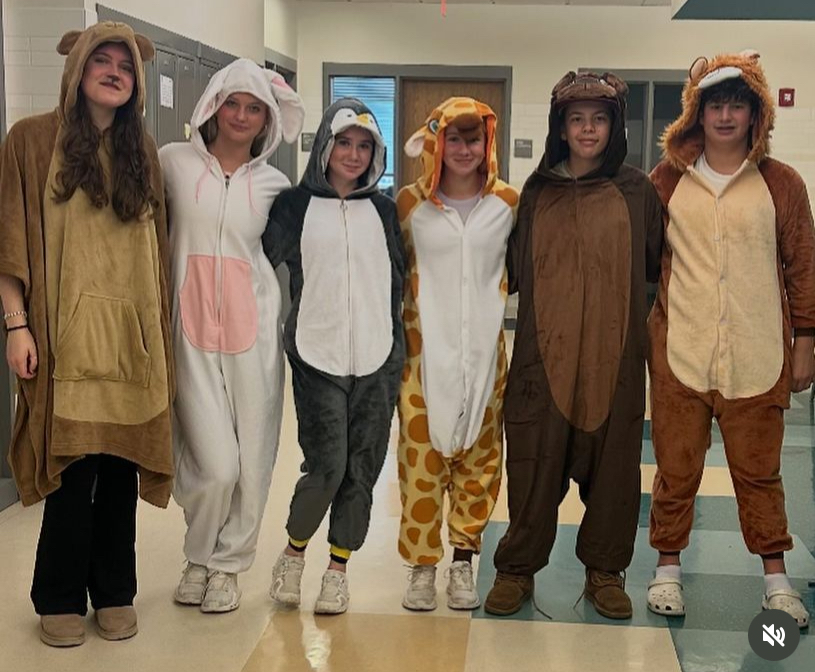
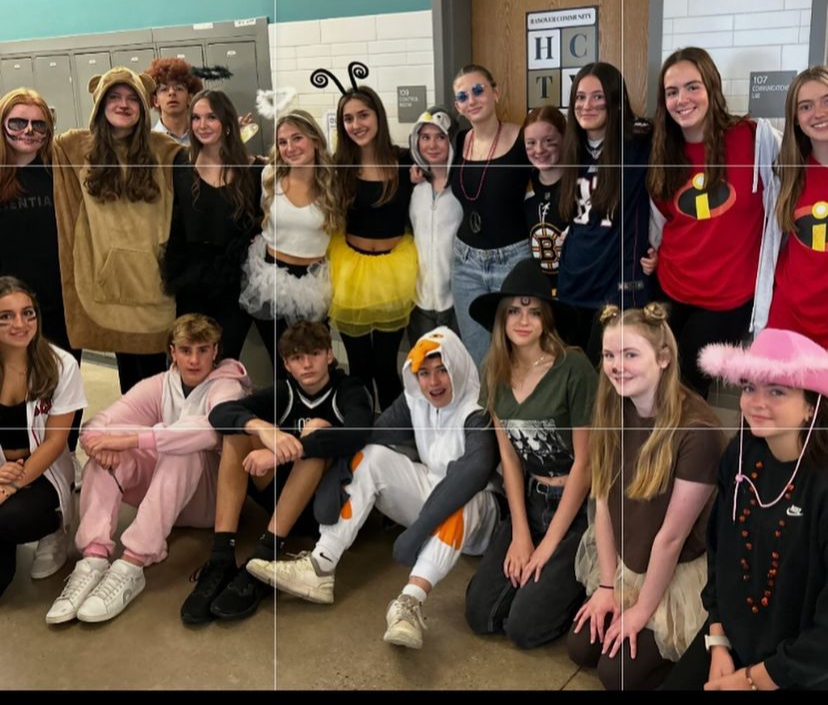
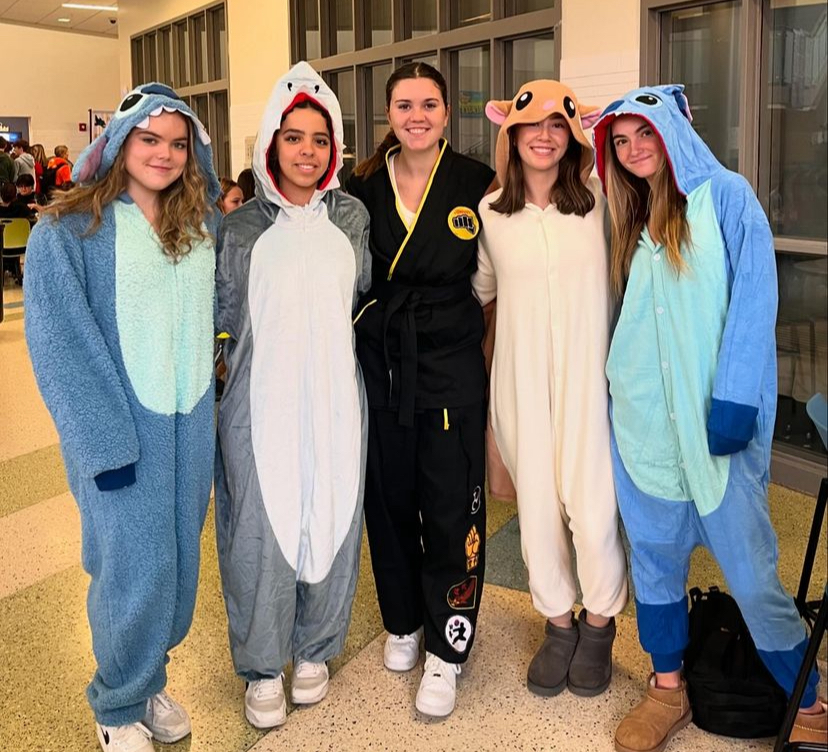
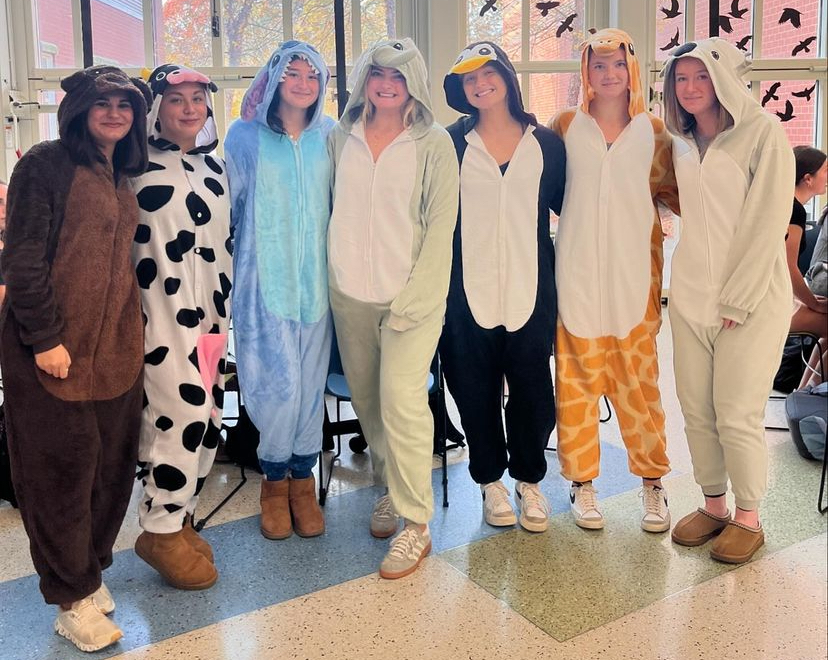
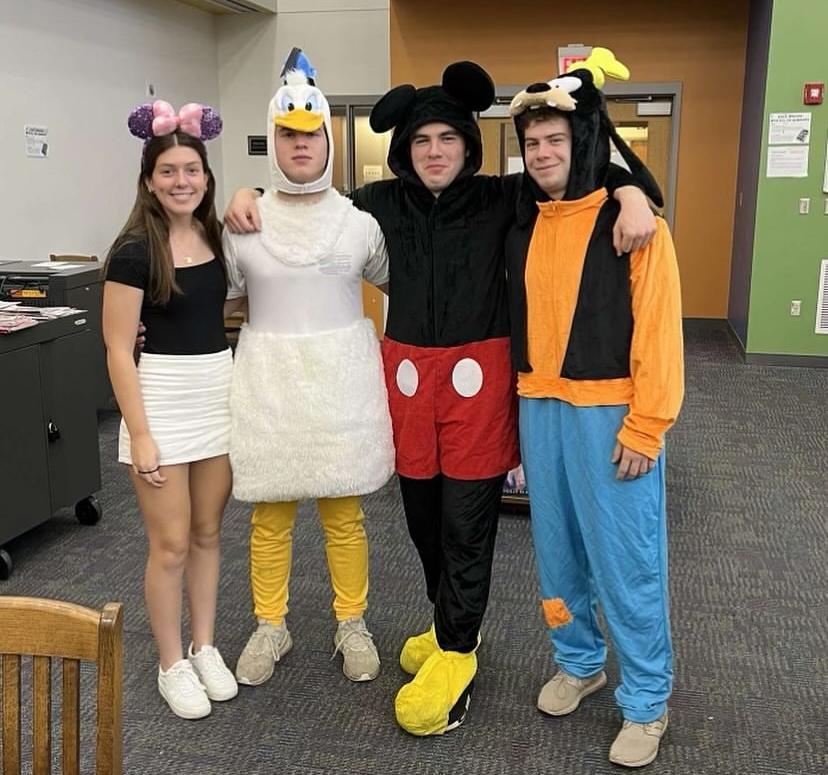
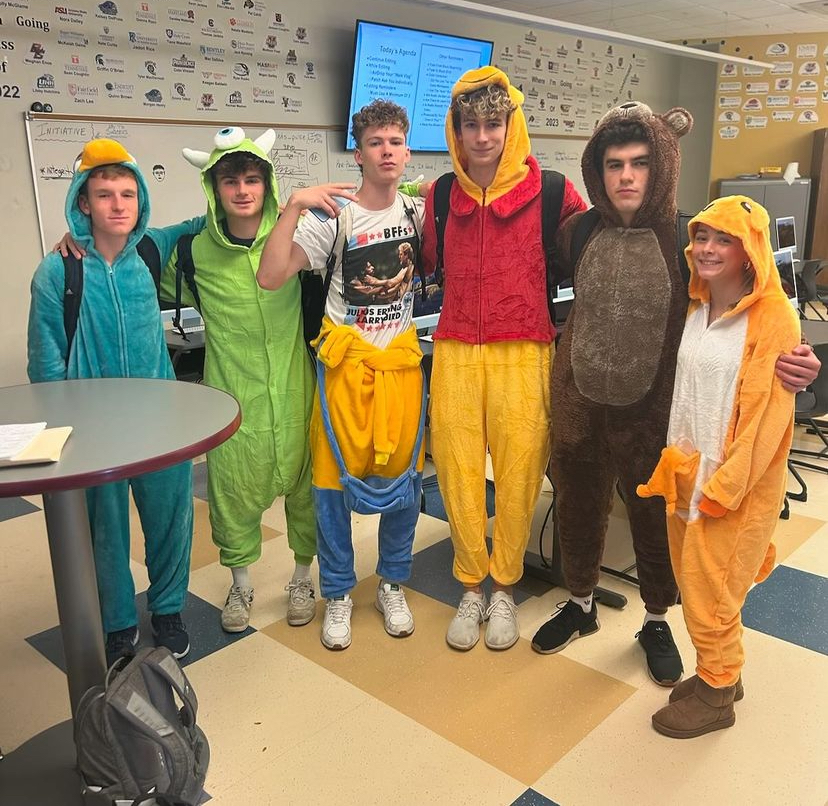
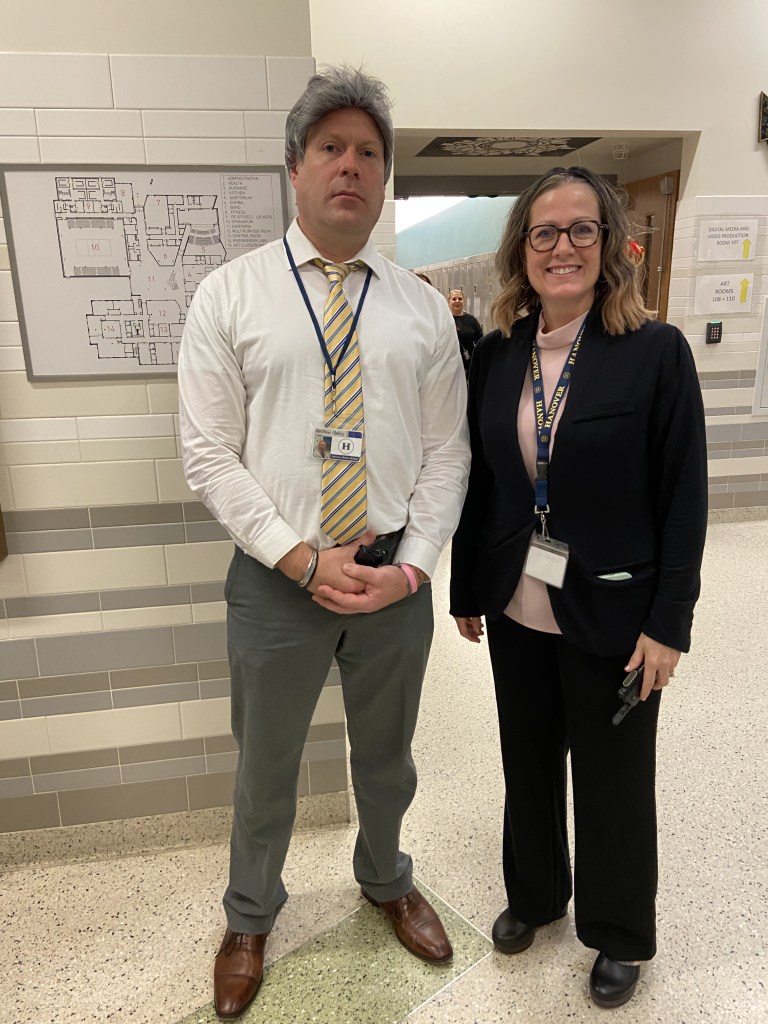
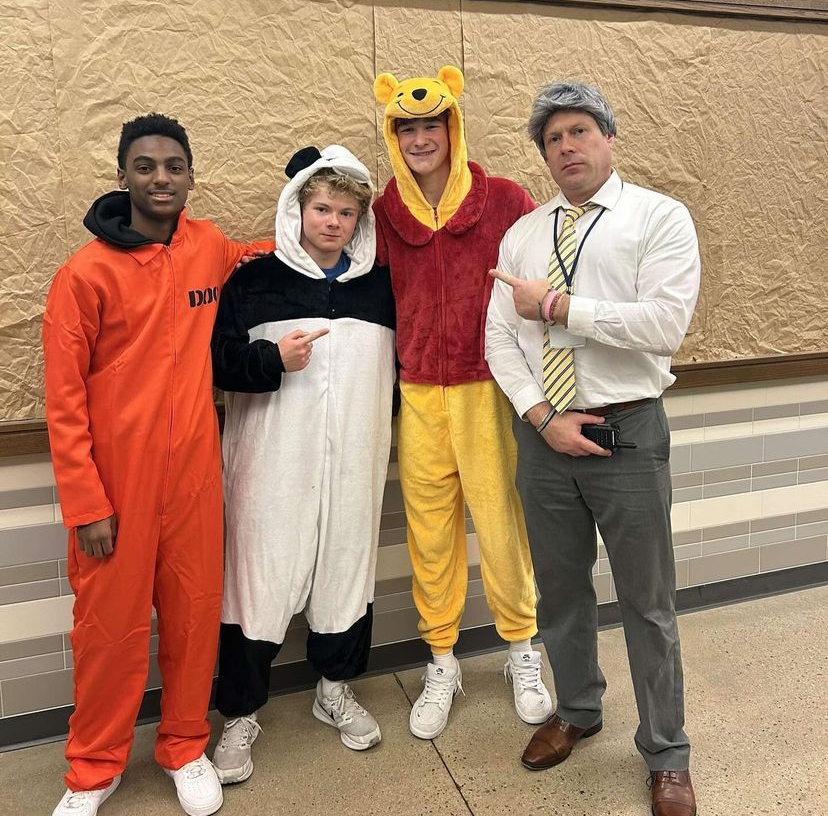
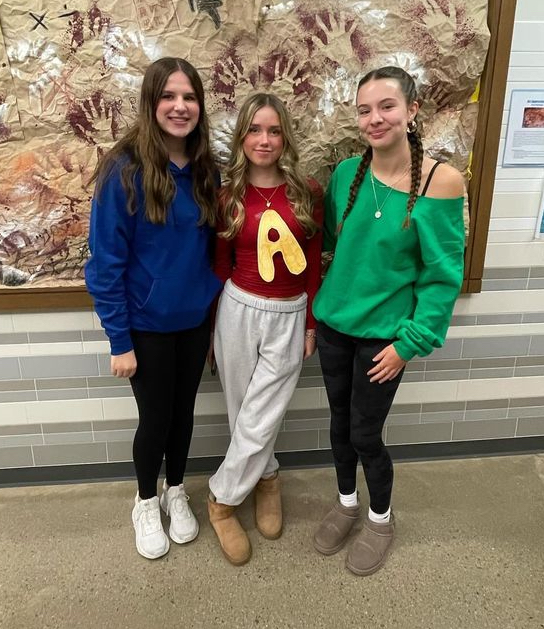
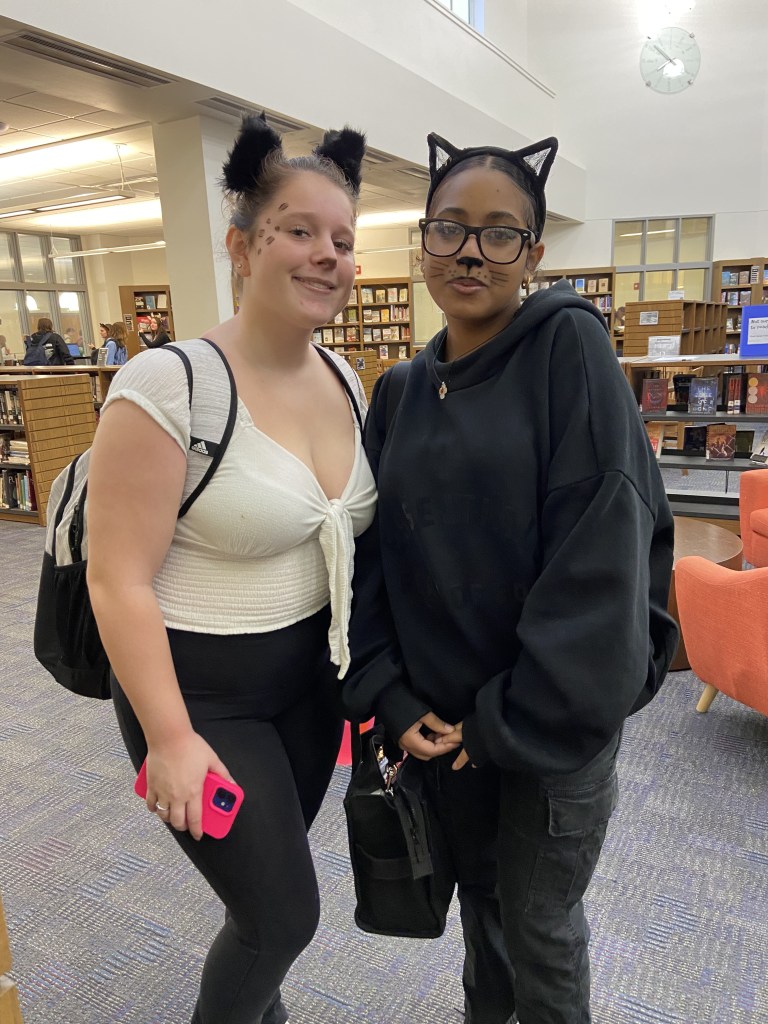
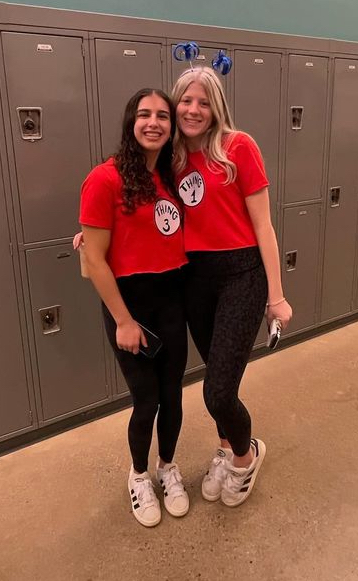
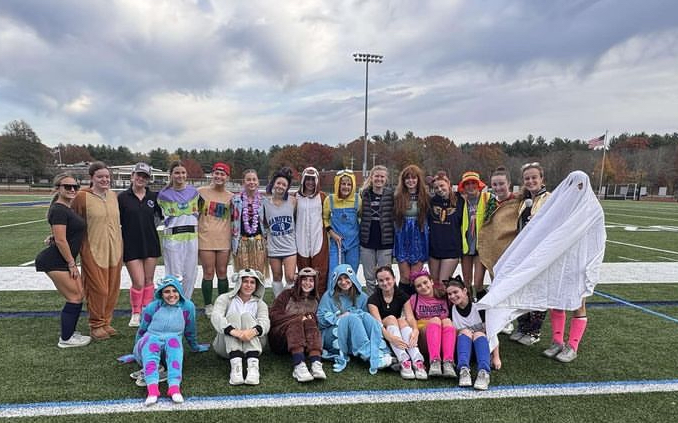
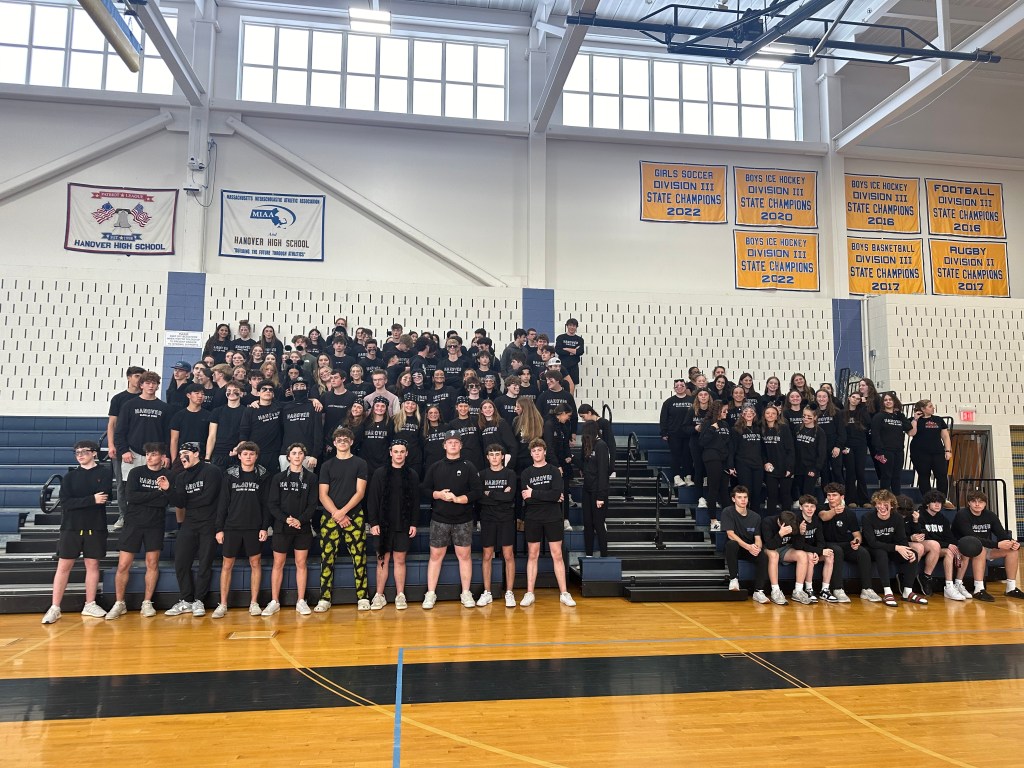
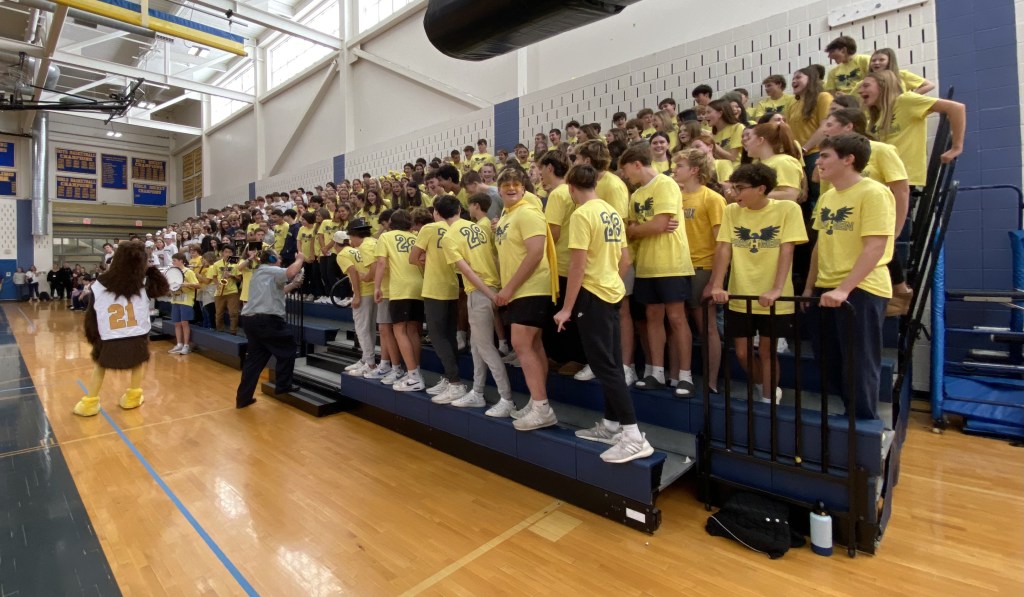
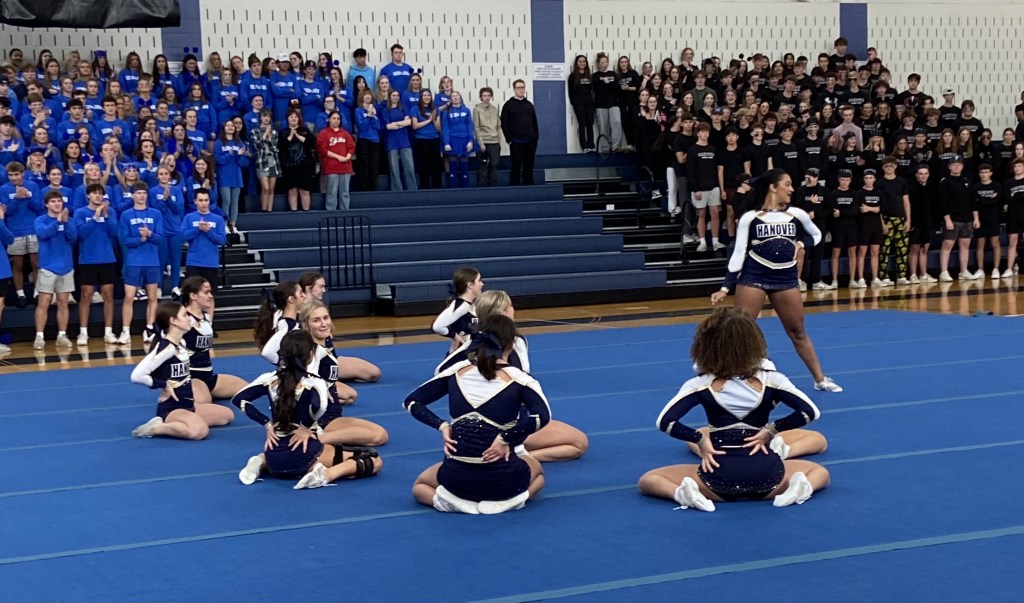
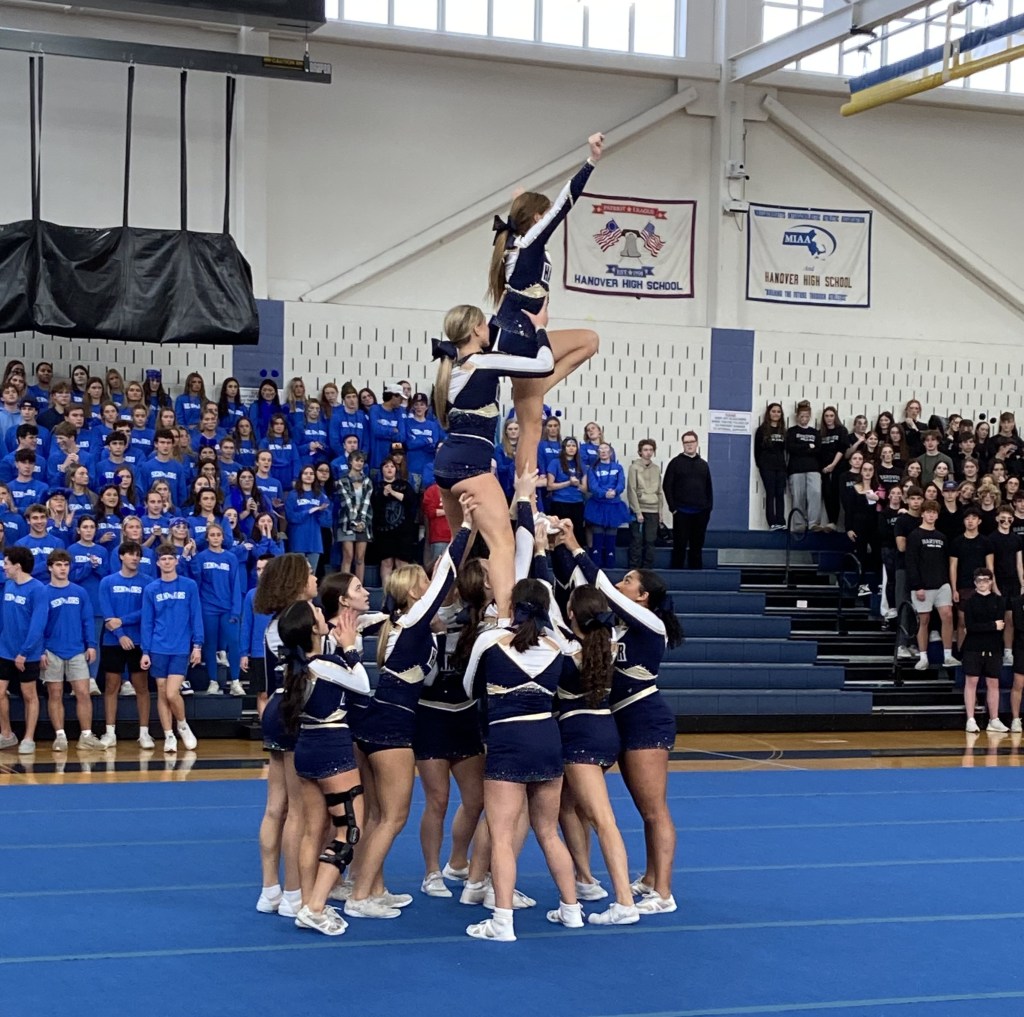
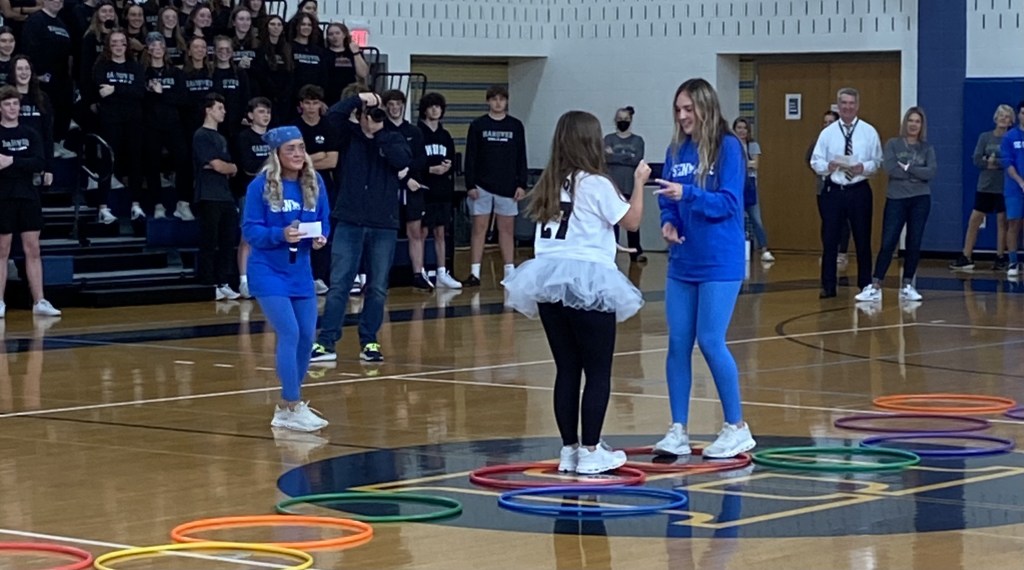
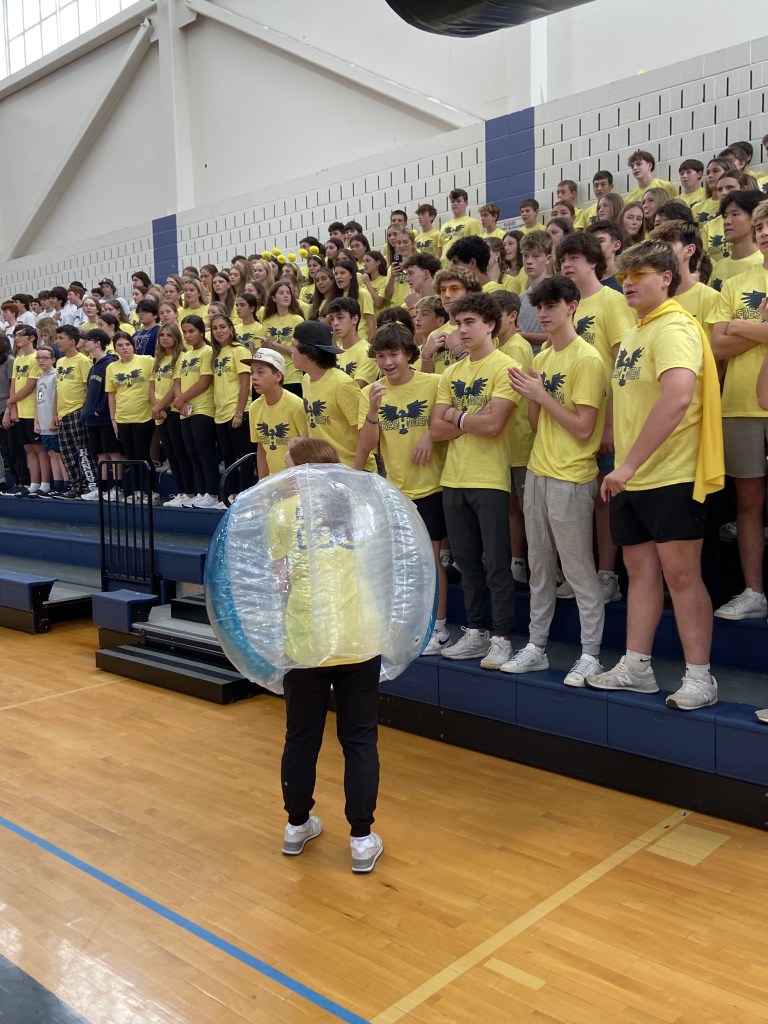
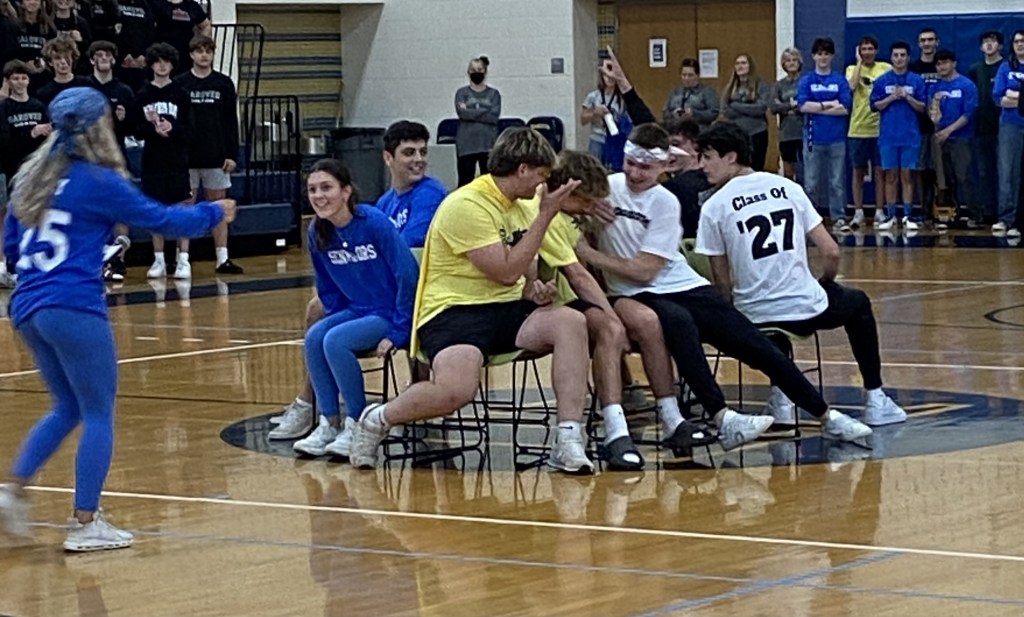
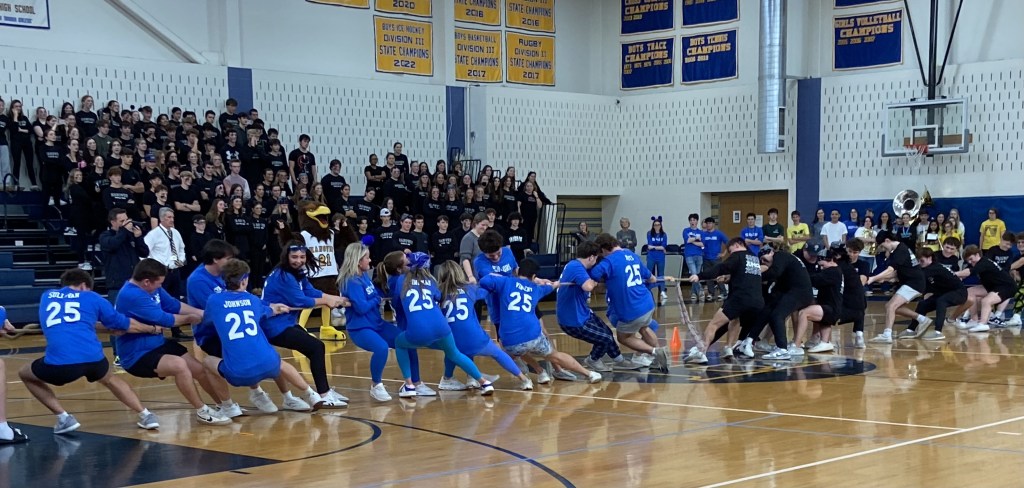
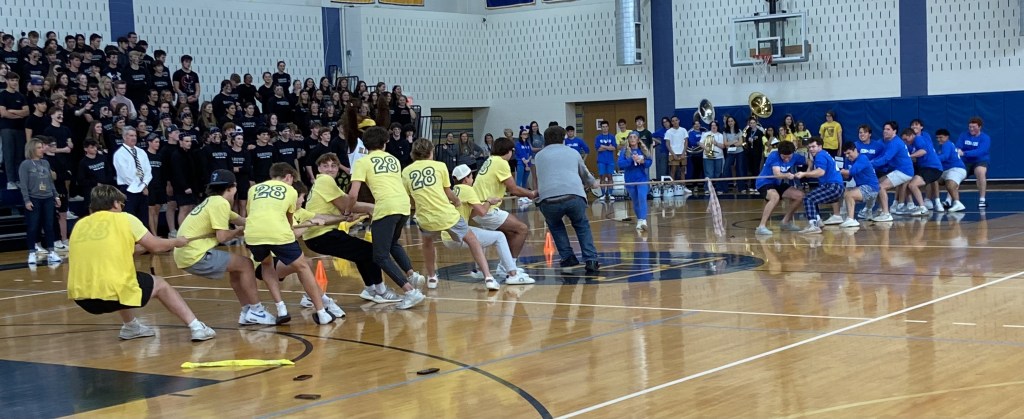
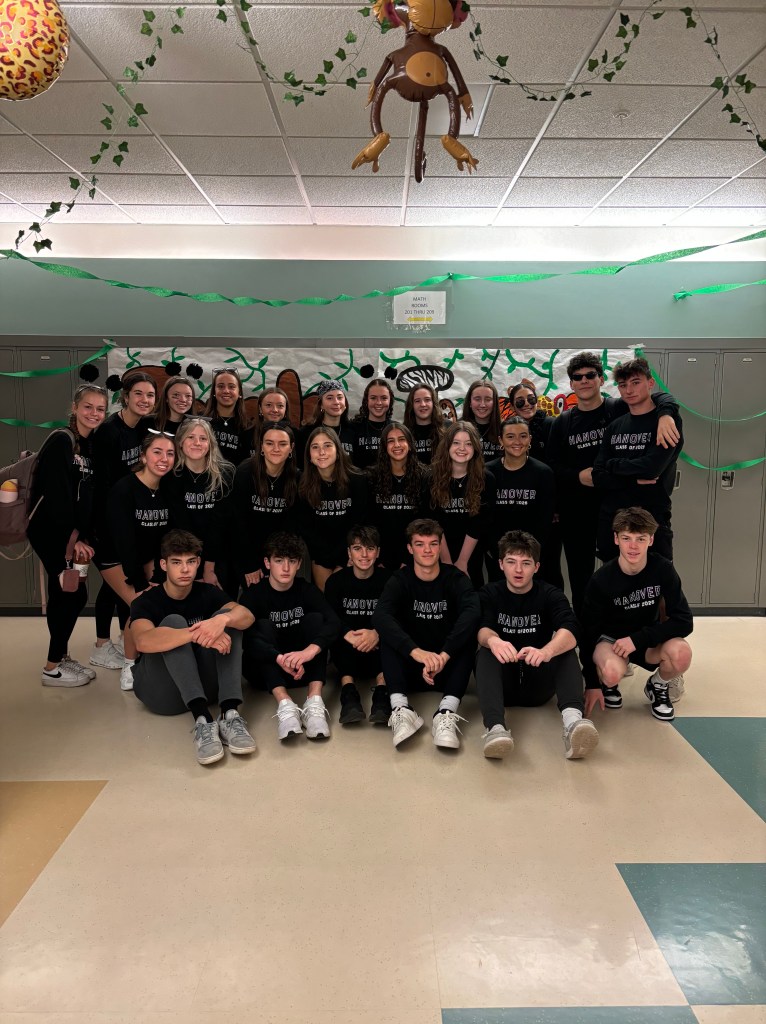
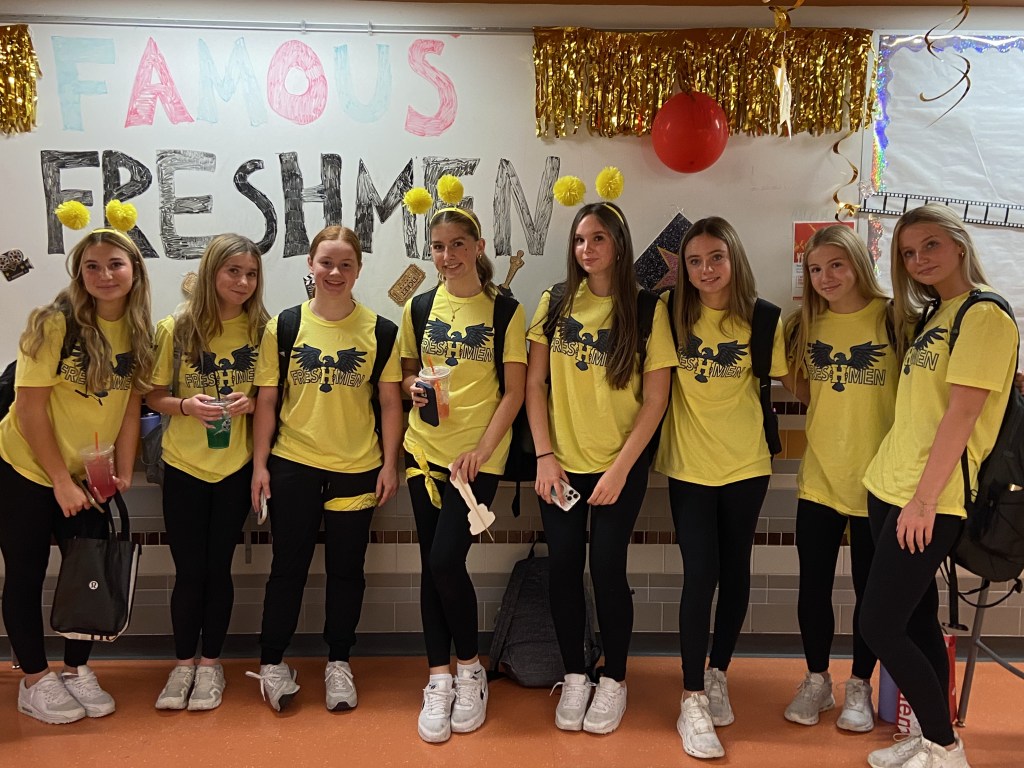
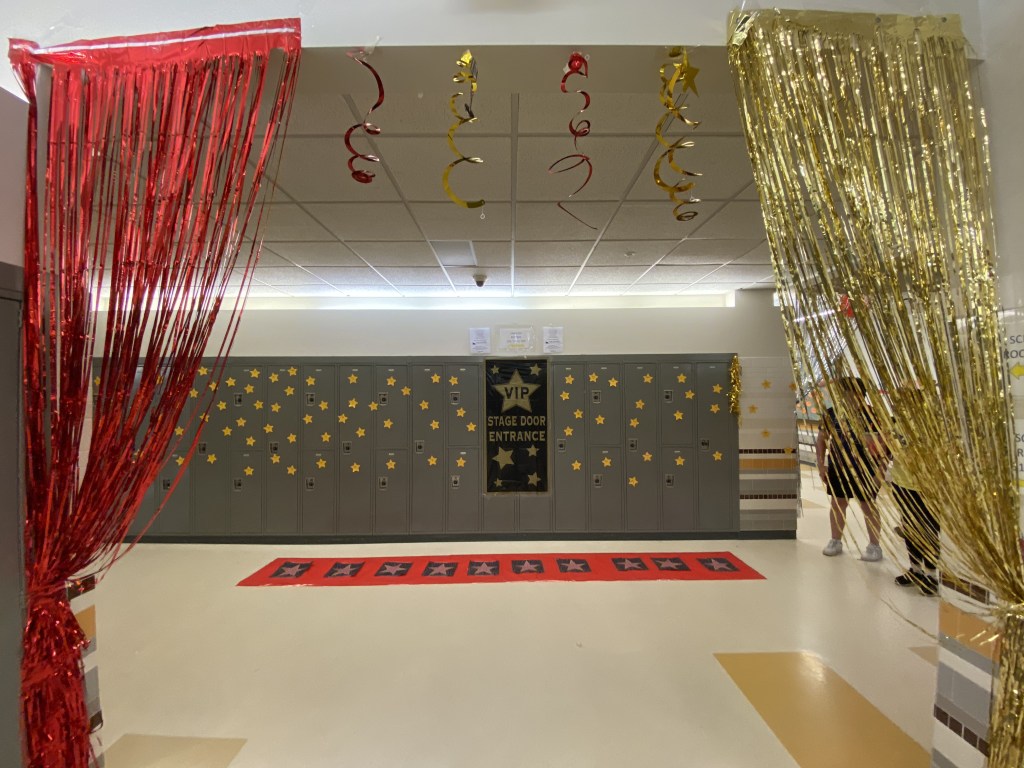
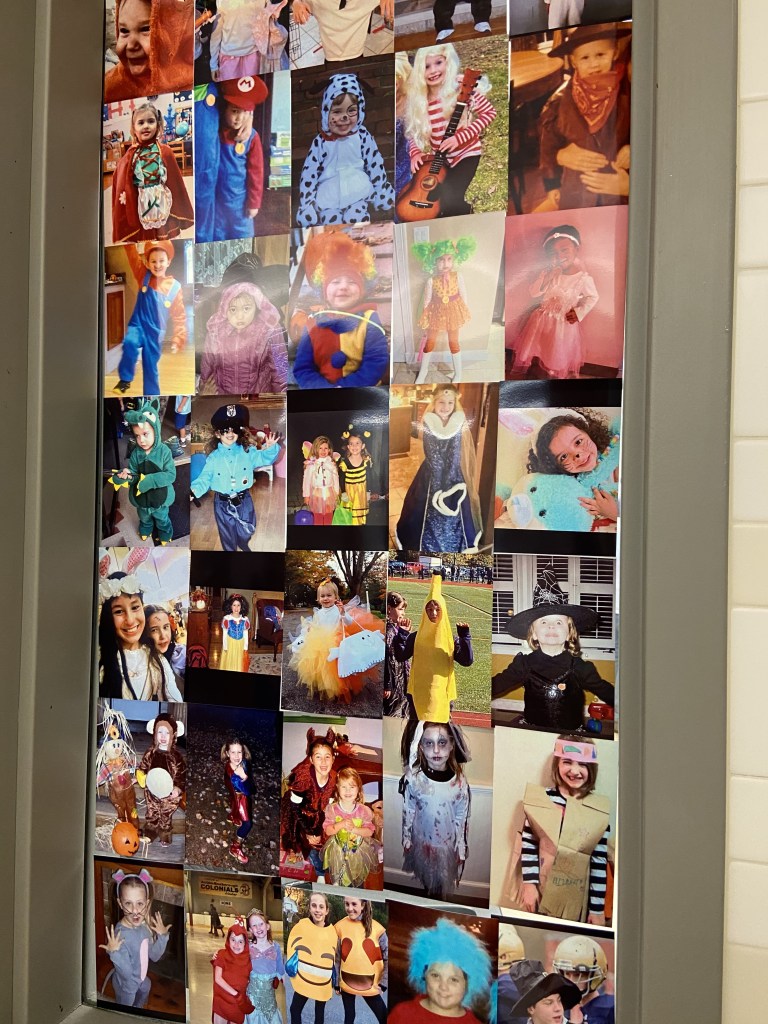
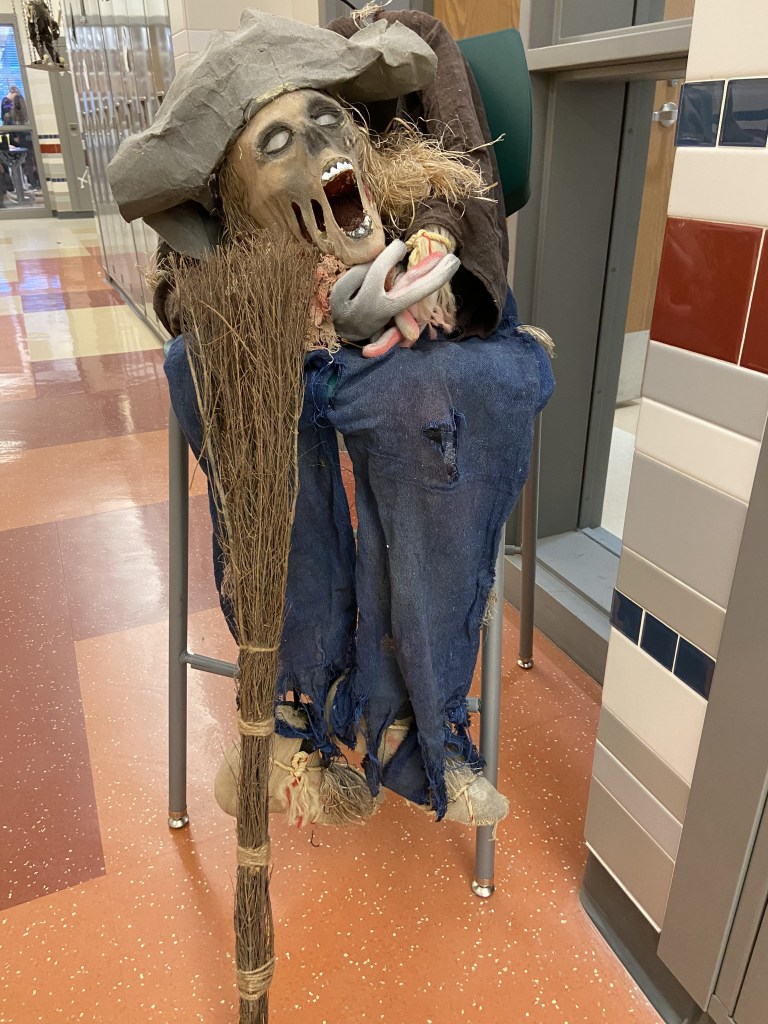
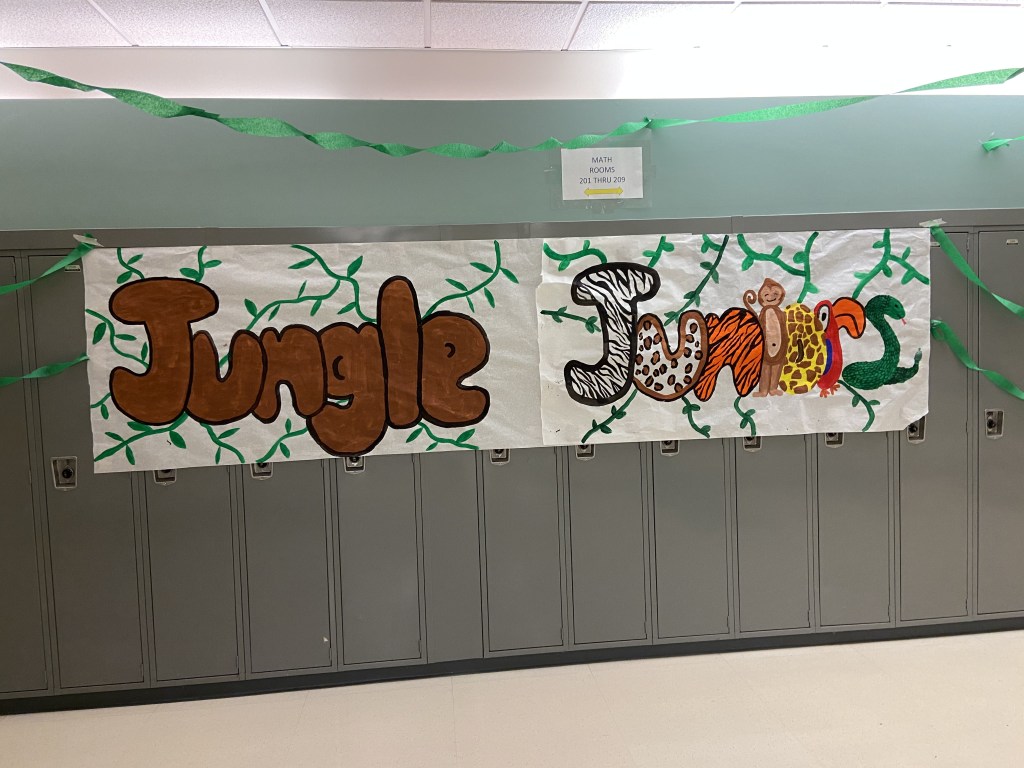
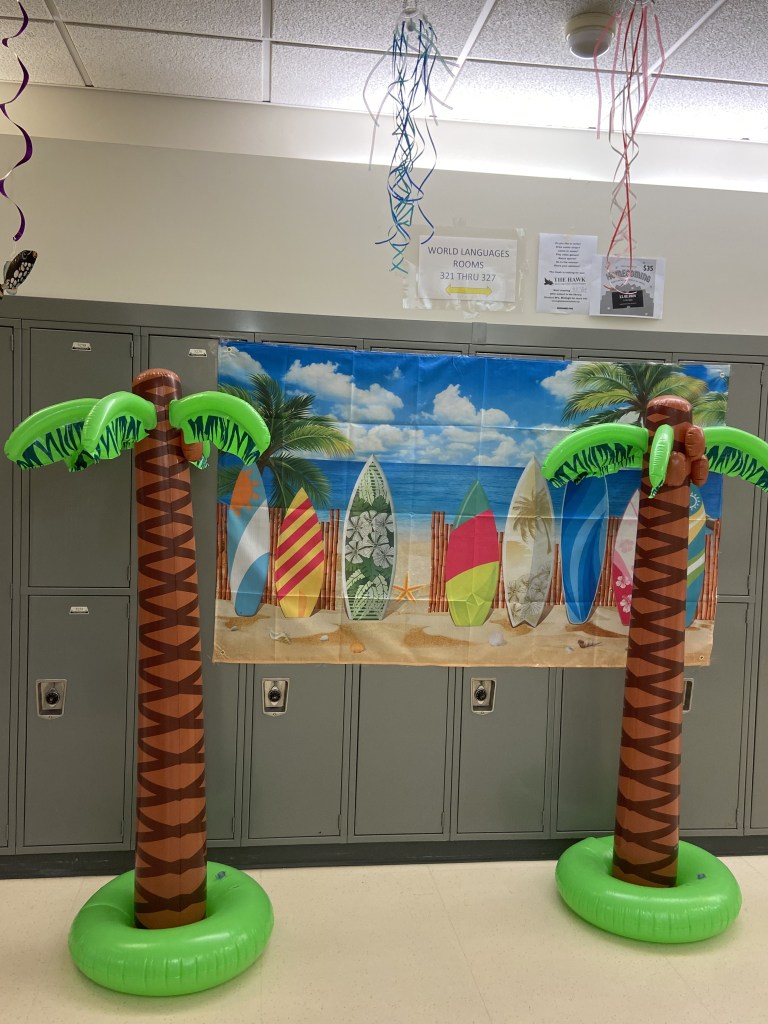
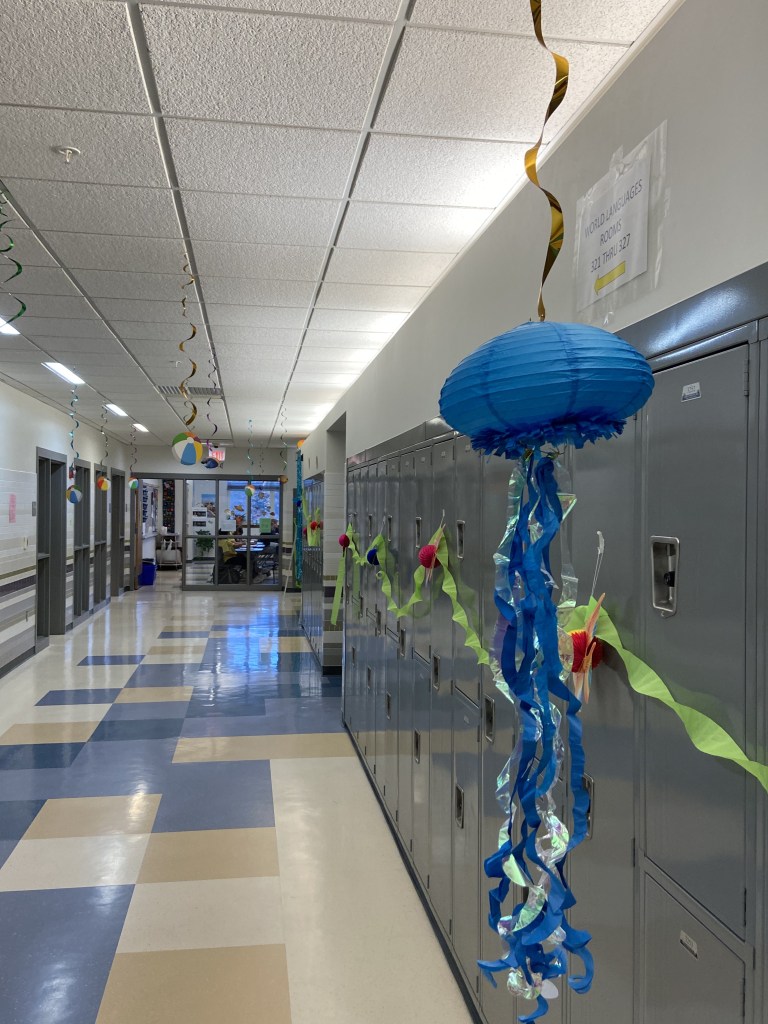
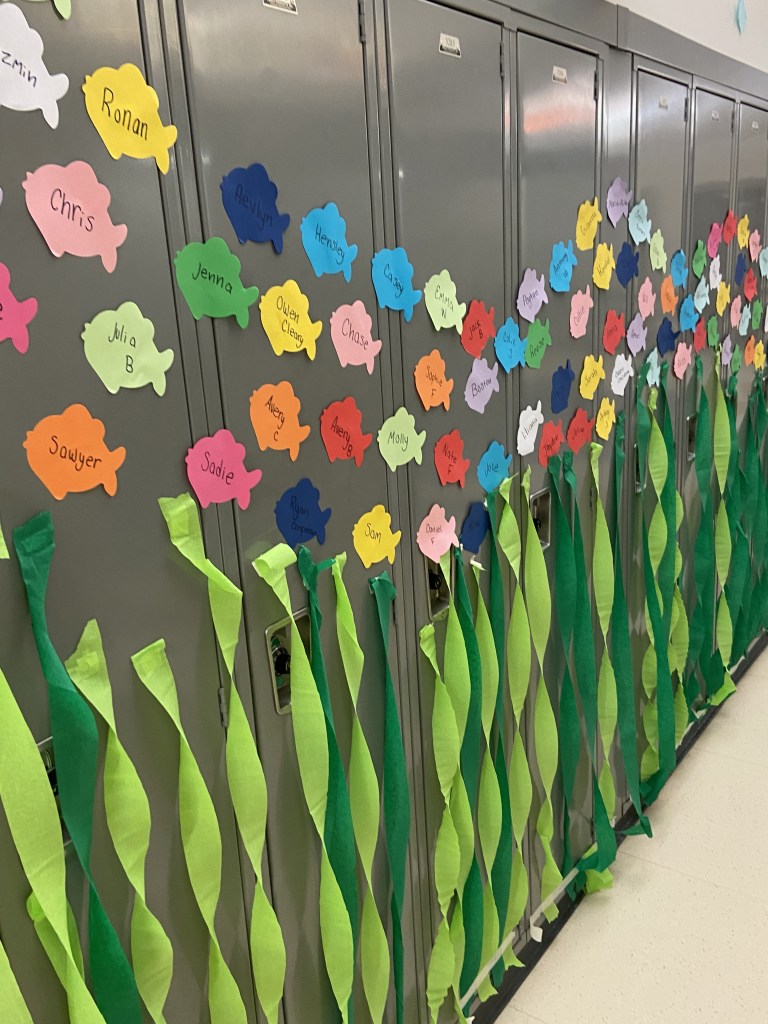
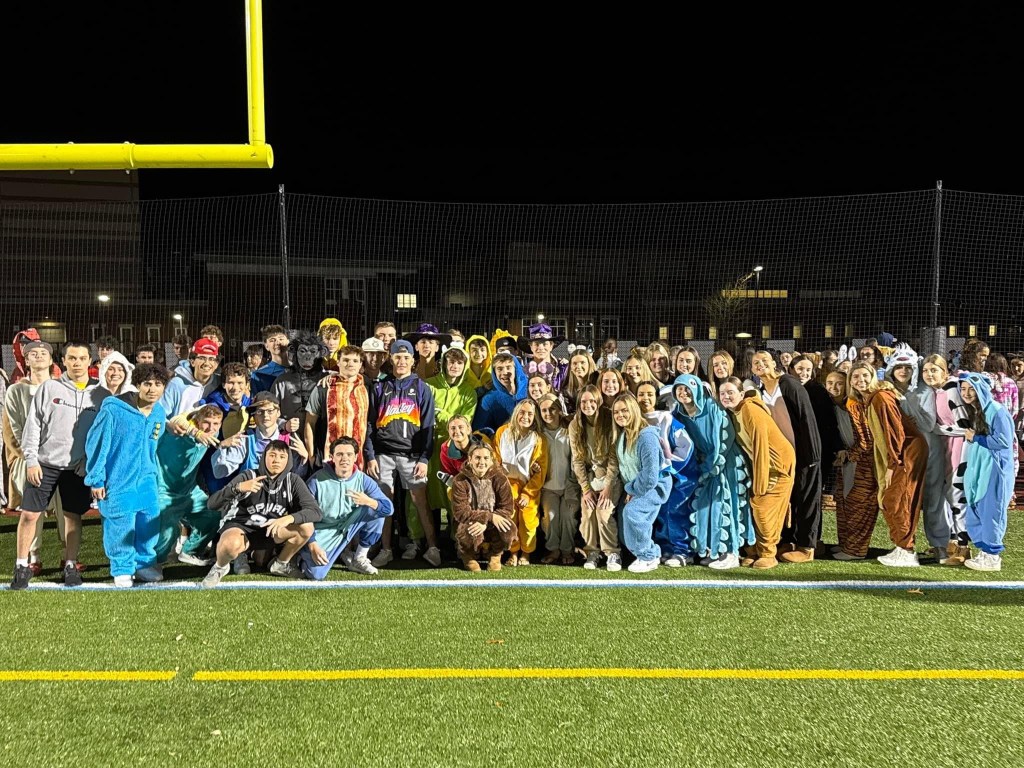
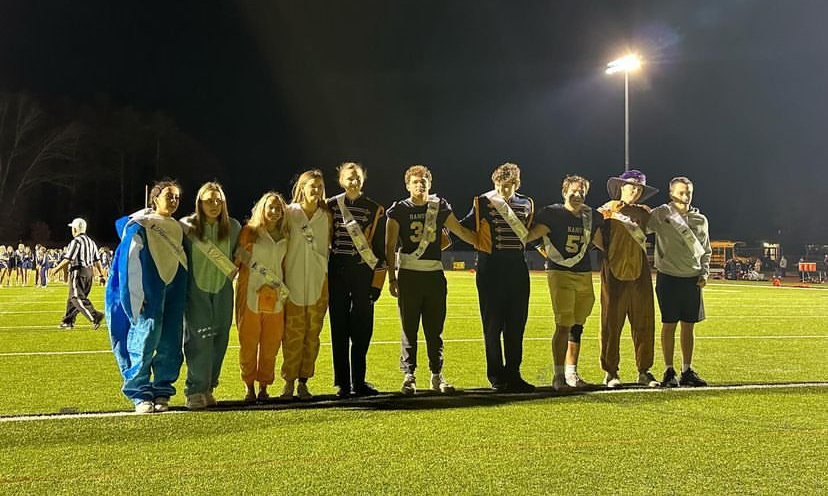
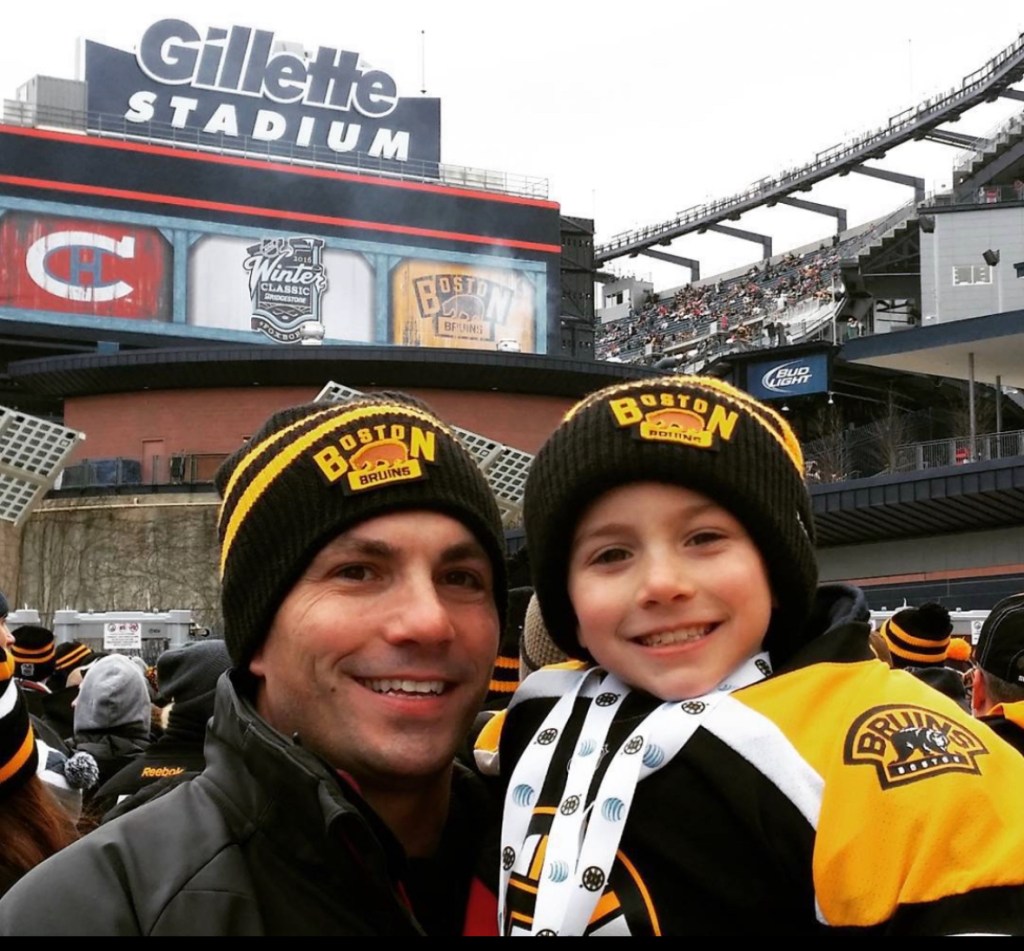
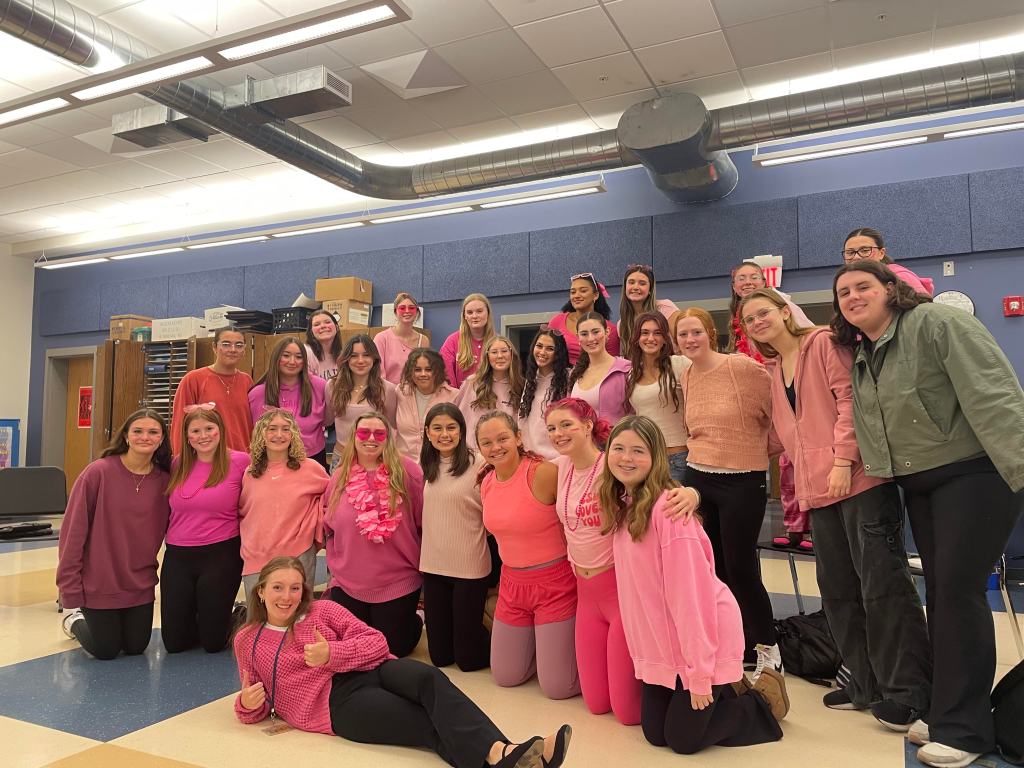
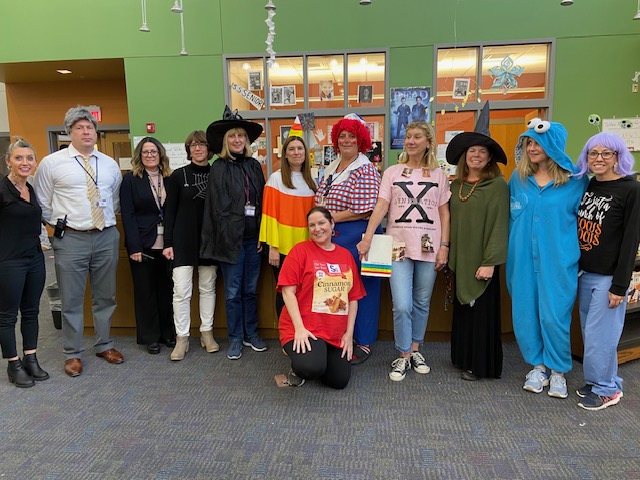
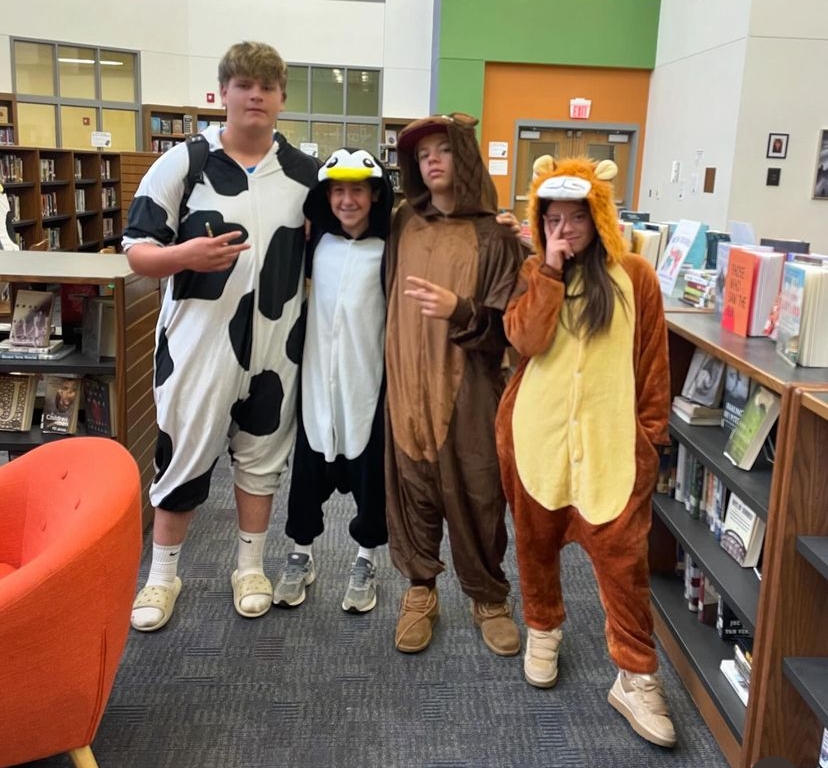
Hanover High students went all in for Spirit Week and Homecoming, held Oct. 28-Nov. 1. The costumes for the four themed days included red, white and blue; jammies and jerseys; ‘On Wednesdays, we wear pink’ from the movie Clueless; and Halloween costumes. The Junior Class won the pod decorating contest with Jungle Juniors, and students wearing their class colors crowded into the gym for a pep rally that featured riotous games and friendly trash talk.

The football team crushed North Quincy High School 42-7 in the Friday night Homecoming game, cheered on by a crowd of costumed fans in the endzone. Seniors Connor McCue and Ava Good were voted Homecoming king and queen at the Saturday night dance, which attendees said was the best in several years.

Click on the pictures to scroll through a larger gallery.

Performers Hit All the Right Notes

By Giada Grace, ’28

Staff Writer

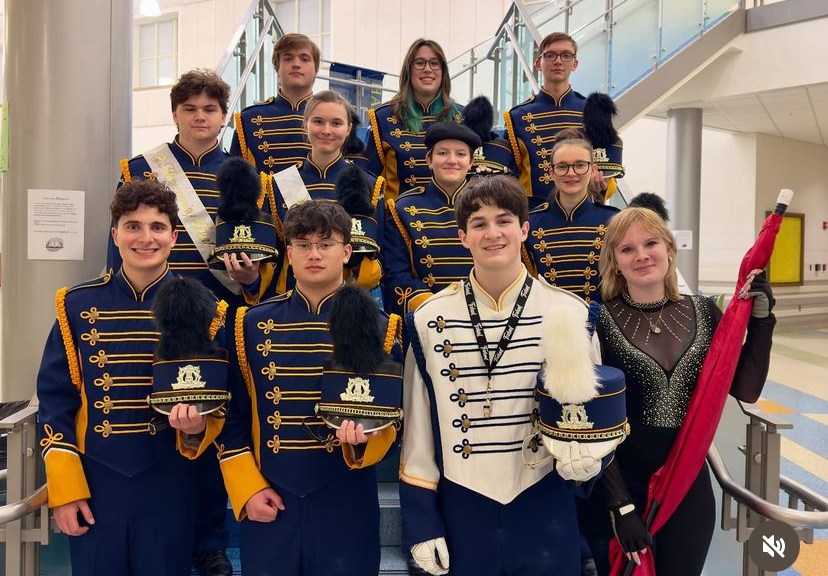
The Hanover High School Cabaret concert, held October 15, transformed the cafeteria into a musical showcase. About 20 participants performed. The Pride of Hanover marching band played its current field show “Chicago,” and Vox displayed its choral talents. Other performances included “Enchanted” by Taylor Swift, sung by Avery Porro and Sophie Frattasio, and “Good Luck, Babe!” by Chappel Roan, performed by Henry Graham and Daniel Freedman. I joined Anna Dillon, Aevlyn Brangan, Ben Smith, Maria-Rita Silva and Luca Ciccolo for “Viva La Vida” by Coldplay. All of the performances were exceptional.

It is a great accomplishment to go in front of an audience and perform. Even after playing for many years on stage, it can still be nerve racking, but everyone did a great job. Some were even brave enough to play a solo. I talked to several of the performers to learn more about the atmosphere for the musical arts at HHS. I love performing in front of a crowd, whether it’s at a football game or a concert. It is fun and exhilarating, even though it can fill me with worries. But it’s all worth it when you see everyone supporting you and cheering you on.

“Before my first game, I was nervous but then I realized that I did good,” said Tory Jara, a freshman. “I feel very proud of myself after my performances due to all of the hard work that I put in everytime.”

Many band students believe, and I agree, that one of the best parts about being in band is showing what we can accomplish together. We all have to come together to make the band what it is and it takes teamwork. Another great thing about band is all of the friends you make. Going to class first period every morning with all the people I love is a great feeling, and everyone there shares a common passion, music!  As a freshman, I wasn’t sure what to expect from high school band, but I very quickly realized that while I liked being in band before, I now love it. I am starting a new chapter that helped make the overall move to high school a little easier.

“The people you meet are amazing and they make you feel like you are part of the team,” said freshman Layla Ali. Music makes you come out of your shell and learn to communicate without words, she added.

AFC East: Future in Focus

By Luke Curran

Staff Writer, ’27

The opening of the 2024-2025 NFL season for the Eastern American Football Conference has been slower than anticipated. Many of these teams’ unpleasant starts have left the rest of the season up in the air. Despite their sluggish starts, each franchise still has goals it hopes to achieve. Here’s what’s happening.
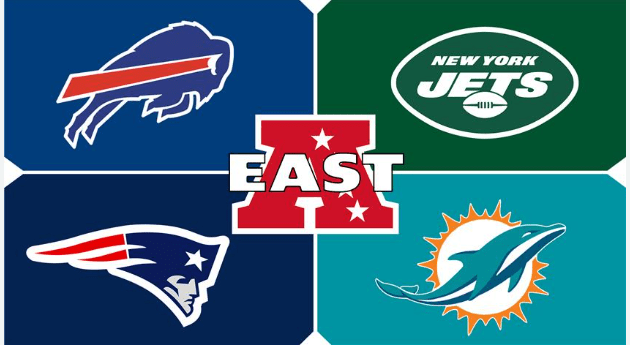
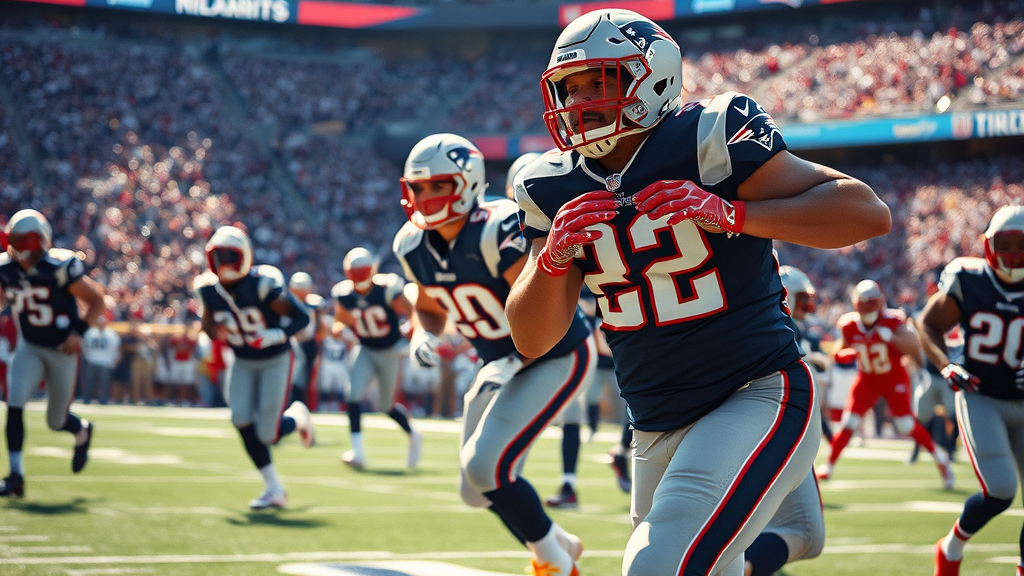
While the New England Patriots rebuild under a new and revamped offense, the New York Jets have looked to showcase a promising starting lineup for the season. The Miami Dolphins have been torn apart by injury and continue to fight for consistency. However, the Buffalo Bills have exhibited the most success, asserting dominance over the league and displaying a talented roster.

Throughout the uncertainty, the AFC East has shown licks of success and improvement, signing new players and filing career extensions as the trade deadline approaches. According to a report from NFL.com, the New York Jets, led by current HC Jeff Ulbrich, successfully acquired star wide receiver Davante Adams from the Las Vegas Raiders on October 15. Another crucial division move occurred recently, according to CNN.com, when Amari Cooper was traded from the Cleveland Browns to the Buffalo Bills.

The new additions and changes for these teams have improved the overall status of the division as the league approaches weeks 10 and 11. The current division standings in the AFC East show the Bills at the top with a steady 7-2 record. The Patriots, Dolphins and Jets lag behind with just three wins apiece.

In short, the AFC East has shown potential, even with an unfavorable start to the season. Through much discipline, these teams have the potential to develop every day for the remainder of the 18-week season.

Do We Still Need the Electoral College?

By Sienna Lamond, ’26

Staff Writer

The vote for president in the United States has never once been determined by the true popular vote but rather by the Electoral College system. When the topic of presidential elections is reinvigorated around Election Day, many Americans wonder why our president is not determined by our votes. Some even choose not to exercise their voting rights because they don’t believe their vote actually counts or matters. In some respects, they’re right.

In 1787, the Constitutional Convention came to the compromise known as the Electoral College. The issue was that nobody could agree on the best way to elect the president. Some wanted Congress to elect the president, and others wanted the people to choose the president directly. So the Electoral College system was born as an odd compromise between delegates from 237 years ago. In this system, a board of 535 electors each cast a ballot in accordance with the majority votes from the state they represent. To win the presidency, a candidate must win 270 of them. Additionally, in 48 states, all of the electoral votes go to only one candidate. For example, if the majority of Ohio votes Republican, all electoral votes would be given to the Republican candidate. This happens even if a decent amount of the state voted Democratic. Only Maine and Nebraska allow the electoral votes to be split.

The number of electors a state is allowed is determined by population. Heavily populated states such as California and Texas have more Electoral College votes than less populated states like Vermont and Wyoming. If you remember back to U.S. history class, this is why the Three-Fifths Compromise in 1787 was so significant. The vast majority of the southern states’ population was comprised of slaves, meaning if the slaves counted as people, the southern states would have more say in the Electoral College and have more representatives in Congress. The Fourteenth Amendment abolished the three-fifths compromise in 1868, which begs the question why do we still need the Electoral College?
In short, we don’t. It’s an antiquated system that deters people from voting and takes the voices away from millions of American voters. The foundation of our country is built on the principle that the people get to control the government. What we have with the Electoral College is a facade of a government elected by the people. According to the Pew Research Center, “More than six-in-ten Americans (63%) would instead prefer to see the winner of the presidential election be the person who wins the most votes nationally,” showing that the majority of Americans also wish to abolish the Electoral College to make their voices heard. Additionally, every other governmental election is determined by popular votes, even the election for the Senate and the House of Representatives, so we know that deciding an election by popular vote works. Why don’t we switch over?

In reality, it’s not so simple. The Electoral College is a part of the United States Constitution, which means we would have to move for an amendment to abolish it. For an amendment to be added to the Constitution, it must go through Congress, both the Senate and House of Representatives. With our Congress significantly divided, lawmakers have tried and failed to pass many bills in recent years. If a movement were made to make an amendment to abolish the Electoral College, it is likely that it would never make it through both chambers of Congress. USA Today writes, “There have been more than 700 federal proposals to change or abolish the Electoral College in U.S. history. . . But getting the remaining states to drop the Electoral College system in favor of the popular vote may be prohibitively difficult, as it would require buy-in from states that benefit from the system.” In all the years the Electoral College has been questioned, very little has been accomplished to change it.

In the past, some candidates have won the popular vote but lost the electoral vote. The most notorious example was the 2016 election between Hillary Clinton and Donald Trump. Clinton won the popular vote by nearly 3 million votes, but Trump won the Electoral College and became president. This is an example of how this system fails the American people. In total, 62,985,106 Americans voted for Trump that year while 65,853,625 voted for Clinton as reported by a New York Times post, a difference of 3 million American voters. Although I disagree with the policies and morals of President Trump, this is not a complaint about him; this is a fault of the system. More people living in the country wanted a certain candidate, and were denied that victory because of the Electoral College, and that statement could go for any candidate that has ever won the popular vote and lost the electoral vote. It’s not only unfair and unjust, it’s un-American and unpatriotic.

The year is not 1787. It is 2024. The world has changed, and we as people have changed. We need to remember the values and ideologies that the United States was originally founded upon: a government for the people, of the people, and by the people. No more Electoral College failures; it’s time for us to make a change and take our country, and our leaders, back into our hands. It is the only way to ensure our democracy will last for years to come. As former President Barack Obama said, “Change will not come if we wait for some other person at some other time. We are the ones we’ve been waiting for. We are the change that we seek.” We are the ones that have the power to make a change for the betterment of our government and our country.

Carrying the Truth about War

By: Michael Sawaya, Jack Nadeau, Malakai Beliveau, Daniel Sierra and Cam Melone, ’26

Guest Writers

“If at the end of a war story you feel uplifted, or if you feel that some small bit of rectitude has been salvaged from the larger waste, then you have been made the victim of a very old and terrible lie,” wrote Tim O’Brien in The Things They Carried, his National Book-award winning novel based on his experiences as a soldier in the Vietnam War. 

Our reading of this book in class motivated us to reflect on the horrors of war and what a soldier would carry on his body and in his heart in order to survive such a traumatic experience. We invited Robert (Bob) Melone, a U.S. military veteran who served in Afghanistan, and father of junior Cam Melone, to join our class and candidly discuss his experience.

“Everyone is human and deserves dignity.”

Robert (Bob) Melone, with his son, Cam, now a junior at HHS.

Mr. Melone always felt the obligation to join the military because his father and grandfather had served. In 1996, he graduated Silver Lake High School and was working at Papa Gino’s in Pembroke. He knew he wanted to go to college and the only way he could afford this was by joining the military. So he joined the National Guard in 1997 and began basic training in Missouri. He was deployed to Afghanistan in 2002 to fight the Taliban and al-Qaeda, two terrorist organizations.

He recalls landing his military plane at Bagram Air Force Base with no lights on, in total darkness, in order to evade the enemy. For the first three months of service, he and his platoon did not have the means to take a shower. Mr. Melone then embarked on a covert operation to locate a shower; he ended up finding one on another Air Force base.

Mr. Melone’s platoon was responsible for blowing up a cache of ammunition and bombs from al-Qaeda and the Taliban. His platoon detonated the enemy’s weaponry high up in the mountains of Afghanistan. The elevation was higher than Denver, Colorado, causing him to suffer from elevation fatigue for the first few days he was there. Mr. Melone found it difficult to breathe in the extreme altitudes of these high mountain ranges as he embarked on these dangerous missions.

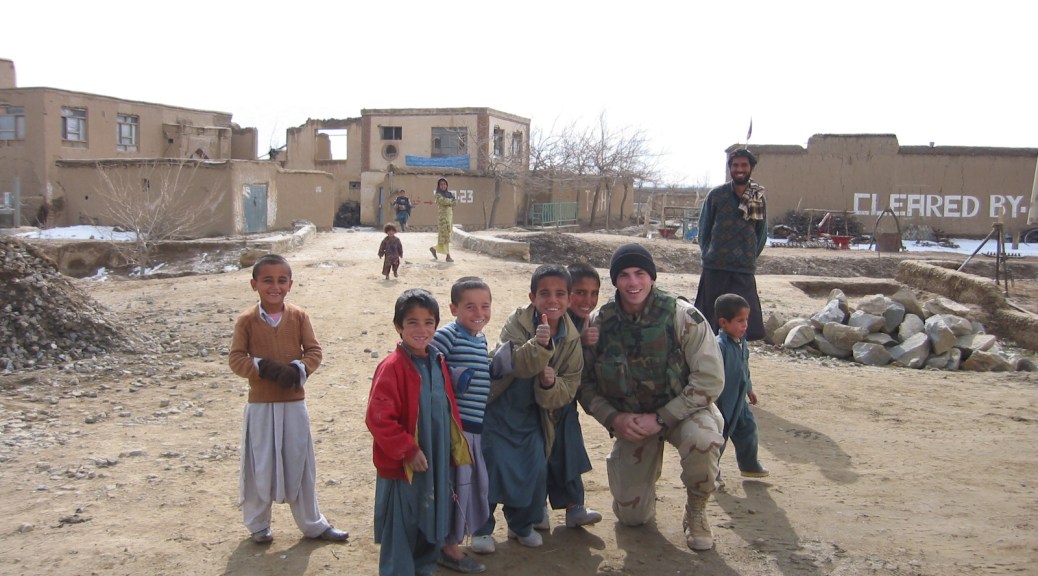
Mr. Melone visits schoolchildren in Afghanistan.

As a combat medic, he made sure his platoon was taken care of properly. Not only this, but Mr. Melone also took good care of prisoners of war (POWs) who were on the side of America’s enemies. He cared for the very people who may have killed him if given the chance. He never lost sight of the humanity in people on the other “side.” For him, it wasn’t about how many people he hurt, it was about how many people he helped. “Everyone is human and deserves dignity,” he said

Overall, Mr. Melone reports that he and his American platoon colleagues were treated well by the Afghans, but he noted that he “wasn’t sure if some were bringing information back to the enemy.” Similar to Vietnam, there were times he did not know who the enemy was. 

The women in Afghanistan wore burqas and were not allowed to speak to American servicemen, Mr. Melone recounted. The Afghan women were only allowed to speak amongst themselves or possibly to female soldiers. The young girls in Afghanistan attended school at the time; however, that is no longer the case. Mr. Melone reflected with regret on how women’s rights deteriorated over time. Since the U.S. withdrew from Afghanistan in 2021, the role of women has declined even further. 

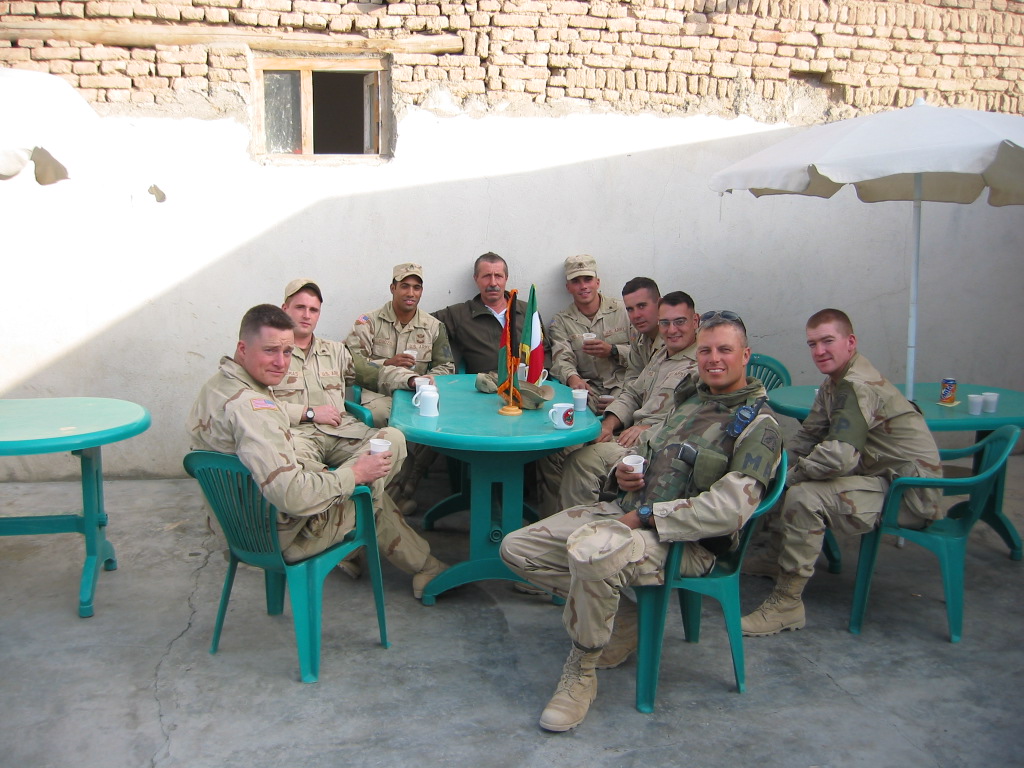
Mr. Melone and fellow soldiers enjoy the Italian platoon’s espresso bar.

Despite being in combat overseas, there were some moments of levity that Mr. Melone looks back on fondly. He remembers that the European troops were better equipped and had more luxuries than their American counterparts. He recalls visiting an Italian military platoon that had set up a full espresso bar. Mr. Melone and his fellow American servicemen indulged in the Italian hospitality and truly enjoyed the excellent quality coffee, espresso and cappuccino. 

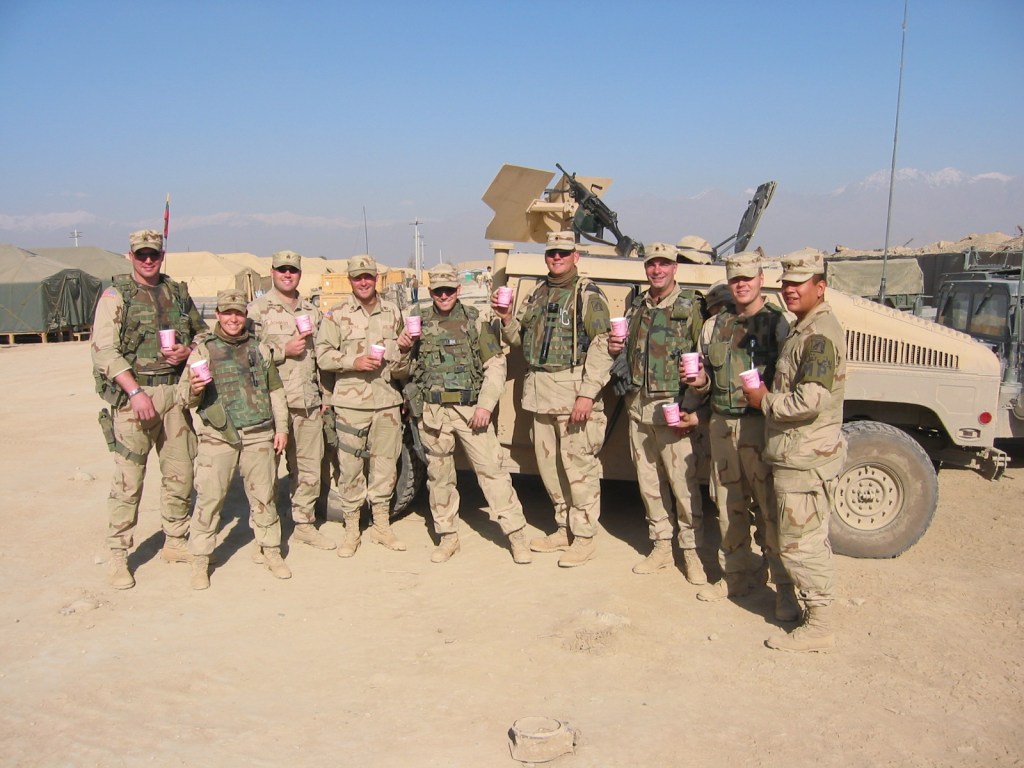
Mr. Melone’s platoon with their MaryLou’s delivery.

As a lover of coffee, this was one of the comforts that Mr. Melone missed most. He recalls writing a letter to the popular coffee chain Mary Lou’s asking them to send his platoon some coffee. Soon, he and his fellow servicemen received a massive supply of Mary Lou’s coffee direct from the South Shore. 

Much like O’Brien recounts in The Things They Carried, Melone met his best friends in the military. They gave each other nicknames and used their sense of humor to deal with the stress and agony of war. 

Also similar to O’Brien’s observations, Melone considered the overall sense of purpose in America’s presence in Afghanistan. At the time, Melone felt that Americans had a strong reason to be in Afghanistan: to free the Afghans from the oppression of the Taliban. Yet looking back, he feels doubt about what the purpose was. He reflected that, when it comes to war, “getting out is way harder than going in.” 

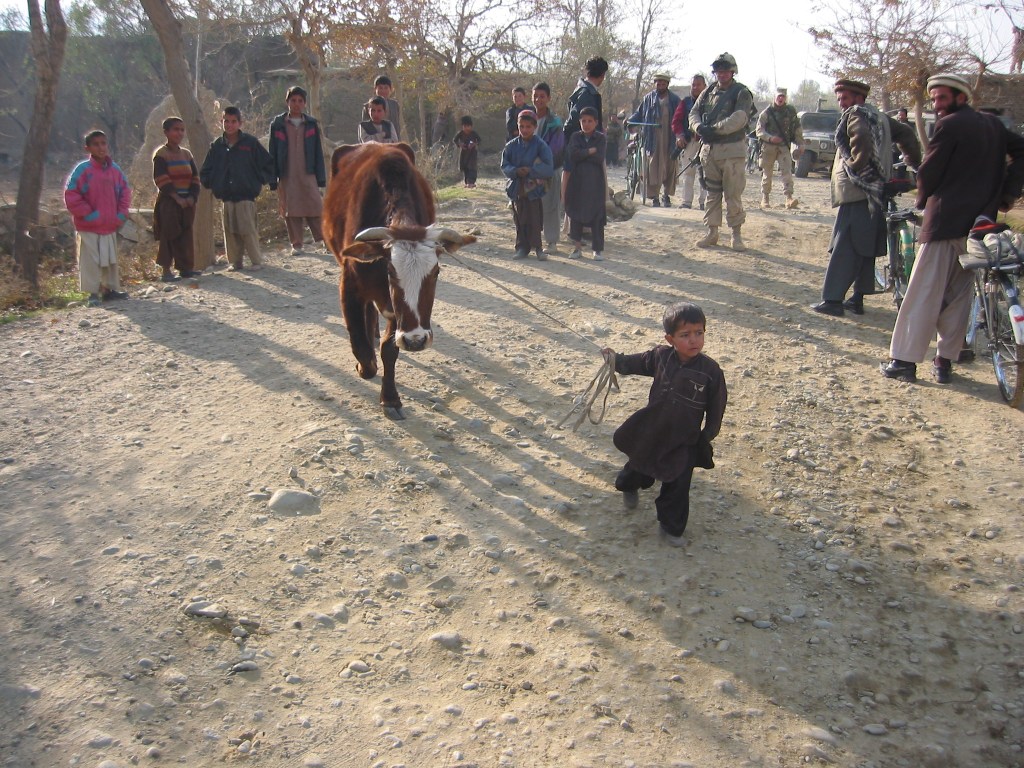
An Afghan child walks his bull on a leash.

In The Things They Carried, Tim O’Brien writes about the tangible and intangible things he and his fellow troops carried with them while at war in Vietnam. Mr. Melone said during his year of service and to this day, he carries the Afghan children. He felt a deep connection to the innocent young lives that were trying to survive in very difficult conditions. He showed a photo of a very young boy walking a bull around on a leash, similar to the way Americans walk their dogs. He cherishes photos of the children of Afghanistan and has several photos framed around his house. 

Physically, he carried a St. Jude prayer card from his cousin Patty that was originally their grandmother’s. This prayer asks God for help during difficult times. He carried this prayer card with him everywhere and it reminded him of his loved ones back home. 

To this day. Mr. Melone carries the powerful emotion and experience with him, and is not afraid to show his vulnerability and how it deeply affected him. We witnessed this when he shared his family legacy of service, his love for the children of Afghanistan, and his love for his own children. 

Ultimately, Mr. Melone is grateful for the opportunities the military gave him and is proud of his service. However, his overall message about war resonated with us all: “Anything that glorifies war is a lie. War is inhumane.” We are sure Tim O’Brien would agree.

A Rebuilding Year for the Patriots

By Luke Curran

Staff Writer, ’27

The first four weeks of the 2024-2025 NFL season have startled many fans, from contract negotiation standoffs to exhilarating games dragging into overtime. Throughout it all, the New England Patriots have looked to establish themselves above the bottom teams in the league. Under the brand-new leadership of head coach Jerod Mayo, the Patriots have entered the season with a completely revamped offense and an even stronger defense.

The team has worked through the off-season to recruit new players, such as securing Drake Maye, the third pick in the NFL draft and the “Quarterback of the future.” With other key additions and better strategic improvements, the Patriots are trying to deliver a promising opening season for fans. The Patriots aim to make a strong statement for the future, with a bright young team ready to perform at the highest level possible.

With a road win against Cincinnati, the Patriots earned their first opening weekend victory since beating Miami at home in 2020. The win was the fourth over Cincinnati in Patriots’ history and shut down criticism from opposing fans.

However, the optimism for the season took a hit in the next three games, with the team falling to 1-3. Although the Patriots have been lackluster in their most recent games, players remain motivated to improve and grow. “I am the biggest team player, if you ever see me on the sideline in a game, I’m the biggest team player,” said star wide receiver Demario Douglas in a Patriots.com interview after the team’s close loss to the Seattle Seahawks in week 2. “Just go out there and play. Whatever coach asks me to do, I’m going to do.”

Ultimately, the New England Patriots have chosen to undertake a slow rebuild during the 2024 season, under the command of Mayo and starting veteran quarterback Jacoby Brisset. While there have been flashes of potential, inconsistency has plagued the overall performance of this new and inexperienced team. The future is bright, but the promise of this season may be dim.

Students Hold the Keys to Keeping Bathrooms Open

By Danny Campbell, ’27

Staff Writer

Students often complain when our school bathrooms are closed and they have to walk to a different floor or down to the cafeteria to find one open. But in an interview with Principal Mattos and custodian Fabz Saldanha last week, I learned that students are often the ones responsible for the closures.

In the past, Hanover High School regularly had just one bathroom open per floor to minimize issues with students gathering, creating messes and getting into trouble. Also in the past, teachers were assigned duties to monitor the halls and bathrooms. Last spring, concerns about the rotating closed bathrooms were brought to the HHS School Council (composed of students, teachers and community members) and the HHS Student Advisory Council. This led the administration to open all bathrooms after announcements were made to the student body about care and maintenance.

“Students control what happens,” Mr. Mattos said, echoing a message he gave during assemblies on the first day of school. “If students respected the bathrooms, they would be open forever. They only get closed for cleaning and maintenance as needed.”

Unfortunately, only three days into the school year, the bathroom in the World Language wing was seriously vandalized. A student or students pulled the stall dividers right out of the wall. Damage like this has cost the school thousands of dollars in the past, Mr. Mattos said. With the school budget tight this year, and a busy maintenance staff serving all the school buildings, it’s going to take time to fix. That bathroom has been locked since.

While students who commit vandalism are just a small part of the school population, Mr. Mattos said, it’s hard to catch them because the general law prohibits cameras in the bathrooms. Due to budget cuts, the school also doesn’t have enough staff to constantly monitor the spaces.

Aside from that closure, the school has been handling the issue much better than years prior, Mr. Mattos said. I noticed one day in September when both bathrooms on the second floor were closed at the same time, leading students to have to walk farther. But Mr. Saldanha said that was a temporary closure because a motion-activated sink needed repair; town health officials say a bathroom must be closed if a sink or toilet is not working.
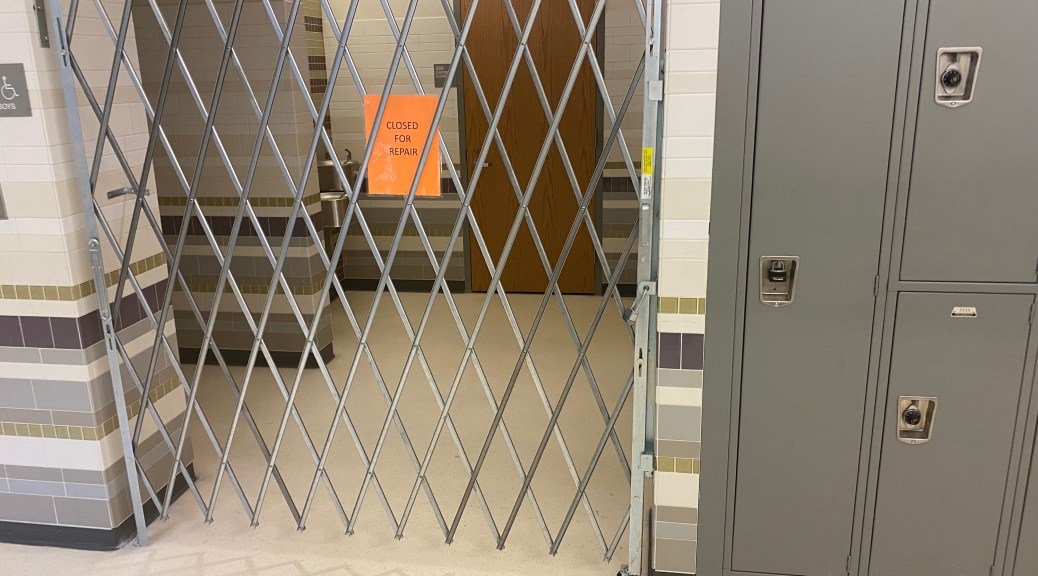
The metal gates were installed in 2022 to lock and secure bathrooms as needed, but the idea of closing a school bathroom for cleaning or a repair is not new. Prior to that, the school had used movable plastic barriers for years, but students would simply push them aside and enter the bathrooms. “With the gates, bathroom maintenance has been much better,” Mr. Mattos said.

We should all be aware by now that the administration and custodians are not in the wrong to close the bathrooms when issues occur. It’s up to students to treat the bathrooms with respect. Having a clean, working bathroom close to your classroom is a privilege, not a given. If you are responsible and behave in the bathrooms, they will stay open. Throw your trash in the bins. Do not put unflushable items in the toilets. Show courtesy to your classmates who use the bathrooms and to the custodians who keep them clean. If only as much as one student misbehaves in the bathrooms, they are all at risk of being closed!

I have done my part in covering this issue. Now it is your turn to do yours!

Trick or Treating for Teens, According to Parents

by Siena Oliver, ’27

News Editor

According to a recent survey by CBS News, 25 percent of people say that Halloween is their favorite holiday. Despite this, many give up on the tradition of trick or treating at some point during their teenage years. This tends to happen for a few reasons, including embarrassment over participating in a ‘childish’ activity, social pressure to stop, and interest in other activities such as parties or hanging out with friends. As a high schooler myself, I too have elected to stop trick or treating. Instead I will be handing out candy at my door, which still allows me to dress up and enjoy the festivities. The motivations for children to stop trick or treating are fairly straightforward, but their parents’ views on that decision are a bit more varied. 

The two graphs below show information taken from an informal survey of eight Hanover High School parents comparing the ages their children stopped trick or treating to the age they believe it is best to stop trick or treating. 

While many parents seemed to agree that sometime in high school is, in fact, the right age to stop participating in the tradition, most also expressed sadness that their children had given up trick or treating.

“Like a part of their childhood was lost forever,” said the mother of junior Sienna Lamond. 

Adam Oliver, another parent in the Hanover community, said he was perfectly fine with older kids trick or treating around the neighborhood. “As long as they’re not interfering with the younger kids having fun,” he said.

The rest of the parents surveyed echoed this statement, agreeing that older groups of teenagers trick or treating is only a problem when they decide to cause mischief or be disrespectful. 

While parents and their kids seem to agree on the general age that it is appropriate to stop trick or treating, that decision has as much of an impact on the adults who are watching their children grow up, as on the kids themselves. As grandmother Kathy Kacergis put it, “you have to keep the spirit of fun things alive,” which sums up the bittersweet sentiment of the parents on this topic.

Bridging Divides: Solutions to Political Extremism

By Samuel Frattasio, ’27

Opinions Editor

In a nation once defined by its shared ideals and a commitment to democratic discourse, the alarming rise of political violence serves as a stark reminder of how deepening divisions can threaten the very foundations of our society. As communities split along ideological lines, the consequences become increasingly evident: violent protests increase, rhetoric escalates into threats and civil discourse becomes chaotic. Most apparent are the two assassination attempts on our former president, Republican presidential candidate Donald Trump. No matter where you stand, we should all agree that this is unacceptable. We have come too far as a country to be ruined by individuals who are so blindly passionate and extreme toward their respective parties. We must confront a crucial question: can we bridge all that separates us, or are we destined to remain divided? 

I’m well-versed in news and politics, regularly engaging with various sources across the political spectrum. Whether browsing the Apple News app on my phone or reading articles from AP, Reuters, The New York Times and The Boston Globe, I make it a point to stay informed. I also watch broadcasts from NBC, ABC, CBS, CNN, and FOX. Some are left and right of the political spectrum, while others may be classified as more center. I enjoy getting information on all sides; this helps eliminate some of the inherent biases of most major media networks. For example, Fox leans right and CNN leans left. Even though these networks and their anchors, analysts, and correspondents differ from each other significantly, they all share one common belief: political violence is not okay, and it’s not the way to solve our division. Jeremey Adam Smith and Zaid Jilani of the Greater Good Magazine said it best: “The attempted assassination of Donald Trump highlights a terrible truth: Political violence and support for political violence have been rising in the United States.”

To better understand this issue, we need to discuss a few key topics: historical context, current trends, impact of rhetoric, mental health, consequences for democracy and potential solutions.

 Historical Context: Our country was born amidst political tensions. The great patriots of the “Sons of Liberty,” who dumped thousands of dollars worth of tea into Boston Harbor, did so in response to an increasingly harsh and dominant England. The split into Loyalists vs. Patriots and the Revolutionary War was the result. After the American Revolution, our country saw the emergence of political parties, which fostered intense rivalries, and political violence occasionally erupted in the form of duels. African American resistance was also prevalent during this period, most notably in Nat Turner’s Rebellion. Also during this time, abolitionist movements faced violent oppression from pro-slavery Americans. Fast forward to the Civil War era. The Southern states’ secession was driven by the desire to preserve slavery, leading to violent conflict between Union and Confederate forces. Throughout this period, political violence was often seen as a means to achieve social and political objectives; the tone of this era set the stage for ongoing conflicts that continue to affect our democracy. 

Current Trends: One may argue that our country is more divided than ever, and this is most obvious when one turns on the news and hears stories of violence and destruction, constant arguing, and continuous falsehoods from both sides of the political spectrum. Something has to be done to fix the wounds of our nation. The current trends of our divisive legislative, executive, and judicial branches have proven tragic; most apparently, the recent assassination attempt on former President Donald Trump, which came as a surprise for many, raised some eyebrows and questions on who is truly safe from political “extremists.” To better understand the motives of those who wish to destroy, we should examine former successful or failed attempts on politicians’ lives to identify what could have gotten us to this moment. Most notably in the mid-19th century, President Abraham Lincoln was assassinated over disagreements regarding slavery and the treatment of the South. In the late 19th and early 20th centuries, Presidents James A. Garfield and Willaim McKinley were killed over the growing discontent with the existing societal norms. Years later, the assassination of Martin Luther King Jr. highlighted the extreme opposition to the civil rights movement. Fast forward to present times, and we have seen several assassination attempts on politicians, including former congresswoman Gabrielle Giffords in 2011 and the attempted bombing of prominent Democrats in 2018. While these examples all were different in some ways, they were all results of individuals who disagreed so strongly with these politicians that they wanted to end their lives. This shows us the beliefs within American society and the complex interplay between ideology, power, and violence. 

 Impact of Rhetoric: As we have come to understand, words have great power, and the spread of hateful, negative, and false allegations has deep impacts on its listeners. We as a society have a duty to determine what words and ideas we want to resonate within ourselves, things that match our own beliefs. Sometimes extreme language evokes strong emotions like fear, anger, or pride, which can galvanize people to act or adopt more radical views. In my opinion, the most prominent effect of Democrat/Republican rhetoric is the Us vs. Them mentality, which often creates clear distinctions between individuals who are “in” groups and “out,”  fostering hostility toward those perceived as opponents. This is the case during political debates and interviews when candidates constantly try to belittle their opponents and spread lies. 

 Mental Health: Kevin Boyle, Professor of American History at Northwestern University who was featured on PBS just days after one attempt on the former president’s life, said, “So what that means is that you essentially have motives and means. I don’t know anything about the motivation of this young man, but I think we have to be willing to acknowledge that it is also tied, to a striking degree, to the mental health crisis that does afflict young men, particularly, and that leads some of those young men to extraordinarily violent behavior.” What Boyle is alluding to is that there has been an immense rise in violence in the last decade perpetrated by individuals who may have mental health struggles. According to an article in The Hill, the Trump shooter in Butler, Pa., had a form of depressive disorder. This issue raises many questions like, “How does one get to this point?” and “Is political rhetoric to blame?” In the case of the man who shot at the former president, one must ask “How can someone with a (known) mental condition have access to a weapon?” To answer the first, there are various reasons why an individual can become radicalized. Mental health struggles can exacerbate feelings of isolation, leading one to join extreme groups for a sense of belonging. In addition, mental health conditions can affect judgment and impulse control, potentially increasing the likelihood of violent behavior. And to answer the latter, it is hard to control what people do and what they have access to. “Are the parents to blame?” That is a question that gets asked after incidents of violence. In my opinion, I believe that individuals who are struggling with mental health disorders should not be anywhere near harmful objects; this was the complete opposite scenario for the man who hoped to assassinate Trump. 

 Consequences for Democracy: This alarming rise in political violence poses a significant threat to the very foundations of democracy. This phenomenon not only undermines public trust in democratic institutions but also deepens societal polarization, making it increasingly difficult for citizens to engage in constructive dialogue. The fear of violence deters many from participating in elections, protests, and civic activities, ultimately weakening the democratic process. The big issue with this is that it opens the door to others with beliefs of violence toward people with whom they disagree. We must commit to fostering dialogue, understanding, and respect for democratic processes to combat this rising tide of violence and protect the ideals that underpin our societies.

Potential Solutions: This pressing issue requires immediate attention and thoughtful solutions. One effective approach is to promote political unity across different groups. When leaders and citizens alike focus on common goals rather than differences, it could significantly reduce tensions and foster collaboration. Additionally, the language used in political discourse matters greatly. Leaders should strive to avoid harmful words and negative ideologies that can incite violence or deepen divisions. Instead, promoting a message of empathy and understanding can create a more positive political climate. Public awareness campaigns that encourage civil discourse and highlight the importance of listening to differing viewpoints can also play a critical role. Ultimately, addressing political violence involves a commitment to unity, respectful communication, and proactive engagement in communities.  

A Call to Action

It is time for us to take a stand against political violence. We live in a country not riddled with hate but with freedom, kindness, and, at our center, unity. Days after the assassination attempt of former President Donald Trump, politicians from all parties expressed their strong opinions on the matter, including how relieved they were that the president was not badly injured. Unity is possible. We’ve seen it done, not just after this incident but also during the aftermath of 9/11, where many Americans came together, or the pre-American Revolution, where a once divided 13 colonies joined together under a shared desire for independence. The stories in the news today can be frightening; they can be violent and negative. However, when I am overwhelmed by this, I try to remember moments when we have come together, and that is what gives me hope. Political violence is not and will never be ok. While all politicians and people may never agree on all the issues, we can agree to be civil, working for a common good and remembering that our democracy is worth preserving.