Tag Archives: education

Class of 2025: Parting Words

By Jenna Clasby, ‘27 and Sophie Bunar, ‘27

Staff Writers

As underclassmen, we often look to the seniors for advice. Whether it’s which classes to take, which extracurriculars to check out, or just how to get through high school, seniors often have the most valuable knowledge and experience. As this school year comes to an end, members of the Class of ‘25 shared their best pieces of advice for younger students.

“Enjoy the time you have, and enjoy the moment. Live in the present.” – Aidan Boutin.

“Being perfect isn’t needed. You are allowed to make mistakes and you should make them. If you’re stressed about being perfect all the time, you’ll miss all the good stuff.” – Aevyn Brink 

“Don’t take anything for granted, it goes by way too fast so enjoy it.” – Abby Hannah

“You’ll never see these people again.” – April Hamilton 

“Do everything for yourself.” – Alexandra Marinis

“Keep your grades up and you’ll be fine. I also wish I had done more sports and joined more clubs, because it is an advantage of making new connections.” – Ava Curren

“Keep your GPA up and turn in assignments on time.” – Bell Keenan

“Don’t be absent all the time.” – Brooke Barber

“Get involved in as much as you can in high school and don’t be afraid to go out of your own comfort zone. High school goes by fast, and the more you put yourself out there, the more experiences and friendships you’ll create.” – Catherine Reinhart, class president

“Don’t be afraid to get involved and don’t stress yourself out too much.” – Thomas Perkins

“Take notes on Thomas Perkins.” – Cam Scott

“Keep open communication if you are struggling. Your teachers want to help you succeed and not asking for help won’t benefit you in the long run.” – Izzy Latessa

“Don’t feel the need to impress anybody. Be yourself.” – Ryan Shea

“Take risks even when you don’t know if you’ll succeed! Apply for the job or leadership position or group outside of school you want because you never know what could happen!” – Julia Fitzgerald

“Shave your facial hair and get a haircut.” – Tyler Neville

“Spend every minute with your friends! You’re all going separate ways after graduation.” – Casey Labelle 

“True kindness comes from lifting others up without lowering yourself. You’re worthy of standing tall, just as you are.” – Addison Baldinelli

“Give the janitors less work to do.” – Malcolm Beliveau

“My advice is to figure out what you want to do after high school as soon as possible and start working towards that goal as soon as you start your freshman year.” – Connor McCue

“No one expects you to know everything, and it’s okay to ask questions when you’re struggling. Teachers, friends, and family are there to support you” – Ella Brinkman 

“Don’t let drama get to you.” – Kaylee Lupien

“High school isn’t for everyone, find something that you enjoy to do whether it is in school or not and put more time into that.”  – Dylan Clark

“Only try your sophomore and junior years.” – Matt Lombardi

“Work hard, even if you’re unmotivated. Surround yourself with people who motivate you to be the best person you can be.” – Grace Witt  

“Take the right classes. Ask upperclassmen what to take.” – Macklin Ball

“The best advice I would give to younger students is to always keep your head up and don’t get past yourself and just focus on the moment. Be you, not something else.” – Michael Sawaya

“Take classes that are the best fit for you. Don’t pick classes just because they are popular to take.” – Tyler Vincent

“Take advantage of every opportunity, as cliche as it is, you will be a senior before you know it, so enjoy it.” – Sophie Schiller

All in all, advice is important to shape the young minds of underclassmen. It can provide guidance and support which leads to better decision making overall in the future. As underclassmen, we are forever grateful for the advice from our seniors that allows us to better ourselves on our own journey through High School.
Class of 2025: What We’ll Miss Most

By Billy Hersey, ‘27 and Siena Oliver ‘27

Hawk editors

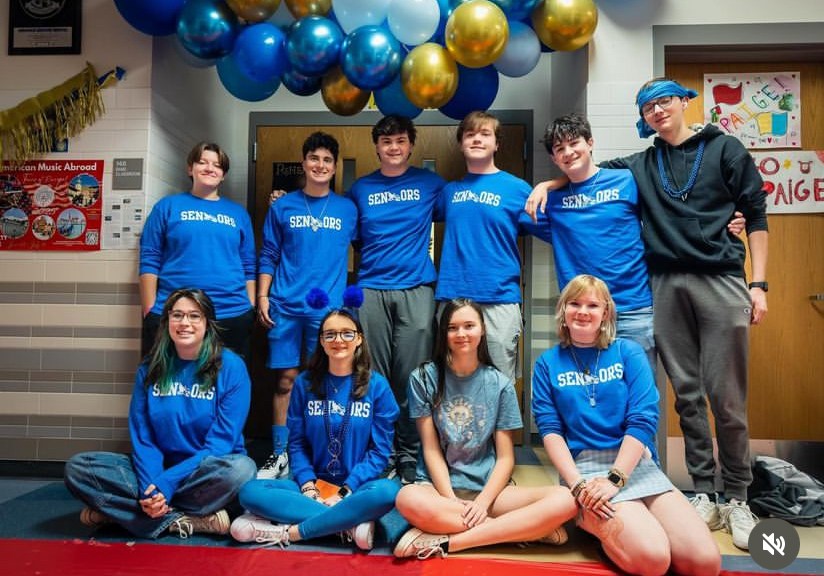
As our seniors look toward new beginnings, many can’t help but look back on their fond memories of our community. Students who replied to The Hawk senior survey said they would miss many things about their time at HHS. A common theme among responses was that students would miss their friends, teachers and sports.

“I will miss the teachers that showed up every day and cared about us deeply,” said Thomas Perkins. For Noey Giardina, it will be the lunch ladies. For April Hamilton and Adrian Nickerson, it’s the art classes and teachers. James Bison will miss “Doc.” Michael Sawaya will miss “hanging out with the office ladies.” Samantha Ferguson said: “I’ll miss my friends and my favorite teachers.” Sophie Schiller echoed that sentiment and added that she’ll miss her coaches too.

Connor McCue will greatly miss the atmosphere at HHS and the people. “They do a great job at creating a positive environment that people want to be a part of.” 

Many seniors are sad to be separated from their friends and will cherish the memories they have made with each other. Max Aikins will miss “classes with my friends who are going to different schools.” Scott Theriault will be sad to end “socializing with the people I’ve grown up with.” Cat Reinhart said she’ll miss “seeing everyone in 6th period library every day.”

“I’ll miss having my friends around me all the time and just being able to drive a mile or two to see them,” said Grace Witt. Madi Pongratz agreed. “I’ll miss seeing everyone together in one place because once we graduate we won’t see a lot of these people ever again,” she said.

Sports are a huge part of life at HHS, leading to lifelong connections and great memories. During the Class of 2025’s time at HHS, girls soccer won the state championship in 2022 and made it to the finals in 2024. Boys hockey won the state title at the TD Garden in 2022 and returned to the finals in 2024. Rugby made it to the state finals in 2022 and 2024. Girls Lacrosse reached the final four in 2024. Football made it to the state semifinals in 2022 and 2024, and to the Super Bowl at Gillette Stadium in 2023.

Abby Hanna, who played softball and hockey, will miss her teammates and coaches. Max Goitia will miss playing rugby; for Matt Jenkins, it’s soccer, and for Cam Fish it’s baseball. Addison Baldinelli will miss playing field hockey and performing with the dance team.

Liz Curtis will miss field hockey the most. “Being part of the team has been such a huge part of my high school experience!” she said.

Aidan Boutin, who played football and rugby for four years and wrestled for three, said he will miss the opportunities to practice and compete with close friends. “It deeply saddens me that I will never be able to suit up and play with my childhood friends ever again.”

Watching sports was as memorable as playing, according to Ava Good and Ava Puzzangara. 

Clubs, community service and performing arts provided fond memories for many students. Tyler Neville said he will miss “performing at concerts for the symphonic and marching band.” Julia Fitzgerald, who counted band and tennis among her activities, said she will miss the friends she made inside and outside the classroom. “Even if I keep them up in college,” she said, “I know I will miss their presence.”

While the Class of ‘25 will embark on different paths, hopefully their memories of friendship, guidance and support will bolster them in whatever they take on next. It is clear that, for many students, their time at HHS has left an indelible mark.

“Over the past eight years since I moved here in 4th grade, I have gotten to know the people around me here in Hanover and I have grown to love it,” said Lochlan Garvey. “Being able to come to school every day and be surrounded by this community that we have created over the past years has been a gift and I am going to miss it terribly.”

Vo-Tech School to Get New Building

By Ryan Costello, ’27

Staff Writer

It is no secret that the South Shore Technical School is growing outdated. The Webster Street building is more than 60 years old and can’t serve all of the students who want to attend. With the trades currently facing a shortage of skilled workers, a new, modernized vocational school could be filled with more students than ever before as well as new programs of study. Thanks to a recent vote, that new building is coming soon.

Opened in 1962, the school has an enrollment of 685 students and a considerable number of students on a waiting list. The school offers programs in Automotive, Culinary Arts, Carpentry, Cosmetology, Electrical, Design & Visual Communications, Computer Information Technology, HVAC-R, Allied Health, Advanced Manufacturing Electric Technology, Metal Fabrication/Welding, and Horticulture & Landscape Construction. Students from nine towns can attend the school: Abington, Cohasset, Hanover, Hanson, Marshfield, Norwell, Rockland, Scituate, and Whitman. 

Why a new build?

Building a new school would mean an increase in taxes for residents of the nine towns it serves, but advocates of the plan argued that renovations would have a poor long-term value. A renovation would require up to four years of construction, which would mean four years of noise, learning disruptions, parking constraints and traffic impacts. New programs such as plumbing and veterinary science couldn’t happen in a renovated facility without closing other programs. A new facility would allow an enrollment of up to 900 students each year, over 200 more than currently served, as well as the expansion of programs.

On January 25, the $276 million project to build a new South Shore Technical High School received overwhelming approval, with 78 percent of voters in support. In Hanover, 80 percent of voters approved the plan. The state will reimburse the towns an estimated $100 million of the cost. The new building will be constructed on the playing fields behind the current facilty, allowing the school to remain open during construction. Groundbreaking is set for April 2026, with hopes that the new building will open for the 2028-2029 school year.

Does the MCAS Still Matter?

By Danny, Campbell, ’27

Staff Writer

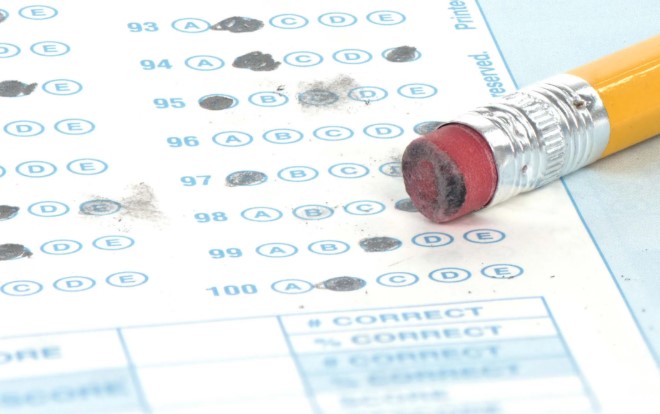
So I bet most of you are aware of the fact that on November 6th, the people of Massachusetts voted in favor of getting rid of MCAS as a graduation requirement. I personally believe this was a great decision, since it means that students won’t have to worry about not getting their diploma for scoring poorly on it. However, I think we still have to take the standardized tests seriously because of how much they still can affect students and our school.

The MCAS, or Massachusetts Comprehensive Assessment System, is a series of standardized tests created in 1993. Starting in third grade, all students take tests in English Language Arts and Math. A Science, Technology and Engineering exam is given in grades five and eight. Civics is administered to 8th graders and biology is given to 9th graders. Passing the tests had been a requirement for a diploma in Massachusetts, while schools used the data to evaluate teaching and learning. After the vote, the graduation requirement has been removed, but schools are still giving the tests to collect information.

But how did this movement to remove the MCAS graduation requirement get onto the ballot in the first place? You see, this movement was started by a mom in Lexington and the Massachusetts Teachers Association because they felt like MCAS was unfair to students who don’t take tests well. The movement was further spread by Adriana Mason and another mom from Hanover who helped to get the word out locally and get the question on the ballot.

One of the main concerns that went into having MCAS as a graduation requirement is the belief that students with special needs are treated unfairly by the system. I can relate to this concern from personal experience; while I was in elementary and middle school, I was given extra support in my classes to address my needs. However, when you are taking the MCAS, you are not allowed to have the same extra support you have had for the entire year. This would cause issues for students, who might have to take the high school tests repeatedly to finally earn a passing grade and qualify for their diploma. Teachers were forced to spend a lot of time each year preparing students for MCAS. It is either that or risk having students unprepared for test day.

Between 2003 and 2024, 400-450 students left HHS without their diploma, according to Mason. This large number has to do with their MCAS grades, and many of the students impacted were students with disabilities. Most students with disabilities already have hard lives, and not being able to get their diploma made their lives unfairly harder. Without a diploma, your job opportunities are reduced. You cannot go to college or into the military, and you cannot become a police officer or firefighter. Thankfully, with this law passing, students who graduated HHS from the 2003-2024 are able to now receive their diploma.

With all of that being said, and with the ELA test taking place at the high school this week, it leads me back to my question, “should we still be worried about the MCAS?” I will say once more that I am beyond glad that this law has passed, and I have NO complaints about this vote. However, as a sophomore, it feels very anti-climactic after being told numerous times since middle school that the 10th grade MCAS was the extremely important one that would determine whether or not I received a diploma. Now, the test feels just like an extra thing to do.

Still, my final verdict is that while MCAS shouldn’t be treated AS seriously as it was in previous years, I do believe students should still try to do well. The test results will be used to check in on how students are doing in school, and to make sure that teachers are successfully providing instruction in important skills. All of this can now be done without stressing out students yearround.

featured image: https://www.boston.com/news/education/2021/09/21/mcas-scores-2021-pandemic/

Unified Sports Win is About More than Final Score

By The Hawk staff

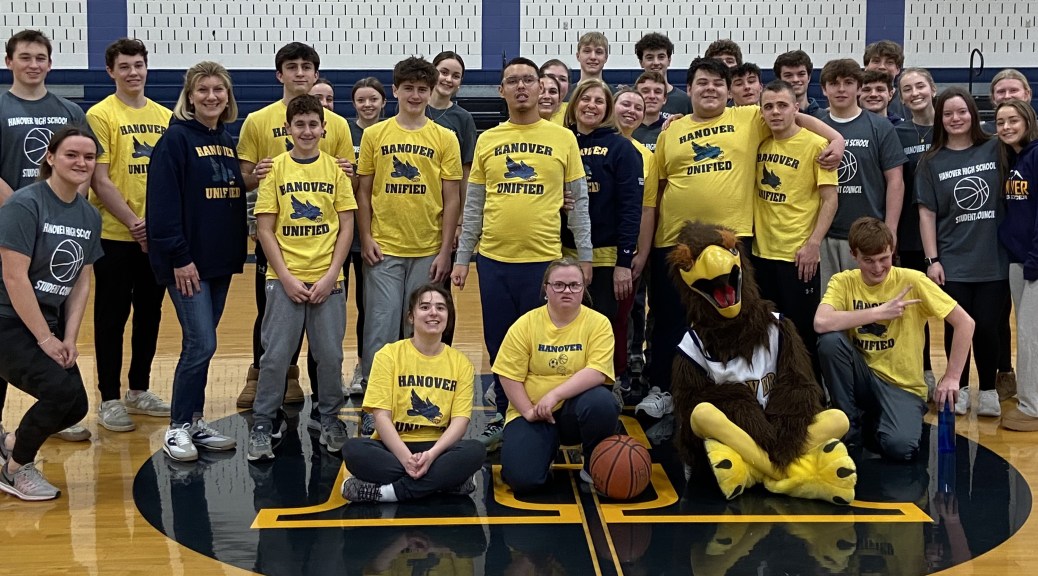
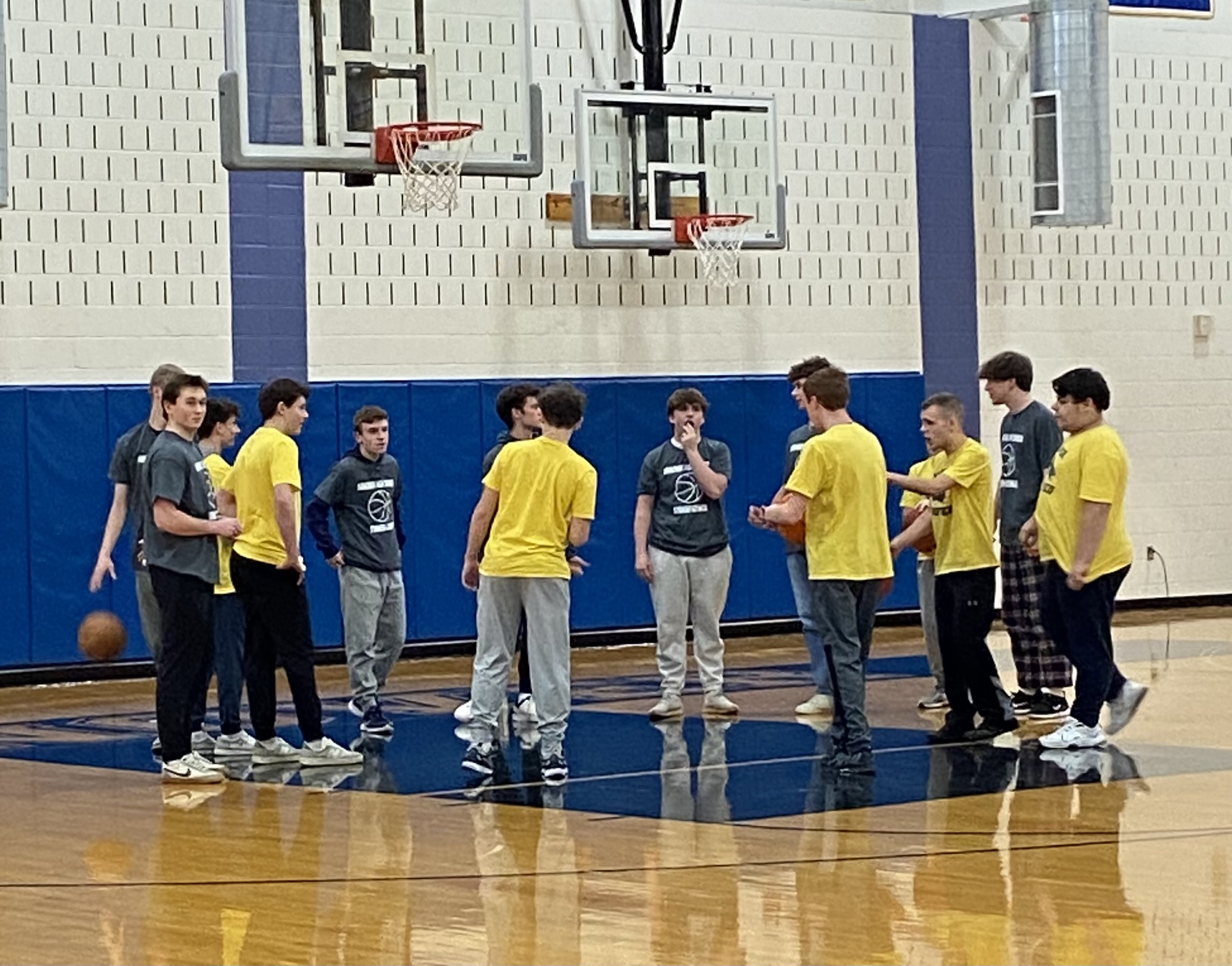
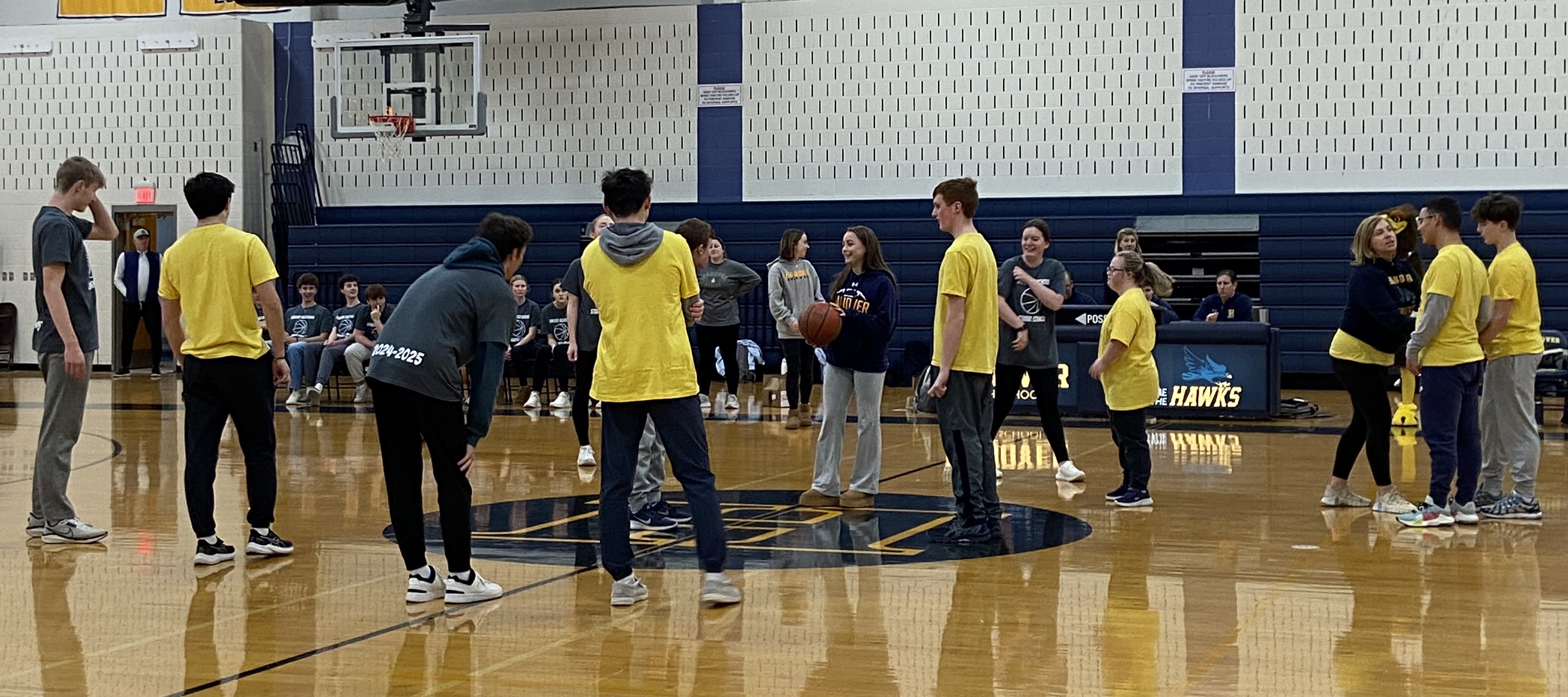
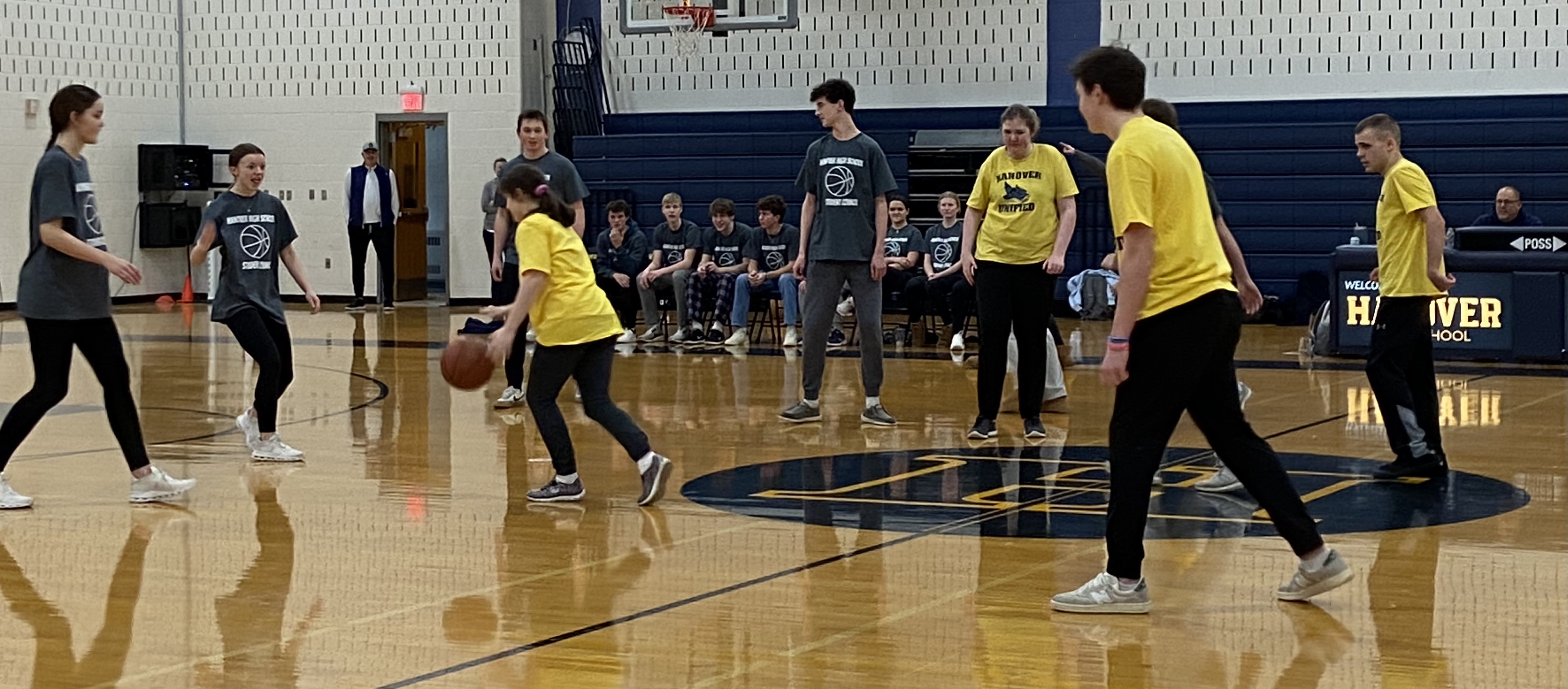
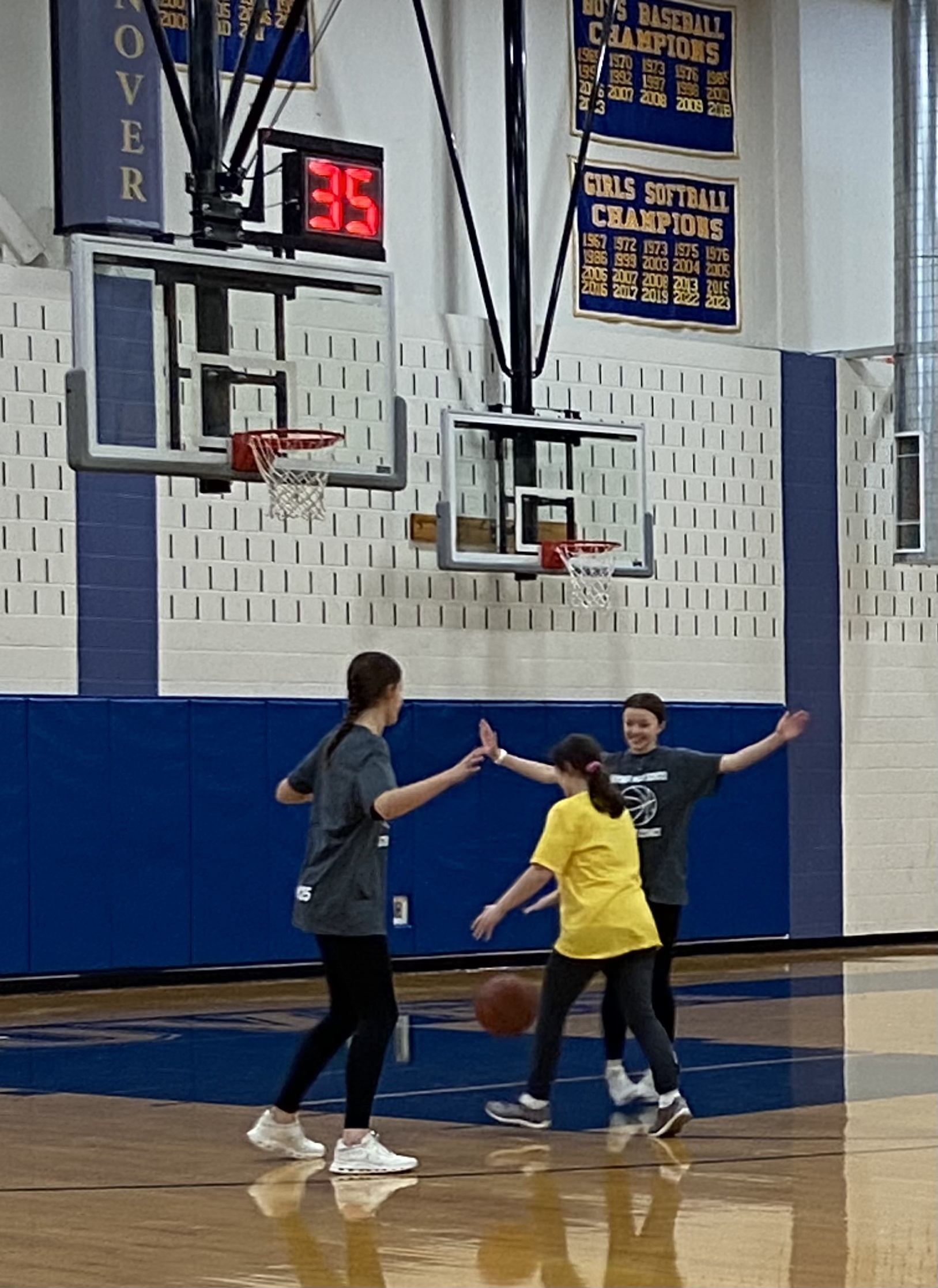
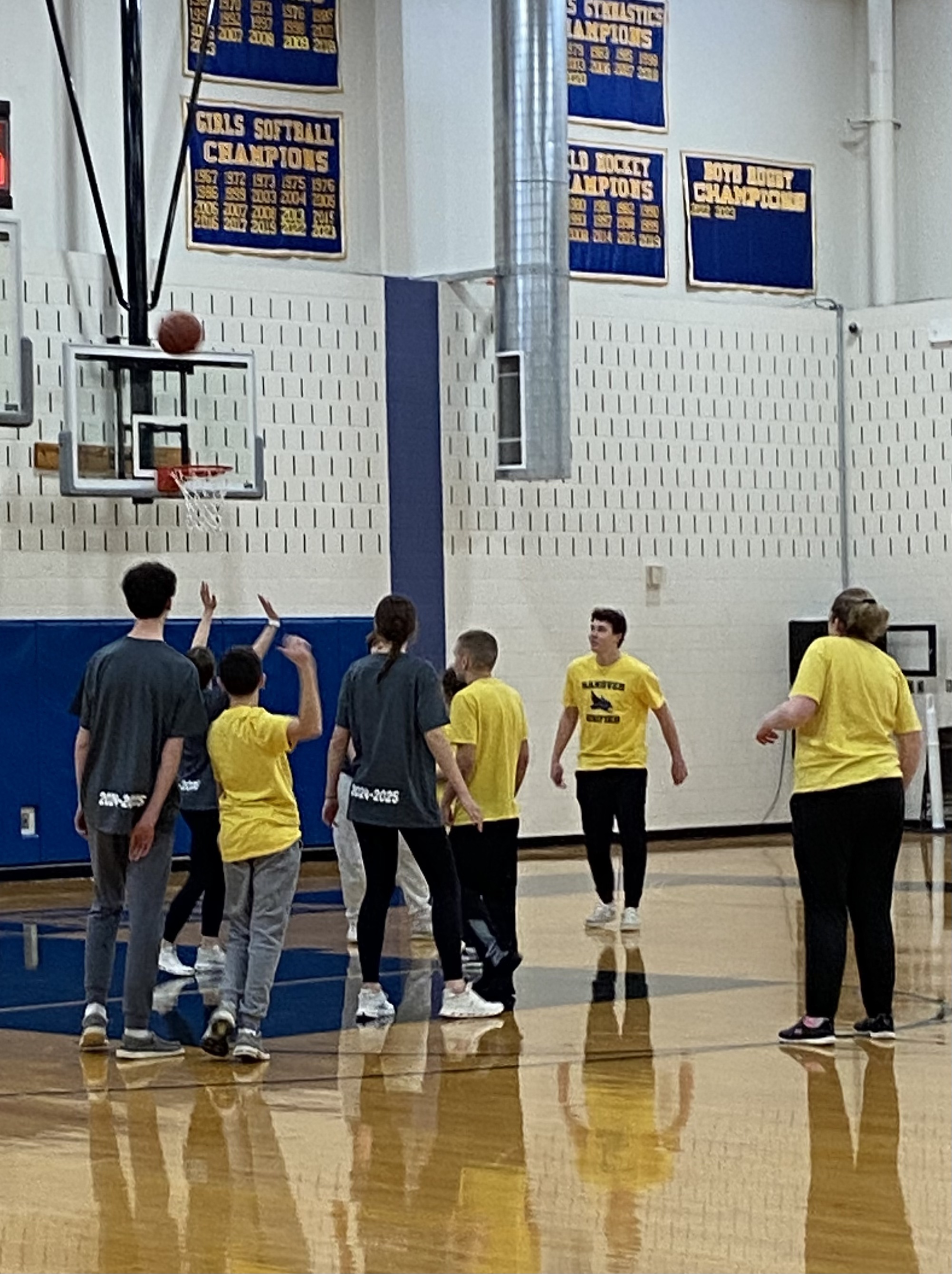
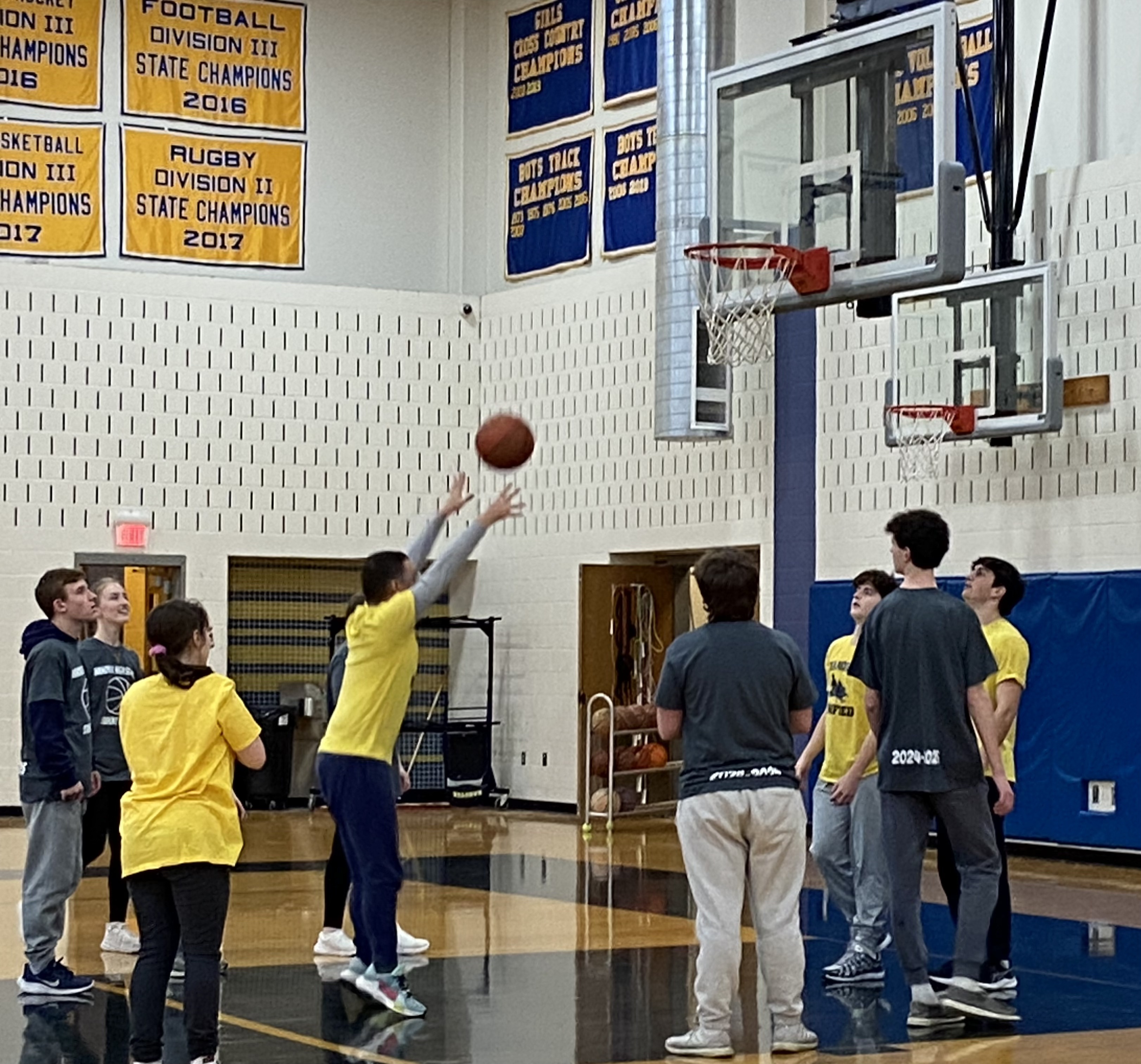
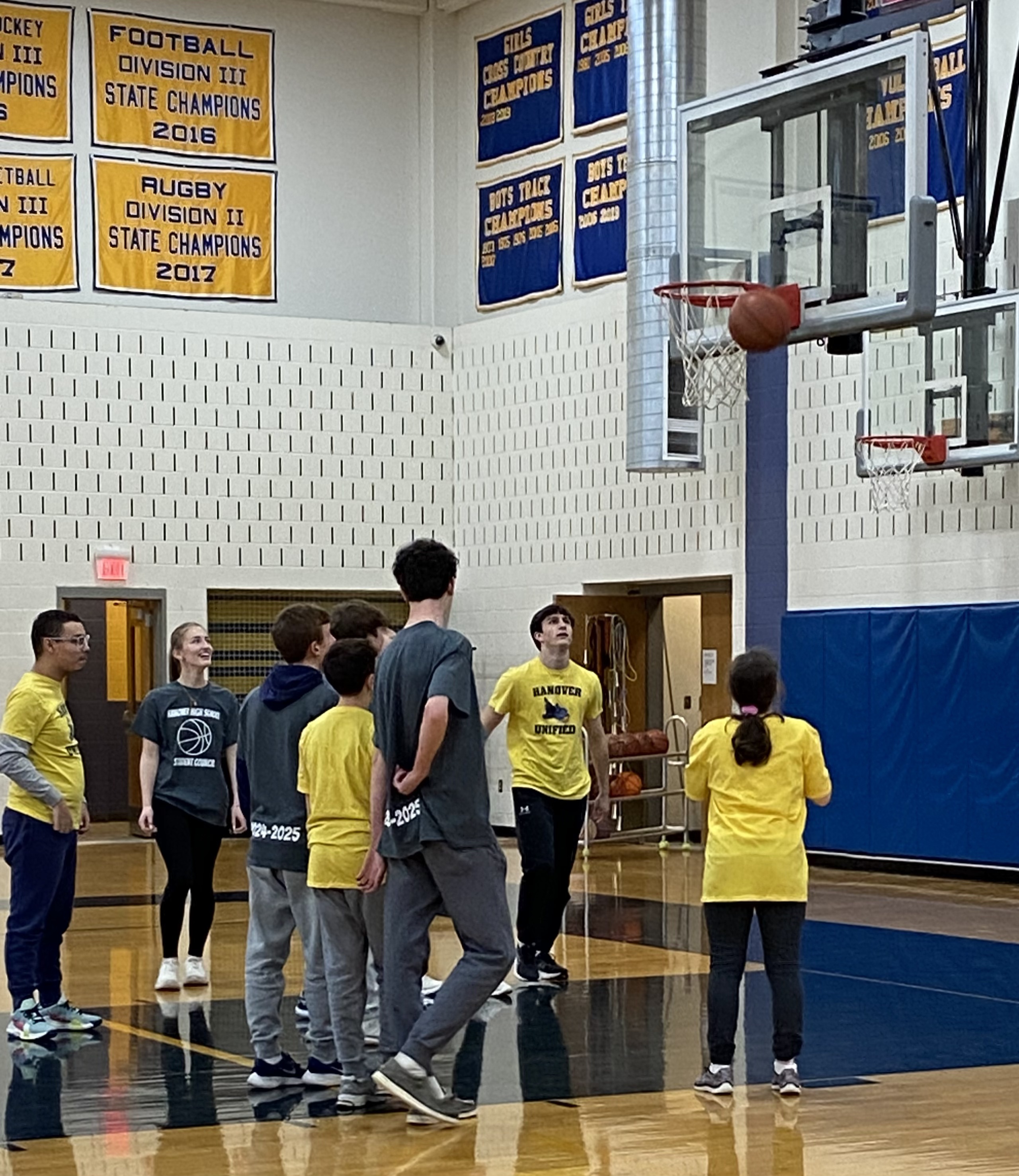
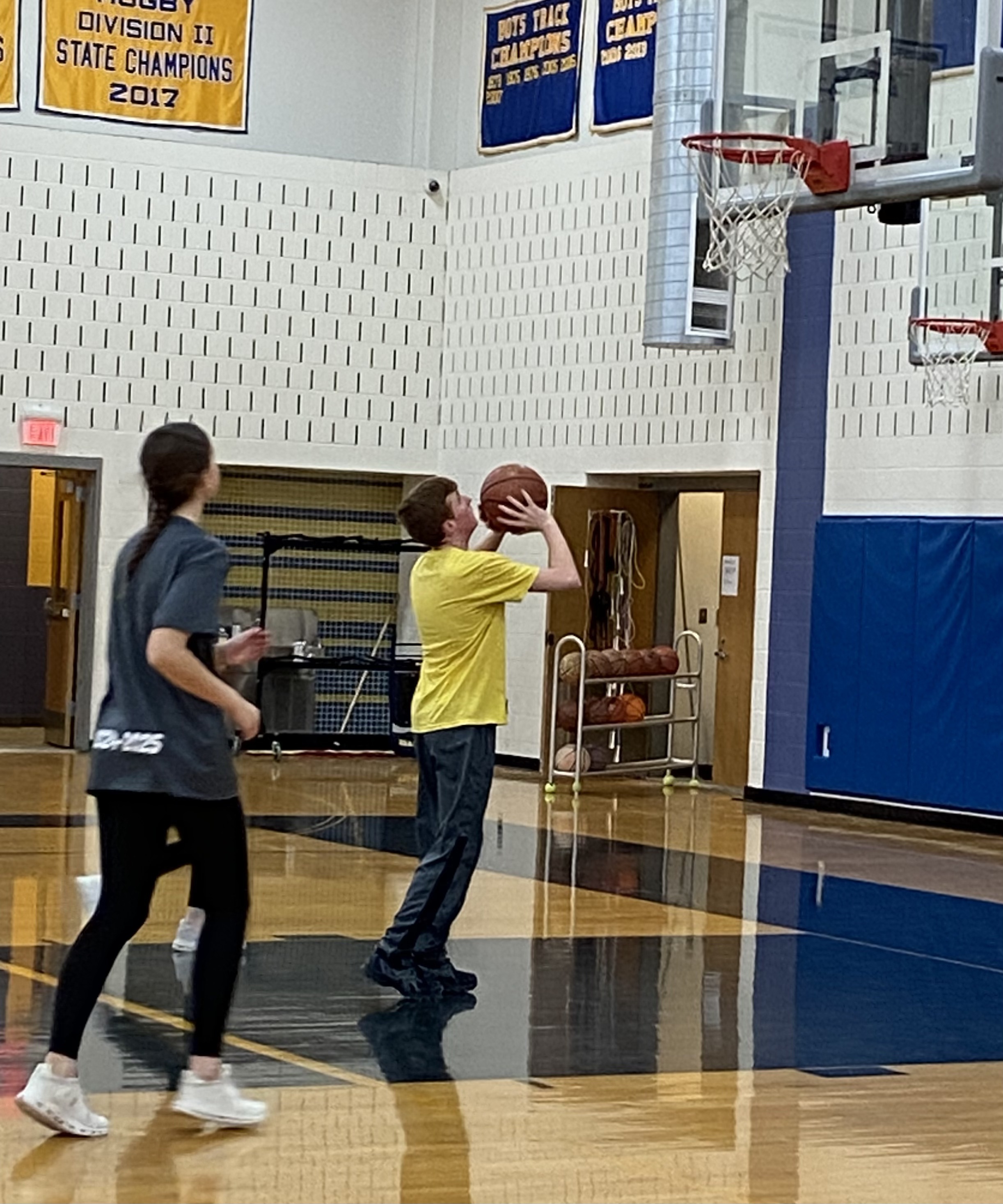
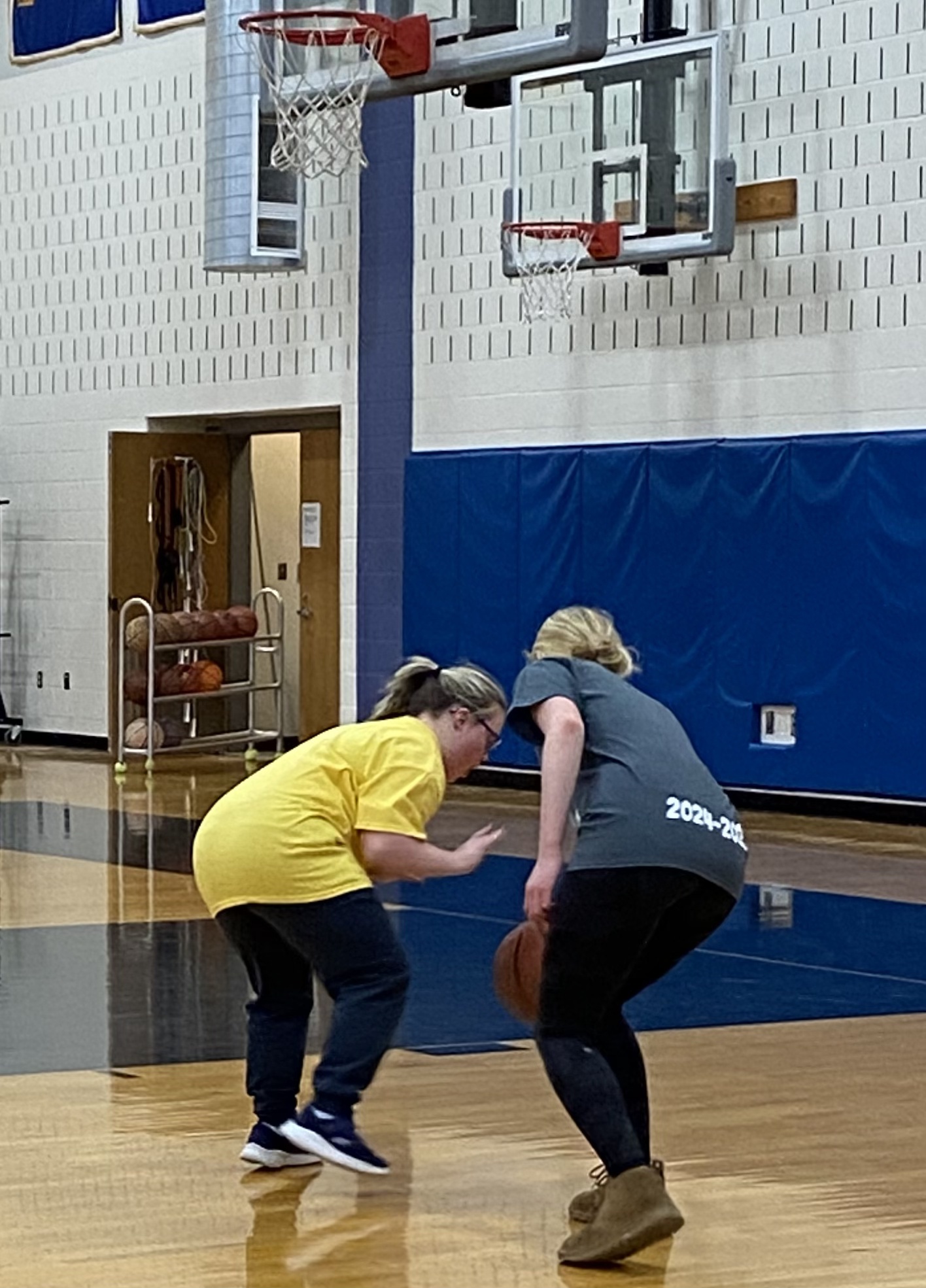
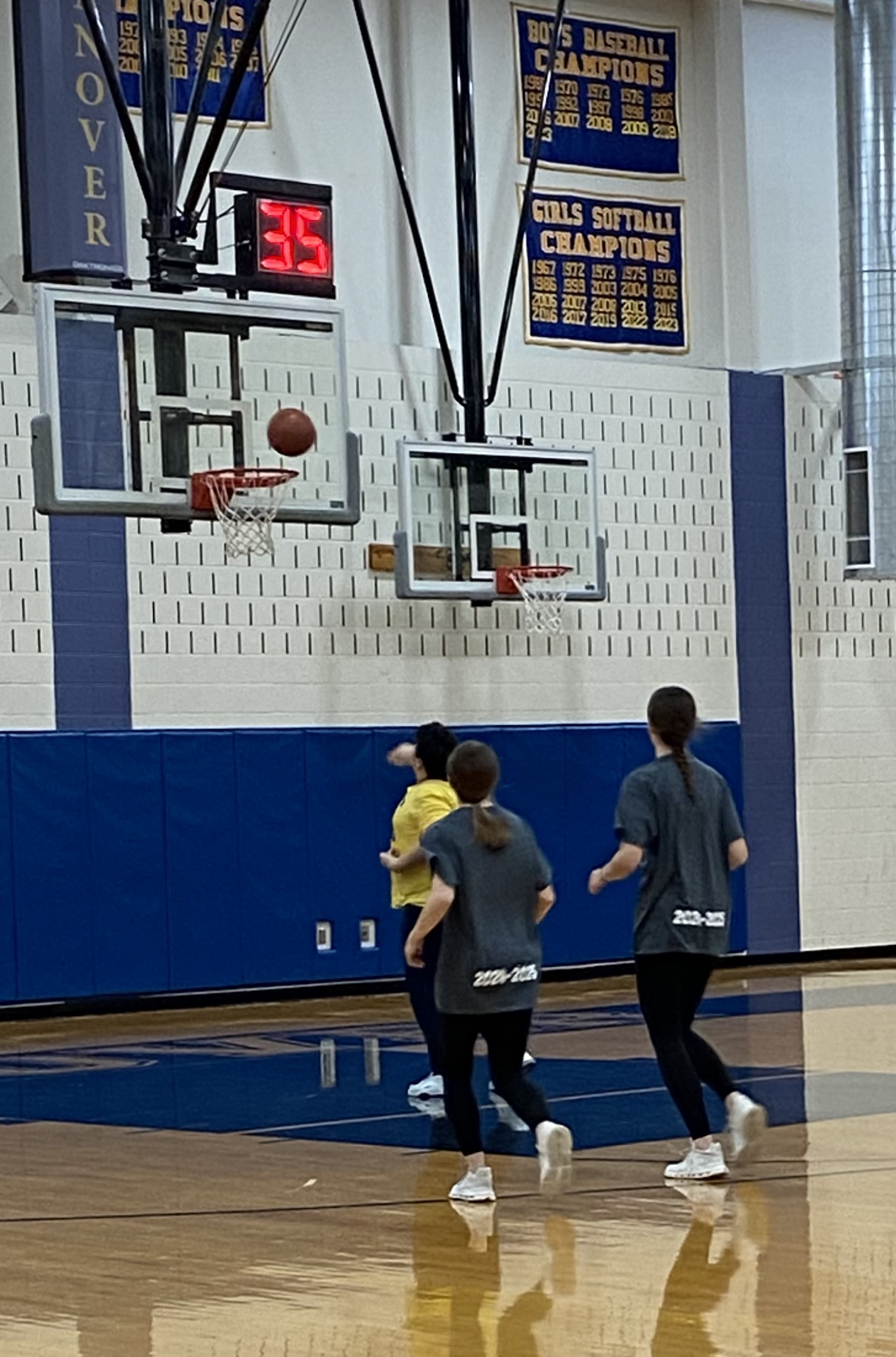
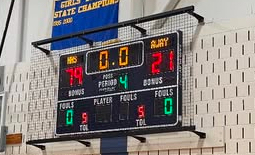
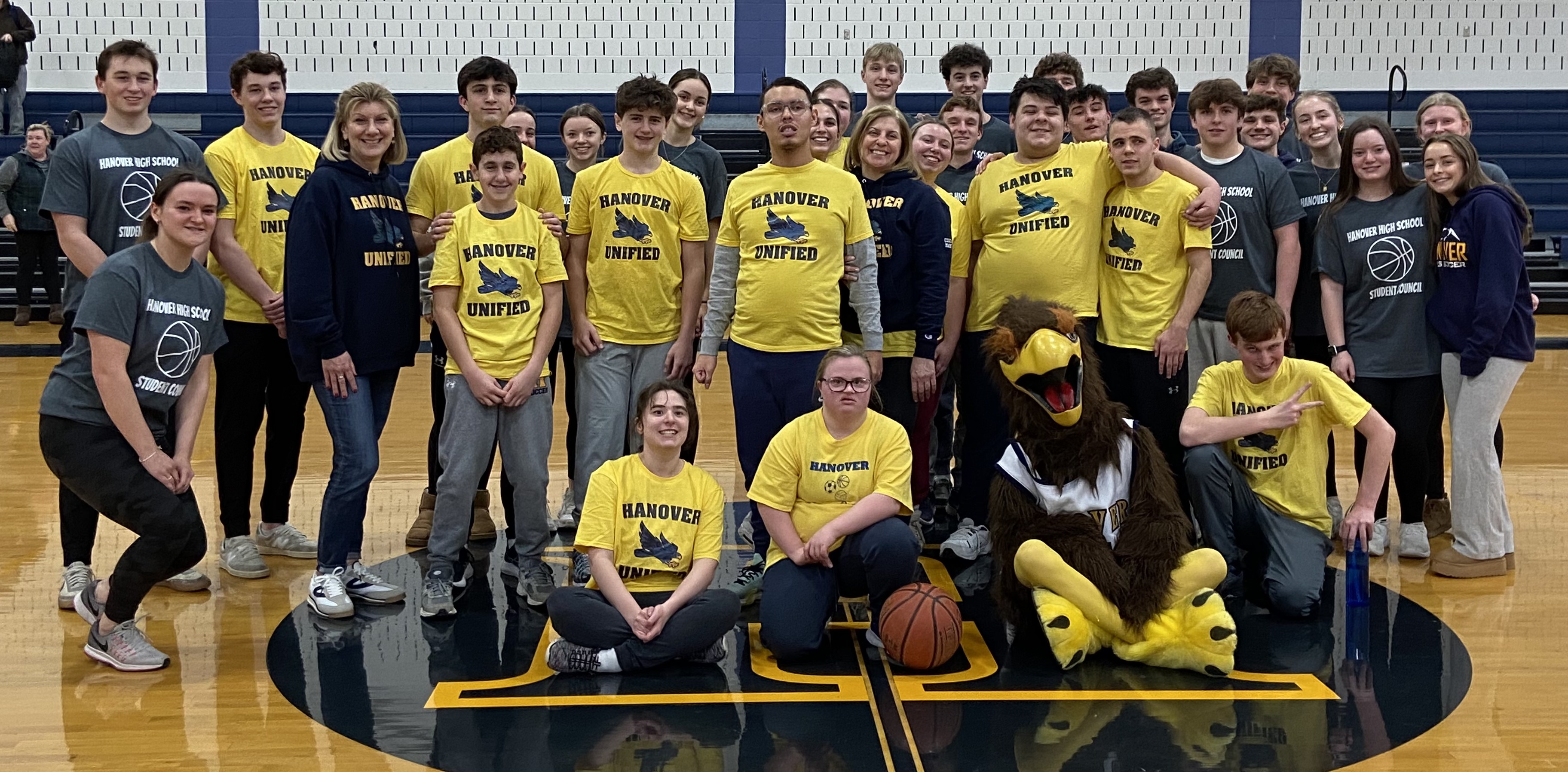
The Hanover High School Unified basketball team made a powerful statement as they took on a team fielded by Student Council in a packed gym on Feb. 6. While the final score stood at Unified 79, StuCo 21, what counted more than the many, many (many) baskets made was the teamwork, sportsmanship, and friendship on display.

For the Unified team, top scorers were Danny Campbell, Bre Thomas, Jillian Richards, JJ Molina-Para, and Adel Mustafa-Rivera. Dom Castaldini and Maeve Patten showed determination as they made passes and grabbed rebounds. Molina-Para wowed the crowd with his 360-turns before sinking several baskets, and Richards’ countless steals from StuCo players were almost criminal.

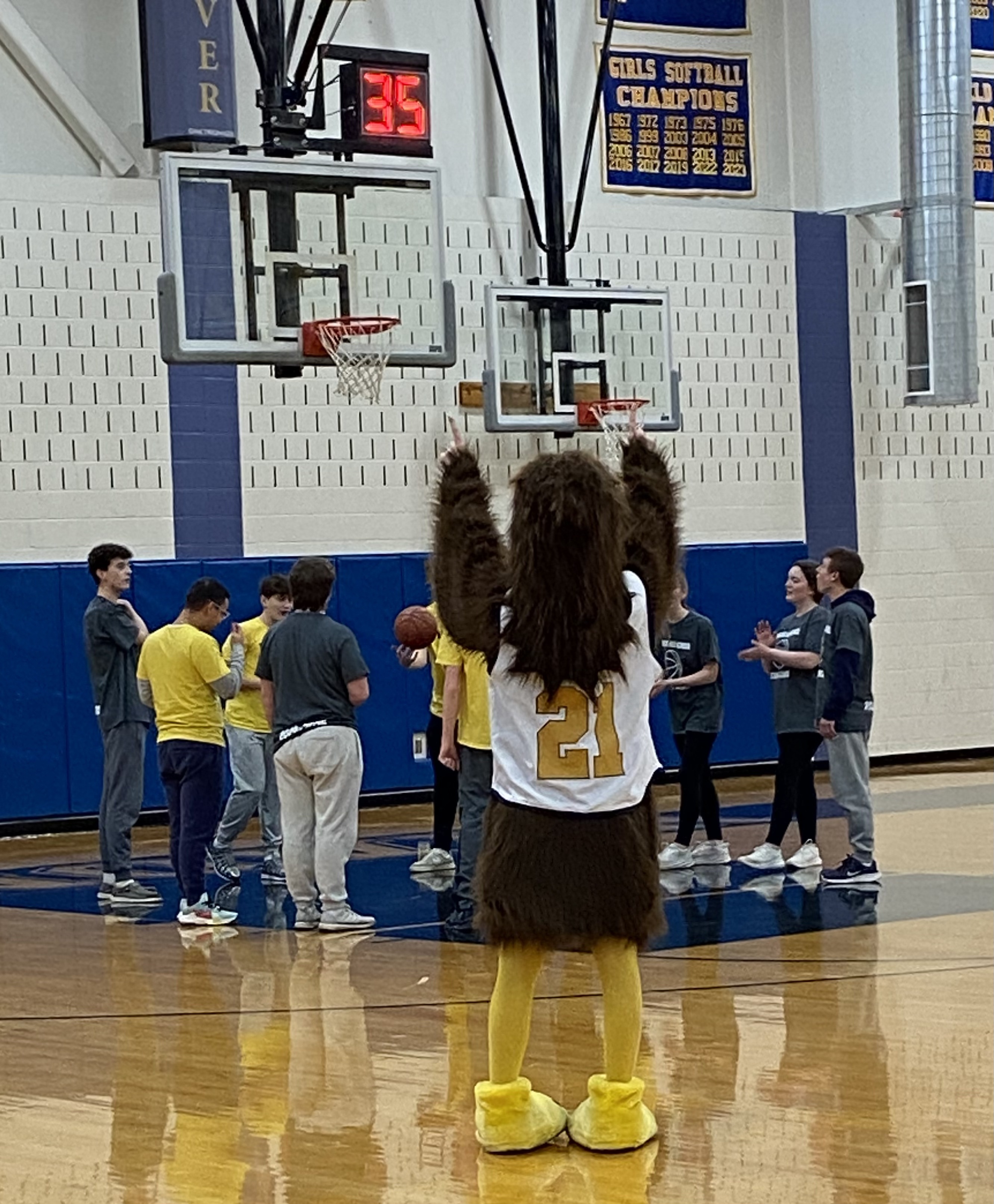
The StuCo team kept their spirits high, with several members of HHS basketball teams making impressive shots. The atmosphere was festive thanks to the play-by-play of HHS senior Thomas Perkins, and the Hanover Hawk mascot rallying the crowd. Congratulations to players from both teams! Special thanks go out to Unified Sports organizers Ms. Mann and Ms. Gately, Athletic Director Scott Hutchison and all the fans in attendance.

The HHS Unified team will take part in a Jamboree at Abington High School on Feb. 12, playing teams from Abington and Carver high schools. We wish them best of luck!

Pioneered by Special Olympics, the goal of Unified Sports is to partner people with and without intellectual disabilities on the same team. By training and playing together, Unified teams promote inclusion, friendship and self esteem, according to the Special Olympics website. An estimated 19 million young people participate in Unified Sports nationwide.

Eagle Scouts Soar to New Heights

By Bradlee Dowling, ’26

Staff Writer

Earning the rank of Eagle Scout is no small achievement: it requires years of dedication, leadership, and service. Five scouts from Hanover High School have gone above and beyond, using their projects to make a meaningful impact on our community. From improving accessibility and transportation to preserving local history, their efforts demonstrate the values of scouting and the lasting difference one individual can make.

According to EagleScout.org, the projects these high schoolers participate in must be challenging, valuable to the community, “demonstrate leadership of others and provide service to a worthy institution.”  Eagle Scout is the highest rank a scout can achieve.

After seeing how many bikes were being thrown out at the Hanover transfer station, senior Gavin Hardy organized a bike drive for his Eagle Scout project. He collected about 100 bikes from the dump in one weekend, refurbished the bikes that could be saved and donated them to schools, veterans and families in need. Spare parts were sent to Cameroon, Africa. He credits Rich Bonanno, the founder of the Scituate-based nonprofit Rolling Wave Foundation, with helping him connect with organizations and individuals in need. Gavin’s project shows how a simple idea can bring mobility and independence to others.

Drew Keith’s journey to Eagle Scout has been lifelong, filled with challenges and memorable moments. Attending the National Jamboree in West Virginia stands out as a highlight, while navigating the extensive paperwork for his Eagle Scout project proved to be his greatest hurdle. An HHS junior, Drew built a bog board to replace an old one between the middle and high schools, making the trails accessible for people and their dogs. Despite facing weather challenges, Drew’s perseverance shone through, and he credits scouting with instilling leadership, life skills, and values like good citizenship. When asked for advice, Drew shared, “Stick with it. It’s a fun experience if you go into it with the right mindset.”

Tyler Jewson’s Eagle Scout project also involved building bog boards to bridge muddy areas, improving accessibility and usability for the community. The HHS junior’s project demonstrates a hands-on commitment to solving local challenges and leaving a lasting impact.

Since joining scouting in 2019, junior Matthew Bell has held the leadership position of “historian.” For his Eagle Scout project, Matthew built paddle board racks for the Hingham Maritime Center. In addition to that, he refurbished their flagpole, built in the 1920s. His role as troop historian reflects his dedication to leadership and legacy and his project reveals a deep understanding and appreciation for the local history.

Junior Liam Anderson’s path to Eagle Scout began with a unique twist: quitting in 5th grade only to rejoin in 6th. His determination paid off as he rose to the rank of Senior Patrol Leader, managing a troop of 60 scouts. For his Eagle Scout project, Liam created portable exhibit signs for antique vehicles to support the local historical society. Communication challenges during the project taught him the importance of persistence and follow-ups. Liam credits scouting with shaping his leadership and communication skills, making him a more well-rounded individual. His advice to aspiring Eagle Scouts: “Overlook the tedious, see the light at the end of the tunnel, and imagine yourself in the future without it. You’d be pretty sad if you saw all the others and wish you had stuck through it.”

From bike drives to bog boards and historical preservation, these scouts’ projects highlight the diverse ways Eagle Scouts make meaningful contributions. Through their dedication, leadership, and resilience, they’ve not only achieved scouting’s highest rank but also left lasting marks on their communities, setting powerful examples for future generations.

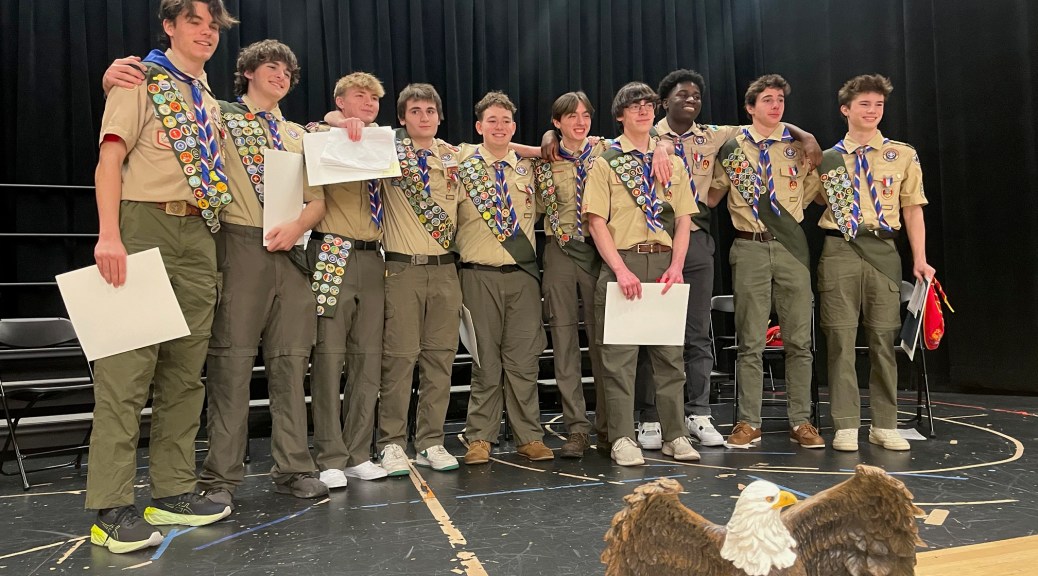
Students from HHS and the area celebrate earning the rank of Eagle Scout in a ceremony Jan. 4. Photo courtesy of Kimberly Hardy.

Cedar Street Cafe: a Sweet Spot at HHS

By Bradlee Dowling, ’26

Staff Writer

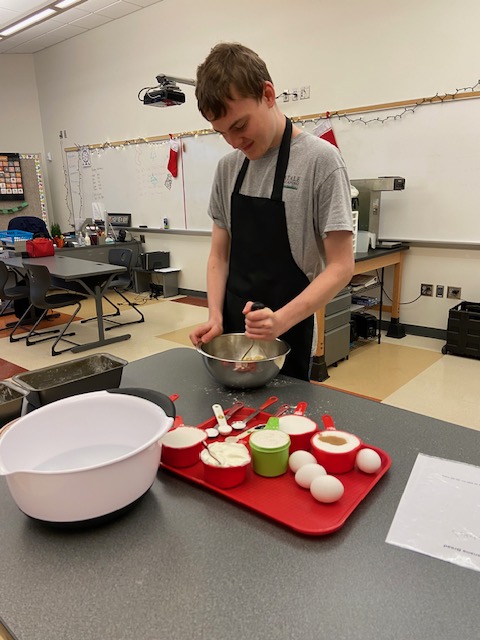
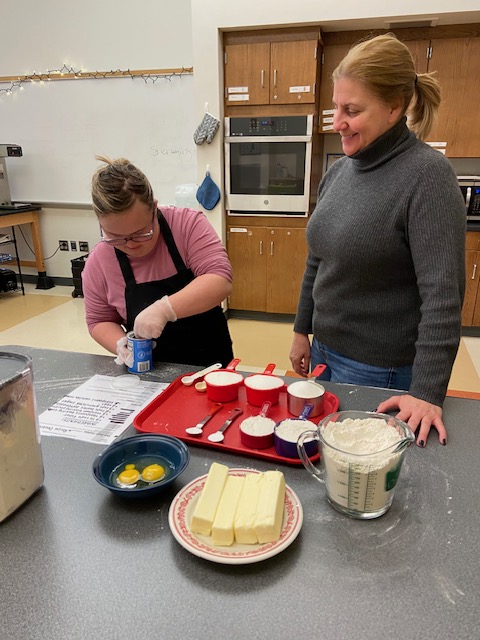
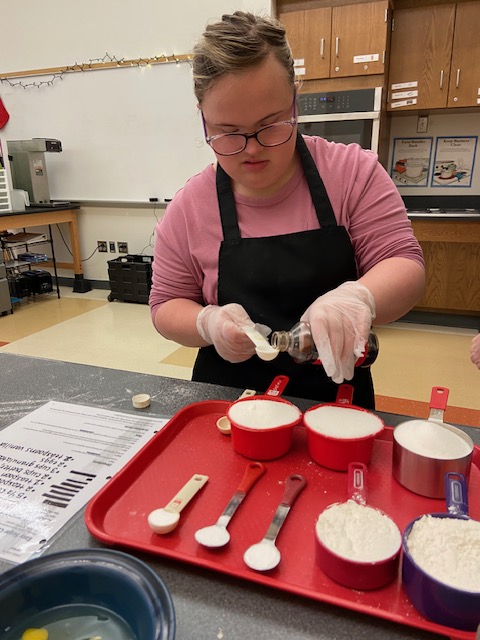
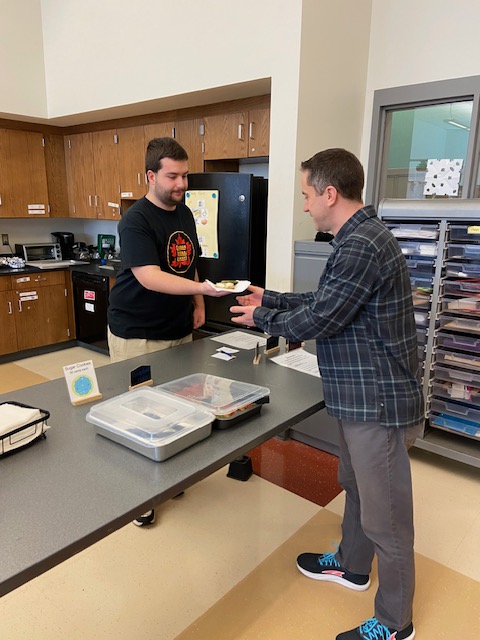
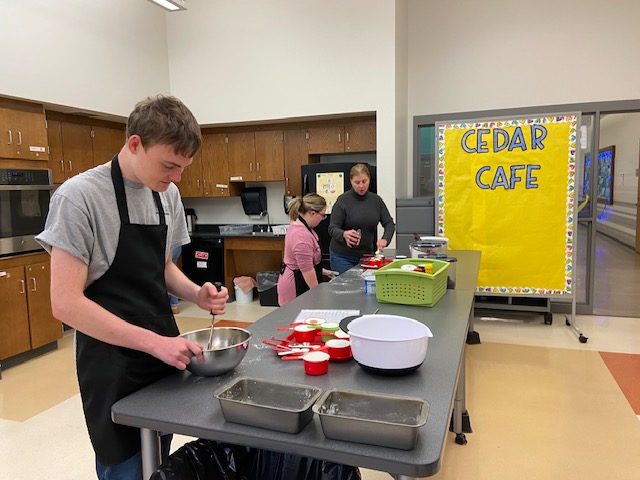
At the heart of Hanover High School is a hub of hard-working students dedicated to serving the school community with warm baked goods and coffee: Cedar Street Café. This beloved café has a unique origin story: for many years, students in the RISE and POST programs have been making treats to sell to teachers at Cedar School. About three years ago, HHS Principal Mr. Mattos approved bringing the operation here, where its weekly shop has flourished.

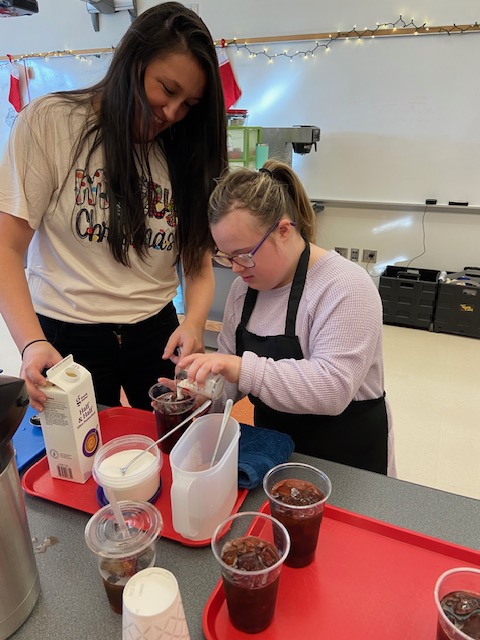
The RISE and POST programs at HHS work with special needs students from ages 14-22 on academics, life skills and social/communication skills. The programs are run by Mr. O’Hare and Ms. Melone, assisted by a team of paraprofessionals who help tailor learning to each student’s needs. Ms. Mann and Ms. Drinkwater, the paras helping run the cafe on a recent visit, explained that the goal is to teach students about handling money and providing excellent customer service. They also shared that their favorite aspect of the café is the interaction between the students and their peers.

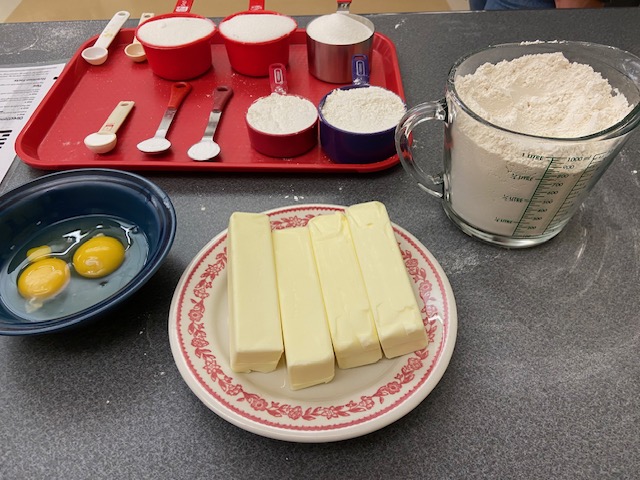
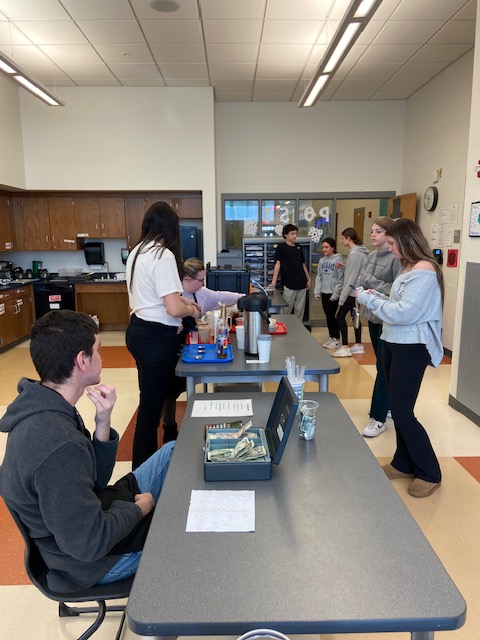
Students and teachers in the RISE and POST programs typically shop for the week on Mondays and bake the treats on Tuesdays and Wednesdays. When Thursday comes around, three students manage the café out of room 111. One takes orders, another prepares the coffee and packs baked goods, and the third handles transactions. As a student myself, I can confidently say that Cedar Street Café brings joy to everyone’s day. The moment the announcement is made over the loudspeaker, half the class rushes to the café. When they return, they’re all smiles, carrying delicious treats.

Now, you’re probably wondering what’s on the menu. Ms. Mann says that the blueberry cake and coffee cake are not only her personal favorites but also a fan favorite among students. However, the café offers so much more: cookies, lemon cake, pumpkin bread, coffee, blondie brownies, regular brownies and sugar cookies have been up for sale. One thing everyone knows about Cedar Street Café is its love for seasonal treats! In the fall, they serve pumpkin-flavored goodies; in the winter, they offer holiday cookies and hot chocolate; and in the spring, lemon bread becomes the go-to treat.

The café is always looking for new ideas, and the teachers encourage students to share suggestions. If you have a specific treat in mind, submit your ideas using the Google Form linked below! Keep in mind, the café operates as cash-only to give students valuable hands-on experience in handling money and practicing essential math skills.

Cedar Street Café is more than just a place to grab a snack—it’s a bright spot in the day for students and staff alike, and a cornerstone of our school community.

To submit suggestions on items to offer: https://forms.gle/Jrkrjr5qD4hP5Ys36

Art: A Cornerstone of Education

By Sophie Bunar, ’27

Staff Writer

“Education isn’t just about feeding the brain. Art and music feed the heart and soul.” ~ Julie Garwood

Art and music surround us, bringing humanity to our computed, monotonous lives. They allow free expression, enjoyable experiences, and even a future career for many. Here in Hanover, we strive to create a place where students can find companionship, acceptance, and invaluable skills. However, with the overwhelming town budget struggles forcing cuts to art and music this year – and threatening more for next year – the voice of our community needs to be louder than ever. To better understand the importance of art and music curricula, I interviewed several educators and students.

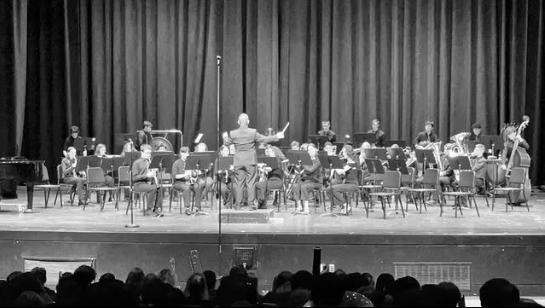
“The arts programs here at Hanover are the most important parts of our public schools,” said Dante Heffron, senior drum major of The Pride of Hanover Marching Band. “These programs provide a sense of belonging for students and also provide a place for students to explore their skills or learn new ones.”

Even if they may not excel in other subjects, many students find their strength and community through the arts. Everybody is different and distinctively skilled, but a group that works together and embraces these differences is what many students need to succeed both in school and in life. Just as Hanover High School band director and music teacher Matthew Harden explained, “Not every young person is an athlete or scholar in the traditional sense; however, music and art speak the language of emotion, connection, and community.” Providing students with a place where they can express themselves on a level that surpasses standardized academics is essential within any school system.

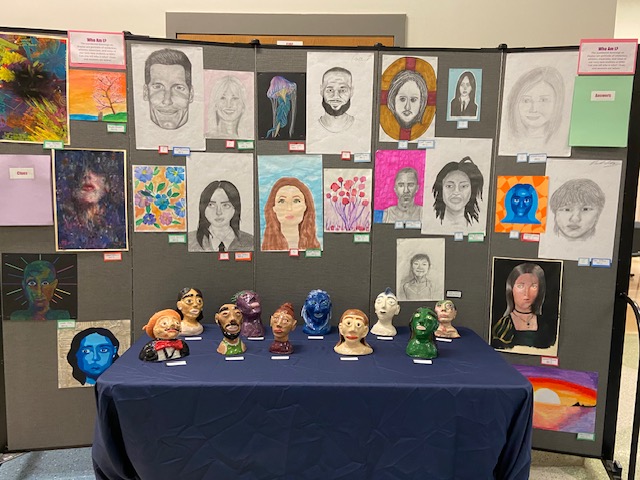
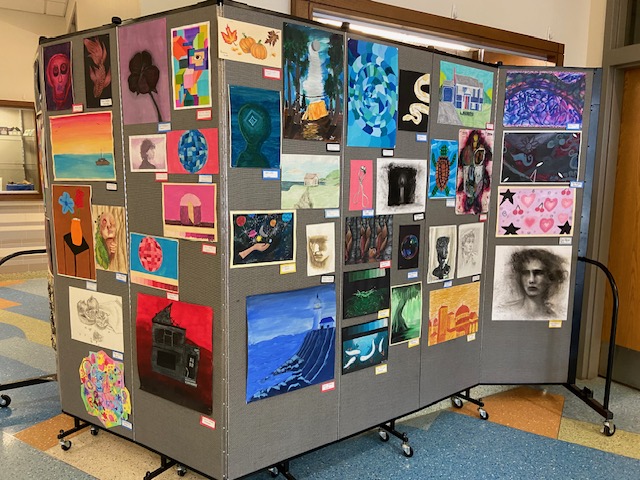
Work created by HHS students in 2D and 3D art courses

The arts are also significant because of their ability to foster community and friendship within educational environments. Many students meet their lifelong friends in school, especially in programs like music and art, which are close-knit and inclusive. “People you meet in your band or in your section of AP Art tend to be people who you become so connected to,” said Sadie Hofford, chorus and music educator. “In VOX and Chorus, I watch students help and support each other every single day in big and small ways.”

Art and music programs are also important because individuals involved in the arts work hard to make sure that people of all races, genders, and backgrounds are welcome and feel welcome. “Art transcends racial, socio-economic, cultural, and political boundaries while also calling upon each artist to reflect on their audience’s backgrounds and interpretation,” commented Mr. Harden, describing the diversity within the arts programs. It is crucial that students feel connection and belonging during their years in school because it helps to stimulate positive social skills and provides relationships that will prove useful in their years after graduating.

Another reason why the arts programs are indispensable in our schools is because of the advancing technology and increasing use of AI in our ever-changing world. “In a world of instant gratification and artificial intelligence, the arts foster long-term investment and dedication,” said Mr. Harden. “The arts challenge us to see the humanity in each other—to find empathy and cohesion amidst apathy and divisiveness.” Because of the influx of artificial intelligence within education systems, people are finding easy ways to complete assignments and pass their classes. However, the arts are some of the few programs where students cannot cheat. They require perseverance, humanity, and diligence. A robot cannot play a song or create a painting that has feelings and meaning behind it; only people can do that.

Work created by students in 2D art classes.

Just as technology evolves, our society evolves, oftentimes causing disharmony and even leading to periods when the people controlling the technology thrive while those under them face tribulation. The art community currently is facing immense adversity with the use of AI, stealing from artists, and creating “art” by data-scraping the Internet in order to provide entertainment that can be shared across social media. As Maria-Rita Silva, a sophomore at HHS, said: “In a world where capitalism, materialism, overconsumption, and the lack of creativity have captivated so many lives, we cannot let the arts die, and to deprive Hanover High School of the arts will take away the opportunity to engage in such a beautiful thing from thousands of current and future students.” By cutting or eliminating the arts, one takes away humanity and pure expression, which is far beyond the understanding of computers.

Many may argue that the arts are complicated, time-consuming, and unnecessary, especially during the early years of education. However, they fail to understand that art is humanity’s way of creating a legacy, of solidifying their presence far into the uncertainty that is our future. “It is not suprising to me that at every level we educate our students with visuals, from counting apples in kindergarten to drawing complex organic systems in anatomy. We are, after all, a sight-centered species,” said HHS art teacher Mr. File. “Ever since we began to coalesce into societies, whether in caves or early towns and cities, humans have been trying to create visual evidence they existed. The historical version of ‘File was here’ echoed throughout human existence.”

The arts have always resulted from mankind, starting from the very moment we evolved into what we are. When you observe art such as cave drawings, Beethoven’s symphonies, or Van Gogh’s paintings, one fact remains true: it doesn’t matter what one has, it matters what one gives, and the arts are gifts that influence our society forever. Teaching this in our schools strengthens the interest in and appreciation of art and all that results from it.

As Mr. Harden said, “A comprehensive and sequential education in the arts is essential for a myriad of reasons.” Art provides students with an expressive environment, a diverse community, and unfathomable knowledge of humanity and emotion. To take away the opportunity of participating in such an influential phenomenon from those in any level of education is to take away the individualism and soulfulness that society could use more of.

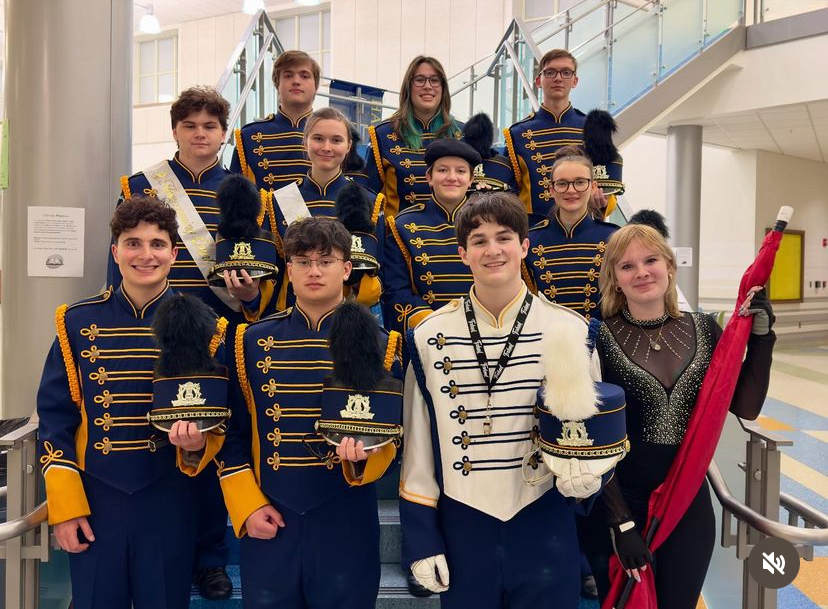
HHS seniors in the Band and Color Guard

Budget Woes: The New Face of HHS

By John Owens, ’28

Staff Writer

On the morning of September 3rd, the sun rose to greet the residents in the town of Hanover. Autumn signaled its approach, as leaves danced in the air, swishing and sliding as they fell to the ground.  The turning of the leaf, the changing of the season, symbolized a new beginning for everyone, but especially for those who attend Hanover High School. With the failure of a funding initiative in May, students woke to the blaring of their alarm clocks and the bright light of a new day, along with the realization that their lives have changed for the rest of their high school careers.
Flashback to early May, when there’s a high chance you heard about a potential vote that would determine the “fate of Hanover.” Rumor of the vote spread like wildfire throughout the town, and some students were confused by or unaware of the reason for the vote. On the evenings of May 5 and 6, hundreds of citizens of Hanover gathered in the high school auditorium to voice their opinions about the town budget proposed for the subsequent year. The town was asking for about $6 million in additional funding for multiple departments, according to the town website. If approved, taxes would be raised, costing the average homeowner about $1400 a year.

Residents had to decide whether they would put this proposal to a town-wide vote in a special election. Those in attendance voted in favor of a special election May 18. But on that day, residents worried about higher taxes and rising costs voted by a large margin to reject the tax increase. Town departments were forced to reduce their budgets, cutting down on many programs and job positions.

This would be felt most harshly in the schools, which had asked for about $2.7 million of the additional funds. The school department is responsible for helping students become the future leaders of society. A comfortable and safe atmosphere for students is important for the schools of Hanover to uphold the motto of giving all students the chance “to soar and succeed without limits.” But according to information on the Town of Hanover website, the override failure would lead to more than 25 teachers being laid off, classroom sizes increasing by 20 percent, and electives for students being reduced. Opportunities for teaching and career exploration would decrease, supporters of the override feared, while behavior issues would increase.

Now that we are a few months into the school year, the wounds inflicted by the override failure have become more evident at HHS. The void left by the budget cuts looms in the empty classrooms that once were used to teach Hanover students, or classrooms bursting at the seams. According to Steve Henderson, President of the Hanover Teachers Union, there are fewer courses being offered at the high school, and the ones being offered are overcrowded. There is also aging technology that cannot be replaced and field trips and extracurriculars that have been canceled. Seniors, in their last year, no longer have the same class choices and opportunities they have grown to expect, he said, and freshmen coming into school have “an uncertain horizon ahead of them.” 

Teachers are unable to spend as much time with students because of larger class sizes and caseloads, and their relationships with students are suffering, Mr. Henderson said. “Teachers are in a very trying position, and will continue to advocate for students.”

The opportunity to collaborate with other students and to create the arts that represent HHS is a gift to many. HHS strives in the arts and thrives when it comes to amazing performances by the chorus, band and drama programs. However, the Fine Arts department has changed because of the override failure. Matt Harden, music teacher and band director, said major impacts from the override include the loss of supplies and programs and the shifting of teachers to courses they have never taught before. The high school also lost its drama teacher, which has greatly impacted the face of the popular Drama program, he said.

“There will be a ripple effect for a long time,” he said. “My goal every day is to limit how much of an impact there is.”

It is necessary to understand the central causes that brought the town to this financial position. According to the town of Hanover website, “similar to many Massachusetts communities, the cost of providing services to the community has outpaced the revenue growth allowed under Proposition 2½ .” This means that the town’s tax revenue – its profits – aren’t keeping up with its expenses. The money in the town’s coffers also has been impacted by the expiration of federal Covid-19 grants and general inflation.

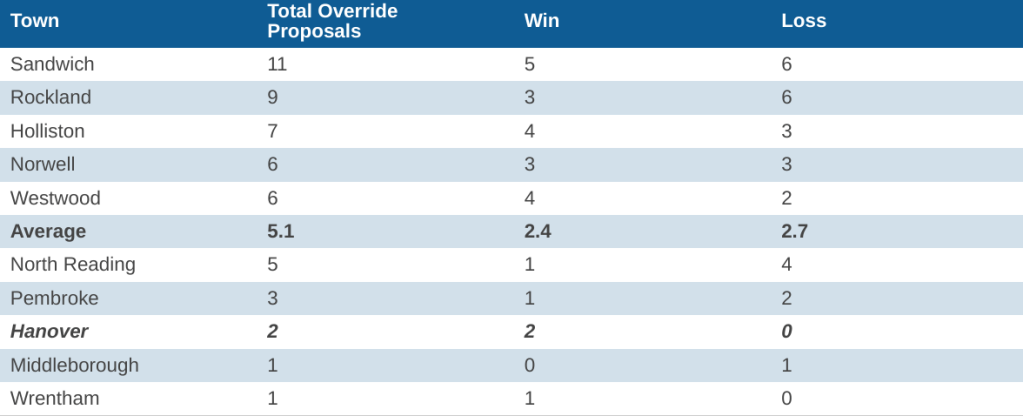
Rising expenses have not only impacted our town, but other comparable towns such as Sandwich, Rockland, Norwell and Westwood. Based upon a Municipal Data Bank, created by the Massachusetts Department of Revenue, towns like ours have asked for an average of 5.1 overrides since 1990 and more requests have failed than succeeded. Sandwich alone has asked for an override 11 times. Hanover has sought two tax overrides since 1990, both of which passed.

Hoping to heal from the wounds being nursed this year, school and town officials are already deep into planning the budget for next year. They are preparing three different budget proposals and pursuing another override vote. The “level funding” school budget would maintain the current level of reduced funding, resulting in more cuts due to rising expenses, according to school officials’ budget presentations. The “level services” budget would include funding to cover those rising expenses to maintain what we have this year. The “restore 24” budget would restore the funding cut last spring, returning many positions and programs that have been reduced. 

If only the “level funding” is approved, officials say, bussing, sports, clubs and course offerings at HHS could be even further impacted. The school we know and love, that the community cheers for on the playing field and on stage, could become unrecognizable. “Our identity is defined by the schools,” said Mr. Henderson.

It is a gift that HHS still maintains its core factors, its students and staff. The relationships that students and teachers have built over the years make HHS a welcoming place. It is hard to imagine what will happen if another override fails.

For more information on the town and school budget: https://www.hanoverschools.org/district/budget-planning