Tag Archives: featured

Madame Web Fails to Spin a Captivating Tale

By Abbey Kinzel, ’23

Alumni Writer

Madame Web is an absolute cinematic disaster for a multitude of reasons, but I’ll only be covering a few to save you from a 12-page review. One of the many issues starts with the budget of the film itself. Other superhero movies like Venom, Venom 2 and even Morbius had a better budget than Madame Web. Venom was allotted about $100-$116 million, Venom 2 had $110 million, and Morbius received $75-$83 million. Madame Web had a budget of $80 million. But it was more like 80 cents after paying stars Dakota Johnson and Sydney Sweeney and shelling out for the visual effects, which were the only decent aspect of the movie. 

The film, meant to be the origin story of a superhero in the Spiderman universe, was written by Matt Sazama and Burk Sharpless. The pair has worked together on several well-known films like Dracula Untold, Gods of Egypt, Power Rangers (2017) and Morbius. (Yeah Morbius, you know it’s morbin’ time, with Jared Leto, pretty bad). Most people who watched Madame Web in theaters say that Morbius is better by a landslide. Madame Web’s dialogue feels choppy and unfinished since there was a script change when Dakota Johnson signed on. The characters have absolutely no arc, no background, and no backstory; they’re almost like zombies. The characters have as much depth as a stick gum; it’s like they have no life, no soul. 

At this point, I’ll be going into spoiler territory, so if for some reason you still want to watch Madame Web, just be warned. Johnson plays Cassandra Webb, whose mom dies while trying to research a spider that gives superpowers, (how convenient). Cassandra is bitten by this spider – a big shock – but doesn’t develop superpowers right away. She grows up and becomes a paramedic, when she bumps her head and activates the power to see into the future. When she has a vision of three girls being murdered by a random guy, she vows to prevent it. (The only reason the guy wants to kill the girls is because he keeps having nightmares about the girls killing him. That’s it, that’s his reason). The girls hide out in the home of Cassandra’s friends, Ben and Mary (hmmm, I wonder who Ben is), but when Mary goes to the hospital in labor, the girls are discovered by the bad guy.

There is no action or fighting in this action movie, only the nightmare the bad guy keeps having. The only exciting thing Cassandra does is hit the bad guy with a taxi, and then throw an ambulance at him. In the end, Cassandra and the three girls just lure the bad guy to a spot where he gets crushed by a sign. At this point, Cassandra is blinded and can’t walk so she is next to useless. But now she can see into the future whenever she wants to and will help mentor the three girls who are spider-women now. 

From the movie and the tone of Dakota Johnson, it’s like Madame Web doesn’t want to be a part of the Spider-Man universe. It’s so hard for me to watch a Sony live action Spider-Man movie because they have just gotten progressively worse and worse. Just like with the Fantastic Four, it’s so hard to watch a reboot from a company that never made the source material; they’re just interested in taking your money. My biggest pet peeve is that the movie is boring, and almost made me fall asleep, which never happens.

Even having a star like Johnson didn’t do the movie any favors, as she went on the huge press tour trying to practically seduce viewers into watching it. She admitted at the premiere that she’s never watched the movie and doesn’t plan to. That’s her own issue since she avoids watching any of her movies for her self care, but maybe don’t say it to reporters and make them think that the movie is bad. 

Sony should just stick to making animated Spider-Man movies like Spider-Man: Into the Spiderverse and Spider-Man: Across the Spiderverse. The first animated spider-verse movie had a bigger budget than Madame Web and did better in theaters. So, to put it bluntly, Sony should stick to what they do best: draw.

St. Patrick’s Day: Sorting Fact from Fiction

By Emily Davis, ’27

Staff Writer

Whether you’re Irish or not, many people celebrate St. Patrick’s Day on March 17. While the holiday is associated with leprechauns, rainbows, gold and pubs, not many of us know the true origination of the day, or why it’s celebrated.

 Saint Patrick’s Day is cleverly named after St. Patrick, a patron saint of Ireland from the fifth century. But his original name was Meawyn Succat, according to “History of St. Patrick’s Day” on History.com. The man who would be St. Patrick was kidnapped as a slave from Roman Britain and brought to Ireland when he was 16 years old. He escaped slavery yet returned to Ireland, where he is credited with introducing Christianity. Some say he explained a major belief of Christianity, the Holy Trinity, through the three leaves of a shamrock.

Much of the history of St. Patrick is considered myth or legend. One popular story is that St. Patrick banished snakes from Emerald Isle. However, according to “St. Patrick’s Day Legends and Myths Debunked” on History.com, the water surrounding Ireland would have been far too cold for snakes to be able to swim and survive. 

“Water has surrounded Ireland since the end of the last glacial period, preventing snakes from slithering over,” author Jennie Cohen writes. “Before that, it was blanketed in ice and too chilly for the cold-blooded creatures.” Plus, how would one be physically capable of banishing snakes?! 

Another popular myth is that St. Patrick and Ireland are associated with the color green. Historically, the color blue was worn by St. Patrick’s knights, and not green. According to Cohen, the holiday became associated with the color green to connect it with Irish independence. 

The holiday has been celebrated for centuries, marking the day St. Patrick is thought to have died in 461. The first parade was held in 1601 in the Spanish colony of St. Augustine, Fla., where an Irish vicar lived, according to “History of St. Patrick’s Day.” While originally a religious holiday, today it is more a celebration of Irish culture. Parades are held in more than 100 cities, with Boston’s among the largest.

What about leprechauns, colorful rainbows and pots of gold? According to the “History of St. Patrick’s Day,” leprechauns come from Irish folklore, stories of magical creatures known for their mischief and treasure hunting.They have their own holiday on May 13, but over the years have become part of St. Patrick’s Day as well. 

Sources:

Cohen, Jennie. 7 St. Patrick’s Day Legends and Myths Debunked | HISTORY, 17 March 2022, https://www.history.com/news/st-patricks-day-myths-debunked. Accessed 10 March 2024.

St. Patrick’s Day: Origins, Meaning & Background | HISTORY, 27 October 2009, https://www.history.com/topics/st-patricks-day/history-of-st-patricks-day. Accessed 10 March 2024.

Music Dept Makes Magic on Vacation Trip

By Owen Pierotti, ’27

Staff Writer

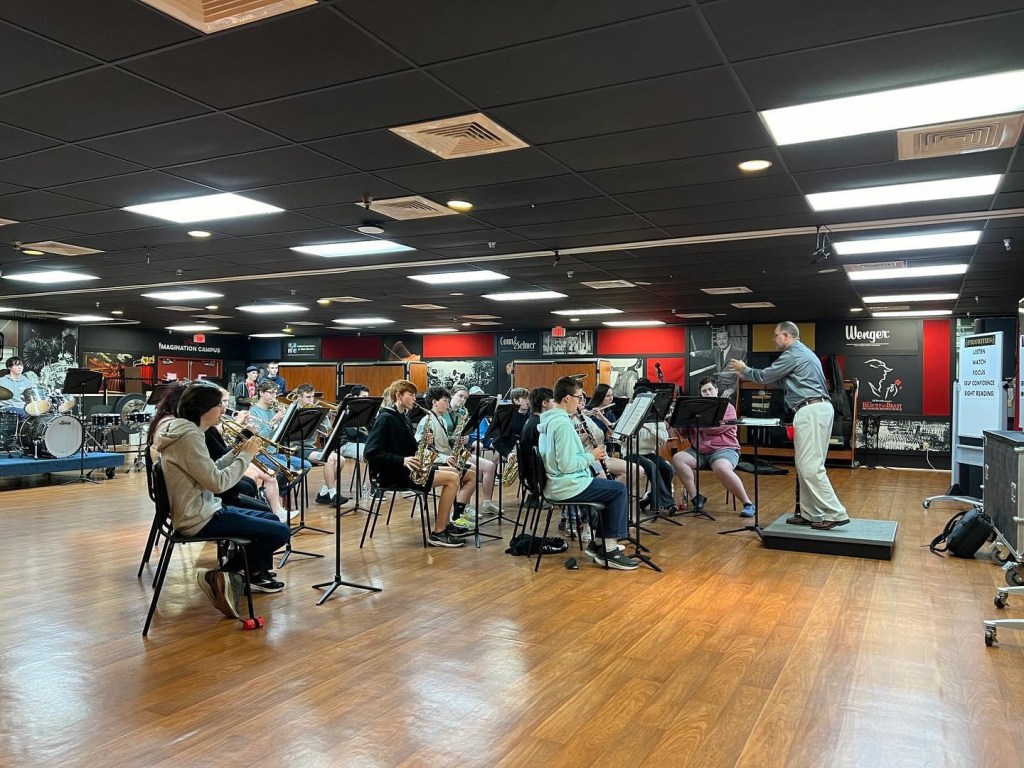
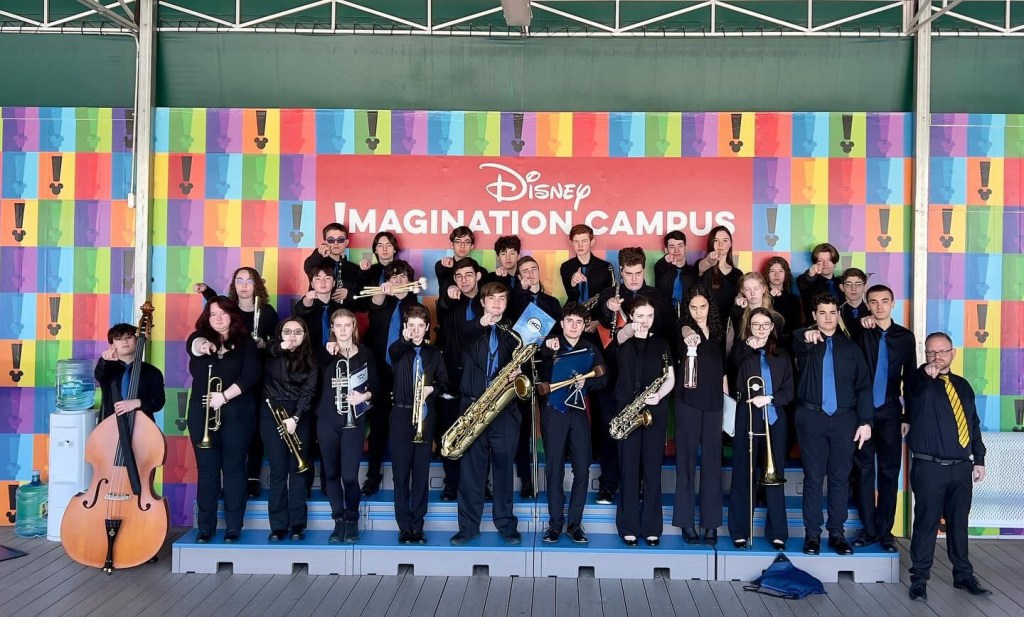
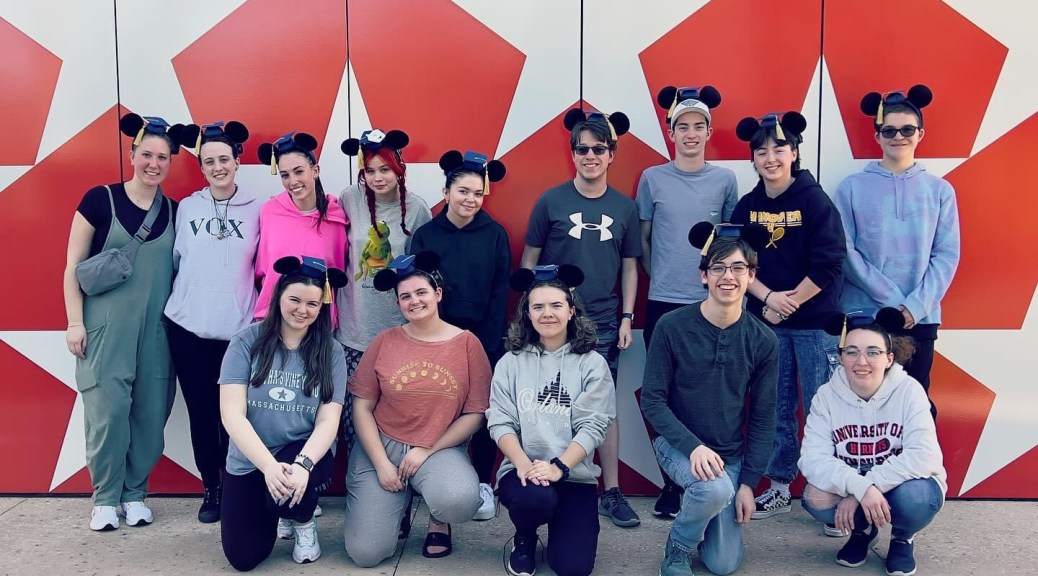
What did you do over February break? Well, the HHS band and chorus traveled to the most magical place on earth: Disney World! About 80 students fundraised for months to take part in the trip, performing live at the park, attending workshops and enjoying time together in the sun.

The castle, the lights, the air — all were magical (pun intended!). The atmosphere of Disney was beyond my expectations, since it had been 10 years since I last visited. The trip was relaxing,  very expensive (had to buy those souvenir pins and Mickey hats!), and very enjoyable. We jumped between the parks, visiting the metropolitan area of Hollywood Studios, Disney Springs and then Magic Kingdom. We spent our last day at Animal Kingdom, where I went on my favorite ride, Expedition Everest! Our workshops were led by Disney’s leading artists at its behind-the-scenes Imagination Campus, and we got to play some Disney favorites, which helped us improve our technique.

I made many memories and more friends, and learned to be on my own. I found a new love for Disney and my love of music deepened in many ways too.

Creating Art, and Joy, in Ceramics Class

By Billy Hersey, ’27

Staff Writer

When I was choosing my classes for freshman year, 3D Art/Ceramics wasn’t even on my mind. But it has grown to be one of my favorite periods of the day and I can’t imagine this school year without it. Each time the class meets, it has been a great time to relax and make art.

Initially, I was more interested in Accounting, because it seemed like a necessary life skill, and Chorus, because I have always loved to sing. I had spent many of my Monday afternoons at the HMS Art Club working with oil pastels, but hadn’t spent much time with 3D Art. But when I found that the other course options didn’t work with my schedule, I decided to give Ceramics a try.

Mrs. Curley’s welcoming and warm disposition, and the handful of friends with me in the class, made the decision easy. Mrs. Curley is an amazing teacher; she puts together creative and fun projects for students in her 3D Art/Ceramics classes. She’s shown me that anything can be art, including the many everyday objects around her classroom which — with a little ambition and effort — can become beautiful home decorations. Mrs. Curley is kind and helpful to all of her students. There are so many students constantly needing her attention, and somehow she is patient and gives each individual the support they need. Mrs. Curley strives to create a place where people can feel comfortable, socialize with friends and feel completely stress- and anxiety-free. The aura in her classroom makes students like me want to be there.

Working with clay seems to me like something everyone should try at some time in their lives. There are so many things you can do with clay, from throwing bowls or vases with a potter’s wheel to hand-shaping pinch pots, coil pots, sculptures and more. Mrs. Curley’s class provides me with an essential brain break in the day. Other classes can be stressful and homework can pile up, but in this class, students can take a minute to slow down and breathe. Even people who don’t see themselves as “good at art” can still have fun and hang out with friends.

My school day would be a lot more stressful without this class, and the class would not be the same without this caring and supportive teacher. I plan to continue with the next level of 3D Art/Ceramics as a sophomore. When it’s time to register for classes for next year, I would highly recommend adding a 3D Art course to your schedule.

In Sephora’s Playground, Tweens at Risk

By Bradlee Dowling, ’26

Staff Writer

Step into the hallowed halls of Sephora, and you’ll find more than just shelves ransacked of beauty products – you’ll stumble upon a spectacle that defies imagination. What was once a sanctuary for makeup mavens of all ages has now morphed into a playground for the pint-sized, where chaos reigns supreme and the rules of etiquette are but a distant memory.

“People say the store looks like an elementary school for the beauty-obsessed 10-year-olds, some of whom have been caught treating employees poorly and destroying displays,” mocked Katie Camaro in a Jan. 29 article from USA Today, eyes wide with disbelief as she bore witness to the pandemonium that has taken root within Sephora’s walls. Indeed, what unfolds before them is a scene straight out of a twisted fairytale – a fairytale where tween queens tower above, armed with mascara wands and lip gloss scepters.

Imagine, if you will, a troop of tweens descending upon the aisles like a swarm of locusts, their eyes alight with the fervor of discovery and desire. But instead of gentle exploration and whispered inquiries, their approach is anything but subtle. With reckless abandon, they snatch at samples, leaving a trail of destruction in their wake as they wreak havoc upon displays and unleash turmoil upon the nerves of troubled Sephora staff.

Yet, it’s not just the chaos and discord that raises eyebrows – it’s the alarming trend of tweens purchasing products better suited to seasoned skincare veterans than fresh-faced adolescents. “A bigger concern for many is pre-adolescents obsessing over beauty products traditionally marketed to women and older teens, including exfoliators and anti-aging products with retinol that may be too harsh for pre-teens’ skin,” said Tom Ryan in a Jan. 31 article in Retail Wire. Indeed, wandering through the aisles of Sephora, one can’t help but notice the potent potions and elixirs, tempting young patrons with promises of flawless skin and eternal youth.

From retinol-infused creams to potent exfoliators, these young beauty devotees are unwittingly playing Russian roulette with their delicate complexions. “Preteens are bombarded with influencer-sponsored advertisements and step-by-step tutorials for makeup and skincare products unlike generations past,” Ryan continued in Retail Wire. In their quest for TikTok-worthy perfection, they’re sacrificing more than just their pocket money – they’re trading innocence for the fleeting promise of beauty, unaware of the potential long-term effects on their still-developing skin.

As Sephora transforms into a playground, the stakes have never been higher. It’s not just about the products lining the shelves or the chaos unfolding in the aisles – it’s about the future of an entire generation, grappling with unprecedented levels of anxiety and self-esteem issues. As one can’t help but wonder, what price are we willing to pay for the pursuit of perfection?

But amidst the madness lies a glimmer of hope – an opportunity to educate and empower the next generation of beauty enthusiasts. By promoting a culture of kindness, respect, and self-acceptance, Sephora can reclaim its status as a sanctuary for all – regardless of age or experience. For beauty knows no bounds, and neither should our compassion.

New Year, New You? Most Popular Resolutions

By Sam Frattasio, ’27

Staff Writer

As the new year dawned, many once again found themselves enthralled by the tradition of making resolutions. Whether it’s limiting screen time or trying to eat healthier, New Year’s resolutions give us a chance to reflect on our pasts and make a better version of ourselves. An article in Mass Live reported the most common resolutions of 2024, based on surveys conducted by Forbes magazine and Statista.

1. Save more money – In a materialistic world, putting away money for our futures can be hard, but it’s the most popular resolution. A report made by Statista’s Consumer Insights survey concluded that 59 percent of participants said they wanted to save more.

2. Exercise more – The second most-popular resolution was to be more active. Taking time out of our days to exercise can benefit our health and mindset. According to the Forbes Health/OnePoll survey, 48 percent percent of voters made fitness a top priority.

3. Improve mental health – Amid a fast-paced and stressful world, we are increasingly prioritizing self-care and acknowledging the impact of mental health on our daily lives. The challenges of the past few years have led us to truly understand the importance of resilience, supporting a broader awareness of mental health challenges. According to Mass Live, 36 percent of voters made this their top choice. 

4. Eat better –  Many people realize the importance diet has on our body both physically and mentally. The pursuit of a balanced diet and weight management in the new year represents a commitment to self-care, longevity, and a healthier, more energized life ahead. The article found that 32 percent of voters put this as their top goal. 

The New Year is like a blank slate; starting over is a way to motivate us to foster healthier habits. However, according to the Forbes poll, most resolutions are abandoned within four months. As we settle into 2024, here’s hoping we all can reach the goals we set for ourselves.

Featured image: https://www.linkedin.com/pulse/two-most-effective-ways-keep-your-new-years-gautam-dr-d-

The Year’s Top Music, According to Spotify

By Emily Davis, ’27

Staff Writer

As 2023 ended, many different apps and websites did yearend recaps of what their users interacted with the most. One of those apps is Spotify, the nation’s leading service for streaming music and podcasts. Spotify recorded the top 10 artists that users listened to through the year and presented it as “Wrapped,” which users frequently shared on social media. Based on the different genres of music and podcasts that Spotify has to offer, users’ top artists greatly varied. While HHS students I talked to had different Wrapped results, there were a few artists who most frequently topped their lists.

Taylor Swift – Ranked number 1 worldwide with 29.10 billion streams, Taylor topped the playlist for many HHS students as well. Her “Eras Tour” captivated the entirety of 2023, and even went as far to crash Ticketmaster. She officially became a billionaire while selling out arenas around the country.

The Weeknd – Coming in at number 3 worldwide with 14.14 billion streams, the Weeknd was the second most popular artist on the “wrapped” lists of students I interviewed. The Weeknd continued his “After Hours till Dawn” tour around the world after his North America tour ended in November of 2022.

 Drake – Ranked a close fourth behind The Weeknd with 14.03 billion streams, Drake was another popular top artist among students. His tour “It’s All a Blur” began in early July, and is scheduled to conclude in late March. 

SZA – After releasing her album “SOS” in late 2022, SZA landed at number 8 worldwide in 2023 with 7.10 billion streams. Behind Drake, she was the next most popular artist among students I interviewed. 

Other artists who rounded out the Spotify top 10 streamers, according to Euronews.culture, were Bad Bunny (2), Peso Pluma (5), Feid (6), Travis Scott (7), Karol G (9) and Lana Del Ray (10). With many of these artists touring in 2023, it makes sense that they fell into the top ten of the most streamed artists worldwide. Whether top on Spotify or among HHS students, the results show that these artists know how to make popular music.

Featured image: https://www.techradar.com/audio/audio-streaming/spotify-wrapped-2023-our-release-date-predictions-plus-how-to-listen-to-it

A New Chapter for Gypsy Rose

By Owen Pierotti, ’27

Staff Writer

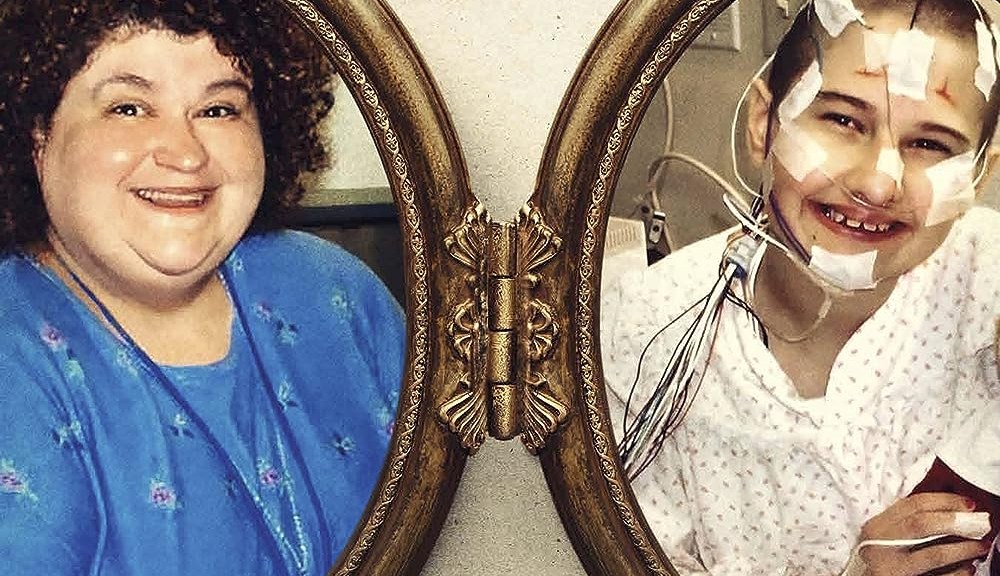
Gypsy Rose Blanchard, whose story capitivated us after a 2017 HBO documentary called Mommy Dead and Dearest, is out of prison and now a survivor of a rare mental illness called Munchausen syndrome by proxy. But has she gotten the help she needs to ensure she’s no longer a danger to society?

According to Medline Plus, Munchausen by proxy is a form of child abuse where a parent fakes an illness or causes symptoms to make a child appear sick. Gypsy suffered years of unnecessary medical treatments for sleep apnea, leukemia and more due to her mother, Claudine “Dee Dee” Blanchard. Gypsy was confined to a wheelchair and isolated from others and her mother even lied about her age to make her seem younger and more fragile. Eventually, Gypsy started going behind her mother’s back to talk to people outside of her sheltered life. She learned she didn’t need the wheelchair and began to disobey Deedee. Still, she was confused by her mother’s behavior and scared to tell anyone she wasn’t sick. 

Feeling stuck, Gypsy met a quirky and weird boy on an online dating site. Nicholas Giddejohn called Gypsy his “princess” and promised to do anything for her. That ultimately included killing Gypsy’s mother, who was stabbed to death in June 2015. Gypsy and Nicholas were soon arrested and put on trial. Nicholas was sentenced to life in prison while Gypsy was sentenced to ten years. Last December, Gypsy was released after serving 8.5 years.

Since leaving prison, Gypsy has moved to Louisiana with Ryan Anderson, who she married while behind bars. She’s gone viral on social media and has been featured on interview after interview. Gypsy is now an activist for Munchausen by proxy, and is speaking out about her experience. The media has been surprisingly forgiving. I think Gypsy needs to focus on her mental health before she can help others. If she doesn’t get help, the abuse inflicted by Dee Dee could still linger. What if Gypsy abuses her own child like Dee Dee did? 

This is surely not the end of Gypsy’s story. I hope it can be the advent of a new happy and healthy life if she focuses less on the spotlight and more on healing herself.

The Psychology of Mean Girls

By Sienna Lamond, ’26

Staff Writer

For years there’s been this stereotype of the “mean girl” at every high school – it’s expected that there is a female monarch, but why? Why is there an unspoken election of these Queen Bees? Why do they get to be mean to people, yet stay so respected? Why do adolescents fear their peers? Is there a price to pay for being nice, and furthermore, is there a benefit to being mean?

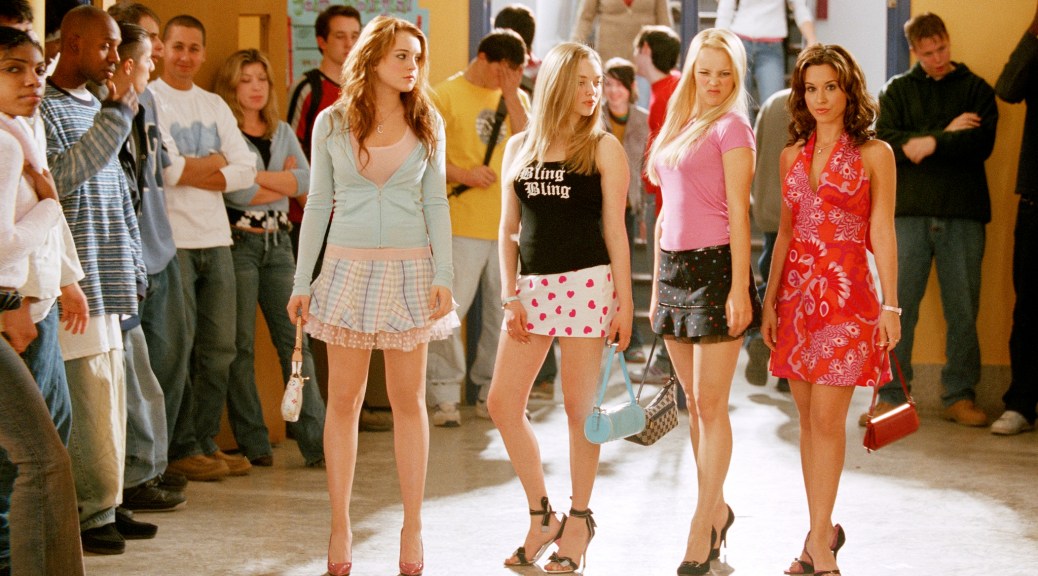
One of the most iconic chick flicks of the early 2000s highlights the mean girl clique in a unique and relatable way. Tina Fey’s 2004 Mean Girls, now in theaters as a musical, features a girl named Cady moving to a small town in Illinois from her previous home in Kenya. Cady’s parents are biologists that study animal behavior, which is told to the audience early on in the movie, but is a relevant detail that carries throughout. As Cady, portrayed by Lindsey Lohan, navigates her new high school, she finds that it isn’t too different from her old life in Kenya. She recognizes that Regina George, the designated Queen Bee, represents the apex predator, the animal at the top of the food chain with nothing capable of tearing it down, and all the other kids in school are her subjects, the smaller and lesser members of the animal kingdom.

The plastics, consisting of Regina and her two best friends, Gretchen Weiners and Karen Smith, operate much like a pack of lions or lionesses. The analogy of a high school to African wildlife represents the primeval nature of the social hierarchy. As an article published in Irishnews.com states, “not only do all human teenagers share similar characteristics, but their typical adolescent behavior is reflected throughout the animal kingdom in creatures as small as insects to as large as whales.” The article then proceeds to break down the similarities into four categories, one of them being social status. Irishnews.com writes that, “In animal hierarchies, high status individuals eat more, live in safer places and reproduce more. They even have stronger immune systems and get better sleep” which helps to show why social status inherently matters so much to high school students. It’s part of our innate behavior to want to be on top because of all the benefits it provides, and if you can’t be number one, being close enough to that MVP also allows for these perks. 

Of course, Mean Girls is loved by all for its iconic script, fantastic actors, killer soundtrack, and classic costumes, but what many didn’t realize then and don’t realize now is that the movie is based on a Rosalind Wiseman book titled Queen Bees and Wannabes which is a guidebook for high schoolers, specifically girls. Though this book is devoted to helping teenage girls, it also exposes some taboos of the social structure. It challenges girls, but also adults, to recognize the deeper meanings behind the actions, reactions, and inactions of their peers. The book illustrates a box of characteristics and traits. The qualities inside the box (beauty, athleticism, confidence, right clothing brands, pretty by the guys standard, etc.) are what determines a girl’s popularity while the exterior qualities (overweight, acne, overly-masculine, financial difficulty, etc.) are often present in social outcasts. Wiseman then explains that, “… the words outside of the box. These are weapons. … Cliques are self-reinforcing.” Girls choose to be bystanders when they see bullying occur because standing up to the popular clique would make them stand out enough to be categorized as outside-of-the-box, and being inside-of-the-box provides a sense of social security.

All humans, according to Sigmund Freud’s legendary research and theory of personality,  initiate defense mechanisms in an effort to protect themselves. Whether a teen is insecure about their body, grades, social status, financial situation, or home life, all are reasons for projection. This means that negative attributes they see in themselves, they often assign to others as a way to cope. A girl may make fun of another girl’s hair if she’s insecure about how her hair looks, and that will make her feel better. For those who cannot identify these mechanisms in action so easily, this will appear as if the girl is truly being mean. Obviously, it’s not nice to call someone’s hair scraggly, but if that person believes that their own hair also looks scraggly, then it makes more sense and the attack is not without reason or purpose. Being mean just to be mean is not a common occurrence. More often than not, one can find a motive behind most verbal attacks.

However, verbal attacks and “gossip [are] like money,” says 16-year-old Jane, one of the teens interviewed in Wiseman’s book. “We exchange it, sell it, and lend it out. It’s what we have of value.” Ideas expressed through gossip can be interpreted as mean and unwarranted statements. There is a big difference between trying to be mean and inadvertently saying things that are mean. We have to be able to discern between what is malicious and what is benign based on the circumstances we are told things. People often say mean and damaging things about other people without even realizing, partly because they don’t think what they say will ever reach the person they’re talking about, but also because they don’t view what they are saying as mean in the first place. When engaged in a conversation about someone else it is important to know the information you say could end up being shared with that person. 

Sometimes people just don’t have anything else to talk about, so they resort to gossiping to keep a conversation going, which, unbeknownst to them, is actively contributing to the spread of rumors and negativity. Gossip is one of the quickest ways mean comments are spread around. So why do we gossip? Well, uninteresting people make up for it by talking about other people to make themselves appear more interesting, and also to make them seem of higher value to the people who “matter” to them. In most social situations, like at work, at the gym, at the salon, and at school, gossip is power. Gossip may not be intended to be mean, but it almost always comes across that way, so it’s important to be mindful of who you’re talking about, and with who.

So, do people really want to be mean? No, not really. Most people don’t even realize they’re being mean even when they are. When they do make a targeted comment, it’s often a reflection of their own insecurities. The most important takeaway from the movie, as well as the book it’s based on, is that putting down others doesn’t lift you up. “Calling someone else fat won’t make you any skinnier,” says Cady. “Calling someone stupid doesn’t make you any smarter. And ruining Regina George’s life definitely didn’t make me any happier.” More often than not, it’s the girls that call you mean who are trying to make up for their own lack of kindness. In the words of the beloved beauty icon, Audrey Hepburn,  “for beautiful lips, speak only words of kindness” for no physical beauty can compare to a kind heart and compassionate smile.

Swim/Dive Finishes Strong Amid Questions about Lack of Busing

By Siena Oliver, ’27

Staff Writer

The Hanover-Marshfield Swim and Dive season ended in historic fashion this year. In a series of Patriot League meets last weekend, the girls placed second out of eight teams and the boys placed fourth. Although the girls didn’t win the League meet, they swam an undefeated season and are the overall Patriot League Champions for the first time in HHS history! In addition to working hard in practices and at meets, swimmers have had another challenge to overcome: how to get to and from meets without school-sponsored busing

Since the winter season began after Thanksgiving, the swim team has had meets fairly consistently, ramping up to one or even two a week. Many of these meets, home or away, have been held at Percy Walker Pool in Duxbury; two of the four weekly practices also take place there. Driving to this pool from Hanover can take 20 to 25 minutes, and none of the meets have had team buses. This has left students with two options: drive themselves or figure out a ride from parents or older friends who all undoubtedly have busy schedules of their own.

Many of the meets start at 3:30 or 4 pm, but swimmers are required to arrive no later than 3 pm for warm-ups. This is almost impossible for Hanover students who get dismissed from school at 2:30, especially those with working parents who don’t get home until later. 

This begs the question why doesn’t the swim team have buses to and from meets? Many people’s minds go straight to funding. Getting buses takes money, right? So that must be the problem. While this may be partially true, Scott Hutchison, HHS athletic director, explains that it also has to do with how swim and some other winter teams operate.

Several winter sports teams practice and compete at off-campus facilities, including swim, hockey and gymnastics, Mr. Hutchison said. Buses are not provided to those “home” facilities, and often other facilities within a similar distance from HHS.  With limited funding, it is not possible to provide buses to the various off-campus venues for practices and competitions. The fact that the swim team is combined with Marshfield High School is also a factor, Mr. Hutchison added. Because it is a combined team, it quickly becomes hard to coordinate things with dismissal times, different locations, and the need for a coach to be on the bus at all times.

“As a parent, I felt like it was challenging at times to not have buses especially if the meet was right after school,” said Katherine, one parent of a swim team freshman. “When I was on a swim team in high school and college, being on a bus was part of what bonded the team and always felt like an exciting lead up to the meet.”

Thankfully, the Hanover-Marshfield Swim and Dive team has persevered and had a great season. But in the future, it would be a relief to have more busing so athletes could focus on their performances in the pool and not about how they’re going to get there and back home.