By Samuel Frattasio, ’27
Opinions Editor
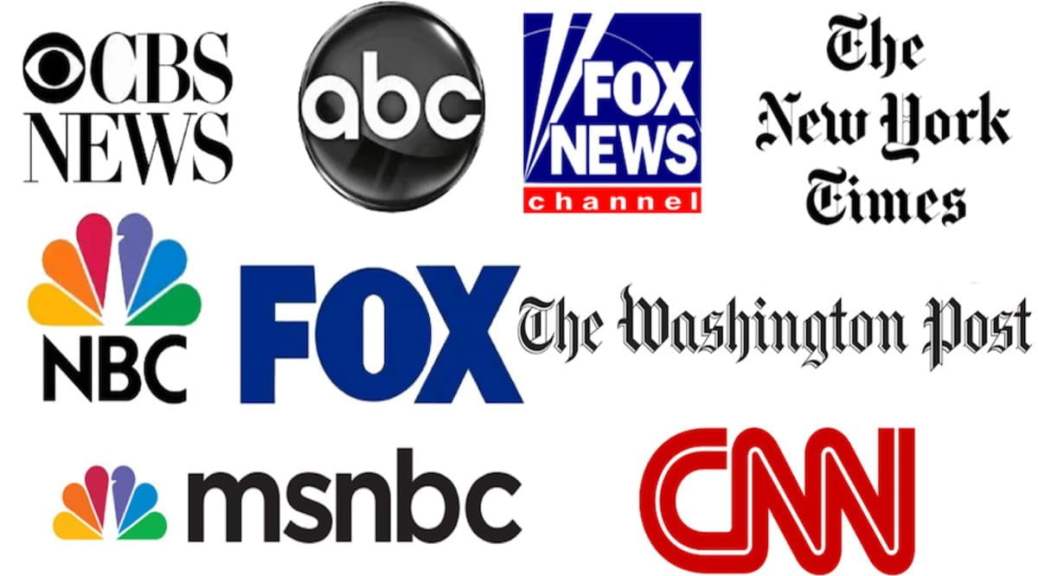
It’s safe to say that many were surprised by the results of the 2024 U.S. Presidential Election. Among those taken aback were left-wing broadcasters from networks such as CNN and MSNBC, who spent months leading up to the election accusing the now-President, along with his family and political allies of various transgressions. While opinions on these accusations may vary, two crucial questions arise: Is such rhetoric necessary? Should broadcasters not strive to maintain impartiality? The evidence suggests otherwise. This perceived lack of objectivity is most definitely contributing to the struggles many mainstream television networks face today. This includes declining ratings and multi-department layoffs. In the case of MSNBC, there is an uncertain future. Their prime audiences are turning to information online, often from the popular social media platform X, formerly known as Twitter, newer outlets, and podcasts.
To understand this phenomenon, we have to address how we got here. The mainstream media, or “Legacy Media,” began in the 1900s, broadcasting from radios. Televisions were introduced in the 1940s. Families across America would gather every evening in the parlor to watch the nightly news. This was when the news wasn’t divisive, before the negative commentary and constant back and forths as seen today. Back then, the news was simple, with straight facts and barely any opinions. Fast forward to the present day, and it seems you can’t turn on the news and just watch the news. It’s ALWAYS negative. As the mainstream media’s prime audiences scatter, they need to find a solution fast or it may be too late.
Is this rhetoric really necessary?
It’s not difficult to research a topic like this. A quick look at a few news programs and the key points become clear. For instance, I recently watched Morning Joe and The Rachel Maddow Show on MSNBC. Both cover much of the same material but with slightly different styles. Yet, they both lean heavily on the same rhetoric. Take Joe Scarborough and Mika Brzezinski from Morning Joe, for example. They’ve spent countless episodes attacking anyone who supports Republican ideologies, only to meet with Trump after the election results were in. Many saw this as an attempt to pander to him or preserve their jobs, further alienating their own audience. As for Rachel Maddow, a seasoned broadcaster and arguably the most popular figure on MSNBC, her nightly show blends current events, pop culture, and political guests. However, she’s been criticized repeatedly for a hypocritical and subjective approach to reporting. Despite trying to cater to her left-leaning viewers, many of them are leaving. It’s clear that people are tired of the constant arguing, the rhetoric, and the misinformation, that’s often found on these networks—and they’re turning elsewhere.
It’s important to recognize that right-wing networks have been equally guilty of bias. Take Fox News, for example. The network has faced its own share of criticism for promoting divisive rhetoric, especially surrounding the 2020 election. However, lately, viewers have been flocking to conservative outlets, and it’s clear that these networks are benefiting from a model that prioritizes partisanship. Whether left-wing or right-wing, the focus on political division and entertainment at the expense of objectivity has become a standard across much of the mainstream media.
Why aren’t broadcasters impartial?
I genuinely believe that most journalists strive to present the facts without letting their personal biases influence their reporting. This is generally true for many centrist networks like CBS, ABC, and NBC, which have historically been trusted for their more neutral coverage. According to a 2020 Pew Research Center study, 67 percent of Americans say that “journalists should aim to be neutral and unbiased in their reporting.” Unfortunately, the same can’t always be said for networks like CNN, Fox News, or MSNBC, where partisanship often colors their coverage. In fact, a Pew Research Center report from 2019 found that 60 percent of Democrats trust CNN, while 60 percent of Republicans trust Fox News, highlighting the ideological divides in modern media. Even within centrist outlets, subjectivity can creep in. Take Kristen Welker, for example, the moderator of NBC’s Meet the Press. Welker has publicly stated that her goal is to present the facts and nothing but the facts, yet, at times, her reporting seems to be influenced by her personal opinions rather than pure, impartial facts. Similarly, Margaret Brennan of CBS’s Face the Nation, and other broadcasters at ABC, have occasionally been critiqued for leaning into more subjective tones, especially when covering political topics.
In my view, it’s impossible to completely escape bias, and some argue that it makes news more entertaining, but in today’s deeply polarized world, can we afford to let personal beliefs dominate the news cycle? In a society already torn apart by division and hostility, the need for impartial, fact-based journalism is more crucial than ever. While no one is perfect, news presenters have a responsibility to set aside their personal beliefs, or at least strive for balance, when reporting the news. It’s not too much to ask. In fact, the public demands it. According to a 2021 Gallup poll, trust in media has plummeted to record lows—only 36 percent of Americans say they have a “great deal” or “fair amount” of trust in the media. This decline in trust can be attributed to growing concerns about bias and partisanship. What’s happening now is that audiences are turning to other forms of media—like podcasts, independent news outlets, and social media—where they feel they can get a more “unfiltered” or “honest” perspective. So, is it too much to ask journalists to put aside their personal opinions and simply present the facts? I don’t think so.
So where is everyone going?
The answer is podcasts, social media, and online news websites. On the popular platform TikTok, news influencer Dylan Page emerged as a leading source for election night coverage. His videos announcing election updates garnered over one million engagements and 6 million views, according to the Columbia Journalism Review. Currently, more than half of U.S. adults turn to social media for at least some of their news, as revealed in a Pew Research study from September. Furthermore, about half of TikTok users under 30 rely on the platform for news, while 79 percent of Instagram users aged 49 and under catch breaking news as it unfolds on the site, according to the Columbia Journalism Review.
Online news is especially convenient for younger generations of voters. In the lead-up to the election, President Trump made a guest appearance on The Joe Rogan Experience, which attracted around 40 million views, surpassing the viewership of last year’s World Series. Similarly, former Vice President Kamala Harris appeared on the Call Her Daddy podcast, amassing over 7 million views. These appearances not only amplified their voices but also led many viewers to cement who they would vote for. It is widely believed that President Trump’s appearance on Rogan’s podcast helped push the President across the finish line with undecided voters.
For mainstream media to stay relevant, they must shift their focus from entertaining to prioritizing facts and accuracy. Since November, many major news outlets have had to make significant layoffs; they should take notes on the simplicity of online media.
Ultimately, I hope for a return to a time when watching the news wasn’t a source of anxiety, when discussions weren’t dominated by shouting matches, and when people could respectfully disagree and still get along.
“The most important thing is to be accurate, to be fair, and to be honest. That’s what you’re supposed to do in this business.”
– Tom Brokaw, former anchor of NBC Nightly News
































 The Hawk