
By Emma Hersey, ’29
Staff Writer
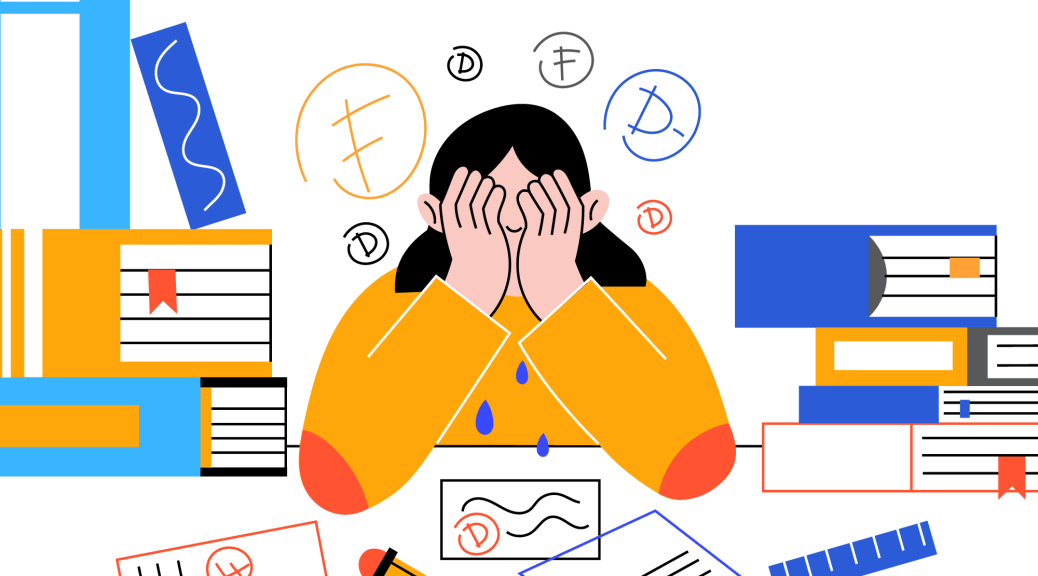
What makes people want to get good grades? What makes people not care about their grades? These two questions are ones that teachers and students ask themselves all the time. Why do students put so much importance on some random letters? Of course it’s natural to want to succeed, but is it really healthy to let these letters have so much influence on our happiness? I, like many of my peers, believe that all students who wish to keep their peace of mind during their high school journey need to have a balance between school life and social life. Students who fail to find this balance often find themselves feeling “burnt out” and unable to match the productivity they were able to achieve before. Even more troubling is that without this balance, students often tend to prioritize academics over friendships. As a result, their social life often suffers, which causes them to become isolated from their friends.
The idea of a grading system has been around for about three or four centuries, originating from groupings based on oral exams in ancient times. Now, educators utilize a mix of written exams, oral exams, and homework to help determine numerical and letter grades. As time has passed and the world has progressed, the grading system has evolved with it. The origin of the grading system we use today came from Ezera Stiles, an educator and president of Yale from 1778-1797. For exams at the prestigious university beginning in 1785, he split people up into four different groups ranging from best to worst: Optimi, meaning best; Second Optimi; Inferiores, and finally Pejores, being the worst. In 1792 this system was later adapted to a numerical grading system by William Farish, a professor at Cambridge University. The idea of using letters to represent grades didn’t come into practice until 1897, with letters ranging from A-E. Later, near the 20th century, the E was removed because it was continually confused with the meaning “excellent” instead of its true meaning, which was failure. That’s when the F came in to take its place.
Mental health issues have a big impact on the young and old alike and can carry a lot of weight when making decisions. Mental health is the emotional state that influences a person’s thinking, behavior, and emotions. Your psyche and social well-being are also factors that help people determine their mental health. Lots of students suffer declines in their mental state because of stress that originates in academic settings. Whether through the stress of preparing for AP exams, finals, unit tests, or projects, students dealing with that kind of constant pressure are bound to find themselves mentally unhealthy.
Why do students become stressed with their school work? Why do students want to produce a “good score”? What are the guidelines and qualifications of a “good score”? Is it above average? Highest in the class? These so-called qualifications for achievement are set by your peers, teachers, parents, but most importantly yourself. Many students forget that they have the ability to determine what they deem as excellent. As a result, they continue to needlessly stack on the pressure from others. Students should not feel pressured to produce scores that are above their capacity and should, instead, set reasonable goals for themselves. These days, it often feels like society expects everyone to have straight As, disregarding the fact that many students show real learning and hard work when earning Bs or even Cs. In some cases, an extra push to success is beneficial, but more often it can lead students to feel stressed and overwhelmed. Parents are one of the main reasons that children feel pressured to produce good grades. Some parents view their children as a reflection of themselves and want only the best from them, when in fact children are not copies of their parents and the scores that they receive have no correlation to the parents at all. Creating a good learning environment is crucial to the success of students. Overbearing parents most often create an atmosphere that is not only intolerant of failure, but unaccepting of anything below perfection. This attitude toward achievement, along with the constant pressure to achieve, causes students’ mental health to decline.
Getting good grades is not all that matters when getting into college. Of course, it is something that they consider important, but there are always other deciding factors to get that letter of acceptance. Admissions officers don’t want working machines at their colleges; they want students who will become well-rounded people, and who will better the school’s reputation. Having a social life, extracurriculars, jobs, and hobbies are important to colleges too. Balancing your school work and social life shows that you have good time management and varied interests as well as an understanding of your classes. Ultimately, what colleges are looking for is a well-rounded student. Lots of students can get “good grades,” but what sets your application apart from others is your extracurriculars, interests, and personality.
Life is a competition. This popular mantra is repeated again and again by teachers, principals, parents, and relatives. Most of us tend to scoff at this message, but, in truth, the statement does carry some weight. In life, there are only a few people that you are not in competition with, even if only subconsciously. All of your peers are competing against you to see who can get the best grades, who can get the better test score, or who can just do better in life. And that competition doesn’t just stop after college. Even adults, however outlandish this may seem, compete with each other over trivial matters like what private school their kids might be attending or how neat their yard is compared to their neighbors. These are all ways that people compare themselves to others. Making comparisons is a natural part of life, and it happens in every setting; however, excessive competition can become unhealthy. The main cause of comparison is the need for validation from oneself and others. High schoolers are at the age where image matters; sometimes, that drives people to be better than others, but it also makes people act as if they don’t care. An obsession with being better than others often does more harm than good. It might make you a more determined person who puts time and effort into their education, but it can also lead to over confidence, unbridled egotism, and an unhealthy focus on grades.
While getting good grades can be a sign of success, focusing solely on the points you earn can cause immense stress. It is also not a true reflection of the whole person you are. People tend to forget that their grades do not define them. The most important thing in life is to be able to set reasonable goals and work hard to reach them. Having straight As is great, but not at the expense of your mental health.
featured image: https://www.aacp.org/article/are-grades-failing-students

