
By Sophie Bunar, ’27
Staff Writer
“You must always have faith in people. And, most importantly, you must always have faith in yourself.” – Elle Woods, Legally Blonde
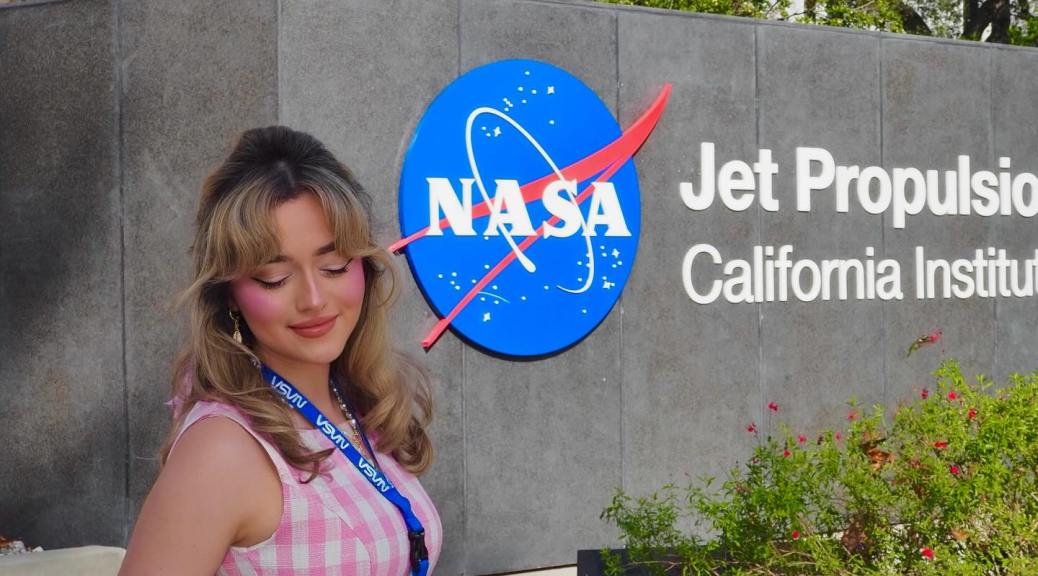
Dr. Clary, AKA @thatastrogirlie, is an astrophysicist and content creator, commonly known by her fans as “the Elle Woods of astrophysics.” For those of you who haven’t watched the movie Legally Blonde, Elle Woods is the iconic, fashion-forward protagonist in pink. Originally a fashion merchandising student and sorority president at UCLA, Elle decides to attend Harvard Law School to win back her ex-boyfriend, Warner. Once at Harvard, she defies the expectations of her peers and proves her immense intelligence, succeeding as a brilliant lawyer while staying true to her feminine style.
Her real-life counterpart, Dr. Clarissa Rizzo Credidio Do Ó (Dr. Clary), grew up in São Paulo, Brazil, where she fell in love with astronomy after visiting the Ibirapuera Planetarium as a child. As stated on her personal site, her research includes “exoplanet orbital dynamics, coronagraphy, and wavefront sensing and control.” She received her Ph.D. in physics from UC San Diego, where her doctoral research was recognized with a Dean’s Award and the Carol and George Lattimer Award for Graduate Excellence, and is now a postdoctoral fellow at Caltech. Along with this, she works on observation planning for the Nancy Grace Roman Space Telescope Coronagraph Instrument, which launched August 30, and on technologies for NASA’s future Habitable Worlds Observatory, which is being designed to image and characterize potentially Earth-like planets around nearby stars.
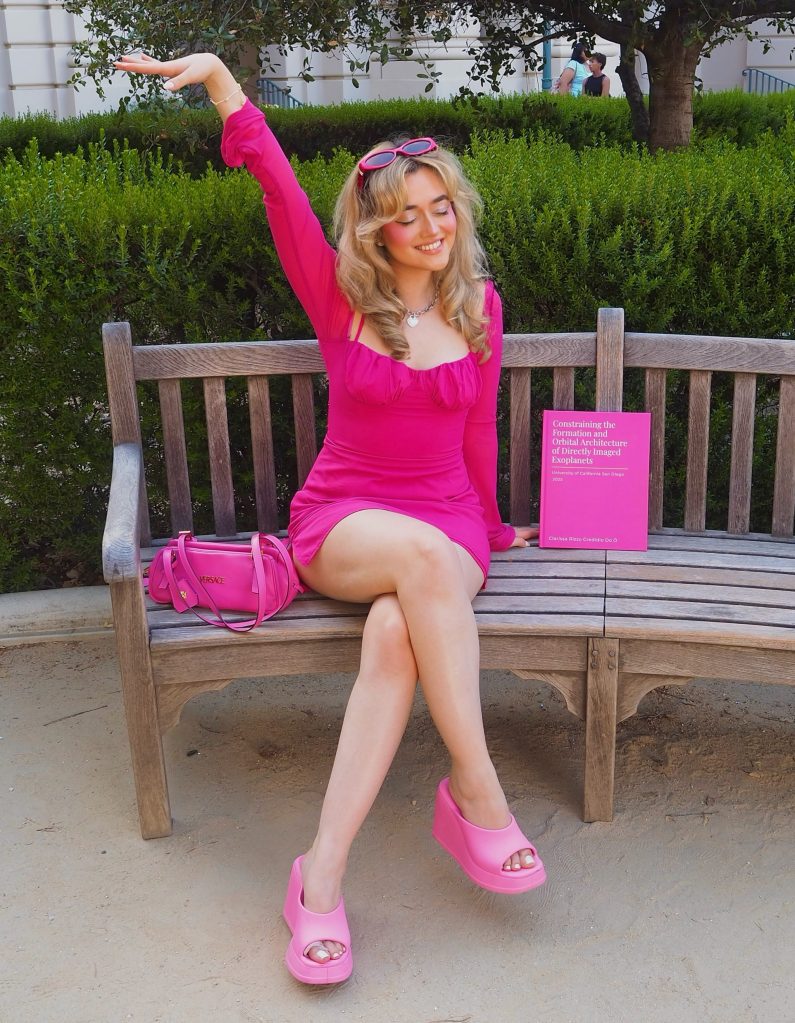
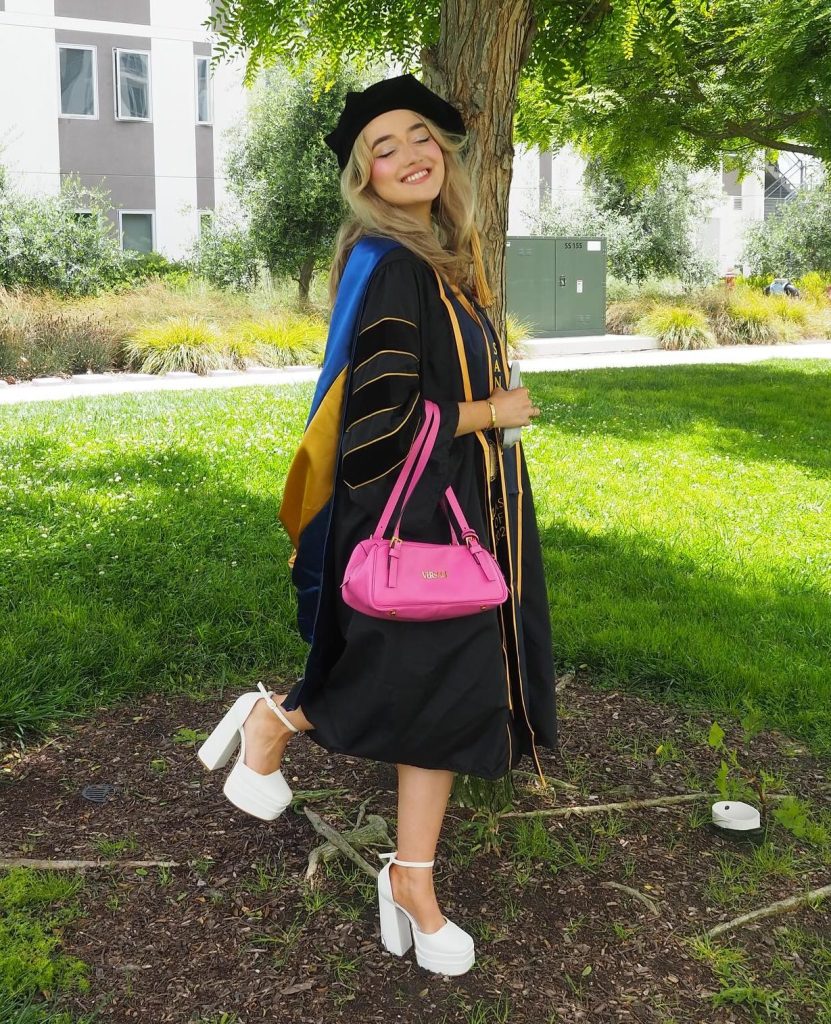
While doing all of this, Dr. Clary still finds time to embrace her femininity, and the way she dresses doesn’t undermine any of her accomplishments. She enjoys Pilates, figure skating, content creation, and shopping, making her an icon for women and showing that they can enjoy these things while succeeding in fields traditionally dominated by men. In a post on LinkedIn, she shared, “My social media platform has given me the opportunity to highlight the daily life of a scientist, share insights into research careers, and discuss discoveries in my research field that I find fascinating (HR 8799, I am still thinking of you!), while also embracing interests that are not traditionally associated with science, such as fashion and the color pink.”
So, why is this so important? Well, according to an article from the Natural History Museum of Utah (NHMU), research indicates that many young people may be discouraged from pursuing STEM degrees due to prominent stereotypes regarding who “belongs” in those fields. “Being able to see a scientist who’s like you can be incredibly important for young students, an indication that they can pursue and succeed in the fields that fascinate them.” However, representation is only the first step. In order to counter STEM stereotypes, changing inherent biases and barriers within institutions is also fundamental. As noted by doctor Angela Byars-Winston, “there are more people from underrepresented groups, particularly from underrepresented racial and ethnic groups, around now compared to the 1980s, but that doesn’t mean we have achieved equity or inclusivity; just more faces from underrepresented groups, which is known as symbolic diversity.”
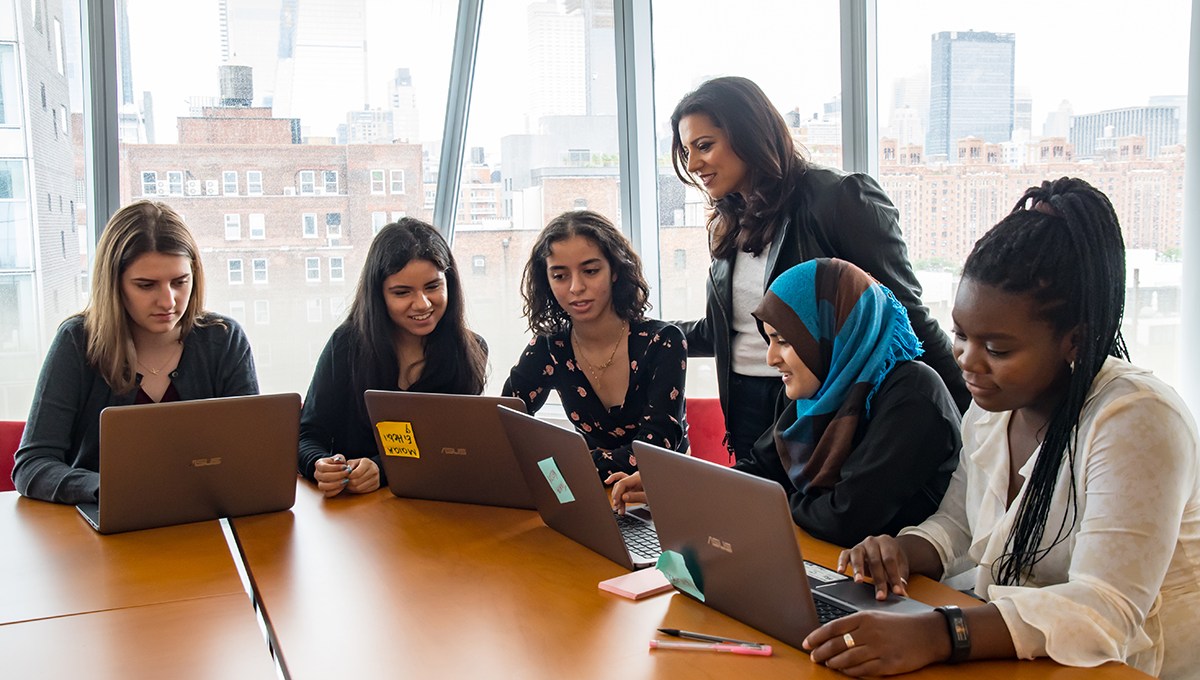
In another article from NMHU, they shared that programs like Girls Who Code, STEM and Gender Advancement, and Women in Engineering Proactive Network have been working to open doors for women in science and change this culture. Still, the UNESCO Institute for Statistics reports that “women make up less than 30 percent of the world’s scientific researchers.” This is partially because girls and women in college are often told not to pursue science due to stereotypes about who scientists are, as well as the low permanent employment rates for women who do earn degrees in their field of study. Women are constantly belittled in STEM fields, and it doesn’t just start with their careers. In college, “even in majority women science classes, men do more talking and take up more air time” (NHMU Curator of Learning Sciences Lynne Zummo).
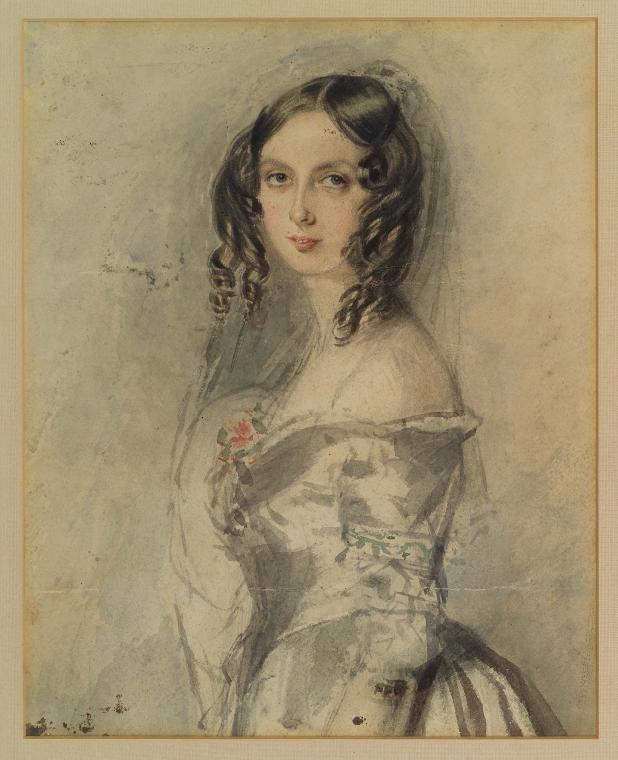
Despite this, some of our greatest advancements in science couldn’t have been achieved without women. As mentioned in that same article, “Lynn Margulis forever changed biology by suggesting that mitochondria were once free-living cells that became enclosed within other cells through symbiosis. Mary Dawson opened up a whole near world of paleontology in the Arctic. Astronauts wouldn’t have gotten very far without the engineering brilliance of Mary G. Ross and Mary Jackson. Rosalind Franklin discovered the structure of DNA. Lynn Conway revolutionized the computer industry.” One of my favorite icons in computer science is Ada Lovelace, who is widely recognized as the world’s first computer programmer. As a woman in STEM myself, these luminaries have upheld my passion for the sciences despite backlash from closed-minded individuals. After years of hiding my femininity to fit into traditionally male-dominated fields, I’ve decided it’s time to embrace the lace, the sparkles, and everything in between.

“I suppose that is the main point: scientists are people, and thanks to that, they can look like anyone!” – Dr. Clary

