Tag Archives: 2026-2027

Mayday in New England: Patriots Struggle to Find Their Rhythm

By Luke Curran, ’27

Staff Writer

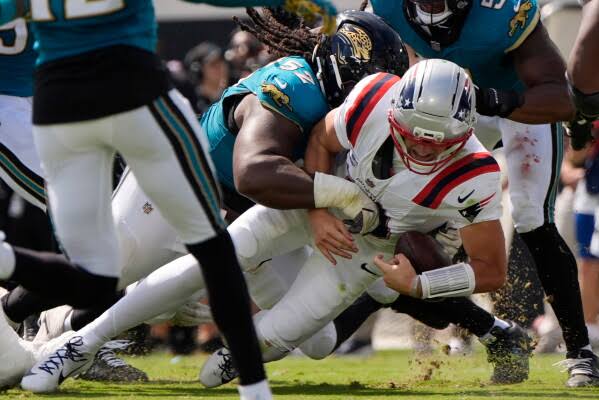
As we move through week 3 of the 2026 NFL season, the Patriots have gone from Super Bowl runner-up to absolute free fall. Sitting at a mediocre 1-2 record, the Patriots are third in their division as Drake Maye and the offense continue to struggle.

Looking back at the past three games, the problem becomes clear: Drake Maye and this Patriots offense have looked nothing like they did last year. In week 1, the Patriots took a tough 13-10 loss in a rematch against the defending Super bowl Champion Seattle Seahawks. Maye threw three interceptions and finished with a passer rating of 54.9. The following week, the defense secured a solid 20-3 win against the Pittsburgh Steelers. However, Maye and the offense continued to struggle, throwing another interception and finishing with a completion percentage of 63.6. Last week, we saw the worst loss so far, with the Patriots suffering a brutal 35-6 blowout to the Jacksonville Jaguars. This game was Maye’s worst performance yet, giving up three turnovers and finishing with a completion percentage of 56.

Looking at these stats, it is safe to assume Maye has been struggling with his confidence. However, the loss of certain players and unfortunate injuries to others play a large role in this decline in his performance. Currently, Maye’s best recievers are Mack Hollins and Romeo Doubs, who have been filling in the WR1 spot for an injured AJ Brown. Additionally, the loss of Kayshon Boutte and Stefon Diggs means that the two receivers who had the best connection with Maye are no longer on the team. As a result, Maye has seven turnovers combined through the first three weeks.

Despite these struggles, the season is still young, and AJ Brown is expected to return by week 6 against the New York Jets. For now, we will continue to observe what Head Coach Mike Vrabel and Offensive Coordinator Josh McDaniels have planned to get this talented Patriots team back on track.

featured image: https://apnews.com/article/patriots-analysis-drake-maye-struggles-26a42ba3a8b3b710fb621a2b5823c13a

Screen Time Erodes Attention, Mental Health

By Charlize Coviello, ’29

Opinions Editor

How many hours in a day do you spend looking at screens: your phone, a computer, a TV? The average person spends about 10-12 hours in a day looking at digital screens; that is almost half of an entire day. Ask yourself this question: What am I looking at on a digital screen? Am I doing school work, researching, studying — or am I mindlessly scrolling social media?

Digital screens have been around for decades, and since the 1960s attention spans have decreased by 96.8 percent, going from 2.5 minutes to only 8 seconds. The constant interruption of focus over the years while using social media and technology have allowed the brain to switch tasks constantly. Ads, popups, and notifications make multiple ideas available to the brain when online constantly throughout the day. This makes the brain used to switching topics, further disabling the ability to focus on just one topic for an extended period of time. TikTok, Snapchat, and Instagram – all platforms that provide short-form videos – have a combination of almost 6 billion users. The ability to endlessly scroll, being provided with a new idea every video, provides rapid dopamine rewards. These constant boosts of dopamine make your brain want more, as well as make slow or deep tasks feel monotonous and boring when they aren’t providing steady entertainment. Continuously processing multiple streams of digital information wears out the brain’s executive functions, especially the parts responsible for planning and concentration. Furthermore, people are relying on devices to store easy information, rather than practicing active retention, weakening sustained mental effort.

Growing children and teens are heavily effected by social media through changes in mental health, brain development, and daily habits. The average teen who uses social media gets an average of 6-7 hours of sleep per night, falling significantly short from the 8-10 recommended hours. Blue light and late-night scrolling interfere with natural rest cycles, which directly contributes to worsening depressive symptoms over time. The constant exposure of a specialized feed fuels the fear of missing out (FOMO), low self esteem, body dissatisfaction, and feelings of social isolation. The exposure to dopamine rushes gives teens a desire to be constantly entertained not only by social media, but by their friends as well. They constantly compare the life they have, causing them to want that unrealistic, fake, and unattainable lifestyle that influencers lead.

Attention spans and mental health of users can be potentially saved by shifting from content that exploits attention to curating digital use into a non-addictive activity. Regulating online use is a choice, one that everyone needs to make. Teens and children should have a daily screen time limit. Society as a whole needs to stop normalizing extended electronic usage. Eight hours of screen time a day is not normal, and certainly not healthy.

Works cited

https://www.reviews.org/tv-service/americans-spend-12-hours-a-day-on-screens

https://www.azumotech.com/resource-center/display-tech-evolution-history

https://www.apa.org/news/podcasts/speaking-of-psychology/attention-spans

https://www.printful.com/blog/tiktok-statistics

https://www.statista.com/statistics/545967/snapchat-app-dau

https://www.statista.com/topics/1882/instagram

https://childmind.org/article/how-using-social-media-affects-teenagers

https://www.ncbi.nlm.nih.gov/books/NBK594763

https://www.nationwidechildrens.org/specialties/sleep-disorder-center/sleep-in-adolescents

https://medicine.yale.edu/news-article/yale-study-probes-connection-between-excessive-screen-media-activity-and-mental-health-problems-in-youth

Lindsay Clancy Trial Highlights Complex Legal Issues

By Ryan Costello, ’27

News Editor

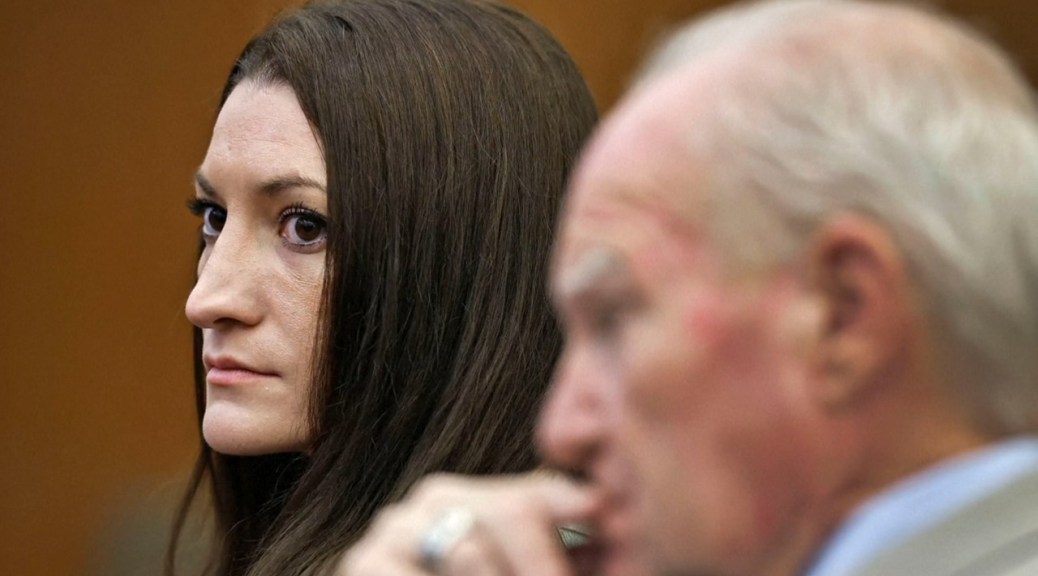
The Lindsay Clancy trial has been one of the most serious and emotional criminal cases in Massachusetts. Clancy was accused of killing her three children, Cora, Dawson, and Callan, in January 2023. Her trial focused not only on what happened, but also on an important legal question: whether Clancy should be considered criminally responsible for her actions because of her mental state at the time.

Clancy admitted to killing her children in their Duxbury home, but her defense argued that she was suffering from postpartum psychosis and should not be found criminally responsible. Postpartum psychosis is a rare, severe mental health crisis that causes new mothers to disassociate from reality, suffer from hallucinations or delusions and experience extreme insomnia. The prosecution argued that Clancy knew what she was doing and should be held responsible for the deaths. The trial lasted almost six weeks this summer and included testimony from medical experts, family members, and other witnesses.

One of the biggest legal issues came when the jury began deliberating. In a criminal trial, the jury must reach a unanimous verdict. In this case, the 12-person jury could not agree on whether Clancy was criminally responsible. Reports said that 11 jurors were leaning toward finding her not criminally responsible, while one juror disagreed. After about seven days of deliberations, the jury told the judge several times that it could not reach a unanimous decision.

Because the jury was deadlocked, Judge William Sullivan declared a mistrial on September 4th. A mistrial means that the trial ends without a final verdict. It does not mean that the defendant was found guilty or not guilty. Instead, the case is left unresolved.

The mistrial also created another important legal issue involving the holdout juror. Clancy’s defense team argued that the juror was not following the judge’s instructions about reasonable doubt and asked for the juror to be removed. The defense even made an emergency appeal to the Massachusetts Supreme Judicial Court. That appeal was denied, and the mistrial went forward. Courts are generally very careful about interfering with jury deliberations because jurors are supposed to make their own decisions based on the evidence and the instructions given to them by the judge.

Another major legal question is whether Clancy can be tried again. Usually, a mistrial caused by a genuinely deadlocked jury does not automatically prevent prosecutors from having another trial. This is connected to the constitutional protection against double jeopardy, which generally prevents someone from being tried twice for the same offense. However, there are exceptions when a first trial ends without a verdict because of circumstances such as a deadlocked jury.

Clancy’s lawyers have argued that the case should be dismissed and have raised double-jeopardy arguments. Prosecutors, meanwhile, have to decide what they want to do next. They could seek another trial, consider a different resolution, or decide not to continue the prosecution. Both sides appeared in court September 29th, but nothing was resolved; the next hearing is November 2nd. The Clancy case shows how complicated the legal system can become when mental health and criminal responsibility are involved. The trial was not simply about whether Clancy committed the acts. The jury also had to consider whether her mental condition meant she should legally be held responsible for them. Since the jury could not reach a unanimous decision, there was no verdict.

The mistrial is important because it means the legal process is not over. The next steps could involve more arguments from the lawyers about double jeopardy, the jury’s conduct, and whether another trial should happen. Whatever happens next, the case demonstrates how the court system has to balance the rights of the defendant, the interests of the prosecution, and the need for a fair trial.

Astrophysically Blonde: Why Representation Matters

By Sophie Bunar, ’27

Staff Writer

“You must always have faith in people. And, most importantly, you must always have faith in yourself.” – Elle Woods, Legally Blonde

Her real-life counterpart, Dr. Clarissa Rizzo Credidio Do Ó (Dr. Clary), grew up in São Paulo, Brazil, where she fell in love with astronomy after visiting the Ibirapuera Planetarium as a child. As stated on her personal site, her research includes “exoplanet orbital dynamics, coronagraphy, and wavefront sensing and control.” She received her Ph.D. in physics from UC San Diego, where her doctoral research was recognized with a Dean’s Award and the Carol and George Lattimer Award for Graduate Excellence, and is now a postdoctoral fellow at Caltech. Along with this, she works on observation planning for the Nancy Grace Roman Space Telescope Coronagraph Instrument, which launched August 30, and on technologies for NASA’s future Habitable Worlds Observatory, which is being designed to image and characterize potentially Earth-like planets around nearby stars.

While doing all of this, Dr. Clary still finds time to embrace her femininity, and the way she dresses doesn’t undermine any of her accomplishments. She enjoys Pilates, figure skating, content creation, and shopping, making her an icon for women and showing that they can enjoy these things while succeeding in fields traditionally dominated by men. In a post on LinkedIn, she shared, “My social media platform has given me the opportunity to highlight the daily life of a scientist, share insights into research careers, and discuss discoveries in my research field that I find fascinating (HR 8799, I am still thinking of you!), while also embracing interests that are not traditionally associated with science, such as fashion and the color pink.”

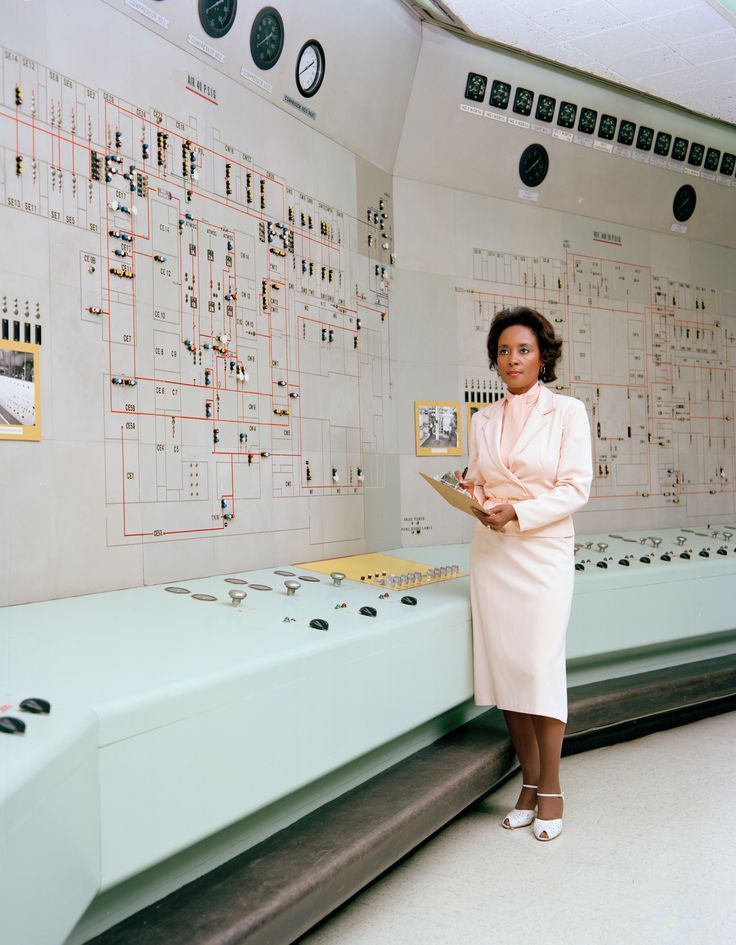
So, why is this so important? Well, according to an article from the Natural History Museum of Utah (NHMU), research indicates that many young people may be discouraged from pursuing STEM degrees due to prominent stereotypes regarding who “belongs” in those fields. “Being able to see a scientist who’s like you can be incredibly important for young students, an indication that they can pursue and succeed in the fields that fascinate them.” However, representation is only the first step. In order to counter STEM stereotypes, changing inherent biases and barriers within institutions is also fundamental. As noted by doctor Angela Byars-Winston, “there are more people from underrepresented groups, particularly from underrepresented racial and ethnic groups, around now compared to the 1980s, but that doesn’t mean we have achieved equity or inclusivity; just more faces from underrepresented groups, which is known as symbolic diversity.”

Reshma Saujani, founder and CEO of Girls Who Code (Photo by Carey Wagner)

In another article from NMHU, they shared that programs like Girls Who Code, STEM and Gender Advancement, and Women in Engineering Proactive Network have been working to open doors for women in science and change this culture. Still, the UNESCO Institute for Statistics reports that “women make up less than 30 percent of the world’s scientific researchers.” This is partially because girls and women in college are often told not to pursue science due to stereotypes about who scientists are, as well as the low permanent employment rates for women who do earn degrees in their field of study. Women are constantly belittled in STEM fields, and it doesn’t just start with their careers. In college, “even in majority women science classes, men do more talking and take up more air time” (NHMU Curator of Learning Sciences Lynne Zummo).

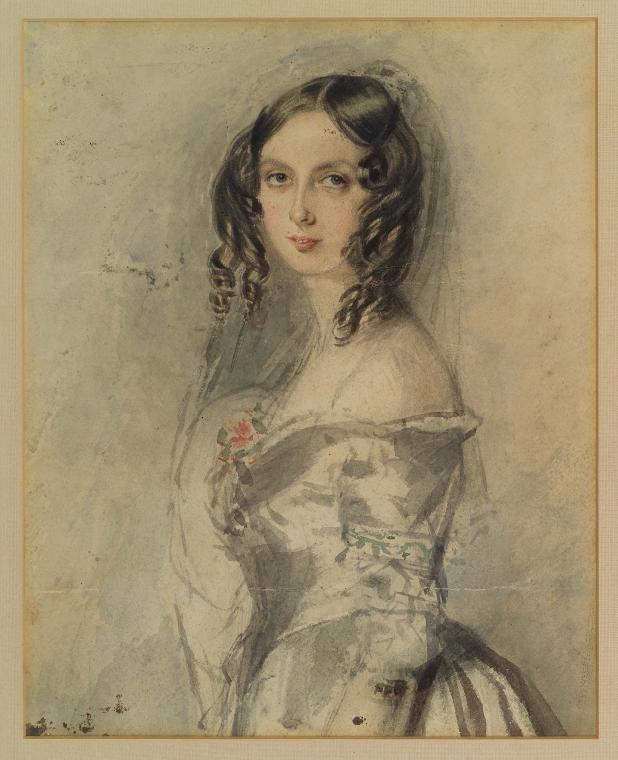
Despite this, some of our greatest advancements in science couldn’t have been achieved without women. As mentioned in that same article, “Lynn Margulis forever changed biology by suggesting that mitochondria were once free-living cells that became enclosed within other cells through symbiosis. Mary Dawson opened up a whole near world of paleontology in the Arctic. Astronauts wouldn’t have gotten very far without the engineering brilliance of Mary G. Ross and Mary Jackson. Rosalind Franklin discovered the structure of DNA. Lynn Conway revolutionized the computer industry.” One of my favorite icons in computer science is Ada Lovelace, who is widely recognized as the world’s first computer programmer. As a woman in STEM myself, these luminaries have upheld my passion for the sciences despite backlash from closed-minded individuals. After years of hiding my femininity to fit into traditionally male-dominated fields, I’ve decided it’s time to embrace the lace, the sparkles, and everything in between.

“I suppose that is the main point: scientists are people, and thanks to that, they can look like anyone!” – Dr. Clary

Tips for Juniors on the College Application Process

By Siena Oliver, ’27

Co-Editor in Chief

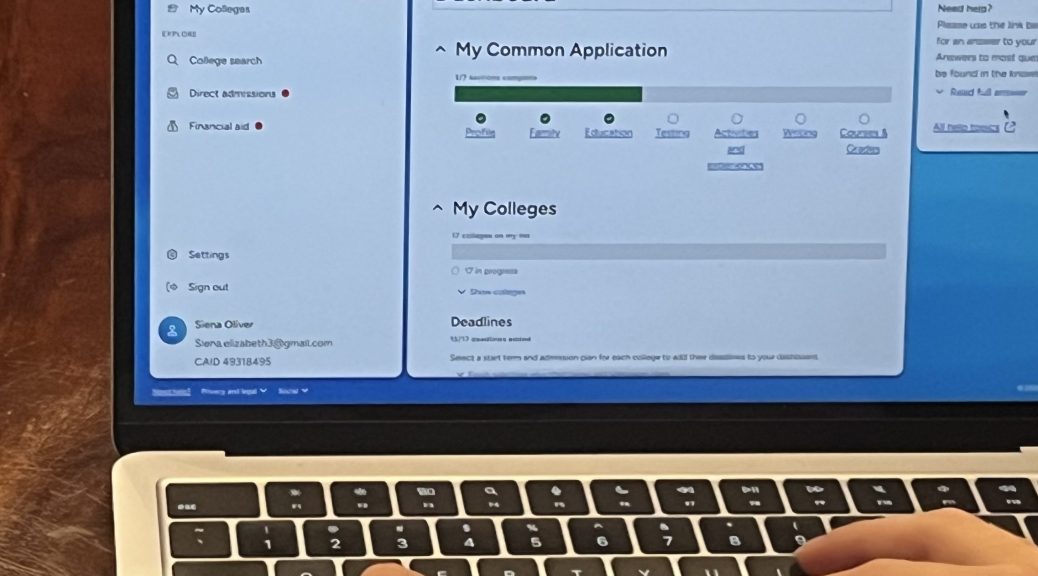
As a high school senior facing deadlines for college applications, there are several things I wish I’d done throughout junior year to better prepare myself. Here are some tips to make the process easier, and to stop you from making easily avoidable mistakes!

TERM 1

  • Schedule: Everyone knows that junior year is pretty much the hardest year of high school. It’s the year when many students pack their schedules full of APs and extracurriculars to try and bolster their resume. There are both pros and cons to this approach. My suggestion is this: by this point, you know what you like and what you are good at. Maybe you’re involved in a sport, or in the arts, or have a job. Rather than adding new clubs and activities to your already hectic schedule, try to improve on the activities you already have. If you like to draw and already take art classes in school, maybe consider joining the Art Club. If you’re really into volleyball, think about running for captain or another leadership position. Take what you already do and expand on it. This will show colleges that you are invested and hardworking, rather than just trying to pad your resume.
  • PSAT: You’ve likely seen the emails in your inbox about registering for the school-run PSAT. You should sit down with a parent and sign up for it. Taking the PSAT is a great way to get used to the SAT format and questions, learn what areas you struggle in, and get a fairly accurate estimate of what your SAT score will be.

TERM 2

  • College Tours:  Did you know that juniors are allowed several excused absences for college tours throughout the year? Talk with your parents or friends and try to plan out a few school tours that work for your schedules! If you’re worried about travel during the school year, try and visit some schools nearby. Don’t worry if you don’t have a specific school in mind yet, I’d recommend visiting at least one bigger school and one smaller school so you get a feel for what type of school is right for you.
  • SAT/ACT: At this point, I would sign up for your standardized testing. You don’t have to take it this term if you’re unprepared, but the spots are limited, so it’s good to sign up in advance. In addition, do some research about the different options. Many students fail to realize that the ACT is just as accepted in college applications as the SAT. Although similar, the two tests have several differing qualities, and some people may perform better on one than the other. Now is also the time to study. Learn how to use the Desmos calculator, remind yourself of the English grammar conventions you learned in middle school and have since forgotten, and look up tips for how to study. This is not a test you can cram for the night before.

TERM 3

  • High School:  In this term, be a high schooler. Do your homework, spend time with friends, start preparing for AP tests, and don’t slack off. By this point, you’re probably getting worn out. I get it, junior year is unimaginably stressful. Try to enjoy yourself, but also remember that colleges will see your junior year grades, and you don’t want to send in a transcript you’re not proud of.
  • College List: Start making a list of colleges you might be interested in applying to. You don’t have to decide right now, just research some options and write down any school you might be interested in. A good way to narrow down the search is by taking two extremes and pitting them against each other (e.g. Big/Small, City/Rural, Sporty/Artsy, Party/Academics, etc.). By checking off those few big boxes, you can quickly get a feel for what you’re interested in. Additionally, if you know (or don’t know) what you’d like to major in, that could be a limiting factor to consider. Some schools have great programs you might be interested in for specific majors. However, DO NOT WORRY if you’re not sure what you want to do. There are plenty of schools that let students apply undecided, and many liberal arts colleges require students to wait until their sophomore year before declaring a major.

TERM 4

  • Letters of Rec: If you haven’t already, now is definitely the time to ask your teachers for letters of recommendation. The Guidance department sends out a “Junior Reflection Sheet,” which you should fill out and hand to the two teachers you ask to write letters for you. Notice how I said two teachers? You may be tempted to only ask one, because many schools only require one teacher letter. I’d suggest asking two anyway, because some colleges still require it.
  • Scholarships: Something you might not be thinking about is applying for scholarships. Some large, merit-based scholarships are only open to applications during junior year. Don’t miss out on these opportunities, especially if you have strong extracurriculars, academic achievements, or consistent community service. With a bit of research on Google, you are sure to find a couple of good options to apply for.

SUMMER

  • Common App: At this point, you may be operating under the assumption that you cannot begin filling out your common application until the Common App website re-sets on August 1st. This is untrue. Any information filled in under the “My Common Application” section, can – and should – be filled out before August 1st, to give you a head start before the school year (it will not disappear on August 1st, I promise). Just make sure you don’t start on the specific school applications or supplemental essays quite yet.
  • Tours, continued: Keep going on tours of schools. Because it is summer, you might end up having the opportunity to visit some schools that are further away, take advantage of this! 
  • College Essay:  Start drafting your Personal Statement essay. This is the college essay everyone talks about. The one where you are supposed to convince colleges you are the right choice in 650 words or less. I won’t lie, it is a daunting task. Start by writing down any and all ideas you have. Think of your favorite activities, a challenge you’ve had to face, a time you had personal growth. What’s the thing you could talk about for hours without getting bored, the book you read as a child that changed your life, or the craziest summer camp you’ve ever been to? Literally any topic can work, as long as you are passionate about it, and it reflects you in some way. Make a couple of drafts about different ideas, have people read them, and, by the end of the summer, pick one you’d like to work on editing for submission.

The college application process is stressful, yes, but you’re almost there. A little over a year and you’ll be hitting the submit button on your applications, and all of your hard work will be worth it. Good Luck!

Boston Area’s Biggest Concerts of Summer 2026

By Emily Davis, ’27

Entertainment Editor

From Fenway park to Gillette Stadium and the Xfinity Center in Mansfield, the Boston area was packed with concerts this summer. Some of the biggest names came to Massachusetts, giving fans plenty of chances to see major acts without traveling far from home. 

One of the biggest concert stories from the summer was Noah Kahan’s four-night run at Fenway Park. The Vermont singer performed July 7, 8, 10 and 11, bringing more than 150,000 fans to the ballpark. Kahan also became the first artist to sell out four consecutive shows at Fenway. His connection to New England made shows especially exciting for local fans.

Outside Boston, BTS brought one of summer’s largest events to Gillette Stadium in Foxborough. The K-pop group performed two shows on August 5th and 6th as part of the BTS World Tour. According to Pollstar, the two Gillette shows sold 132,943 tickets combined. The concerts also created huge demands for transportation, with the special MBTA trains selling out within minutes.

Meanwhile, some big concerts at the TD Garden were Shakira’s Las Mujeres Ya No Lloran World Tour and Ariana Grande’s Eternal Sunshine Tour. On July 10 and 11, Shakira returned to Boston for her first show in over 20 years. Her return attracted longtime fans who have been waiting literally decades to see her. On Grande’s Eternal Sunshine Tour, she also returned to Boston after several years, bringing out fans for the three nights in July she performed. 

Back at Fenway, another popular concert was Zac Brown Band on August 2nd. The country group continued its long history at Fenway by selling out the stadium for the 15th consecutive time. The concert gave country music fans a chance to see the band perform some of its biggest hits in one of Boston’s most famous locations.

Meanwhile the Xfinity Center in Mansfeild gave fans a different mix of music. Dave Matthews Band, Kid Cudi, Muse, Kesha, TLC, Salt-N-Pepa, and Pitbull were among the artists who performed there over the summer. 

With huge crowds at stadiums, packed shows at Fenway, and a busy schedule at the Xfinity Center, the Boston area had a concert-filled summer. Whether fans were there for pop, country, rock, hip-hop or K-pop, there was no shortage of major artists to see. For many local music fans, the summer of 2026 will be remembered for the unusually large number of major concerts that came to the area. 

How the Red Sox Pulled Off the Biggest Turnaround in Baseball History

By Greyson Potter, ’29

Staff Writer

Three months into the 2026 MLB season, the Red Sox were an embarrassment to the city of Boston. Well below a .500 record, the Sox were out of playoff contention with injuries mounting and multiple contracts they could offload at the trade deadline. The team had fired longtime manager Alex Cora, along with the hitting coach, bench coach, and third base coach. Even the Fenway Faithful had lost their faith, with the Sox having the worst home record in baseball. The icing on the cake was an unsightly series loss to the Colorado Rockies, a team that has been the bottomfeeders of the league for multiple years now. Promising young second baseman Marcelo Mayer got hurt in the series finale, adding to a list that already included ace Garrett Crochet, leadoff hitter Roman Anthony, and shortstop Trevor Story. All were severely underperforming, and all ended up with IL stints much, much longer than expected.

Then came a four-game series with the New York Yankees. The Sox headed to the Bronx an abysmal 14 games below .500, while the Yankees were sitting comfortably atop the American League at 48-31, even without slugging superstar Aaron Judge. One team was the obvious favorite.

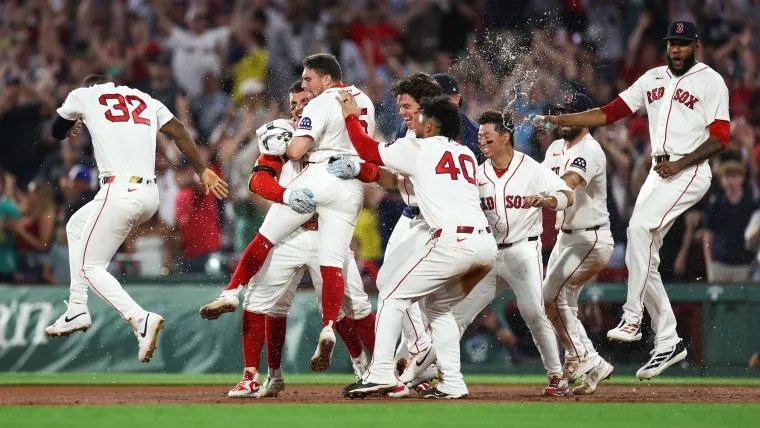
But the Red Sox did the unthinkable. They went to New York and swept the Yankees in four games in the House that Ruth Built.

The day after that last game, I was at my barbershop, doing what I usually do: talking about sports. Obviously, any Red Sox-Yankees series is news, especially when we sweep them. Especially when we suck like we did, and when the Yankees were so much better than us. I made a comment to my barber, saying, “Hey, we swept the Yankees. Sox are finally turning it around.” We both laughed, and my barber said, “Don’t get your hopes up, Grey.” It was just a quick, sarcastic comment. Never in a million years did I expect myself to be right.

Since then, the Sox went from the doormat of Major League Baseball to clinching a playoff spot. So how did this team do it? A lot of things went wrong, and then a lot of things had to go right.

Managerial Changes

Just 27 games into the 2026 season, the Red Sox were sitting at 10-17 with the team severely underperforming, and the light at the end of the tunnel was anything but visible. Garrett Crochet, the only real competitor to Tarik Skubal for last season’s AL Cy Young award, was having some uncharacteristic struggles. He had a revolting outing against the Minnesota Twins, letting up 10 runs in less then two innings, then proceeded to let up five in his next start. He finally had a good outing, where he twirled 6 scoreless innings against the Orioles, and the Sox won by a decisive 17-1. A dark cloud of an elbow injury to Crochet loomed over the win, but it was thought to be not too serious. The Red Sox front office added to the panic that evening, relieving manager Alex Cora of his duties, along with bench coach Ramón Vázquez, hitting coach Pete Fatse, assistant hitting coach Dillon Lawson, third-base coach Kyle Hudson, and Major League hitting strategy coach Joe Cronin. They also tried to reassign game planning and run prevention coach Jason Varitek to a new role in the organization, but he declined and left with the others. Triple-A manager Chad Tracy was brought up to replace Cora, whose seven years with the Red Sox included a World Series ring with the best team of all time in 2018.

Red Sox Nation had some mixed feelings about the firing. Obviously, sending a World Series-winning manager out the door is going to cause some backlash, but Cora had been losing some steam among the fan base for a year or two. He still, of course, had his faithful followers who said the 10-17 start had nothing to do with him (my mom included – she adamantly believes the bad start and the turnaround have nothing to do with Cora or Tracy). Such a terrible start would ease the criticism of the firing, coupled with the fact that the team was just looking flat, without any energy.

There wasn’t an immediate turnaround when Chad Tracy took over. It took about two months for the team to start its magical run, and the Cora supporters certainly looked right during those two months. Like they say, however, good things take time, and that certainly showed.

Chad Tracy turned out to be the perfect person to unite the clubhouse. There was a noticeable shift from the feeling of a young team that was sad and sulking from losing so many games, to an energized clubhouse that just looked like they were having fun. And Tracy’s game management was unbelievable. He always was able to pull the right pinch hitter off of the bench to get a key hit, and he embraced small ball. Bunts, hit-and-runs, aggressive base running, and just putting the ball in play became key to the Red Sox success, and Tracy was the one pushing the buttons for a team that was playing baseball the way it was intended to be played.

Underperformance Reversal

During this past offseason, which was very controversial, the Red Sox signed playoff ace Ranger Suárez and traded for Sonny Gray and Willson Contreras from the Cardinals, Johan Oviedo from the Pirates, and Caleb Durbin from the Brewers to replace one-and-done third baseman Alex Bregman (who should have been here if it wasn’t for ownership refusing to give him a no-trade clause. Don’t get me started.). These moves were supposed to turn the Red Sox into an elite run-preventing, contact-hitting team.

However, neither of things were happening early in the season. The pitching was letting up lots of runs and Garrett Crochet, Sonny Gray, and Ranger Suárez all spent time on the IL, while Oviedo got hurt in Spring Training. And the offense was no better. I think the second- and third-grade teams I umpire for in the spring could have scored more runs than the Sox at that point.

Jarren Duran, Trevor Story, Roman Anthony, and Caleb Durbin all had batting averages under .200, and that’s just off the top of my head. Durbin took the most heat of the group, though. People had been up in arms about letting Alex Bregman walk out the door in February, and seeing his replacement having a batting average starting with a .1 only made things worse. I myself was the self-proclaimed president of the Caleb Durbin Hate Club.

But that Yankees series changed everything. The pitching only let up more than three runs in the one extra-innings game of the series, when they let up four, and the offense got rolling.

Since that series, Ceddanne Rafaela has evolved his game greatly, becoming one of the league’s premier two-strike hitters and being way better about getting himself in good counts. Coupled with his stellar defense, he looked like a dark horse AL MVP candidate for a couple months. Willson Contreras became the leader of the team, with his burning passion for the game rubbing off on everyone else and his career-best home run pace setting the tone. Sonny Gray set a career-low ERA of 2.72 and tied for the league lead with a career-best 18 wins. Payton Tolle, who was called up in April after spending about a month with the team at the end of last season, evolved into a multi-pitch strikeout artist, Rookie of the Year candidate, and probably one of the two or three most loved athletes in the current Boston sports scene. But nobody saw the Durbin turnaround coming, not from a mile away. Since June 1st, about three weeks before the Yankees series, Durbin has hit .279 with 12 homers and 42 RBI’s in 100 games. He went from being benched by the manager to a key middle-of-the-order bat for the Sox, and played Gold-Glove caliber defense at the hot corner all the while. The list goes on and on. The Red Sox were finally playing how they were supposed to.

The Rivalry

We all wonder how this massive turnaround came about. What inspired it? In my mind there are really two reasons for it. One is The Rivalry. You know which one. Coming in to Yankee Stadium, just about everybody in the city of Boston had given up on the team, and losing a series to the hated Yankees would be a sucker-punch to the face for the already wounded Red Sox Nation. Even if you somehow still believed, you were grasping at straws, and this series was the only straw left to grasp.

For a player, this was probably your last straw as well. I would imagine it’s hard to have to hear how much your team sucks every day. If the Sox lost this series, pretty much everyone was condemning them to the seller’s fate at the Trade Deadline, which at the time was about a month away.

Being a “seller” at the MLB trade deadline is a term reserved for the most depressing teams in the league. Being a “seller” is when a team “sells” off all of their quality players, usually in exchange for prospects, in hope that the team will be competitive in two or three years. Doing this means that your team is so bad that you have basically zero hope of making the playoffs by July. Teams like the Red Sox at the time were the best teams to be sellers at the trade deadline. They had promising young talent (Roman Anthony, Marcelo Mayer, Payton Tolle, Connelly Early, etc.) that gave them hope for the future, but they also had veteran pieces that were playing well for a bad team, and on short contracts (Willson Contreras, Sonny Gray, Aroldis Chapman). These veteran pieces are the best assets to sell off, because they can make an immediate impact for a team that wants to contend for a World Series.

Thankfully, the Red Sox avoided this fan-crushing fate. How? By sweeping the Yankees. Of all the good teams the Red Sox could have had a season-changing, 4-game sweep against, I think it was destiny for it to be against the Yankees. As a fan, nothing excites me more than a matchup with the the greatest rivalry in sports. As a player, I would think they get the same feeling, especially this team, who added a little gas to the flame before the season.

Sonny Gray, in his introductory zoom call with the Red Sox, spent a little time talking about his time with the Yankees. He was not very fond of it. He said he never wanted to go there when he got traded, and once he was there, he hated every second of it. Obviously, Red Sox fans loved to hear that. Aroldis Chapman also talked about his time with the Yankees over the off-season. He said he would rather retire on the spot than be traded to the Yankees.

Around the time of the season-altering series, when there was speculation starting about the Red Sox selling and Chapman being a prime trade candidate, he also demanded an apology from Yankees GM Brian Cashman about the events of his previous tenure with the team before he would ever be traded there. Who knows? Maybe Sonny and Chappy, two guys who have been in the game for years and years, rounded up the guys before the series and had a little pep talk. Maybe they didn’t want to have the white flag waved on their season because their current team got embarrassed by the team they hated playing for.

This players-only meeting idea is just something I would like to believe, not something there is any evidence of. Still, even if this didn’t happen, I refuse to believe that playing that the feeling of sweeping the bitter-rival Yankees had nothing to do with this turnaround.

Venezuela

This is the other emotional spark that caused this team’s turnaround, in my opinion. The Red Sox have very deep ties to the country of Venezuela, with Willson Contreras, Wilyer Abreu, Ranger Suárez, utility man Andruw Monasterio, and at the time catcher Carlos Narváez all hailing from there. Around the time the Yankees series was wrapping up, there were some devastating earthquakes in Venezuela. Thousands of people were dead or missing, countless had lost their homes, and the country was in disaster. Obviously, it was a really hard time for anybody who has ties to Venezuela, and it was no different for the players. There was worry about the safety of family members and friends. It was extremely difficult.

I believe these Red Sox players used this tragedy as fuel. They started playing for their country, and I have evidence for this one. In the series after that Yankees sweep, the Sox were playing the Nationals at Fenway. Willson Contreras, in the bottom of the first inning of that series opener, crushed a 421-foot, 3-run bomb to set the tone. He took it a step further by flipping his bat 15 feet into the air, turning to his dugout, and screaming, “Venezuela! My home!” When he got back to the dugout, he sat on the bench and broke down in tears for several minutes.

This kind of passion, this energy, this love for the game and his country is what Contreras brought to the Red Sox, aside from his massive Green Monster pull-side power. He took a tragedy in his home, and grief that many of his teammates shared, and ignited a flame in this team with it. He could have sat down and grieved, but instead, he set the tone every day, and dared his team to match his love for the game. And they did just that.

All of a sudden, the Sox were having fun playing baseball. They were hustling, diving, giving 110 percent effort on every play, and smiling. And everyone was doing it. Willson, Wilyer, Ceddanne, Duran, Durbin, Monasterio, Nick Sogard, Anthony Siegler, and almost everybody else got big hits. Mickey Gasper got called up from Triple-A, barely expecting to play, and put up the second-highest OPS in a single month. Ever. The list: Barry Bonds, Mickey Gasper. 7 home runs in 13 games, with 10 walks to only 2 strikeouts. Nobody could get anything by Mickey Bonds.

And the pitching was there too. Sonny, Ranger, Payton, and Jake Bennett all came out and shut opposing teams down. Chappy and Garrett Whitlock came out of the pen and locked down the 8th and 9th, per usual. Tyron Guerrero, after years out of the big leagues, comes out and starts pumping 102-mile-per-hour sinkers down the pipe from his terrifying 6-foot-8 frame. The list goes on and on. Everybody did something for the Red Sox.

This all resulted in the greatest turnaround in the history of baseball. They went on a 15-game win streak to tie an 80-year-old franchise record. They won 27 of 30 games. Reeled off another 9-game win streak. Won 32 of 37. Finished with the best record in baseball after the All-Star Break. First team to finish above .500 and make the playoffs after losing at least 32 of their first 78 games. Ever. All because this team refused to quit.

Playoffs

Now it’s playoff time. As Chad Tracy said, “You stared impossible in the face . . . you beat it back and said, ‘The hell with that, we’re going to the playoffs.’ ” And they did.

Unfortunately, the Red Sox magic seemed to fizzle out in September, and that carried into the playoffs. They played a highly-anticipated Wild Card matchup against the Yankees. The Yankees had the second-best record in the American League, the Red Sox the third. It seemed as close as close as could be, and there was added drama with the way the Red Sox turned around the season starting against the Yankees.

Both teams carried elite pitching, starting and out of the bullpen. The Red Sox planned to throw lovable Payton Tolle game 1, MLB wins co-leader Sonny Gray game 2, and playoff ace Ranger Suárez game 3 if they needed it. The Yankees were responding with Walpole, Mass., native and Red Sox villain Cam Schlittler lined up for game 1, Max Fried following in game 2, and Gerrit Cole in a potential game 3. The Sox had the best bullpen ERA in the majors this year; the Yankees had the second best. The Sox offense had stumbled into the playoffs, averaging the least runs per game in the majors in the month of September. The Yankees, however, did not have Aaron Judge. They responded by stacking their roster with hitters for all situations, and all of them could slug. They had the least amount of pitchers on their roster in the 3-game Wild Card era.

Through the first five innings of Game 1, the pitching came as advertised. In the bottom of the fifth, Payton Tolle was on the mound, having completed 4 2/3 innings and throwing only 83 pitches. With one of the best fastball hitters in the league, Scituate native Ben Rice, coming up to the plate, Chad Tracy came out to pull Tolle, a fastball-heavy pitcher. Even though Rice hammers fastballs, this is still an inexplicable move.

Making things even worse, his replacement, Erik Miller, has been awful for a month. He came in and immediately let up a home run to Rice. From there, the bullpen continued to let up runs, and the offense was nowhere to be found as Cam Schlittler threw a career-high 117 pitches and the Red Sox lost, 9-0. Roman Anthony had to leave the game after only two at-bats, and the Red Sox only got a runner to second base once.

The next game started out similarly, with the starting pitchers, Gray and Fried, dealing on the mound. With two outs in the fourth inning, Sonny had only given up one run (sound familiar?), and he had runners on first and third with a mere 70 pitches. For some reason, Chad Tracy made his way to the mound and called on none other than Erik Miller to face lefty Cody Bellinger. Usually, a lefty pitcher versus a lefty hitter is an advantage for the pitcher, but Bellinger is one of the best left-on-left hitters in baseball.

Miller proceeded to let up two runs, and the bullpen again blew the game while the Red Sox failed to score until the 6th inning on a Willson Contreras home run, which broke a scoreless playoff innings streak of over 20 dating back to last postseason. The Sox lose, 9-2.

Even though they got embarrassed in the playoffs, there is still a lot to be grateful for this past season. Three months in, it was painful to sit and watch a Sox game. This turnaround was the most unprecedented thing I have ever witnessed in my entire life. They went from the lowest possible point of rock bottom to the highest of all highs in a few weeks. It was unthinkable. If you had told me the Red Sox were going to make the playoffs in early June, I would have called you crazy. To experience something as remarkable as this turnaround, with the energy and passion that every single player had on that team, was nothing short of special, and something I will never forget.

featured image: https://sports.yahoo.com/articles/numbers-red-sox-turned-around-170055135.html