All posts by gpotter29

How the Red Sox Pulled Off the Biggest Turnaround in Baseball History

By Greyson Potter, ’29

Staff Writer

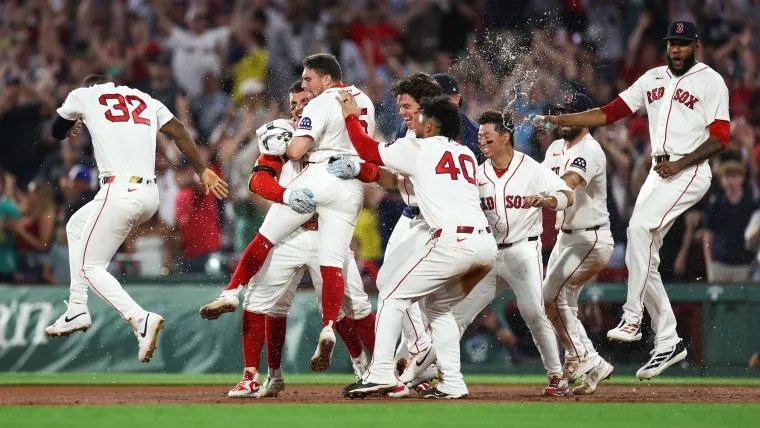
Three months into the 2026 MLB season, the Red Sox were an embarrassment to the city of Boston. Well below a .500 record, the Sox were out of playoff contention with injuries mounting and multiple contracts they could offload at the trade deadline. The team had fired longtime manager Alex Cora, along with the hitting coach, bench coach, and third base coach. Even the Fenway Faithful had lost their faith, with the Sox having the worst home record in baseball. The icing on the cake was an unsightly series loss to the Colorado Rockies, a team that has been the bottomfeeders of the league for multiple years now. Promising young second baseman Marcelo Mayer got hurt in the series finale, adding to a list that already included ace Garrett Crochet, leadoff hitter Roman Anthony, and shortstop Trevor Story. All were severely underperforming, and all ended up with IL stints much, much longer than expected.

Then came a four-game series with the New York Yankees. The Sox headed to the Bronx an abysmal 14 games below .500, while the Yankees were sitting comfortably atop the American League at 48-31, even without slugging superstar Aaron Judge. One team was the obvious favorite.

But the Red Sox did the unthinkable. They went to New York and swept the Yankees in four games in the House that Ruth Built.

The day after that last game, I was at my barbershop, doing what I usually do: talking about sports. Obviously, any Red Sox-Yankees series is news, especially when we sweep them. Especially when we suck like we did, and when the Yankees were so much better than us. I made a comment to my barber, saying, “Hey, we swept the Yankees. Sox are finally turning it around.” We both laughed, and my barber said, “Don’t get your hopes up, Grey.” It was just a quick, sarcastic comment. Never in a million years did I expect myself to be right.

Since then, the Sox went from the doormat of Major League Baseball to clinching a playoff spot. So how did this team do it? A lot of things went wrong, and then a lot of things had to go right.

Managerial Changes

Just 27 games into the 2026 season, the Red Sox were sitting at 10-17 with the team severely underperforming, and the light at the end of the tunnel was anything but visible. Garrett Crochet, the only real competitor to Tarik Skubal for last season’s AL Cy Young award, was having some uncharacteristic struggles. He had a revolting outing against the Minnesota Twins, letting up 10 runs in less then two innings, then proceeded to let up five in his next start. He finally had a good outing, where he twirled 6 scoreless innings against the Orioles, and the Sox won by a decisive 17-1. A dark cloud of an elbow injury to Crochet loomed over the win, but it was thought to be not too serious. The Red Sox front office added to the panic that evening, relieving manager Alex Cora of his duties, along with bench coach Ramón Vázquez, hitting coach Pete Fatse, assistant hitting coach Dillon Lawson, third-base coach Kyle Hudson, and Major League hitting strategy coach Joe Cronin. They also tried to reassign game planning and run prevention coach Jason Varitek to a new role in the organization, but he declined and left with the others. Triple-A manager Chad Tracy was brought up to replace Cora, whose seven years with the Red Sox included a World Series ring with the best team of all time in 2018.

Red Sox Nation had some mixed feelings about the firing. Obviously, sending a World Series-winning manager out the door is going to cause some backlash, but Cora had been losing some steam among the fan base for a year or two. He still, of course, had his faithful followers who said the 10-17 start had nothing to do with him (my mom included – she adamantly believes the bad start and the turnaround have nothing to do with Cora or Tracy). Such a terrible start would ease the criticism of the firing, coupled with the fact that the team was just looking flat, without any energy.

There wasn’t an immediate turnaround when Chad Tracy took over. It took about two months for the team to start its magical run, and the Cora supporters certainly looked right during those two months. Like they say, however, good things take time, and that certainly showed.

Chad Tracy turned out to be the perfect person to unite the clubhouse. There was a noticeable shift from the feeling of a young team that was sad and sulking from losing so many games, to an energized clubhouse that just looked like they were having fun. And Tracy’s game management was unbelievable. He always was able to pull the right pinch hitter off of the bench to get a key hit, and he embraced small ball. Bunts, hit-and-runs, aggressive base running, and just putting the ball in play became key to the Red Sox success, and Tracy was the one pushing the buttons for a team that was playing baseball the way it was intended to be played.

Underperformance Reversal

During this past offseason, which was very controversial, the Red Sox signed playoff ace Ranger Suárez and traded for Sonny Gray and Willson Contreras from the Cardinals, Johan Oviedo from the Pirates, and Caleb Durbin from the Brewers to replace one-and-done third baseman Alex Bregman (who should have been here if it wasn’t for ownership refusing to give him a no-trade clause. Don’t get me started.). These moves were supposed to turn the Red Sox into an elite run-preventing, contact-hitting team.

However, neither of things were happening early in the season. The pitching was letting up lots of runs and Garrett Crochet, Sonny Gray, and Ranger Suárez all spent time on the IL, while Oviedo got hurt in Spring Training. And the offense was no better. I think the second- and third-grade teams I umpire for in the spring could have scored more runs than the Sox at that point.

Jarren Duran, Trevor Story, Roman Anthony, and Caleb Durbin all had batting averages under .200, and that’s just off the top of my head. Durbin took the most heat of the group, though. People had been up in arms about letting Alex Bregman walk out the door in February, and seeing his replacement having a batting average starting with a .1 only made things worse. I myself was the self-proclaimed president of the Caleb Durbin Hate Club.

But that Yankees series changed everything. The pitching only let up more than three runs in the one extra-innings game of the series, when they let up four, and the offense got rolling.

Since that series, Ceddanne Rafaela has evolved his game greatly, becoming one of the league’s premier two-strike hitters and being way better about getting himself in good counts. Coupled with his stellar defense, he looked like a dark horse AL MVP candidate for a couple months. Willson Contreras became the leader of the team, with his burning passion for the game rubbing off on everyone else and his career-best home run pace setting the tone. Sonny Gray set a career-low ERA of 2.72 and tied for the league lead with a career-best 18 wins. Payton Tolle, who was called up in April after spending about a month with the team at the end of last season, evolved into a multi-pitch strikeout artist, Rookie of the Year candidate, and probably one of the two or three most loved athletes in the current Boston sports scene. But nobody saw the Durbin turnaround coming, not from a mile away. Since June 1st, about three weeks before the Yankees series, Durbin has hit .279 with 12 homers and 42 RBI’s in 100 games. He went from being benched by the manager to a key middle-of-the-order bat for the Sox, and played Gold-Glove caliber defense at the hot corner all the while. The list goes on and on. The Red Sox were finally playing how they were supposed to.

The Rivalry

We all wonder how this massive turnaround came about. What inspired it? In my mind there are really two reasons for it. One is The Rivalry. You know which one. Coming in to Yankee Stadium, just about everybody in the city of Boston had given up on the team, and losing a series to the hated Yankees would be a sucker-punch to the face for the already wounded Red Sox Nation. Even if you somehow still believed, you were grasping at straws, and this series was the only straw left to grasp.

For a player, this was probably your last straw as well. I would imagine it’s hard to have to hear how much your team sucks every day. If the Sox lost this series, pretty much everyone was condemning them to the seller’s fate at the Trade Deadline, which at the time was about a month away.

Being a “seller” at the MLB trade deadline is a term reserved for the most depressing teams in the league. Being a “seller” is when a team “sells” off all of their quality players, usually in exchange for prospects, in hope that the team will be competitive in two or three years. Doing this means that your team is so bad that you have basically zero hope of making the playoffs by July. Teams like the Red Sox at the time were the best teams to be sellers at the trade deadline. They had promising young talent (Roman Anthony, Marcelo Mayer, Payton Tolle, Connelly Early, etc.) that gave them hope for the future, but they also had veteran pieces that were playing well for a bad team, and on short contracts (Willson Contreras, Sonny Gray, Aroldis Chapman). These veteran pieces are the best assets to sell off, because they can make an immediate impact for a team that wants to contend for a World Series.

Thankfully, the Red Sox avoided this fan-crushing fate. How? By sweeping the Yankees. Of all the good teams the Red Sox could have had a season-changing, 4-game sweep against, I think it was destiny for it to be against the Yankees. As a fan, nothing excites me more than a matchup with the the greatest rivalry in sports. As a player, I would think they get the same feeling, especially this team, who added a little gas to the flame before the season.

Sonny Gray, in his introductory zoom call with the Red Sox, spent a little time talking about his time with the Yankees. He was not very fond of it. He said he never wanted to go there when he got traded, and once he was there, he hated every second of it. Obviously, Red Sox fans loved to hear that. Aroldis Chapman also talked about his time with the Yankees over the off-season. He said he would rather retire on the spot than be traded to the Yankees.

Around the time of the season-altering series, when there was speculation starting about the Red Sox selling and Chapman being a prime trade candidate, he also demanded an apology from Yankees GM Brian Cashman about the events of his previous tenure with the team before he would ever be traded there. Who knows? Maybe Sonny and Chappy, two guys who have been in the game for years and years, rounded up the guys before the series and had a little pep talk. Maybe they didn’t want to have the white flag waved on their season because their current team got embarrassed by the team they hated playing for.

This players-only meeting idea is just something I would like to believe, not something there is any evidence of. Still, even if this didn’t happen, I refuse to believe that playing that the feeling of sweeping the bitter-rival Yankees had nothing to do with this turnaround.

Venezuela

This is the other emotional spark that caused this team’s turnaround, in my opinion. The Red Sox have very deep ties to the country of Venezuela, with Willson Contreras, Wilyer Abreu, Ranger Suárez, utility man Andruw Monasterio, and at the time catcher Carlos Narváez all hailing from there. Around the time the Yankees series was wrapping up, there were some devastating earthquakes in Venezuela. Thousands of people were dead or missing, countless had lost their homes, and the country was in disaster. Obviously, it was a really hard time for anybody who has ties to Venezuela, and it was no different for the players. There was worry about the safety of family members and friends. It was extremely difficult.

I believe these Red Sox players used this tragedy as fuel. They started playing for their country, and I have evidence for this one. In the series after that Yankees sweep, the Sox were playing the Nationals at Fenway. Willson Contreras, in the bottom of the first inning of that series opener, crushed a 421-foot, 3-run bomb to set the tone. He took it a step further by flipping his bat 15 feet into the air, turning to his dugout, and screaming, “Venezuela! My home!” When he got back to the dugout, he sat on the bench and broke down in tears for several minutes.

This kind of passion, this energy, this love for the game and his country is what Contreras brought to the Red Sox, aside from his massive Green Monster pull-side power. He took a tragedy in his home, and grief that many of his teammates shared, and ignited a flame in this team with it. He could have sat down and grieved, but instead, he set the tone every day, and dared his team to match his love for the game. And they did just that.

All of a sudden, the Sox were having fun playing baseball. They were hustling, diving, giving 110 percent effort on every play, and smiling. And everyone was doing it. Willson, Wilyer, Ceddanne, Duran, Durbin, Monasterio, Nick Sogard, Anthony Siegler, and almost everybody else got big hits. Mickey Gasper got called up from Triple-A, barely expecting to play, and put up the second-highest OPS in a single month. Ever. The list: Barry Bonds, Mickey Gasper. 7 home runs in 13 games, with 10 walks to only 2 strikeouts. Nobody could get anything by Mickey Bonds.

And the pitching was there too. Sonny, Ranger, Payton, and Jake Bennett all came out and shut opposing teams down. Chappy and Garrett Whitlock came out of the pen and locked down the 8th and 9th, per usual. Tyron Guerrero, after years out of the big leagues, comes out and starts pumping 102-mile-per-hour sinkers down the pipe from his terrifying 6-foot-8 frame. The list goes on and on. Everybody did something for the Red Sox.

This all resulted in the greatest turnaround in the history of baseball. They went on a 15-game win streak to tie an 80-year-old franchise record. They won 27 of 30 games. Reeled off another 9-game win streak. Won 32 of 37. Finished with the best record in baseball after the All-Star Break. First team to finish above .500 and make the playoffs after losing at least 32 of their first 78 games. Ever. All because this team refused to quit.

Playoffs

Now it’s playoff time. As Chad Tracy said, “You stared impossible in the face . . . you beat it back and said, ‘The hell with that, we’re going to the playoffs.’ ” And they did.

Unfortunately, the Red Sox magic seemed to fizzle out in September, and that carried into the playoffs. They played a highly-anticipated Wild Card matchup against the Yankees. The Yankees had the second-best record in the American League, the Red Sox the third. It seemed as close as close as could be, and there was added drama with the way the Red Sox turned around the season starting against the Yankees.

Both teams carried elite pitching, starting and out of the bullpen. The Red Sox planned to throw lovable Payton Tolle game 1, MLB wins co-leader Sonny Gray game 2, and playoff ace Ranger Suárez game 3 if they needed it. The Yankees were responding with Walpole, Mass., native and Red Sox villain Cam Schlittler lined up for game 1, Max Fried following in game 2, and Gerrit Cole in a potential game 3. The Sox had the best bullpen ERA in the majors this year; the Yankees had the second best. The Sox offense had stumbled into the playoffs, averaging the least runs per game in the majors in the month of September. The Yankees, however, did not have Aaron Judge. They responded by stacking their roster with hitters for all situations, and all of them could slug. They had the least amount of pitchers on their roster in the 3-game Wild Card era.

Through the first five innings of Game 1, the pitching came as advertised. In the bottom of the fifth, Payton Tolle was on the mound, having completed 4 2/3 innings and throwing only 83 pitches. With one of the best fastball hitters in the league, Scituate native Ben Rice, coming up to the plate, Chad Tracy came out to pull Tolle, a fastball-heavy pitcher. Even though Rice hammers fastballs, this is still an inexplicable move.

Making things even worse, his replacement, Erik Miller, has been awful for a month. He came in and immediately let up a home run to Rice. From there, the bullpen continued to let up runs, and the offense was nowhere to be found as Cam Schlittler threw a career-high 117 pitches and the Red Sox lost, 9-0. Roman Anthony had to leave the game after only two at-bats, and the Red Sox only got a runner to second base once.

The next game started out similarly, with the starting pitchers, Gray and Fried, dealing on the mound. With two outs in the fourth inning, Sonny had only given up one run (sound familiar?), and he had runners on first and third with a mere 70 pitches. For some reason, Chad Tracy made his way to the mound and called on none other than Erik Miller to face lefty Cody Bellinger. Usually, a lefty pitcher versus a lefty hitter is an advantage for the pitcher, but Bellinger is one of the best left-on-left hitters in baseball.

Miller proceeded to let up two runs, and the bullpen again blew the game while the Red Sox failed to score until the 6th inning on a Willson Contreras home run, which broke a scoreless playoff innings streak of over 20 dating back to last postseason. The Sox lose, 9-2.

Even though they got embarrassed in the playoffs, there is still a lot to be grateful for this past season. Three months in, it was painful to sit and watch a Sox game. This turnaround was the most unprecedented thing I have ever witnessed in my entire life. They went from the lowest possible point of rock bottom to the highest of all highs in a few weeks. It was unthinkable. If you had told me the Red Sox were going to make the playoffs in early June, I would have called you crazy. To experience something as remarkable as this turnaround, with the energy and passion that every single player had on that team, was nothing short of special, and something I will never forget.

featured image: https://sports.yahoo.com/articles/numbers-red-sox-turned-around-170055135.html
One Shining Moment: 2026 March Madness Recap

By Greyson Potter, ’29

Staff Writer

Every year in March, everybody gets their hopes sky high, wishing against reason that they will make history. But it’s not through some outstanding talent; it’s sheer luck. In fact, your odds of making this kind of history are 1 in 9.2 quintillion (1 in 120.2 billion for knowledgeable fans).

If you guessed that I’m talking about the odds of making a perfect March Madness bracket, you are right. It has never been done. This year, an 8th-grader made it through the first two rounds of the women’s tournament, something that had only been done one other time in tournament history, men’s or women’s. The longest perfect streak ever is 50 games, which is only two games into the third round.

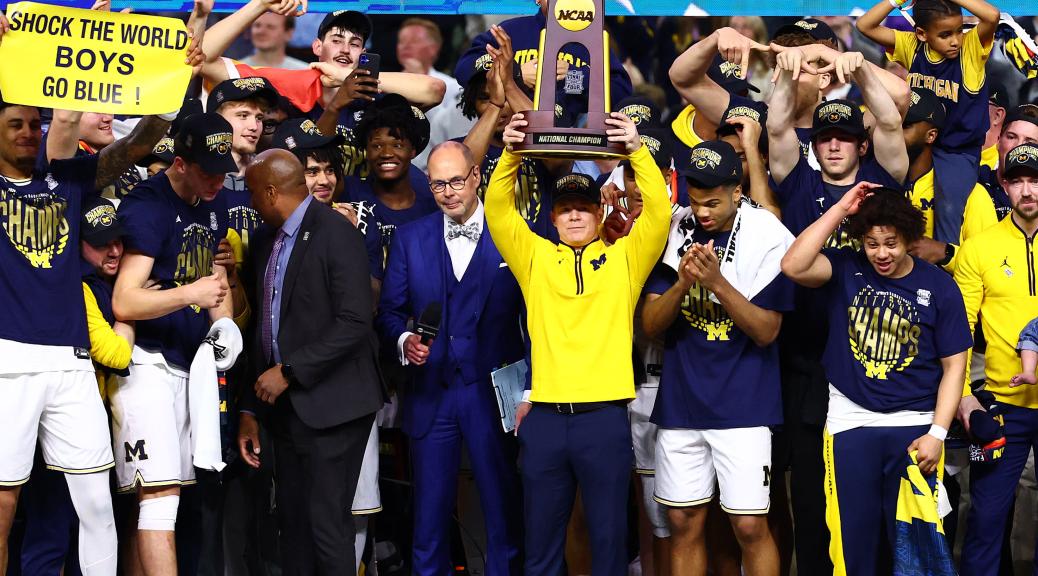
Now that Michigan has claimed their National Championship, here is a recap of the men’s tournament, round by round, in case you missed some.

First Round

Ah, the opening round of March Madness. Everyone’s heart is light with hope, because nobody has lost their bracket yet. Sadly, most people will be heartbroken within two days, or even hours of the start of the very first game. Without a doubt, the first round is the hardest to get through.

We Saw It Coming:

(1) Florida 114, (16) Prairie View A&M 55

A 16-seed has only beaten a 1-seed twice in tourney history, and this year came and went as expected. All 1-seeds made it to the second round very comfortably. Florida really handled business here, beating a First Four team by 59. The 2nd and 3rd seeds also took care of business, many of them blowing out their first-round opponents.

Bracket-Busters

(9) TCU 66, (8) Ohio State 64

The very first game of the tournament ruined almost half of people’s brackets. Games between the 8th and 9th seeds are always a toss-up; they have virtually a .500 record against each other. But losing your bracket on the first game is rough.

(11) VCU 82, (6) North Carolina 78

North Carolina had a great regular season, but late in the season lost their star freshman, Caleb Wilson, to injury. He was the driving force of this squad, a surefire All-American and lottery pick in the NBA draft, and without him they got a lower seed and had to play a VCU squad that felt slightly under-seeded.

(12) High Point 83, (5) Wisconsin 82

This rare 12-5 upset was up there with the TCU-Ohio State game as one of the biggest bracket busters. And it was also within the first 5 games played. It’s very exciting to see upsets like this, unless you’re like me and found it ruined your bracket.

(11) Texas 79, (6) BYU 71

This season, BYU had their biggest basketball recruit since Danny Ainge in the 1980s. And what did they do? Pack their bags after the very first round. AJ Dybantsa, the stud freshman out of Brockton who is a favorite to be the first pick in this year’s NBA draft, certainly played his part for the Cougars. The D-I scoring leader dropped a 35-point, 10-rebound double-double while playing every second of the game. The problem is, he didn’t get much help, like he hasn’t all season, evidenced by the fact that he scored half of his team’s points.

Other First Round Notes:

  • Alabama, after losing second-leading scorer Aden Holloway, who was arrested two days before the tournament on felony drug charges, showed they can still score with the best of them by dropping 90 on (13) Hofstra
  • Miami (OH), who lost their one game all season about a week before the tournament, suffered a first-round exit after facing questions on whether or not their schedule was too easy (apparently it was)
  • (1) Duke kept their matchup against 16-seeded Siena too close for comfort, and actually trailed by 11 at halftime, the largest halftime deficit for a 1-seed against a 16-seed ever
  • All-American guard Braden Smith broke Bobby Hurley’s all-time NCAA assists record in (2) Purdue’s win over (15) Queens (NC)

Second Round

The rare brackets that make it through the first round usually meet their doom in the second round. Only two recorded brackets have made it past. The upsets, while still quite shocking, usually don’t live up to the first round. There were, however, a few shockers this year.

(9) Iowa 73, (1) Florida 72

Merely two days after flexing their first-seeded muscles on Prairie View A&M with a 55-point victory, Florida was the first 1-seed to pack their bags with an upset loss to 9-seeded Iowa, thanks to a clutch 3 from Alvaro Folgueiras.

(11) Texas 74, (3) Gonzaga 68

Texas followed up their upset over one of the top players in the country by beating a high-seeded Gonzaga squad that is in the mix every year. They were well on their way to being 2026’s Cinderella team.

Other Second Round Notes:

  • (6) Tennessee beat a tough 3-seeded Virginia crew that gave Duke a run for their money in the ACC Championship Game
  • Speaking of the Blue Devils, they kept everybody on the edge of their seats again with a close game at halftime against (9) TCU, but pulled away for a big win

Sweet 16

The Sweet 16 is where each year’s Cinderella stories are made. Yeah, a first- or second- round upset is great, but winning in the Sweet 16 and going to the Elite 8 shows you are a legitimate threat that may have been under-seeded. Here are the top contenders for this year’s Sweet 16 Cinderellas:

(6) Tennessee: Tennessee had a played a few quality teams, taking down a Miami (OH) team that almost had an undefeated season, a 3-seeded Virginia team that almost won an ACC that had Duke in it, and then beat a top-notch defensive squad in (2) Iowa State.

(9) Iowa: The Hawkeyes won a close game against Clemson in the first round, not exactly a statement win. But their real signature game came in the second round by knocking Florida out and making them the first 1-seed to head home. They then beat a good Nebraska team to advance to the Elite 8.

Elite 8

The excitement for teams in the Elite 8 is tangible. Win, and you go to college basketball’s Garden of Eden: The Final Four. There still a good mix of favorites and underdogs, so that the upsets, if they happen, can be dramatic and very unprecedented.

Unfortunately, there were no massive upsets in this Elite 8. Our 6- and 9-seeds both lost. But there was still plenty of drama. Keaton Wagler, only a three-star recruit whose Illinois offer was one of his only two major conference offers, continued his fantastic season and led Illinois to their first Final Four since 2005. But the best drama came in a 1-2 game, again with Duke.

(2) UConn 73, (1) Duke 72

Throughout the years, there have been countless clutch moments etched in March Madness history. The first one I remember seeing is Jalen Suggs’ game-winning half court heave for Gonzaga in the 2021 Final Four. It was one of the best plays I have ever seen. But what happened in this Huskies-Blue Devils matchup will go down in history as well.

Duke inbounded the ball, up by two, with 10 seconds to play. The ball found its way to Cayden Boozer at midcourt with 7.5 seconds left. He could just dribble out, hold the ball, maybe get fouled and ice the game. But instead, with a double team coming, Boozer threw up a moronic pass to who-knows-where that was intercepted by UConn. The Huskies made a couple quick passes, eventually getting to Braylon Mullins, who hoisted up a desperation logo three. Nothing but net. UConn up by 1 with 0.3 seconds left. Goodbye, Duke.

This was one of those moments that I will remember where I was when it happened forever. I was at my end-of-season basketball banquet. Everybody was watching the game as we ate, but it took a backseat as the coaches started to talk to everyone. The varsity basketball head coach had just come up to speak with barely a minute or two left. He soon noticed everyone’s quick, furtive glances every couple of seconds at the game, and decided to wait until after the game to talk. I’m so glad he did. It was absolute pandemonium when Mullins hit that shot. An all-time March Madness classic.

The Final Four

Reaching the Final Four is one of the greatest achievements in basketball. Every great collegiate player, coach, and program is judged by their Final Four appearances. You can’t be a great if you’ve never made it; then you’re a choker. This year’s Final Four, however, was certainly great.

(1) Michigan 91, (1) Arizona 73

“The Game of the Year.” That’s what this was expected to be. Two of the select few truly elite teams in college basketball duking it out, the winner going to the national championship. Michigan lost only three games all year, Arizona two. The top two defenses in the country. But instead, Michigan laid it on them like they were playing an underdog nobody thought would be there. Michigan sprinted to a double-digit lead only 5 minutes into the game, and never looked back.

(2) UConn 71, (3) Illinois 62

Another year, another deep tournament run for Danny Hurley. This win sent him and the Huskies to his third national championship game in the last four years. But Illinois put up a fight, better than Arizona did. And this was certainly a great season for the Fighting Illini, Keaton Wagler especially. Wagler entered this year as an unheralded three-star recruit from Kansas, and left as the Big Ten Freshman of the Year and NBA lottery lock.

National Championship

And now, we have made it. The final countdown. The last dance. Win or go home. The national championship on the line. A historic UConn team, looking for their third national championship in four years. A Michigan team that enjoyed success in the past, but hadn’t been able to reach their past heights in recent years.

The game was close, with Michigan taking a slim 4-point lead to intermission. The Wolverines pulled away at one point of the second half, but the Huskies weren’t quite done. Alex Karaban, their only remaining player from their 2024 championship team, showed the moment wasn’t too big for him and led UConn on a late rally. In the end, however, Elliot Cadeau and the Big Blue proved too much for UConn. With a 69-63 win, Michigan took home their second national championship in program history, the first since 1989.

So, despite the fact that over 40 million people had their brackets, and their hearts, broken by underdogs and upsets, we still believe March is by far the best month in college, and quite possibly the year. Nothing rivals the passion, intensity, and, well, madness of March.

America’s Game: Super Bowl LX Recap

By Greyson Potter, ’29

Staff Writer

I’m just starting to recover.

The Super Bowl is arguably the biggest event in sports every year. It shatters ratings records for sporting events and draws viewers not only for the game but also for the outstanding halftime performances and even the legendary commercials. But, as a Patriots fan, this year’s Super Bowl was hard to watch. We came in with so much hope, and then everything just came crashing down.

Those Seahawks fans out there, they all got their revenge for 2014, despite some amazing play from a different Patriots cornerback by the name of Christian Gonzalez. If you happened to miss the biggest sporting event of the year, then you came to the right place. Even if you watched every minute, it might help to drown your sorrows in reading this Super Bowl recap, or it might make you feel even more victorious if you happen to be a Seahawks fan.

From the get-go, it looked like Super Bowl LX was going to be a defensive slugfest. Both defenses were highly touted coming into the game, with Seattle boasting the league’s best scoring defense, allowing a mere 17 points per game. Neither team could get much going, with Seattle leading 3-0 after the first quarter. The ‘Hawks were sending lots of blitzes from their secondary, with their standout corner Devon Witherspoon getting a drive-ending sack on third down on one of New England’s first drives in the quarter.

The second quarter was no different. The Patriots’ offense was really struggling, and they ended up getting shut out in the first half. Their defense was doing the best they could, limiting Seattle to only two more field goals, putting the Pats in a 9-0 halftime hole. Not a big difference by any means, but any lead feels big when you’re getting shut out.

In the third quarter, it was more of the same. The Seahawks kicked another field goal, and the Patriots continued to struggle putting up any numbers.

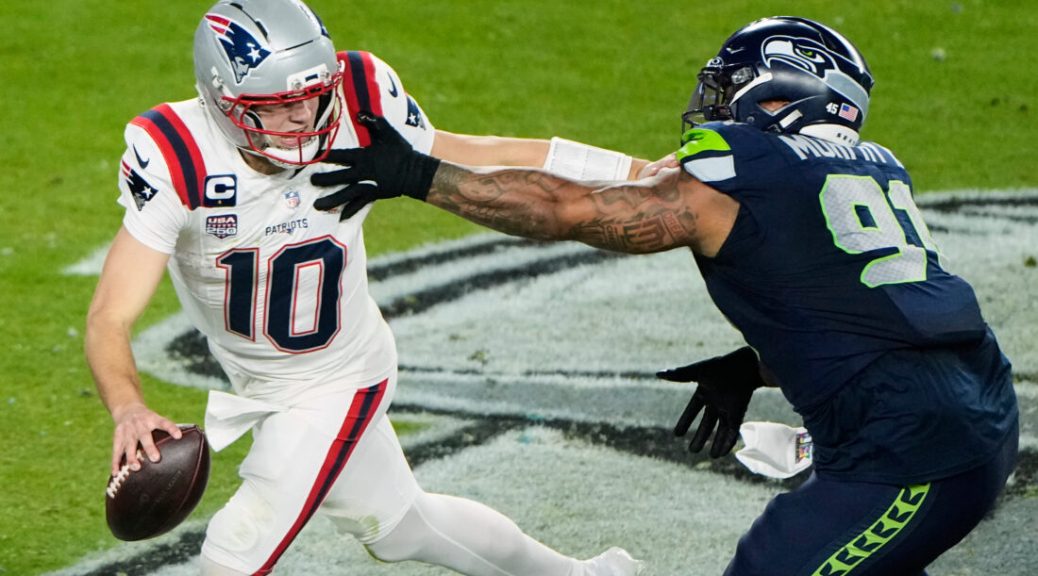
The fourth is really where things started to heat up. The Seahawks scored the first touchdown of the game a minute and a half into the final quarter, giving them a 19-0 lead over New England. But the Pats weren’t done yet. Drake Maye, who Seattle’s defense had silenced so far, orchestrated a quick 3-play touchdown drive with two beautiful deep balls to Mack Hollins. Their defense stopped Seattle again, forcing a punt. New England was marching down the field again, until Maye, a finalist for the league’s MVP, threw an ugly interception over the middle of the field, giving Seattle the ball. It was really a terrible pick; the ball was multiple feet behind Maye’s intended receiver. This set up Seattle for a field goal and put them up by 15 with five and a half minutes left. New England needed a quick score, and probably a two-point conversion, to make this a game again. Instead, the Seahawks got a quick score, with Maye throwing a pick-six on the fourth play of the drive. This was the nail in the coffin, putting New England in a 29-7 deficit with four and a half minutes left. The Pats scored a touchdown just before the two-minute warning, but it really didn’t matter; Seattle could have started celebrating pretty much after they took the Maye interception to the house.

And so it was complete; Seattle gets revenge for Malcolm Butler’s goal-line interception in 2014, and wins the Super Bowl. Running back Kenneth Walker III took home the Super Bowl MVP honors after racking up 135 yards on 27 carries, plus two catches for 26 yards. Walker really powered Seattle’s offense, running all over the Patriots’ stout run defense.

Takeaways

Seattle: The Seahawks’ defense showed why they were a contender for the best in the league. Their standout defensive line, consisting of Leonard Williams, DeMarcus Lawrence, and Byron Murphy II, crushed the Patriots’ offensive line and kept Drake Maye on his for seemingly the whole game. The ‘Hawks put up 6 sacks, 8 tackles for loss, and 11 QB hits. Their whole defense really had talent at every level. I already mentioned their D-line, but they had Ernest Jones IV in the middle as their game-managing linebacker with five interceptions in the regular season, and an elite secondary that featured do-it-all, All-Pro corner Devon Witherspoon and standout rookie safety Nick Emmanwori. The Patriots’ offense was overpowered by this unit, especially the D-line, which calls itself “The Dark Side.”

Seattle’s quarterback, Sam Darlond, also silenced a lot of his critics after this Super Bowl run. Darnold was the third overall pick in the draft in 2018. The fact that he was drafted by the Jets is all that needs to be said. He lasted three very bad years before getting cut. Everything culminated with him claiming to be “seeing ghosts” after throwing four picks and losing a fumble, and generating only 86 yards passing in a 33-0 loss to the Patriots. He spent some time with the Carolina Panthers, but that didn’t work out, so he went to the San Francisco 49ers and served as a backup to Brock Purdy. Not being under as much pressure as a backup and playing under a genius like Kyle Shanahan really helped Darnold improve, though he didn’t know it yet.

Darnold signed with the Minnesota Vikings before the 2024 season, expecting to back up rookie QB J.J. McCarthy. Except McCarthy tore his ACL in his first preseason game, opening the door for Darnold to be the starter. Out of the blue, Darnold had an incredible season, throwing for 4,300 yards and 35 touchdowns while leading the Vikings to an outstanding 14-3 record and the #2 seed in the NFC. However, he had some rough games down the stretch and choked in the first round of the playoffs, getting bounced by the #6 seed LA Rams. It was about as good a contract year as you could have, but there were still questions about whether Darnold could perform under pressure when it really counted. He signed with the Seahawks this offseason, and his clutch performances in the Super Bowl run this year silenced his critics. Sam Darnold is finally the player he was supposed to be.

Patriots: New England was the surprise team of this season. New head coach Mike Vrabel pressed all the right buttons and led a 10-game regular season turnaround and the two seed in the AFC just a season after getting a top-5 draft pick. They had a healthy mix of young talent and proven veterans, which took them to a Super Bowl. However, this wasn’t exactly a proven playoff squad. Only 5 players on New England’s roster had Super Bowl experience. It’s no easy feat playing on the game’s biggest stage, especially when you’ve never done it before.

There really isn’t one person or thing to blame for the Patriots’ loss. A lot of it was just inexperience. Seattle’s D-line squashed New England’s offensive line like they were stepping on a bug. The left side of the Pats’ O-line was made of two rookies, number four overall pick Will Campbell at left tackle and third round pick Jared Wilson at left guard. Campbell, in particular, was in fits the whole game, showing marginal resistance to the opposing pass-rush. But when it wasn’t him, somebody else on the line was always letting up some sort of pressure on Maye. Speaking of Maye, he didn’t exactly play to an MVP level, especially with those two costly fourth-quarter picks. He also lost a fumble at the end of the third quarter, highlighting some ball-security issues that Maye has had. He also went into the game with an injured shoulder, receiving a painkilling injection in the shoulder before kickoff. You can imagine it is hard to throw a perfectly accurate ball with an injured shoulder, especially when constant pressure is speeding you up. The defense played very well, although they had multiple sack opportunities and couldn’t finish. Kenneth Walker III also ran all over them.

Most surprising of all the Patriots’ struggles, in my opinion, was the play-calling. Josh McDaniels was in his third stint with the Patriots, won multiple Super Bowls here, and was a key part of Maye’s takeoff this year. Yet the play calling was nothing short of horrible. The offense seemed to be very vanilla, and Seattle seemed to know what was coming every time. Maye’s shoulder injury could have been limiting his options, but the whole process wasn’t very efficient. Running back Rhamondre Stevenson had only seven carries, but he put up 35 yards, coming to a good average of five yards per carry. Yet the run game was very quiet. If you are in a hole like they were, you do want to pass the ball and move down the field quickly, but you need to run the ball sometimes just to keep the defense on their toes.

Standout corner Christian Gonzalez was a bright spot for the Patriots. He was the one who kept them in the game for most of the time, locking up Jaxon Smith-Njigba and showing why he deserves a big payday on an extension this offseason.

Seattle’s defense is set and under contract for years to come, and they are young. Plus, they have arguably the best receiver in the league in JSN. New England has an MVP-level quarterback who is only going into his third season in the league, and a good, young core to build around. Both of these teams should be competing for Super Bowls for years to come. I wouldn’t be surprised if we saw a rematch in the big game in the next five years.

featured image: https://www.mininggazette.com/sports/2026/02/patriots-maye-had-pain-relieving-injection-in-shoulder-before-3-turnovers-in-super-bowl-loss/

Maye-Day in NE: Drake Maye Deserved MVP

By Greyson Potter, ’29

Staff Writer

New England Patriots fans might be the most spoiled people on the planet.

For nearly 20 years, their team was led by the best quarterback of all time, Tom Brady. He was coached by one of the winningest coaches in NFL history, Bill Belichick. It was around these two legends that New England built its decades-long run of dominance. The Pats won 17 AFC East titles in Brady’s 19 years, went to 9 Super Bowls, and won 6 of them. This was a stretch of utter domination the likes of which the league had never seen. But after the 2019 season, Tom went down to Tampa to get a title without Bill. He succeeded, winning the Super Bowl that very year.

New England has not enjoyed the same level of success since. Their next two QBs, aging veteran Cam Newton and draft flop Mac Jones, both failed, and Belichick lost his job after 24 seasons. Jerod Mayo, the former Patriots linebacker whom owner Robert Kraft had chosen to be Bill’s successor, took over. He and general manager Elliot Wolf now had possession of the third pick in the 2024 draft. The team was one of the least talented in the league and needed a quarterback. So they chose Drake Maye from the University of North Carolina.

Out of college, Drake Maye was viewed as a young, raw prospect who needed to work on some things, especially his footwork. Most, including the Patriots, thought it would be best for him not to play most of his first season to perfect his technique. Veteran Jacoby Brissett was brought in to teach Maye the ropes and play while he learned. Maye was brought in to start after five games, with the team at 1-4. He showed promise, but the team was so talent-depleted that we ended up with the fourth pick in the draft.

We came out of the 2025 draft with left tackle Will Campbell, running back Treveyon Henderson, wide receiver Kyle Williams, interior offensive lineman Jared Wilson, and safety Craig Woodson, among others. In free agency, we gave defensive tackle Milton Williams, fresh off a Super Bowl victory, the largest contract in franchise history, a 4-year, $104-million deal. Along with Williams, we added wide receivers Stefon Diggs and Mack Hollins, edge rushers Harold Landry III and K’Lavon Chaisson, linebacker Robert Spillane, center Garrett Bradbury, and right tackle Morgan Moses. New England spent the most of any team in free agency, hoping it would turn things around.

Not only that, but coach Jerod Mayo was fired and replaced by another Super Bowl-winning linebacker with the Patriots: Mike Vrabel. Vrabel previously had been the head coach of the Tennessee Titans, but had been fired before last season and spent that year as a front office assistant for the Cleveland Browns. When he came to the Patriots, he brought Josh McDaniels as the offensive coordinator, back for his third stint at that position with the Pats. Drake Maye credits a lot of his development to Josh and his attitude. Vrabel was brought in to change the culture and set this new-look New England team on the right track.

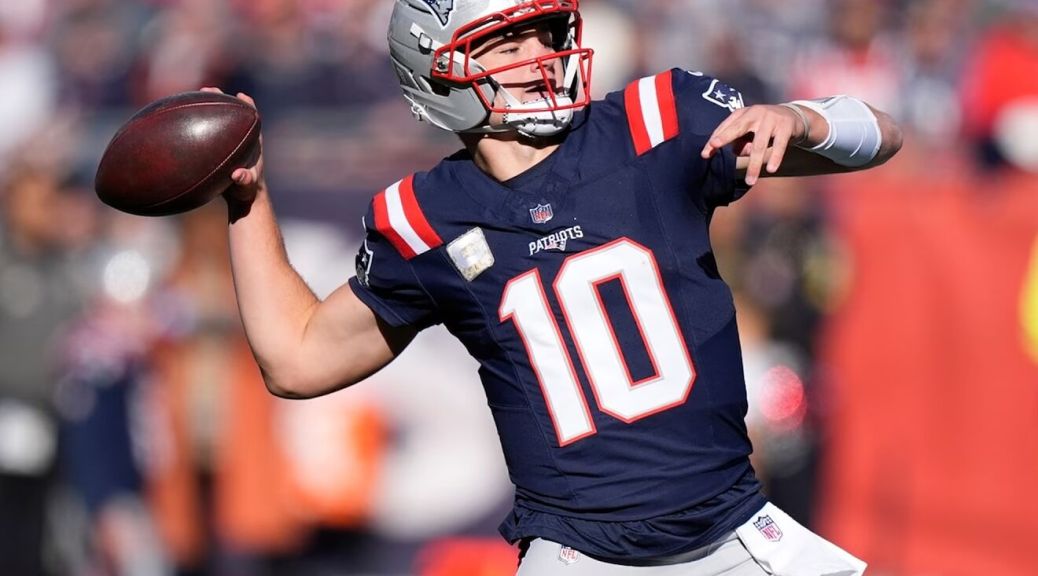
It worked. Vrabel made this team a band of brothers, with everyone buying into his message. New England finished the regular season 14-3 and is playing for a Super Bowl. And a lot of it can be attributed to the MVP-level play of Drake Maye. At only 23 years old, Maye was neck and neck with Matthew Stafford of the Los Angeles Rams in the MVP race, reportedly losing by just one vote before Stafford was announced Feb. 6 as this season’s winner. Maye has shown maturity beyond his years, so despite the official vote, I think the young signal-caller deserved to be named MVP.

In a vacuum, Matt Stafford has better surface numbers. He threw for 4,707 yards and 46 touchdowns, both good for first in the league, as well as the same number of interceptions as Drake Maye (8). Comparatively, Maye threw for 4,394 yards and 31 touchdowns, both top five in the NFL, but less than Stafford. But the National Football League is not a vacuum.

Matthew Stafford’s top receiving weapons are First Team All-Pro wide receiver Puka Nacua and future Hall of Fame candidate Davante Adams. Drake Maye’s top option was a 32-year-old Stefon Diggs, fresh off an ACL tear at the end of last season. Some might argue that Drake Maye had a cakewalk of a schedule (a valid point-the Patriots this season had the easiest schedule of any team in the 2000s). But his QBR (Total quarterback rating) is 77.2 compared to Stafford’s 71.1. QBR factors in the strength of schedule, and Maye still outperformed Stafford and everyone else in the league.

Maye, with a 72 percent completion rate, was the only player in the NFL to have a rate over 70 percent. He set the Patriots’ record for completion percentage, an impressive feat given that Tom Brady played quarterback for the Patriots for 20 years. He also led the league in adjusted completion percentage (completion percentage minus drops, spikes, and intentional throwaways) at 78.8 percent, and completion percentage over expected (CPOE) at plus-9 percent. These are very important numbers because they show he can place the ball where it needs to be with accuracy, and his CPOE shows that he is making the tough throws that other QBs can’t.

It’s not like he’s just checking the ball down and throwing small-gain completions, either. Drake leads the league in yards per pass attempt at 8.9, air yards per pass attempt at 8.7, and yards per drop back at 7.7. He was second in the league in pass plays of 20+ yards. These metrics show his finesse when throwing the deep ball. If he can throw the deep ball with accuracy, then he can move his team down the field more quickly and score faster.

Stafford put up some great numbers of his own, but numbers alone don’t win you the MVP. When it comes down to it, “MVP” stands for “Most Valuable Player,” not “Best Player,” and Maye’s Patriots went from 4-13 last year to 14-3 division champions this season. Stafford’s Rams went from 10-7 to 12-5, which is an improvement, but not the historic 10-game turnaround that Maye led. The Rams also clearly had a better roster at the start of the season, with their aforementioned Pro Bowl-level receivers, a proven offensive line, and a running back with consecutive 1,000-yard, 10-touchdown seasons. Meanwhile, the Pats had an inconsistent offensive line, their best receiver is 32 and coming off an ACL tear, and their running back room consists of veteran Rhamondre Stevenson, who has fumbling issues, and rookie Treveyon Henderson, an explosive back with injury concerns. Both teams had solid defenses, with the Patriots’ unit being a bit better. But the Patriots finished with a better record than Stafford and the Rams, and it is safe to say Drake Maye made the pieces around him better. Stefon Diggs was a 1,000-yard receiver, former 6th-round pick Kayshon Boutte was one of the most improved players in the league this season, and nearly everybody else on the offensive side of the ball contributed.

Along with all that, Drake Maye led the league in scramble yards for QBs, showcasing his dual-threat ability. Plus, he is a leader in the locker room and on the field, holding himself accountable while being in command of every game.

Maye has also developed a cult following here in New England. You can see shirts plainly stating “I (heart emoji) Drake Maye,” with one fan at a Patriots game even drawing that on their bare chest. The “Drake Maye Lover” account on Instagram has gone viral, and he has earned the simple yet slightly confusing nickname Drake “Drake Maye” Maye. Don’t ask what it means; nobody knows, not even Drake. There have even been songs written about him, such as the Drake Maye Anthem and a Drake “Drake Maye” Maye song.

All in all, Drake Maye is my clear pick for NFL MVP. He led the turnaround of this New England Patriots team from the cellar of the league to playing in a Super Bowl, all in a single season. He did it with his great arm, insane accuracy, situational play, and leadership. And when you ask what player was really the most valuable to his team, it, without a doubt, was Drake Maye.

X-Ray Tables and “Injuries”: Inside the NBA’s Betting Scandal

By Greyson Potter, ’29

Staff Writer

For a very, very long time, the cardinal sin of professional sports has been gambling: players making bets on and fixing games for profit. Let’s be honest, who wants to watch a rigged game? If you want to watch something fixed, watch the WWE, not the NFL or the MLB. And pro sports leagues have not been very sympathetic toward those who have been caught gambling. Take the Chicago “Black Sox” of 1919. They intentionally lost the World Series to get a big payout. Eight players on that team were banned for life from Major League Baseball. Perhaps the most famous example of the consequences of athletes’ gambling is the late, great Pete Rose. The MLB’s hits king with 4,192 in his career was found guilty of betting on games, including his own, and throwing them, for years. In 1989, Rose was banned from baseball and the Hall of Fame, a place where someone with 4,000 hits belongs.

In late October, the FBI announced that they had made 38 arrests across eleven states involving illegal poker games and sports betting. Two of these people were NBA coaches, and one of them was an active player. Chauncey Billups, Hall of Fame guard and current Portland Trail Blazers head coach, allegedly worked with the mafia to run fixed poker games. Former Cleveland Cavaliers assistant coach Damon Jones and Miami Heat guard Terry Rozier III were arrested for providing illegal betting information. The news broke just days after the 2025-26 NBA season tipped off, putting a sour taste in the mouths of those happy that basketball is back. The sport has never really seen anything like this, and some reports indicate that the news so far may only be the tip of the iceberg, with an impact much more far-reaching.

Chauncey Billups was just entering his fifth season as the head coach of the Portland Trail Blazers when he was arrested. It was found that he had been working with the mafia to illegally rig poker games. He and his mafia pals would use high-tech gadgets such as rigged shuffling machines, X-ray tables, and special contact lenses to see marked cards. They also had poker chip trays that could read cards and fake cell phones with card analyzers. All of this information, along with how good each player’s hand was, was transmitted to a behind-the-scenes “quarterback” who would process it and send it to the players he or she was working with. The scheme allegedly made $7 million over six years, with one victim losing $200,000 at one of these tables. And if you could not pay your debts, the mafia thugs would not be shy about violently threatening you. Not only that, but Billups was involved in gambling as well. He allegedly gave bettors insider information about his team’s tanking, who he was playing, and who he was not playing in a given game.

Terry Rozier was entering his 10th NBA season, this one with the Miami Heat. He has been there for a couple of years now. But it was Scary Terry’s actions that sparked the whole investigation into the NBA and gambling.

It started all the way back in March of 2023, when Rozier told his childhood friend that he would leave the game early with an “injury” to hit his under bets. This friend, Deniro Laster, told other conspirators what Rozier said so they could all cash in on it. Terry stayed true to his word, leaving the game after about nine minutes. Thousands of dollars came in on his unders because of this, sparking the NBA to look into it. There was another instance in January 2024, when Rozier said he would leave the game with a leg injury. Sure enough, he left that game with a leg injury, and a considerable sum of money came in on his unders again. The NBA had been investigating him, but had supposedly cleared him to continue playing.

Damon Jones was the third person involved with professional basketball to be arrested. He was a former player and assistant coach with the Cleveland Cavaliers and the Los Angeles Lakers. He was more on the gambling side of things, where he supposedly told some conspirators to make a large bet on Milwaukee one night, because a specific player would be out. LeBron James showed up on the injury report that night, and Los Angeles lost again, with lots of money coming in on this loss.

Sports betting has always been a disgusting practice for a professional athlete, something frowned upon by all. It can tarnish a reputation and ruin a career in the blink of an eye. It happened to Pete Rose. And now it could very easily happen to someone like Chauncey Billups, who was inducted into the Naismith Memorial Basketball Hall of Fame. If he is found guilty, his reputation and how people remember him will be changed for the worse, forever. The same goes for Terry Rozier and Damon Jones. Neither of them was going to the Hall of Fame. But if found guilty, they will forever be associated with one of the biggest gambling scandals in the history of professional basketball. None of these people will ever be associated with the NBA again if convicted.

Not exactly the way I would want to go out.

Beantown vs. the Bronx: The Red Sox-Yankees Rivalry

By Greyson Potter, ’29

Staff Writer

If you know anything about the Boston baseball scene, you’re probably familiar with our rivalry with the New York Yankees. Intense is an understatement. Sox and Yankees fans (and many players) genuinely despise each other. From the days of Babe Ruth and Ted Williams vs. Joe DiMaggio to the A-Rod era, every generation has had its defining moments in this storied feud. This year, a new chapter was added as the Red Sox and Yankees faced off in the Wild Card round of the Major League Baseball playoffs. The Yankees ended the Sox’s season, only to be eliminated by Toronto. With both teams now out of the running, it feels like the right time to reflect on the rich, 100-plus-year history of this legendary clash and consider where it might be headed next.

This story starts way back in the early 19th century. The Red Sox were a dominant force in the early days of the MLB, winning World Series titles in 1903, 1912, 1915, 1916, and 1918. Many of these championship teams were led by Boston’s star lefty pitcher, who could also hit. His name was Babe Ruth. At the same time, the Yankees were the bottom feeders of the MLB and had no World Series titles to show. But everything changed in 1916, when a man named Harry Frazee, the anti-Christ to Sox fans, bought the team. Frazee was a Broadway producer. His shows were successful when he bought the team, but by 1920, many of his shows had flopped, and Frazee was swimming in debt. He needed a way to pay off all of his bills, so he decided to trade away some of his baseball players in exchange for cash. Fortunately for him, the Yankees owner, Jacob Ruppert, had plenty of money and was very willing to give it to Frazee in exchange for his championship-winning players. So Harry and Jacob met up and talked shop for a while, and Harry eventually decided to sell Babe Ruth to Jacob for $100,000, paid in four installments of $25,000 with 6 percent interest. Little did they know that this would change the course of baseball history forever.

Three years later, the Yankees, led by Babe Ruth and his staggering .393 batting average and 41 home runs, won their first World Series title, kicking off decades of dominance. By the year 2000, the Bronx Bombers had claimed 25 championships. No other team even had double-digit titles at that point. Meanwhile, Boston’s Olde Towne Team took a very different path, breaking the hearts of generations of fans. The Red Sox wouldn’t win another World Series for 86 years, until the self-proclaimed “Idiots” of 2004 finally changed the narrative. The Curse of the Bambino was just beginning.

Babe Ruth won four World Series championships during his time in the Bronx and retired with a staggering 714 career home runs, by far the most in league history at the time. Even after Ruth, the Yankees sustained their excellence. There were the legendary days of switch-hitting Mickey Mantle, and the historic 1961 season when Roger Maris became the first player to hit more than 60 home runs in a single year, finishing with 61. During this era, there wasn’t much of a true rivalry between the two teams. The Yankees were consistently excellent, while the Red Sox were, more often than not, far from it.

But the Red Sox got a beautiful ray of sunshine in 1939, when Teddy Ballgame made his Major League debut against the Yankees. Ted Williams, the man whose one desire in life was to be remembered as the greatest hitter who ever lived, brought something to the Sox that they had not experienced in years: success. During the 1940s and 1950s, the Yankees and Red Sox began to compete more closely. The Yanks were led by Joe DiMaggio, whose brother, Dom, played for the Red Sox. Joe and Ted were the cream of the crop in baseball, with one constantly being compared to the other. Williams had the numbers; DiMaggio had the rings. Teddy hit .406 in the 1941 season, becoming the last player to hit .400 in a season, along with 37 home runs and 120 RBIs. But Joe DiMaggio edged him out for MVP, hitting .357 with 30 taters and 125 RBI. The difference was that while Williams’ Red Sox were 84-70, a respectable record, DiMaggio’s Yankees were 101-43 and went on to win the World Series. So, despite Williams having the better career numbers and being part of the 500 home run club, many argue that DiMaggio was better because he got the championships. In fact, Ted Williams only made one World Series appearance in his entire 19-year career. It was 1946, and Teddy Ballgame had just returned from three years of war service. He won MVP in his first year back and led the Red Sox to the World Series, where they would play the Cardinals. But in an exhibition game just days before the Series, Ted was hit by a pitch, breaking his elbow. He still played in the World Series, but hit a measly .200 with zero extra-base hits and a single RBI. The Sox lost in seven games. Williams would never make it back to baseball’s grandest stage. This was the first time that the Curse of the Bambino struck the Red Sox hard.

The Yankees and Red Sox would not face each other in the playoffs again until 1978, and the stakes could not have been higher. At the end of the season, the Sox and Yankees were tied for first place in the American League East. A one-game tiebreaker was needed. The winner would advance to the playoffs, while the loser would pack their bags for home.

The game would be played at historic Fenway Park in Boston. The Sox had Hall of Famers Jim Rice, Carl Yastrzemski, and Carlton Fisk hitting 3-4-5, while the Bombers had Reggie Jackson in the 4 hole and Goose Gossage at the back end of their bullpen. The Sox took a 2-0 lead into the top of the seventh inning, with starting pitcher Mike Torrez on the bump. Two men were on base, and nine-hole hitter Bucky Dent was at the plate. Dent was a light-hitting, defensive-minded shortstop who had hit a mere four home runs all season long. He got a fastball from Torrez, and he sent it far over the iconic Green Monster to give the Yankees a 3-2 lead. They would go on to win, 5-4. This cemented Dent as one of the biggest villains in Boston baseball history and earned him the nickname Bucky (bleep)ing Dent. The Curse of the Bambino was in full force.

Fast-forward to 2003, and the Red Sox and Yankees were tied at 3-3 in the American League Championship Series. Everything rested on Game 7 in the Bronx. The pitching matchup featured Red Sox ace Pedro Martinez, a historically good pitcher for the team, versus Roger Clemens, the 41-year-old ace for the Yankees in his final season. Clemens had spent years with the Red Sox, including their 1986 World Series loss. Pedro had some of his best stuff that day. He threw seven innings and led his team to a 5-2 lead in the top of the eighth. He was at 105 pitches. Now, the stats showed that Pedro’s performance severely dropped off after 100 pitches. He sent a kiss to the heavens, walking off the mound in the seventh inning, as he always does once he is done pitching. He got all his high-fives once he was back in the dugout, as he always does after a start. But when the eighth inning rolled around, Red Sox manager Grady Little asked Martinez if he wanted to go back out. Martinez wasn’t going to say no; he was too competitive. Grady had a man warm in the bullpen, but despite the numbers saying to avoid this at all costs, he sent Pedro out to pitch the eighth inning.

Grady’s decision would cost him not only his job but also his legacy in Boston. Pedro struggled, and the Yankees tied the game. That was when Grady decided to pull him. The game went to extra innings, and at 12:16 AM, in the bottom of the 11th inning, knuckleballer Tim Wakefield was on the mound for the Red Sox. Wake threw a knuckleball that didn’t knuckle to Aaron Boone of the Yankees, and Boone hit to the midnight moon. Game over. Red Sox lose. Grady Little was replaced by Terry “Tito” Francona as manager.

That offseason, the Red Sox knew they needed to make some changes. But the back-and-forth between them and the Yankees was unlike anything we have ever seen. Pedro was getting older, and the Red Sox needed another ace. Curt Schilling, a World Series champion with the Arizona Diamondbacks, was on the trade market. He was also being pursued by the Yankees, whom he had publicly stated he would love to play for. But Boston general manager Theo Epstein, the youngest GM in baseball history, swooped in, wooed Schilling, ate Thanksgiving dinner with him, and traded for him on November 28.

But Schilling was not the prime target for Boston that offseason. The best shortstop that the game had possibly ever seen, Alex Rodriguez of the Texas Rangers, was on the trade market too. He was the highest-paid player in the history of baseball at the time, but couldn’t even deliver the Rangers a playoff berth. They were looking to get out of that massive deal they gave to A-Rod. The Red Sox had their own elite shortstop, fan favorite “No-mahh” Garciaparra, who had declined an extension with the Red Sox, and they also had the second-highest-paid player in baseball, Manny Ramirez. Manny was an outstanding player, but he could be a prima donna in the clubhouse and never looked like he cared about anything. So Theo met with Alex, and they became very friendly. Alex was charming and charismatic, precisely what the Red Sox needed. A deal was agreed upon between the Sox and Rangers, but the MLB Players’ Union rejected it. Boston had attempted to renegotiate A-Rod’s contract, which the Union opposed. Rodriguez was still in Texas, Manny was still in Boston, and Nomar was unhappy about almost being traded away.

The Yankees made some moves of their own, too, signing big names like Gary Sheffield. But it was not until January that the Yankees would pursue one of the biggest deals in baseball history. In January, Aaron Boone, the man who sent the Red Sox packing in the 2003 ALCS, was playing a game of pickup basketball. He tore his ACL in that game. Now the Yankees were stuck without a third baseman for the whole season. A-Rod was on the trade block, and the Yankees definitely had the resources to pay him. The only problem was that the Yankees already had a shortstop, Derek Jeter. Owner George Steinbrenner and GM Brian Cashman spoke with A-Rod, and he agreed to play third base for the Yankees. The deal was done around Valentine’s Day, 2004. Leadoff hitter Alfonso Soriano was sent to the Rangers, and the Yankees got Alex Rodriguez.

Red Sox fans were devastated. It’s hard not to be when you have the chance to acquire one of the greatest players the game has ever seen at his prime age of 28, then have it slip through your fingers. Still, the Sox did not have a bad offseason at all. They traded for Curt Schilling, who made a scary ace combo with Pedro Martinez. They signed the American League leader in saves, Keith Foulke, to serve as closer. This whole drama would lead to one of the most memorable regular and postseasons in baseball history.

Spring training 2004 arrived, and although it was usually a quiet time, it already felt like September. Garciaparra was clearly upset with the organization, feeling betrayed after they tried to trade him. He was sidelined with a mysterious case of Achilles tendinitis and would end up missing the first 57 games of the season. Manny Ramirez was also upset, with rumors suggesting Pedro Martinez believed Boston was trying to “replace” him with Schilling. What would a Red Sox season be without drama?

The first spring training game for the Red Sox was against the Yankees. The game was a sellout, with hordes of rivals traveling down to Florida for a game that meant nothing, where most starters were going to sit on the bench. The Sox and Yankees would play each other multiple times in spring training, and it would be much of the same, foreshadowing almost every rivalry game that season.

Pedro Martinez was the opening day starter. He had a rocky outing and showed some signs of maybe having to be replaced by Schilling. Nomar did not play, and the Red Sox lost, 7-2. They were up-and-down to start the season, and sulky Nomar, who had been sitting by himself on the bench for over a month and a half, returned to the lineup on June 10th. Sox Nation thought this would provide the team the spark it needed to really live up to its potential, but instead, it only made things worse. Nomar was never a Gold-Glove caliber shortstop, but his defense that season was lackluster. Additionally, he was cold with the bat, his most potent weapon. The team struggled with his sulky attitude and subpar play, and we had a tough June. Finally, in July, Theo Epstein knew something had to be done. So, to the dismay of many of the Fenway faithful, young Theo traded Nomar, the beloved fan favorite for so many years, to the Chicago Cubs. He got first baseman Doug Mientkiewicz and shortstop Orlando Cabrera, two top defensive players at their respective positions that would plug some holes in the Red Sox’ spotty infield defense.

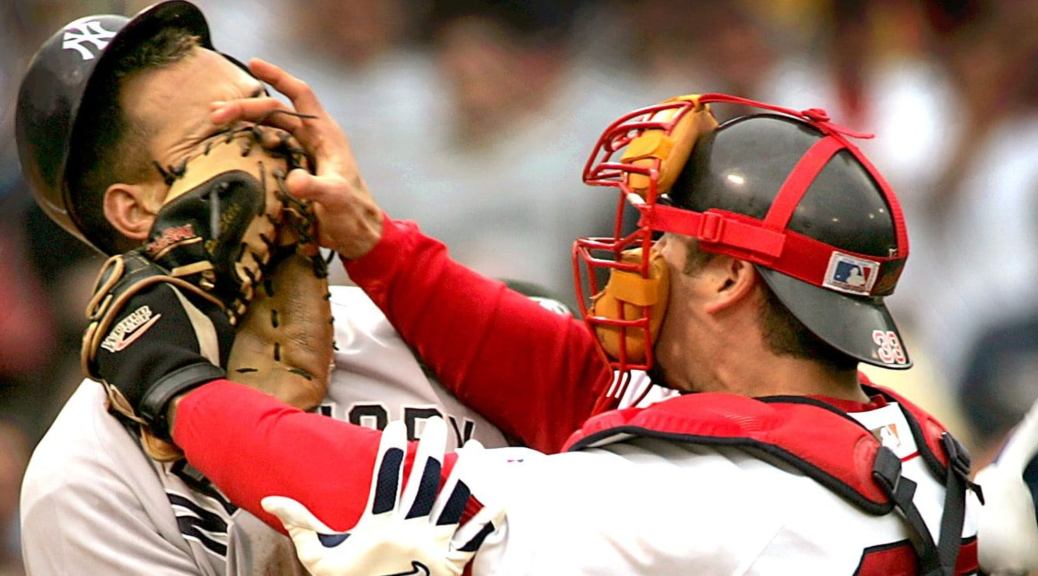
That was not the only memorable event from July 2004, however. On July 24, the man the Red Sox failed to acquire in the offseason helped make a portrait that would be framed in New England dens for many years to come. Bronson Arroyo was pitching for Boston against the Yankees. It had been a pretty chippy game, but it climaxed when Arroyo hit Alex Rodriguez with a pitch. A-Rod was not happy, to say the least, and had some words for Arroyo. Jason Varitek, the Red Sox catcher, did not appreciate what Rodriguez had to say to his pitcher. So he stepped up to A-Rod and punched him in the face with his catcher’s mitt, sparking a benches-clearing brawl. It was a memorable moment that really sparked the Red Sox team and sent them on the right path for the rest of the season.

The Sox were unstoppable after Varitek punched A-Rod. Schilling was as good as advertised, David Ortiz and Manny Ramirez were mashing in the heart of the order, and the defense had been cleaned up. We came very close to catching the big, bad Yankees in the American League East division race. One of our last series of the season was against the Yankees. Pedro Martinez pitched and got struck, resulting in one of his worst outings of the season. Pedro had been shaky against New York all year long. When asked about it post-game, he said, “…I guess I just have to tip my cap and call the Yankees my daddy.” Not the best thing to tell if you ever want to return to Yankee Stadium.

It was now playoff time. October baseball. The Red Sox clinched a Wild Card spot and took on the soon-to-be MVP Vladimir Guerrero and the Anaheim Angels in the American League Division Series. The Yankees had won the AL East and were playing a series against the Minnesota Twins, with soon-to-be Cy Young Award winner Johan Santana. We swept Anaheim, with Big Papi and Manny delivering many clutch hits. New York won their series as well.

The stage was set. One year after Grady Little’s stupid mistake and Aaron Boone’s heartbreaking home run, the Red Sox and the Yankees were meeting in the ALCS. The ace for the Red Sox, Curt Schilling, had hurt his Achilles tendon in the series against the Angels. He tried to pitch in game one of the Sox-Yankees series, but he was essentially pitching off one leg and got beaten up. The Red Sox lost, 10-7. Game 2 was a low-scoring affair, with Pedro Martinez receiving “Who’s your daddy?” chants throughout the game. Red Sox lose, 3-1. Game 3 was just embarrassing. The Yankees pounded the Sox in a demoralizing 19-8 win.

We were down 3-0 in a best-of-seven series. All the Yankees had to do was win one of the next four games, and they would be back in the World Series. No one in the history of Major League Baseball had come back from a 3-0 deficit. Some teams would simply accept that the Yankees are better. But not the Red Sox. Records are made to be broken, right?

Before game 4 in the Bronx, Kevin Millar went around during warm-ups, hyping up his teammates and telling them, “Don’t let us win tonight.” Derek Lowe was on the mound for the Red Sox, and he had been shaky at best during the regular season. But he pitched a solid game and kept his team close. It was 4-3 Yankees heading into the 9th inning. New York had Mariano Rivera, the best closer in baseball history, on the mound. He walked Millar, who was pinch-run for by the speedy Dave Roberts. Roberts did not play much during the season, but he was one of the fastest in the league. He was one of those players who everybody knew was stealing, yet he still managed to get to second. And in this case, everybody did know he was stealing.

Game 5 was very reminiscent of Game 4, with Rivera coming in for the Yankees in the ninth with a 4-3 lead. Again, he blew it, this time on a Jason Varitek sacrifice fly that would score Dave Roberts. The game went 14 innings this time, and Big Papi delivered again, with a walk-off single well into the next day.

Curt Schilling was scheduled to pitch in Game 6, but his Achilles was still hurt. He went to a doctor that morning, who practically stapled his tendon together in an effort to enable him to pitch. Early on in the game, however, whatever was holding Schilling’s ankle together came apart. No bother; Schilling proceeded to go out and deliver a masterful 7-inning effort with a giant blood stain on his sock, going down in Boston lore as the “Bloody Sock Game” that would lead the Red Sox to tie the series at 3-3, heading back to New York.

Game 7 was over as soon as it started. Papi hit a two-run bomb in the first inning, and Johnny Damon hit a grand slam in the fourth to give Boston a 6-0 lead. The Red Sox held on to win 10-3. They were the first MLB team to ever come back from a 3-0 series deficit and win. They had finally beaten the hated Yankees. Unsurprisingly, David Ortiz took home the honor of ALCS MVP.

The World Series, somehow, oddly felt like a formality. Everyone knew the Red Sox were going to win. The Cardinals were the best team in the National League, featuring one of the scariest top four hitters in the MLB, but their pitching was not very strong. The Red Sox swept the team that Ted Williams lost to in his only World Series appearance, with Manny Ramirez taking home World Series MVP honors.

They had finally done it! The Red Sox had reversed the Curse of the Bambino and won their first World Series in 86 years. Many people never even lived to see the Red Sox win a World Series. Most could not remember the last time they won it all, if they were even alive. This title changed a fan base. The team was no longer the pitiful, cursed Red Sox that were always so close, but just not quite there. They were the Red Sox that won the World Series, starting an era of dominance that included titles in 2007, 2013, and 2018. The only World Series the Yankees would win with Alex Rodriguez was in 2009. There would be no more “1918” signs or chants, no more snarky curse remarks from Yankees fans. New York had accomplished arguably the biggest collapse in league history and was thoroughly embarrassed. Somewhere up in the sky, Babe Ruth, the Great Bambino, was smiling down upon Red Sox Nation.

The rivalry has certainly quieted down in recent years. The Sox have won the World Series, but the Yankees haven’t been winning as much. But this year, the Red Sox and Yankees played each other in the American League Wild Card Series. The Red Sox took game one of the best-of-three series in a low-scoring pitchers’ duel between the Red Sox’s #1 starter, Garrett Crochet, and the Yankees’ #1, Max Fried. The Yankees’ inconsistent bullpen lost them the game, though. Carlos Rodon was great for the Yankees in game 2, and the Red Sox pulled starter Brayan Bello in only the third inning. Garret Whitlock, our lights-out setup man, lost us the game, 4-3. Game 3 was sure to be exciting. Winner takes all. Two rookies were on the mound. Conelly Early was the starter for Boston, who had a mere four career major league starts under his belt. Walpole, Mass., native Cam Schlittler was pitching for New York. Schlittler’s fastball was electric that night. He put up one of the best postseason pitching performances ever, becoming the first pitcher to go 8 or more innings with 12 strikeouts and zero walks in a playoff game.

Hopefully, one day soon, the rivalry will be as intense as it was back in the glory days of the early 2000s. Both teams appear poised to be playoff contenders for years to come, boasting exciting players like Roman Anthony for Boston and Aaron Judge for New York. This rivalry is undoubtedly one of the strongest and most brutal clashes in the sports world.