
By Hannah Lynch, ’30
Staff Writer
As someone who is an avid reader and appreciates the ability to read whatever books I want, the banning or censorship of books is a major concern. “Banned Books Week” is sponsored by the American Library Association and held every October. It is a week that highlights the importance of the freedom to read, efforts to remove books from schools and libraries, and the harms of book censorship.
Why do people try to ban books?
The banning of books has been going on for centuries. The earliest book banning in the United States dates back to 1637 when the Puritan government prohibited Thomas Morton’s “New English Canaan,” which criticized Puritan beliefs. In modern society, books are typically challenged with the best intentions: to protect others, frequently children, from difficult ideas and information. Challengers argue that the book can still be read, just not in school or the public library. Opponents of the bans, though, say that while parents have the right to choose appropriate books for their own child, they should not be able to keep the book from all students. A significant reason why many people oppose the idea of banning or censoring books is the belief that if everyone had the same ideas, there would be no improvement or development in the world. Silencing opinions is something that will not help society but rather harm it, critics of book banning argue. When groups or organizations try to ban books, their goal is to remove that book from schools, libraries, and public circulation. There are many motives for why people seek to ban books. Among some of the most common, according to the American Library Association, are political, racial, or religious concerns.
What types of books are being banned?
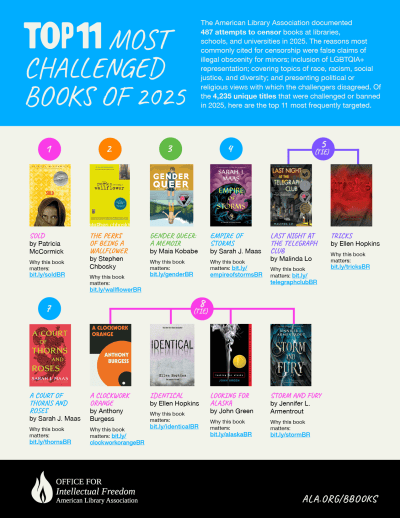
Books in the U.S. that are most commonly challenged or successfully banned are Young Adult (YA) fiction, titles that contain LGBTQ+ or identity themes, classics, and dystopian literature. Among other often-challenged topics are race or political/religious themes. For example, dystopian novels such as “1984” and “Fahrenheit 451” are commonly banned due to the fact that their main themes follow ideas that challenge authority, break social norms, and expose truths about power and control. Racial and religious books such as “The Hate You Give” or “The Handmaid’s Tale” are often targeted because critics feel a certain race or religion is being condemned. Books like “The Perks of Being a Wallflower” and “Last Night at the Telegraph Club” are called anti-Christian or obscene because of their focus on gay characters.
Who is banning books?
Generally in the United States, books are censored or banned by school boards, state legislatures, and government officials. School boards and administrators argue that they ban books to protect kids from harmful content. This can include sexual content, LGBTQ+ themes, or if they perceive it to not be age appropriate. In censoring these books, school officials are often overriding the librarians and teachers who have selected them for readers. In state legislatures such as Texas and Florida, book banning can occur for many different reasons including personal beliefs and ideological agendas. Lawmakers can also be responding to political pressure from their party or the public. Restrictive laws lead to preemptive compliance, with schools and towns pulling hundreds of books out of fear of state sanctions.
How can you fight book bans?
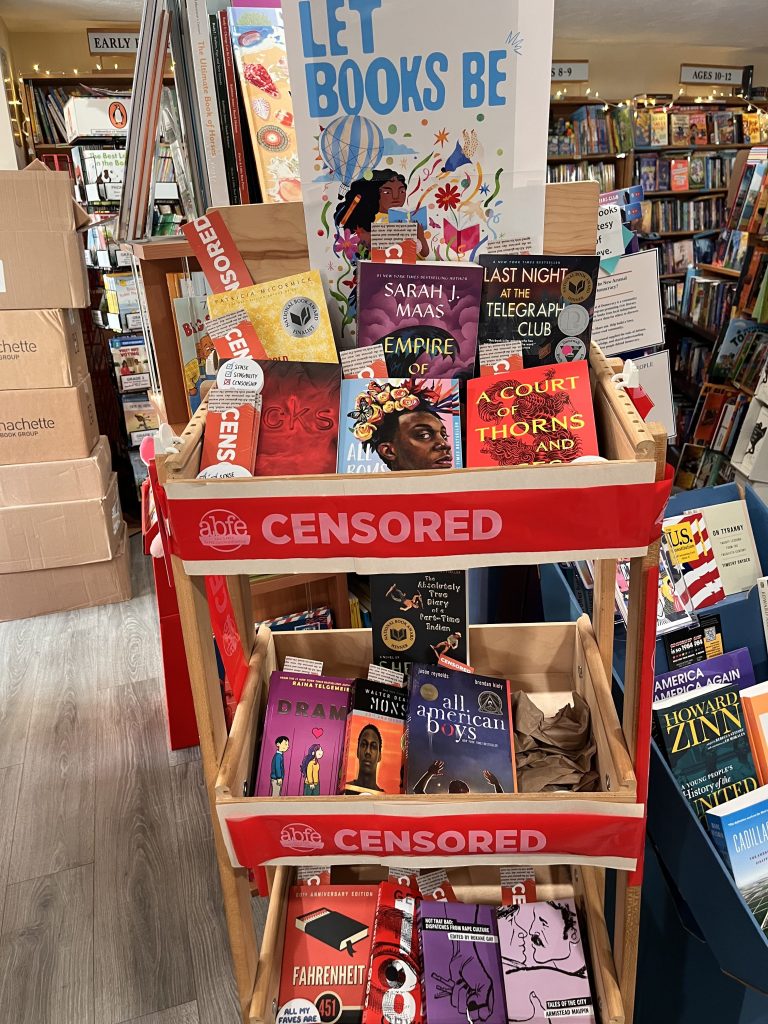
Right here in Hanover, we have bookstore owners that are raising awareness for Banned Books Week. Janet Bibeau, who owns Storybook Cove on Washington Street, set up a section of the store with large bins containing multiple books often targeted by bans. The purpose of this display is not only to advertise these books, but is also to help fight against the banning of literature. There are countless ways you can individually help fight against the banning of books too. First, you can start by reading anything you want! Reading is so vital to society because it allows you to read other opinions and experience different worlds just within your head. Reading a book from an author who may have a different perspective gives us the ability to look outside of what we believe in and learn about the different standpoints of others. It is crucial to the fight against a uniformity of opinions and beliefs. The whole world should be able to broaden their horizons and learn about different cultures and religions. One final way you can help advocate and stop book banning is to support your local library and get a library card. The more people reading, the more opportunities for different viewpoints and opinions to be read.

