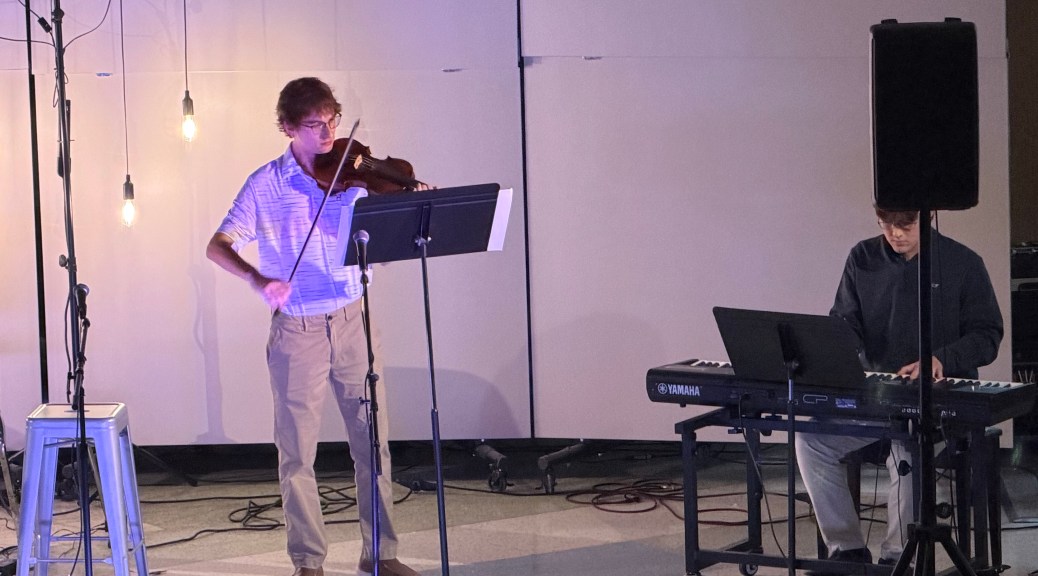
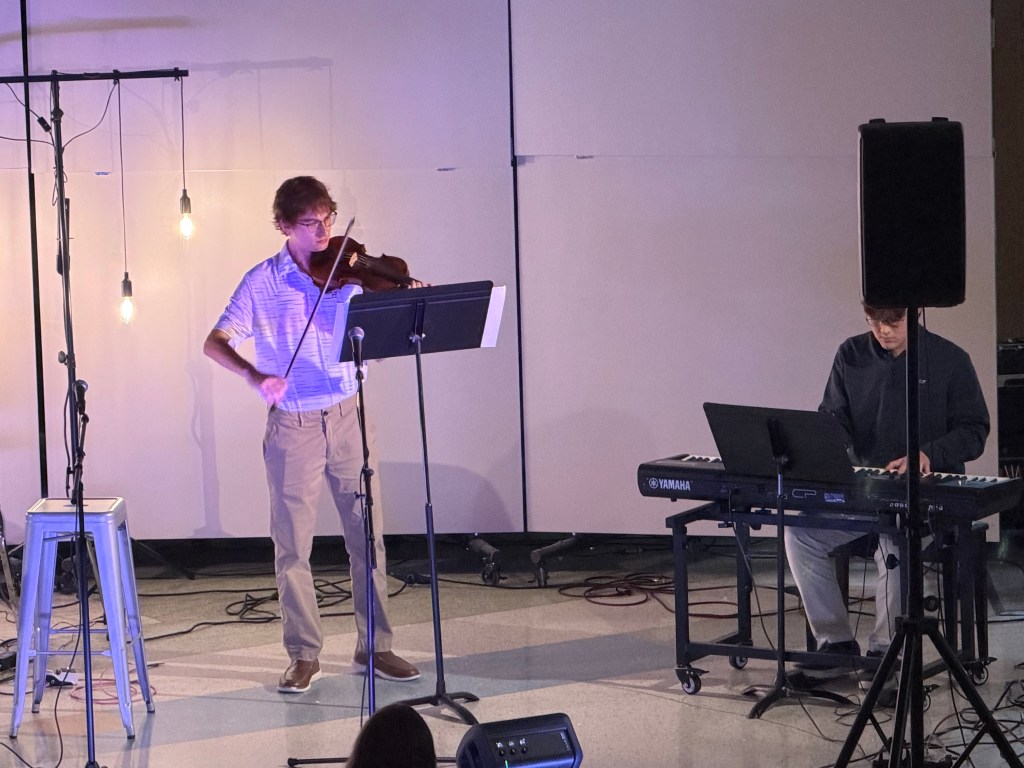
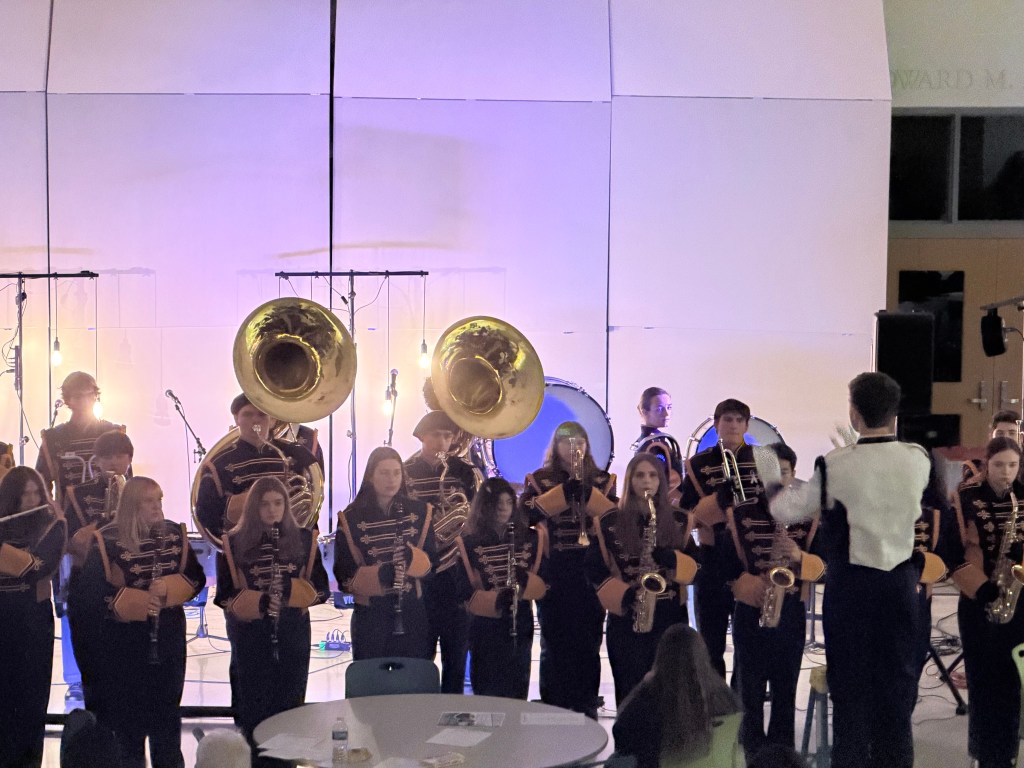
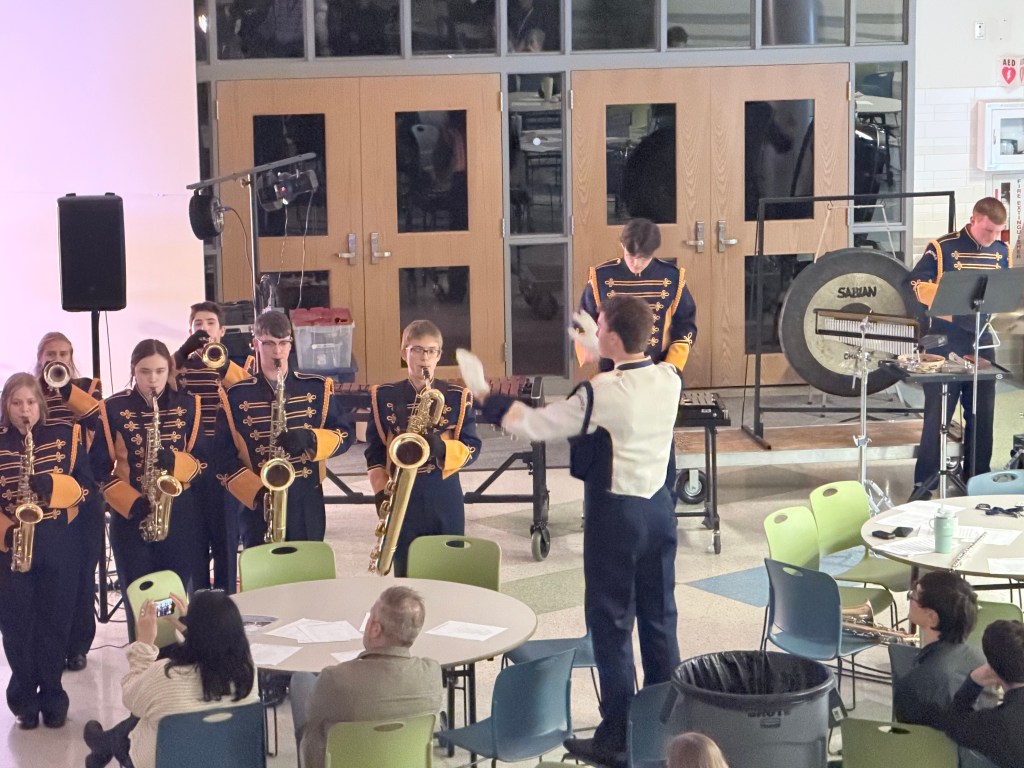
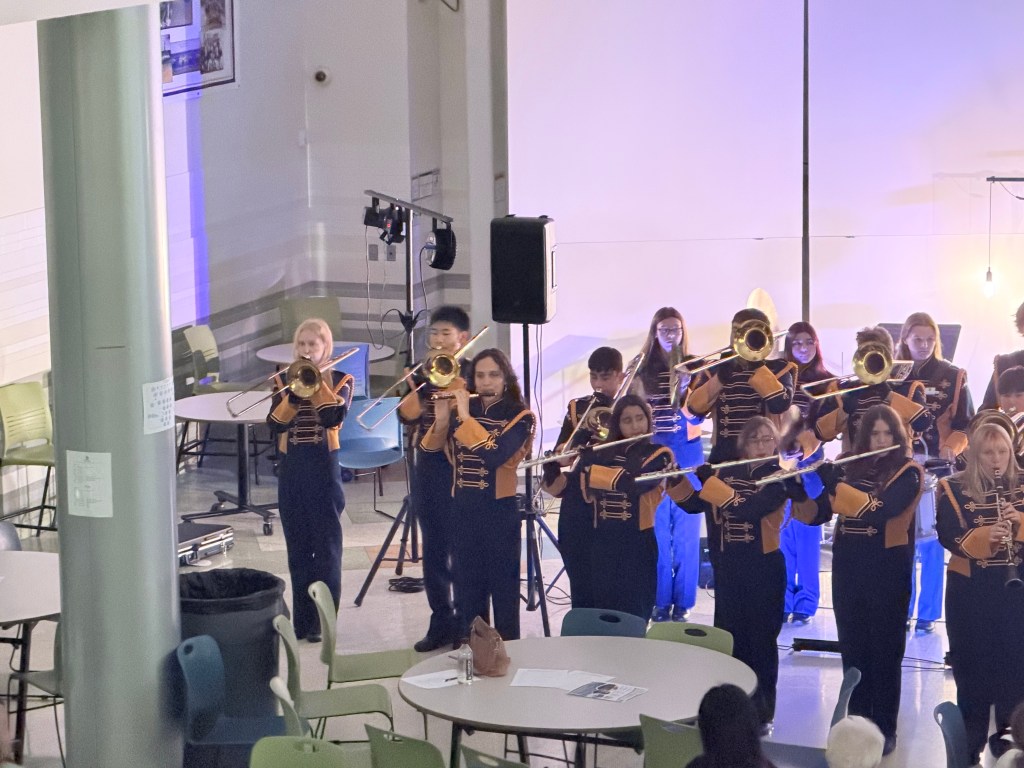
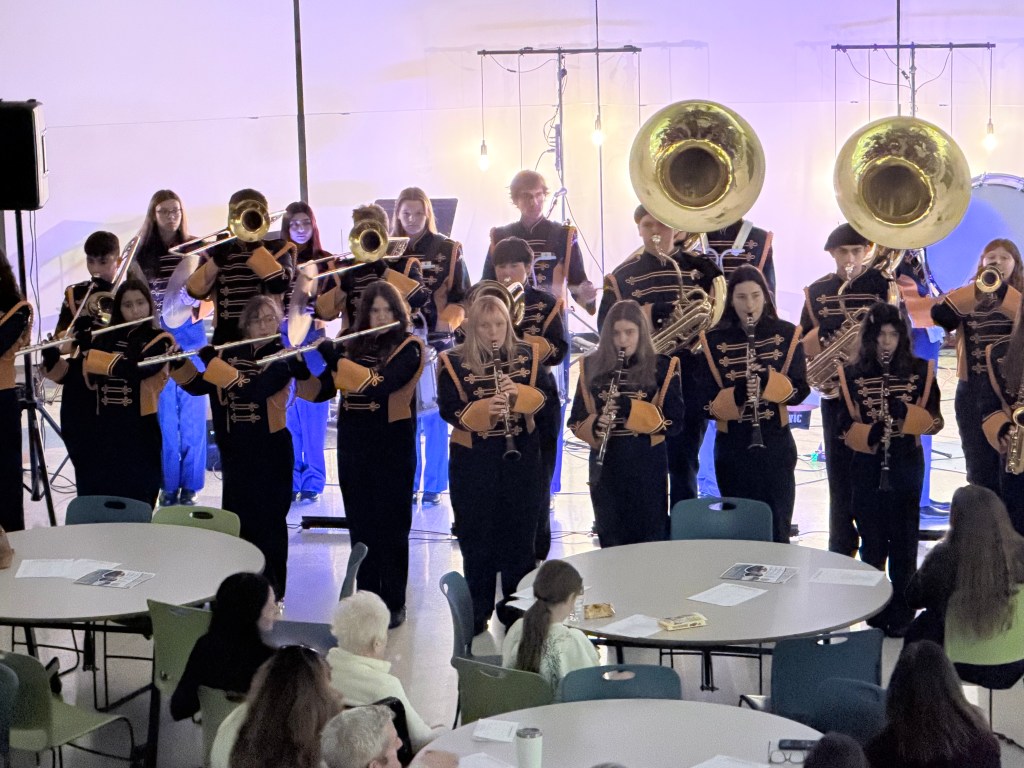
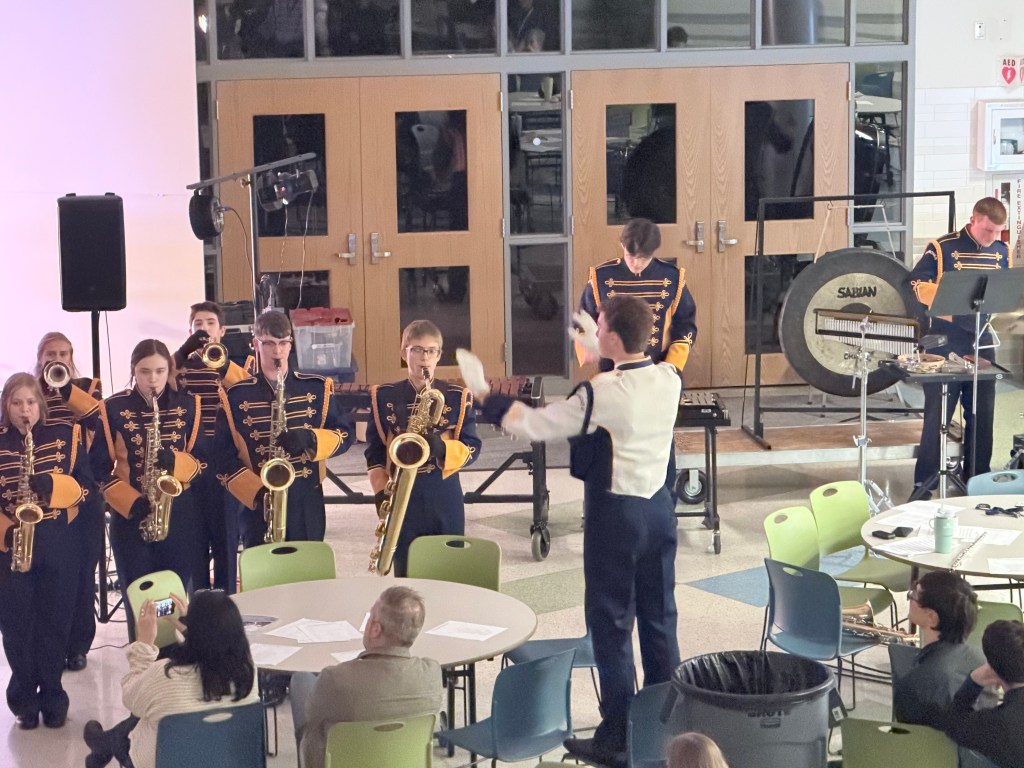
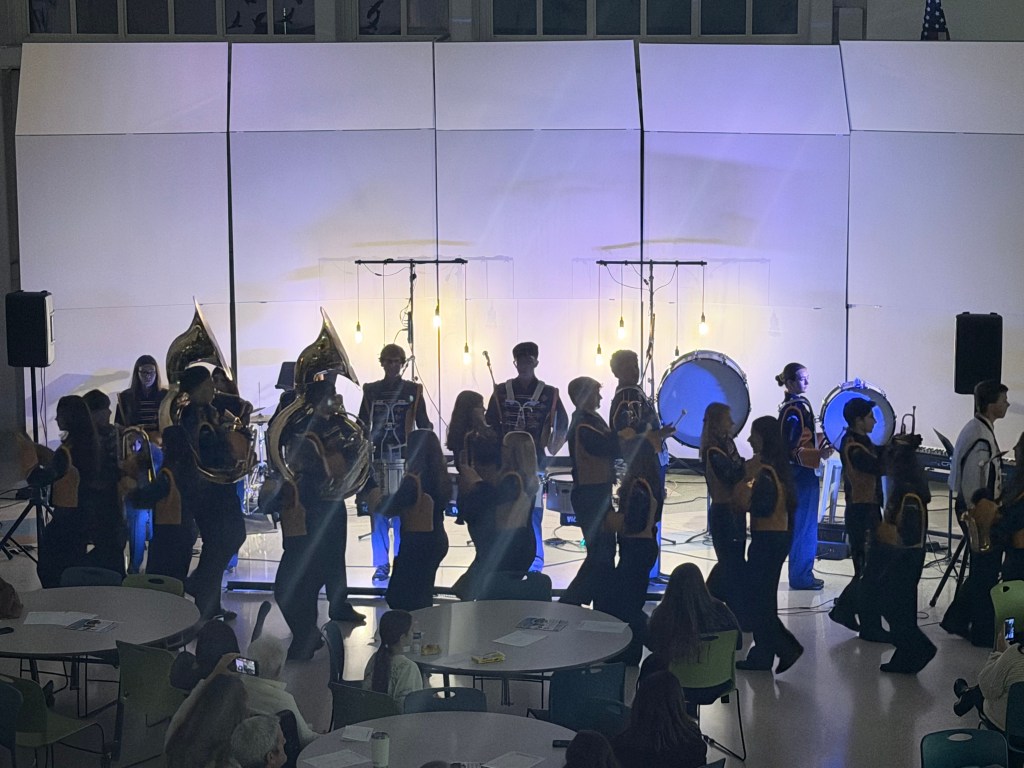
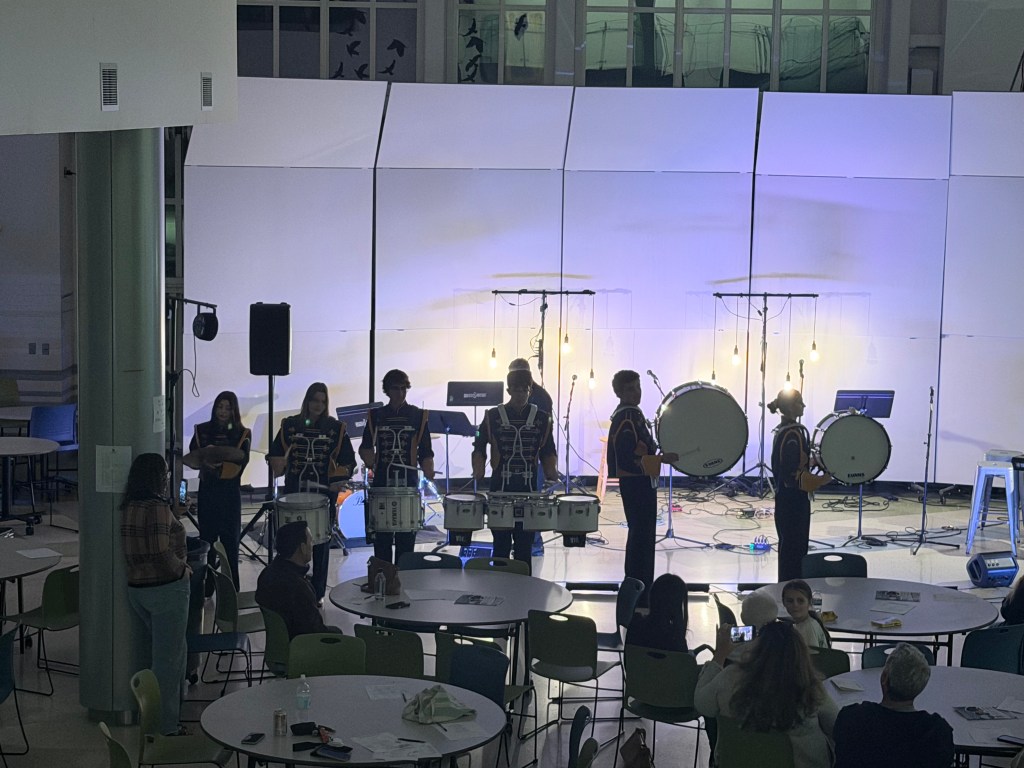
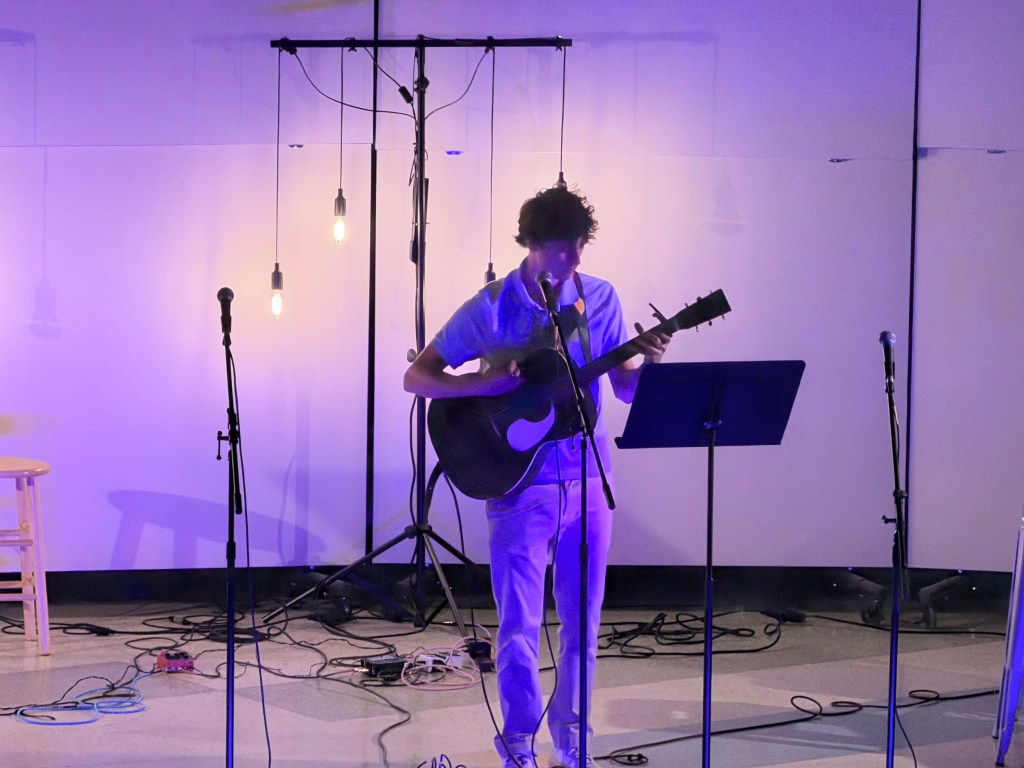
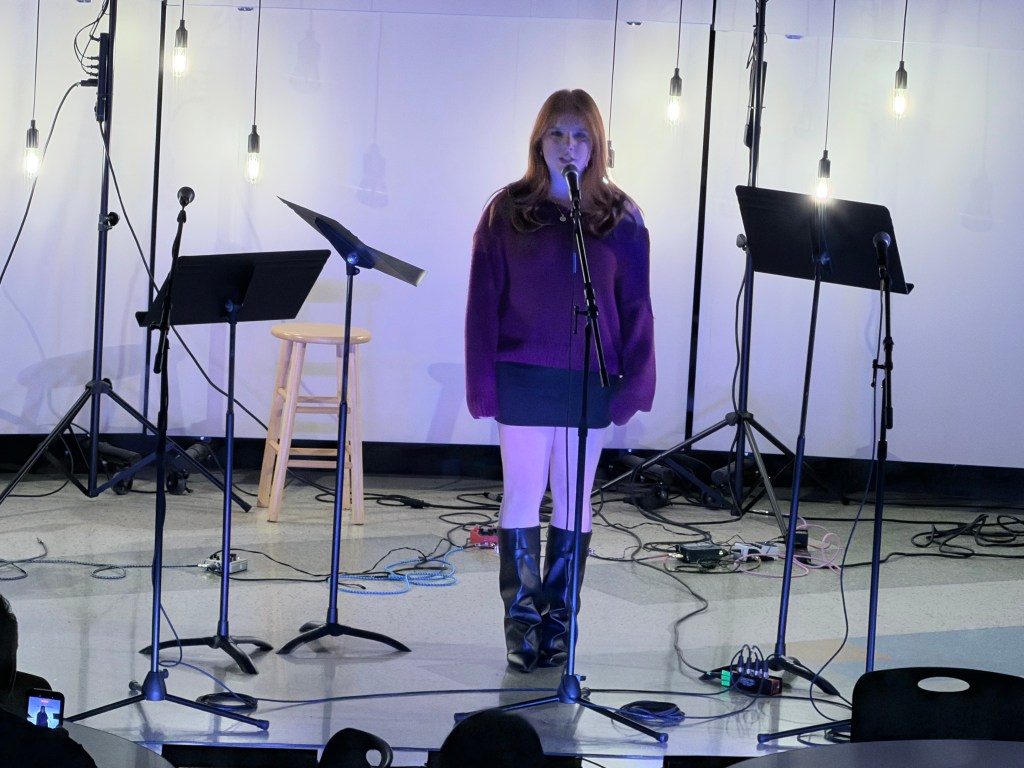
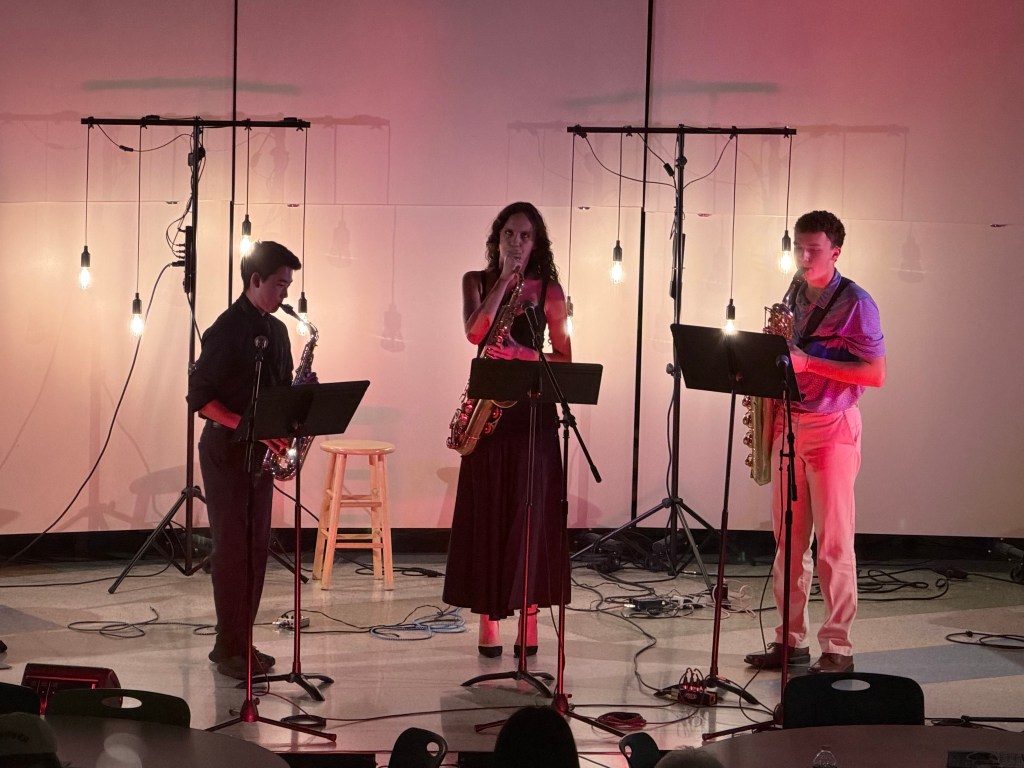
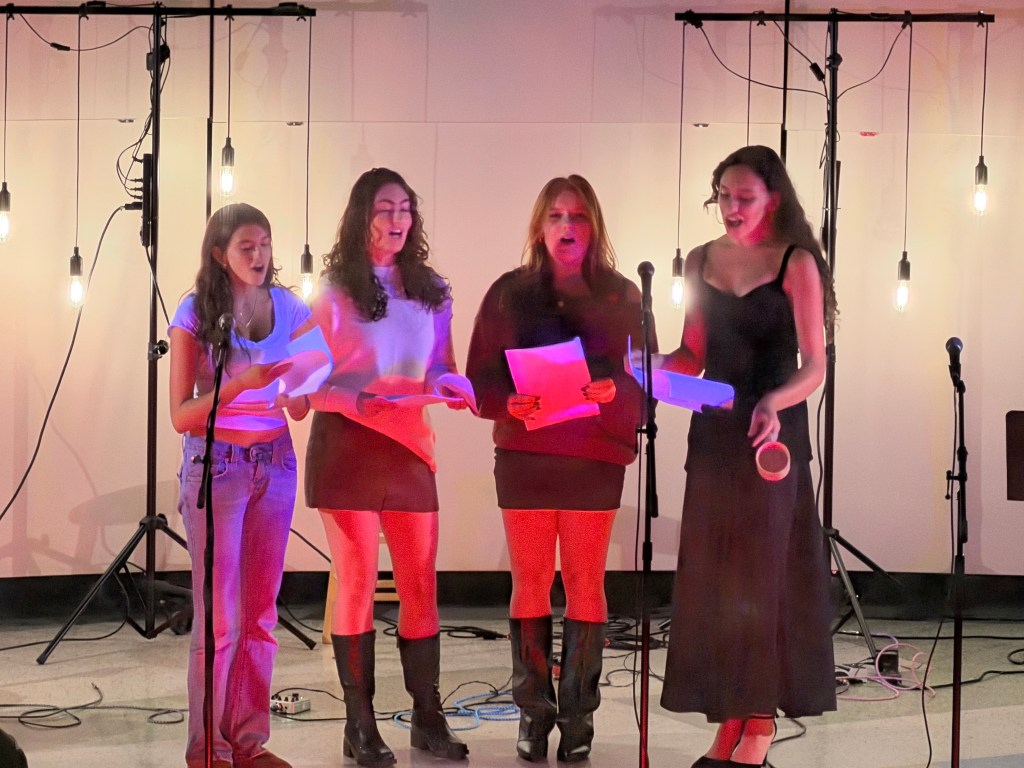
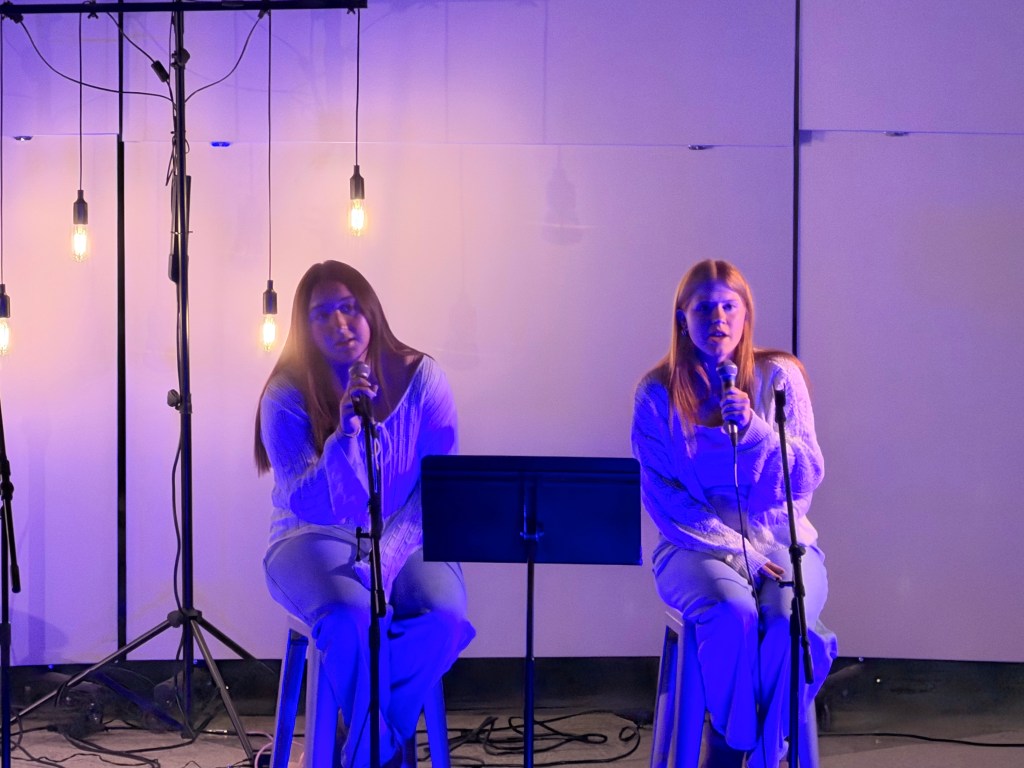
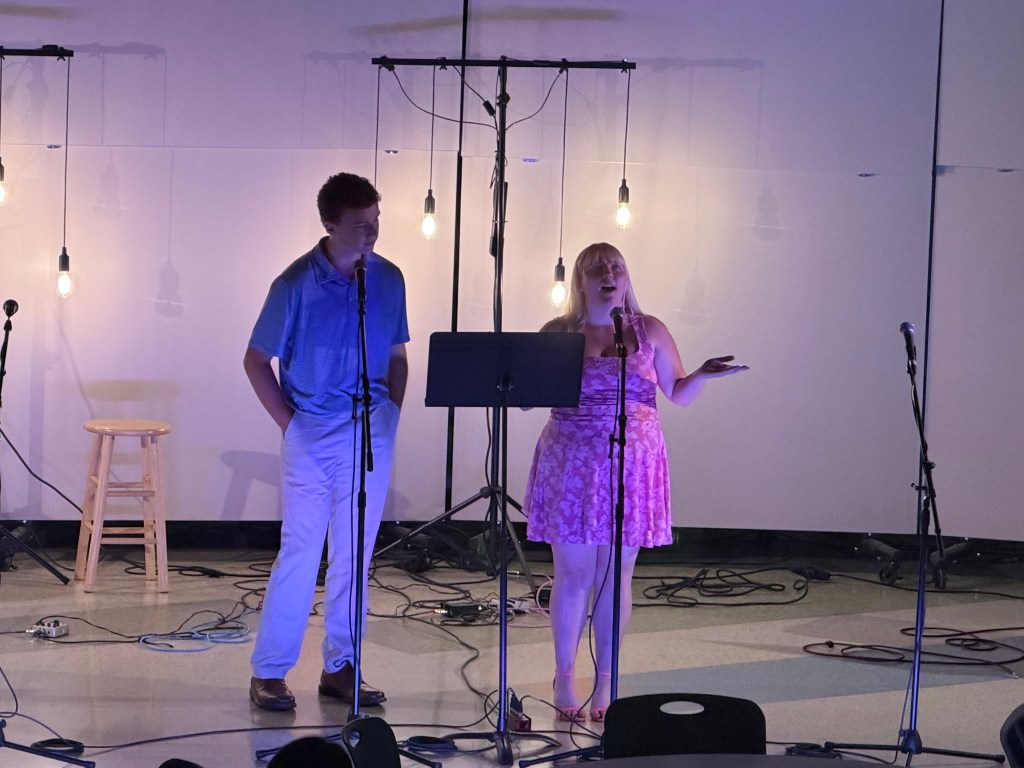
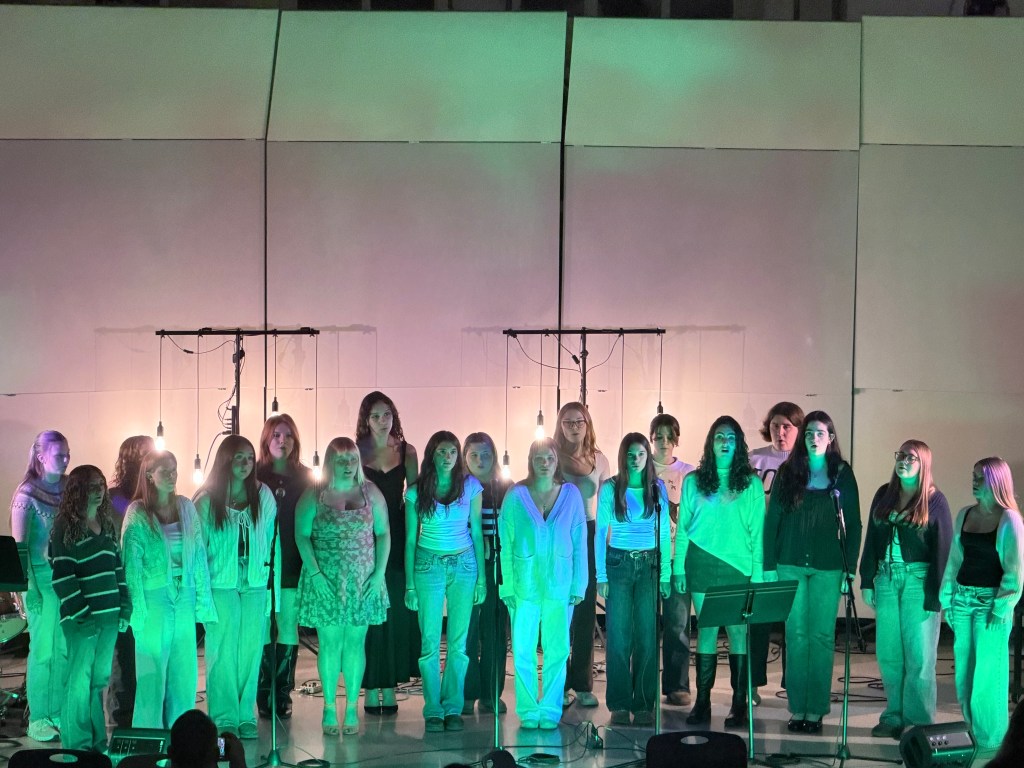
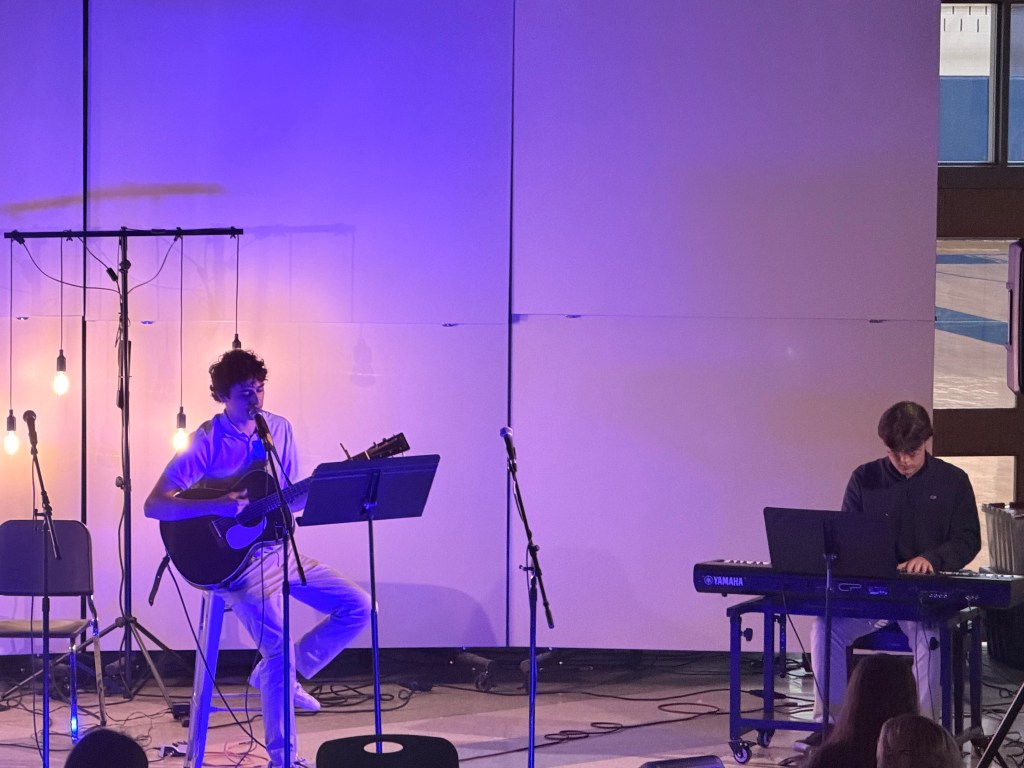
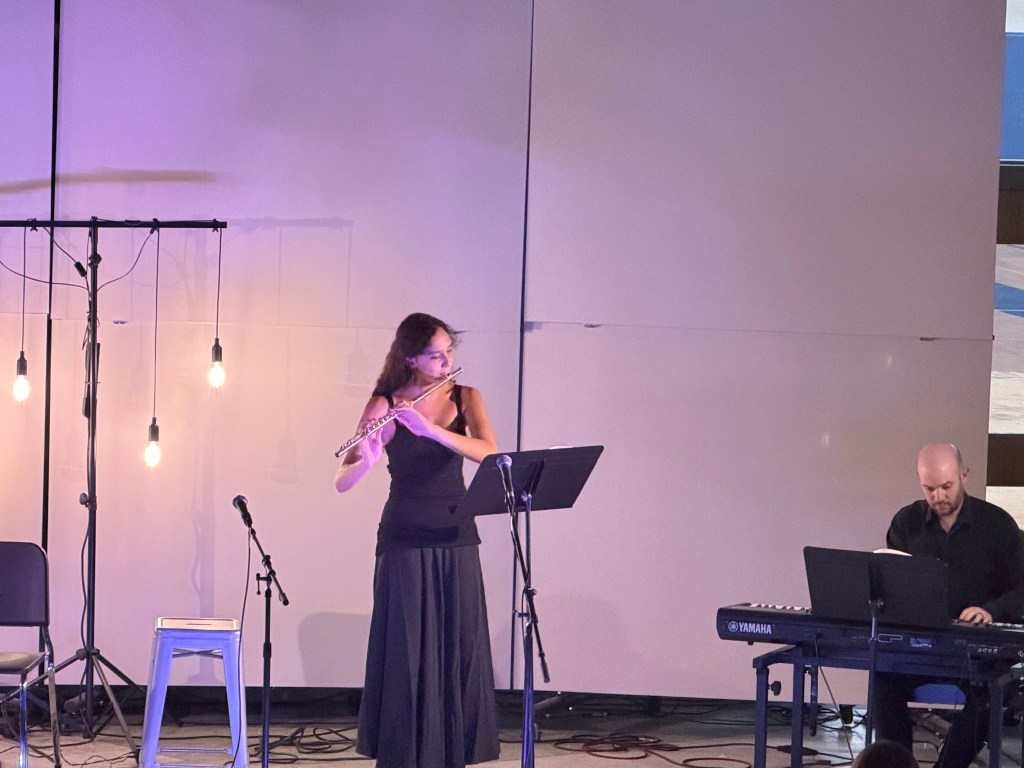
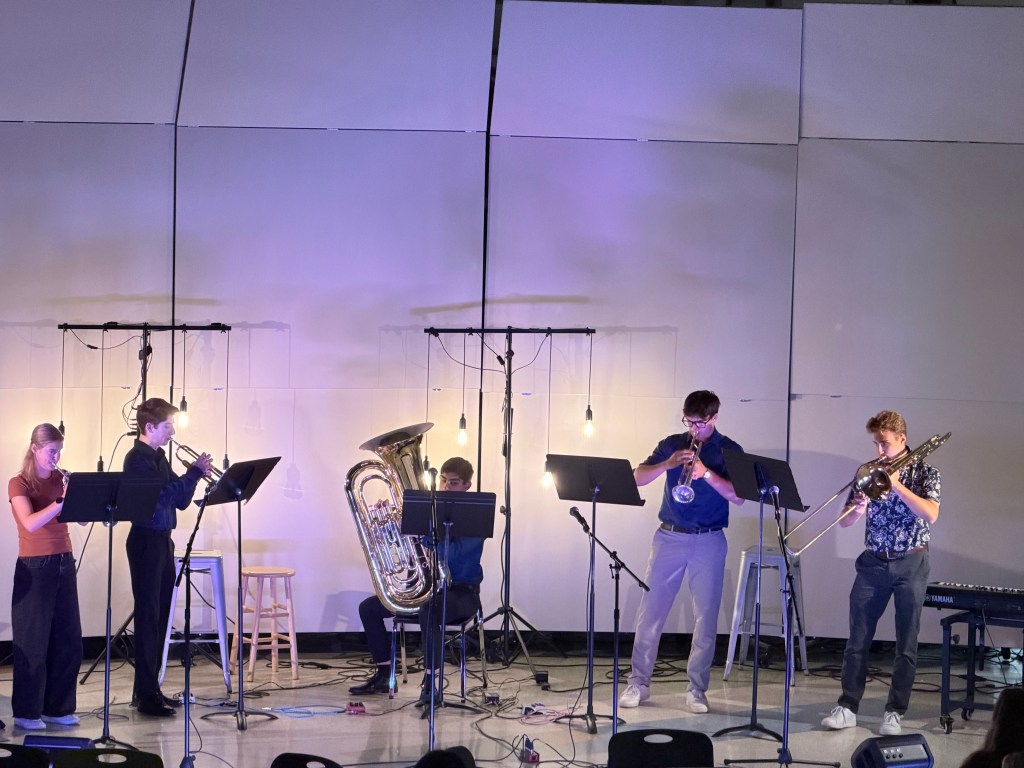
It takes something special to make people forget they’re sitting in Hanover High School’s drafty cafeteria. But that’s exactly what happened on the evening of October 15, when the HHS music department hosted the annual Fall Cabaret. Friends, family, teachers, and other members of the school community came together to transform the space into an intimate venue showcasing student performers. The event gave students the opportunity to share their musical talents with an audience while also highlighting the time and effort they put into preparing for the show.
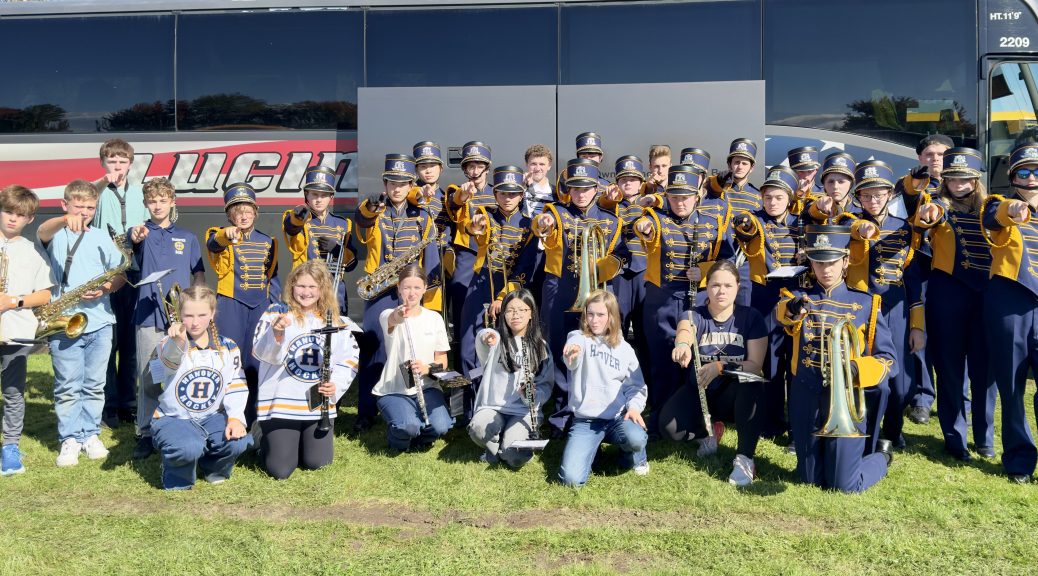
The cabaret featured a variety of musical styles, giving the audience plenty to enjoy. Students performed songs such as Taylor Swift’s “The Best Day,” Adele’s “Skyfall,” Prince’s “Purple Rain,” and Blink-182’s “All the Small Things.” The show also featured instrumental performances, such as “Concertino” by Chaminade and “Puttin’ on the Ritz” by the brass ensemble. In addition, the Hanover Marching Band performed selections from Les Misérables. With soloists, small groups, and larger ensembles taking the stage, the show highlighted the wide range of musical talent at Hanover High School.
Preparing for an event like Cabaret requires practice, dedication, and teamwork. In the weeks leading up to the event, students meticulously learned their pieces and refined their skills, with the guidance and encouragement of HHS music teachers Mr. Harden and Mr. Wade. For many, the show was an opportunity to build confidence performing on stage as well as share their passion for music with the broader Hanover community. It also brought the school community together through a shared interest in the performing arts. Overall, the Fall Cabaret celebrated student talent and dedication as well as the important role that music plays at Hanover High.
Click on an image to enlarge, then use the arrows to scroll through.
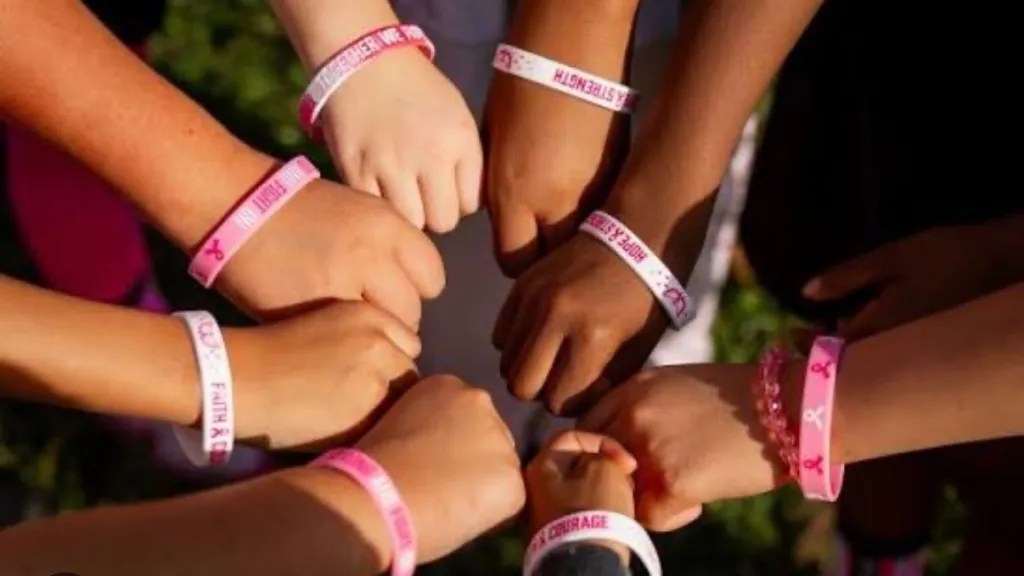
Every ribbon tells a story. Some are stories of victory, whether earned from a spelling bee, sports, or a local fair. Others carry a deeper meaning. A pink ribbon is one example. It’s the ribbon of breast cancer awareness. The pink ribbon tells a person’s story. It’s the tale of their life and how they were affected by this disease. But beyond just being pink, what does breast cancer awareness actually mean, and why is it so important?
The pink ribbon symbol is recognized all over the world, and yet the disease itself is not always well-understood. According to the American Cancer Society, “Breast cancer is a type of cancer that starts in the breast. It starts when cells begin to grow out of control. These cells usually form a tumor that can often be seen on a mammogram (x-ray of the breast) or felt as a lump.” Learning about this disease can not only spread awareness, but also lead to earlier detection. Since October was designated Breast Cancer Awareness Month in the late 1980s, rates of death from the disease have dropped 44 percent, according to the National Breast Cancer Foundation. These profound results illustrate that when we raise awareness, we save lives.
However, breast cancer awareness goes way beyond understanding the disease. It also means supporting those who have been diagnosed, and acknowledging the many that have lost their lives. This disease affects 1 in 8 women in their lifetime, according to the NBCF. That’s one person diagnosed every two minutes in the U.S. Moreover, for many people, a breast cancer diagnosis is more than a change in physical health. It brings fear, anxiety, depression, anger, and a feeling of loneliness. Giving support and offering to be a listening ear can improve their lives significantly.
Millions participate in Breast Cancer Awareness Month. This includes volunteering at support groups, posting educational content, and participating in walks and runs. However, the most recognizable way of supporting is wearing the color pink. Something as simple as wearing a pink ribbon can enlighten a conversation and encourage people to learn more. Fundraising and donations can also contribute greatly by providing money for research and improving treatments for those affected. Donations are important, regardless of size, because they aid a much bigger project to combat the disease.
Overall, breast cancer awareness is more than a color or a ribbon. It’s about learning, it’s about support, it’s about research, and it’s about hope. No single person has to do everything to make an impact. Every little conversation, act of kindness, and effort to learn more helps keep the cause moving. Every ribbon tells a story, but behind every ribbon is a person, and a reason why awareness matters.
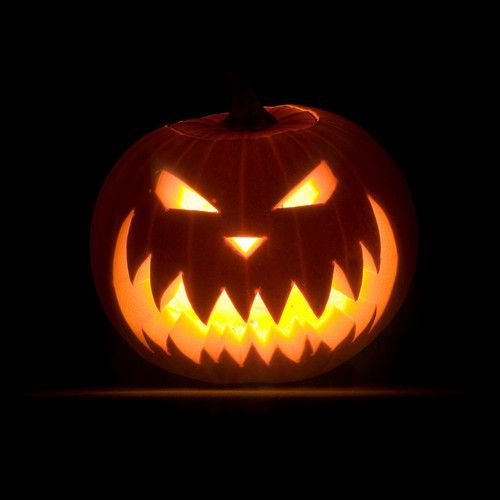
Every Halloween, kids around the country dress up in their spookiest costumes, knocking door to door for popular candies like Hershey’s bars or Skittles. These traditions don’t happen all over the world, though. Different countries celebrate the fall season in their own special ways. The autumn customs of other cultures may be unfamiliar to us, but every community has its own traditions, ways of connecting with others and making the spooky season great.
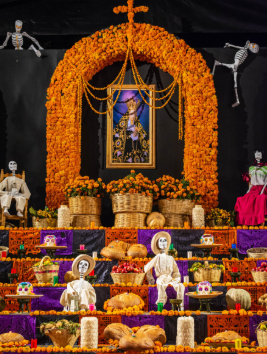
Our first destination: Latin America. Here, the celebration is referred to as “La Noche de Brujas,” which translates to “The Night of the Witches.” While children of the region, which includes countries like Brazil and Argentina, go trick-or-treating, it is more common to dress up and go to local pubs or disco parties with friends. As is done on “Dia De Los Muertos” in Spain and Mexico, people of Latin American countries tend to take flowers to the graves of their loved ones on the first and second of November. This tradition goes way back to ancient civilizations like the Aztec and Mayans that held festivals to celebrate the souls of the dead. In some countries, families spend their nights singing and praying. While some people in Latin American countries worry Halloween will overshadow traditional celebrations, it is seen by many as a fun addition to the autumn holidays. The American style of Halloween festivities are also resisted by most people, as they prefer their own cultural holidays.
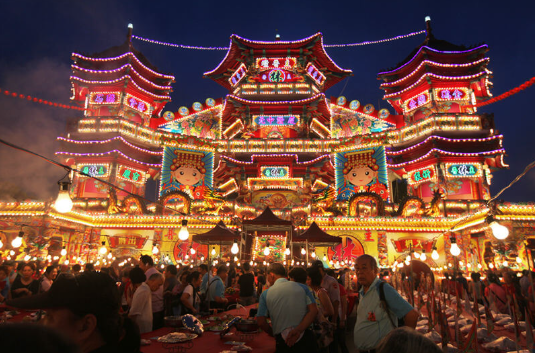
Next on our trip is East Asia. This includes China, Japan, Korea, Taiwan, and Mongolia. To much surprise, wearing scary costumes and makeup on Halloween is banned in certain areas of China. Halloween is a vibrant nightlife event in other parts of the region. There are many festivals, like the Hungry Ghost Festival, most popular in China as “Zhongyuan” Festival. This event includes Chinese Street Opera, water lanterns, and food offerings. Trick-or-treating isn’t very common here, so shops and hotels seize the festive season by decorating above and beyond and featuring Halloween-themed foods and drinks. Costumes are very common in Korea and Japan, blending their fun culture with Western traditions. These countries really tune in to the vibrant and spooky spirit of the holiday. Halloween in East Asia is more adult-focused with late-night street festivals. The holiday only became a popular celebration in the 1990s to 2000s in this area.
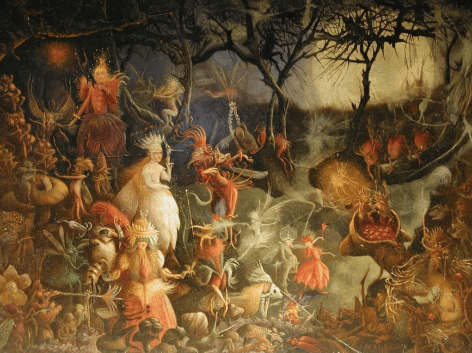
Let’s go back to where the tradition first came from. Halloween can be traced back to the ancient Gaelic festival of Samhain, celebrated on sunset of October 31st to November 1st. This Celtic harvest dates back around 2,500 years ago, and is mentioned in some of the earliest Irish literature from the 9th century. “Samhain” directly translates to “Summer’s End,” and is the modern Gaelic word for the month of November. The Celts believed that on this night, the boundary between the living and the dead blurred and the ghosts of the dead could walk the earth. On this day, people also lit bonfires and wore costumes to ward off ghosts, greatly resembling the fun traditions today. Halloween also has Christian roots from the 8th century. November 1st was designated as All Saints Day to celebrate the saints of the religion, and October 31st was made All Hallows’ Eve, which is where the name came from.
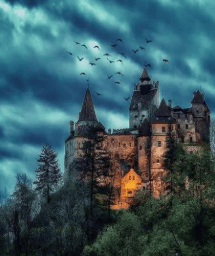
Everyone is familiar with the legendary vampire town, Transylvania. We’ve all heard stories of the undead bloodsuckers and tales of the infamous Dracula. I hope we’ve all seen the film, “Hotel Transylvania.” The citizens of Transylvania, which lies in western and central Romania, embrace the myths in their Halloween celebrations. The region has a seven-day tour, taking participants to many sites related to the vampire legends. Guests view many different historic castles, including the Poenari Castle from the 14th century; the Corvin Castle, where many believe Vlad the Impaler was once imprisoned; and the Bran Castle, which is said to be the most impressive structure in Romania. The Vlad Dracul House, which is Vlad the Impaler’s birthplace, is also toured. The infamous character, made famous in Bram Stoker’s novel “Dracula,” borrowed the name from the infamous prince, also known as Vlad III Dracul. On the night of October 31, the Bran Castle holds the main Halloween celebration annually. People dress up in dark costumes, tour the spooky castle, visit a Marquee party on Castle grounds, and can even have a fine-dining experience inside the castle.
Many countries have a tradition special to their culture and identity that is similar to our spooky season. Even though Halloween is celebrated in different ways around the world, each version brings its community together for a bright and festive season. Getting to know different cultures is a great way to bring the world together, and we get to put a fun spin on it for the Halloween season!
As someone who is an avid reader and appreciates the ability to read whatever books I want, the banning or censorship of books is a major concern. “Banned Books Week” is sponsored by the American Library Association and held every October. It is a week that highlights the importance of the freedom to read, efforts to remove books from schools and libraries, and the harms of book censorship.
Why do people try to ban books?
The banning of books has been going on for centuries. The earliest book banning in the United States dates back to 1637 when the Puritan government prohibited Thomas Morton’s “New English Canaan,” which criticized Puritan beliefs. In modern society, books are typically challenged with the best intentions: to protect others, frequently children, from difficult ideas and information. Challengers argue that the book can still be read, just not in school or the public library. Opponents of the bans, though, say that while parents have the right to choose appropriate books for their own child, they should not be able to keep the book from all students. A significant reason why many people oppose the idea of banning or censoring books is the belief that if everyone had the same ideas, there would be no improvement or development in the world. Silencing opinions is something that will not help society but rather harm it, critics of book banning argue. When groups or organizations try to ban books, their goal is to remove that book from schools, libraries, and public circulation. There are many motives for why people seek to ban books. Among some of the most common, according to the American Library Association, are political, racial, or religious concerns.
What types of books are being banned?
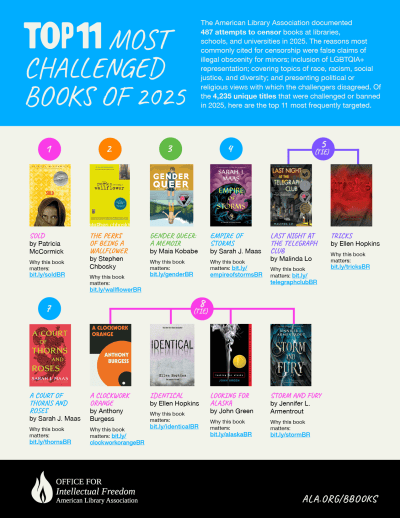
Books in the U.S. that are most commonly challenged or successfully banned are Young Adult (YA) fiction, titles that contain LGBTQ+ or identity themes, classics, and dystopian literature. Among other often-challenged topics are race or political/religious themes. For example, dystopian novels such as “1984” and “Fahrenheit 451” are commonly banned due to the fact that their main themes follow ideas that challenge authority, break social norms, and expose truths about power and control. Racial and religious books such as “The Hate You Give” or “The Handmaid’s Tale” are often targeted because critics feel a certain race or religion is being condemned. Books like “The Perks of Being a Wallflower” and “Last Night at the Telegraph Club” are called anti-Christian or obscene because of their focus on gay characters.
Who is banning books?
Generally in the United States, books are censored or banned by school boards, state legislatures, and government officials. School boards and administrators argue that they ban books to protect kids from harmful content. This can include sexual content, LGBTQ+ themes, or if they perceive it to not be age appropriate. In censoring these books, school officials are often overriding the librarians and teachers who have selected them for readers. In state legislatures such as Texas and Florida, book banning can occur for many different reasons including personal beliefs and ideological agendas. Lawmakers can also be responding to political pressure from their party or the public. Restrictive laws lead to preemptive compliance, with schools and towns pulling hundreds of books out of fear of state sanctions.
How can you fight book bans?
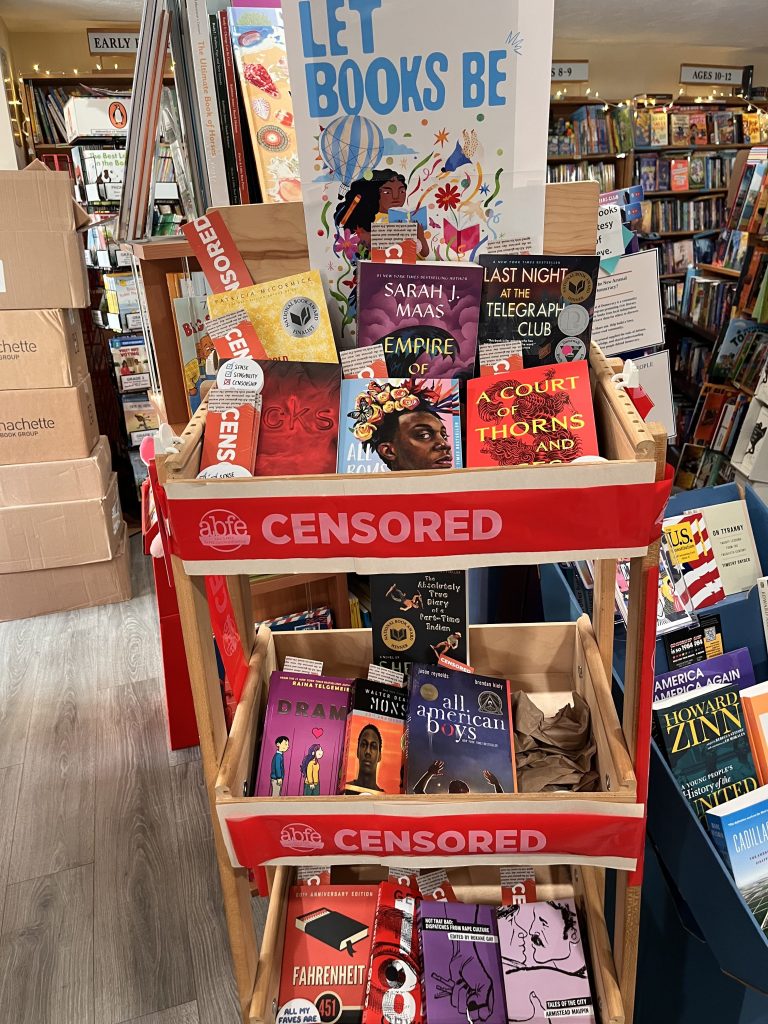
A display at Storybook Cove in Hanover shows commonly censored books
Right here in Hanover, we have bookstore owners that are raising awareness for Banned Books Week. Janet Bibeau, who owns Storybook Cove on Washington Street, set up a section of the store with large bins containing multiple books often targeted by bans. The purpose of this display is not only to advertise these books, but is also to help fight against the banning of literature. There are countless ways you can individually help fight against the banning of books too. First, you can start by reading anything you want! Reading is so vital to society because it allows you to read other opinions and experience different worlds just within your head. Reading a book from an author who may have a different perspective gives us the ability to look outside of what we believe in and learn about the different standpoints of others. It is crucial to the fight against a uniformity of opinions and beliefs. The whole world should be able to broaden their horizons and learn about different cultures and religions. One final way you can help advocate and stop book banning is to support your local library and get a library card. The more people reading, the more opportunities for different viewpoints and opinions to be read.
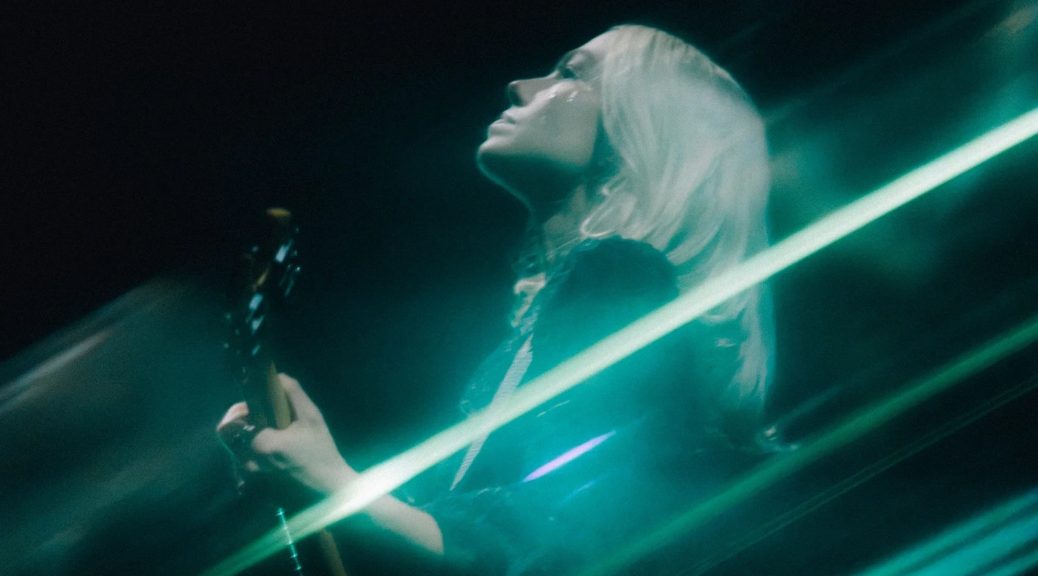
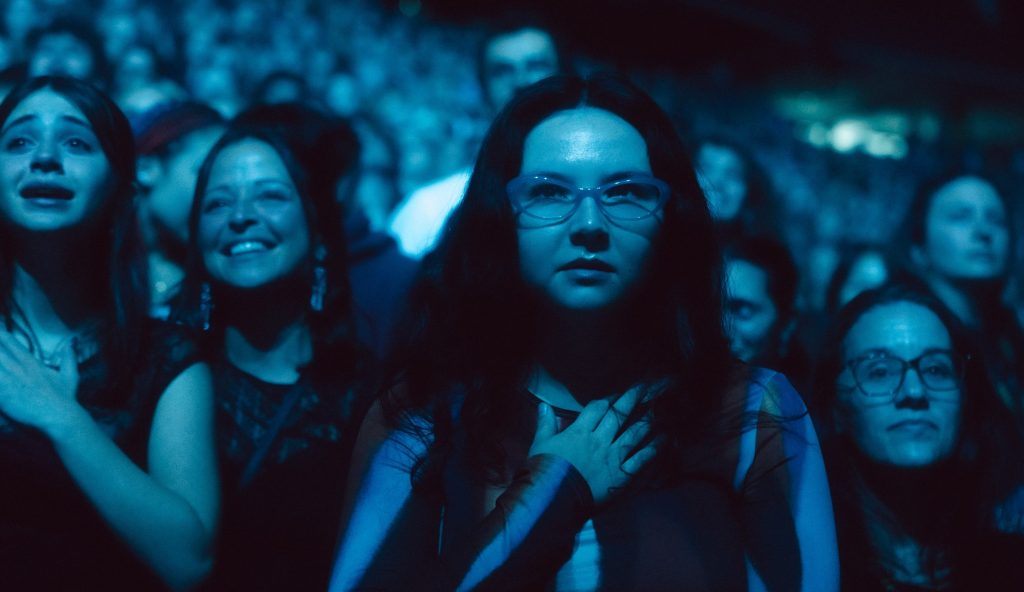
In early October, Phoebe Bridgers performed at TD Garden as part of her Lost Tour. Immediately upon entering the venue, I surrendered my phone into a Yondr pouch, which locks your devices magnetically inside a small case. For the next 4 hours, I was completely in the moment, and it was refreshing to be at a concert where there were no devices blocking my view of the performance and no influencers or phone filmers creating content to monetize later. This is because Phoebe has banned phones, AirPods, smartwatches, and Meta glasses from all stops on her tour. She even thanked the audience mid-set for putting aside their phones for the night, calling it an act of self-preservation.
Fans at Boston night 2 — @thelosttour on Instagram
The pressure of visibility in recent years—with both her album “Punisher” and the rise of her folk-rock trio boygenius—led the singer-songwriter to consider quitting music entirely. Her newest album is particularly intimate, describing her journey through grief after the death of her father in 2023. Unburdened by phones or other devices, she felt comfortable returning to the stage, sharing personal material with a crowd of over 15,000 understanding fans.
When she announced the ban, however, she faced criticism online. A small but vocal group called the choice classist and ableist. They suggested that she was discriminating against those who couldn’t afford tickets and could only experience the concert vicariously or taking phones away from those attendees who needed them to monitor health conditions. Neither of these accusations were relevant, as people have been unable to afford concerts long before smartphones existed, and venues did, in fact, allow individuals to access phones for medical reasons.
Phoebe Bridgers certainly isn’t the first to ban phones from her concerts. Artists such as Alicia Keys, Bob Dylan, Childish Gambino, and Jack White adopted the Yondr pouches much earlier than she did, and the same mechanisms have long been used in Broadway theaters, classrooms, courtrooms, and even wedding venues.
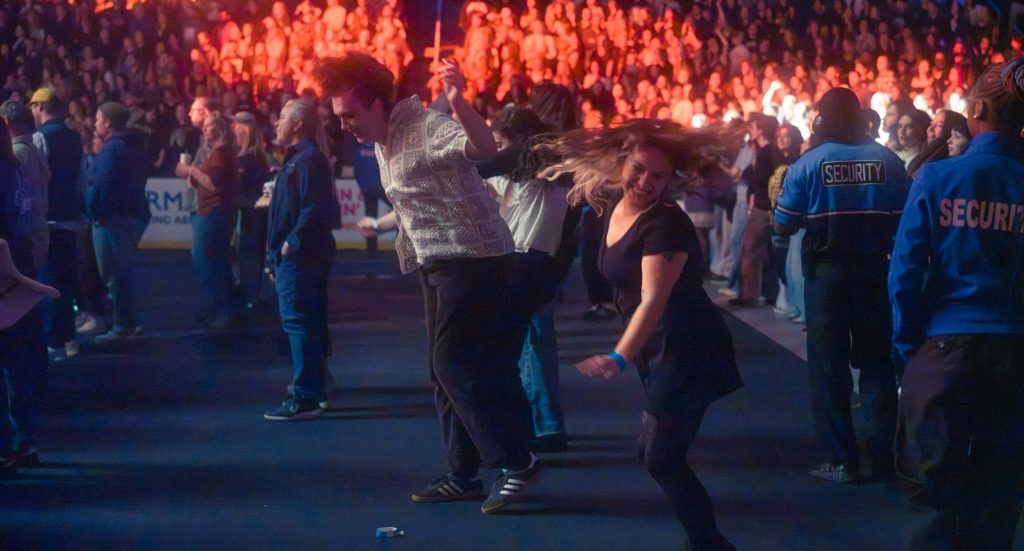
Fans dancing on the floor — @thelosttour on Instagram
Does this mean that more concerts should go phone-free? Well, ask yourself. Do you enjoy watching a concert through a screen, or do you find it more fulfilling to be singing your heart out with a bunch of strangers, giving your undivided attention to the performer and their art?
As Phoebe says herself in Garden Song, “When I grow up, I’m gonna look up from my phone and see my life.” Acknowledging this distraction, she comments that going through our short existence while constantly staring at a screen can make time fly by. When you finally look up, you realize that life was always in front of you, waiting, and you had to face it to truly experience it. After years tethered to a device, will some young adults know how to interact face-to-face? Will they truly enjoy life as opposed to just going through the motions?
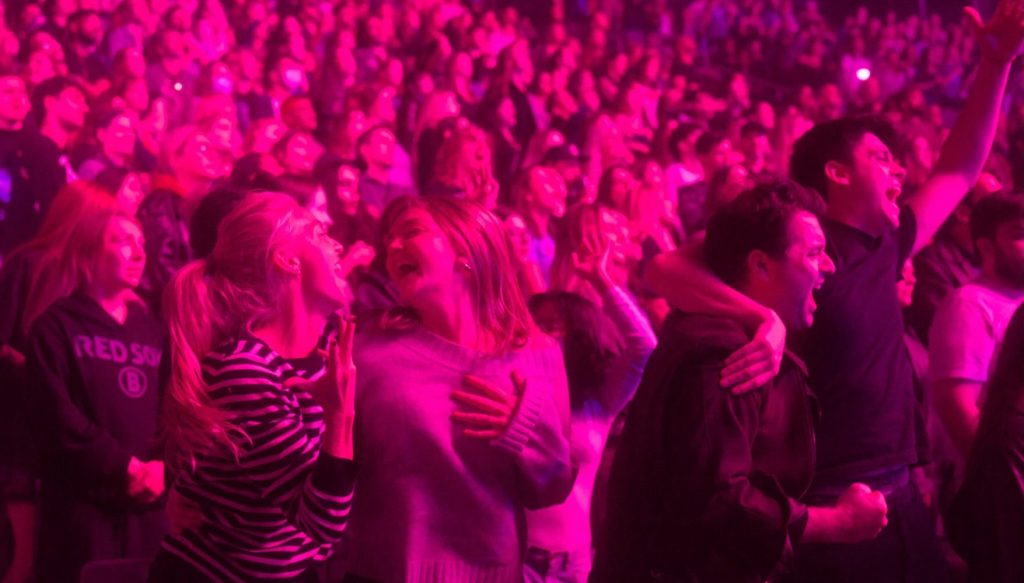
Fans singing together during the concert, not a phone in sight — @thelosttour on Instagram
During her last song of the night, Scott Street, Phoebe turned on all of the lights in the stadium. Appropriately, the lyrics “anyway, don’t be a stranger” invited us to look around at people from all walks of life, say hello, and get to know someone in a way that phones simply cannot achieve.
I believe that Phoebe’s phone ban is opening up a multitude of possibilities for concerts in the future. If more artists banned phones in a similar fashion—using pouches instead of meticulously confiscating thousands—we will all be able to look around, interact, and engage with the show. In an age where so much communication is done online, and social media falsity leaves us feeling unfulfilled, it would be extraordinarily restorative to see thousands of emotional faces illuminated—not by screens, but by stage lights.
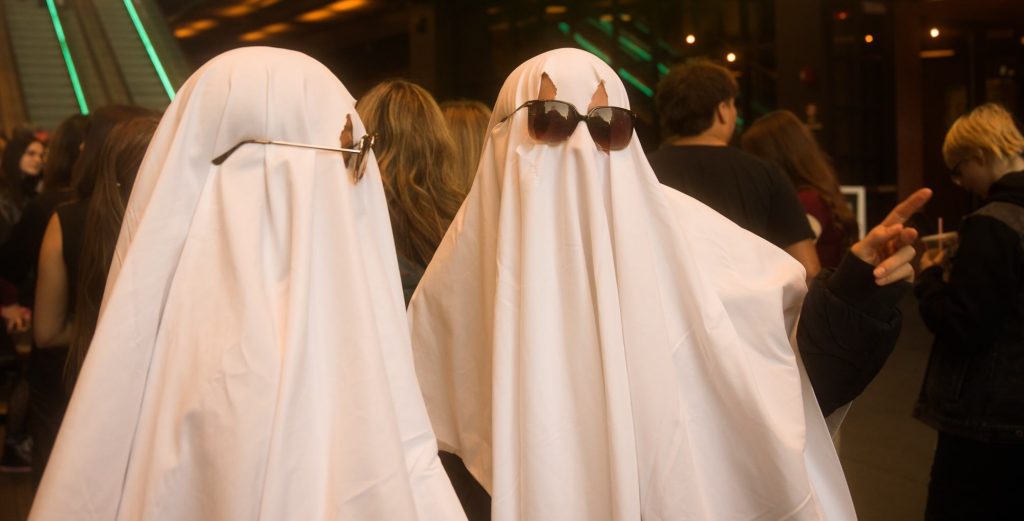
Fans dressed as ghosts, mimicking the album cover of Stranger in the Alps — @thelosttour on Instagram
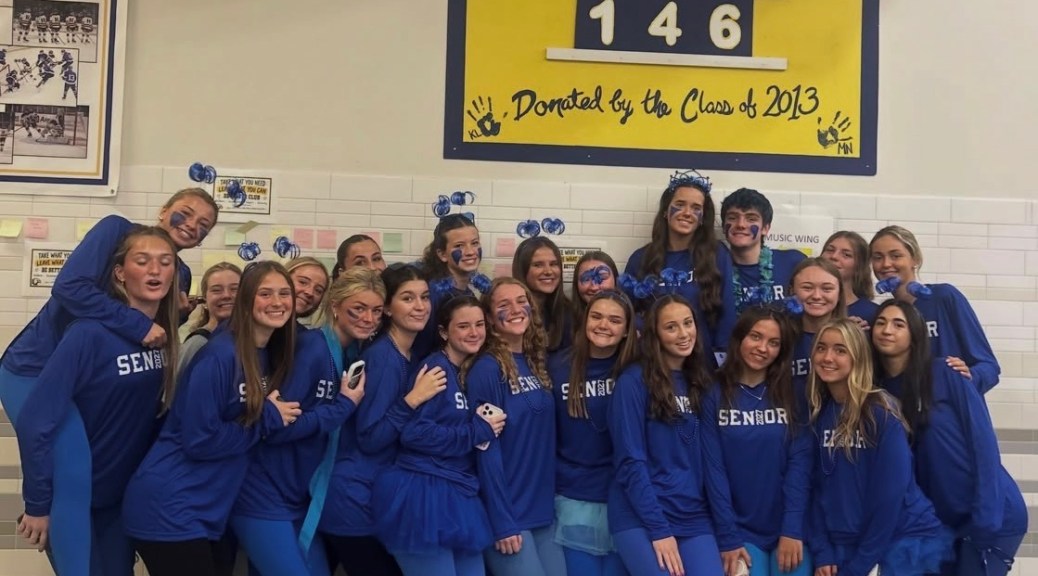
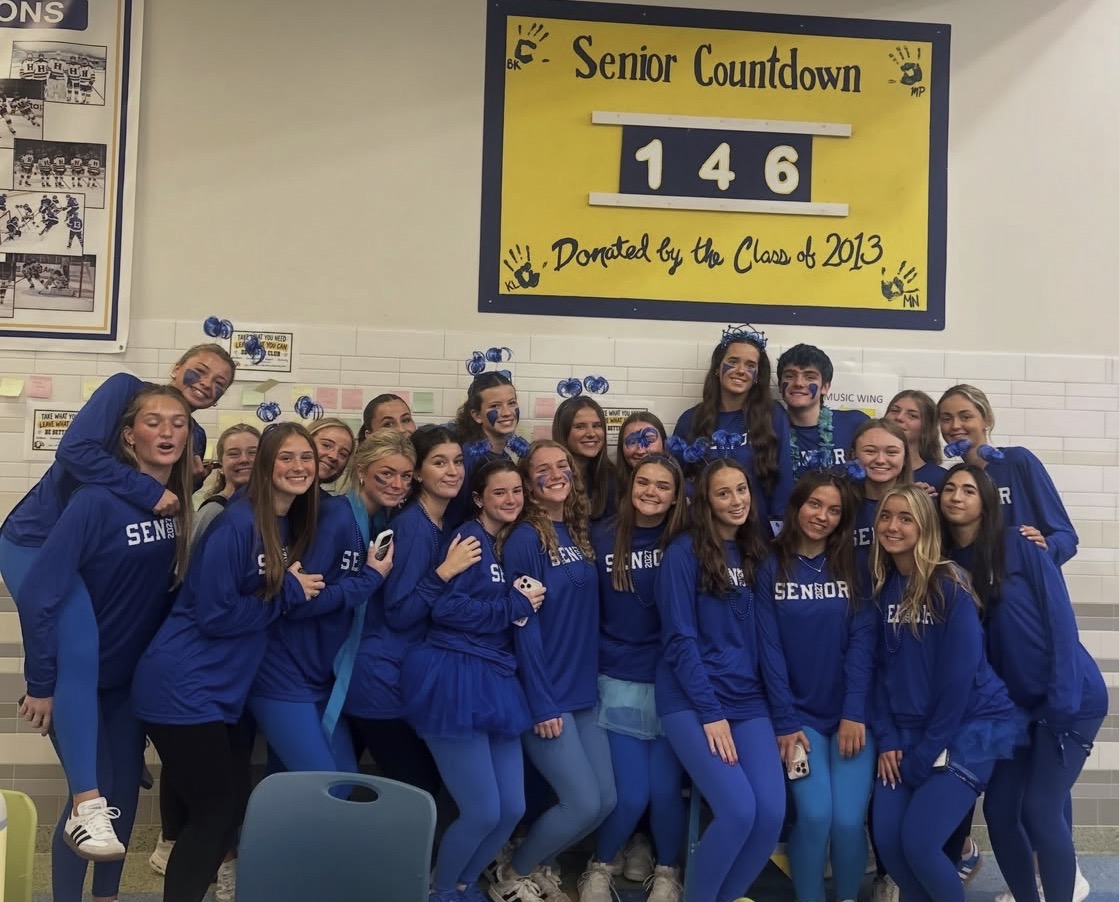
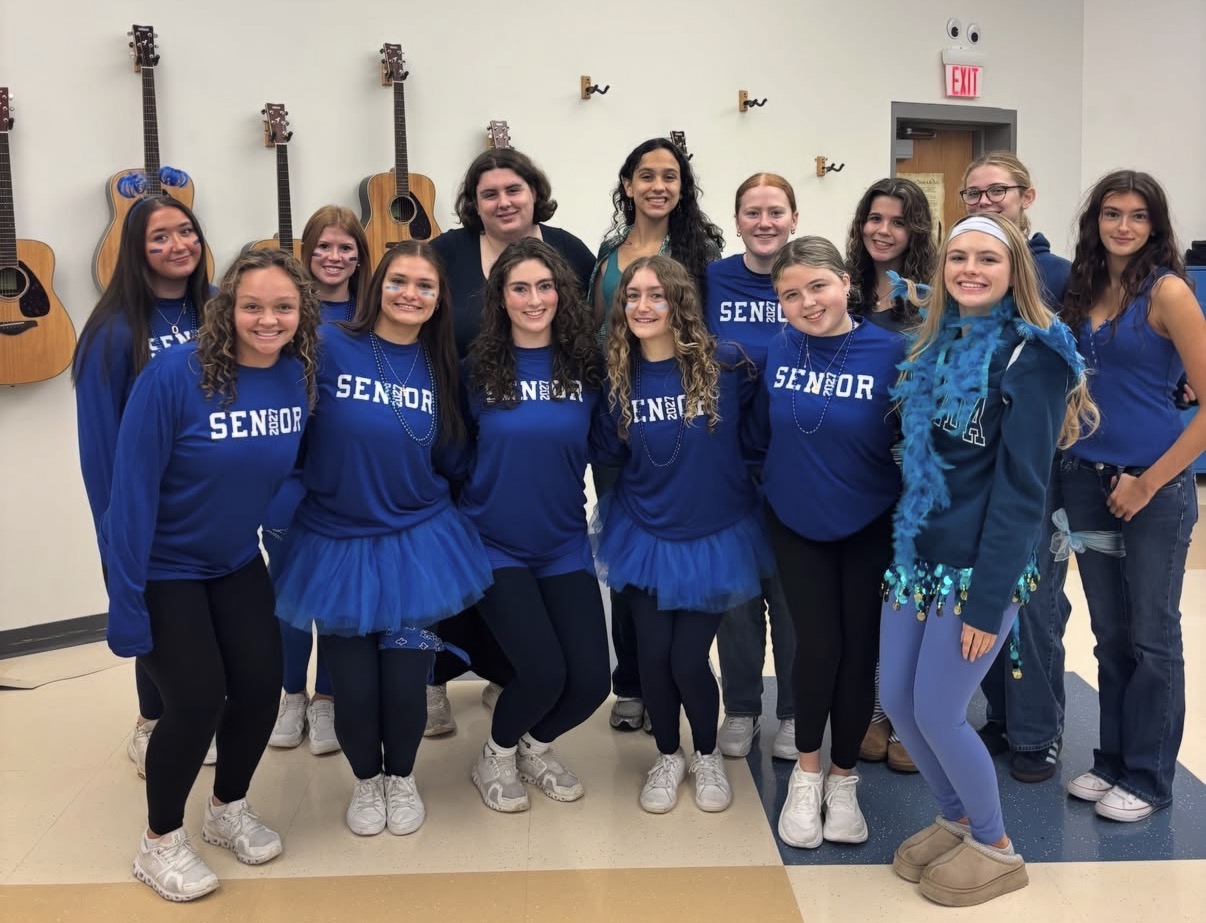
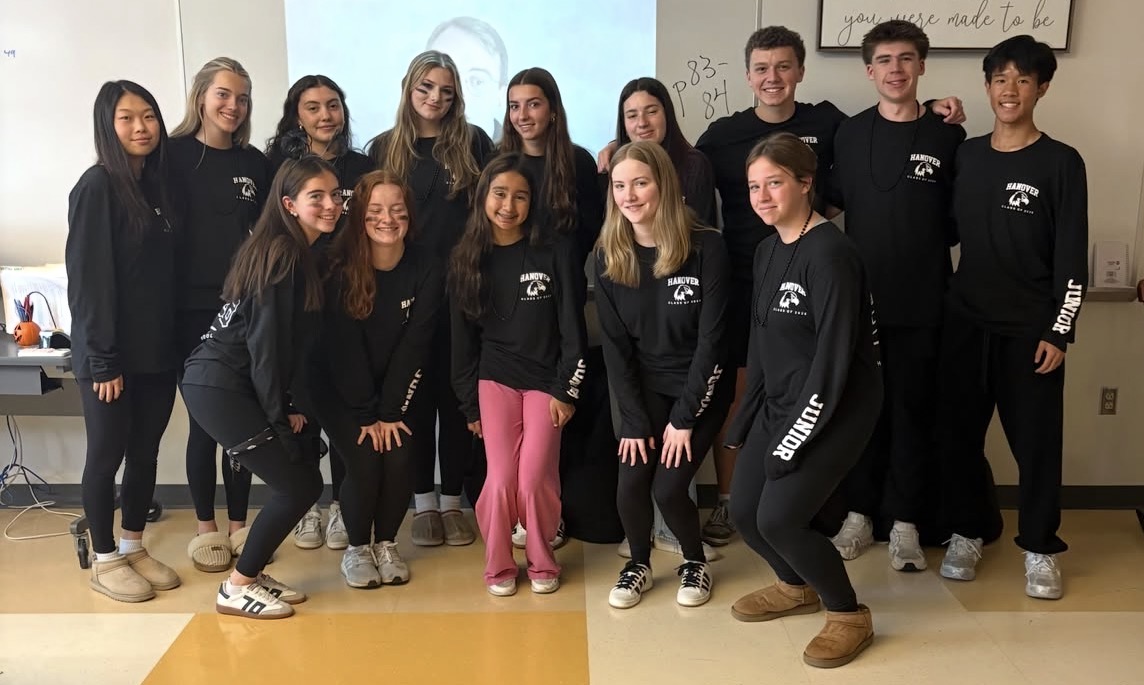
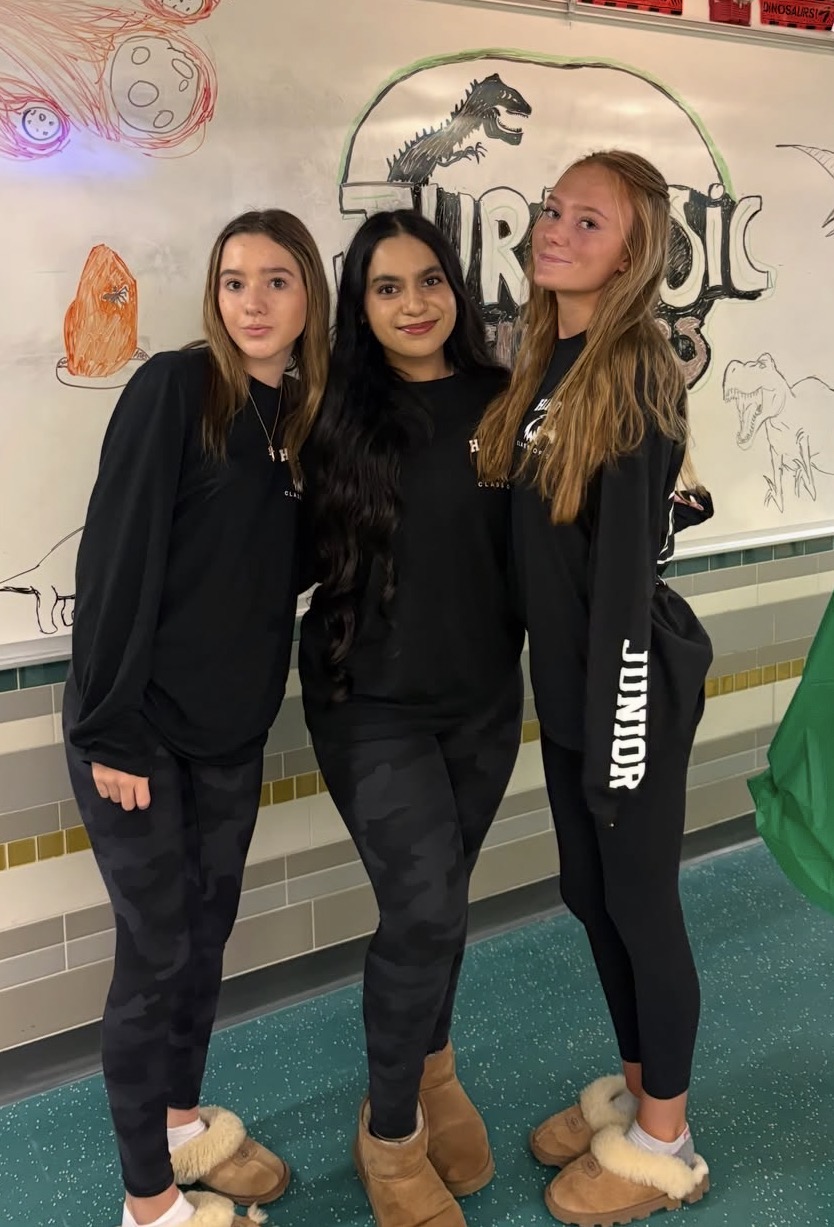
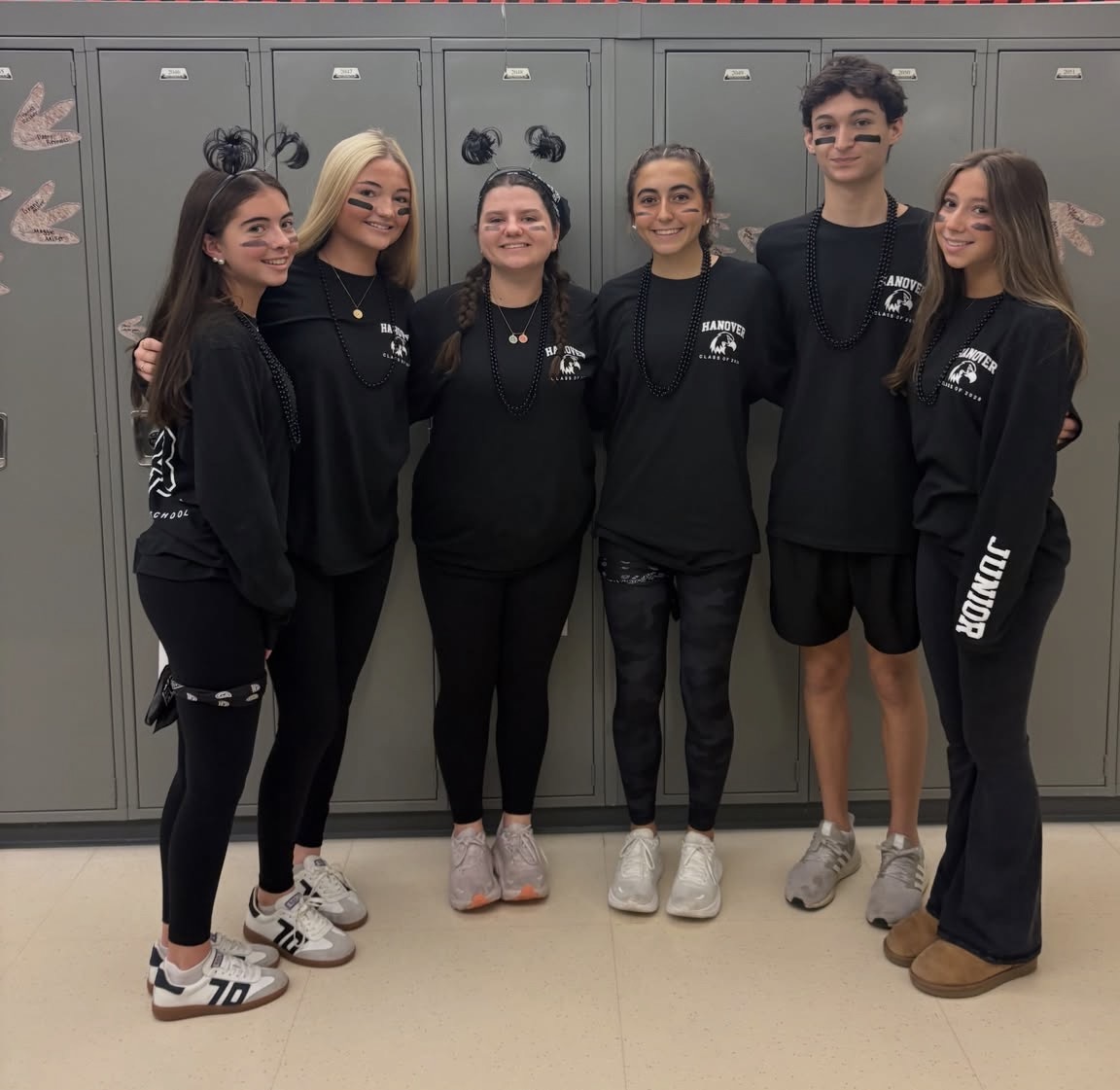
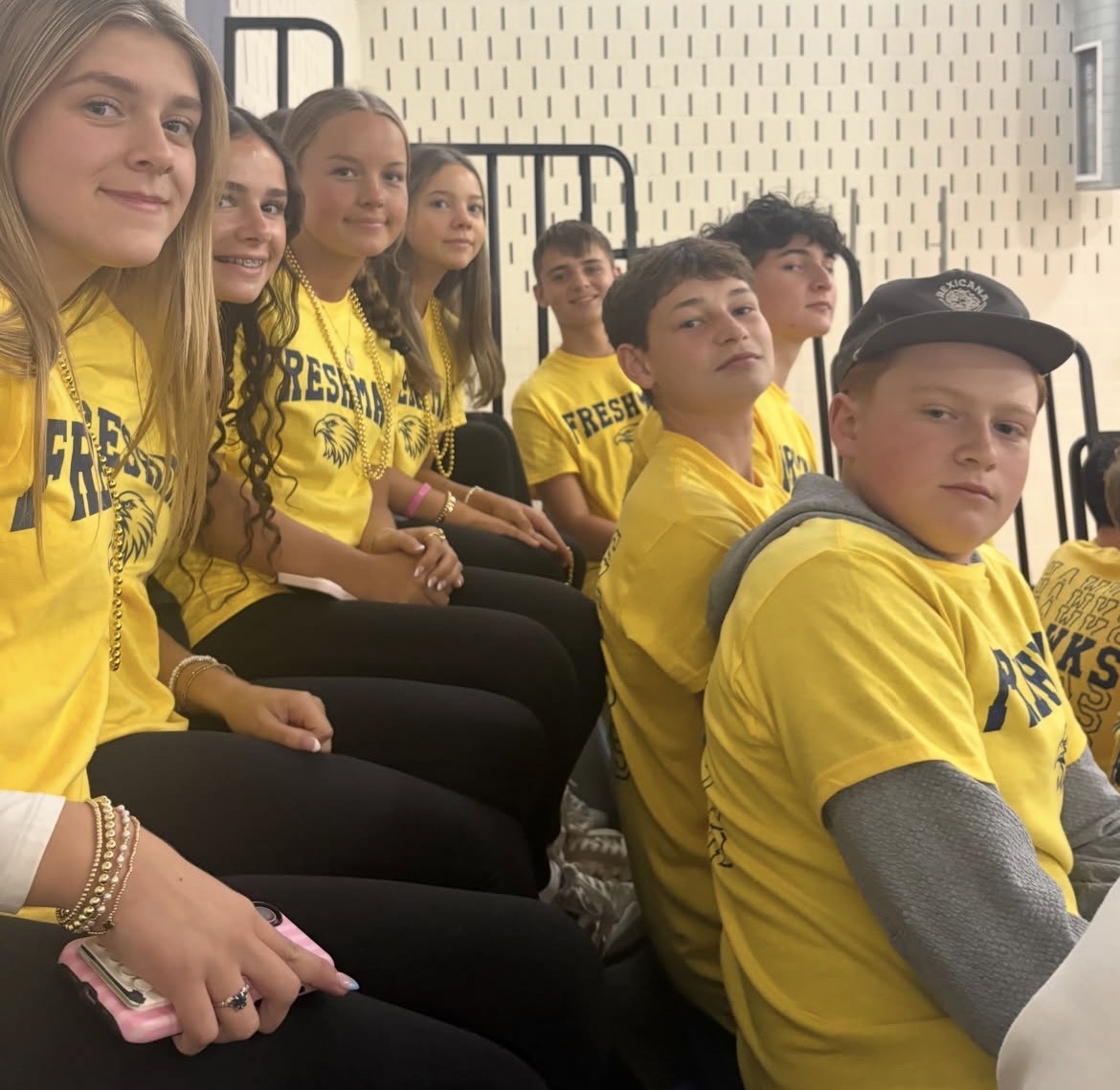
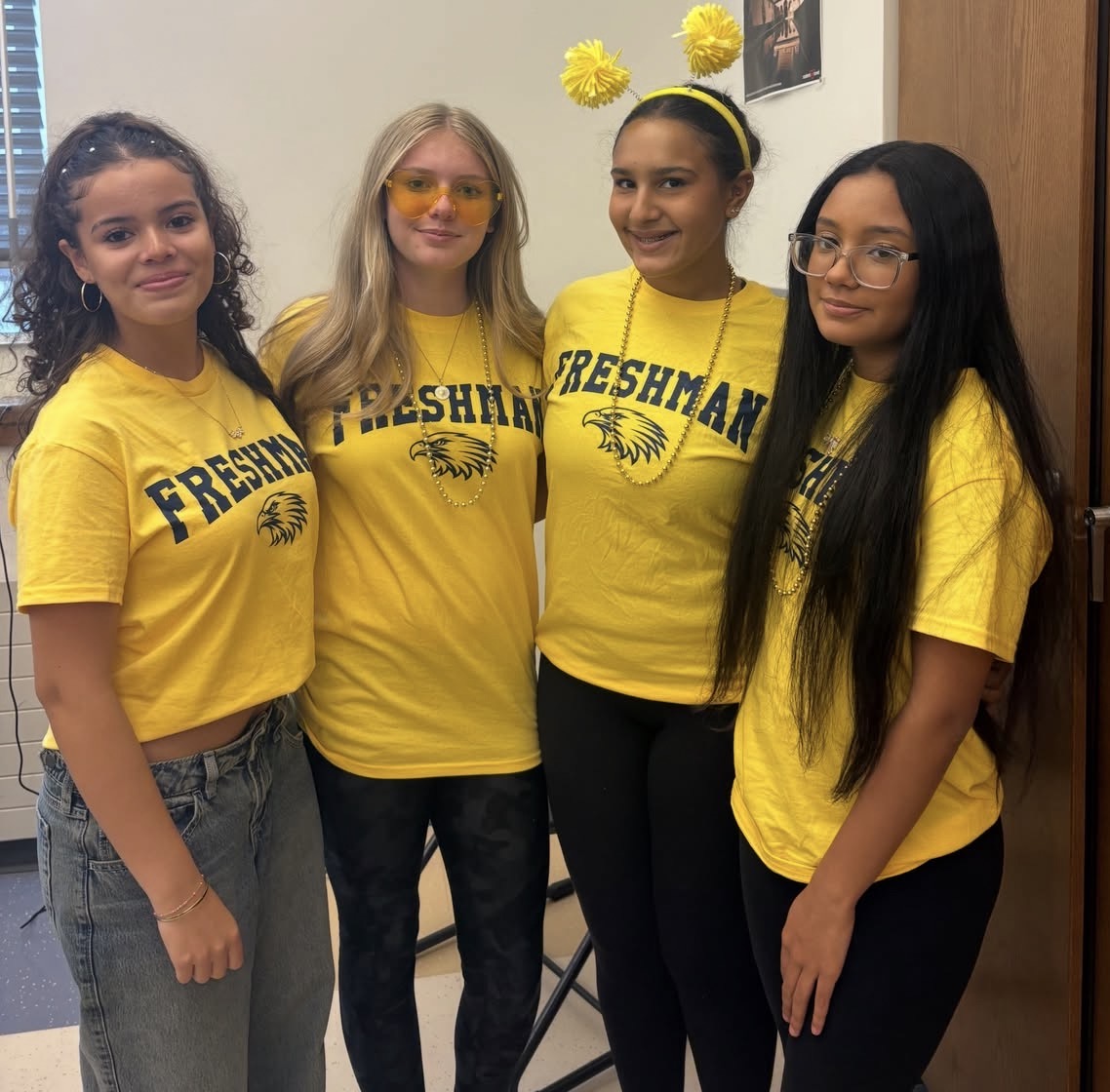
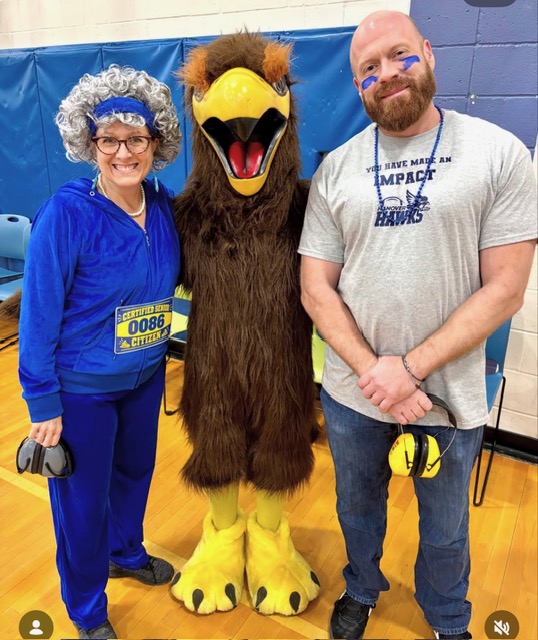
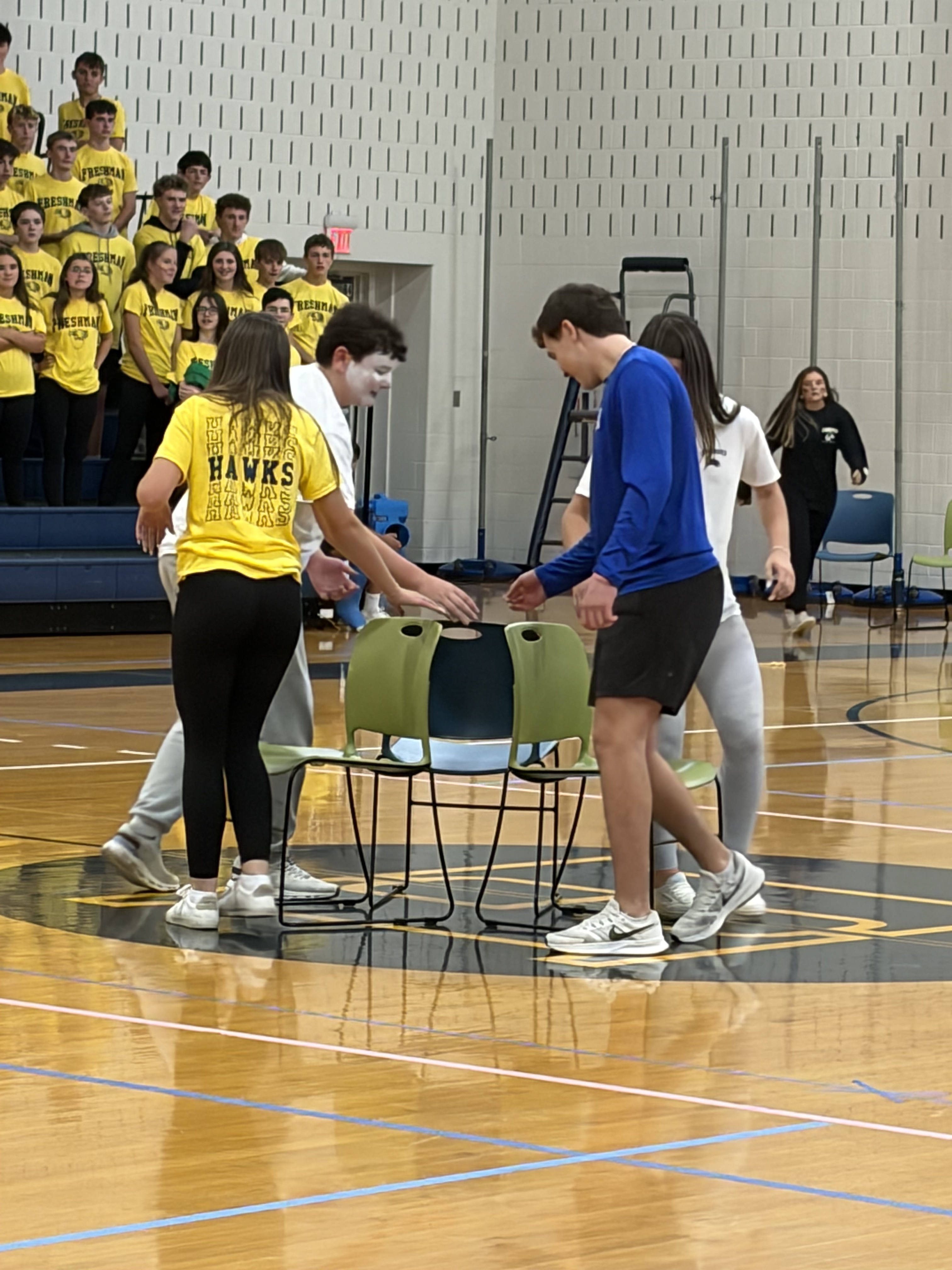
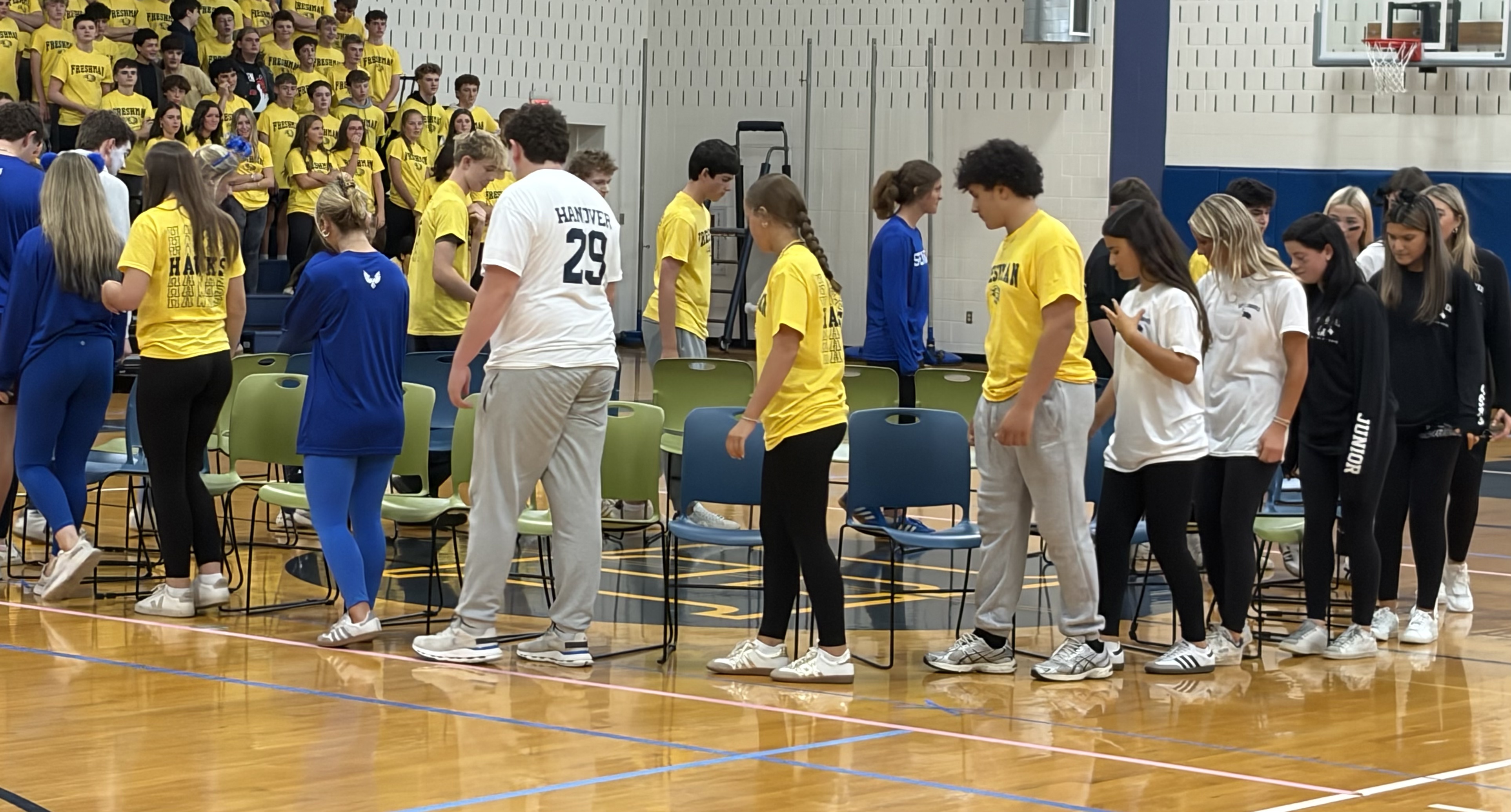
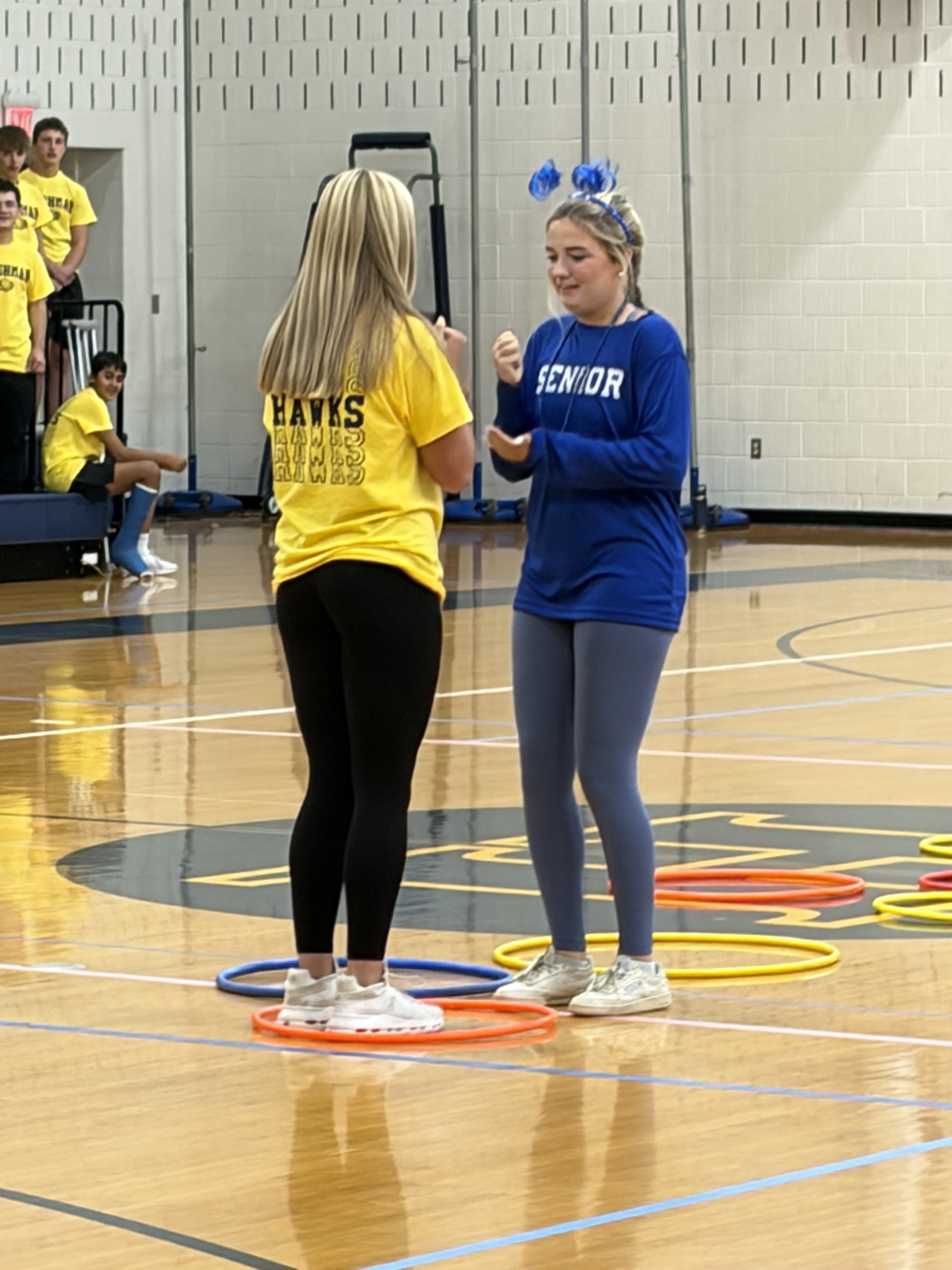
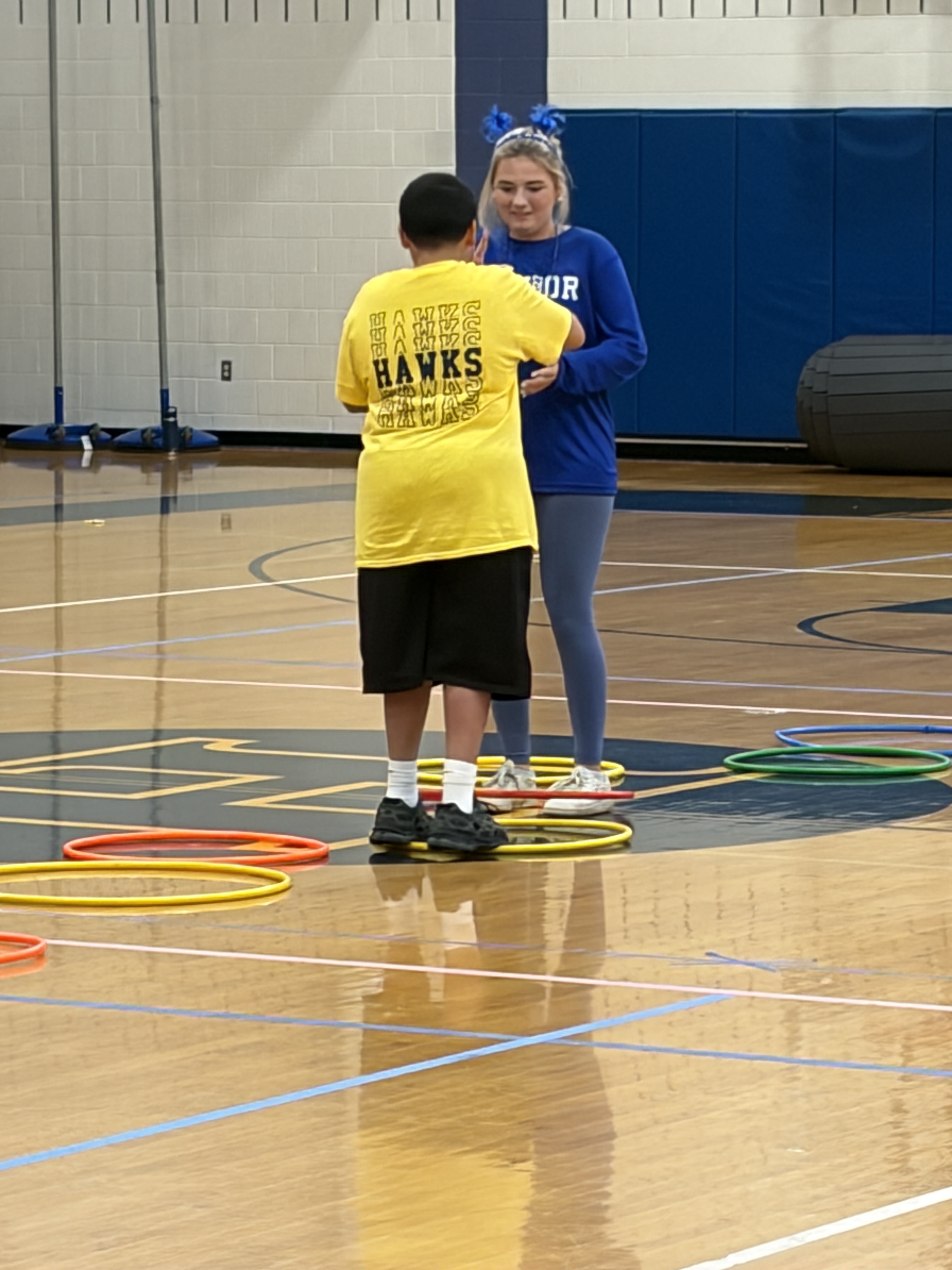
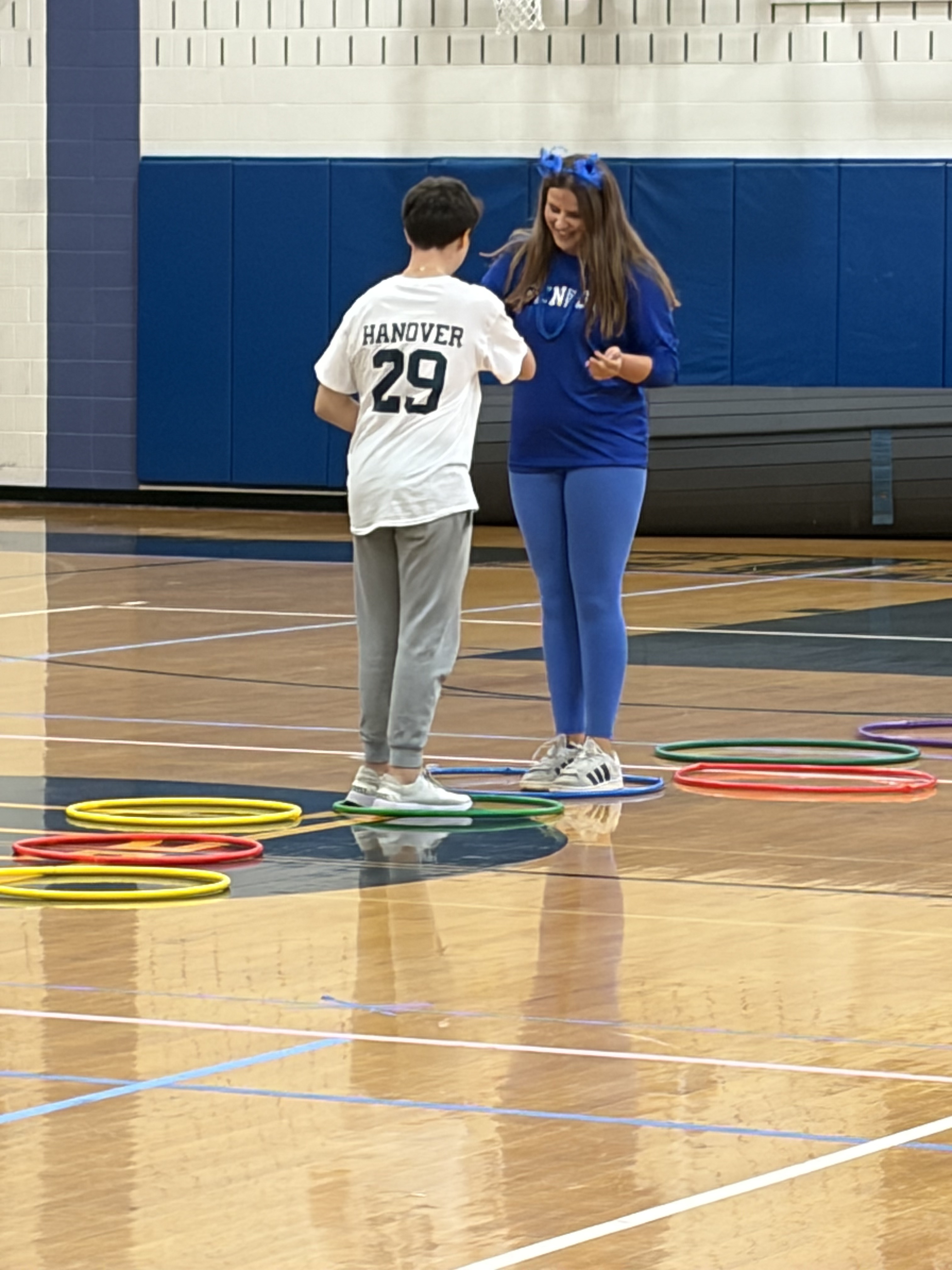
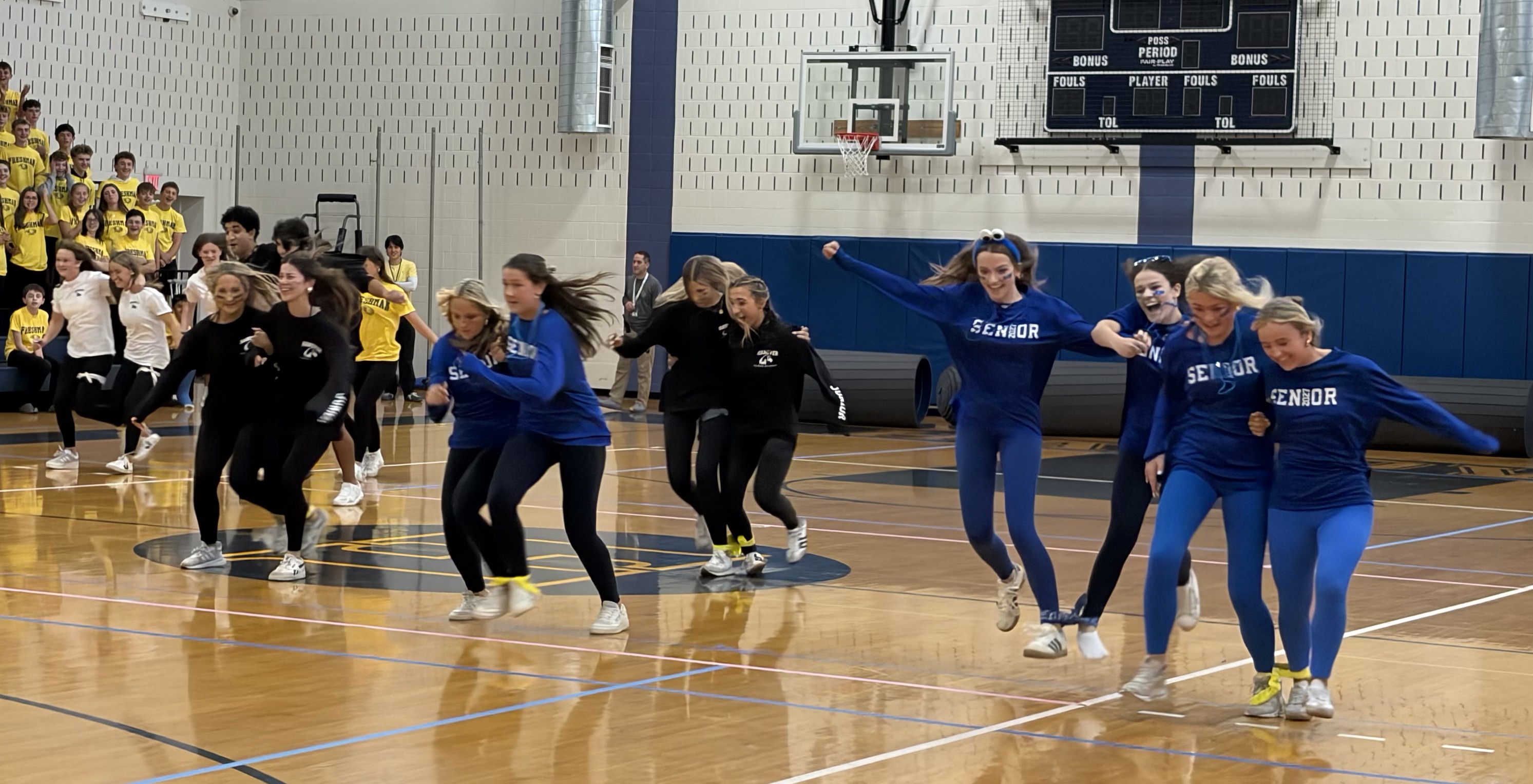
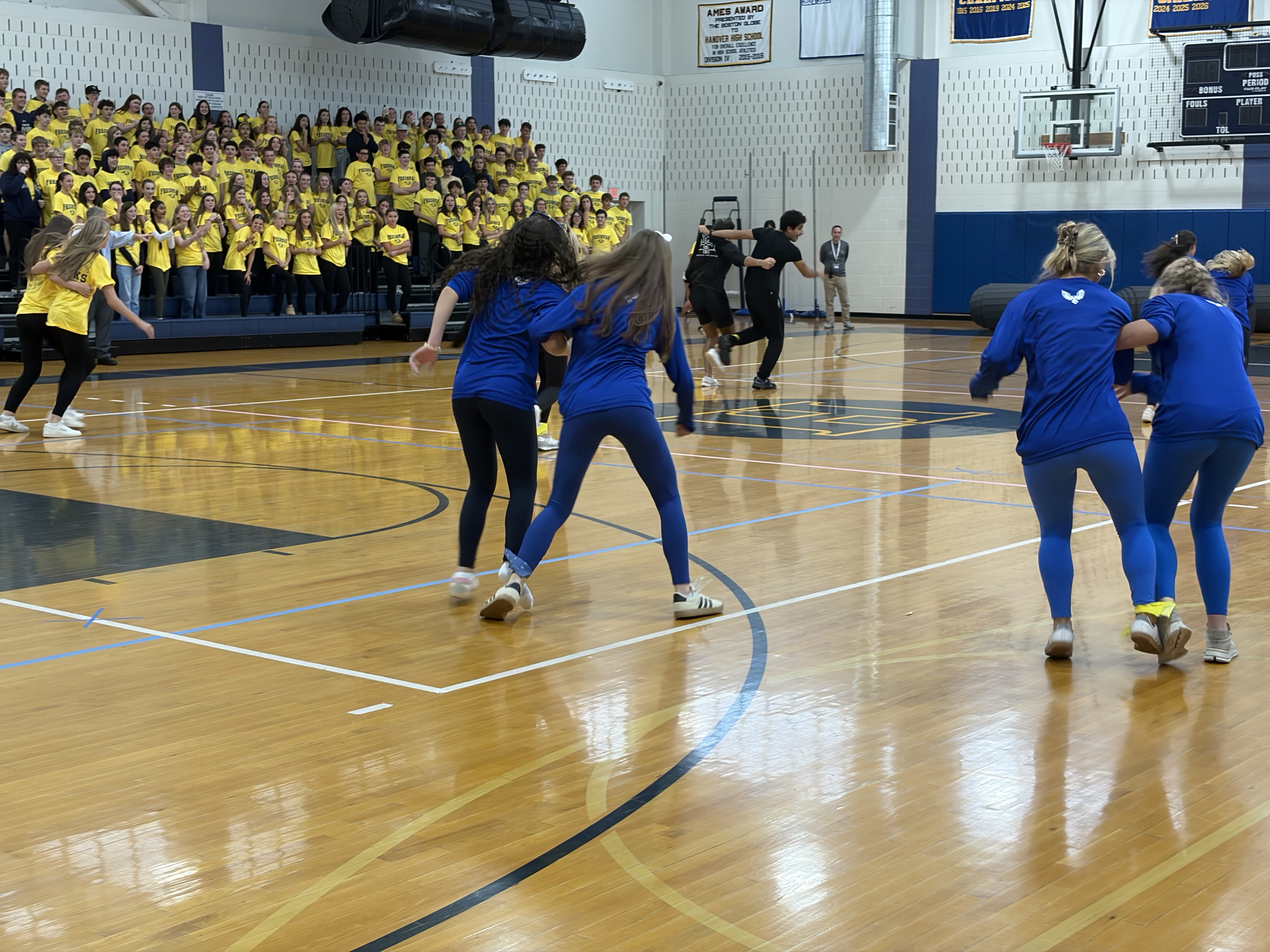
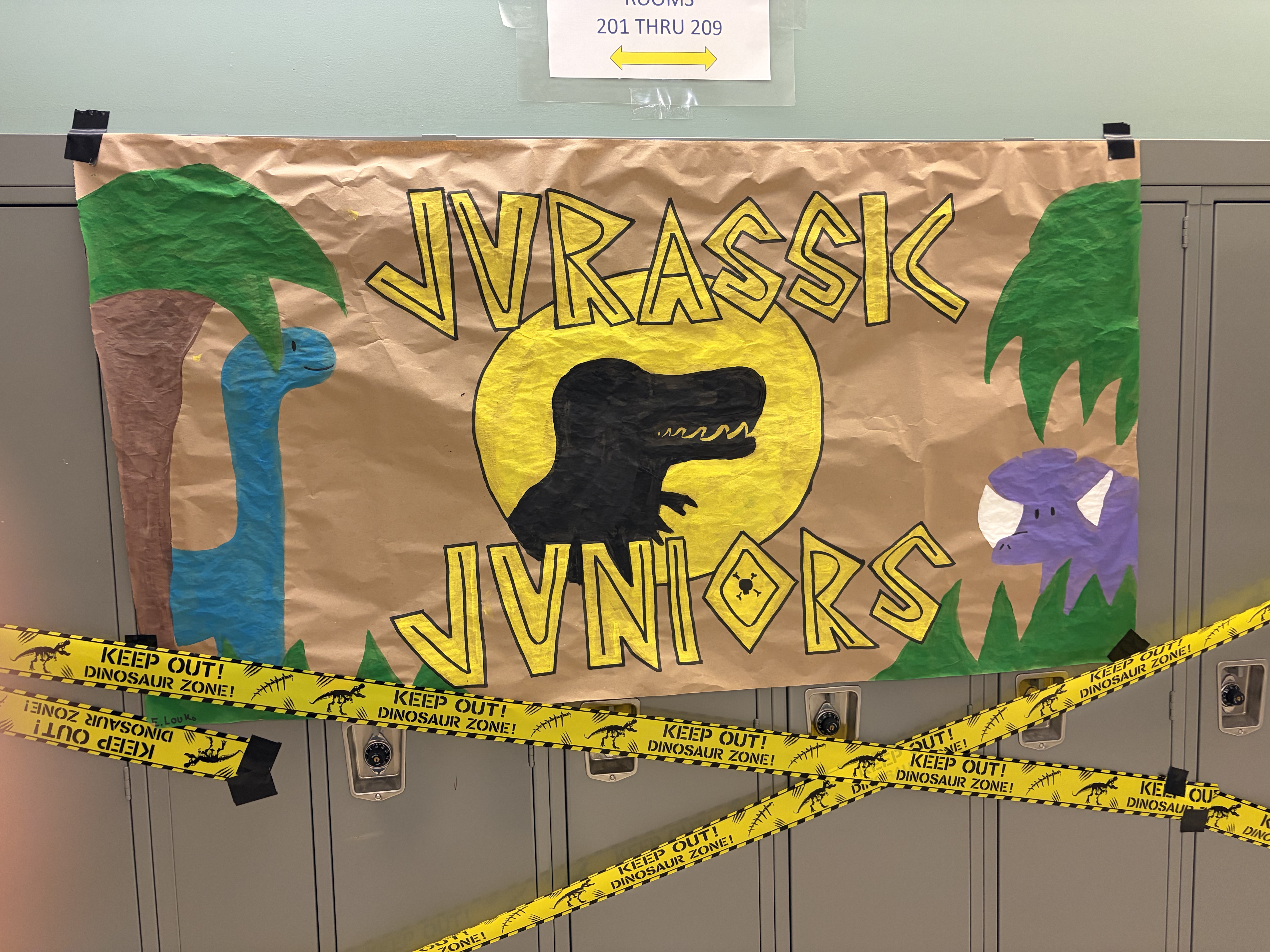
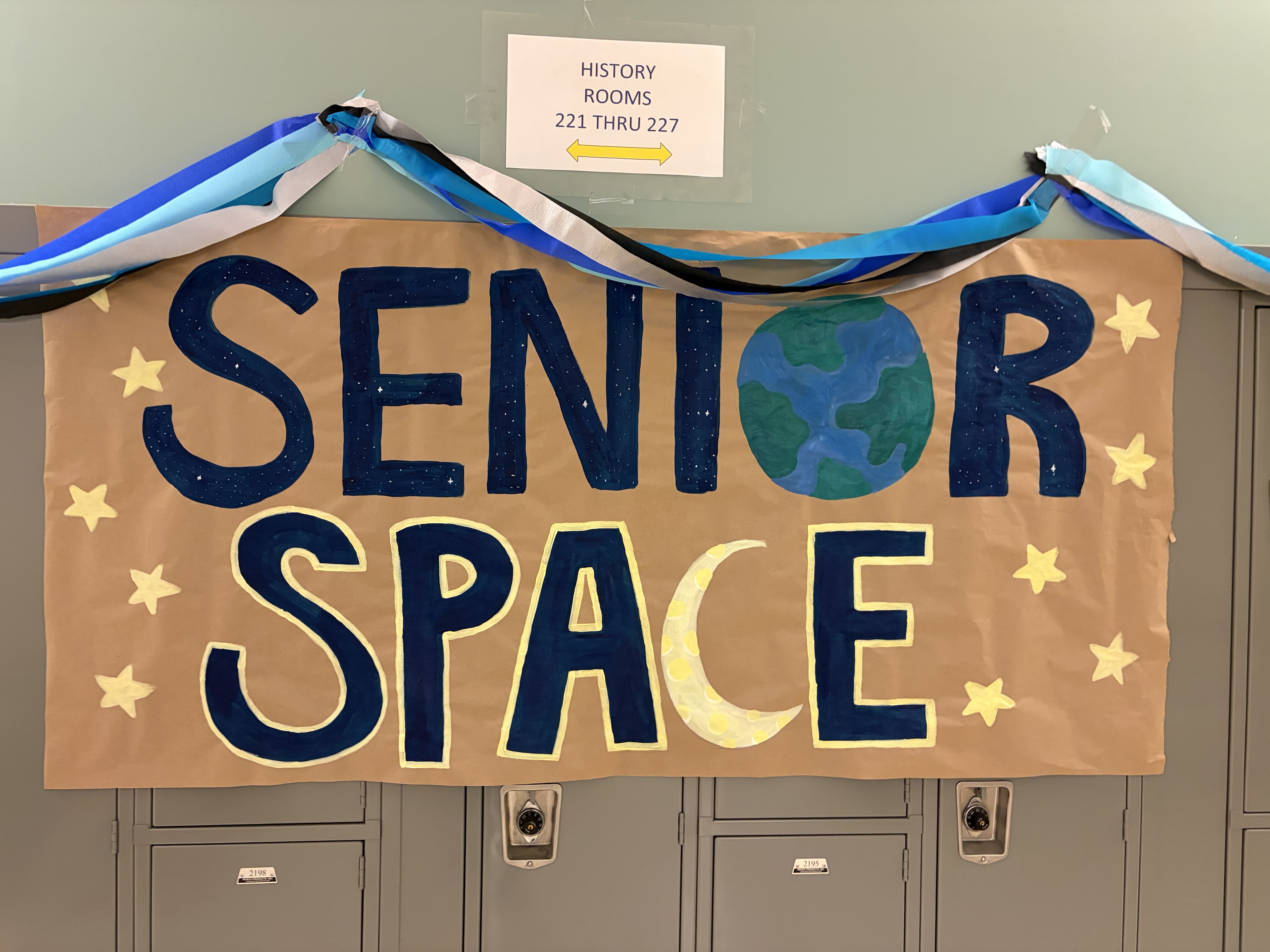
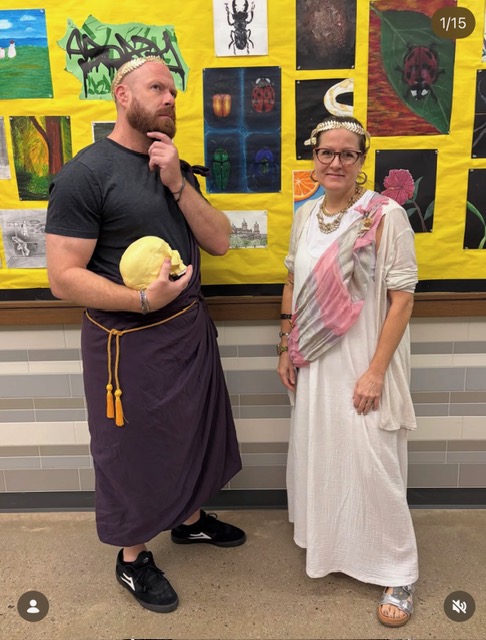
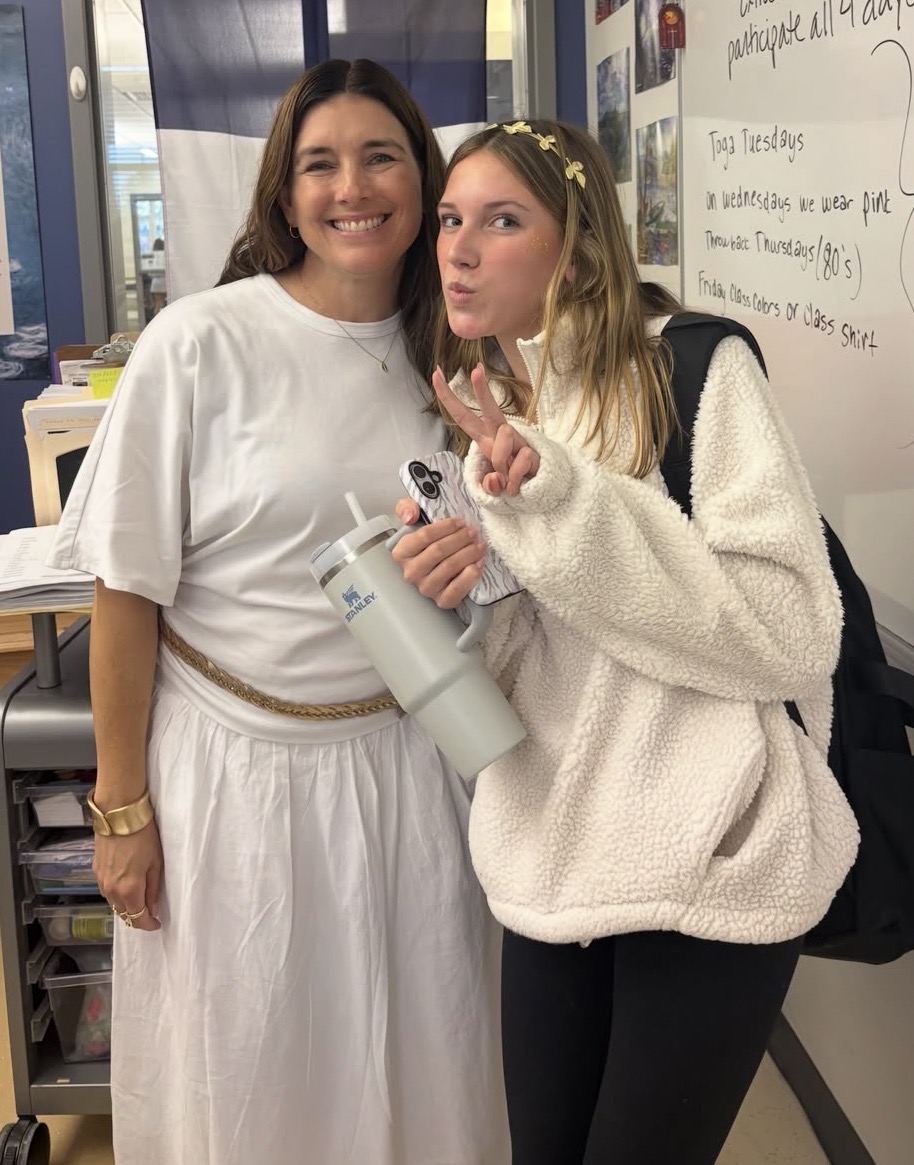
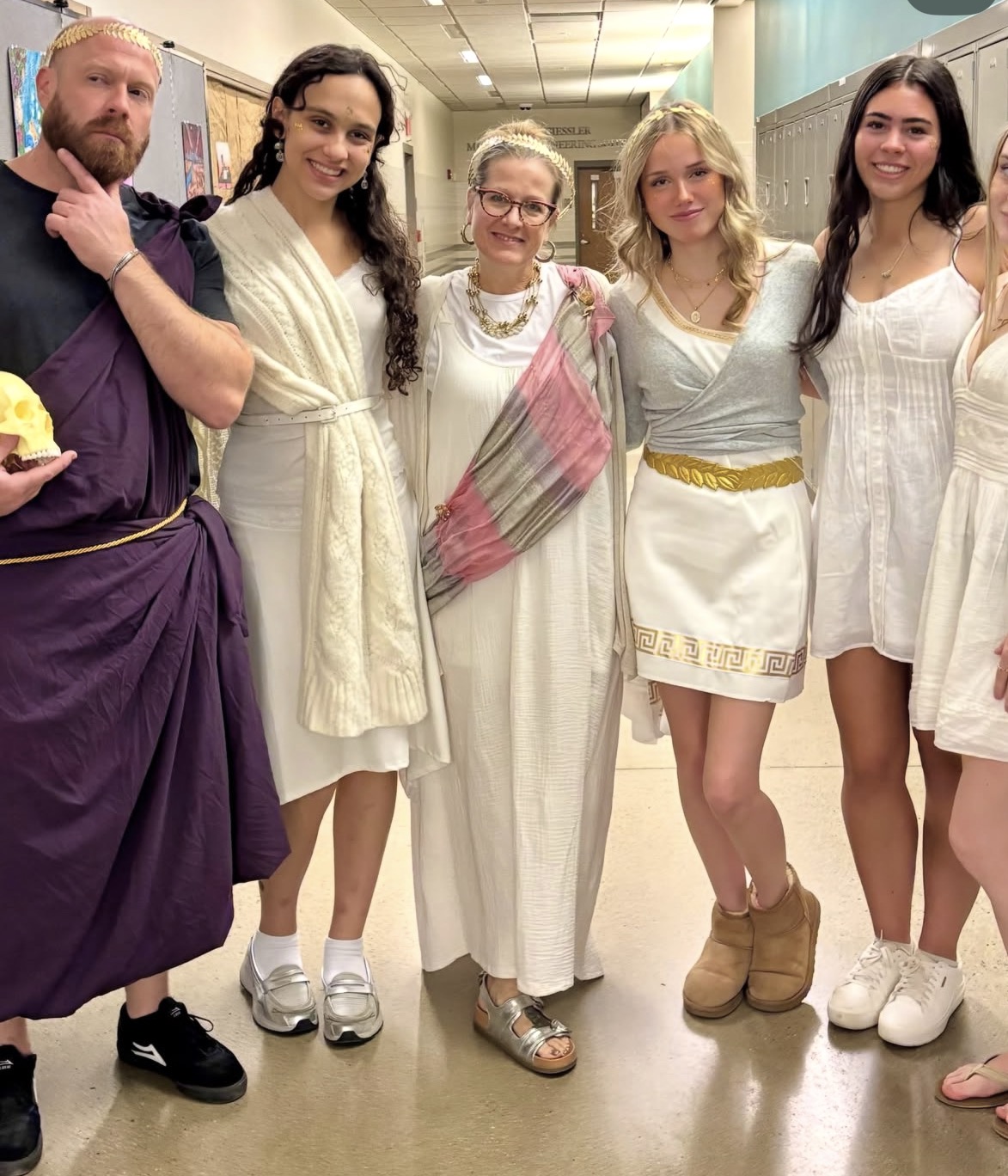
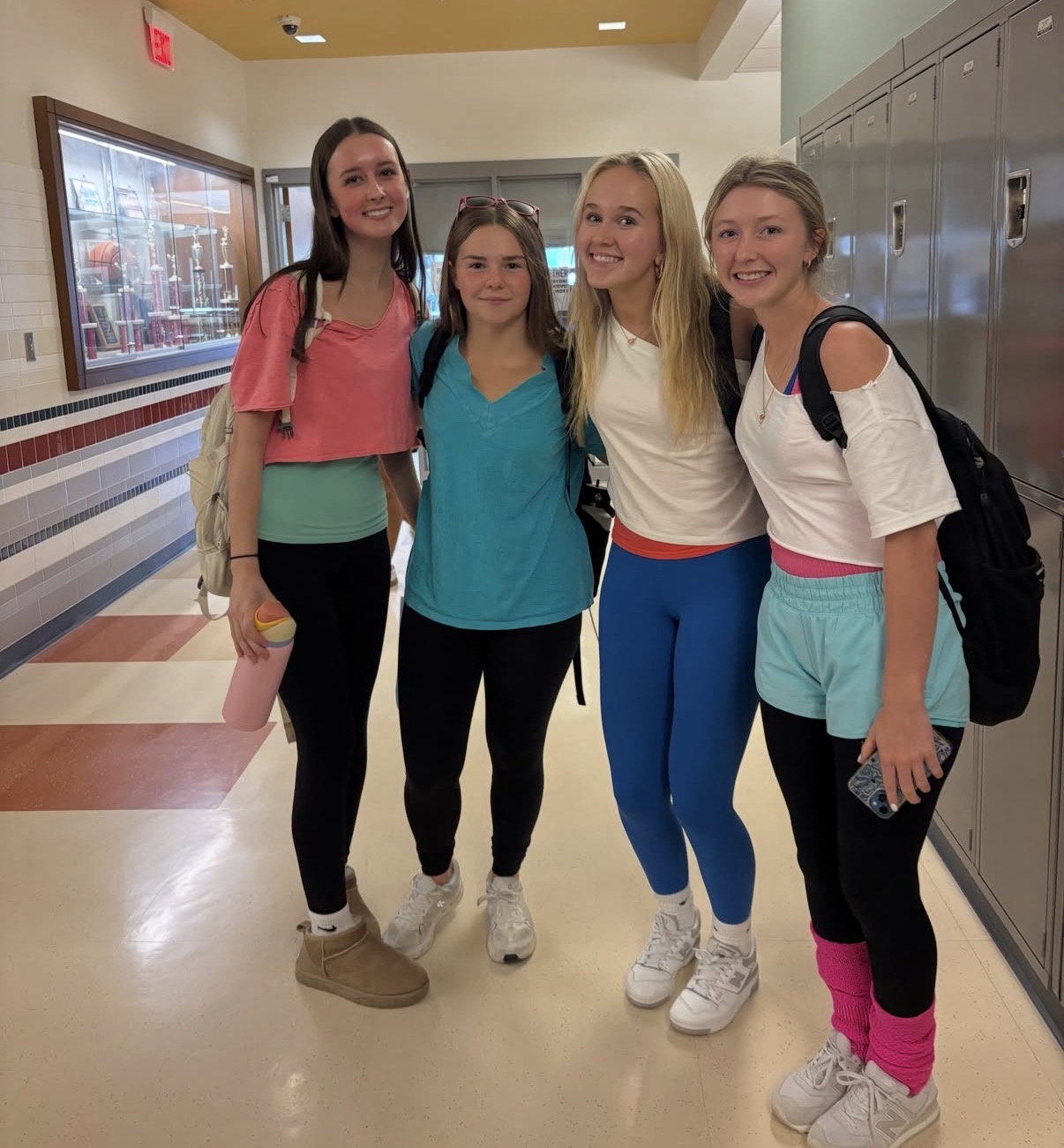
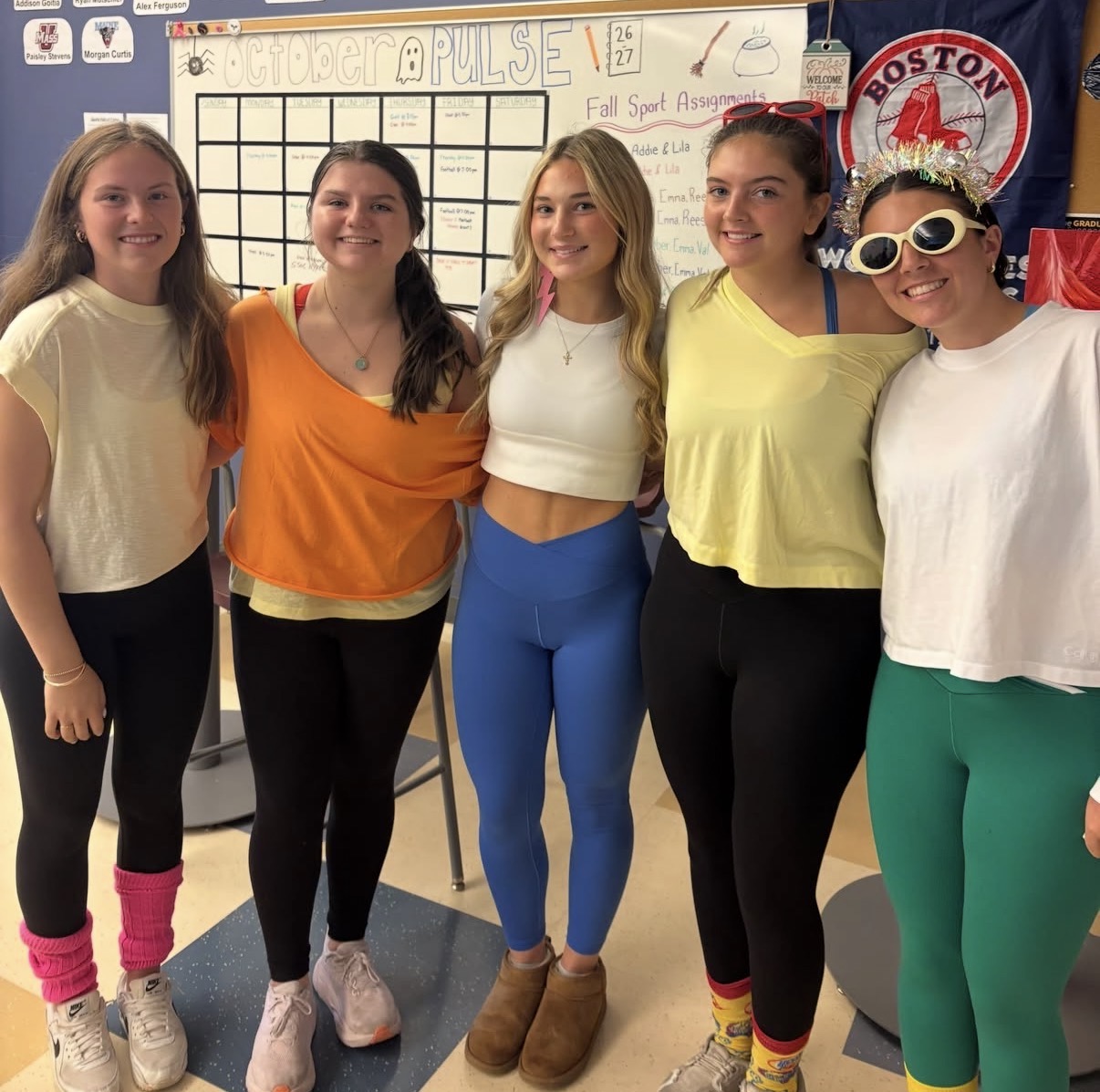
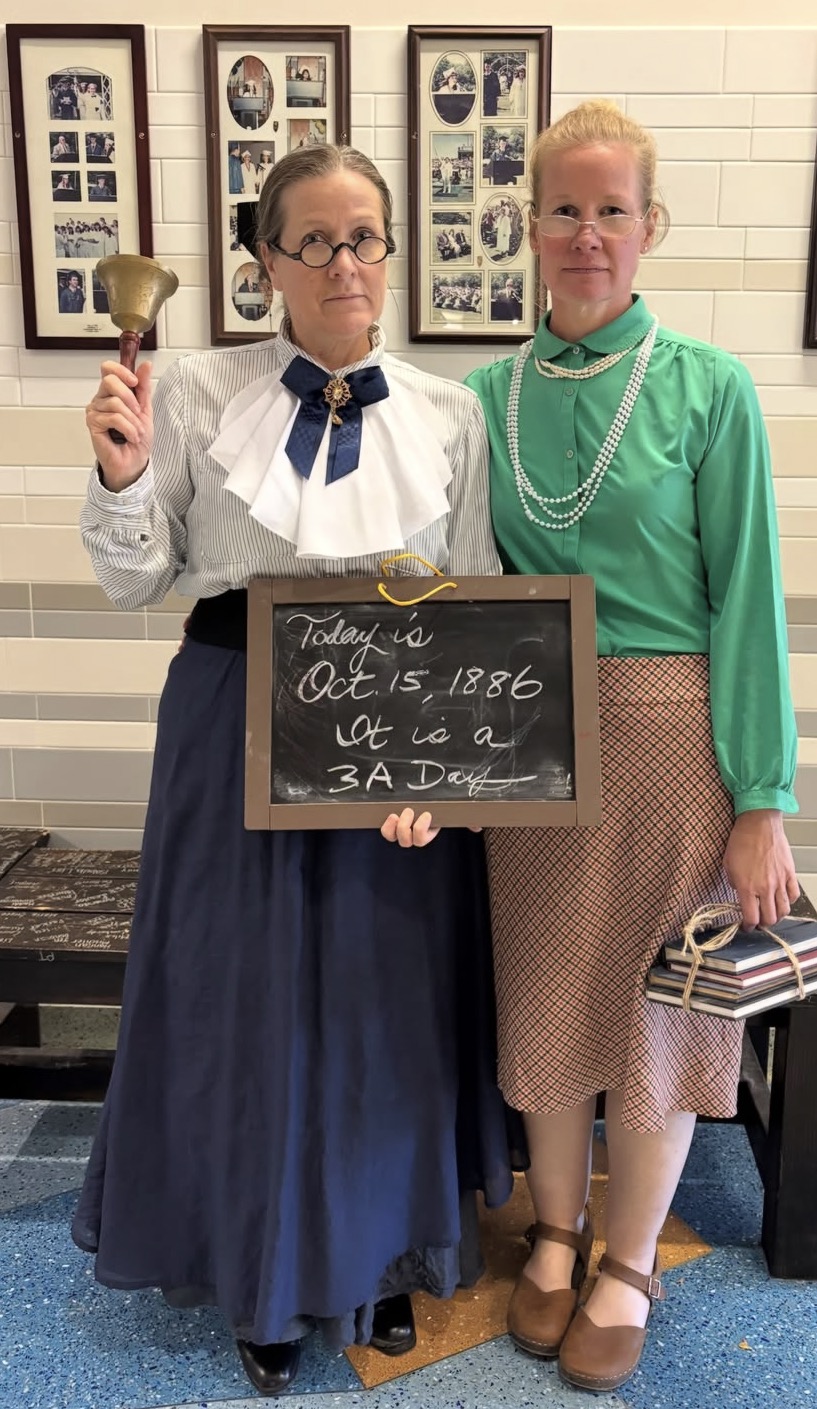
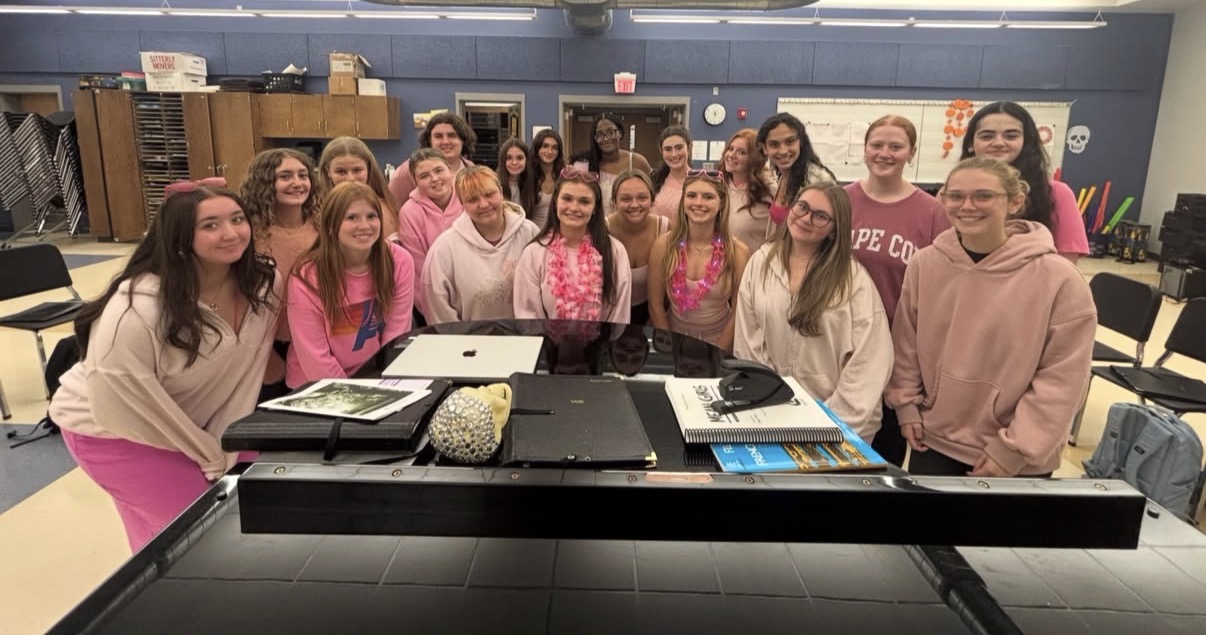
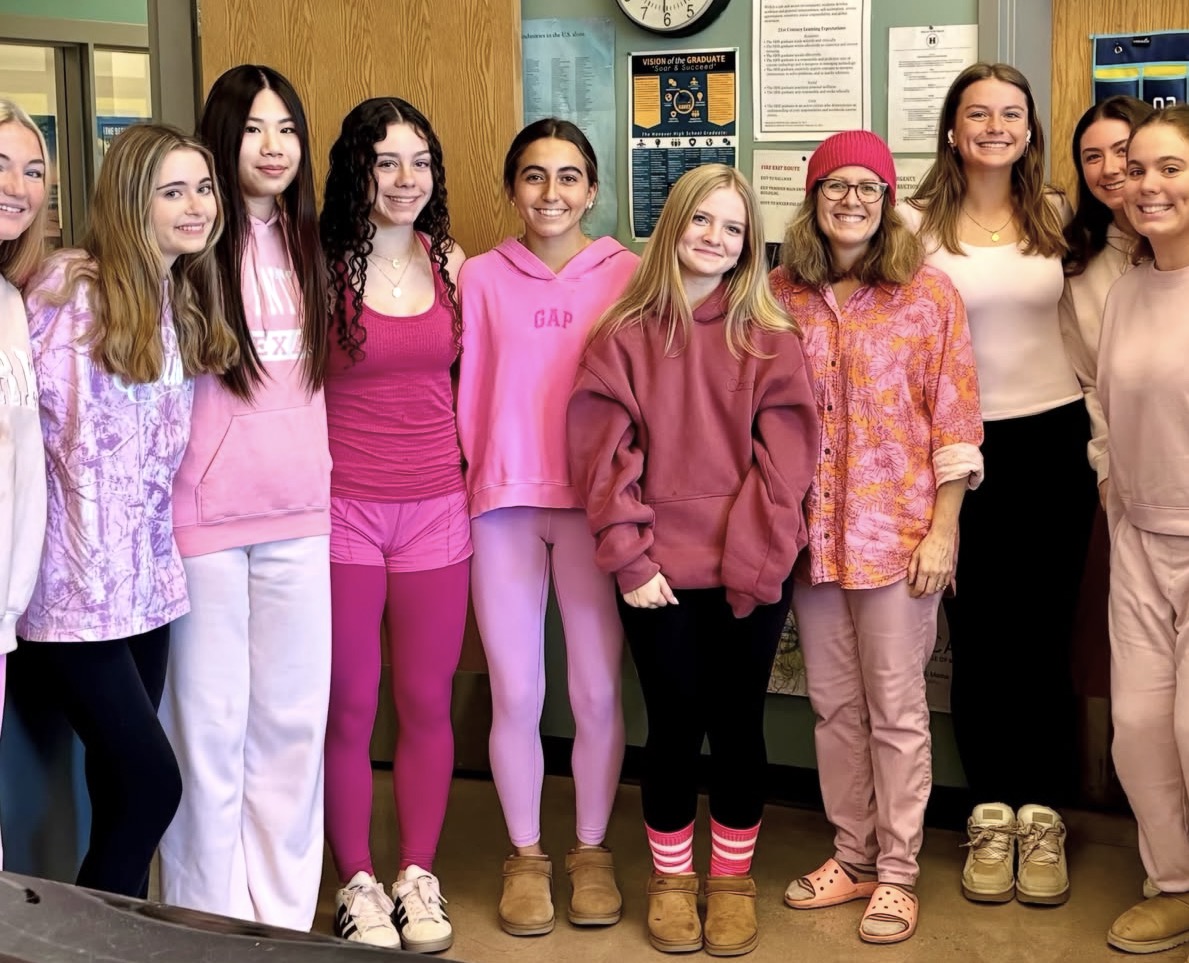
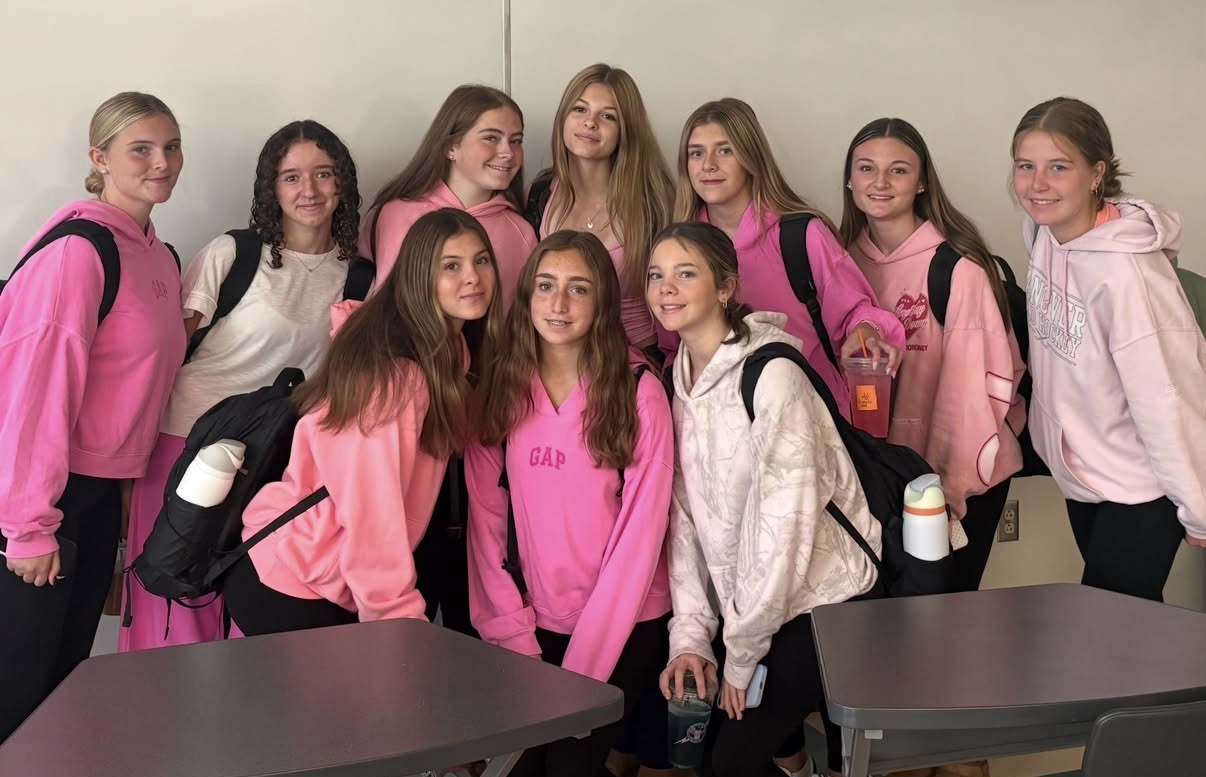
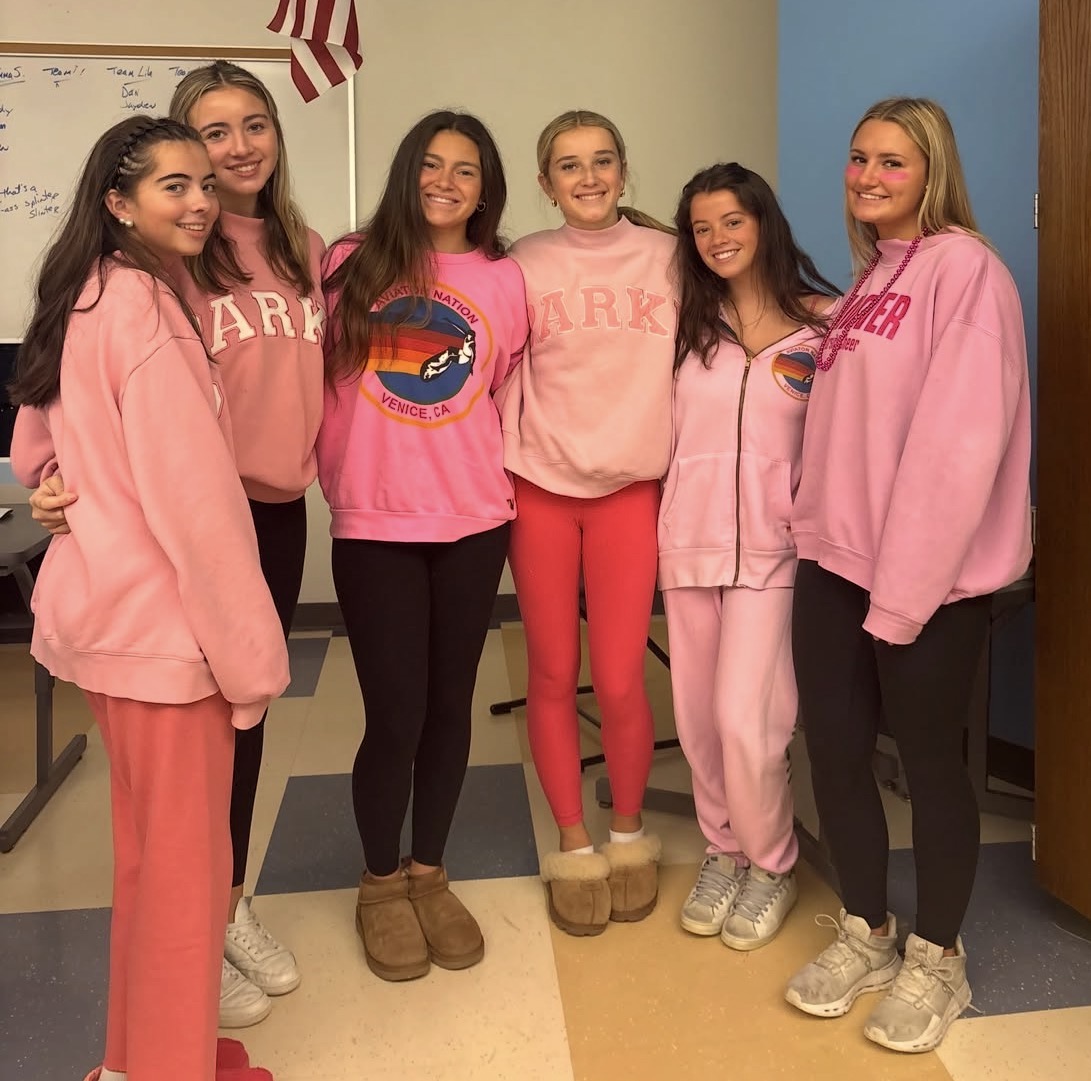
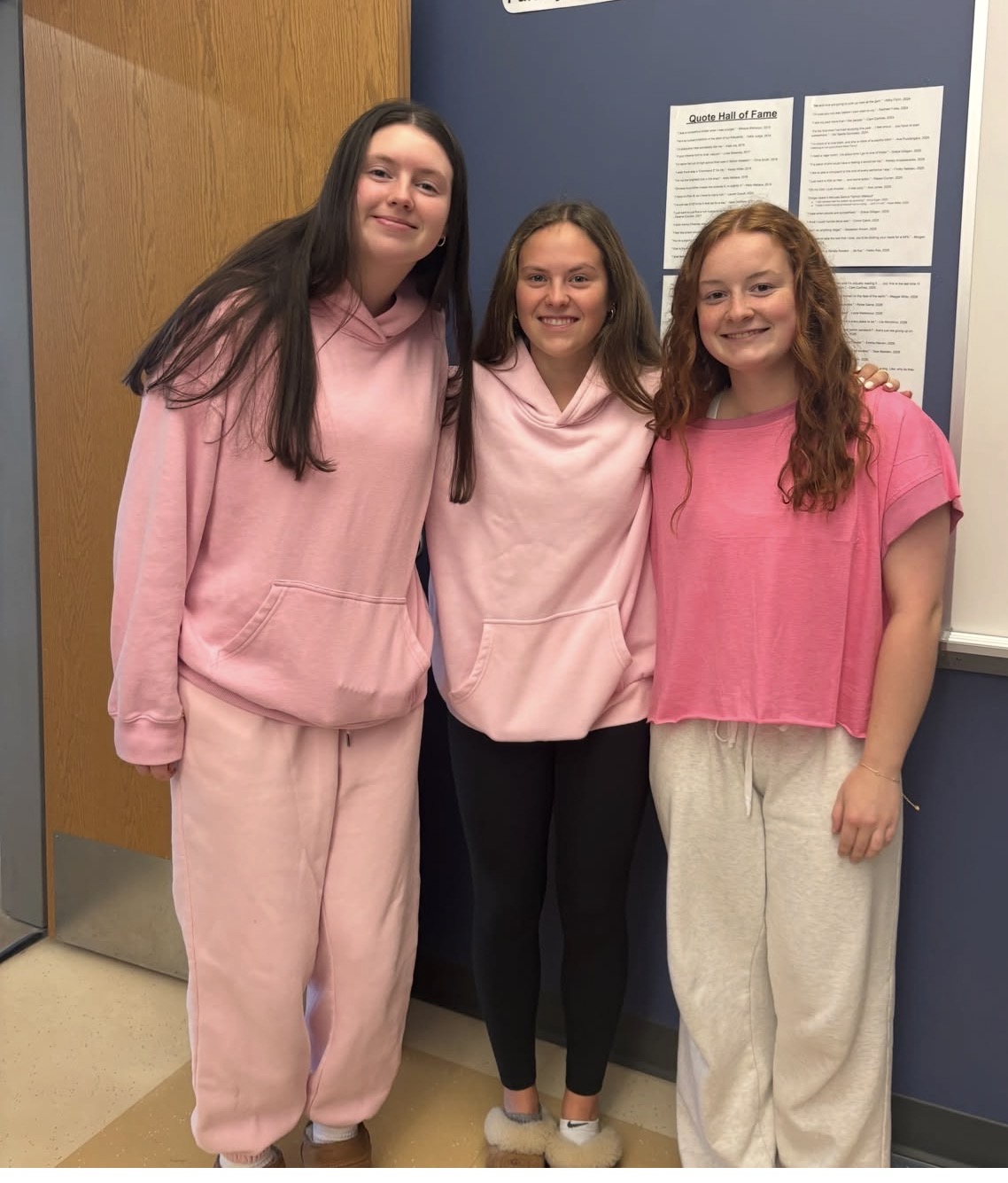
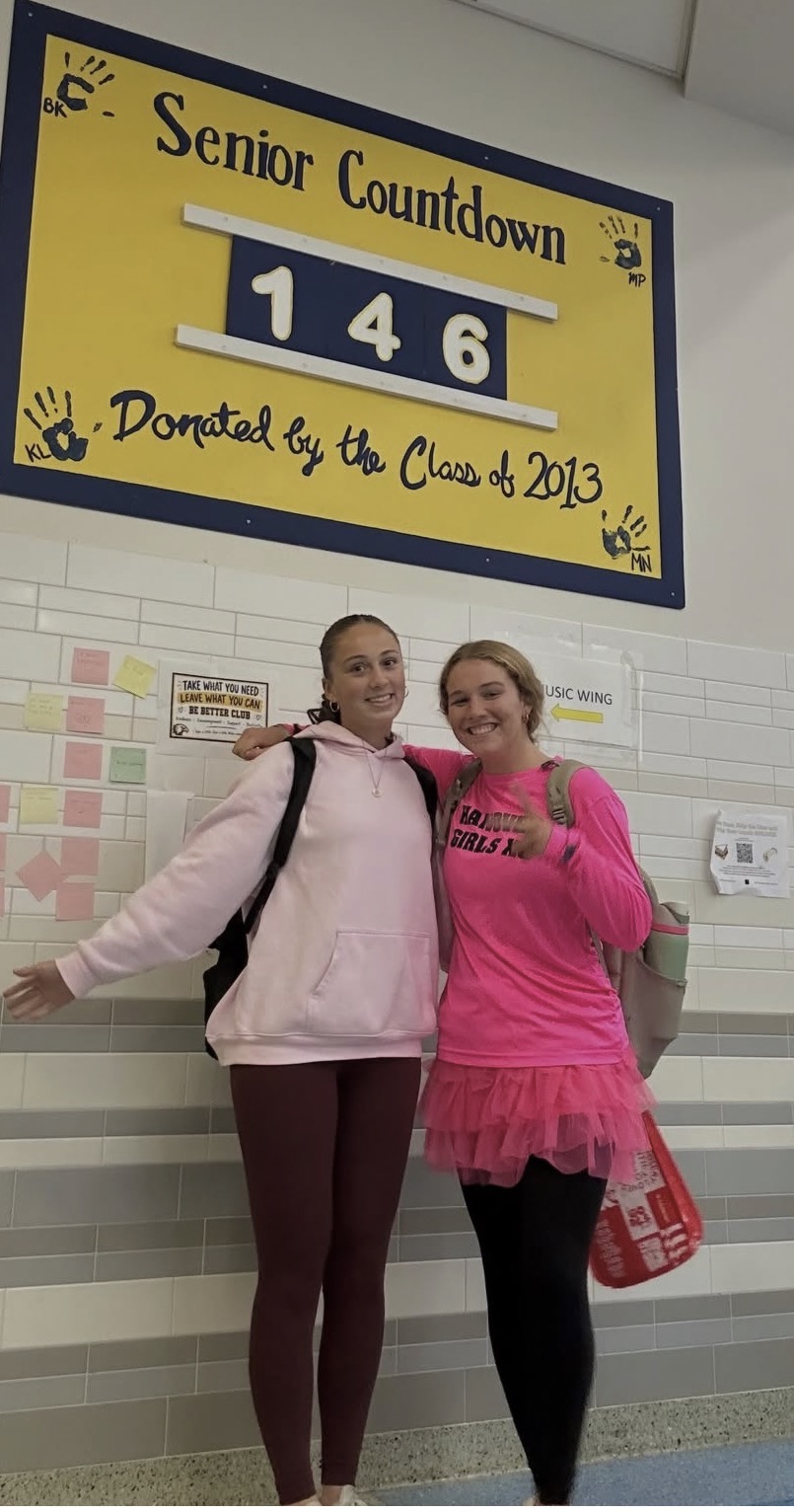
An entire classroom dressed in pink? Teachers wearing togas? Siblings tackling each other for the last musical chair? It can only mean Spirit Week at Hanover High.
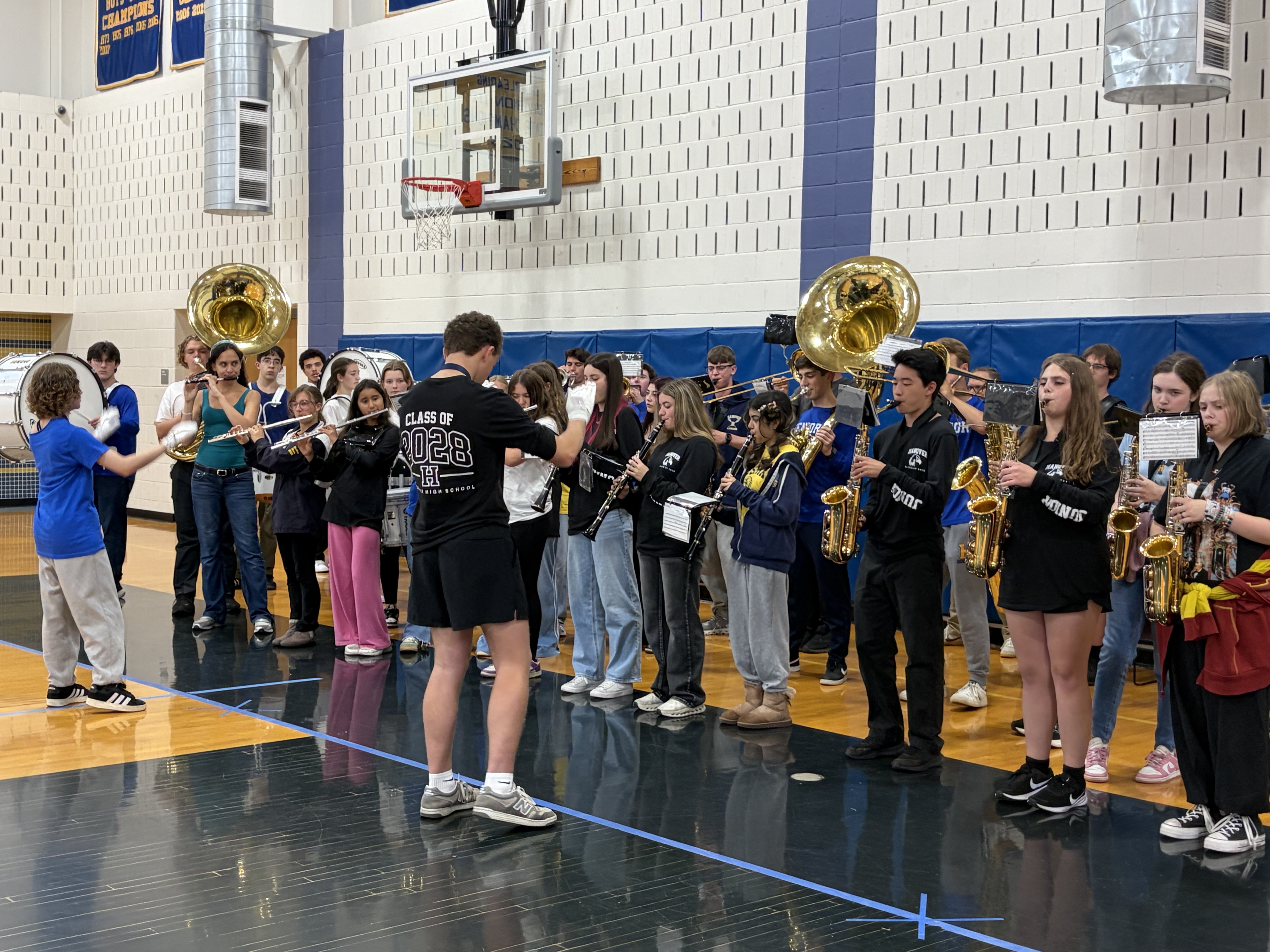
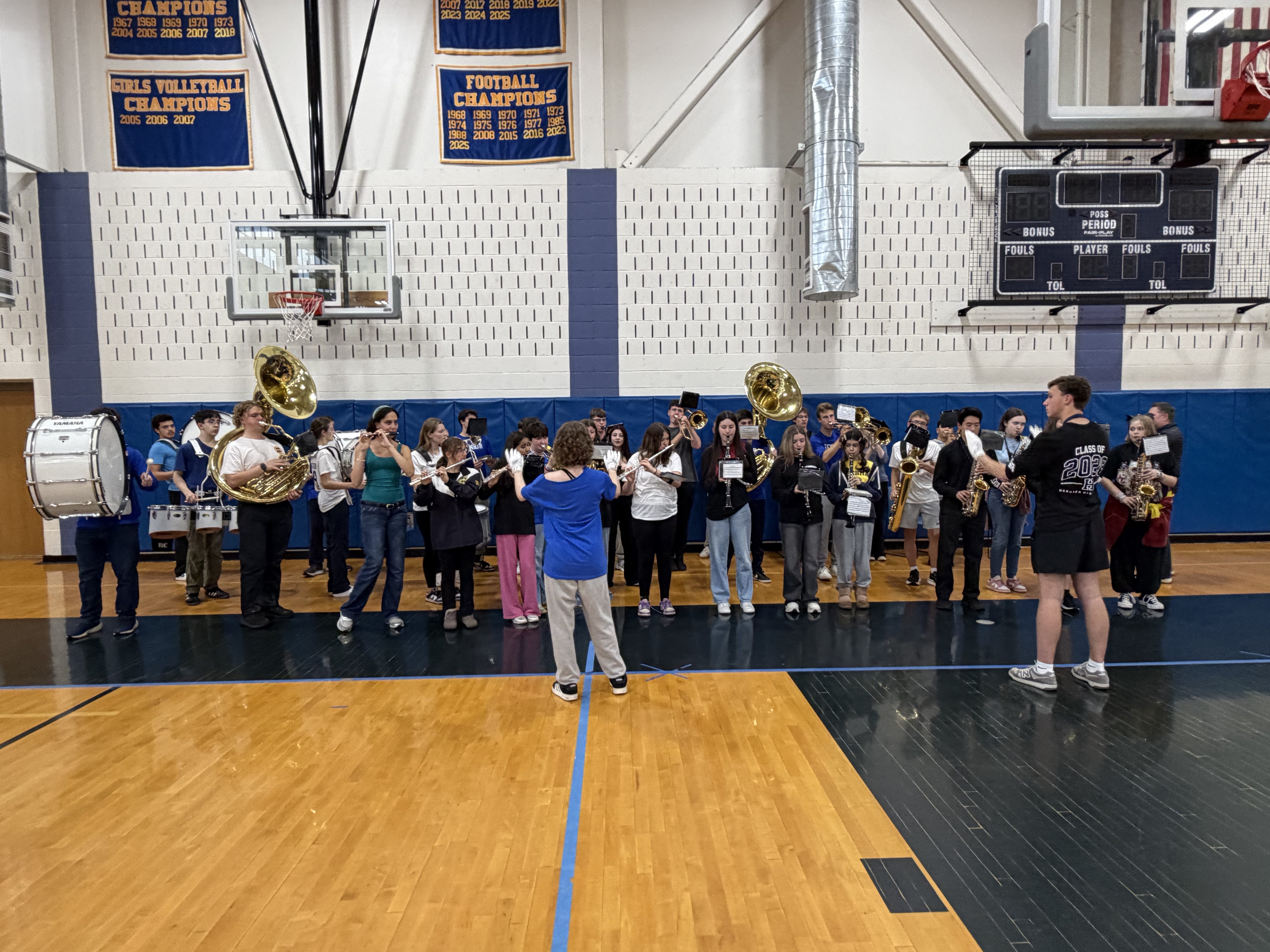
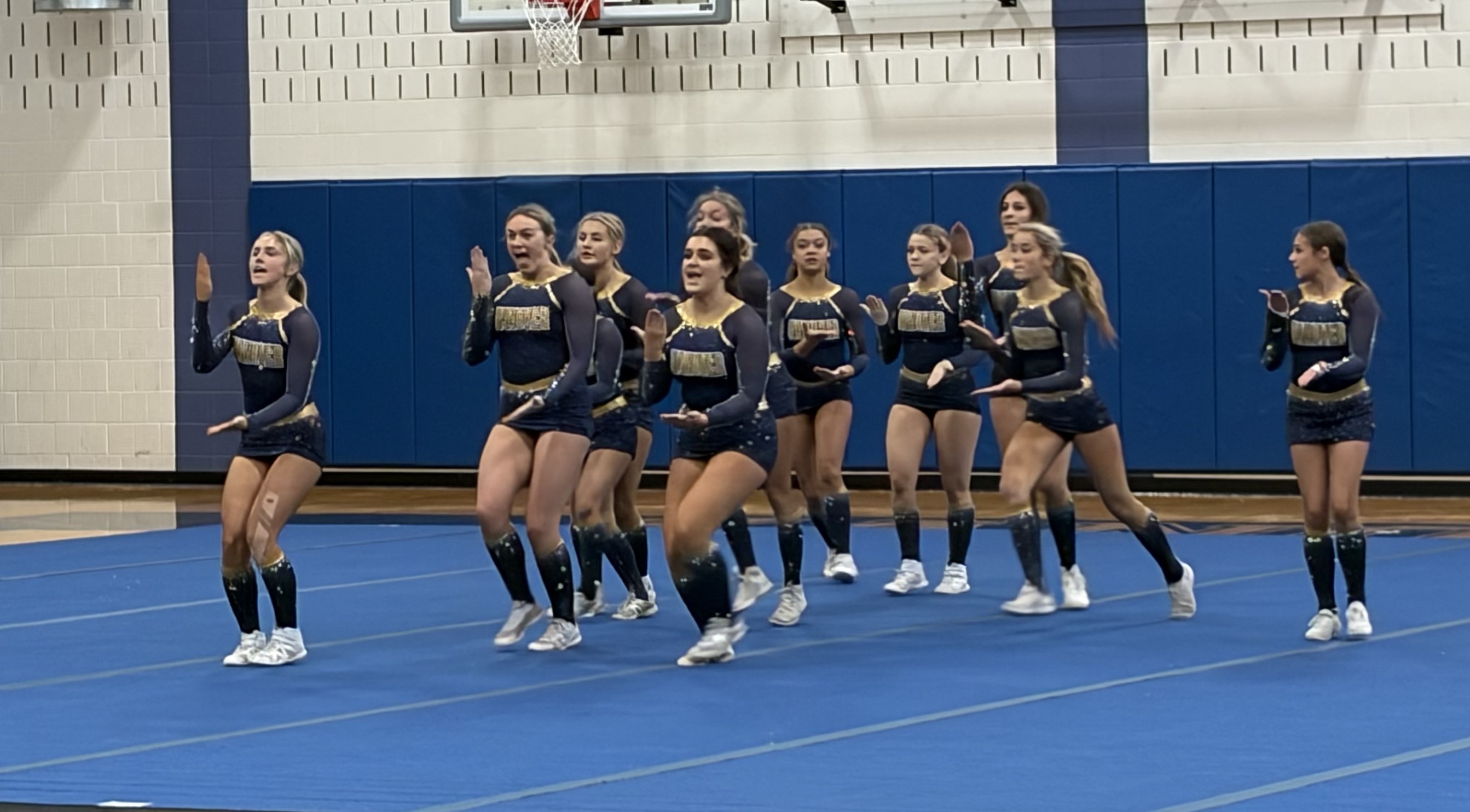
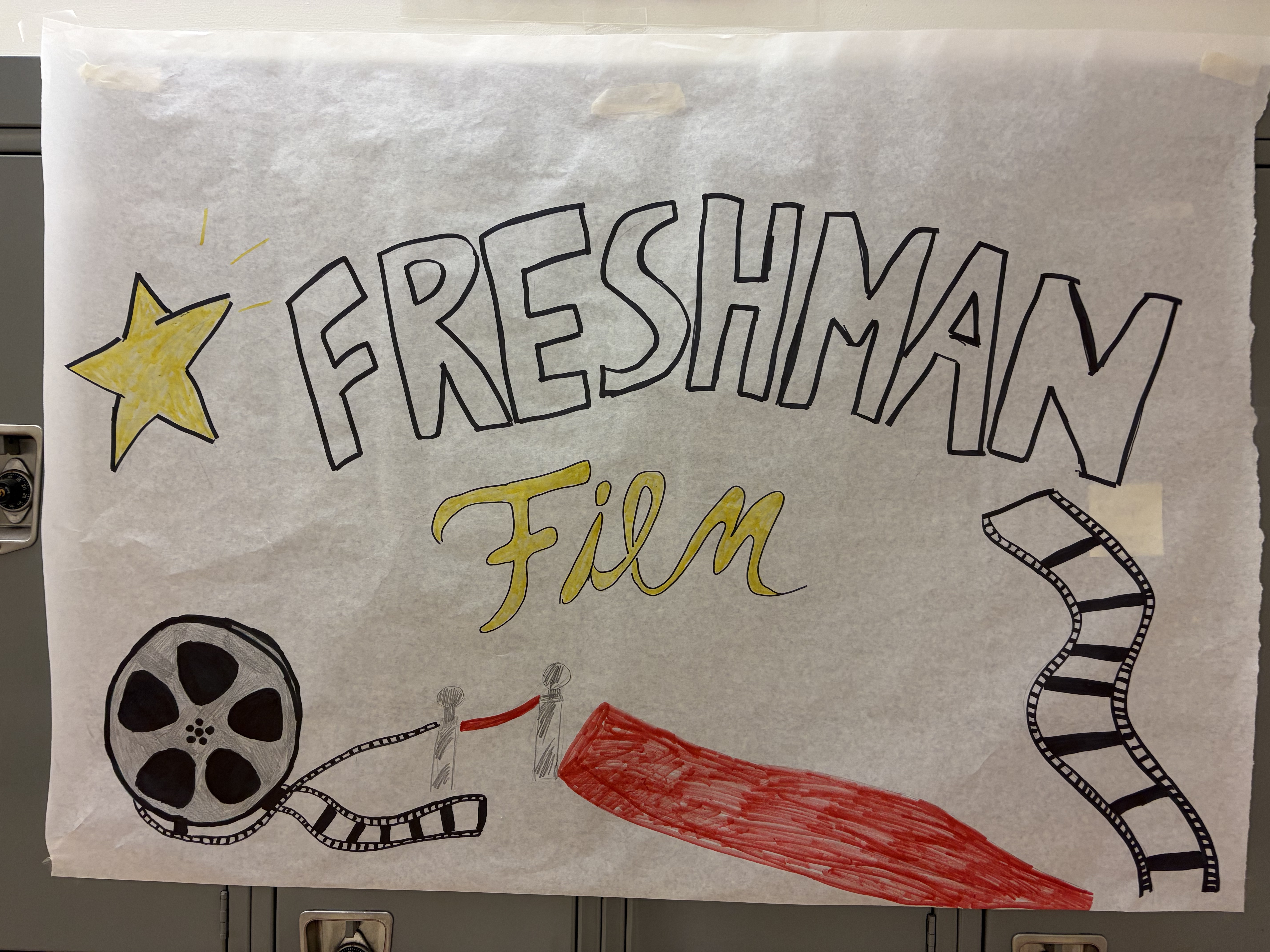
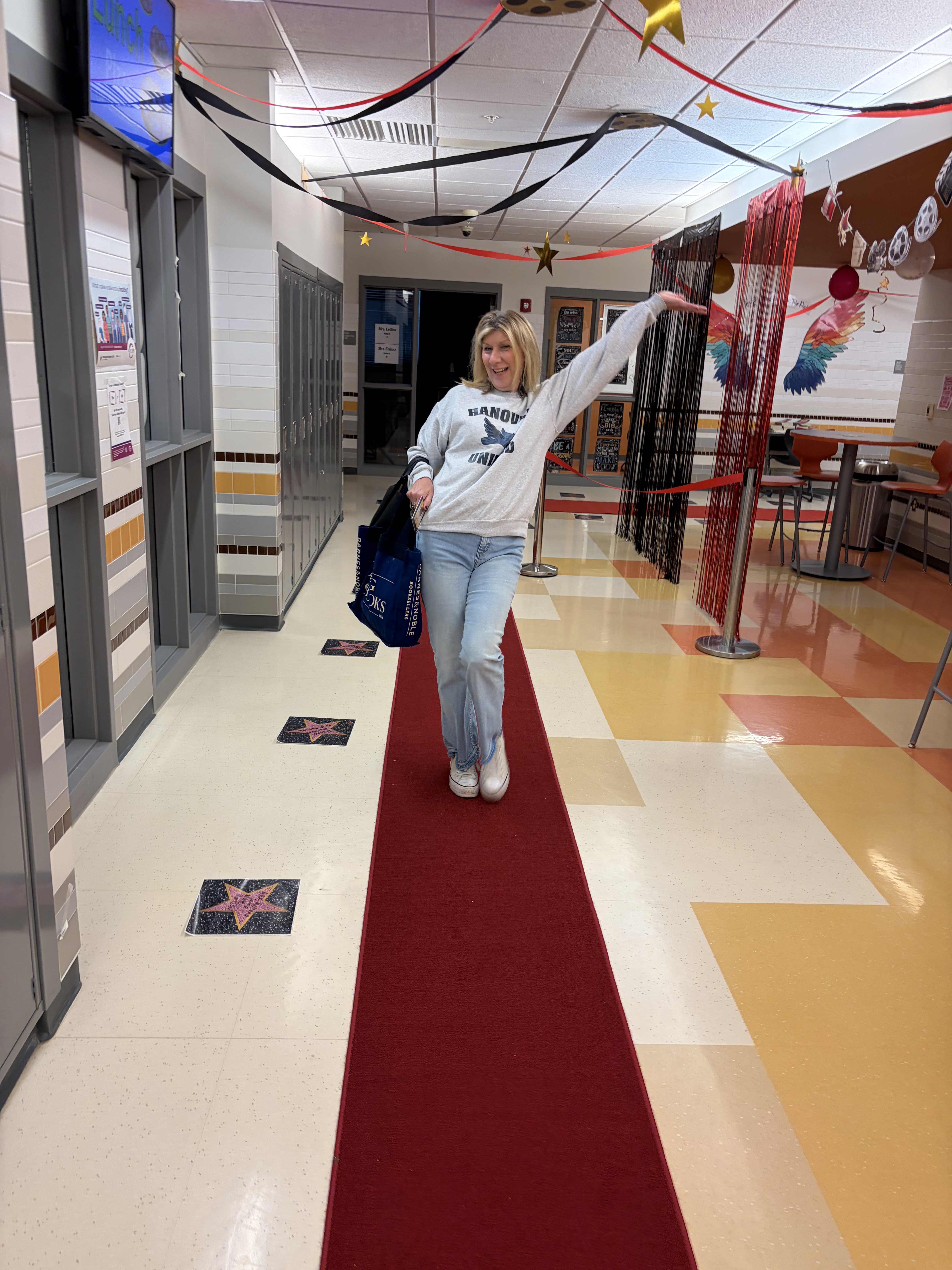
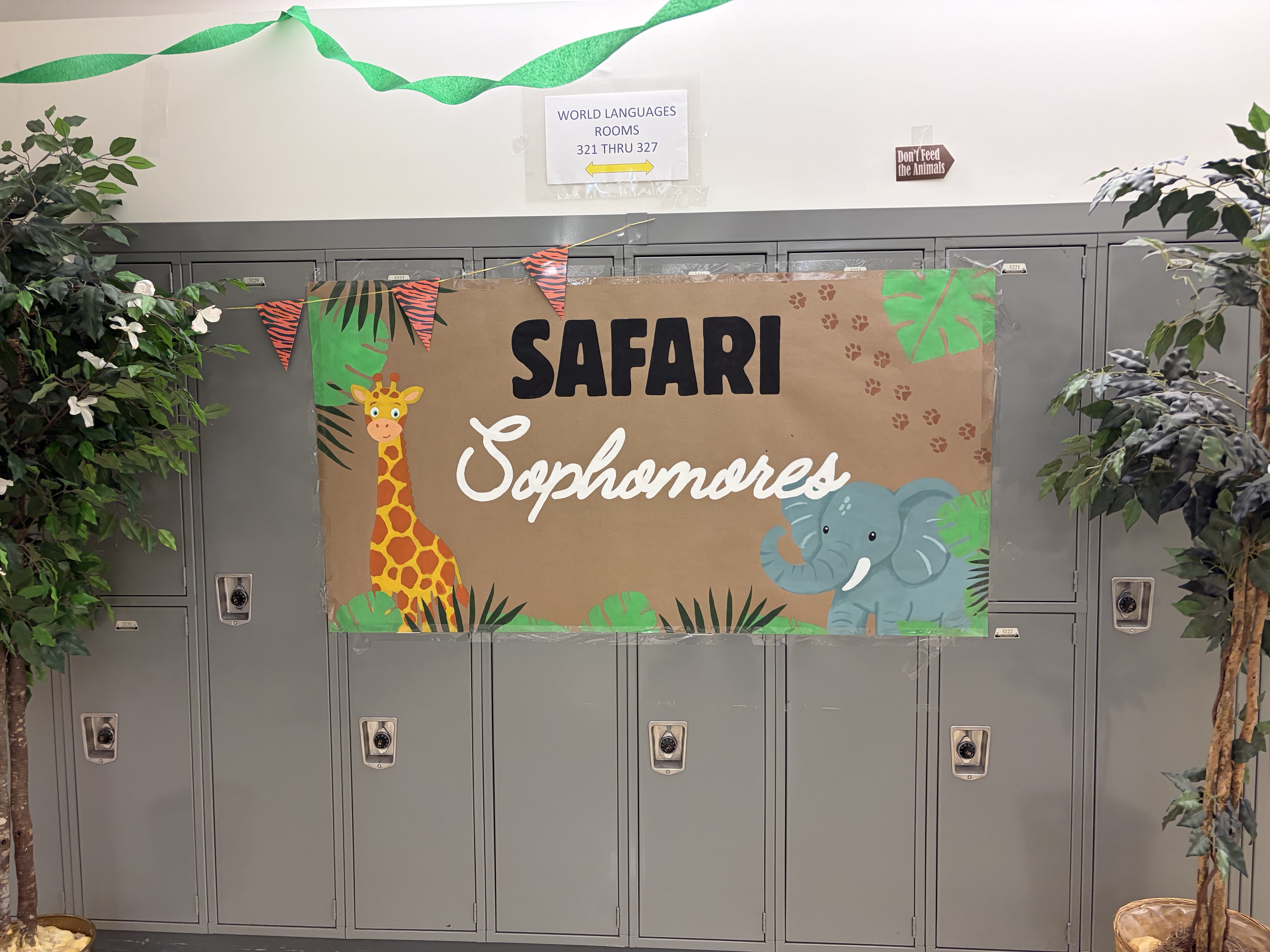
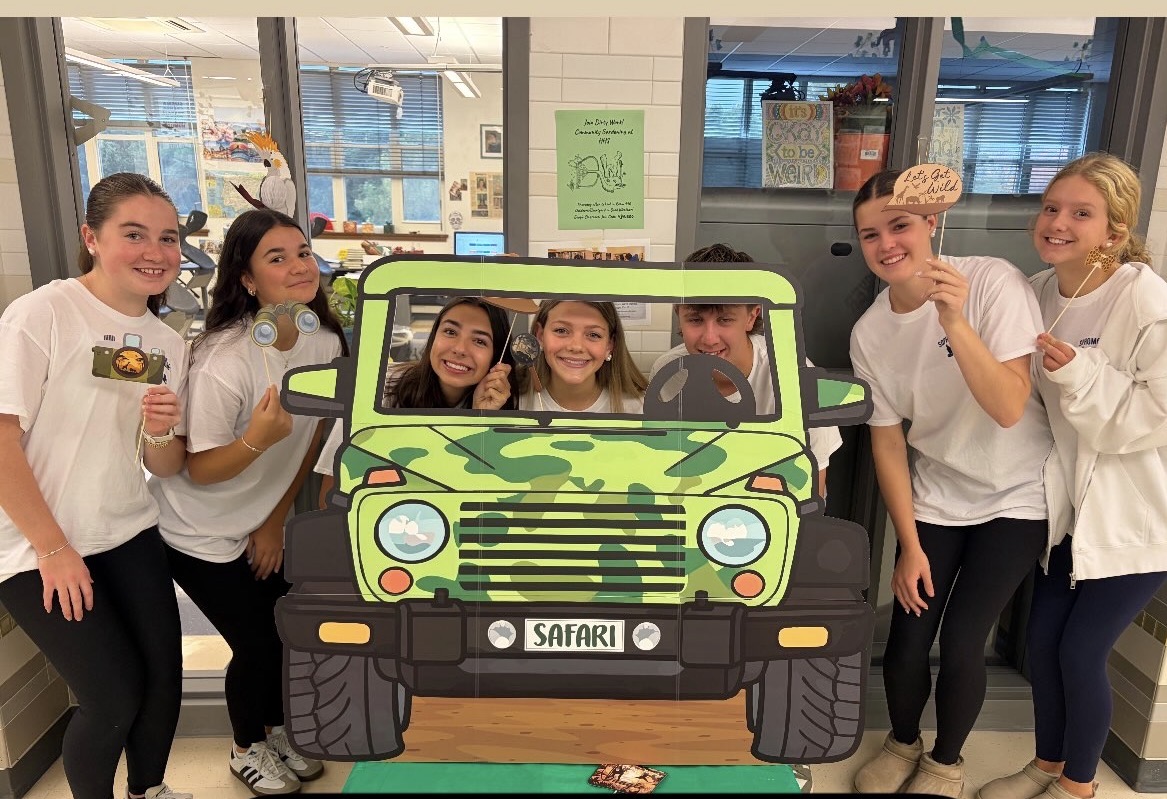
The annual tradition was celebrated Oct. 13-17, featuring dress-up days including Toga Tuesday, ‘On Wednesdays We Wear Pink,’ Throwback Thursday and Class Color Friday. The Friday afternoon pep rally kicked off with performances by the HHS competition cheer squad, which has taken home the last two state championships, and the Pride of Hanover Marching Band. Games included sibling musical chairs, won by brothers Connor and Charlie Hines, and three-legged races. As seems to happen every year, the senior class took home the prize for the most spirit, including the loudest cheer judged by art teachers Mr. File and Mrs. Curley. The sophomores, however, won the pod decorating contest with their safari theme .
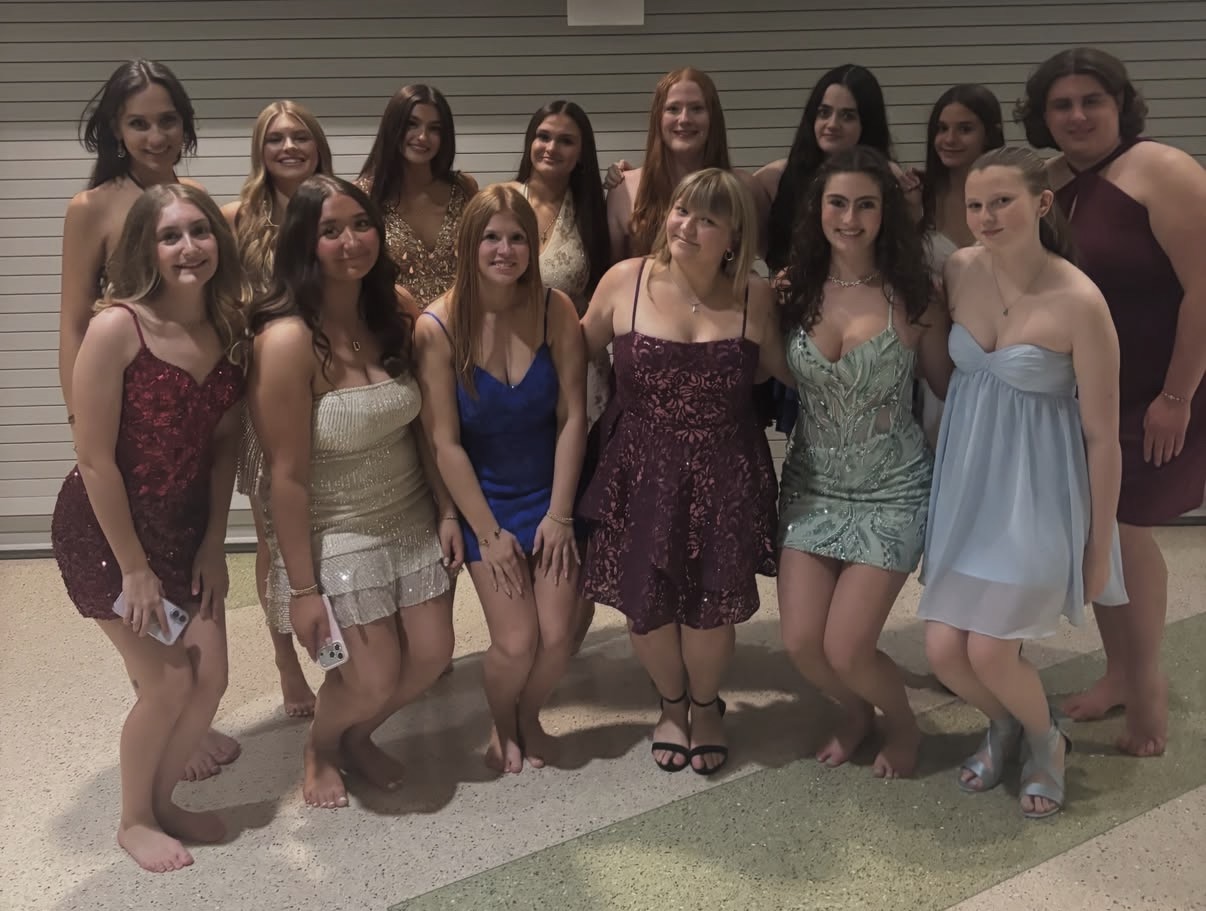
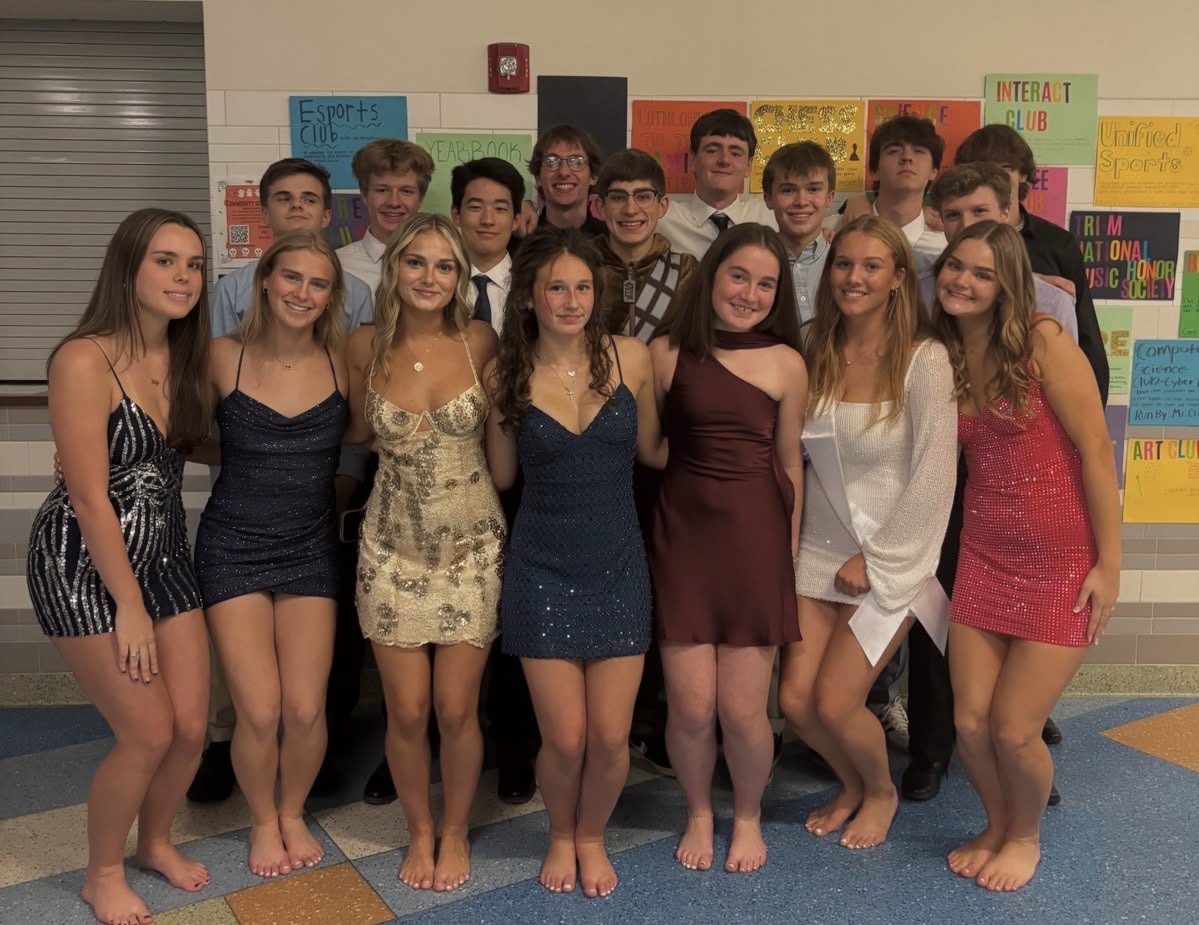
Fans came out to cheer as the football team took on North Quincy on Friday night, despite the pouring rain and a disappointing final score. Seniors on the team invited HHS staff who’ve made an impact on them to attend the game and join captains on the field for the opening coin toss. The week ended with the Homecoming Dance on Saturday and the announcement of Homecoming King and Queen. Tessa Logan and Marty LeBlanc took top honors, while the court included Kenzie Sherman, Sawyer Bradford, Mikayla Picard, Lila Minichino, Declan Freel, Steven Drummy, Connor Cahill and Colin Brown.
Pictures were taken by Hawk staff or collected from Class Instagrams. Click to enlarge and use the arrows to scroll through.
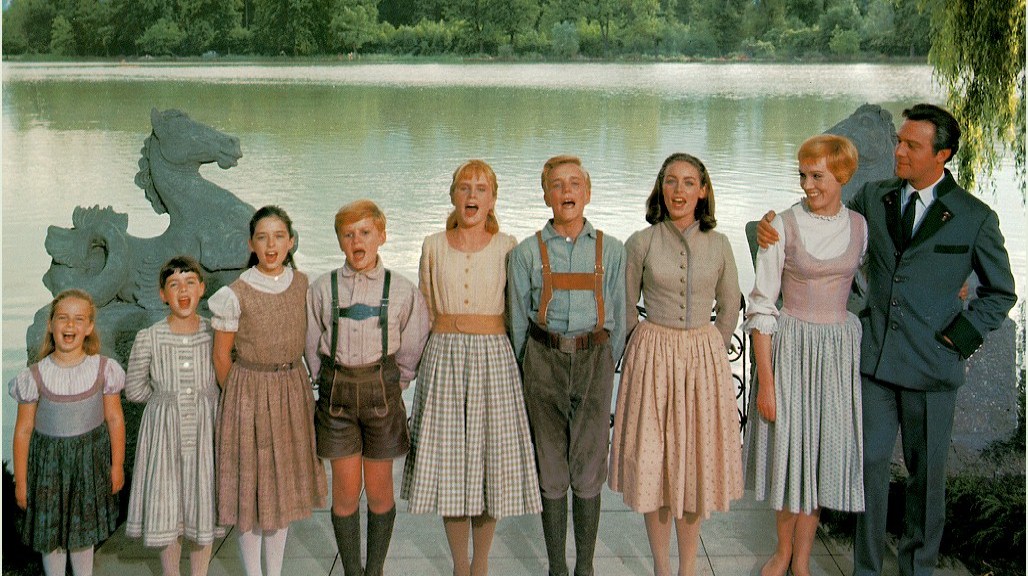
“The Sound of Music” is a movie about a young woman named Maria who lives in Austria and is full of high spirits and positivity. She lives as a nun but leaves her abbey to become a governess to the von Trapp children, and later falls in love with their father, Captain Georg von Trapp. The movie shows how people around Maria change and grow because of her optimism and loving personality. For example, the seven children ranging in age from 5 years old to 16 start acting like children rather than soldiers in an army when Maria takes charge instead of their strict father. Also, the captain and baroness planned to marry but decided they were not suitable for each other as Georg found his love for Maria.
This movie has been a favorite of mine since I was little. I used to fall asleep to this movie in my parents’ old bedroom and I used to love the songs Maria sang to the children. I also loved the puppet show scene. Now that I’m older, I like the historical context too. The story takes place during Nazi Germany’s rise to power, and its annexation of Austria. Captain von Trapp is called to serve the Nazis, but resists, putting himself and his family in danger. The scenes at the end of the movie when the von Trapp children flee the Nazis during the music festival is one of my favorites. As they sing the goonight song, they run to hide in Maria’s old abbey, where the nuns sabotage the Nazis’ car and help the von Trapp family escape Austria. I am interested in learning about World War II and other past wars, and “The Sound of Music” was inspired by a real family.
I wrote this review as a tribute to my dad since he wrote movie reviews in high school. This movie is one of our many favorites to rewatch and talk about since he and I talk about history a lot.
The Hawk welcomes feedback from our readers. You can post a comment on an article, suggest an idea or contribute a letter to the editor such as this from HHS senior band member Ross Canwell.
To The Hawk,
I am writing to share some exciting information about the Hanover High School Marching Band. I would appreciate you sharing this information in the school’s newspaper.
The Hanover High School Marching Band, also known as the Pride of Hanover Marching Band, has been an integral part of the school’s culture for decades. This year is no different. The marching band is composed of students ranging from 9th to 12th grade, and this year it features 15 seniors. The band’s field show for the 2026-2027 season is an arrangement from the musical Les Misérables. You will see the marching band in action at all of the Hanover High School football team’s home games, so be sure to come check them out!
In addition to their field performance, the Pride of Hanover Marching Band also performs at various community events throughout the year, including the Veteran’s Day observances at Center Elementary School and the Memorial Day parade. In addition, the Hanover Marching Band performed at the annual Cabaret Showcase on October 15th at Hanover High School.