
By Sophie Bunar, ’27
Staff Writer
Content warning: This article contains discussions of suicide and mental health struggles.
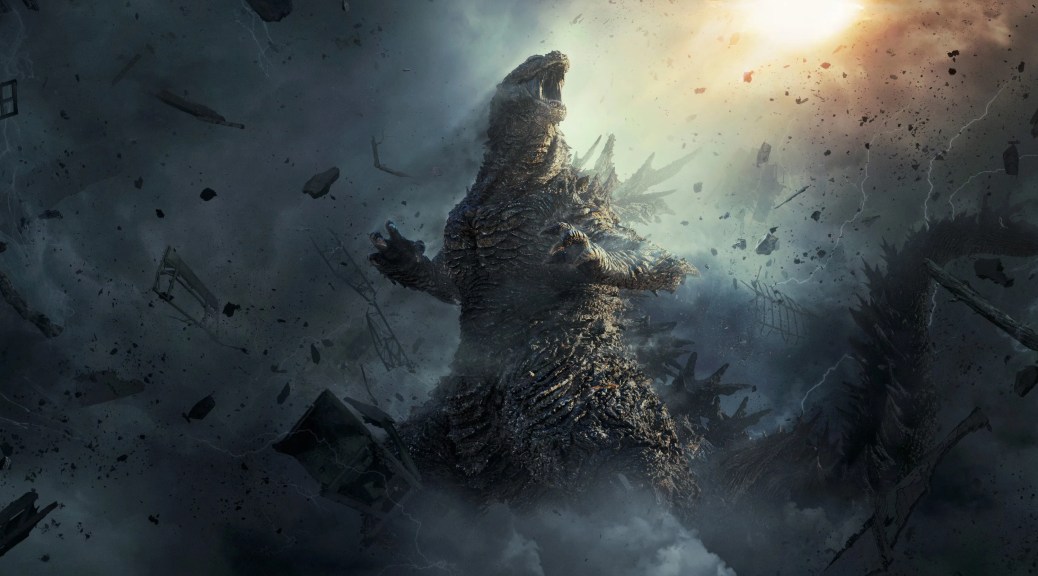
In light of the recent movie, which was released to American theaters on November 6th, the discussion about Godzilla as more than just a monster has been circulating around the internet more than ever.
The original 1954 Godzilla film is widely understood as a metaphor for the devastation of war in Japan, most importantly as the aftermath of the detonations over Hiroshima and Nagasaki in 1945. Godzilla Minus One, which was released in 2023, reimagines that story immediately after the end of World War II. As Japan starts to recover from the war, Godzilla presents itself as a new threat to their existence, emerging from the sea to devastate everything in its path.

Where did this inspiration come from? One of the creators, Tomoyuki Tanaka, witnessed the United States detonate its largest nuclear explosion in the Marshall Islands on March 1, 1954. As he was flying back to Japan over the Pacific Ocean, he wondered if a hydrogen weapon detonating in a large body of water could accidentally awaken some prehistoric sea monster, causing it to morph into a larger beast. The idea birthed Godzilla, a giant reptilian monster.
In their 1954 film, they recreated the Castle Bravo nuclear test. When Godzilla destroys the boat in the opening sequence, he is followed by a bright flash of light. During his rampage through Tokyo, he wreaks destruction with both fire and his sheer size. The people who manage to survive this destruction are left to contend with radiation, which is purposefully used by filmmaker Ishirō Honda to portray Godzilla as an allegory for nuclear weapons.
The anxieties about nuclear weaponry in the film don’t end there, because one of the main characters, a physicist named Dr. Serizawa, has a secret project called the Oxygen Destroyer. The device disintegrates oxygen atoms in water, which actively kills all organisms through asphyxiation. Although he is adamant about never using it, he relents to stop Godzilla. Ensuring it will never be used again in fear of accelerating the arms race, he commits suicide at the end of the film.
In Godzilla Minus One, written and directed by Takashi Yamazaki, more than just the nuclear fallout is considered. Set in Ginza, the heart of Tokyo’s modern culture and commerce, Yamazaki creates a physical manifestation of Japan’s collective trauma. Before and after WWII, Ginza was a center of urban life, culture, and economic revival, making its destruction in the film a powerful representation of how deeply the war and its consequences affected Japanese society.
When the monster surfaces, glowing neon blue from the nuclear testing at Bikini Atoll, it unearths the repressed shame and trauma of Japanese veterans, particularly a failed kamikaze pilot, Kōichi. When Godzilla arrives in Tokyo, Kōichi is no stranger to its devastation. Previously, during his failed flight, he stopped on the fictional Odo Island, where he hesitated to shoot the creature and save his new allies. The Japanese government in the film’s narrative covered up the incident, falsely claiming the deaths were due to a military attack by the United States.
While the nuclear mutation of Godzilla is a crucial part of the plot, Yamazaki’s script focuses more on the Japanese government, including their failure to protect its citizens from this threat, as well as the imperial regime that forced young men into suicide missions during the war. The government stated that it withheld direct assistance to avoid alarming the public and escalating existing war tensions, which mirrored the approach the United States took in its dealings with Japan. Concurrently, the film critiques the rapid rearmament and modernization of Japan, raising ethical questions about the dangers of unchecked scientific advancement and military escalation. Godzilla itself represents a force that the government is incapable of controlling, forcing ordinary people to come together to survive.
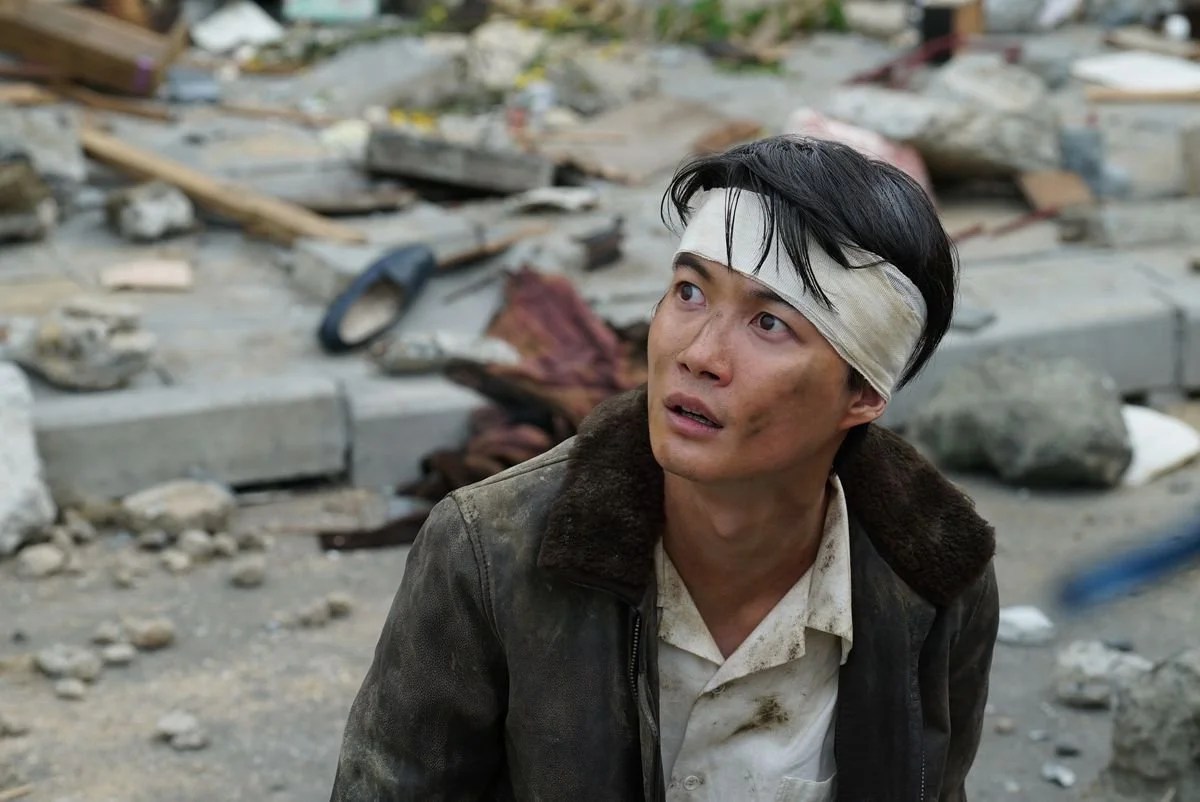
In order to exemplify this commentary, it’s a group of volunteer naval vets—not the government—who end up taking on Godzilla. Kōichi, haunted by his failure to stop the monster on Odo, the death of his family, and the ruin of his home, realizes he can only find freedom from this burden by completing his mission. This is a prime example of Yamazaki’s narration of survivor’s guilt.
According to an article by Stuart D. B. Picken, “countless Japanese have committed themselves to work as a form of living that may lead to death in order to justify their not having died when their friends and comrades did.” He also recounts a letter from a 34-year-old housewife in 1980, which tells about her father’s experience after returning from the war. On the day he returned from the army barracks, he told his wife that their engagement was cancelled and that he was going to kill himself in front of the Imperial Palace. Among the male wartime generation, up to 87 percent blamed the military for reckless policies that squandered millions of lives 60 years after the war ended. This reflects a form of survivor’s guilt or perpetrator trauma, where survivors grappled with the massive loss of life and their own continuance.
Although widely celebrated and iconic, Godzilla occupies relatively little screen time, as narrative focus remains firmly on the human characters. Irrespective of the quality of their execution, the Godzilla movies function as an embodiment of devastation, a reflection of humanity itself rather than a traditional antagonist.
The general message of Godzilla Minus One is an anti-war statement that rejects the militaristic ideal of sacrificial death in favor of the courage to live and build a future. Kōichi, through forming a makeshift family with Noriko and her adopted daughter Akiko, learns that his survival is not a betrayal, but an opportunity to create meaning among ruin.

While some argue it falls short of its Oscar-winning predecessor, the immense praise for Godzilla Minus Zero proves that Godzilla’s message has remained incredibly profound for over 70 years. As film critic Alci Rengifo says, “Godzilla Minus Zero becomes more than another monster movie. It is glorious pop art about the human condition, which produces the most frightening monsters of all.”

