All posts by The Hawk

HHS Alumni Reflect on Transition to College

By Grace Van Duyn, ’22

Staff Writer

As I am a senior, I am so happy to be done with my college applications, and I know many of my classmates are too. But now that many of our college applications are submitted, we have the new struggle of waiting to hear back from the schools that we applied to, which turns out to be just as hard as completing the applications themselves. In addition to wondering where I will get accepted, I also have been trying to envision how I would do at the schools where I applied. It can be hard to get a realistic picture of college in your head when people only share the good parts on social media, and schools only share the positive aspects in their brochures. One of the best things that has helped me has been talking to previous Hanover High students about their experiences. I’ve compiled the responses of a few students in hopes that their experiences can help you too.

Tim Sullivan, Northeastern sophomore, HHS class of 2020

Question: Do you feel like HHS prepared you well for college? 

Yes! I think that HHS has some great offerings for classes and is only expanding the opportunities, especially with VHS classes. I would encourage students to use these opportunities to try out different classes in high school. It’s totally normal to head into college not knowing what you want to do but opportunities like this in high school can help you find a direction.

Question: What is the difference in workload compared to high school? 

Although coming to college and having a new workload is definitely challenging, some aspects are similar to how things were set up in high school. One thing that was different for me was that in college you generally have fewer assignments that are worth a large portion of your grade, and this means that it’s really important to be prepared, especially when a test can be something like 30 percent of your grade! Like everything, the workload is an adjustment, but it’s manageable.

Question: Is there anything that you miss about HHS, or any advice that you would give to current seniors? 

“I miss so much about HHS! I wish I could go back, especially before Covid, and just live a quick day in my life because I do miss it. Not to be cringey but seniors, just enjoy it! I know everyone looks forward to graduating and literally counts down the days, but this is such a great year, and you don’t want to rush it.

Question: What types of students do you think do best at Northeastern? 

“I wouldn’t say that there’s one specific type of student that would excel here over another type, but I will say that everyone has a different experience at college. It’s important to reach out to current students to get the general vibe of a school, but definitely remember that everyone’s experience is unique and go with what feels right for you when thinking about where you fit best!”

Rachel Maccarrone, Suffolk University freshman, HHS Class of 2021

Question: Do you feel like HHS prepared you well for college? 

I think high school prepared me to an extent for college. Definitely prepared me socially, but college is different when you get to choose what you want to learn, and this taught me about time management and how much effort I needed to put in. Also, I would say that math was taught really well at HHS, and it prepared me for math in college.

Question: What is the difference in workload compared to high school?

“The course load depends on your major at Suffolk. In high school I felt like I could manage my work more than in college.”

Question: Is there anything that you miss about HHS, or any advice that you would give to current seniors? 

“I miss all of my friends from HHS and the fun moments. In terms of advice for seniors, I would say just make the most of it. Don’t take everything so seriously and focus on yourself.”

Question: What types of students do you think do best at Suffolk? 

“I believe that if you are hardworking in general, then you will do well anywhere. At Suffolk, you have to have a strong work ethic and confidence.”

Shannon Taylor, University of Rhode Island freshman, HHS class of 2021

Question: Do you feel like HHS prepared you well for college?

I would say that college is a lot more about taking notes in class. At HHS I did more in- class assignments, and now at URI I have to do a lot more of my work myself. You get used to it though, and I usually get homework on Monday and most of it is due Friday or Sunday which is helpful. 

Question: What is the difference in workload compared to high school?

I feel like college is a lot of work over longer periods of time which can be overwhelming, but if you have good time management, then you will get your work done on time and can make more of your own schedule than in high school. URI also has such a pretty campus, and whenever you are stressed with work, you can always walk around and enjoy that campus which is something really nice and unique!”

Ben Lee, Merrimack College junior majoring in Business, HHS class of 2019

Question: Do you feel like HHS prepared you well for college?

“I do think HHS prepared me well and gave me tools to succeed in college. I think teachers’ expectations in high school are somewhat skewed; they expect professors to be much less forgiving than they truly are. The first year I was in college, I found my expectations were far off from what college truly was, and that was an adjustment for me”

Question: What is the difference in workload compared to high school?

“I don’t find there to be a tremendous difference in workload. The big difference is in accountability. I have to do my work, they really don’t hunt you down to do it. The professors give you the tools and truly do want you to succeed and they care about you, but if you don’t want to pass the class, they don’t care nearly as much as high school teachers do.”

Question: Is there anything that you miss about HHS, or any advice that you would give to current seniors? 

“I don’t miss high school. I enjoyed it for what it was but I think by the time I left I had grown out of HHS.”

Ainsley Kane, Pace University sophomore majoring in health science/pre-nursing, HHS Class of 2020

Question: Do you feel like HHS prepared you well for college?

“I feel as though HHS helped me open up my shell a lot and learn how to meet new people and make connections. One thing that I expected coming into college was that I would have a tremendous amount of work and that professors wouldn’t be accommodating, which isn’t the case. I lucked out with my school and their priority for their students. I have built many connections with my professors and have been able to succeed even when I fall behind.”

Question: What is the difference in workload compared to high school?

“The workload itself is determined on the degree program, so as a health science major my workload mainly consists of writing research papers and studying rather than actual homework.”

Question: Is there anything that you miss about HHS, or any advice that you would give to current seniors? 

“I think the only thing I really miss about HHS would be all the little moments I shared that I didn’t appreciate enough. One piece of advice I would give is enjoy your time in high school don’t try and grow up too fast.”

Kaitlyn Cox, Elon University sophomore majoring in finance, HHS Class of 2020

Question: Do you feel like HHS prepared you well for college?

My situation is unique in the sense that I was only at HHS for senior year and with the pandemic, that year was actually only a few months. I feel like HHS prepared me for the switch in classes with the pandemic. The asynchronous work senior year helped me prepare to handle that same work in college.”

Question: What is the difference in workload compared to high school?

“I have noticed a significant difference. Now that I’m taking more classes geared towards my major, the workload is significantly increasing and I spend much more time working now than I did in high school.”

Question: Is there anything that you miss about HHS, or any advice that you would give to current seniors? 

“My college experience has been great and I don’t find myself missing high school too much because of that. In high school, I found myself stressing over every little thing (for really no reason) and college taught me that these little things are not important in the grand scheme of things. I wish I enjoyed high school more while it lasted and not stressed out so much.”

Hope Thurston, Salem State University majoring in political science, HHS Class of 2020

Question: Do you feel like HHS prepared you well for college? 

“Hanover prepared me academically definitely; I feel like I already know a lot of what I am taught in several of my courses. I also had a few teachers that influenced my passion for government and politics. In terms of the “real world,” culture shock was something I struggled with because we went to an incredibly wealthy and white high school. I didn’t really feel accepted ever and there are probably a lot of students right now struggling with that. Fortunately, there are very accepting people in the real world and I’ve come to meet them and grow into a better person for myself and others.”

Question: What is the difference in workload compared to high school?

“My workload isn’t too different. It’s a lot more studying and a lot more work that I actually can involve myself in. Professors are understanding and very flexible. They want you to succeed and will do anything to make that happen, as if they are your parents or your close friend. It’s motivating knowing that people really want you to succeed and do well at any cost.

Question: Is there anything that you miss about HHS, or any advice that you would give to current seniors? 

“I miss a few teachers, but I’m very glad that high school is over. Advice to seniors now is, it gets better and college is an amazing place.”

Featured image: Craig Warga | Bloomberg | Getty Images

Tragedy at Astroworld

By Teddy McCrann, ’23

Staff Writer

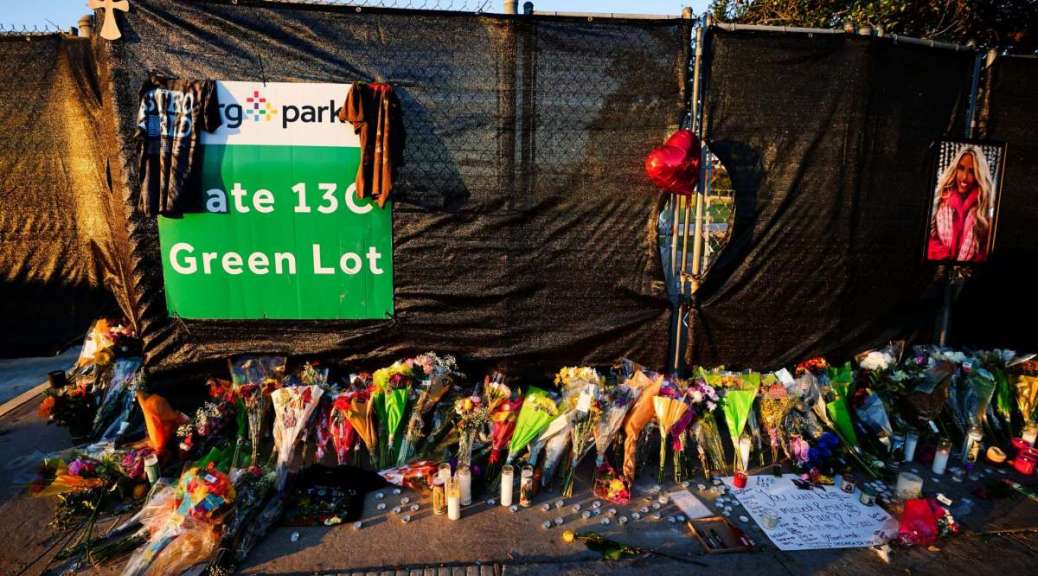
At least 10 innocent people dead and hundreds injured: the result of chaos in Houston on Friday, November 5th at Travis Scott’s Astroworld festival. The horrific sights and first-hand accounts of what went on that night are unparalleled to anything we have seen in the music industry in years, as the “surge” of the crowd left people suffocating, trampled, and in pure agony. The dead ranged in age from 9 to 27, with the youngest casualty, Ezra Blount, placed in a medically induced coma because of injuries his family believes occurred when he was trampled.  

Although Scott and his associates have offered apologies and financial support for what happened at the festival, questions still linger over whether these deaths and substantial injuries could have been prevented.

Since that nightmarish night, the public has struggled with who is truly to blame. Was it Travis Scott’s fault for failing to see his fans scream for help and continuing to perform and induce further surges? Was it the security’s fault for failing to realize what was going on just feet away from them in the crowd? Or was it the spectators’ fault for succumbing to the grasps of Scott’s “rager” influence and injuring their fellow concertgoers? I believe the blame should be attributed to Scott and the fact that he was oblivious to what was happening at his own concert. Even though at some points Scott had stopped the show due to ambulance lights and people being carried off on stretchers, he still continued to perform and wanted the crowd to make the “ground shake.” This behavior is unacceptable. Scott should have completely stopped his show in order to address the crowd, allow the injured to recieve help as quickly as possible, and prevent any casualties. 

What happened at Astroworld has some precedence. In 1979, 11 people were trampled to death at a Cincinnati concert by the Who. In 2000, nine people died at a Pearl Jam concert in Denmark. These concerts all offered “festival seating,” a practice where seats are either not reserved or are removed entirely so the crowd ends up standing shoulder-to-shoulder. To address the chaos and casualties that can occur with such seating, concert venues since then have often divided the main floor into grids; crowd size is limited in each section and security has better access when there are issues. The number of security personnel has also been increased at many shows. These measures were either not in place or not adequately enforced for Travis Scott, whose shows are known for being so high-energy they border on chaotic.

Since the tragedy of November 5th, many performers and artists have come out before their concerts to reassure the crowd that nothing close to what happened that night will be repeated. These artists care about their fans and want to prevent deaths or injuries at their shows, which indicates a promising future in concert safety.

The calamity at Astroworld will never be forgotten. While the debate over who truly is to blame may rage on, Travis Scott has felt repercussions including being removed from this year’s Coachella music festival lineup. This is a step forward in responding to his inhumane and negligent actions, and may help ensure other artists work to prevent such tragedies in the future.

Featured image: https://www.chron.com/news/houston-texas/article/Travis-Scott-Astroworld-victim-Danish-Baig-fiancee-16636224.php

With Apocalypse Near, Teen Fights for Survival

By Mrs. McHugh

HHS Librarian

The end of the world is upon us, and you’ll only survive if you’re useful. But who gets to decide if what you can offer is important enough?

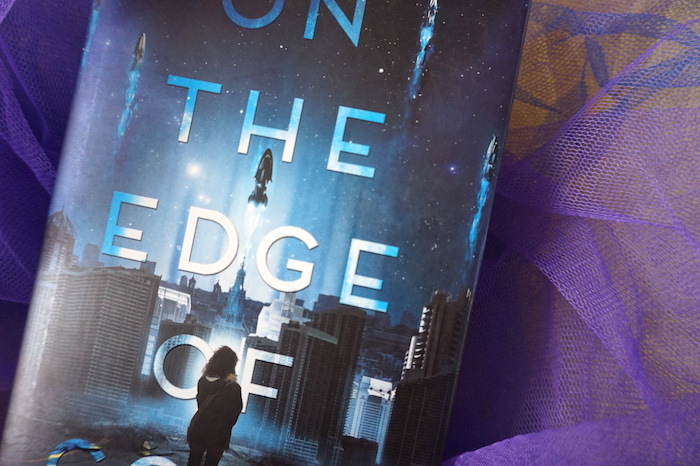
That’s the question facing 16-year-old Denise in the young adult novel On the Edge of Gone by Corinne Duyvis. A comet is on track to hit Earth, causing devestation not seen since the dinosaurs were wiped off the planet. If you’re wealthy and connected, you’ve bought a spot on a “generation ship” set to colonize another planet. If you’re not – like Denise – you’ve been assigned to a temporary shelter and after a few days, you’ll be on your own.

As the impact nears, Denise and her mom stumble upon a different kind of ship, one that will take people with practical skills that will help the community survive. There are doctors, engineers, computer scientists, teachers. Denise is desperate to prove they deserve a spot. But she’s a teen with autism whose inability to read social cues or handle change often causes her problems. And her mom is struggling with drug addiction. Can they convince the ship’s community that they’re worth saving?

This science fiction thriller has some exciting action sequences, and could easily be turned into a gripping television series or movie. In fact, when it ended, I wanted a sequel so I could find out what happens next to all of the characters. The book also raises thought-provoking questions about identity and purpose. The author is autistic, so her depictions of the sensory issues and meltdowns that Denise endures are honest, accurate and valuable for those not familiar with the challenges. There are also several LGBTQ characters, including Denise’s trans sister and a lesbian couple on the ship. So in addition to being an action-packed story, it provides representation for some groups that are often sidelined or restricted to just “issue” books. 

Trio of Novels Highlight Far-off Land, Universal Issues

By Mrs. McHugh

HHS Librarian

Too often, when people think of Africa, they think of it as one big place, not the dozens of individual and unique countries that make up the continent. Or maybe they come up with generic images: lions on the savannah, slave ships teeming with misery, or famine and civil war.

None of these is the full picture.

As Nigerian author Chimamanda Ngozi Adichie once said in a widely quoted TED talk, there is a danger to just one story. “The single story creates stereotypes, and the problem with stereotypes is not that they are untrue, but that they are incomplete,” she said. “They make one story become the only story.”

I read a lot and consider myself pretty open-minded, but when a colleague recommended one of this author’s novels last summer, I realized that I knew very little about Africa – especially contemporary Africa. In the ensuing months, I read the book she suggested and two others that took me deep into the culture of Nigeria, the most populous country in Africa. I learned that this one country alone has more stories than I ever imagined.

Some may wonder, why does it matter? Africa is so far away; it doesn’t really impact our daily lives. Of course, there’s the danger of a single story – when we know little about a country or people, we default to stereotypes, and stereotypes make it hard for us to empathize. Empathy not only makes us better people, it prepares us – in this interconnected world – for the eventual encounters we are likely to have.

Also, what is happening in Nigeria – the conflict between ethnic groups, city life versus village life, the clash of economic and social classes, climate change issues, and emigration in hopes of a better life – is taking place in a lot of countries. These issues are changing our world, and we need to know something about them.

Finally, reading about this faraway place reminds me that things such as love, family and growing up are universal. The rituals and circumstances experienced in each society may be different, but emotions and relationships are very relatable.

This review covers three books, starting with Americanah by Adichie, recommended by former HHS English teacher Mrs. Pavao. The story follows Ifemelu and Obinze, teens in love when they leave Nigeria for better opportunities. Ifemelu heads to America, where she struggles with what it means to be Black, African, and an immigrant in a country divided by race. Obinze, barred from the United States, ends up an undocumented immigrant in England. Their vastly different experiences impact their relationship and, ultimately, their ideas of identity and home. I loved how the book explored so many angles and issues, and I rooted for Ifemelu to find happiness.

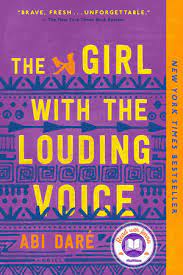
Next I read The Girl with the Louding Voice by Abi Dare, suggested by English teacher Mrs. Doyle. Adunni is a 14-year-old village girl who dreams of getting an education when her father promises her as the third wife of an old man. Faced with abuse in the arranged marriage, Adunni flees to the wealthy capital city. There, she finds work in the home of a cruel businesswoman and her preying husband. Adunni dreams of using her voice to improve her own situation and help other Nigerian girls. Through every heartache, she never gives up hope. I was right there with her hoping for a happy ending. Some readers may struggle with the dialect; Adunni’s English is very rough at the start of the story and improves as she grows older and more educated. But if you can stick with it, it’s worth it.

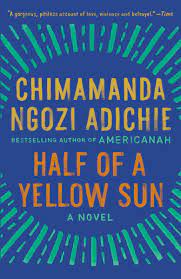
Finally, I returned to Adichie with Half of a Yellow Sun, which senior Elsa Little-Girl raved about. This is more historical, taking place before and during a civil war in the 1960s. Conflict between different ethnic groups leads to a massacre and war, which we experience through the lives of five unique characters: a servant boy from a small village, the university professor he works for, a young woman who prefers the intellectual life to that of her upper class parents, her bold twin sister, and a white Englishman visiting the country. I had my favorite characters, but I was fascinated by how their lives intertwined. It was a compelling way to tell the story of a society torn by civil war.

Sometimes there’s a gap between what we feel we should read and what we want to read. If you fear these books may seem “meaningful” but too much work, rest assured; they’re also really good stories.

Chimamanda Ngozi Adichie’s TED Talk on the danger of a single story

Featured image: https://www.bbc.com/news/world-africa-54357810

Skiing vs Snowboarding: Which is Your Winter Favorite?

By Paulina Leskow, ’24

Staff Writer

Winter is one of the most special times of the year. Many people associate winter with the holidays, no school, and warm hot chocolate by the fireplace. When others think of winter, they picture fresh powder and the mountains opening up for skiing and snowboarding. Debates over which is the better sport have been going on for decades. Some prefer whichever sport they mastered first. Others are unwilling to try the other because they have gotten used to one.

In an informal survey of about 20 HHS students, I found that more than half felt skiing was the better sport, while just 15 percent prefered snowboarding. But nearly a quarter of people surveyed couldn’t decide because they love them both.

Fans say thatboth sports offer great views from mountaintops and lots of chances to make fun memories with family and friends. And when you get going fast enough, whether on skiis or a snowboard, you can feel like you’re flying. The techniques and style of skiing and snowboarding are very different, though, and there are advantages and disadvantages to both. Below are some of the pros and cons for each sport:

Snowboarding Pros

  • Less equipment so easier to transport and take on and off, boots more comfortable
  • Easy to control falls and get back up faster
  • Both feet are on the board, making it easier to steer
  • Turning is simple and only requires the toe and the heel
  • Similar to skateboarding, could be easier to learn for skaters
  • Easy to get the hang of even at an older age
  • Easy to do tricks, and it looks really cool on the slopes

Snowboarding Cons

  • More difficult to maintain balance
  • Hard to ride on a ski lift with snowboard on, and annoying to have to unstrap and restrap the board every time you get on or off
  • Can get stuck in powder or snow very easily
  • Difficult to learn to stay up; many elbow, knee and tailbone bruises will result

Skiing Pros

  • Easy to maneuver, steer and control speed downhill
  • Easier to ride on icy patches on skis than on a snowboard.
  • Easier to get on and off a ski lift with skiis on
  • Easier to balance
  • Ski poles are beneficial and really fun to use.

Skiing Cons

  • Takes a long time to learn, and harder to pick up at an older age
  • Bad habits can be produced easily and are very difficult to rid of
  • Difficult to get back up on two feet after a fall, especially if a ski falls off
  • Ski boots are stiff, leading to sore muscles in the legs and bruising
  • Gear and lift tickets can be pretty expensive
  • Easy to lose control and crash if going straight down the trail

Whether you prefer skiing, snowboarding or both, it is important to stay safe on the slopes, and to have fun while the snow is still on the mountains!

featured image: https://trustcarehealth.com/blog/snowboarding-and-skiing

Support the Seven Days of ‘Students as Santa’ Challenge!

Raising $40,000 for charity in seven days? That’s the goal of several Hanover High School groups who have joined for an ambitious fundraiser this holiday season.

The National Honor Society, Student Council and Class of 2025 are collaborating on the Seven Days of ‘Students as Santa’ Challenge, which officially kicks off today. Each member of these groups is tasked with getting at least 10 donors to contribute $20. The proceeds will benefit organizations distributing toys to local families, the Visiting Nurses Association, and the Hanover Food Pantry. Donations can be made to a GoFundMe campaign or given to students directly.

On the GoFundMe, donors are requested to select the school “team” they are supporting by choosing the student representative: McKenzie Bottomley for NHS, Caris Mann for Student Council and Catherine Reinhart for Class of 2025. While the event officially started today, the link went live yesterday and raised $1,000 in less than a day!

The fundraiser came together when student leaders realized the three different groups wanted to hold similar toy drives, said Mrs. Coates, who advises NHS along with Mrs. Collins. They believed, she added, that “we could make a bigger – huge, in fact – impact on local South Shore charities if we worked together.”

While the fundraising goal is ambitious, student leaders believe it’s within reach. “It’s a large number, but we did the math and with the number of people in these groups, it seems possible,” said McKenzie Bottomley, vice president of NHS. “It’s very exciting to think we’re going to have such a big impact on the community.”

To donate: https://gofund.me/de5f8f3c

Speaker Series Focuses on Tech Careers

By Natalie Mowbray, ’22

Staff Writer

The second installment of the STEM Speaker Series, launched this fall by HHS senior Isma Saleem, focused on careers in technology and computer science. The “in-school field trip,” which took place Nov. 19, featured Matt Mastrangelo, Brian Converse and Jim Calabro.

All students at HHS should be familiar with the Aspen X2 Portal used for posting grades, attendance, and other important academic information. Matt Mastrangelo is a founder and creator of Aspen, used by countless schools around the country. Previously, he studied computer science at Northeastern University and started off as an education technology consultant. In addition to creating Aspen X2, Mr. Mastrangelo is a cofounder of Halix.io, a technology platform that helps businesses build websites, process payments and more.

Brian Converse is a software developer who creates technology to assist Hanover Schools students, parents and staff in a variety of tasks. When parents sign up for teacher conferences, for example, they’re using a program built by Mr. Converse. He earned an applied mathematics degree from SUNY Polytech Institute.

The final speaker was senior software engineer Jim Calabro. He works in the booming field of computer science at Cogo Labs in Braintree. He got his degree in computer science from the University of Massachusetts Amherst and was a part of the marching band there.

Isma began working with administration last year to bring in these monthly speakers, who she hopes will “give students the opportunity to find their passion.”  While it can be difficult to find speakers at times, she said, she is glad that students can be introduced to unique professionals within multiple industries. In September, students heard from health care professionals. Next up, likely in January, will be careers geared toward helping people recover from injuries or illness, such as a pharmacist, nutritionist, physical therapist and sports medicine specialist. 

Featured image from https://www.openaccessgovernment.org/can-studying-mathematics-and-computer-science-be-as-creative-as-the-arts/93425/

COVID Couldn’t Stop the Music, But Band is Joyful for Return to Normal

By Jake Faghan, ’23

Staff Writer

Drum majors . . . is the band ready?”

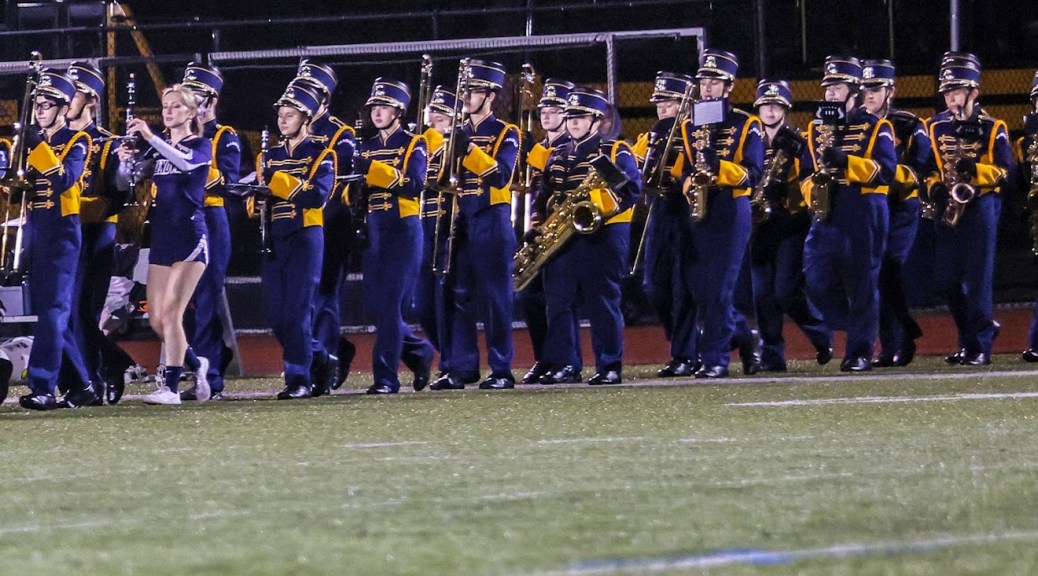
It’s often said that absence makes the heart grow fonder. And as members of the Hanover High School band felt the crisp air of a recent Friday night while standing silently in formidable formation on the field, those words rang true. There’s magic in band, and what makes it truly magical is how the HHS band has pulled through the challenge that has been COVID-19. With pride, we stand. With strength, we return.

“Please welcome back to the field, the Pride of Hanover!”

With Thanksgiving break wrapping up Autumn 2021, the marching band will finish its season with one final performance at the Hanover-Norwell football game on Thanksgiving Day. But before the band leaves in the early morning to perform that day, members will likely reflect on the  hours and hours of sacrifice and strife that have led to the day’s opening notes. It all started back in March 2020, which may be scary to realize was around a year and some change ago: the era of no band.

The band takes the field at a football game this fall.

Well, no tangible band. Band continued through remote school in spring 2020 as most of my classes did, with students turning in assignments and becoming dangerously independent. While it wasn’t the best, it was something that should be respected given the quick thinking. Our assignments from Mr. Harden focused on practicing sight-reading or even fun games like plotting a field show. However, we weren’t together, it wasn’t the same. So by the end of that year, my first of high school, I was able to see what band was like, but not get the full experience.

Coming into sophomore year, things were different, and that became clear very quickly. No band camp, and just half of the band together during outdoor classes, was a lukewarm welcome into the year, but something we took with a smile. When it got colder, our cohort moved inside to the auditorium, where there was just enough room for us with ten feet spacing. While we were spread out, we played together but we were distant. We recorded separate parts to come to a whole, played over video for virtual audiences, but we were never whole in the first place. Band 2021 was a more normal year, we had our groups, but still were stranded.

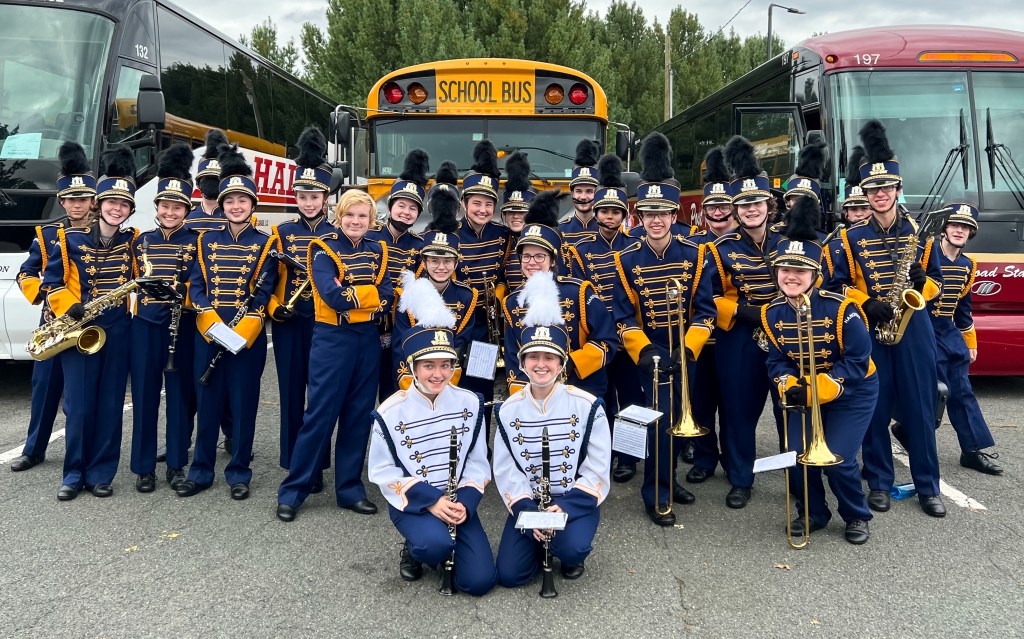
Excited for Band Day at UMass Amherst!

Until the calendar announced the start of the current school year, that is. This year has brought so many good opportunities. This year we were able to practice during band camp, and it was perfect. We were able to play in the band room again, together. It took what felt like ages, but we were able to perform for a crowd again with the return of Friday night football, a trip to Band Day at UMass Amherst in October, and a cabaret showcase in the HHS caf.

Our field show this year has a theme of love to it, and also a message to love life before it flies by. I believe that our show illustrates through music how we as a society can finally come together again. 

That also shows through our formations for the opening song Can’t Help
Falling in Love. At the start, everyone is scattered, much like the beginning of COVID life. Then as we play, we march into sections of our instruments, similar to how we were last year, together but not whole. We found a group, but not a united family. Then moments later, the small groups unite and march together with pride. Not only is it cool and a powerful moment of the show, it also has its symbolism. Now that we march together, we do so striding forward with strength. We as a band made it through a long period of confusion, and now as we prepare for the Thanksgiving game, there is a lesson I have learned: Pride is a feeling, and it’s a magic.

To view a recording of the Cabaret showcase from October 21, which features the HHS band and a variety of student talent, click here.

Twisty Mysteries Keep You Guessing

By Mrs. McHugh

HHS Librarian/Advisor of The Hawk

Brynn and Mia are 13-years-old when they’re accused of killing their best friend, Summer. The brutal ritualized murder was inspired by a fantasy story the trio was obsessed with, according to police. When lack of evidence and shoddy police work allow the girls to go free, they are outcasts in their town, considered by neighbors to be evil incarnate.

Except, they claim, they didn’t do it. And five years later, they’re determined to clear their names and find the real killer.

This is the plot of Broken Things by Lauren Oliver, a mystery/thriller that will keep you glued to the page. As the story alternates between then and now, you learn more about the victim Summer, whose years bouncing around foster homes left her troubled and turbulent. You get to know Mia and Brynn and why they were drawn to the exciting, but often toxic, friendship. You dive into the fantasy story the girls tried to recreate, both in their afterschool adventures and fan fiction they wrote together. You meet ex-boyfriends, bus drivers and  other characters and wonder what role they played – if not in the murder then in the drama surrounding Summer’s final months.

The book leaves you guessing until the heartbreaking reveal. It is then that you realize that the book is not just a mystery, but a tragedy.

Not just one murder, but thirteen are at the heart of The Forest of Stolen Girls by June Hur. Hwani and Maewol are children when they get lost in the woods and are found, unconscious, next to the body of a dead young woman. The girls are impacted in vastly different ways and the family is torn apart. Years later, after 13 other girls are missing and presumed dead, Hwani’s detective father tries to investigate. Instead, he disappears as well. Defying the norms of a culture that require young ladies to stay hidden at home while they await marriage (it’s Korea, in the 1400s), Hwani sets out to find her father and solve the mystery of the missing girls.

While I enjoy historical fiction, I normally read books set in more recent history. I’m not usually drawn to stories of maidens and emperors. Yet the conflict at this book is timeless – girls fighting the expectations of an oppressive society – and the mystery is engaging. Whenever I thought I figured out the story, a new twist would arise. 

For more mysteries, check out the Genre Lists at hhsmchugh.weebly.com