Category Archives: Entertainment

Two Dystopian Classics Offer Different Reading Experiences

By Siena Oliver, ’27

Staff Writer

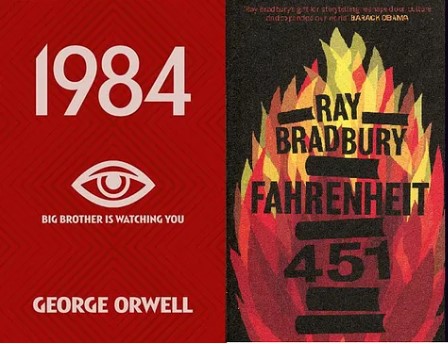
In English class the last two years, I’ve read 1984 by George Orwell and Fahrenheit 451 by Ray Bradbury. These two books were published four years apart in 1949 and 1953 respectively. They are both cautionary tales about the future, the use of technology, and mass censorship of a society that seems not to care that they are being manipulated.  Both books are extremely important in the literary world, but I found Fahrenheit far more enjoyable to read.

Both books follow men living in dystopian societies, who eventually start to question their ways. The protagonist of 1984, Winston, begins his story working at the “Ministry of Truth” where his job is to edit and censor all types of media and information, essentially changing history. Montag, from Fahrenheit 451, works as a fireman who burns books, which is another form of censorship. Both of these characters work in respected jobs for the government and actively take part in changing the information that is given to the public. At some point in both of the books, the protagonists each have a revelation about how they cannot stand to live under the rule of an all-powerful government that so blatantly controls the information they receive. Winston and Montag both end up rebelling, and in doing so make connections with people they otherwise would not have.  

Although the books are fairly similar in terms of content and meaning, I personally disliked 1984 but enjoyed Fahrenheit 451. In my opinion, 1984 was too long and often seemed to drone on with unnecessary and boring information, while Fahrenheit 451 was a fairly fast-paced and short read that held my attention throughout the entire story.  I found the authors’ writing styles to be a bit wordy and confusing at times, often sounding sort of like poetry. This can be a good thing or a bad thing depending on the length and excitement of the book. As a reader, I dislike stopping books in the middle, but with 1984, I nearly did because it was so hard for me to get through. 

Bob Marley Biopic Falls Short in Honoring Legend

By Sienna Lamond, ’26

Staff Writer

Like jazz was born in Louisiana, reggae was born in Jamaica; and just like jazz had stars such as Louis Armstrong, reggae had Bob Marley. A biopic called One Love about Marley was recently released in theaters. The highly anticipated film was preceded by a clip of Marley’s son, Ziggy Marley, who also works in the music industry, giving a statement on how proud the family was of this film. As I watched, though, I couldn’t help but feel like the movie was a disservice to Marley. The set design, costumes, and actors were all perfectly suited to the story, but the entire movie only captured two years of Marley’s life, accomplishments, and legacy (1976–1978). I feel that the movie failed to encapsulate just how great and impressive Bob Marley truly was and what he did, not only for music but for peace.

Bob Marley was born on February 6, 1945, the same year that World War II ended. For almost the entirety of Marley’s childhood, Jamaica was a piece of the British Empire. In 1962, Jamaica was granted independence as a nation but maintained its status as part of the British Commonwealth. However, political unrest still plagued the country. Tensions between two large political groups, the Jamaican Labor Party (JLP) and the People’s National Party (PNP), resulted in violence and danger throughout the country. 

Marley utilized his musical skills to speak on political topics, the most famous instance of which is the “One Love Peace Concert” held in Kingston, Jamaica in 1978. This is one of the most important highlights of his career, which thankfully the movie includes. Here, Marley stood as a symbol of unity as he clasped the hands of the PNP and JLP leaders, Michael Manley and Edward Seaga, in front of the roaring crowd. Marley sought more than an end to violence; he sought the betterment of his home country. Through songs like “War,” “Slave Driver,” “One Love,” “Get Up, Stand Up,” “Rebel Music,” and “Concrete Jungle,” he literally and metaphorically uses his voice and platform to provide the Jamaican people — and people globally — a sense of hope that the fight for peace will be heard and not silenced. 

To fully appreciate the mysticism of the legendary Bob Marley, one must understand the sociopolitical climate at the time he delivered his message to the world. The movie touches on the political unrest and violence in Jamaica, but Marley’s music had global implications wherever political unrest and unjust social structures existed. In his lyrics, “Rasta don’t work for no CIA,” it’s evident that Marley’s music was viewed as a pivotal motivator in elections and, thus, was threatening to various political regimes. Whether it be Cuba, Africa, or Chile, his music was viewed as destabilizing to the established structure. Ironically, Marley’s power came from remaining politically neutral even as his reach expanded globally. Despite assassination attempts and pressure from multiple sides, Marley never wavered from his philosophy: “Live for yourself, and you will live in vain. Live for others, and you will live again,” and that love is stronger than fear, hate, and violence. The movie could have included more examples of him as a symbol of peace, such as his music playing as the Berlin Wall came down in 1989 and its impact on civil rights worldwide. 

The few scenes that touched on his musical journey and the development of his songs seemed oddly placed to me. The drum circle scene does well to portray his Rasta roots and shed light on the spiritual nature of his music; however, I would have preferred a more chronological journey to understand and appreciate his early music that led to him ultimately creating his greatest hits and the sound that the world recognizes him for. I would have also liked to see the movie shed light on Marley’s legacy. Despite passing at the early age of 36 to cancer —which is another unclear aspect of the film—he had a tremendous impact on popularizing reggae music worldwide. Music tends to set the tone for an era. Think of the U.S. in the 1940s, being focused on classic stars like Frank Sinatra and Ella Fitzgerald, but then in the 50s, Elvis and Rock n’ Roll came to popularity, challenging the conformist norms of the decade. Reggae was the rock n’ roll of the 1970s. It was new and therefore alluring to younger folk, raising a generation focused on its message of peace and love. Many of Marley’s associates continued his musical journey. Others, from Eric Claypton to Lauren Hill, covered his songs. His children have had illustrious musical careers as well, such as the aforementioned Ziggy Marley, who released songs such as “Love is My Religion” and “True to Myself,”  carrying on his father’s legacy and message. His grandson (and Rohan Marley and Lauren Hill’s son), YG Marley, has recently come out with a modern reggae song called “Praise Jah in the Moonlight,” which has gained popularity through social media, namely TikTok. 

Overall, the movie does well to introduce us to Bob Marley, the man, but I attest that he deserved even more. A man whose music and message reverberate through the ages deserves more than an hour and 45-minute biopic covering two years of his life. A legend of his status deserves an epic film capturing all his trials and tribulations and the lessons he learns while overcoming them. Marley teaches the world that no matter what dire circumstance confronts you, there is love, hope, and belief in a brighter tomorrow, and he does so brilliantly through his music. I hope this is not the end of Marley’s tributes; as he says himself, “in this bright future, you can’t forget the past,” because acknowledging fault is how we progress and do better for ourselves and the world in the future.

Madame Web Fails to Spin a Captivating Tale

By Abbey Kinzel, ’23

Alumni Writer

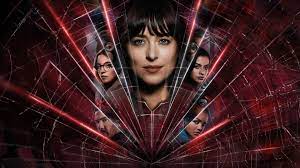
Madame Web is an absolute cinematic disaster for a multitude of reasons, but I’ll only be covering a few to save you from a 12-page review. One of the many issues starts with the budget of the film itself. Other superhero movies like Venom, Venom 2 and even Morbius had a better budget than Madame Web. Venom was allotted about $100-$116 million, Venom 2 had $110 million, and Morbius received $75-$83 million. Madame Web had a budget of $80 million. But it was more like 80 cents after paying stars Dakota Johnson and Sydney Sweeney and shelling out for the visual effects, which were the only decent aspect of the movie. 

The film, meant to be the origin story of a superhero in the Spiderman universe, was written by Matt Sazama and Burk Sharpless. The pair has worked together on several well-known films like Dracula Untold, Gods of Egypt, Power Rangers (2017) and Morbius. (Yeah Morbius, you know it’s morbin’ time, with Jared Leto, pretty bad). Most people who watched Madame Web in theaters say that Morbius is better by a landslide. Madame Web’s dialogue feels choppy and unfinished since there was a script change when Dakota Johnson signed on. The characters have absolutely no arc, no background, and no backstory; they’re almost like zombies. The characters have as much depth as a stick gum; it’s like they have no life, no soul. 

At this point, I’ll be going into spoiler territory, so if for some reason you still want to watch Madame Web, just be warned. Johnson plays Cassandra Webb, whose mom dies while trying to research a spider that gives superpowers, (how convenient). Cassandra is bitten by this spider – a big shock – but doesn’t develop superpowers right away. She grows up and becomes a paramedic, when she bumps her head and activates the power to see into the future. When she has a vision of three girls being murdered by a random guy, she vows to prevent it. (The only reason the guy wants to kill the girls is because he keeps having nightmares about the girls killing him. That’s it, that’s his reason). The girls hide out in the home of Cassandra’s friends, Ben and Mary (hmmm, I wonder who Ben is), but when Mary goes to the hospital in labor, the girls are discovered by the bad guy.

There is no action or fighting in this action movie, only the nightmare the bad guy keeps having. The only exciting thing Cassandra does is hit the bad guy with a taxi, and then throw an ambulance at him. In the end, Cassandra and the three girls just lure the bad guy to a spot where he gets crushed by a sign. At this point, Cassandra is blinded and can’t walk so she is next to useless. But now she can see into the future whenever she wants to and will help mentor the three girls who are spider-women now. 

From the movie and the tone of Dakota Johnson, it’s like Madame Web doesn’t want to be a part of the Spider-Man universe. It’s so hard for me to watch a Sony live action Spider-Man movie because they have just gotten progressively worse and worse. Just like with the Fantastic Four, it’s so hard to watch a reboot from a company that never made the source material; they’re just interested in taking your money. My biggest pet peeve is that the movie is boring, and almost made me fall asleep, which never happens.

Even having a star like Johnson didn’t do the movie any favors, as she went on the huge press tour trying to practically seduce viewers into watching it. She admitted at the premiere that she’s never watched the movie and doesn’t plan to. That’s her own issue since she avoids watching any of her movies for her self care, but maybe don’t say it to reporters and make them think that the movie is bad. 

Sony should just stick to making animated Spider-Man movies like Spider-Man: Into the Spiderverse and Spider-Man: Across the Spiderverse. The first animated spider-verse movie had a bigger budget than Madame Web and did better in theaters. So, to put it bluntly, Sony should stick to what they do best: draw.

In Sephora’s Playground, Tweens at Risk

By Bradlee Dowling, ’26

Staff Writer

Step into the hallowed halls of Sephora, and you’ll find more than just shelves ransacked of beauty products – you’ll stumble upon a spectacle that defies imagination. What was once a sanctuary for makeup mavens of all ages has now morphed into a playground for the pint-sized, where chaos reigns supreme and the rules of etiquette are but a distant memory.

“People say the store looks like an elementary school for the beauty-obsessed 10-year-olds, some of whom have been caught treating employees poorly and destroying displays,” mocked Katie Camaro in a Jan. 29 article from USA Today, eyes wide with disbelief as she bore witness to the pandemonium that has taken root within Sephora’s walls. Indeed, what unfolds before them is a scene straight out of a twisted fairytale – a fairytale where tween queens tower above, armed with mascara wands and lip gloss scepters.

Imagine, if you will, a troop of tweens descending upon the aisles like a swarm of locusts, their eyes alight with the fervor of discovery and desire. But instead of gentle exploration and whispered inquiries, their approach is anything but subtle. With reckless abandon, they snatch at samples, leaving a trail of destruction in their wake as they wreak havoc upon displays and unleash turmoil upon the nerves of troubled Sephora staff.

Yet, it’s not just the chaos and discord that raises eyebrows – it’s the alarming trend of tweens purchasing products better suited to seasoned skincare veterans than fresh-faced adolescents. “A bigger concern for many is pre-adolescents obsessing over beauty products traditionally marketed to women and older teens, including exfoliators and anti-aging products with retinol that may be too harsh for pre-teens’ skin,” said Tom Ryan in a Jan. 31 article in Retail Wire. Indeed, wandering through the aisles of Sephora, one can’t help but notice the potent potions and elixirs, tempting young patrons with promises of flawless skin and eternal youth.

From retinol-infused creams to potent exfoliators, these young beauty devotees are unwittingly playing Russian roulette with their delicate complexions. “Preteens are bombarded with influencer-sponsored advertisements and step-by-step tutorials for makeup and skincare products unlike generations past,” Ryan continued in Retail Wire. In their quest for TikTok-worthy perfection, they’re sacrificing more than just their pocket money – they’re trading innocence for the fleeting promise of beauty, unaware of the potential long-term effects on their still-developing skin.

As Sephora transforms into a playground, the stakes have never been higher. It’s not just about the products lining the shelves or the chaos unfolding in the aisles – it’s about the future of an entire generation, grappling with unprecedented levels of anxiety and self-esteem issues. As one can’t help but wonder, what price are we willing to pay for the pursuit of perfection?

But amidst the madness lies a glimmer of hope – an opportunity to educate and empower the next generation of beauty enthusiasts. By promoting a culture of kindness, respect, and self-acceptance, Sephora can reclaim its status as a sanctuary for all – regardless of age or experience. For beauty knows no bounds, and neither should our compassion.

The Year’s Top Music, According to Spotify

By Emily Davis, ’27

Staff Writer

As 2023 ended, many different apps and websites did yearend recaps of what their users interacted with the most. One of those apps is Spotify, the nation’s leading service for streaming music and podcasts. Spotify recorded the top 10 artists that users listened to through the year and presented it as “Wrapped,” which users frequently shared on social media. Based on the different genres of music and podcasts that Spotify has to offer, users’ top artists greatly varied. While HHS students I talked to had different Wrapped results, there were a few artists who most frequently topped their lists.

Taylor Swift – Ranked number 1 worldwide with 29.10 billion streams, Taylor topped the playlist for many HHS students as well. Her “Eras Tour” captivated the entirety of 2023, and even went as far to crash Ticketmaster. She officially became a billionaire while selling out arenas around the country.

The Weeknd – Coming in at number 3 worldwide with 14.14 billion streams, the Weeknd was the second most popular artist on the “wrapped” lists of students I interviewed. The Weeknd continued his “After Hours till Dawn” tour around the world after his North America tour ended in November of 2022.

 Drake – Ranked a close fourth behind The Weeknd with 14.03 billion streams, Drake was another popular top artist among students. His tour “It’s All a Blur” began in early July, and is scheduled to conclude in late March. 

SZA – After releasing her album “SOS” in late 2022, SZA landed at number 8 worldwide in 2023 with 7.10 billion streams. Behind Drake, she was the next most popular artist among students I interviewed. 

Other artists who rounded out the Spotify top 10 streamers, according to Euronews.culture, were Bad Bunny (2), Peso Pluma (5), Feid (6), Travis Scott (7), Karol G (9) and Lana Del Ray (10). With many of these artists touring in 2023, it makes sense that they fell into the top ten of the most streamed artists worldwide. Whether top on Spotify or among HHS students, the results show that these artists know how to make popular music.

Featured image: https://www.techradar.com/audio/audio-streaming/spotify-wrapped-2023-our-release-date-predictions-plus-how-to-listen-to-it

Books about Our Past Help Shape our Future

By Mrs. McHugh

HHS Librarian

To paraphrase a century-old saying, those who don’t know their history are destined – or doomed – to repeat it. During Black History Month, the HHS library highlights books about the contributions of and challenges faced by people of color throughout American history. From stories of notable people and events to the issues we struggle with today, books can help us understand and learn from the mistakes of our past so we may pave a brighter path forward.

Below are quick reviews of a few titles I recommend not just in February, but throughout the year. To find more, check out the Historical Fiction, Notable Nonfiction and Biography & Memoir genre lists on the library website.

Nonfiction

The Warmth of Other Suns by Isabel WIlkerson – Three families flee the South during the Great Migration of African Americans in the decades between the Civil War and Civil Rights Movement. The book highlights the oppression they faced in the South as well as the opportunities – and obstacles – they found in the North. 

Stamped from the Beginning: the definitive history of racist ideas in America by Ibram X. Kendi and Jason Reynolds – This book breaks down the mythology around the people and historical events that history textbooks have simplified, from Frederick Douglass and Martin Luther King Jr. to Reconstruction and the War on Drugs.

The Rebellious Life of Ms. Rosa Parks by Jeanne Theoharis – Often portrayed as a tired old woman arrested in 1955 for not moving to the back of the bus, Rosa Parks really was a tireless activist for Civil Rights – especially against sexual violence toward women.

Just Mercy: Young Readers Edition by Bryan Stevenson –  A young lawyer fighting to overturn the wrongful convictions of African Americans shines a light on the flaws of our justice system.

When They Call You a Terrorist: a Black Lives Matters memoir by Patrisse Khan-Cullors – One of the founders of the movement shares the experiences of her brother, whose mental illness seemed to be criminalized instead of treated in his encounters with police.

Fiction

Underground Railroad by Colson Whitehead – Part historical fiction, part fantasy, this story imagines that the famed network to freedom is a literal train running beneath the earth. It follows Cora as she risks everything to flee the brutality of slavery.

All American Boys by Jason Reynolds and Brendan Kiely – An incident of police violence involving a white officer and a Black teen is explored from multiple perspectives.

Dear Martin and Dear Justyce by Nic Stone – These books focus on how two youths from similar circumstances can end up on very different paths, and how the color of their skin can impact their trajectory.

Required Reading for the Disenfranchised Freshman by Kristen Lee – When the statue of her college’s first Black president is vandalized, Savannah is torn between keeping quiet or speaking up and risking her scholarship. 

Monday’s Not Coming by Tiffany D. Jackson – Claudia runs up against apathy and uncertainty when trying to solve the disappearance of her best friend. The story highlights racism, poverty and other social issues that cause people to fall through the cracks. 

Piecing Me Together by Renee Watson – Jade struggles with feeling like an outsider, or someone who needs to be fixed, when she leaves her poor neighborhood to attend a wealthy private school. She turns to art to release her frustrations, and ends up finding her voice.

A New Chapter for Gypsy Rose

By Owen Pierotti, ’27

Staff Writer

Gypsy Rose Blanchard, whose story capitivated us after a 2017 HBO documentary called Mommy Dead and Dearest, is out of prison and now a survivor of a rare mental illness called Munchausen syndrome by proxy. But has she gotten the help she needs to ensure she’s no longer a danger to society?

According to Medline Plus, Munchausen by proxy is a form of child abuse where a parent fakes an illness or causes symptoms to make a child appear sick. Gypsy suffered years of unnecessary medical treatments for sleep apnea, leukemia and more due to her mother, Claudine “Dee Dee” Blanchard. Gypsy was confined to a wheelchair and isolated from others and her mother even lied about her age to make her seem younger and more fragile. Eventually, Gypsy started going behind her mother’s back to talk to people outside of her sheltered life. She learned she didn’t need the wheelchair and began to disobey Deedee. Still, she was confused by her mother’s behavior and scared to tell anyone she wasn’t sick. 

Feeling stuck, Gypsy met a quirky and weird boy on an online dating site. Nicholas Giddejohn called Gypsy his “princess” and promised to do anything for her. That ultimately included killing Gypsy’s mother, who was stabbed to death in June 2015. Gypsy and Nicholas were soon arrested and put on trial. Nicholas was sentenced to life in prison while Gypsy was sentenced to ten years. Last December, Gypsy was released after serving 8.5 years.

Since leaving prison, Gypsy has moved to Louisiana with Ryan Anderson, who she married while behind bars. She’s gone viral on social media and has been featured on interview after interview. Gypsy is now an activist for Munchausen by proxy, and is speaking out about her experience. The media has been surprisingly forgiving. I think Gypsy needs to focus on her mental health before she can help others. If she doesn’t get help, the abuse inflicted by Dee Dee could still linger. What if Gypsy abuses her own child like Dee Dee did? 

This is surely not the end of Gypsy’s story. I hope it can be the advent of a new happy and healthy life if she focuses less on the spotlight and more on healing herself.

The Psychology of Mean Girls

By Sienna Lamond, ’26

Staff Writer

For years there’s been this stereotype of the “mean girl” at every high school – it’s expected that there is a female monarch, but why? Why is there an unspoken election of these Queen Bees? Why do they get to be mean to people, yet stay so respected? Why do adolescents fear their peers? Is there a price to pay for being nice, and furthermore, is there a benefit to being mean?

One of the most iconic chick flicks of the early 2000s highlights the mean girl clique in a unique and relatable way. Tina Fey’s 2004 Mean Girls, now in theaters as a musical, features a girl named Cady moving to a small town in Illinois from her previous home in Kenya. Cady’s parents are biologists that study animal behavior, which is told to the audience early on in the movie, but is a relevant detail that carries throughout. As Cady, portrayed by Lindsey Lohan, navigates her new high school, she finds that it isn’t too different from her old life in Kenya. She recognizes that Regina George, the designated Queen Bee, represents the apex predator, the animal at the top of the food chain with nothing capable of tearing it down, and all the other kids in school are her subjects, the smaller and lesser members of the animal kingdom.

The plastics, consisting of Regina and her two best friends, Gretchen Weiners and Karen Smith, operate much like a pack of lions or lionesses. The analogy of a high school to African wildlife represents the primeval nature of the social hierarchy. As an article published in Irishnews.com states, “not only do all human teenagers share similar characteristics, but their typical adolescent behavior is reflected throughout the animal kingdom in creatures as small as insects to as large as whales.” The article then proceeds to break down the similarities into four categories, one of them being social status. Irishnews.com writes that, “In animal hierarchies, high status individuals eat more, live in safer places and reproduce more. They even have stronger immune systems and get better sleep” which helps to show why social status inherently matters so much to high school students. It’s part of our innate behavior to want to be on top because of all the benefits it provides, and if you can’t be number one, being close enough to that MVP also allows for these perks. 

Of course, Mean Girls is loved by all for its iconic script, fantastic actors, killer soundtrack, and classic costumes, but what many didn’t realize then and don’t realize now is that the movie is based on a Rosalind Wiseman book titled Queen Bees and Wannabes which is a guidebook for high schoolers, specifically girls. Though this book is devoted to helping teenage girls, it also exposes some taboos of the social structure. It challenges girls, but also adults, to recognize the deeper meanings behind the actions, reactions, and inactions of their peers. The book illustrates a box of characteristics and traits. The qualities inside the box (beauty, athleticism, confidence, right clothing brands, pretty by the guys standard, etc.) are what determines a girl’s popularity while the exterior qualities (overweight, acne, overly-masculine, financial difficulty, etc.) are often present in social outcasts. Wiseman then explains that, “… the words outside of the box. These are weapons. … Cliques are self-reinforcing.” Girls choose to be bystanders when they see bullying occur because standing up to the popular clique would make them stand out enough to be categorized as outside-of-the-box, and being inside-of-the-box provides a sense of social security.

All humans, according to Sigmund Freud’s legendary research and theory of personality,  initiate defense mechanisms in an effort to protect themselves. Whether a teen is insecure about their body, grades, social status, financial situation, or home life, all are reasons for projection. This means that negative attributes they see in themselves, they often assign to others as a way to cope. A girl may make fun of another girl’s hair if she’s insecure about how her hair looks, and that will make her feel better. For those who cannot identify these mechanisms in action so easily, this will appear as if the girl is truly being mean. Obviously, it’s not nice to call someone’s hair scraggly, but if that person believes that their own hair also looks scraggly, then it makes more sense and the attack is not without reason or purpose. Being mean just to be mean is not a common occurrence. More often than not, one can find a motive behind most verbal attacks.

However, verbal attacks and “gossip [are] like money,” says 16-year-old Jane, one of the teens interviewed in Wiseman’s book. “We exchange it, sell it, and lend it out. It’s what we have of value.” Ideas expressed through gossip can be interpreted as mean and unwarranted statements. There is a big difference between trying to be mean and inadvertently saying things that are mean. We have to be able to discern between what is malicious and what is benign based on the circumstances we are told things. People often say mean and damaging things about other people without even realizing, partly because they don’t think what they say will ever reach the person they’re talking about, but also because they don’t view what they are saying as mean in the first place. When engaged in a conversation about someone else it is important to know the information you say could end up being shared with that person. 

Sometimes people just don’t have anything else to talk about, so they resort to gossiping to keep a conversation going, which, unbeknownst to them, is actively contributing to the spread of rumors and negativity. Gossip is one of the quickest ways mean comments are spread around. So why do we gossip? Well, uninteresting people make up for it by talking about other people to make themselves appear more interesting, and also to make them seem of higher value to the people who “matter” to them. In most social situations, like at work, at the gym, at the salon, and at school, gossip is power. Gossip may not be intended to be mean, but it almost always comes across that way, so it’s important to be mindful of who you’re talking about, and with who.

So, do people really want to be mean? No, not really. Most people don’t even realize they’re being mean even when they are. When they do make a targeted comment, it’s often a reflection of their own insecurities. The most important takeaway from the movie, as well as the book it’s based on, is that putting down others doesn’t lift you up. “Calling someone else fat won’t make you any skinnier,” says Cady. “Calling someone stupid doesn’t make you any smarter. And ruining Regina George’s life definitely didn’t make me any happier.” More often than not, it’s the girls that call you mean who are trying to make up for their own lack of kindness. In the words of the beloved beauty icon, Audrey Hepburn,  “for beautiful lips, speak only words of kindness” for no physical beauty can compare to a kind heart and compassionate smile.

If I Could Talk to Anyone in History, I’d Choose Robin Williams

By Paulina Leskow, ’24

Staff Writer

“Please, don’t worry so much. Because in the end, none of us have very long on this Earth. Life is fleeting.”

– Robin Williams

Father. Actor. Comedian. Born in 1951. Died in 2014. There are hundreds of thousands of actors in the world, so you may wonder, “what makes Robin Williams so special?” Why is he the one, out of all people, that I so desperately want to speak with? Robin Williams was not only a world-renowned actor, but he was also a good man who was deeply affected by addiction and depression, leading to his tragic downfall. If I was given the chance, I would talk to him about his life, his career, his struggles, and in every way I could, I would show him how important he was to the world. 

When thinking of historical figures, people tend to envision political figures such as George Washington, Susan B. Anthony, or Martin Luther King Jr. These people have all played important roles in our nation’s history. However, I believe that historical figures consist of more than just war heroes, civil rights activists, and politicians. Many impactful historical figures were artists, scientists, authors, musicians, and actors. I was quick to decide that I would choose an actor as a figure to talk to, but why? Better yet, why would I even consider Robin Williams an historical figure? For starters, Robin Williams has starred in several performances and represented a variety of characters that have affected many on a personal level. From iconic movies like Jumanji and Mrs. Doubtfire to comedies like Flubber and Night at the Museum, Robin Williams was very successful in his establishment of character and emotion, which allowed audiences to unlock the depths of their imaginations. Using his performing skills, he knew how to effectively appeal to his audiences and portrayed his roles in ways that many would characterize as unforgettable.

One of my earliest childhood memories was watching Flubber with my siblings. For those who don’t know, Flubber tells the comedic, fictional story of a scientist who experiments with the creation of a rubber-like substance while simultaneously enduring crazy adventures and unique situations in an effort to win over the girl of his dreams. It is a simply hilarious film and I recommend it to anyone who hasn’t seen it or to anyone who is simply in need of genuine, feel-good, comedic relief in their life. Robin Williams’ strong performance in the film is what made Flubber especially memorable to me. I most clearly recall in the movie a quote he said that went: “I know I love her, Weebo. Every neuron in my limbic system is saturated with phenylethylamine. That triggers euphoria, elation, exhilaration. Truth is, Weebo, I’m not absent-minded because I’m selfish, crazy or inconsiderate. I’m absent-minded because I’m in love with Sara.” To me, this was such an unbelievably powerful quote that painted a beautiful picture of what love truly is. Williams successfully embodies the character’s love of science and incorporates distinct scientific processes into portraying how he feels, all while presenting an entirely raw and personal account of his deep love for the girl. It was these memorable quotes and movies like Flubber that drew me to the comedic, loving, and powerful characters portrayed by Robin Williams.

Robin and his animated counterpart, the Genie

Arguably, one of Robin Williams’s most significant and well known roles consisted of his vocal portrayal of the Genie in the 1992 Disney animated film Aladdin. From this movie, I formed a rather personal connection to Robin Williams when I was in the fourth grade. In school that year, Aladdin Jr. was selected as our musical, and I was lucky enough to land the role of the Genie. In preparation for the show, I recall that my method of practicing for the role was rewatching clips of the Genie from the movie. I most vividly remember looking back and constantly listening to his use of different voices in the song Prince Ali, noting how Robin Williams used the power of his voice to convey different emotions, actions, and thoughts. I was inspired by his successful performance and hoped to someday be as talented of a performer as he was. That was truly what inspired me to continue to be involved in productions, and looking back it seemed to have indirectly influenced my decision to dedicate myself and my life to the world of theater, as I intend to study performing arts as my major in college. 

Robin Williams has impacted a multitude of aspects of my life, and I did not realize until recently how large of an impact this would have on my future. Thanks to Robin Williams, I really know who I am and am confident in who I want to be when I grow up. If given the chance to meet him, I would want to learn more about what contributed to his success as an actor. Specifically, one of the significant questions I would ask would be how much practice and effort he had to put into his roles, and what methods he used to be able to embody his unique characters so well. Learning about what it takes to succeed in the world of performing arts from this world-renowned actor, I know, would help me further enhance my acting abilities and improve my chances of success in the future.  

Not only is Robin Williams seen as an historical figure in the world of acting, he also is viewed as a significant figure in the field of mental health. In the 1980s, he overcame an addiction to drugs and alcohol which had fueled his early career. After his death in 2014, Williams was diagnosed with Lewy Body Dementia, the second most common type of dementia after Alzheimer’s disease, according to the Mayo Clinic. It is caused by protein deposits that develop in nerve cells in the brain, impacting brain regions that are involved in thinking, movement, and memory. This condition likely exacerbated Robin Williams’ lifelong struggle with depression as well as impacted his ability to create and perform, leading to his death by suicide.

A scene from Mrs. Doubtfire

In a conversation with him I would ask how and why he masked himself as being strong, when on the inside he was really broken. Was there a specific moment where he was able to realize he had depression? Did he talk to anyone about it or have to suffer in silence as many celebrities, and people, do today? How did internal and external influences affect his thoughts, emotions, and actions? But before all that, I would ask if, right then and there, he was doing alright. Knowing that he suffered from these difficulties, it would have been so important for Williams to have an effective and trusted support system, or at least to have people in his life who truly cared about him. Though he did not know me, he could have potentially found help in talking to someone like me, someone who cared about him and wanted to help him through his depression. Of course I am not saying that I would have cured his mental illnesses, but perhaps for even a moment, I could have helped make him feel like he was valued for the person he was and for all he contributed to the world. 

Despite all of his struggles, his positive outward personality and his feel-good performances helped many people struggling with mental health problems. Many recall the kinetic energy that Williams put out in his life, and his jokes inspired people to realize that joy, laughter, and happiness can be found in their world. And though he suffered from poor mental health and death by suicide resulting from depression, his best qualities will always be remembered. Robin Williams left a light shining in this world that can never fade away. 

Home Alone or Elf: Which is the True Holiday Classic?

By Owen Pierotti, ’27

Staff Writer

Christmas movies seem to take over our televisions this time of year. It’s hard to flip through the channels without finding at least one to watch at any given point in the day. Two popular hits are Home Alone and Elf. Released in 1990, Home Alone stars Macaulay Culkin as a boy left behind when his family takes a holiday vacation; he is forced to defend his home from bungling burglars and learns that he misses his family despite their squabbles. It’s rated 7.7 out of 10 on IMDB.com. Elf debuted in 2003, and tells the story of Will Ferrell’s Buddy the Elf, who finds out he’s a human among elves and journeys from the North Pole to find his real dad and his place in the world. Elf is rated 7.1 out of 10 on IMDB.com. 

Among HHS students, opinion is split on which of these movies is the best. 

“I love both but they’re very different vibes,” said Maddie Curtis, a junior. “I prefer Elf because it’s funny all the way through and you can watch it with everyone, even little kids. With Home Alone, the best part is the ending.”

While Maddie said this, her friend sat beside her shaking her head and scrunching up her face, proof of how controversial this debate can get! In fact, two other students would only give their opinion if they remained anonymous.

“I prefer Elf because it’s funny,” said one.

Home Alone is funny,” said another. “I get to watch people fall down and it’s not too Christmasy.”

In my opinion, both movies are very different. Elf is about helping Santa and finding your place, while Home Alone is about being lost on Christmas. Sure, Buddy and Kevin are both abandoned in a way, but they are very different characters. If I had to choose one over the other, I’d pick Home Alone because it has always felt like home to me whenever I have watched it! 

What’s your favorite Christmas movie? 

Featured image: https://www.express.co.uk/entertainment/films/1367384/home-alone-elf-christmas-movies-films-watch-2020-love-actually-noelle-disney-plus