Category Archives: Entertainment

HMS Theater Returns to the Spotlight

By Paulina Leskow, ’24

Staff Writer

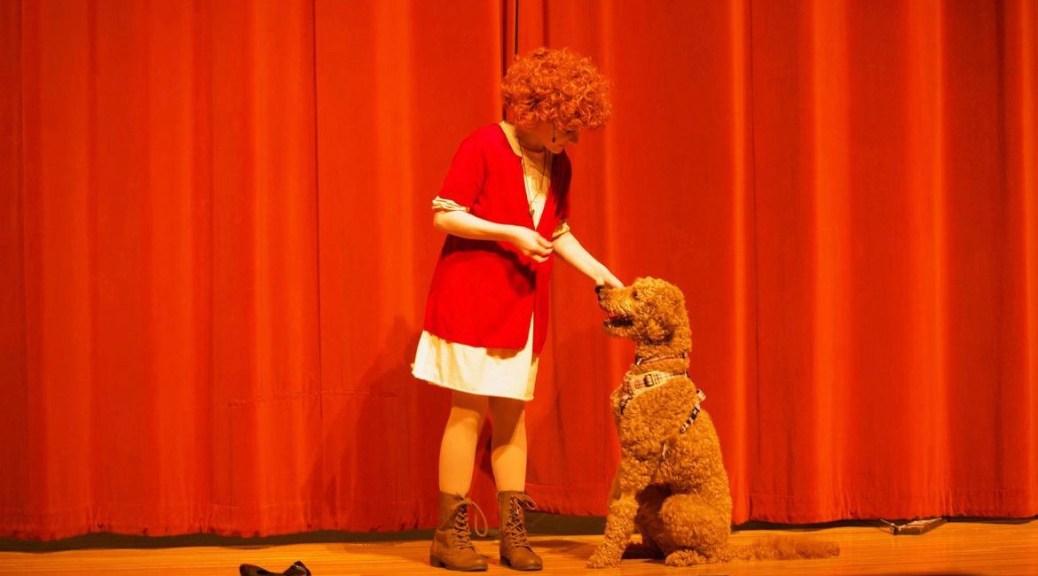
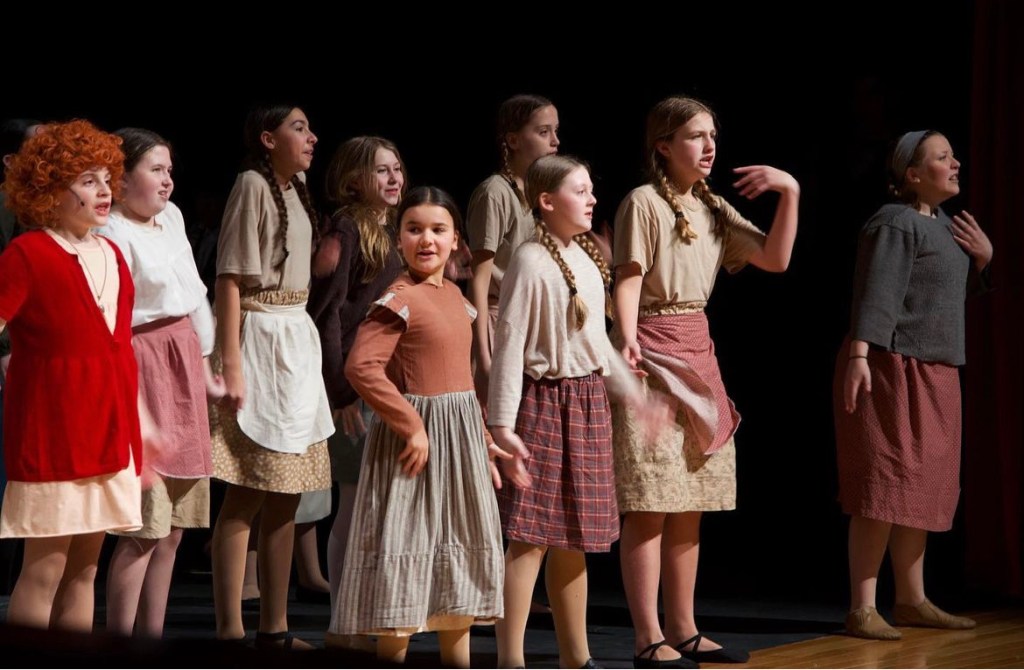
After almost three years, and a global pandemic, Hanover Middle School’s theater program is back in the spotlight. The school’s production of Annie Jr., which tells the story of an orphan girl living in a rich man’s mansion with a desire to meet her real parents, took the Hanover High School stage March 23-25. Based on a 1924 comic strip, the musical was created for Broadway in 1977; the “junior” version is adapted for length, younger voices and bigger casts.

HMS students held both acting and technical roles in order to assure a smooth running production with fantastic music and acting performances. The show was directed by music teacher Dustin Lindsay with the help of HHS teacher Mr. Fahey and many others, including students from the HHS Drama Club.

Sophomore Marie Fortier, the assistant stage manager for the show, said the high school students tried to help their younger counterparts “feel more comfortable in a space they haven’t been in as often.”

“I was able to help the show go from scene to scene,” she added, “whether it was moving set pieces, helping with props, or answering the questions of the middle schoolers.”

Junior Baylor Speckmann, the show’s prop master, said, “I thought it was a great experience to be able to work with the middle schoolers and serve as a role model.” 

It is so great to see theater coming back to Hanover schools; the high school performed 13: The Musical in November and the Brothers Grimm Spectaculathon for the Massachusetts Educational Theater Guild festival last month. Be sure to check out the summer musical of Nemo Junior, scheduled for August 11-12.

Star Wars Movie Franchise is Dying, But the TV Shows May Save It

By Abbey Kinzel, ’23

Staff Writer

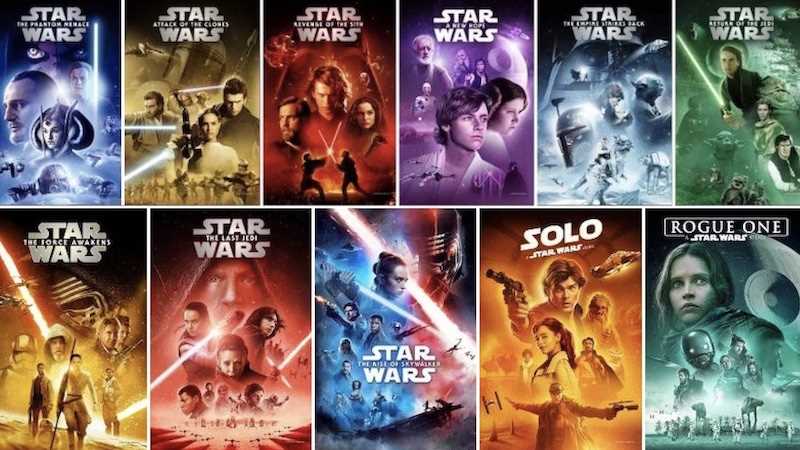
If you asked someone what movie comes to mind when you think of science fiction, they are likely to answer Star Wars. The franchise is a classic in the world of sci-fi and is referenced in many other movies and TV shows. To a lot of people, the series will never get old. But to me and many others, it has become repetitive over time and the direction taken with the storylines in the latest movies has been very questionable. Rotten Tomatoes still thinks the franchise is the best thing since the invention of the iPhone. But while the visuals may be good, from a plot and canon standpoint, the recent movies have been appalling. At the beginning of a film, we’ll learn about the newest characters and what makes them who they are, but then later they’ll do things that don’t make sense. You could say it’s “character development” but I think there is little to no development at all. I’ll get into that more when I discuss the latest three films.  I’ll start by going over every Star Wars movie in order of release date, and then touch on the television shows. It may be that, despite the place in pop culture the Star Wars movies hold, their future may be better on the small screen.

Star Wars: Episode IV-A New Hope (1977):  This is a classic for multiple reasons: unforgettable characters, quotes that are still relevant, a villain that has become a staple of pop culture and the introduction of a very influential weapon, the lightsaber. And who can forget the Death Star, the Millennium Falcon, “It’s a trap,” C3P0 and R2D2? Of course, after you watch it for the 17th time, you lose that feeling of excitement and pure joy. To quote my cousin after we were forced to watch it with our younger cousins, “Wow . . . It’s just like the first 200 times I’ve seen it.” Rotten Tomatoes gives this a 93 percent fresh rating, but my opinion at this point is probably a little more mixed.

Star Wars: Episode V-The Empire Strikes Back (1980): Ok look, trust me, some of these I watched tons of times when I was a kid, like A New Hope, The Phantom Menace and Revenge of the Sith. But that doesn’t mean I’m not going to go hard on them. This isn’t one of them. All I remembered before I rewatched it recently was carbonite, Boba Fett and Darth Vader. After seeing it again, I realized I had forgotten about Leia kissing Luke for some reason that still puzzles me, Yoda (yeah he’s in here), the Planet Hoth, XT-XT’s, AT-AT’s and Lando. It has a good plot twist, but it’s a plot twist that has been ingrained into Star Wars fans’ heads forever. This movie wasn’t the best and greatest, it did feel better story-wise than the first. That’s probably why this movie is actually rated one percent better on Rotten Tomatoes than A New Hope.

Star Wars: Episode VI-Return of the Jedi (1983): This installment wraps up the original trilogy (although creator George Lucas always had ideas for prequels in his head). Episodes 1-3, made almost 20 years later, tell the story of Anakin, Luke’s father. But episodes 4-6 serve as Luke’s story. The film features the rescue of space pilot Han Solo, the death of Boba Fett and Yoda, and the reveal of the real evil Darth Sidious aka Emperor Palpatine. With Darth Sidious defeated and Darth Vader dead, Luke and his friends have officially defeated the empire for good. Now it’s time for the prequels. This has gotten 83 percent on Rotten Tomatoes.

Star Wars: Episode I-The Phantom Menace (1999): This starts the story of Anakin Skywalker, and we meet him when he is a little kid. Obi-Wan Kenobi and his master Qui-Gon Jinn are escorting Padmé Amidala, queen and senator of the planet Naboo, who Anakin later gets a crush on. We are introduced to Darth Maul and he dies 45 minutes later. We are also introduced to the second best character in the franchise, suspected sith lord Jar Jar Binks. Obi-Wan and Qui-Gon sense that Anakin has the force and want to train him. Anakin wins a race, Qui-Gon dies, Anakin blows up an empire space station, and Anakin is evaluated by Yoda and other Jedi masters. Yoda says  he is too old even though Anakin is like 6 or 7 years old, but Obi-Wan convinces them to let him train Anakin. This movie received a 51 percent rating on Rotten Tomatoes. The kid actor that played Anakin is named Jake Lloyd, and after this role he was bullied intensely at school for his portrayal, leading him to quit acting in 2001 and get into legal trouble later in life.

Star Wars: Episode II-Attack of the Clones (2002): This second installment of the prequel trilogy is much better. Obi-Wan discovers a planet that makes clones of Jengo Fett, father of Boba Fett. There are also assassination attempts on Padmé. Jar Jar Binks is an ambassador, teenaged Anakin is tasked with keeping Padmé safe, and he acts really creepy. I’m surprised Padmé eventually gets married to this guy. Anyway, Jengo dies, and Boba decides to become a bounty hunter just like his dad. This one got 65 percent on Rotten Tomatoes.

Star Wars: Episode III-Revenge of the Sith (2005): Upon a recent rewatch, this is better than the first two movies. Anakin and Obi-Wan save Palpatine, kill this guy Count Dooku, and Padmé becomes pregnant. Anakin is torn between staying with the Jedi Council or helping Palpatine. Eventually Anakin joins the dark side since Palpatine manipulates him with the promise of finding out how to save Padmé, who Anakin dreams will die in childbirth. Palpatine orders the clones to initiate Order 66, which is basically the order to kill all Jedi and children with the force. Anakin takes over this one lava planet and is visited by Obi-Wan and Padmé. Anakin hurts Padmé and Obi-Wan & Anakin fight. Anakin loses the fight and is somehow still alive, even though he lost an arm and both his legs and suffered extensive burns. He is rescued and taken back by the dark side for recovery. After losing the will to live, Padmé gives birth to her twin babies. One of the babies was given to, I think, Padmé’s advisor, and the other was given to a part of his family on Tatooine. I don’t know, it’s really confusing. Padmé dies and the babies are officially given to the families and the movie ends. This movie ties up a lot of loose ends, but if anyone finds any new loose ends or plot holes let me know quickly. This movie received 79 percent on Rotten Tomatoes.

Star Wars: The Clone Wars (2008): Let me explain why I found it really hard to initially write this. This was one movie I couldn’t stop watching. It’s one of those movies where you can’t quite remember the plot of but you know it’s good. Surprisingly, it is the lowest ranked movie of all of them, getting just 18 percent on Rotten Tomatoes. It’s really hard to explain. The animation was fine but at times it looked cheesy and flat; some characters felt two-dimensional, dull and sometimes annoying; and the plot is spotty at times. I have zero clue why no one hates Jabba the Hutt’s ugly baby, since so many people hate the Ice Age baby. I found it very hard to stay engaged when watching this movie.

Star Wars: Episode VII-The Force Awakens (2015): Since it has been seven years since a Star Wars installment (and 10 years since a Star Wars movie with a Rotten Tomatoes score above 50), a lot of people forgot how good they could be and must’ve lowered their expectations. This movie wasn’t great or awful; it was just ok with an alright comeback. The characters are blah with just one standout, Oscar Issac’s Poe Dameron, who has recently appeared in the insanely good TV series Moon Knight. The plot is sometimes spotty and left open-ended which is perfect for building terrible sequels. Some of the characters don’t make sense, including a villain who is a man-child who has temper tantrums. It feels like this movie fooled everyone including Rotten Tomatoes, since it has a 93 percent rating. If you get rid of all the weird choices in this movie, it has potential to be good.

Rogue One: A Star Wars Story (2016): Rogue One is a prequel movie that comes directly before A New Hope. The only character’s name that I recognize is Cassian Andor, hero of the rebellion. This is one of the movies that you didn’t quite expect in terms of the ending. This movie introduced deep fakes to me in the form of Wilhuff Tarkin and Princess Leia Organa, the younger CGI versions of deceased actors Peter Cushing and Carrie Fisher. It’s really hard not to spoil this without spoiling A New Hope. This movie received an 84 percent on Rotten Tomatoes.

Star Wars: Episode VIII-The Last Jedi (2017): This movie has been memed to death thanks to Adam Driver and the weird things the directors decided to include. Basically, Luke Skywalker is a big jerk and tells everyone he is a jerk and he sucks, but Rey is like “but you don’t suck” and won’t stop begging him to train her. Finn and Rose’s storyline is just to extend the runtime and is one big waste of time. Also, Rose kisses Finn and the writers thought they could pull a fast one on us and have absolutely no romantic tension or show any romance at all. The producers also hyped up Rey’s parents as being important but it turned out they weren’t. I’m even more surprised that it got a high score on Rotten Tomatoes, 91 percent I really hate this movie. I laughed at the movie and they screwed up the story and destroyed my respect for the franchise.

Solo: A Star Wars Story (2018): I’m not going to say a lot about this movie. It was just a big letdown for me. The only person I cared about was Chewbacca, and I hated everyone else. There was the underlying feeling that they aren’t remotely redeemable. Also, can someone help me understand how, if you were cut in half at the waist, you are still alive? The only thing that kept me going were the references to other Star Wars films. Might I add this is the second lowest rated movie of all of them, earning a 69 percent on Rotten Tomatoes.

Star Wars: The Rise of Skywalker (2019): Ok I literally laughed at this movie. There were giant plot holes, moves that didn’t make sense and almost all of the classic characters die. Having Rey’s parents be nobodies but her grandparents be somebodies just doesn’t make sense. Also, rewriting the force to make specific powers genetic is dumb and against canon; everything we thought we knew about the force and what the previous movies had established over the years was just thrown out the window. It pains me to watch the Skywalker saga go out with a whimper, and this movie received just 52 percent on Rotten Tomatoes.

How Do The Shows Help Star Wars as movies? You may be asking, if these movies keep going up and down with their ratings, how are they still pumping out successful TV shows like nothing happened to the franchise? Well, it’s because the TV shows have a completely different tone and story compared to the movies. The shows add more to the Star Wars films and fill in some plot holes, but they’re not just some bland productions to answer questions we didn’t ask. They get you invested and fearful when you think the protagonist’s story is going to end, even though we know which characters are going to make it. Shows like The Mandalorian, The Clone Wars, Obi-Wan Kenobi and most recently Andor are all respectfully rated in the 80s or above on Rotten Tomatoes. The Book of Boba Fett earned a 66 percent.

Featured image: https://comicbookmovie.com/sci_fi/star-wars/poll-which-star-wars-movie-is-the-best-one-heres-your-chance-to-decide-a200956

Avengers: Each Installment is Bigger, Better than the Last

By Abbey Kinzel, ’22

Staff Writer

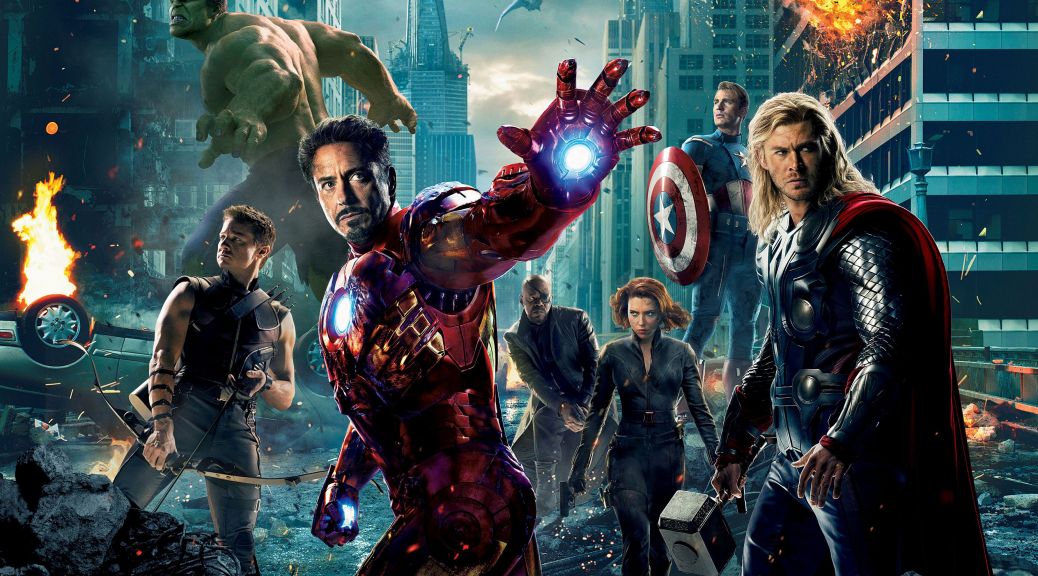
A lot of Gen-Z movie-goers have said that the most iconic franchises are Pirates of the Caribbean, the live-action Diary of a Wimpy Kid, and The Avengers. The Avengers saga, part of the Marvel Cinematic Universe, is by far the most successful of them all. I personally have seen all four movies in theaters with either my friends or my family, and each one tops the previous installment.

The Avengers (2012): Even though this is the first movie of the saga, it doesn’t have the highest score on Rotten Tomatoes. Disregarding that fact, it’s an amazing movie. Marvel was setting up these characters in stand-alone single movies that filled in their backstories and who they are as individuals. Having these six characters come together and defeat a common enemy and a giant space army was game-changing — and a little funny. Captain America, Black Widow, Hawkeye, The Hulk, Iron Man and Thor have to defeat Thor’s brother Loki and throwing a big ol’ space army into the mix was good for the runtime and for the consequences when The Avengers fail their mission. This movie has a 91 percent on Rotten Tomatoes, setting a goal for future Marvel movies. This is a modern classic, and I wouldn’t doubt that when Gen-Z become adults and have families, they are probably going to show this to their kids.

Avengers: Age of Ultron (2015): This was the most anticipated sequel in the summer of 2015. Avengers: Age of Ultron was a near direct sequel to The Avengers. Everyone’s the same, character-wise, but Iron Man made more of his suit of armor to combat different situations. They begin to show off  two new characters that might be added to the gang, “enhanced individuals” named Wanda and Pietro (they can’t call them mutants since FOX owns the X-Men franchise). The team has to defeatUltron, a rogue robot made by Tony Stark and Bruce Banner. And Ultron has a very elaborate plan to kill off the world population. That’s all I have to say about this movie without spoilers. It earned a score of 76 percent on Rotten Tomatoes, the third best in the saga. This movie was very exciting but there is always the feeling deep down that they will save the day. The same cannot be said about the next movie.

Avengers: Infinity War (2018): I believe this is the first movie that made me cry in theaters. I can’t say too much due to spoilers. After many events in some movies that began with the name Captain America, the newly separated Avengers team up with some runaways, criminals and new heroes to fight some big purple man’s armies. This big purple man’s name is Thanos and he is trying to collect the “Infinity Stones” little rocks with different powers that have been referenced or featured in the different MCU movies. A lot of people die and there is a lot of sadness in this one, which has a score of 85 percent on Rotten Tomatoes.

Avengers: Endgame (2019): Not surprisingly, this has the highest score on Rotten Tomatoes, and for many good reasons. One is that a lot of fan theories are confirmed in this movie; two, is that it references many storylines from the comics; and three, the CGI in this movie is downright gorgeous. Thanos returns in this movie and the same sadness and death are in this too. This movie has a 94 percent on Rotten Tomatoes and lays the groundwork for the next phase of the MCU.

Featured image: https://www.seventeen.com/celebrity/movies-tv/g31672673/marvel-moves-in-order/

Mary Shelley: the Mother of Science Fiction and How Pop Culture Has Failed Her

By Leah Dillon, ’24

Staff Writer

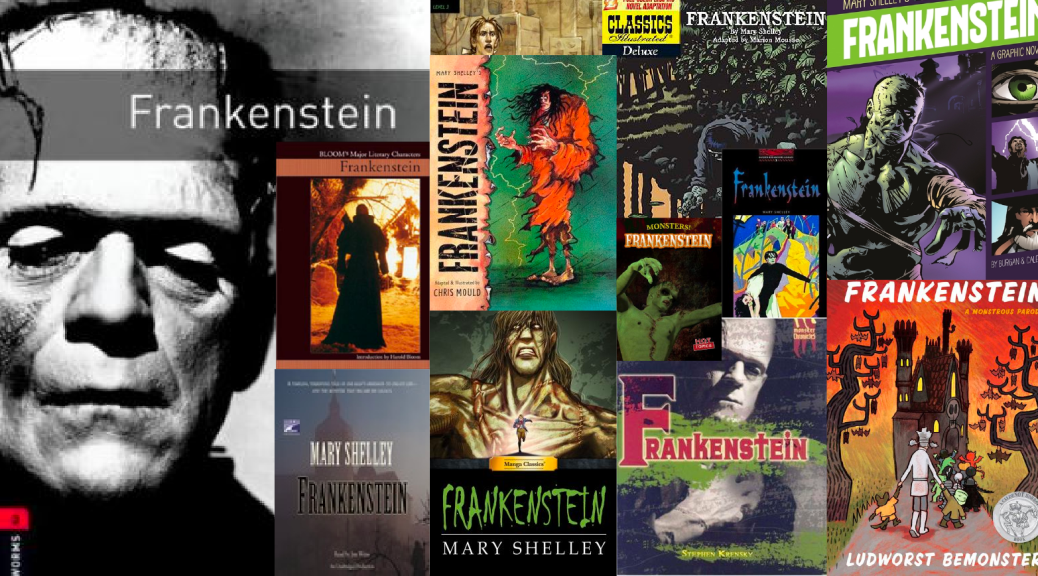
Classic literature and science fiction are, to the inattentive critic, genres which seldom collide. And why would they? Classic lit is, to many, stuffy and overburdened with words, antiquated and boring to anyone with a social life. Science fiction presents itself as the opposite; it’s the storytelling of the future, full of ideas and potential. But what if those assessments are inaccurate? As hard as it might be to believe, a novel published in 1818 provides a vision of the future that remains cutting edge, still relevant today in its precautionary message. Mary Shelley’s Frankenstein tells the repeating tale of human error, of our tendency to extend ourselves further than we should, to mess with forces that we seldom understand in pursuit of selfish ambition. While many are familiar with the premise of a doctor and his pursuit of creating life, much of the pop cultural reception of Frankenstein is skewed, dramatized for the sake of marketing. Not once in the novel was the iconic line “It’s alive!” uttered, and few know that Frankenstein was the doctor, the real monster, while his creature was the unwitting victim. Through an exploration of the original source material, we can discover truths about today’s iteration of sci-fi and the nature of entertainment, as well as commentary about the relentless world that we live in. 

Mary Shelley grew up at the precipice of a new century, in a household fraught with enlightened ideas and conflict alike. Her mother, Mary Wollenstonecraft, was largely credited with the conception of feminist literature with her writing of A Vindication of the Rights of Women, and her father, too, was a radical thinker, giving the young Mary Shelley a hefty legacy to live up to. Though she never met her mother, who died just a few days after Shelley’s birth, it is evident through her writing and personal diary excerpts that her mother’s writing and ideas largely influenced her view of the world. Her mother’s writings inspired her to be fiercely independent, advocating for her own ideas and following her passions (namely, a married man), regardless of any pushback. These vividly independent ideas were conceived amidst a rapidly changing time period; in her lifespan, she viewed civil wars across the ocean and right next door, human rights movements aplenty (such as the one heralded by her mother), and radical change across the world. Countries colonized, and peoples were colonized, and those people rose up in rebellion. Corporations grew, economies boomed, and a working class languished. Individuals grew in power, and continued to grow. While Shelley saw herself as a reformer, far removed from her parents’ radicalism, her ideas still largely challenged the society that she lived in, as well as our society today. The trajectory of her life and the rapidly changing conditions of her world painted the backdrop of Frankenstein’s precautionary tale, which ultimately warns us about the pitfalls of individual ambition gone too far.

Beyond fitting into the framework of her time and challenging the ideas they perpetuated, however, the ideas behind Frankenstein remain cutting edge today. 

Prior to Frankenstein’s publication in 1818, science fiction did not formally exist as a genre. While it wasn’t unheard of to use the supernatural to ruminate on the natural circumstances which surround us, often through the lens of ancient Greek gods, fairies and ghosts, the merging of the supernatural with the scientific wasn’t as explored. Frankenstein changes this entirely. The story was largely inspired by the ideas of alchemy, a subject which blurs the scientific and the mythical. Alchemists sought to turn base metals to gold, to make an elixir of immortality and a philosopher’s stone, and most notably, to create new life from scratch. While these ideas are unfounded and ridiculous today, alchemy as a concept surfaced before most scientific processes and before the major sciences that we recognize today; we now view alchemy as the forerunner to chemistry. It was alchemy which drove scientists across the globe, and thus, Frankenstein’s story is framed.

Frankenstein follows the story of a young doctor, Victor Frankenstein, and his feverish pursuit of alchemy, his fascination with the mechanics of life and death. Ultimately, these special interests of his culminate in the creation of a creature, called simply “The Creature” or “The Being” (notably, not Frankenstein, as most movie adaptations would have you believe). The being was sewn together from a sundry mix of detached limbs and decaying body parts, selected from the most beautiful corpses that Frankenstein could find. “His limbs were in proportion, and I had selected his features as beautiful. Beautiful!” Shelley wrote. But as soon as The Being was reanimated, Frankenstein changed his mind about his beauty, and fled for the hills, hoping to never see the thing again. From here, the narrative unravels, revealing the real crux of the story, the conflict between a parent and his abandoned child, of the scientist and the monster he created. The Creature, who learned love from observing families, wants only for Frankenstein to love him despite his abhorrent appearance. Still, Frankenstein is overcome with disgust, and he rejects his creation once more. What follows are a series of injustices and a cycle of revenge that doesn’t end until both parties are in the grave. 

Upon publication, Frankenstein was an immediate hit. From its unique framing device of being narrated through letters, to the brand-new genre of science fiction, to the unique ideas about ambition and natural human limits, Frankenstein was a breath of fresh air to the publishing industry, a far-cry from its contemporaries. Above all else, it challenged nearly all of the predominant political ideas of the time it was published. Victor Frankenstein’s downfall at the hands of human ambition greatly contrasted with the popular notions of expansion and growth; the idea that nature and the world at large are ours to take, that the strong should overtake the weak, that we should continue to take, to grow, to expand. The idea that we’ve surpassed mother nature in the act of gaining sentience, as if we aren’t a part of the animal kingdom ourselves, destined to die and feed the soil. Frankenstein asserts the opposite; it says that nature has a wisdom that humans weren’t meant to try to replicate. It says that we have a place to honor in the cycle of life, and everyone suffers if we don’t. It says that we, human beings, are limited, and that is okay. Victor Frankenstein is a lesson in himself, the cautionary tale of the novel. We aren’t meant to emulate Frankenstein; and yet, disturbingly, that seems to be the current trajectory of the human race, and it doesn’t seem to be changing. 

Pop culture has failed to adapt this book in a way that does the story and its messages justice, eschewing the more psychological fear of one’s own progeny and the evil in human nature for the much-shallower monster-horror present in most film adaptations. Frankenstein loses its soul to the modern media lens. And why wouldn’t it? A message about the limits of humanity’s ability to achieve, and the danger of the pursuit of greatness, is the exact opposite of marketable. It’s important to understand that so much of what we consume is dictated by our other consumption. Businesses and corporations who want to sell us our lives, entertainment included, for their own exponential growth, don’t benefit from a story telling us the danger of that level of ambition. Thus, the reconfiguration of Frankenstein’s story commences. The monster is called Frankenstein, not the doctor. Iconic and easily quotable lines like “It’s alive!” are interjected. The beautiful features sewn together to make something less beautiful are thrown away and Frankenstein becomes a symbol, a mask you can buy for Halloween. Thus is the engineering of Sci-Fi. No longer can we see the fears of our own nature. Instead, we observe the next biggest monster, fitted with more spikes and teeth and scales, or the next bit of cutting edge-technology, first imagined onscreen, then perhaps produced in our world. The message of Frankenstein becomes eroded and unreadable, when it is as relevant as it ever has been.

We see the consequences of Frankenstein play out every single day. Greenhouse gasses in the atmosphere, pumped there from the newest, fastest car they can make. Conglomerate corporations buying out their competitors, until every last dollar of yours is spent on only them (looking at you, Disney.) The cancer cells of one woman, Henrietta Lacks, taken from her without her knowledge or consent and being experimented on, and becoming a multi-billion dollar business for doctors and researchers, all the while her family doesn’t see a dime of that fortune. Now, more than ever, we humans step out of place and mess with things bigger than our understanding, making consequences bigger than our understanding. For what? Progress that hurts us more in the long run? An earth so advanced that it becomes unlivable? The decline of humans and mother nature alike? This isn’t progress. Such extreme ambitions, the want for such severe control, is not progress. Progress is learning to work with mother nature, to improve within our human bounds so that members of our own species prosper before we work on the next big advancement, or the next big buck. Progress is the understanding that one person or group of people should never be that powerful, as power corrupts. Mary Shelley knew this, and she warned us. Now, we are just beginning to live out its consequences.

Classic literature is called classic because, despite its age, it tells us universal truths about the human condition. Frankenstein is among these timeless truths; it’s our job to listen. Though classic literature might not be everyone’s idea of a good time, it’s certainly not antiquated, and remains valuable through the lessons it shares, the ideas it pioneers. The work of the past tells us the truths of our future, without the added lens of marketability. If only more people were willing to look to the past to understand our future, then maybe we would be better equipped to escape Frankenstein’s fate, and our own reality wouldn’t become such a precautionary tale. 

featured image: https://www.hcpl.net/blog/2022/06/six-ways-frankensteins-creature-surprised-me

Captain America: a Hero We Can All Root For

By Abbey Kinzel, ’23

Staff Writer

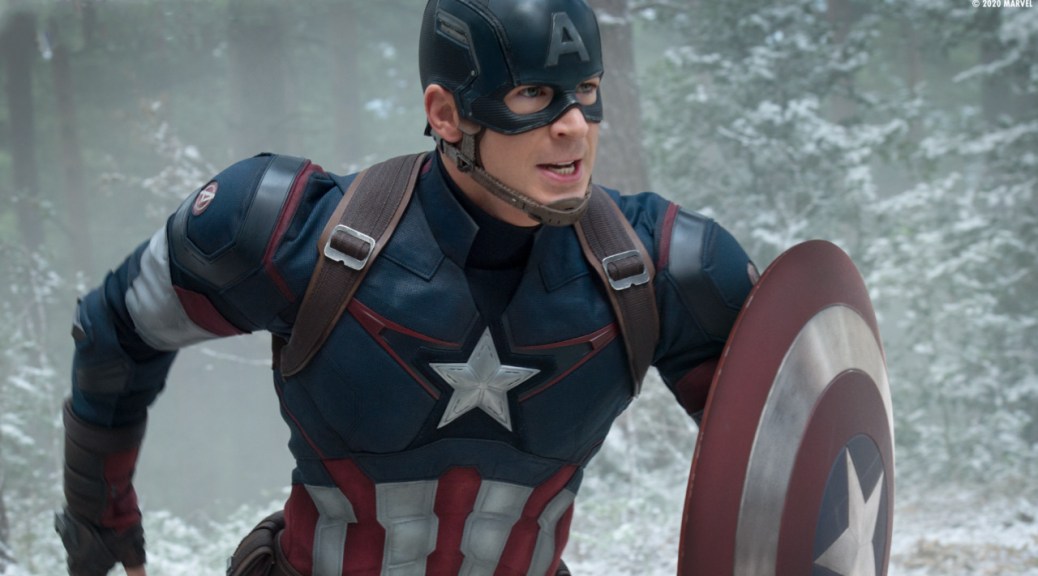
The Captain America films are a collection of three installments with another on the way in 2024. They are stand-alone movies in the Marvel Cinematic Universe that focus on introducing a character or concept and serve as a prelude to Avengers: Infinity War and Endgame. Captain America himself is a symbol of heroism and patriotism, but he also shows that having power doesn’t mean it can change you into someone else. 

Captain America: The First Avenger (2011): For me and my family, this movie was a big hit. We are fanatics about war movies, but this is one that will never get old for me. It is also likely the first movie I saw in theaters. This was the second Marvel-released film directly from the source, before the purchase by Disney. Iron Man , the first movie, was a solid 94 percent on Rotten Tomatoes and would make a lasting impression on moviegoers. Captain America: The First Avenger wasn’t as good as Iron Man, with a rating of just 79 percent on Rotten Tomatoes. It wasn’t bad, just not mind-blowingly amazing. It’s cool to watch at different ages and catch some of the concepts and details we missed when we were younger. There are a lot of references to World War II and what was considered “normal.” It explores concepts like propaganda versus reality, the propaganda the government was selling to promote the war compared with the undeniable reality the soldiers were facing on the battlefield. It looks at death coming unexpectedly in places away from the battlefield, as well as the concept of a good thing having an unexpected end and the idea of sacrifice. It also features the first onscreen appearance of an Infinity Stone known as the Tesseract.

Captain America: The Winter Soldier (2014): This, too, was a movie I was too young to understand the concepts of when it first premiered. This movie did significantly better than the first Captain America as Marvel brought in characters from the original as well as the Avengers series. It explores concepts like corrupt officials in government positions or organizations and the idea that one person’s conspiracy about the people they are working for changes everything. It also dives into, uh, brainwashing . . . just straight up brainwashing. This movie has a 90 percent on Rotten Tomatoes and marks the midway point of the MCU’s Phase 2 of their movie lineup.

Captain America: Civil War (2016): Captain America: Civil War picks up almost where we left off in the Avengers film and marks the beginning of Phase 3. I couldn’t find anything about themes in this movie without giving spoilers. So if you were sick of me rambling about themes and concepts, then thank this movie. This one is a mix of excitement and heartbreak and it’s hard to feel serious, excited, and sad all at once. This movie has a 90 percent on Rotten Tomatoes, a tie with Captain America: The Winter Soldier. With a lot of conflicting emotions in this movie, the plot  of it defined the other movies in the MCU moving forward.

Captain America: New World Order (2024): This is an upcoming movie with Captain America as the star, of course. The release date is May 3, 2024 and there’s little info yet about the plot. The director is Julius Onah, a Nigerian-filmmaker and occasional actor who directed The Cloverfield Paradox.

Featured image: https://www.marvel.com/characters/captain-america-steve-rogers

The Case for Bjork: Pop Music’s Most Eccentric Artist

By Leah Dillon, ’24

Staff Writer

Perhaps you’ve heard of her. Maybe you haven’t. Breaking records in her native country of Iceland, and eventually carving a niche for herself in the worldwide cultural zeitgeist, there’s nobody in the music industry quite like Björk. From her unique merging of new musical styles, the deeply intimate themes embedded throughout her whole discography, to her vivacious and strange personality,  Björk presents the music industry with one of the most artistic performers in recent history.  

Björk Guðmundsdóttir first began her music career at the age of 11 by releasing a collection of traditional Icelandic folk songs. Soon after, she rose to prominence within Iceland as the lead singer of alternative rock band, The Sugarcubes, among other punk and post-punk bands that she performed in. During her time in The Sugarcubes, however, Björk became dissatisfied with the limits posed by the guitar, and began seeking out other instruments and other styles of music through which she could actualize her artistic vision. From classical piano to electronic trip-hop, the burgeoning artist immersed herself in as many genres and instruments as she could find. While The Sugarcubes continued to top charts in Iceland, Björk herself remained relatively unknown in Europe and the Americas for the duration of her early career. All the while, her thirst for new music to immerse herself in led to internal tensions within The Sugarcubes, which culminated in her decision to leave the group in pursuit of a solo career. Entering the ’90’s, Björk embarked on the beginning of a long and fruitful artistic journey, now uninhibited by the conventions of a single genre and able to express ideas that were wholly hers.

Her debut album, named simply Debut, yielded a few hit songs, notably, “Venus as a Boy” and “Human Behavior,” which prevail as some of the most popular songs in her discography. Only two years later, Post was released, truly launching Björk into the wider musical world. Her style, which combined the emergent genre of electronic music and the then-waning genre of classical orchestra, was distinct and easily recognizable. “Hyperballad,” a song hailing from the album Post, exhibited this unique blend of genres, layering her three-octave voice over an electronic beat and a wide array of orchestral instruments, from the trumpet to the violin to the bass and drums. Her music also ruminated on themes that were seldom discussed in the industry at large; “Hyperballad,” for example, frames itself as the story of a woman who lives on a mountain and spends her morning throwing small objects over the edge of a cliff, exploring ideas of suicidal ideation in a tender and sympathetic manner. “I imagine what my body would sound like, slamming against those rocks,” she sings, “and when it lands, will my eyes be closed or open?” The song ends with her returning to the arms of her lover, remarking that going through this ritual of throwing small objects allows her to be “safe again.” “Hyperballad” exhibits a level of vulnerability and raw, unfiltered emotion that is absent from most of the music industry, which favors more easily palatable songs for its top charts and radio stations. “Hyperballad” is far from the only vulnerable song Björk has created; her whole discography is laced with a sense of intimacy that reads like a diary entry, or as a conversation between friends. Through and through, Björk’s discography shines with her unique artistic voice and deep sensibilities. 

While her records sold, and her music gained popularity, much of her work was dismissed by critics as strange, with Björk herself being largely written off as some batty Icelandic lady. In a sense, that assessment wasn’t wrong. Every piece of her work blurs the lines between genres and breaks well-established musical conventions. Her lyrics can be viewed as strange, and many of her beats are discordant. Her music videos are equally unusual, with one of her videos, “Pagan Poetry,” being an explicit tape of her own body (albeit heavily distorted, and hard to recognize upon first viewing). Her manner of speaking is notably off kilter, a fact which many interviewers chose to hone in on, as opposed to the actual content of her music. Many of these interviews and videographers seem to have skewed their depictions of her in order to favor the popular perception that she was strange; one such report narrates a video of Björk attacking a reporter, choosing to gloss over the fact that this reporter had been harassing her and her son for four days, further cementing the impression of her being erratic and unpredictable. Other interviewers have asked her invasive and condescending questions about her personal life, seeming to regard her as a spectacle or some exotic animal. “Isn’t she cute?” one interviewer asks the audience after having asked Björk whether or not she was going to get angry (in reference to the video of her attacking the interviewer). Many reviews go so far as to describe Björk as some sort of an alien. But once you peel back the flashy layers of clothes and makeup and discordant instrumentals, the discerning listener knows that she’s quite the opposite; of all music that has been released, hers is some of the most authentically human. 

Björk’s unrivaled creativity prevails to this day: just this year, at the age of 57, she released a new album, Fossora. In it, Björk appeals to the increasingly disconnected nature of our society, using fungi and mushrooms as a metaphor for the unseen connections between people, and urging us, the listener, to “find a resonance where we do connect” in spite of our differences. In today’s especially polarizing society, her message rings as urgent, but optimistic. “Hope is a mussel that allows us to connect,” she sings. Hope is a theme that extends through all of her music, even in her darker songs (such as “Hyperballad” or “Victimhood”). Even her older music yields messages and themes that are cutting edge today; her earliest music still prevails as the music of the future.

Björk is not only a rare musician, having blended several genres into her own eclectic style and possessing stunning vocals, but a rare person; somebody who sees through the veil of accepted conventions, and who dares to break them. While much of what she presents to the world is likely a persona meant to further her artistic vision, her art still challenges everyday conventions with a fierce individuality, and encourages the listener to do the same. Every song she writes is embedded with her unique artistic voice, one which dares the listener to break convention too, to live a life uninhibited by restrictive conventions and the thoughts of others. Björk dares the listener to examine every part of themself, the good, the bad, the ugly, and the unorthodox, and to live it wholly and unabashedly. She urges us to have hope, to connect. Above all, Björk asks us to be human. An artist isn’t just somebody who makes music; this is what makes an artist.

Featured image: https://www.vulture.com/2022/10/bjork-fossora-album-guide.html

Netflix Series Shines Spotlight on Familiar, Yet Misunderstood Character

By Norah Kelley, ’24

Staff Writer

* Spoilers Ahead*

Everyone’s favorite outcast. Around since 1938, in her own creepy way, she has held the hearts of millions of people. The Addams Family, despite their strangeness, is seen as comforting and showcases the love in a family. The whole family is shown as doing typical things, but in a weird and creepy way. As a little girl, Wednesday Addams had some different habits from other girls her age. One of her favorite activities was pranking her brother in a not-so-normal way, doing things like putting him in an electric chair. Their relationship looks much different than the typical brother-sister relationship. 

The comics, TV shows, and movies all portray the same spooky family, but in the Netflix show, Wednesday, the audience focuses on the daughter of the family. She does not change her mysterious ways as she makes her way through the show. But instead of being the villain that the people in her school have made her out to be, she is the hero who saves Nevermore.  

Wednesday Addams is sent to Nevermore Academy, a school for outcasts with different powers, but she is still treated like an outsider. Along with the original characters that people have become familiar with, including Thing (the hand with a mind of its own), there is the introduction of new characters to form a connection with: Enid, a werewolf; Xavier, a psychic; Bianca, a siren; and Tyler, a normie, or so we think. 

Wednesday develops different relationships with all these characters, some good, some bad, and some deceiving. Many people who watched this show were shocked when the love interest, Tyler, turned out to be the monster (called a hyde) who was killing outcasts and normies around the town. Plot twist.  

From the first episode I watched, I was hooked. The way that Tim Burton directed this show, I felt as if I could connect with all the characters. This murder mystery story allowed the audience to figure out who was the killer (I figured it out before the reveal, while still getting invested in the friendships and relationships that Wednesday was developing). For someone who is not a huge fan of horror or creepy shows, I found this Netflix original had the right amount of spookiness that many audiences will find enjoyable. 

Movies Return to Hanover In Style

By Abbey Kinzel, ’23

Staff Writer

The opening of Showcase Cinema de Lux at Hanover Crossing was something my friends and I have been looking forward to since the closure of Patriot Cinemas in 2020 due to the Covid-19 pandemic. Waiting two years, thinking that we’d never have another movie theater in Hanover again, was tough. But the November opening of this new “deluxe” theater got me hyped. I was recently able to try it out with a viewing of Avatar: The Way of Water. I recommend going soon if you haven’t already.

When I entered the theater, it was smaller than I expected. It has eight auditoriums including one with a huge screen and reclining chairs. Concessions were good, you can’t quite mess up popcorn and candy. The soda fountain was cool; I was able to choose a vanilla Coke with different flavors. My dad got an Old Fashioned from the bar in the lobby, which he enjoyed.

Sitting down for 3 hours and 12 minutes for Avatar, with some snacks smuggled in from Market Basket, the experience was very good. Seats were comfy. I was relaxed and felt I could sit and watch another two-hour movie.

featured image: https://www.showcasecinemas.com/theater-info/showcase-cinema-de-lux-hanover-crossing

Avatar Movies are Guaranteed Big Bucks for James Cameron

By Abbey Kinzel, ’23

Staff Writer

I’m sorry to say this but, James Cameron just can’t stop making money from his movies. First it was Titanic, and now it’s the Avatar series. It is beyond my comprehension how this man can make so many successful movies. If a ton of people watch one of his movies in theaters and don’t think it’s that good, the money is already in his pocket. But it’s hard not to watch his new movies; they either have a great story, great visuals or both.

Avatar (2009): So this was a thing that actually happened literally 30 minutes before watching the new Avatar. My dad asked if I had seen the first film in theaters. I don’t think it occurred to him that I would’ve been four years old. But anyway, this is a modern classic, with CGI that was absolutely spectacular for 2009. When I watched this when I was younger, it felt like something out of the future. I thought it was magical; if I had only seen a little of it, I might’ve mistaken it for a dream. When I watch it now, that feeling is still there. It’s hard not to say that it’s absolutely beautiful. The story is questionable yet compelling, since it projects Americans as always wanting to destroy something beautiful for their own benefit. The love story between the two main characters is intriguing and fun, and I somehow always find myself smiling when they are together since it feels very genuine. It sometimes feels like you are with the natives of the planet Pandora. It’s hard not to feel for the native people and connect with their culture. But there is one thing that doesn’t sit well with me. One of the main conflicts in the middle of the movie is when the main character Jake Sully has the task of safely relocating the native people before the military began to destroy their land. But Jake basically forgets to convince them to leave their big tree. It feels like they set him up to be revealed as a liar, t but it just doesn’t make a lot of sense. I mean, I can get that maybe Jake was hesitant about what he was going to say to the native people and how much their mega tree home means to them as a culture, but this twist makes him look bad. But since I don’t think anyone wants more spoilers, lets get to the score. This movie earned 82 percent on Rotten Tomatoes. After watching this again, I feel it is definitely better than the second movie. And it’s the highest grossing film of all time with $2.9 billion in profits.

Avatar: The Way of Water (2022): So my friend and I were supposed to go to the new Hanover movie theater to review it and watch the new Avatar movie. But my friend came down with COVID so my dad went with me instead. We were really rushed when we finally got to the theater to watch, and all I felt was tired, and my eyes hurt from probably not blinking because I didn’t want to miss a thing. But I can definitively say that it wasn’t as good as the first one – like most sequels. Since it is a fairly recent release and I don’t want to spoil it for anyone who hasn’t seen it yet, I won’t say too much. This movie has a 79 percent rating on Rotten Tomatoes, which is almost as high as the original. A lot of people who watched the movie thought the CGI was fine but not as mind-blowing as the first movie. The box office did rake in over $2 billion regardless. Meh, Puss in Boots: The Last Wish was still better.

Avatar: Literally any Upcoming Avatar Movie: Not a lot has been said about the upcoming movies except for the release date for each and a lot of rumors. There is a two-year gap between each movie, so it’ll take about six years for all of the movies to be released. Rumors include that they have already filmed scenes for the next movies before the child actors age too much, and that the fifth movie will be Jake Sully and his family going to Earth.

Featured image: https://www.cnn.com/2023/01/22/entertainment/avatar-way-of-water-2-billion/index.html

Drama Club Takes on Fairy Tale Mashup for Annual State Festival

By Paulina Leskow, ’24

Staff Writer

One of the early signs of spring at Hanover High School are preparations for the annual METG Festival. The Massachusetts Educational Theater Guild Drama Festival is a competition in which high schools present a one-act play under 40 minutes, with the crew limited to just five minutes to create and break down the set. The performances are judged professionally in daylong rounds, and only a select number of schools are chosen to move on to the next level. HHS began working in January on this year’s entry, The Brothers Grimm Spectaculathon, and competed against seven other schools in the preliminary round at Marshfield High School on March 4. Their performance was one of four selected to advance to the semifinals on March 18. 

The Brothers Grimm Spectaculathon by Don Zolidis is about almost every fairy tale known — Cinderella, Snow White, Hansel and Gretel and more — all jumbled up into one crazy, hilarious story. The cast was very excited to present the show, with a mix of performers both new to and experienced in the happy chaos of festival days. In the first round, HHS performed in competition with Duxbury, Marshfield, Hull, Norwell, Hingham, Weymouth, and Ursuline Academy. 

“I am happy and nervous at the same time, as this will be my first time performing in front of so many different people from different schools,” Baylor Speckmann, a junior and first-time festival cast member, said early in the rehearsal process. Baylor played Narrator 2 in the production. “There are so many specific parts and movements to memorize, but I know it will work out with the help of the castmates, crewmates, and our director.” 

HHS Drama teacher Collin Fahey directed the show, having a few festivals under his belt including the challenging hybrid-style competitions during the height of COVID.

“It is the 90th annual festival this year, and it is very exciting to be a part of such a tradition,” he said. “All of our cast and crew is such remarkable talent, and I can assure you that this will be one of the funniest shows you have ever seen!”

This is the second and final festival for Kaya Bianculli, senior co-president of the Drama Club who will be portraying Narrator 1. “I like seeing different drama departments from other schools perform as well as meeting new people,” she said.

Family and friends attended a dress rehearsal of the show in the HHS auditorium on March 2. The action-packed, hilarious play left many smiling from ear to ear. In the March 4 competition, the performance was not only selected to advance to the next round, the cast and crew won several individual awards. Junior Ian MacDougall earned a nod for outstanding acting; his multiple roles included a hilarious turn as a black raven with the voice of a 1930s gangster. Junior Paulina Leskow was cited for outstanding stage management and versatility, and sophomore Marie Fortier was honored for her role as assistant stage manager.

“I am thrilled to be able to get a view of the show as a crew member, which is completely different to performing as an actor,” said Fortier. “Seeing the sets and props come together is a very fun and memorable moment.” 

Paulina, Ian and Marie with the awards won in the March 4 round.