Category Archives: Opinion

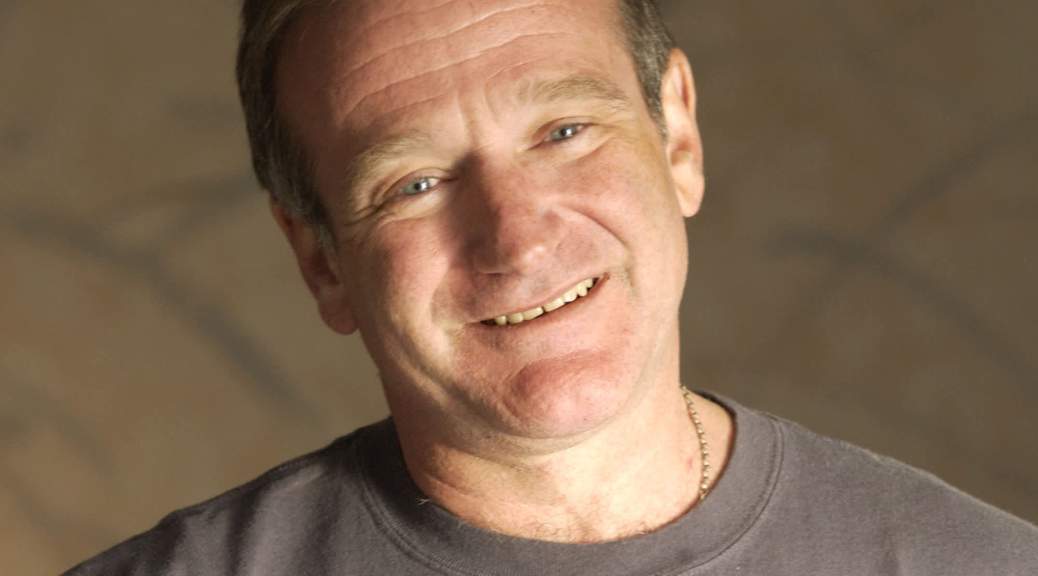
If I Could Talk to Anyone in History, I’d Choose Robin Williams

By Paulina Leskow, ’24

Staff Writer

“Please, don’t worry so much. Because in the end, none of us have very long on this Earth. Life is fleeting.”

– Robin Williams

Father. Actor. Comedian. Born in 1951. Died in 2014. There are hundreds of thousands of actors in the world, so you may wonder, “what makes Robin Williams so special?” Why is he the one, out of all people, that I so desperately want to speak with? Robin Williams was not only a world-renowned actor, but he was also a good man who was deeply affected by addiction and depression, leading to his tragic downfall. If I was given the chance, I would talk to him about his life, his career, his struggles, and in every way I could, I would show him how important he was to the world. 

When thinking of historical figures, people tend to envision political figures such as George Washington, Susan B. Anthony, or Martin Luther King Jr. These people have all played important roles in our nation’s history. However, I believe that historical figures consist of more than just war heroes, civil rights activists, and politicians. Many impactful historical figures were artists, scientists, authors, musicians, and actors. I was quick to decide that I would choose an actor as a figure to talk to, but why? Better yet, why would I even consider Robin Williams an historical figure? For starters, Robin Williams has starred in several performances and represented a variety of characters that have affected many on a personal level. From iconic movies like Jumanji and Mrs. Doubtfire to comedies like Flubber and Night at the Museum, Robin Williams was very successful in his establishment of character and emotion, which allowed audiences to unlock the depths of their imaginations. Using his performing skills, he knew how to effectively appeal to his audiences and portrayed his roles in ways that many would characterize as unforgettable.

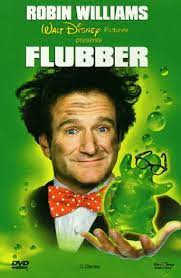
One of my earliest childhood memories was watching Flubber with my siblings. For those who don’t know, Flubber tells the comedic, fictional story of a scientist who experiments with the creation of a rubber-like substance while simultaneously enduring crazy adventures and unique situations in an effort to win over the girl of his dreams. It is a simply hilarious film and I recommend it to anyone who hasn’t seen it or to anyone who is simply in need of genuine, feel-good, comedic relief in their life. Robin Williams’ strong performance in the film is what made Flubber especially memorable to me. I most clearly recall in the movie a quote he said that went: “I know I love her, Weebo. Every neuron in my limbic system is saturated with phenylethylamine. That triggers euphoria, elation, exhilaration. Truth is, Weebo, I’m not absent-minded because I’m selfish, crazy or inconsiderate. I’m absent-minded because I’m in love with Sara.” To me, this was such an unbelievably powerful quote that painted a beautiful picture of what love truly is. Williams successfully embodies the character’s love of science and incorporates distinct scientific processes into portraying how he feels, all while presenting an entirely raw and personal account of his deep love for the girl. It was these memorable quotes and movies like Flubber that drew me to the comedic, loving, and powerful characters portrayed by Robin Williams.

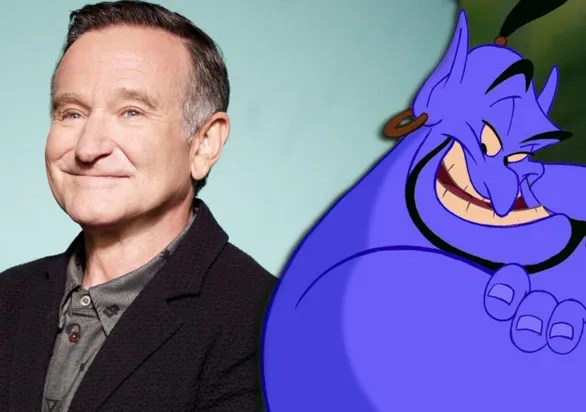
Robin and his animated counterpart, the Genie

Arguably, one of Robin Williams’s most significant and well known roles consisted of his vocal portrayal of the Genie in the 1992 Disney animated film Aladdin. From this movie, I formed a rather personal connection to Robin Williams when I was in the fourth grade. In school that year, Aladdin Jr. was selected as our musical, and I was lucky enough to land the role of the Genie. In preparation for the show, I recall that my method of practicing for the role was rewatching clips of the Genie from the movie. I most vividly remember looking back and constantly listening to his use of different voices in the song Prince Ali, noting how Robin Williams used the power of his voice to convey different emotions, actions, and thoughts. I was inspired by his successful performance and hoped to someday be as talented of a performer as he was. That was truly what inspired me to continue to be involved in productions, and looking back it seemed to have indirectly influenced my decision to dedicate myself and my life to the world of theater, as I intend to study performing arts as my major in college. 

Robin Williams has impacted a multitude of aspects of my life, and I did not realize until recently how large of an impact this would have on my future. Thanks to Robin Williams, I really know who I am and am confident in who I want to be when I grow up. If given the chance to meet him, I would want to learn more about what contributed to his success as an actor. Specifically, one of the significant questions I would ask would be how much practice and effort he had to put into his roles, and what methods he used to be able to embody his unique characters so well. Learning about what it takes to succeed in the world of performing arts from this world-renowned actor, I know, would help me further enhance my acting abilities and improve my chances of success in the future.  

Not only is Robin Williams seen as an historical figure in the world of acting, he also is viewed as a significant figure in the field of mental health. In the 1980s, he overcame an addiction to drugs and alcohol which had fueled his early career. After his death in 2014, Williams was diagnosed with Lewy Body Dementia, the second most common type of dementia after Alzheimer’s disease, according to the Mayo Clinic. It is caused by protein deposits that develop in nerve cells in the brain, impacting brain regions that are involved in thinking, movement, and memory. This condition likely exacerbated Robin Williams’ lifelong struggle with depression as well as impacted his ability to create and perform, leading to his death by suicide.

A scene from Mrs. Doubtfire

In a conversation with him I would ask how and why he masked himself as being strong, when on the inside he was really broken. Was there a specific moment where he was able to realize he had depression? Did he talk to anyone about it or have to suffer in silence as many celebrities, and people, do today? How did internal and external influences affect his thoughts, emotions, and actions? But before all that, I would ask if, right then and there, he was doing alright. Knowing that he suffered from these difficulties, it would have been so important for Williams to have an effective and trusted support system, or at least to have people in his life who truly cared about him. Though he did not know me, he could have potentially found help in talking to someone like me, someone who cared about him and wanted to help him through his depression. Of course I am not saying that I would have cured his mental illnesses, but perhaps for even a moment, I could have helped make him feel like he was valued for the person he was and for all he contributed to the world. 

Despite all of his struggles, his positive outward personality and his feel-good performances helped many people struggling with mental health problems. Many recall the kinetic energy that Williams put out in his life, and his jokes inspired people to realize that joy, laughter, and happiness can be found in their world. And though he suffered from poor mental health and death by suicide resulting from depression, his best qualities will always be remembered. Robin Williams left a light shining in this world that can never fade away. 

The Chaotic World of Children’s Classic ‘Alice in Wonderland’

By Paulina Leskow, ’24

Staff Writer

“Curiosity often leads to trouble” is exactly how I would describe the 1951 Disney animated movie, Alice in Wonderland. An adaptation of the classic Lewis Carroll story, “The Adventures of Alice in Wonderland and Through the Looking Glass,” Alice in Wonderland revolves around the world of curiosity in a chaotic manner that makes it difficult for the viewer to follow along.

Alice in Wonderland tells the story of a very curious girl who finds herself stuck in the world of Wonderland, which consists of creatures and settings that defy the real world in every way possible, with creative creatures such as talking doorknobs, magical tables, smoking walruses, argumentative plants and flying toast. Although it is a creative concept, the storyline does not seem to have any consistency with its characters, as Alice is the only predominant protagonist throughout. Even “sidekick” characters, such as the Mad Hatter and TweedleDee and TweedleDum make very rare appearances that seem insignificant to the plot.

In regards to the plot, once again, there is a lack of continuity and consistency. The first half of the story has Alice searching for the White Rabbit, who claims to be running late “for a very important date.” About three-quarters into the story, that motivation driving Alice instantly disappears and turns into Alice suddenly having a desire to go home and escape the wrath of the Queen of Hearts who, even though she is considered the main antagonist and villain of the story, barely has any backstory or significant connections to Alice or the story as a whole. I like the character of the Queen of Hearts, I mean who doesn’t? Also, the deck of cards serving as her henchmen and military is a clever play on words and had so much potential as an important part of the movie. Unfortunately, the creators left the deck of cards and the Queen until the very end, taking away from their significance or character development. 

Overall, in terms of characters, I think it was pointless to include so many characters and so many irrelevant scenes with those characters. For example, I think back to the scene about the oysters in which one of the extra characters “invites” an entire army of oyster children to dinner and then, in the end, all of the oysters are eaten. Although this was a sad yet ironic scene, it was so unbelievably irrelevant to the story, and not related to Alice and her journey through Wonderland or finding her way home whatsoever.

The ending in which the reader simply finds out that Alice dreamed up Wonderland in her sleep was seemingly satisfying as there is a logical conclusion and explanation for the wild events that occurred throughout the movie. But it also just emphasized the idea that Alice is simply a delusional girl who clearly needs help, but no one seems to care enough to help her find control of her imagination.

Despite its character and plot flaws, there were also positive aspects, which make the movie as iconic as it is today. I was unaware that there was singing involved, and I feel the songs were placed nicely and not over-the-top. I also liked many of the concepts of the film, especially the idea that certain foods lead to growth or shrinkage of a person. The animation style is just like any other classic Disney movie, which adds a sense of nostalgia.

Alice in Wonderland is an iconic Disney movie seen by generations, with references and characters known and quoted around the world. But the unnecessary number of characters and the disorder of the plot make the film difficult to watch and comprehend.

Featured image: One of the scenes of Alice in Wonderland, with protagonist Alice, well-known side character Mad Hatter and additional characters celebrating an “Unbirthday.”

Don’t Judge a Movie By Its Reviews

by Owen Pierotti, ’27

Staff Writer

I recently watched a movie called Ruby Gillman, Teenage Kraken, which was released in June. Despite not performing well financially, I found the movie to be well-made and engaging. The animated film follows the story of Ruby, a 16-year-old girl who discovers that she is descended from an ancient Kraken warrior, and can transform into a Kraken (a giant sea monster, for those who don’t know). The movie explores themes of growing up and overcoming adversity, and I found it to be both thought-provoking and inspiring. While some reviewers have criticized the movie for being too generic and predictable, I believe that it offers a fresh take on the coming-of-age genre. Overall, I would highly recommend Ruby Gillman, Teenage Kraken to anyone looking for a heartfelt and engaging movie experience. And even though this movie says “for kids,” that doesn’t mean a thing; it can be for anyone. 

Ruby Gillman is a great example of the many films that may not be hit in theaters but are still worth watching. Another that was fun and upbeat this year was Super Mario Bros. A movie based on the hugely popular Nintendo game should be a hit, right? False. This origin story of the classic video game, which dates back to 1983, was rated among the top 20 worst movies by IMDB.com. One review read, “It’s brightly colored. It’s energetic. It’s got the characters. There’s the gameplay. The story is fairly simple. It’s pretty much what I expected. I wish there was more heart to it.” But as I watched the movie, memories from playing the game as a kid flooded my brain. I loved it! I grew up with these brothers; shouldn’t everyone else feel likewise? I believed this movie had a certain character to it that others did not.

So when you’re browsing cable or streaming services for something to watch, don’t be so quick to pass by ones that weren’t hits in the theater or ones that have terrible scores on IMDB.com or Rotten Tomatoes. Sometimes the terrible reviews are right. But other times, the movies feature bright characterization, relatable themes, and phenomenal viewing experiences. Checking out these movies may bring a sense of happiness or a sense of change, so why not give them a try? 

What’s the Deal with Barbenheimer?

By Leah Dillon, ’24

Staff Writer

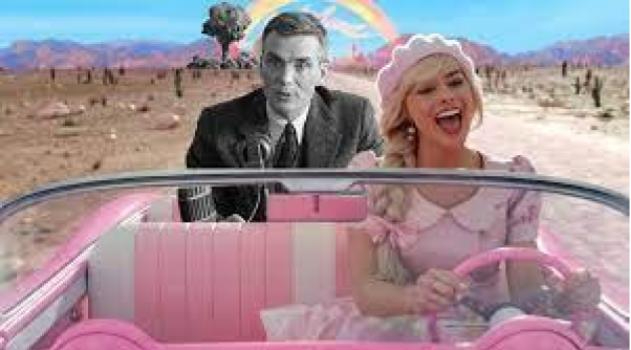
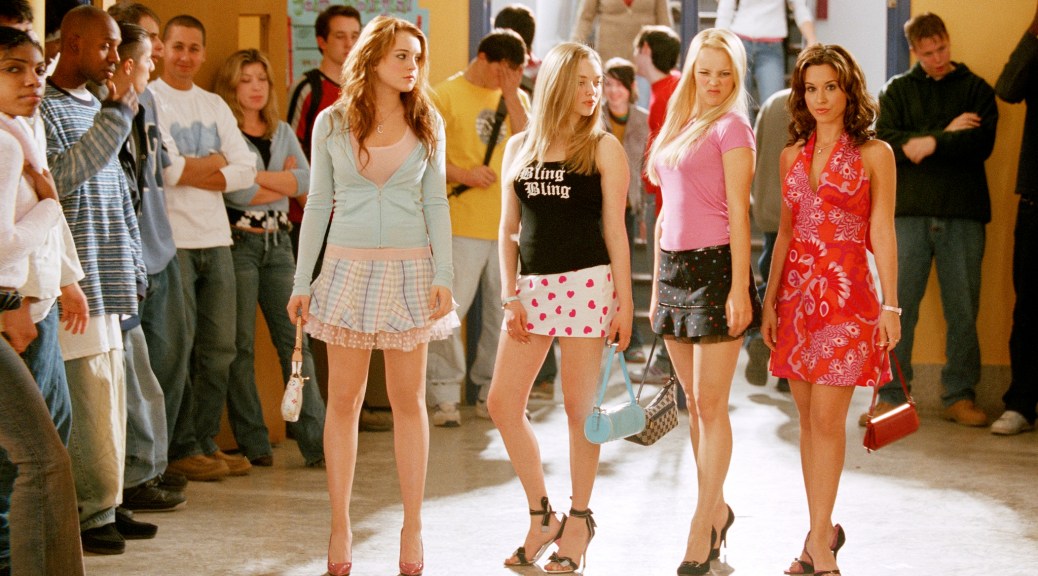
“Barbenheimer,” or the dual release of the polar-opposite films Barbie and Oppenheimer, has been possibly the most unusual trend to sweep the Internet in recent memory. The contrast between the campy and glitter-clad Barbie versus the gritty and dramatic biopic of Oppenheimer seemed to fascinate audiences, who flocked to the theaters en masse to see both films back to back, despite the massive difference in target audience. During my two trips to the new Hanover cinema to see each film, I saw teenage girls and adult men in hot-pink attire crammed into both theaters, hoping to get their fill of the pop culture phenomenon. 

But why? 

https://www.menshealth.com/entertainment/
a44627406/barbenheimer-barbie-oppenheimer-movie-experience/

Beyond the obvious irony of sitting in Oppenheimer wearing bright pink and sequins, I think the “Barbenheimer” trend shows some of the long-term social effects of Covid. Between the virus and now the Hollywood writers’ strike, good movies have been few and far between. There haven’t exactly been many opportunities to go to the local cinema in a while. So why not marathon Barbie and Oppenheimer? Even less broadly, I think the opening of the new Showcase Cinema in Hanover also had a significant hand in reviving local interest in going to the movies. Even if your personal interest in both films could be described as ironic at best, there’s a wealth of experience in going to the movies with friends after several years of isolation and re-integration into the world. 

As for my personal “Barbenheimer” experience, I went in not expecting very much out of either film, except maybe a good time. I didn’t think of myself as the target audience for either movie, and with the last few years of mostly soulless cash grabs in the cinema (with a few notable exceptions), I didn’t have a reason to expect these to be anything different. While both Barbie and Oppenheimer ultimately left me with mixed feelings, I will say that I feel more positive than cynical, and my expectations for both were thoroughly subverted. Here’s my overall thoughts on the “Barbenheimer” experience. 

SPOILERS AHEAD!

Of the two movies, I’ll admit to having higher expectations for Oppenheimer than Barbie. In terms of my personal interest, I expected to like the gritty historical drama much more than something frivolous and in your face (as Barbie undoubtedly was). I dismissed Barbie as one of those “so bad it’s funny” types of movies, ultimately a glorified advertisement. However, the movie managed to rise above the company that conceived it, and in actuality, I liked Barbie considerably more. While I have criticisms of some of the characters and the presentation of some of its themes, it had a lot more substance than I originally gave it credit for, and overall made for a more enjoyable experience. 

I haven’t trusted any big blockbuster movie releases for the past several years because of a widespread decline in the quality of movies and other popular culture. Since roughly 2016, theaters have been inundated with live-action remakes, unnecessary and weirdly executed sequels, and obviously soulless cash grabs. Most of the new movies that have come out in the past few years feel like they’ve been written by accountants rather than screenwriters; the trailers for Barbie made me feel like I’d be walking into a 90-minute commercial for Mattel, and to an extent, it was. With Mattel working on the film, and with a marketing budget of $150 million, the fact that Barbie existed to sell products is unavoidable. However, being what it was, Barbie was extremely self aware. Barbie was able to make fun of its source material and parent company without drawing any corporate ire, from criticizing the male CEOs selling empowerment to young girls, to discussing the unlivable expectations promoted to little girls through the dolls (and the potential impact on self esteem), to playing with the absurdity of its own concept. The whole movie is written in an overly snarky and self-aware kind of way, which genuinely impressed me as I walked out of the theater. On top of that, the movie takes the time to tell a layered story and explore existential questions about the human condition — the very last thing one would expect from a movie about Barbie. The movie managed to surpass my disdain for corporate involvement in art by being aware of the product it’s selling and the subsequent impact, while still leaving ample room for an interesting story and relevant themes. Barbie is so far from just a marketing tool; it manages to be funny and borderline absurd, while also telling a mature story of self-actualization, and giving real-life commentary about the detrimental impacts of patriarchal gender roles.

One of the standout aspects of Barbie is its brand of humor. Right from the get-go, the movie makes it obvious that it is not directed at a child audience; rather, it’s for the adults who grew up with the dolls. The whole movie is permeated with both subtle and explicit adult humor, starting with the Kens talking about “beaching each other off,” and escalating to Barbie discussing her non-existent genitalia with a group of pervs on the street. The opening scenes make a point to show the absurdity of human actors in a life-sized manufactured world: there’s no water in the shower or the ocean, the cars are too small, the food is made of plastic. All the Barbies have upturned heels, and flat feet are an object of derision and disgust. Almost none of the world feels believable, but it isn’t supposed to be; it’s all plastic. In writing and screenwriting, there exists this concept called “suspension of disbelief,” which is essentially the audience’s capacity to pretend that the events of the story are really happening. The human mind craves patterns and consistency, and suspension of disbelief is anchored in the mechanics of the pretend world mimicking life and making relative sense. Barbieland does not make sense—and it’s better off for it. The lack of suspension of disbelief contributes to the humor by forcing the audience to continue to think about Barbie as a product and a doll, even when she leaves that mold and ventures into the human world; the awareness also serves as a setup for a lot of the jokes laced throughout the movie. Some of it feels kind of clunky—the “beach you off” scene felt kind of overdone to me, for example—but more jokes landed than not. Even so, the clunky bits felt more campy – in other words, bad enough to be good — than anything else, which worked with the mood the movie was going for. There wasn’t a single moment that I wasn’t having a good time (except for when I lost my wallet in the theater, but I can’t find a way to blame Barbie for that).  The movie takes itself just seriously enough to deliver perfectly, and I’ll never get over how perfect Ryan Gosling was as Ken — from his first scene, you can tell he’s having fun with the role. The humor is one of Barbie’s biggest selling points for a good reason, and even my painfully unfunny self got a kick out of most of it. 

The acting in Barbie is another standout point of the movie, although it’s a point on which I have mixed feelings. I’ll start off by saying that Margot Robbie and Ryan Gosling were as close as possible to perfect in their respective roles. Ken is undoubtedly the funniest part of the movie, and Margot Robbie’s portrayal of Barbie’s existential crisis was completely unexpected, but brilliant nonetheless. On the other hand, though, America Ferraro’s character and the daughter really didn’t work for me, and a lot of their delivery feels off. I can’t pinpoint why, but all of their lines were delivered really weirdly, and by the time I was at Ferraro’s speech about the contradictory expectations of womanhood, my suspension of disbelief was completely broken (and not in the deliberate way that Barbieland was trying to deliver). I was disappointed that the most surface level points of feminism were delivered as this revolutionary revelation, and her tone of voice during the speech reminded me too much of a cartoon character, or rather somebody reading off a script. This is one of the only bits where I feel like the movie wasn’t as self aware as it could have been. Honestly, since the two most important characters were written and portrayed as well as they were, I suppose I have little grounds to complain about the side characters. 

Despite some of its visible flaws in the delivery, the story is one of Barbie’s strongest points, and genuinely surprised me with how well it was executed. Being somewhat of a commercial for Barbie toys, I expected it to be a sort of girl-power, very basic feminist movie. While it delivered that premise on the surface, the way it portrayed the premise was much more creative than I expected. Barbie’s entanglement with the patriarchy was to be expected, but whose idea was it to have Ken teach all the other Kens what the patriarchy is, and to have them engage in a singing battle of all things? Barbie’s existential crisis and the movie’s meditation on the human condition were a very pleasant surprise, and in my opinion, the aspect of the film that elevated it. Some aspects didn’t work for me — I thought the resolution of the mother-daughter relationship problems was poorly done, and kind of dropped in favor of focusing on Barbie’s conflicts, and the first half of the movie prioritized being funny and self aware over story development. However, the second half of the movie and the ending absolutely justify the first half, and the flawed side characters pale in comparison to the characters who are done well, which are most of them. 

The other half of the story is the theme, which is roughly the same as the rest of the story; slightly flawed, but mostly very impressive. The implicit themes of this movie are portrayed much better than some of the explicit themes; for example, Barbie touches on the ways that men suffer under the patriarchy, which is almost never discussed in feminist conversation. However the explicit discussion about the contradictions of womanhood falls flat. The existential pondering about death, aging, and what we are made for are wonderfully executed, but the real-world feminist issues aren’t tackled to the fullest extent. I think a part of this is the limits of the medium — screenwriters can only have so much happen in that hour and a half window (unless you’re Chris Nolan) and the Barbie movie tries to juggle it all. It’s only natural that some aspects thrive while others fall flat. It’s the implicit themes that really elevate this movie, and thankfully, those are executed very well. 

Overall, Barbie was a fantastic experience. It delivers great humor, engaging characters, and unexpectedly poignant questions for the audience to consider. Barbie is without a doubt one of the best movies that I’ve seen in a while, and will be a pleasant surprise for anyone that ventures to watch it, target audience or not. 

Oppenheimer, on the other hand, left me with much stronger mixed feelings. Walking into the film about the “father of the atomic bomb,” I anticipated that I’d like it a lot — I enjoy history and biopics and the like, and knowing my disconnect from Barbie’s target audience, I thought Oppenheimer would resonate with me much more. In actuality, I feel divided on it. I want to say in advance that some of the criticism I could make about Oppenheimer’s content is unfair given what it is — a modern retelling of recent history. The world of fiction is different from the world of reality and of history in that it’s streamlined to be as interesting and coherent as possible. Characters aren’t people, but rather vehicles for themes, and plots follow a structure to keep the audience engaged. Oppenheimer was a real person, and his life wasn’t meticulously planned for an audience in 2023. To expect the story to be consistently entertaining is impossible without betraying the source material of his life and defeating the entire purpose of the film; in this case, that’s not the writer’s job. What the writer has control over is framing, and in that regard, there’s plenty to praise and criticize for Oppenheimer

Oppenheimer is just over three hours, and the first and second half of the movie feel like entirely separate films. I’ve never experienced a movie or book that had such a compelling first half and such a lackluster final act. The movie starts out with Oppenheimer’s trial, where he’s charged with having Communist ties in his past. The trial is then used as a framing device for telling the story of his life. The best part of the movie is the dynamic between the past and the present, his actions and the guilt and consequences he faces, all building up to the grand crescendo of the bomb being dropped on Japan. And it’s handled brilliantly: the movement between the past and the present, the growing sense of unease as the plans for the bomb are made, and the brilliant soundtrack and visuals gave the film a constant sense of motion. Even when the content was just men talking in rooms, writing on a chalkboard, making calculations and big science statements far beyond my understanding, everything was infused with this growing sense of tension. The visual design and the soundtrack had a lot to do with this — the music plays for the entirety of the film, except for the abject silence that follows the dropping of the bomb, and scenes of men talking in rooms are often supplemented with visuals from its aftermath; one minute, you’re in the courtroom with Oppenheimer, and in the next, the lawyers are living corpses with their skin flayed off from the radiation. The viewer is allowed to experience the guilt that follows Oppenheimer everywhere he goes, and the dynamic between the past and present really enhances the film. It’s after this dynamic is dropped that I start to have issues with the film. 

The last hour and a half of Oppenheimer are entirely dedicated to his trial, and very quickly, everything that made the movie engaging tapers off. The historical biopic becomes a legal drama; the movie about the man who made the atomic bomb becomes a movie about men talking in rooms. The soundtrack, which used to feel impactful, feels like it’s trying to give tension to something lifeless. The many facets of Oppenheimer’s character that the first half of the movie explores so carefully are erased in favor of playing up his guilt. It’s tedious, and lasts for 90 minutes. It didn’t take long for me to lose the thread and any interest I had. The only two reasons I chose not to leave the theater were because I was writing this review and I had spent $17 on the ticket. I was extremely disappointed in the loss of momentum, needless to say, and it sours my impression of the rest of the film. Oppenheimer was a waste of potential. 

Despite this, I think “Barbenheimer” was a fun experience overall, and one I would recommend to just about everyone. For anyone who missed the trend, honestly just streamline the experience and watch Barbie; maybe get dressed up in pink and huddle around the TV with a group of friends. I never thought I’d be saying that Barbie is better than Oppenheimer, but here I am typing it. Actual movies aside, it’s nice to be able to go to the theater again and make new experiences with friends. Hopefully, the film industry will see that people respond well to good movies rather than soulless cash grabs, and we the viewers can continue to have more “Barbenheimer” summers in the future. 

Featured image: https://www.latimes.com/entertainment-arts/business/newsletter/2023-07-11/wide-shot-newsletter-barbenheimer-barbie-oppenheimer-box-office-the-wide-shot

Taylor Swift & Barbie Drive Economic Boon

By Sienna Lamond, ’26

Staff Writer

The entertainment industry certainly serves its role in keeping the United States economically sound. But lately there have been two factors in particular that seem to be driving the numbers: Taylor Swift and Barbie. Now, how are these two empowering feminists promoting positive economic growth? 

Taylor Swift, beloved across the world, has surpassed a remarkable number of records with her latest tour, the Eras Tour. The tour features songs from each of her 10 studio albums (excluding her debut album, self-titled Taylor Swift), with extravagant costumes to accompany each set. The tour would have been successful even if every high school and college student in America was not obsessed with Swift’s music, but fortunately for her – and the U.S. economy – they are. The tour has already grossed over $2 billion dollars, which is over a billion more that the last record holder, Elton John’s Farewell tour. While that tour spanned five years from September 2018 to July 2023, Swift has managed to double that revenue in a matter of months. 

One of the reasons why Swift is so popular in American high schools is because she touches so many different genres and styles in her 10 albums and three re-releases. Since her first country album was released in 2006, she has managed to grow her empire by switching to more mainstream pop, and dabbling in indie, rock, and folk music. One thing that Swift is expert at as well is getting people’s attention. She creates music that directly responds to rumors, calls out institutions that mock her, and defends her reputation when she’s under scrutiny while maintaining a sense of grace and dignity. Through this forward mentality, she has earned the devotion of girls and women of all ages. These die-hard Swifties will pay as much as $800 for a nosebleed ticket, not to mention the price they are willing to pay for merchandise, hotels, restaurants, gas, and more. The average price each concert attendee had to pay for a ticket, based on data from Business Insider, was $1300. According to The National News, “Her six-night residency is projected to deliver a $320 million boost to Los Angeles County and $160 million in local earnings.” 

It is a dangerous game being so popular, though. If Swift were to cancel just one show in any given city, fans would cancel hotels and restaurants, shops would lose walk-in customers, and no one would spend money on the merchandise sold on site. A sick day would essentially destroy the initially generated revenue overnight. As Swift prepares for the international leg of her Eras Tour, fans who reside in the U.S. are scrambling to get their hands on tickets for shows as far as Japan, Brazil and The Netherlands. It’s not a stretch to say that the future of the world’s economic developments lies with Swift and her future enterprises.

Another iconic blonde that has managed to generate an absurd amount of revenue is Barbie. The new movie based on the long-popular doll has generated just under $1.4 billion in box office worldwide, according to Dexerto. The tear-jerking story focuses on Margot Robbie as Barbie, living in a female-run utopia; when she visits the “real world,” the story spirals, depicting the problems of patriarchy and sexism in a horribly realistic light. Not only is the box office revenue insane, but the attention across social media platforms has driven people to purchase Barbie merchandise from both the official organization as well as small businesses through Etsy, Tiktok, Redbubble, and others. Believe it or not, these hyper-supportive fans will spend $35 on a t-shirt and $10 on a keychain to get their hands on unique Barbie merchandise, as shown from websites like Etsy and Redbubble.

Furthermore, women across the globe are using the movie to push for gender equality. Some men have been offended by the way in which they are depicted in the movie, but few realize that it isn’t inaccurate to the way they are perceived in reality. The movie has stirred gender equality movements in all sorts of jobs across the globe, but the social impact does not stop there. Since it could only be seen in theaters for its first two months – just recently becoming available to stream for $25 a rental –  Barbie has reinvigorated the theater business after a nearly two-year slide due to the COVID-19 pandemic. In addition, Barbie is a refreshing new film in the midst of remakes, prequels, sequels, and overall bad original pictures due to a lack of general creativity that has befallen the film-making industry, which is a story for another time. (see What’s the Deal with Barbenheimer? for more on the Barbie movie)

Overall, the U.S. economy can thank Taylor Swift for a near $5 billion increase this past year, according to The National News, and that number is only expected to grow in the coming months. Add to that the revenue generated from the Barbie movie, and most sources agree that we’ll likely never see another such pop culture and economic phenomenon in our lifetimes. The enthusiasm surrounding both the tour and the movie is different than ever seen before and will continue to bolster the national economy in unprecedented ways in the months to come.

Featured image: https://www.insider.com/taylor-swift-eras-tour-outfits-behind-the-scenes-videos-photos-2023-3

Benefits of Standardized Tests for College Apps Outweigh Pitfalls

By Izzy MacLellan

Staff Writer

Standardized testing has been around in the United States since the mid-1800s. In 2002, the use of annual standardized testing was mandated in all 50 states when President George W. Bush signed the “No Child Left Behind Act.” Over the years there have been many differing opinions on the use of standardized testing, but the ones that have caused the most controversy are the ‘high stakes’ tests, such as the SAT and ACT. As a result of the Covid-19 pandemic, many high-end colleges and universities decided to waive their testing requirements; Harvard has even extended this to the high school Class of 2026. Many agree with this decision as they believe that these high-stakes tests put too much pressure on students and cause unnecessary amounts of stress. Although standardized tests do put a lot of pressure on students, they also provide several key advantages in the college admissions process as they showcase hard work, reveal improvement over time, and provide a benchmark for student performance. 

I understand that many parents and students believe that the pressure put on standardized tests is too much for teenagers, but I believe this pressure just pushes students to work harder. Kaplan, an exam prep website, states that students generally spend 10-20 hours a week studying to prepare for the SAT. While this does not seem like an extreme amount of time, it readies students for the amount of hours they will put into studying for college exams. A study by the National Survey of Student Engagement states that most college students spend an average of 10-13 hours a week studying for their classes. Another survey conducted by the news site, The Tab, found that New York University students spend about 8 hours a day studying during the week of final exams, which means they end up studying around 56 hours in just that one week. This shows that dedicating hours each week to studying for a high-pressure test prepares you for college. Students that score well on standardized tests demonstrate that they are willing to put in the hardwork and dedication to be successful at their desired university. Yes, these tests do put pressure on students, but the skill of studying and test-taking while under pressure is vital in the collegiate setting, so it is better to enhance this skill in high school through standardized testing rather than being unprepared for college life. 

Another important aspect of standardized testing is that it shows student improvement over time. Students are allowed to retake the SAT and ACT as many times as possible, allowing for better scores. High schoolers are able to familiarize themselves with these tests and the process of preparation before submitting scores for college applications. According to the College Board, most students improve their score the second time they take the SAT; if a student can improve their SAT score by 100 points or more, then they become eligible to earn an “Improve Your Score scholarship” that is worth $2,000. Many students use their ability to retake the SAT and ACT to their advantage. One of my close friends is an excellent student who didn’t score as well as they hoped the first time they took the SAT, but they didn’t get too upset given they knew that they could retake the test. They decided to dedicate many hours of studying to prepare for the next time they take the exam, and they were ecstatic when they received an excellent score the second time, showing that all of their hard work paid off.

During the college application process, many students apply to top schools, commonly referred to as ‘reach’ schools, which require excellent grades and GPAs. But the American school system does not have standardized grading, so grades and GPAs aren’t worth the same in every school across the nation. Standardized tests provide colleges with a common benchmark for student performance, and an even playing field for all students. This means that students from different backgrounds, schools, and regions can be compared through these tests on a consistent basis. For example, if a student from a more challenging school has a lower GPA than a student from a school that is less challenging, they can make up for their lower GPA in their college application with a higher SAT or ACT score. Standardized tests give students across the country an equal chance to show off their academic performance. 

Even though standardized tests like the SAT and ACT put pressure on students, they are proven to have several key advantages to the college admissions process as they showcase the hard work and improvement of students, and they provide a benchmark for student performance. 

As colleges continue to shy students away from submitting their scores, they prevent many students from experiencing the essential hard work and growth required when taking and retaking these high-stakes standardized tests. That takes away their chance to show off their academic performance on a playing field that is equal to students across the United States. Is it really worth getting rid of standardized tests in the college admissions process, when they have so many benefits to students and their academic growth?

Featured photo: https://standardizedtests.procon.org/

Mary Shelley: the Mother of Science Fiction and How Pop Culture Has Failed Her

By Leah Dillon, ’24

Staff Writer

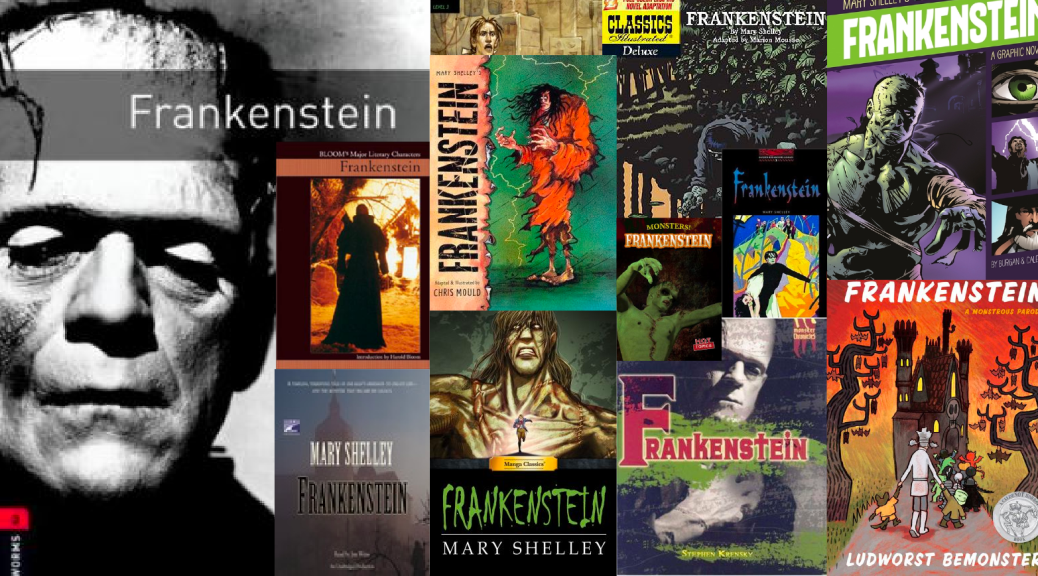
Classic literature and science fiction are, to the inattentive critic, genres which seldom collide. And why would they? Classic lit is, to many, stuffy and overburdened with words, antiquated and boring to anyone with a social life. Science fiction presents itself as the opposite; it’s the storytelling of the future, full of ideas and potential. But what if those assessments are inaccurate? As hard as it might be to believe, a novel published in 1818 provides a vision of the future that remains cutting edge, still relevant today in its precautionary message. Mary Shelley’s Frankenstein tells the repeating tale of human error, of our tendency to extend ourselves further than we should, to mess with forces that we seldom understand in pursuit of selfish ambition. While many are familiar with the premise of a doctor and his pursuit of creating life, much of the pop cultural reception of Frankenstein is skewed, dramatized for the sake of marketing. Not once in the novel was the iconic line “It’s alive!” uttered, and few know that Frankenstein was the doctor, the real monster, while his creature was the unwitting victim. Through an exploration of the original source material, we can discover truths about today’s iteration of sci-fi and the nature of entertainment, as well as commentary about the relentless world that we live in. 

Mary Shelley grew up at the precipice of a new century, in a household fraught with enlightened ideas and conflict alike. Her mother, Mary Wollenstonecraft, was largely credited with the conception of feminist literature with her writing of A Vindication of the Rights of Women, and her father, too, was a radical thinker, giving the young Mary Shelley a hefty legacy to live up to. Though she never met her mother, who died just a few days after Shelley’s birth, it is evident through her writing and personal diary excerpts that her mother’s writing and ideas largely influenced her view of the world. Her mother’s writings inspired her to be fiercely independent, advocating for her own ideas and following her passions (namely, a married man), regardless of any pushback. These vividly independent ideas were conceived amidst a rapidly changing time period; in her lifespan, she viewed civil wars across the ocean and right next door, human rights movements aplenty (such as the one heralded by her mother), and radical change across the world. Countries colonized, and peoples were colonized, and those people rose up in rebellion. Corporations grew, economies boomed, and a working class languished. Individuals grew in power, and continued to grow. While Shelley saw herself as a reformer, far removed from her parents’ radicalism, her ideas still largely challenged the society that she lived in, as well as our society today. The trajectory of her life and the rapidly changing conditions of her world painted the backdrop of Frankenstein’s precautionary tale, which ultimately warns us about the pitfalls of individual ambition gone too far.

Beyond fitting into the framework of her time and challenging the ideas they perpetuated, however, the ideas behind Frankenstein remain cutting edge today. 

Prior to Frankenstein’s publication in 1818, science fiction did not formally exist as a genre. While it wasn’t unheard of to use the supernatural to ruminate on the natural circumstances which surround us, often through the lens of ancient Greek gods, fairies and ghosts, the merging of the supernatural with the scientific wasn’t as explored. Frankenstein changes this entirely. The story was largely inspired by the ideas of alchemy, a subject which blurs the scientific and the mythical. Alchemists sought to turn base metals to gold, to make an elixir of immortality and a philosopher’s stone, and most notably, to create new life from scratch. While these ideas are unfounded and ridiculous today, alchemy as a concept surfaced before most scientific processes and before the major sciences that we recognize today; we now view alchemy as the forerunner to chemistry. It was alchemy which drove scientists across the globe, and thus, Frankenstein’s story is framed.

Frankenstein follows the story of a young doctor, Victor Frankenstein, and his feverish pursuit of alchemy, his fascination with the mechanics of life and death. Ultimately, these special interests of his culminate in the creation of a creature, called simply “The Creature” or “The Being” (notably, not Frankenstein, as most movie adaptations would have you believe). The being was sewn together from a sundry mix of detached limbs and decaying body parts, selected from the most beautiful corpses that Frankenstein could find. “His limbs were in proportion, and I had selected his features as beautiful. Beautiful!” Shelley wrote. But as soon as The Being was reanimated, Frankenstein changed his mind about his beauty, and fled for the hills, hoping to never see the thing again. From here, the narrative unravels, revealing the real crux of the story, the conflict between a parent and his abandoned child, of the scientist and the monster he created. The Creature, who learned love from observing families, wants only for Frankenstein to love him despite his abhorrent appearance. Still, Frankenstein is overcome with disgust, and he rejects his creation once more. What follows are a series of injustices and a cycle of revenge that doesn’t end until both parties are in the grave. 

Upon publication, Frankenstein was an immediate hit. From its unique framing device of being narrated through letters, to the brand-new genre of science fiction, to the unique ideas about ambition and natural human limits, Frankenstein was a breath of fresh air to the publishing industry, a far-cry from its contemporaries. Above all else, it challenged nearly all of the predominant political ideas of the time it was published. Victor Frankenstein’s downfall at the hands of human ambition greatly contrasted with the popular notions of expansion and growth; the idea that nature and the world at large are ours to take, that the strong should overtake the weak, that we should continue to take, to grow, to expand. The idea that we’ve surpassed mother nature in the act of gaining sentience, as if we aren’t a part of the animal kingdom ourselves, destined to die and feed the soil. Frankenstein asserts the opposite; it says that nature has a wisdom that humans weren’t meant to try to replicate. It says that we have a place to honor in the cycle of life, and everyone suffers if we don’t. It says that we, human beings, are limited, and that is okay. Victor Frankenstein is a lesson in himself, the cautionary tale of the novel. We aren’t meant to emulate Frankenstein; and yet, disturbingly, that seems to be the current trajectory of the human race, and it doesn’t seem to be changing. 

Pop culture has failed to adapt this book in a way that does the story and its messages justice, eschewing the more psychological fear of one’s own progeny and the evil in human nature for the much-shallower monster-horror present in most film adaptations. Frankenstein loses its soul to the modern media lens. And why wouldn’t it? A message about the limits of humanity’s ability to achieve, and the danger of the pursuit of greatness, is the exact opposite of marketable. It’s important to understand that so much of what we consume is dictated by our other consumption. Businesses and corporations who want to sell us our lives, entertainment included, for their own exponential growth, don’t benefit from a story telling us the danger of that level of ambition. Thus, the reconfiguration of Frankenstein’s story commences. The monster is called Frankenstein, not the doctor. Iconic and easily quotable lines like “It’s alive!” are interjected. The beautiful features sewn together to make something less beautiful are thrown away and Frankenstein becomes a symbol, a mask you can buy for Halloween. Thus is the engineering of Sci-Fi. No longer can we see the fears of our own nature. Instead, we observe the next biggest monster, fitted with more spikes and teeth and scales, or the next bit of cutting edge-technology, first imagined onscreen, then perhaps produced in our world. The message of Frankenstein becomes eroded and unreadable, when it is as relevant as it ever has been.

We see the consequences of Frankenstein play out every single day. Greenhouse gasses in the atmosphere, pumped there from the newest, fastest car they can make. Conglomerate corporations buying out their competitors, until every last dollar of yours is spent on only them (looking at you, Disney.) The cancer cells of one woman, Henrietta Lacks, taken from her without her knowledge or consent and being experimented on, and becoming a multi-billion dollar business for doctors and researchers, all the while her family doesn’t see a dime of that fortune. Now, more than ever, we humans step out of place and mess with things bigger than our understanding, making consequences bigger than our understanding. For what? Progress that hurts us more in the long run? An earth so advanced that it becomes unlivable? The decline of humans and mother nature alike? This isn’t progress. Such extreme ambitions, the want for such severe control, is not progress. Progress is learning to work with mother nature, to improve within our human bounds so that members of our own species prosper before we work on the next big advancement, or the next big buck. Progress is the understanding that one person or group of people should never be that powerful, as power corrupts. Mary Shelley knew this, and she warned us. Now, we are just beginning to live out its consequences.

Classic literature is called classic because, despite its age, it tells us universal truths about the human condition. Frankenstein is among these timeless truths; it’s our job to listen. Though classic literature might not be everyone’s idea of a good time, it’s certainly not antiquated, and remains valuable through the lessons it shares, the ideas it pioneers. The work of the past tells us the truths of our future, without the added lens of marketability. If only more people were willing to look to the past to understand our future, then maybe we would be better equipped to escape Frankenstein’s fate, and our own reality wouldn’t become such a precautionary tale. 

featured image: https://www.hcpl.net/blog/2022/06/six-ways-frankensteins-creature-surprised-me

School Tech Issues Cause Major Disconnect

By Ashley Stracco, ’24

Contributor

At Hanover High School, many students choose to take high level courses, as well as participate in extracurricular activities. In fact, this year there are a total of 237 students who will take a combined 441 AP exams this spring. I am presently a junior at HHS and have availed myself of many incredible opportunities. As an avid participant in AP courses, the music and drama programs, debate, and community service, this school has offered me many great opportunities. It is a great place with much potential for graduates to have extremely successful futures in a multitude of different fields. However, this school is flawed. Since the beginning of the 2022-2023 school year, our school has been having issues with arguably the most important resource: WiFi and Internet connectivity. As a learning community, we have been informed that this issue will be fixed, yet this has gone on for far too long.  In a building with such a vigorous learning pace, issues with WiFi and Internet connection must be dealt with immediately.

The main issue of not having adequate WiFi is that we simply cannot access course curriculums. Recently, I was in my first period AP English Language and Composition course. In preparation for class that day, students had worked very hard on slideshow presentations. My group was all ready to present; however, we could not access our presentation as the WiFi would not connect. This inconvenience halted our class from moving forward that day and, therefore, left us behind pace.

Another junior, Aidan O’Connor, has the same issues in his classes. “The Internet has become a necessary commodity in many schools across the world, including ours, and the lack of proper networking has wasted countless hours of class time,” he said. I couldn’t agree more.

Another instance in which a curriculum cannot be accessed is in Virtual High School (VHS) courses. VHS classes are entirely online and students have a set time in the school day to work on them. Mrs. McHugh, who supervises VHS, says students frequently lost class time in terms one and two and have needed many extensions. “Many students have work or sports after school, so losing that in-school class time has forced them to repeatedly play catchup,” she said.

The lack of Internet access has contributed negatively to my learning process. In courses with such rigorous pacing, how can we expect students to keep up with their work without the most important resource? And how am I supposed to compete with students worldwide when it comes to taking AP exams when we have not even been able to complete the curriculum? What about the college application process? Without high scores on AP exams, how am I supposed to compete at being admitted into a top tier college or university that I have been looking at and touring? This is not my fault, nor my peers, so why should we be the ones who are being penalized? It isn’t fair. 

Internet access is vital to the world of research. While in the past, students would be expected to go to libraries and flip through multiple textbooks to research topics, it is a different world now. In this day and age, we, as students, are expected to have information at the ready. According to the National Center for Education Statistics, approximately 99 percent of United States public high schools have full WiFi and Internet access, so why don’t we? Instead of being taught how to receive information, students are taught from a young age how to decipher which information is reliable. Standards of education have shifted and students are expected to have facts and research at their fingertips at all times.

Not too long ago, I was in my AP Modern World History class attempting to research the similarities and differences between Asian Early Modern Era religions, but I hit the blockade of not having WiFi. I could not access the Internet for the entire class period; therefore, I had to complete the assignment at home. I am an extremely busy student, so this was a huge inconvenience. Situations like this occur daily; so much class time is wasted. Students are also becoming stressed due to the immense amount of homework that they now have due to inadequate resources. Once again, why should the students have to suffer if the current situation is not their fault?

The WiFi and Internet are also huge safety resources in schools. Since 1970, there have been 2,067 school shootings in the United States alone. In preventative training measures, students and staff are told if they hear information about a danger in the school, they must communicate through cellular devices to the rest of the school. How are we supposed to do this if even a mere text won’t go through? As much as the lack of WiFi and Internet is an issue in education, it is a grave danger for our safety. Recently, when asked about the issue, nurse Rosalind Davis stated that the only means of communication with the outside world that she is able to use during the school day is her office landline. This is very dangerous. If the school were to be faced with any type of emergency, we would not be equipped to handle it. Not fixing the issue is leaving the students, staff, and visitors of Hanover High School at risk or injury or worse. 

According to Superintendent Matt Ferron, in an email to staff in January, “our technology needs have increased exponentially in the past decade, and the hardware and capacity required to stay current are expensive and presently challenging to obtain.” In recent months, the district has prioritized upgrading hardware and data capacity, aiming to boost the Internet and WiFi in the short term while addressing larger infrastructure issues in the long term.

“This will not be fixed overnight, and it is likely that some of the major work will be done over February vacation,” Mr. Ferron wrote. “This project is our highest priority right now, and we are committing the resources to see short term improvement and long-term reliability.”

Curriculum Director Matt Plummer added in a recent interview, “Our IT Director, Mr. Michael Wildrick, just ordered two new servers to improve the network — which serves both HHS and Cedar School. Those servers will be installed as soon as possible!”

Featured imaged: https://www.smehorizon.com/frustration-at-technology-a-factor-in-employees-leaving-jobs/

Is There Room on Library Shelves for Controversial Books?

By Teddy McCrann, ’23

Staff Writer

In recent years, a debate has resurfaced within the American public school system over the presence of “controversial” books in libraries across the nation. For years, classic books such as 1984, Lord of the Flies, and Catcher in the Rye have been pervasive in English literature classes, as they teach valuable and timely lessons on society and human interaction. It was not until the 21st century and the current wave of heavy censorship regarding children’s entertainment that books such as these were even considered to be taken off of the shelves of public schools. While many of these books do contain significant levels of profanity and mature references, they more so teach American students, high schoolers in particular, not only how to read at a more advanced level but also to become aware of societal injustices and the American reality. The question remains: are these books so controversial that they should be stripped from shelves and classrooms nationwide?

Based on a recent survey taken by CBS News, more than 1,600 books were banned from school libraries across the United States in the 2021-2022 school year alone. From Massachusetts to California, in 138 districts across 32 states in total, students were forbidden from reading certain novels that have had a significant presence in English curriculums for the past century. A specific example of one of these novels is Harper Lee’s To Kill a Mockingbird, which was published in 1960 and has since become one of America’s most widely read stories focusing on the foundations and consequences of racism and prejudice within our nation. It delves into the intricacies of community living and how divided individuals can be regarding situations of morality and compassion. Lee’s novel has been banned from school libraries due to the presence of racial slurs as well as Atticus Finch’s character being perceived as a “white savior,” a theme that critics argue has roots in the imperial idea that whites, or Europeans in colonial times, can solve everyone else’s problems. Both are believed to have negative effects on students. The use of racial slurs and promoting any kind of racial supremacy holds no place in American society and its school system whatsoever; however, many believe that a novel such as To Kill a Mockingbird teaches extremely valuable lessons to students, specifically in judging someone solely based on their character and nothing else. I personally read To Kill a Mockingbird in my sophomore year English class and had no issue handling its use of slurs or mature content, although I recognize a classmate of color might be impacted differently. I greatly enjoyed the novel as we mainly focused on analyzing the characters and Lee’s various messages and themes. Nevertheless, I do believe that discussing societal issues, past and present, through a novel like this and recognizing criticisms of it is a fruitful and necessary aspect of the educational process. 

Book banning in today’s society mostly stems from parental concerns over the material that their children are exposed to in school. A significant number of books that are forbidden show similarities to To Kill a Mockingbird through the use of profanity, while others are banned due to their suggestive and mature content. Some of these books are dystopian classics, such as Aldous Huxley’s Brave New World, while others are much more relevant today regarding LGBTQIA+ expression and celebration. An example of one of these works is a memoir written by George M. Johnson called All Boys Aren’t Blue, which focuses on racial and sexual identity and has been banned in 29 school districts due to its content. CBS has found that 41 percent of books that were banned in the 2021-2022 school year contained content on gender and sexuality, with many school officials attributing this to political pressures from state officials and parents. While many agree with these people and desire to keep school literature free from this type of material, others find that books on gender and sexual identity are good for representation of the diverse people in our society. 

The resurfacing of the debate over book banning is no surprise as recent years have brought an increase in sensitivity regarding race, gender, sexuality, and other mature topics within entertainment and especially literature. As this has reached public school systems, more and more books have been taken off the shelves of school libraries out of concern for the students’ well-being and beliefs on these sensitive subjects, even though some of these works have been embedded in American public school curriculums for the past century. While I believe people have a right to differing opinions on sensitive subjects, I have personally found that reading “controversial” novels teaches valuable lessons and also helps to lead healthy discussions on sensitivity and perspective within all aspects of our society. 

https://www.cbsnews.com/pictures/the-50-most-banned-books-in-america/

https://www.cbsnews.com/news/banned-books-list-increased-schools-ban-critical-race-theory-sexuality-pen-america-report/

Top Five NH Mountains for Skiing, Snowboarding

By Paulina Leskow, ’24

Staff Writer

Winter has finally arrived, meaning that people are hitting the slopes for skiing and snowboarding. There are so many ski resorts that make up the New Hampshire Skiing region, some people may not be aware which mountain best suits their ability and preference. Here are the most popular ski resort rankings for anyone looking to hit the slopes this winter.

Starting at number five is Gunstock Ski Resort. Gunstock is a four-season ski resort that offers 227 acres and 49 trails. It is located in the lake regions of New Hampshire, offering a beautiful view of Lake Winnipesaukee. Although Gunstock is a beautiful resort with amazing views and fun trails, it does have its flaws. When one comes in and starts skiing early in the morning, skiers and snowboarders experience nice, powdery snow, however, as the day goes on, the slopes become icy and dangerous to ride on. By lunchtime, riders are going down ice-filled hills with a fear of falling and bruising on the ice. All in all, Gunstock is not a bad ski experience, especially if one is willing to wake up early and head over. 

The next resort on the list is Cannon Mountain. Cannon Mountain is located near Echo Lake in central New Hampshire. This resort has some of the most beautiful mountains and snowy trails imaginable. The only problem is that these conditions are not consistent throughout the whole winter. The conditions depend on the day, and good skiing weather is very hit-or-miss in this region. If you happen to arrive at Cannon Mountain on a beautiful day with amazing conditions, you will have the time of your life riding down the mountain. 

Ranked third is Cranmore Resort. Not only is Cranmore a great place to ski and snowboard with groomed surface conditions and great views, but it also contains many amusements all yearround. In addition to skiing, one is able to ride a rollercoaster as well as take a trip on a zipline. It is a great place to visit with family and friends, and the penguin mascot can always make your day. Cranmore could be a place to go for a weekend trip, with people more interested in the thrill of amusement parks, not just skiers. 

Second on the list is Pats Peak. If you like long, scenic routes on the mountains, Pats Peak is the perfect place for you. It takes about an hour just to get down the mountain. That may seem extremely long for non-skiers, but for those passionate about the sport, this is paradise. Riding calmly through long paths freshly coated with snow sounds like the perfect getaway on a nice winter day. In addition, Pats Peak is located in Southern New Hampshire, one of the closer resorts in the region, so you don’t have to be stuck in the car for hours upon hours just to go skiing. When looking for a nice, calm ski journey, Pats Peak is just the right mountain. 

Although all of these ski resorts are pretty great places to ski or snowboard, Waterville Valley resort is by far the greatest of them all. Waterville Valley is located in the center of New Hampshire, and has a whole village revolving around the ski resort perfect for the winter, and even the summer. All of the ski routes are based upon ski level and vary in length, depending on your preferences. This mountain also introduced a new ski lift that holds six people, as opposed to the standard four-person lift. Lessons at Waterville Valley are very effective and memorable, and it is a great place to go with family, or alone. Waterville Valley is the perfect place to ski or snowboard no matter how advanced you are, and no matter if you prefer long or short trails.

HHS Ski Club: If interested in joining the newly active school ski club, please contact the author at pleskow24@hanoverschools.org

featured image: https://www.newenglandskihistory.com/NewHampshire/watervillevalley.php