The 2025 NFL Draft is done, and there’s a lot to discuss. Some teams made smart picks, some took significant risks, and a few surprises shook things up. A couple of players left earlier than expected, while others fell significantly. In hindsight, this year’s draft did not fall short of expectations.
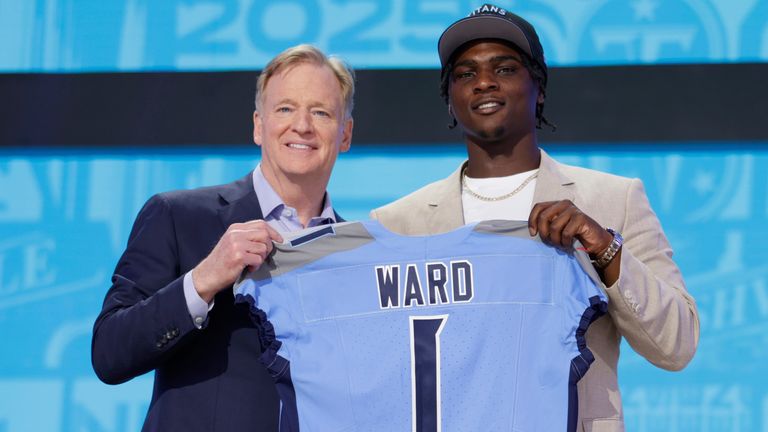
When reflecting on the first round of the draft, it’s clear that many teams selected players who were considered the best fit for certain positions. Organizations such as the Tennessee Titans and the New York Giants sought talented quarterbacks, while other teams, including the New England Patriots, drafted offensive linemen. The Titans, possessing the first overall pick, selected Cam Ward from the University of Miami. Other notable players chosen within the first round included Heisman winner Travis Hunter, who went to Jacksonville; Will Campbell, a left tackle selected by New England; and Ashton Jeanty, heading to Las Vegas as a running back.
Some significant risks were taken within the first round of the draft, including quarterback decisions. One notable example is Jaxson Dart, selected 25th overall by the New York Giants. Dart was projected to land outside of the first round. Other risky draft picks include quarterback Tyler Shough, taken by New Orleans, and quarterback Dillon Gabriel, selected by Cleveland.
However, some players who were projected to land in the first round were not as fortunate. A clear example of this is former NFL star Deion Sanders’ son, Shedeur Sanders, a quarterback from Colorado. Shedeur Sanders was widely anticipated to fall within the first round, yet many teams passed up on him. The Cleveland Browns eventually chose Sanders as the 144th overall pick in the 5th round of the draft after a series of other quarterbacks had been selected before him.
This 2025 NFL draft class is loaded with talent and standout players who have each given it their all just to be drafted. The efforts shown by these individuals reveal the hard work required to be part of the league, no matter how easy it may appear to be. Overall, it’s clear that the future is bright for several teams and players. The next class of stars is on the way, and fans have a lot to look forward to.
Singers and actors dominate pop culture. They are praised for their talents in the music, TV and film industries. What may come as a surprise is that some of our favorite stars actually got their start in theater. While some may consider theater small-time compared to stadium tours, TV shows and movie theaters, it has propelled many performers to stardom. Is your favorite artist or actor among the stars that started as thespians?
Sabrina Carpenter
Carpenter is best known for her pop music career, specifically her 2024 album Short and Sweet, and her acting career, especially her role in the spinoff of Boy Meets World, Girl Meets World. Carpenter’s career was propelled into the stratosphere when she toured with Taylor Swift in the South American leg of the Eras Tour. Since then, Carpenter has become one of the many iconic pop girls of the decade. Carpenter’s talents do not only stop at pop music and film acting, however. In 2020, she made her Broadway debut as Cady in Mean Girls the musical. Unfortunately, her run was cut short due to pandemic lockdowns. Still, our favorite pop girly knows her way around a Broadway stage!
Ryan Gosling
Most recently known for his role as Ken in Barbie, a 2023 movie about the Mattel doll starring Margot Robbie, Gosling went viral with the iconic “I’m Just Ken” musical number. This performance, though, was not the first time Gosling had danced on stage. Circa 1992, Gosling was part of a jazz dance group. This style of dance is the basis for much of the musical theater dance style, making Gosling fully prepared for his future musical number in Barbie.
Hugh Jackman
Jackman is an Australian actor known for his role as Wolverine in Logan and X-Men. Unlike others whose acting career is separate from their theater background, Jackman has tied his theatrical nature into his film work. In 2012, Jackman starred as Jean Valjean in the film adaptation of Broadway show Les Misérables. He is also recognized for his portrayal of P.T. Barnum in the movie musical The Greatest Showman (2018). In 2022, Jackman appeared on Broadway itself in the revival of The Music Man with Sutton Foster, a talented Broadway star, who he is now rumoured to be dating. Seems like even professionals can’t escape ‘showmances’!
Andrew Garfield
Best known for playing Spider-Man in The Amazing Spider-Man films in 2012 and 2014, Garfield has numerous on-stage experiences. His portrayal of Prior Walter in Angels in America earned him a Tony Award, the highest accolade for theater performances. He also notably played Bill Loffman in the revival of Death of a Salesman, which also garnered him a Tony Award. Garfield’s film career reflected his theater roots in the 2021 movie musical, Tick, Tick… Boom!, a film detailing the life of Jonathan Larson, the troubled composer of the Tony-award winning musical Rent. Who knew Spider-Man could sing!?
Anna Kendrick
Most recently recognized for her leading role in Netflix’s original movie Woman of the Hour, Kendrick is not shy about her theater background. At age 12, she made her Tony-nominated Broadway debut in High Society as Dinah Lord. Since then, Kendrick has been in several movie musical adaptations and originals, including Into The Woods (Cinderella), Trolls (Poppy), Pitch Perfect (Beca), and The Last Five Years (Cathy) alongside Broadway superstar Jeremy Jordan who played Jamie.
Nick Jonas
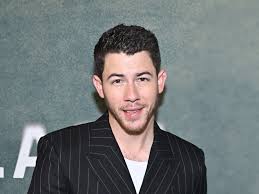
Jonas is best known for his participation in the Jonas Brothers band with his brothers Joe and Kevin. Pop singing isn’t the only trick this Jonas brother has up his sleeve, however. Jonas appeared in the 2010 25th anniversary special of the musical Les Misérables singing as Marius. Now, Jonas is starring on Broadway as Jamie in The Last Five Years. While the musical theater community has attacked Jonas for his vocal abilities not being ‘theater appropriate,’ that hasn’t stopped him from working on musical theater projects thus far.
Reneé Rapp
Rapp is one of the youngest people to star in a Broadway show. While she is widely known for her 2023 pop music album, Snow Angel, she was originally discovered when she won the Jimmy Awards in 2018. The Jimmy Awards is a prestigious nationwide competition and recognition event for high school students in musical theater. Rapp won “Best Performance by an Actress,” granting her a $10,000 scholarship. At just 19 years old, she was cast as Regina George in the Mean Girls musical on Broadway and later reprised the role in the 2024 movie musical adaptation.
Mike Faist
Faist is known to most as Art Donaldson in Challengers, a movie about a tennis love triangle, also starring Zendaya and Josh O’Connor. Faist originated the role of Connor in Dear Evan Hansen on Broadway. Before that, Faist worked as a Jack Kelley understudy in the Broadway musical Newsies. He is also recognized as Riff in the West Side Story (2021) remake. Overall, Faist is a talented theater kid at heart, dabbling in the film industry. Movie audiences hope to see more of him in the future!
Olivia Rodrigo
Rodrigo has been performing on stage since she was very young, as you can see in various videos of her belting her heart out circulating on the Internet. She played Gertrude McFuzz in her elementary school’s production of Seussical the musical. She gained popularity for her roles in Disney Channel’s Bizaardvark and High School Musical: The Musical: The Series. Now, Rodrigo is a world-famous pop star with two studio albums, Sour (2021) and Guts (2023). Through her pop songs, her theater roots shine as much of her music is vocally challenging and requires theatrical technique to sustain vocal health. Another decade-defining pop girly to make theater kids proud!
Ariana Grande
Grande, a pop artist, is not secretive when it comes to her love for theater. As a child, Grande worked with the Fort Lauderdale Children’s Theater, for which she played Annie in Annie, and other roles in Beauty and the Beast and the Wizard of Oz. At 15, she made her Broadway debut in 13: The Musical as Charlotte, earning her a National Youth Theater Association Award. For years, Grande has outwardly expressed her love for the Broadway show Wicked. When she was a little girl, she and her mother won a backstage experience at Wicked on Broadway, allowing her to meet Kristen Chenoweth, the show’s original Glinda. Ever since, Grande has aspired to play Glinda and made fans proud and excited when she portrayed the role in the Wicked movie musical that was released this past fall.
Timotheé Chalamet
Chalamet, the star of A Complete Unknown, made his Broadway debut in 2016 in the play Prodigal Son. Chalamet was destined for the stage as he attended LaGuardia High School of Music & Art and Performing Arts, allowing him to participate in theater arts daily. In 2011 he appeared in a stage play called The Talls at Second Stage Uptown. Recently he was featured in the movie musical prequel to Roald Dahl’s fantastical world of Willy Wonka’s chocolate factory titled Wonka. In this film, he showcased his triple-threat theater talent, truly bringing his character to life with his own theatrical charm.
Sebastian Stan
SStan is a Romanian-born actor who recently won a Golden Globe for his work in A Different Man. He also notably portrayed Donald Trump in the 2024 film The Apprentice, Bucky Barnes in theMarvel Cinematic Universe’s Captain America franchise, and Tommy Lee in Pam & Tommy. While Stan has had an extensive film career, he’s also had his fair share of time on the stage. In 2007 he was in Talk Radio on Broadway, and he appeared on Broadway again in 2012’s Picnic. Stan went to college at the Mason Gross School of the Arts at Rutgers University, and he studied at Shakespeare’s Globe Theater in London for a year.
Jonathan Bailey
Bailey is best known for his portrayal of Anthony Bridgerton in the Netflix series Bridgerton, based on the books by Julia Quinn. He also starred as Fiyero in last fall’s movie musical Wicked. In 2018, Bailey played Jamie in the West End revival of the musical Company. This part was originally written as a female role named Amy, who sings a hysterical song titled “I Am Not Getting Married Today” in which parts of the song require roughly six words to be sung every second. Being a stunning actor, Bailey was selected for the role. Additionally, Bailey made appearances in The York Realist and King Lear. In 2017, he played Jamie in The Last Five Years in London. You can see him live on stage now at the Bridge Theater in London where he’s playing Richard II in William Shakespeare’s Richard II!
Chris Evans
Captain America himself, Evans, is not a stranger to the stage. As a child, Evans participated in productions with the Concord Youth Theater company. Since his professional career took off, he’s been a philanthropist of the company and helped them secure a permanent location in Concord, Mass. In 2017, Evans was persuaded by Mckenna Grace and Ellen Degeneres to show off his tap dancing skills while on the Ellen show during a press tour for the film Gifted. Turns out, Evans grew up tap dancing, a hallmark dance style of musical theater.
Rachel Zegler
How does one become more of a theater kid than Zegler? When she was just a senior in high school, she was cast as Maria in the 2021 remake of the West Side Story movie musical. At the time, Zegler was playing the role of Fiona in her high school’s production of Shrek: The Musical. Supposedly, she asked West Side Story director Steven Spielberg if she could delay filming so she could finish her senior musical — now that is commitment! Zegler is also known for playing Lucy Gray Baird in The Hunger Games: The Ballad of Songbirds and Snakes. Recently, Zegler played Snow White in the movie musical reimagining of the 1937 classic fairytale, Snow White. Though the film did not receive good reviews, it is certainly not for Zegler’s lack of trying or talent. She made her Broadway debut in Romeo and Juliet in 2024 at the Circle in the Square Theater, which shares a building with the famous Wicked theater, the Gershwin. In this revival of William Shakespeare’s timeless play, Jack Antonoff wrote music specifically for Zegler to sing as an addition to the original story. Romeo + Juliet received glowing reviews from critics and is nominated for “Best Revival of a Play” by the Outer Critics Circle.
Kristen Bell
Bell, known by the younger generation as the voice of Anna in Frozen (2013) is recognized by others for The Good Place (2016-2020), When in Rome (2010), and Nobody Wants This (since 2024). She began her theater career as Dorothy in her high school’s production of The Wizard of Oz. After graduating from high school, Bell went on to study at the Tisch School of the Arts at New York University. In 2001, Bell made her Broadway debut in the musical The Adventures of Tom Sawyer. The following year she appeared in The Crucible on Broadway. Later, she starred in an off-Broadway musical called Reefer Madness in 2003.
Amanda Seyfried
Seyfried became a household name after her hilarious performance as Karen Smith in Mean Girls (2004). In 2015, she made her off-Broadway debut in The Way We Get By by Neil LaBute. Through her film career, Seyfried has showcased her theater talent. She first sang on-camera in Mamma Mia!, a film adaptation of the ABBA jukebox musical. She also appeared in the Mamma Mia! film sequel, Mamma Mia! Here We Go Again in 2018. In 2012, she played the role of adult Cosette in the movie musical Les Miserables with costars Hugh Jackman, Eddie Redmayne, and others.
Eddie Redmayne
The Oscar-winning actor from The Theory of Everything, Redmayne has had an extensive stage career. Most recently, he played Emcee in the Broadway revival of the musical Cabaret. Also on stage, he won an Olivier Award for his performance in the play Red at the Donmar Warehouse. He was also in Richard II in 2011-2012 and The Goat, or Who is Sylvia? in 2004. Bringing his theater roots to the screen, Redmayne portrayed Marius in the 2012 Les Miserables movie musical along with two others on this list: Amanda Seyfried and Hugh Jackman.
Christian Slater
The star of Heathers (1988), Slater has built up his career with theater credits on and off-Broadway. Slater originated the character Clifford in the 1998 Broadway play Side Man. Later, in 2005, he played Tom Wingfield in the Broadway revival of The Glass Menagerie. This past winter, Slater debuted in his first off-Broadway play called The Curse of the Starving Class as the character Weston.
Taylor Swift
The world-famous pop star is most recently known for her theatrical interpretation of her musical discography in the Eras Tour. As a child, it is known that Swift wrote music, but she also participated in local theater. She played Maria in The Sound of Music at the Berks Youth Theater Company. At that company, she was also in productions of Grease, Annie, and Bye Bye Birdie. While on the Graham Norton show, Swift admitted to auditioning for the Les Miserables movie, but she did not get a role in the film. However, she did get a role in the 2019 movie musical of the Andrew-Lloyd Webber musical Cats as Bombalurina. Fans thought this role suited her, considering the love she’s expressed for her pet cats. Swift is a prime example of how participating in theater can hone the skills necessary for a successful career!
It is no secret that the South Shore Technical School is growing outdated. The Webster Street building is more than 60 years old and can’t serve all of the students who want to attend. With the trades currently facing a shortage of skilled workers, a new, modernized vocational school could be filled with more students than ever before as well as new programs of study. Thanks to a recent vote, that new building is coming soon.
Opened in 1962, the school has an enrollment of 685 students and a considerable number of students on a waiting list. The school offers programs in Automotive, Culinary Arts, Carpentry, Cosmetology, Electrical, Design & Visual Communications, Computer Information Technology, HVAC-R, Allied Health, Advanced Manufacturing Electric Technology, Metal Fabrication/Welding, and Horticulture & Landscape Construction. Students from nine towns can attend the school: Abington, Cohasset, Hanover, Hanson, Marshfield, Norwell, Rockland, Scituate, and Whitman.
Why a new build?
Building a new school would mean an increase in taxes for residents of the nine towns it serves, but advocates of the plan argued that renovations would have a poor long-term value. A renovation would require up to four years of construction, which would mean four years of noise, learning disruptions, parking constraints and traffic impacts. New programs such as plumbing and veterinary science couldn’t happen in a renovated facility without closing other programs. A new facility would allow an enrollment of up to 900 students each year, over 200 more than currently served, as well as the expansion of programs.
On January 25, the $276 million project to build a new South Shore Technical High School received overwhelming approval, with 78 percent of voters in support. In Hanover, 80 percent of voters approved the plan. The state will reimburse the towns an estimated $100 million of the cost. The new building will be constructed on the playing fields behind the current facilty, allowing the school to remain open during construction. Groundbreaking is set for April 2026, with hopes that the new building will open for the 2028-2029 school year.
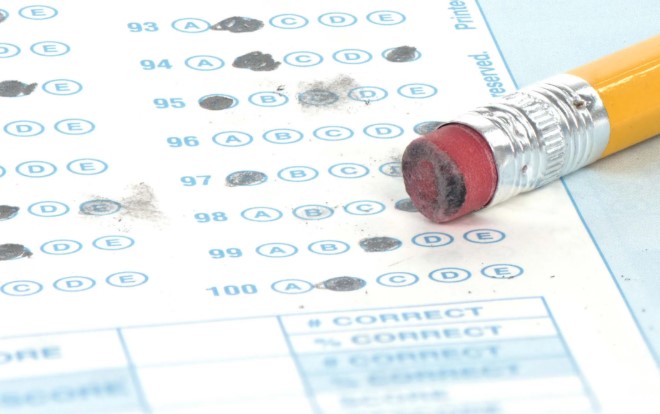
So I bet most of you are aware of the fact that on November 6th, the people of Massachusetts voted in favor of getting rid of MCAS as a graduation requirement. I personally believe this was a great decision, since it means that students won’t have to worry about not getting their diploma for scoring poorly on it. However, I think we still have to take the standardized tests seriously because of how much they still can affect students and our school.
The MCAS, or Massachusetts Comprehensive Assessment System, is a series of standardized tests created in 1993. Starting in third grade, all students take tests in English Language Arts and Math. A Science, Technology and Engineering exam is given in grades five and eight. Civics is administered to 8th graders and biology is given to 9th graders. Passing the tests had been a requirement for a diploma in Massachusetts, while schools used the data to evaluate teaching and learning. After the vote, the graduation requirement has been removed, but schools are still giving the tests to collect information.
But how did this movement to remove the MCAS graduation requirement get onto the ballot in the first place? You see, this movement was started by a mom in Lexington and the Massachusetts Teachers Association because they felt like MCAS was unfair to students who don’t take tests well. The movement was further spread by Adriana Mason and another mom from Hanover who helped to get the word out locally and get the question on the ballot.
One of the main concerns that went into having MCAS as a graduation requirement is the belief that students with special needs are treated unfairly by the system. I can relate to this concern from personal experience; while I was in elementary and middle school, I was given extra support in my classes to address my needs. However, when you are taking the MCAS, you are not allowed to have the same extra support you have had for the entire year. This would cause issues for students, who might have to take the high school tests repeatedly to finally earn a passing grade and qualify for their diploma. Teachers were forced to spend a lot of time each year preparing students for MCAS. It is either that or risk having students unprepared for test day.
Between 2003 and 2024, 400-450 students left HHS without their diploma, according to Mason. This large number has to do with their MCAS grades, and many of the students impacted were students with disabilities. Most students with disabilities already have hard lives, and not being able to get their diploma made their lives unfairly harder. Without a diploma, your job opportunities are reduced. You cannot go to college or into the military, and you cannot become a police officer or firefighter. Thankfully, with this law passing, students who graduated HHS from the 2003-2024 are able to now receive their diploma.
With all of that being said, and with the ELA test taking place at the high school this week, it leads me back to my question, “should we still be worried about the MCAS?” I will say once more that I am beyond glad that this law has passed, and I have NO complaints about this vote. However, as a sophomore, it feels very anti-climactic after being told numerous times since middle school that the 10th grade MCAS was the extremely important one that would determine whether or not I received a diploma. Now, the test feels just like an extra thing to do.
Still, my final verdict is that while MCAS shouldn’t be treated AS seriously as it was in previous years, I do believe students should still try to do well. The test results will be used to check in on how students are doing in school, and to make sure that teachers are successfully providing instruction in important skills. All of this can now be done without stressing out students yearround.
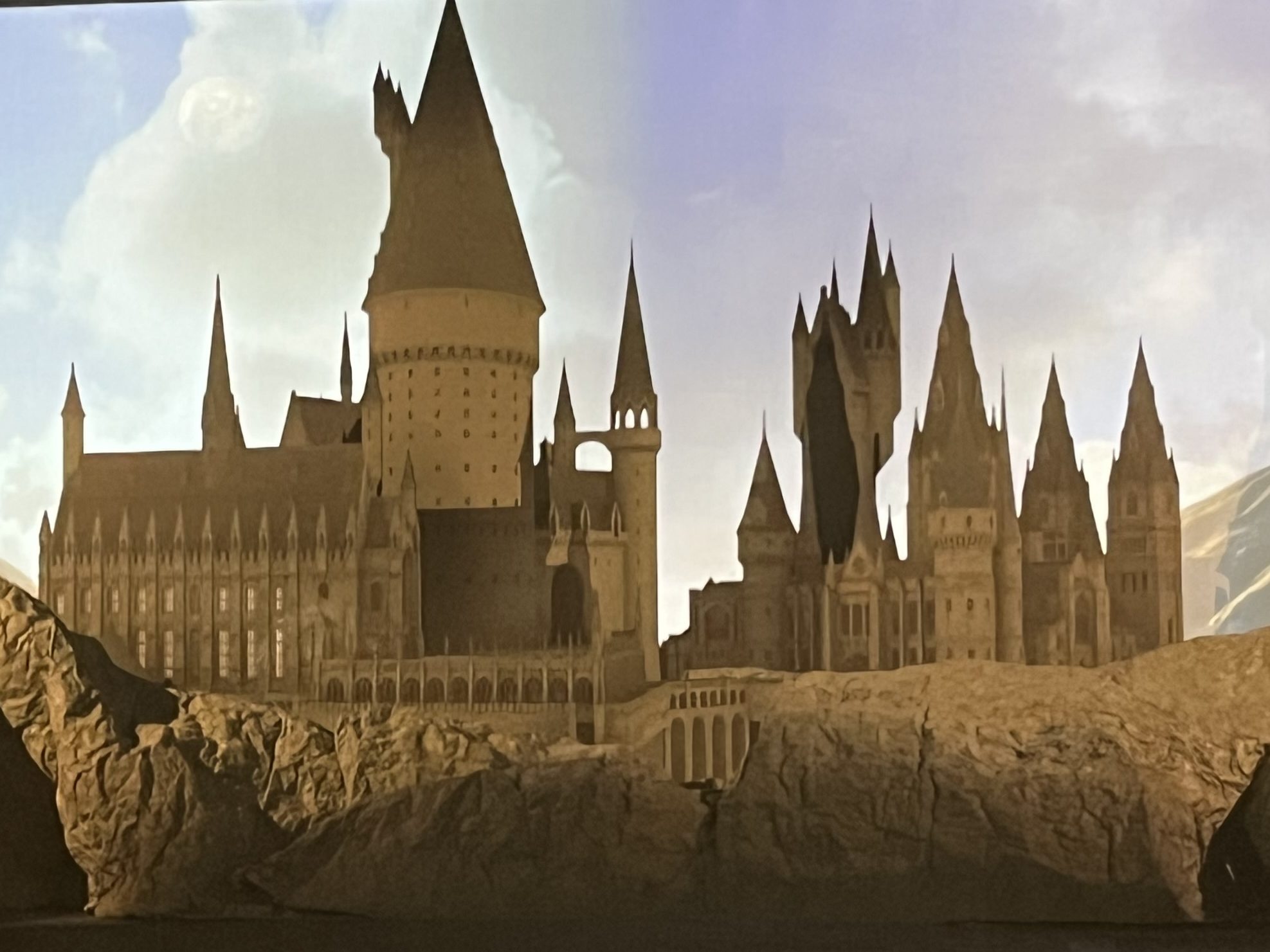
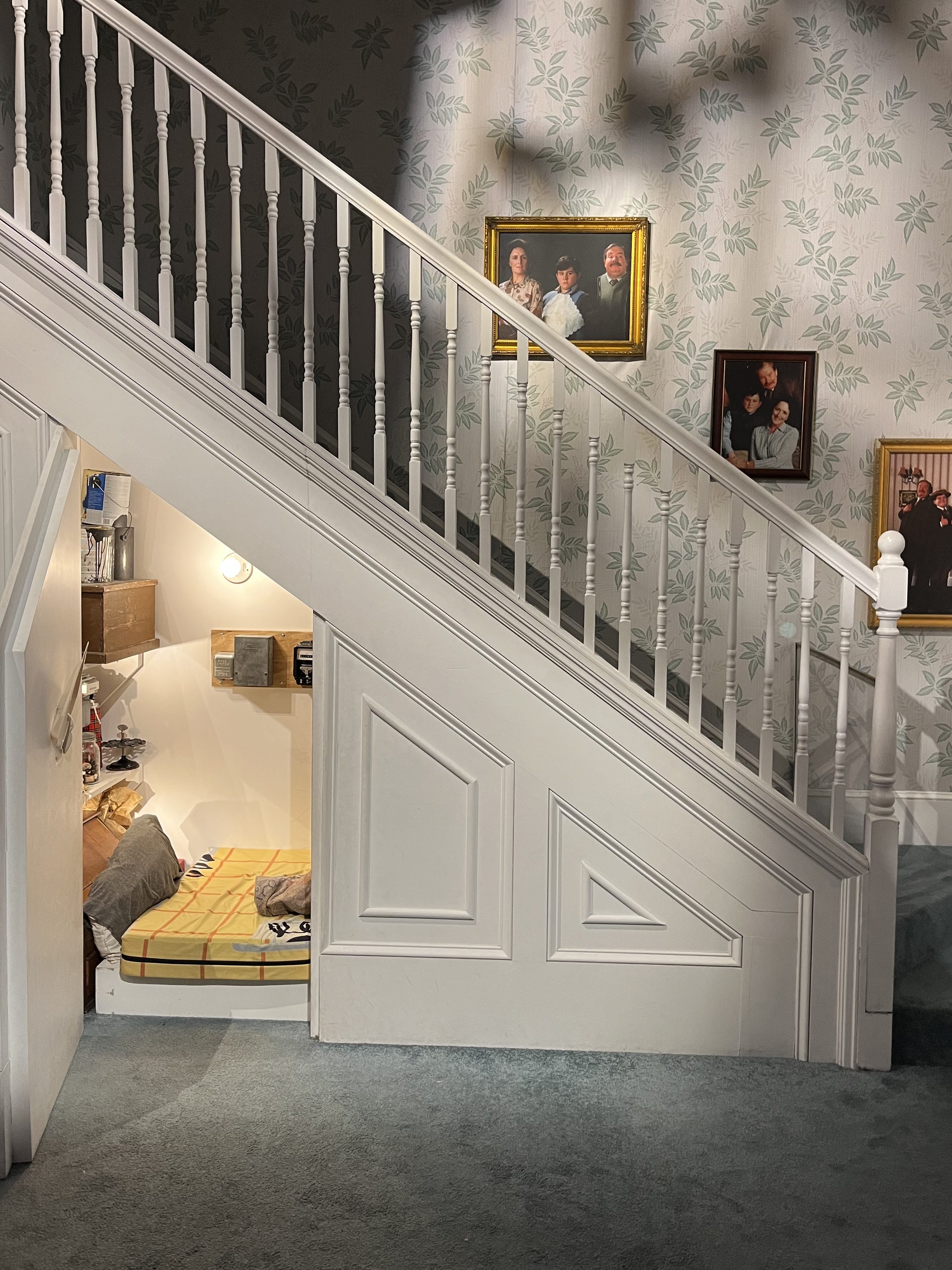
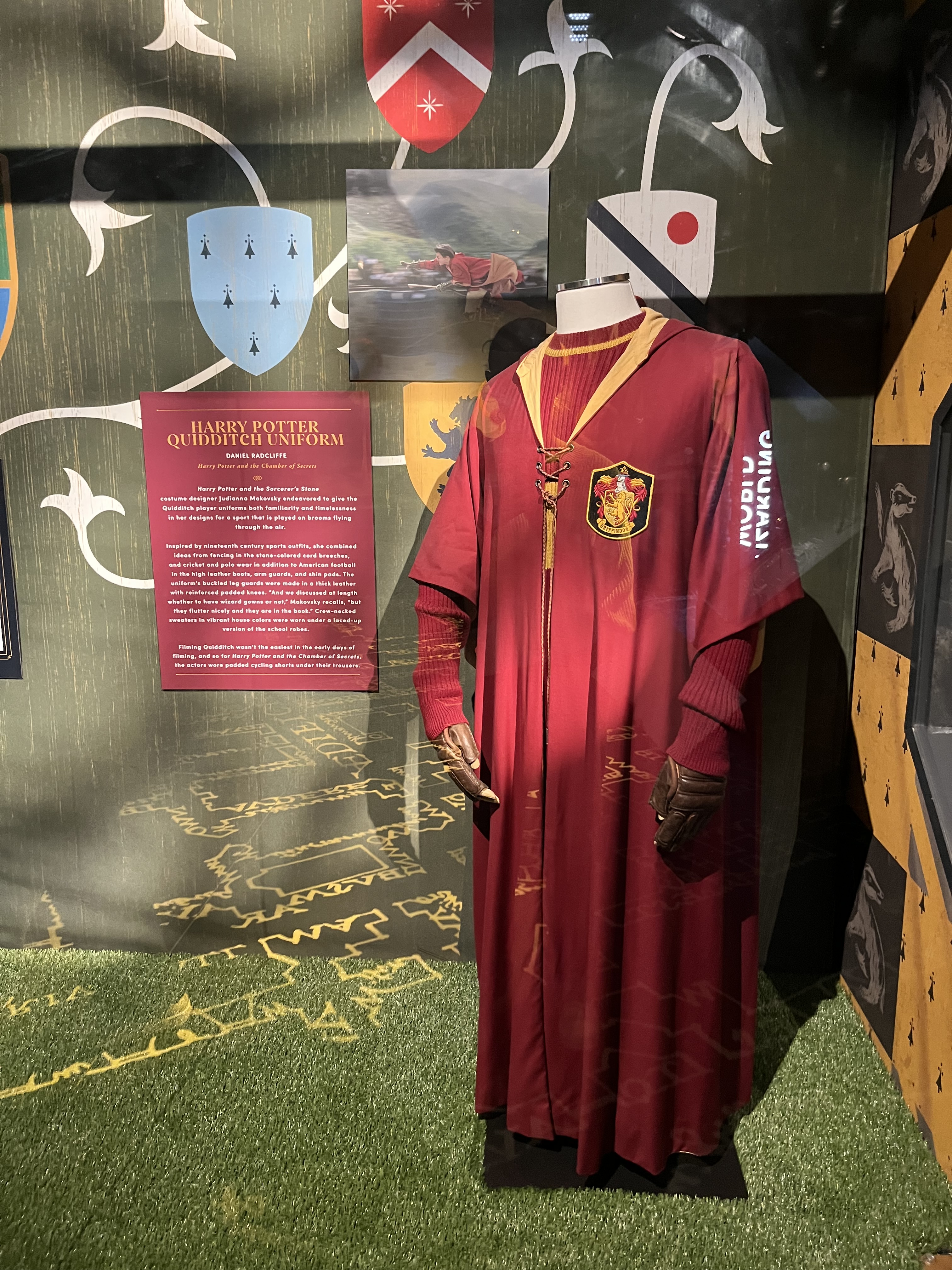
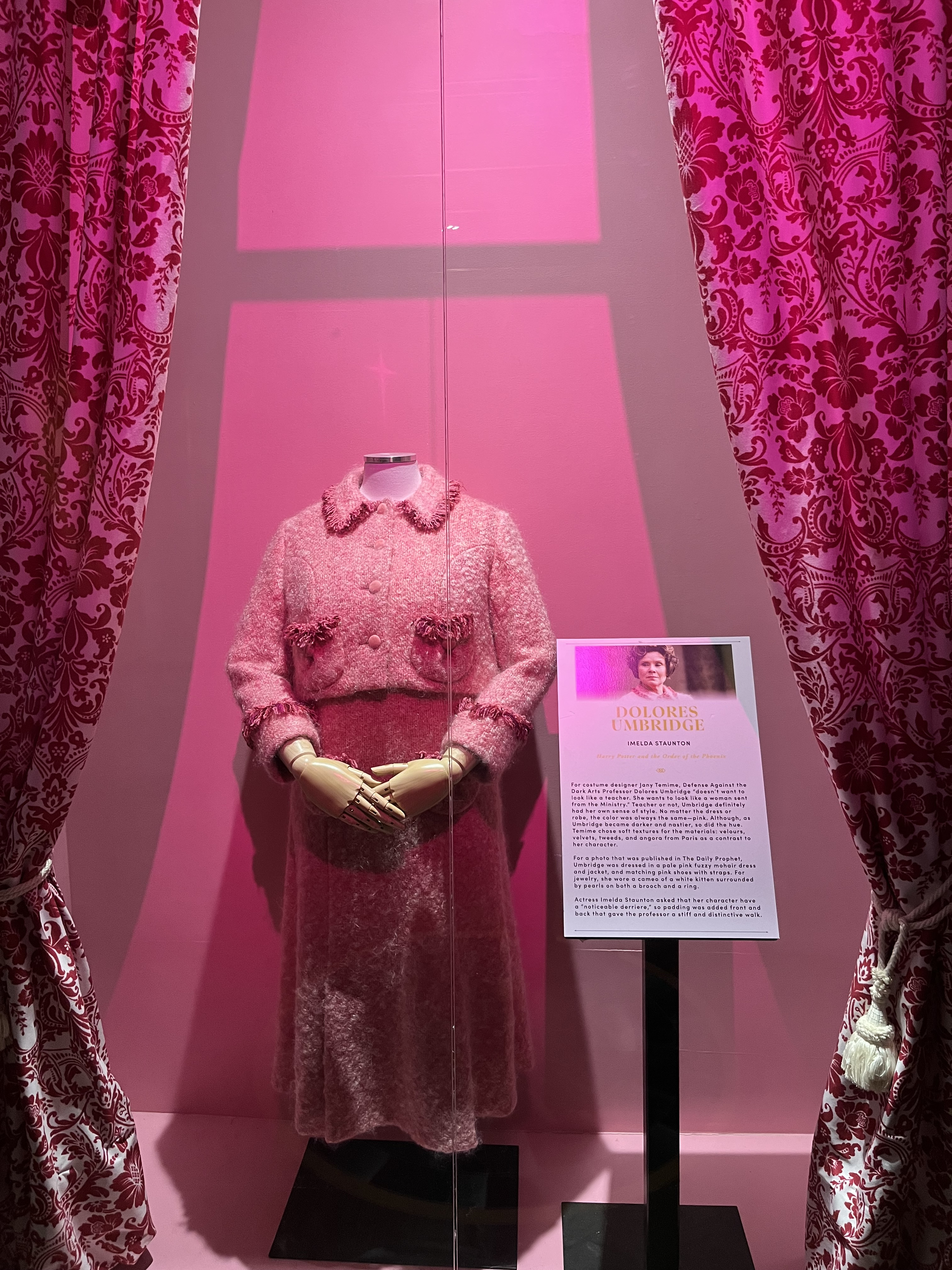
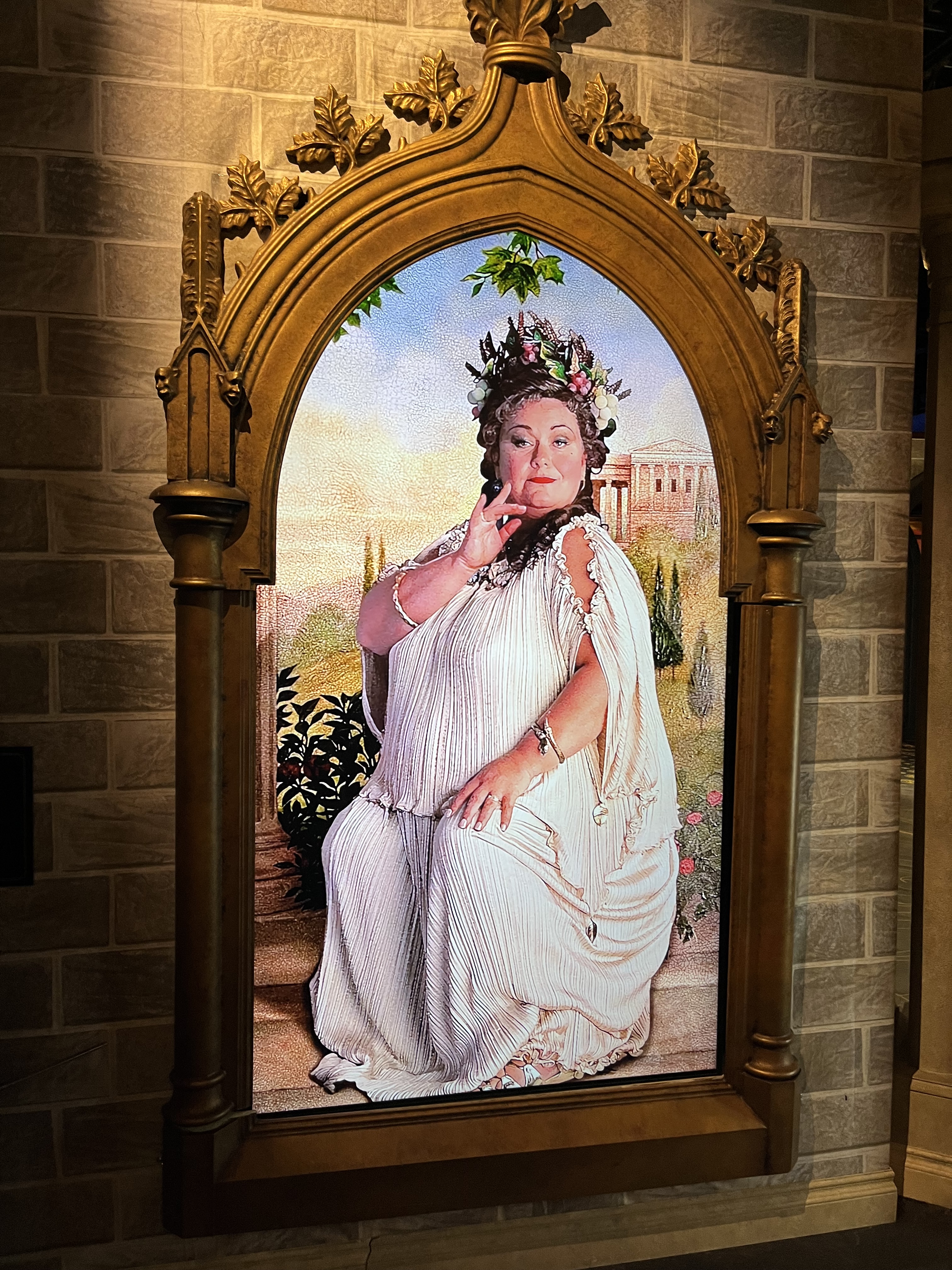
For fans of the iconic Harry Potter books and movies, Harry Potter: The Exhibition, produced by Imagine Exhibitions, gives an interactive and behind-the-scenes view of the Wizarding World. The self-guided tour showcases real props and costumes used in the Harry Potter movies, allows visitors to experience the magic of different rooms like the Hogwarts Great Hall and the Forbidden Forest, and even has a gift shop and Butterbeer waiting at the end. The exhibition is located in Cambridge, Mass., until April 27.
At the beginning of the tour, participants are given a bracelet to act as their “wand” and are encouraged to create an online profile for themselves, which includes their preferred Patronus, wand type, and Hogwarts House. Throughout the exhibition there are several opportunities to scan the bracelet and participate in an interactive activity such as potion-making or scoring in Quidditch. The House Points earned by completing these activities are displayed at the end of the tour.
There are over 20 different Harry Potter themed galleries included, and participants are allowed to take the self-guided tour at their own pace. Despite this, the tour is not overly expansive, and probably won’t take any more than an hour to an hour and 30 minutes to walk through, which can be seen as both a pro and a con. While young children may not get as bored or easily distracted, the relatively short length means that the tour is not extremely large or detailed, and some die-hard Harry Potter fans may be left wanting more.
When visiting the exhibition myself, in a preview for student journalists sponsored by Headliners in Education, two elements stood out the most: the real movie props included in glass cases throughout and the aforementioned interactive activities. Each gallery – dedicated to a specific scene, room, or character from the movies – showcased different props or costumes. It was cool to see the recognizable items and know that they were the actual pieces used during filming.
In an interview, Katie Restuccia, Director of Sales and Marketing at Imagine Exhibitions, explained the process of securing real movie props for their interactive tour. “All of it came from the Warner Bros. archive,” Restuccia said. “I think it’s just a matter of getting licensed through Warner Bros.” Patrice Cleaves, Senior Director of Sales and Marketing at Imagine Exhibitions, emphasized that the tour is about the Harry Potter films, not the books. “Our exhibition is literally focused and licensed with Warner Bros. for the movies,” she said.
Overall, Harry Potter: The Exhibition is an exciting and magical experience for fans of all ages. The self-guided tour, and interactive games along the way, allow participants to feel as if they are part of the Harry Potter movies, and create an overall positive and engaging experience. Harry Potter fans, you may want to see this before it’s gone!
The exhibit runs at CambridgeSide in Cambridge through April 27, with tickets starting at $25. For more information on the exhibit or to purchase a ticket, visit https://harrypotterexhibition.com/
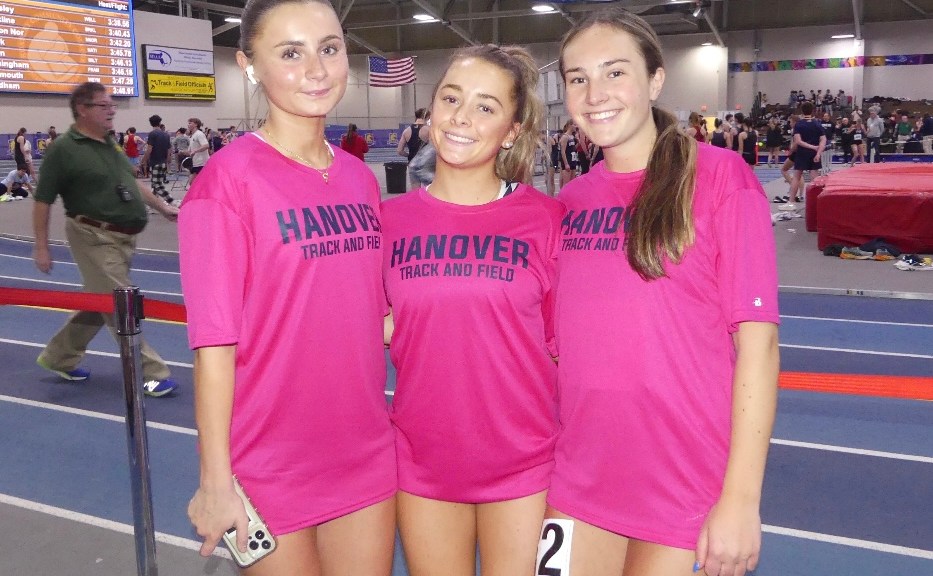
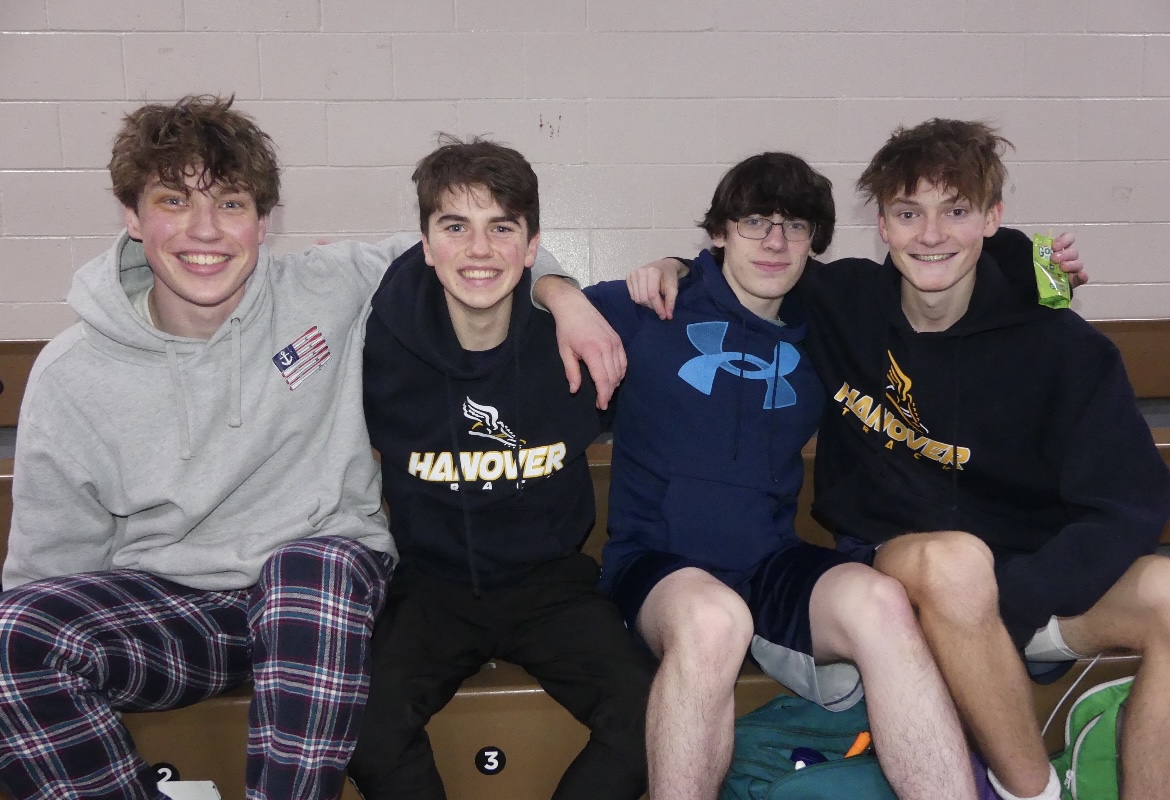
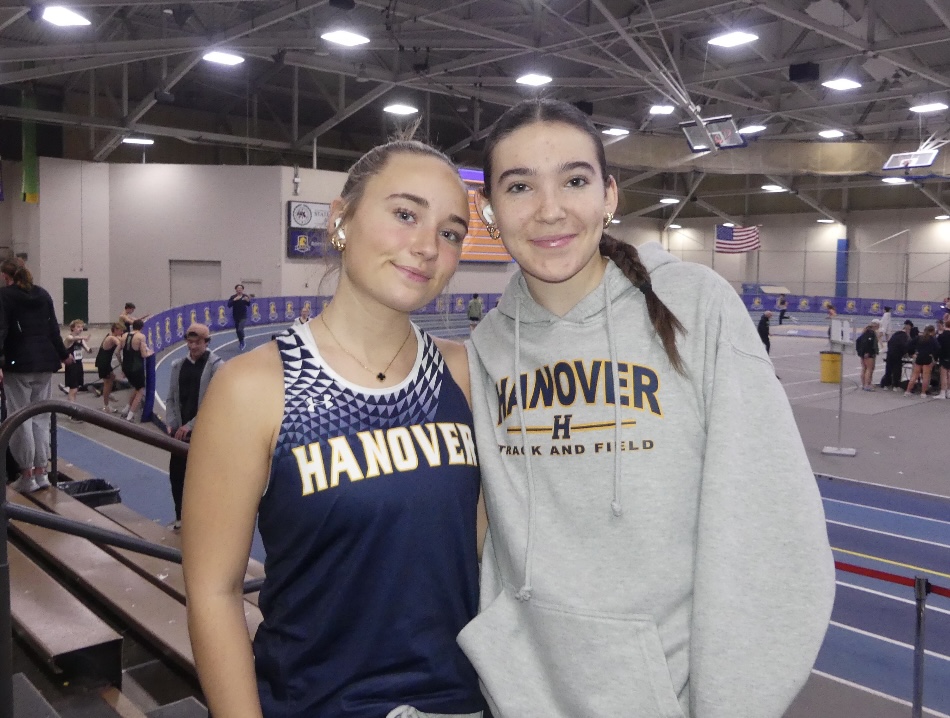
The Hanover High School Indoor Track season may be over, but it will long be remembered for its legacy of success. Anna Egan, Altonio Royster, and Ben Willis all broke school records this season, along with the boys 4×800 relay and the girls 4×200 team.
The HHS track team competes at the Reggie Lewis Center located in Roxbury. Hundreds of students from across the South Shore gathered weekly to race, with the complex booming with fans cheering on their teams. Coached by Patty Nee and Brendan Sullivan, Hanover athletes used that atmosphere, and a lot of hard work, to reach their personal and team goals.
Anna Egan, a junior, broke the school record for the 55m dash that she first set in her sophomore year with a new time of 7.66 seconds. In a distance that short, every millisecond counts. Anna credits focusing on her start and continuous dedication at practice in helping her achieve this goal. Anna’s favorite quote is “Don’t wish for it, work for it” and this inspired her at practice.
Ben Willis, also a junior, broke school records in both the 600m and the 1000m. He ran a time of 1:29.71 to shatter the 600m mark, which had been standing since Adam Cook ran a 1:30 in 2008. Ten days after accomplishing this, Willis lowered his time – and the school record – even further to 1:27.42. At state meet, he broke it again with a time of 1:25.04. Midway through the season, Willis set his sights on the 1000m, setting a record time of 2:47.48 in his first attempt.
Altonio Royster, a sophomore, broke the school’s long jump record with a distance of 19’10.5.” The previous record was 19’5.25,” set by Marvin Felix in 2023. “There were a lot of weeks of of just training and just pushing myself to be the best I could be,” Altonio said.
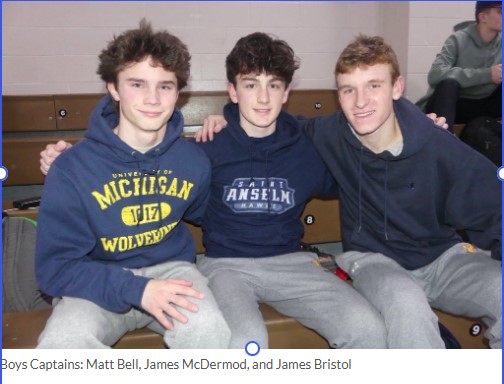
While track is often regarded as an individual sport, members of the relays must work together like a well-oiled machine in order to compete. This season, the boys 4x800m relay school record was broken with a time of 9:11:53. Willis and fellow juniors Matt Bell, Joe Lynch and James McDermod reached this goal at the Patriot League Championship meet on Feb. 8. Their time was 13 seconds faster than the previous record. The girls 4x200m relay set a new school record at the state meet with a time of 1:55:01. The relay included seniors Sam Baker and Ella Brinkman, junior Anna Egan and sophomore Callie Delaney.
With many members of the Indoor Track team moving outside for the spring season, it would be no surprise if the school recordbook continues to be rewritten. The team’s first home meet will be against Pembroke on April 9.
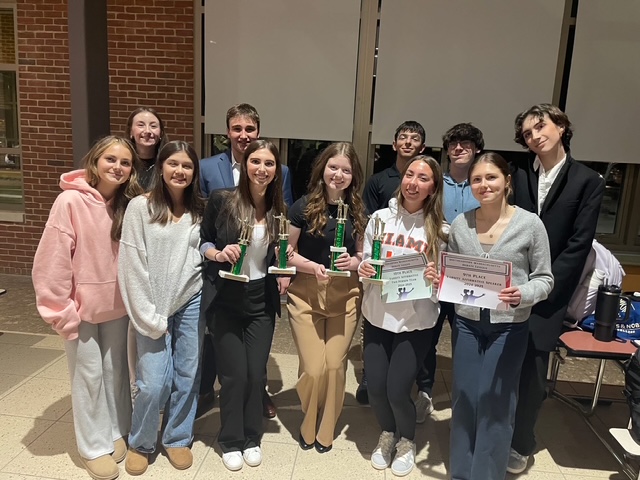
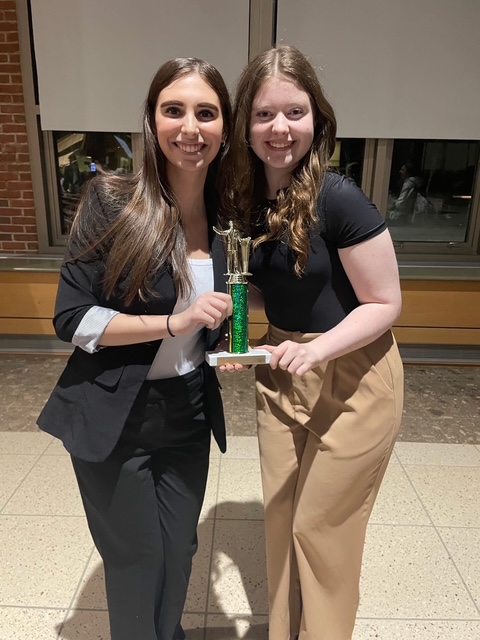
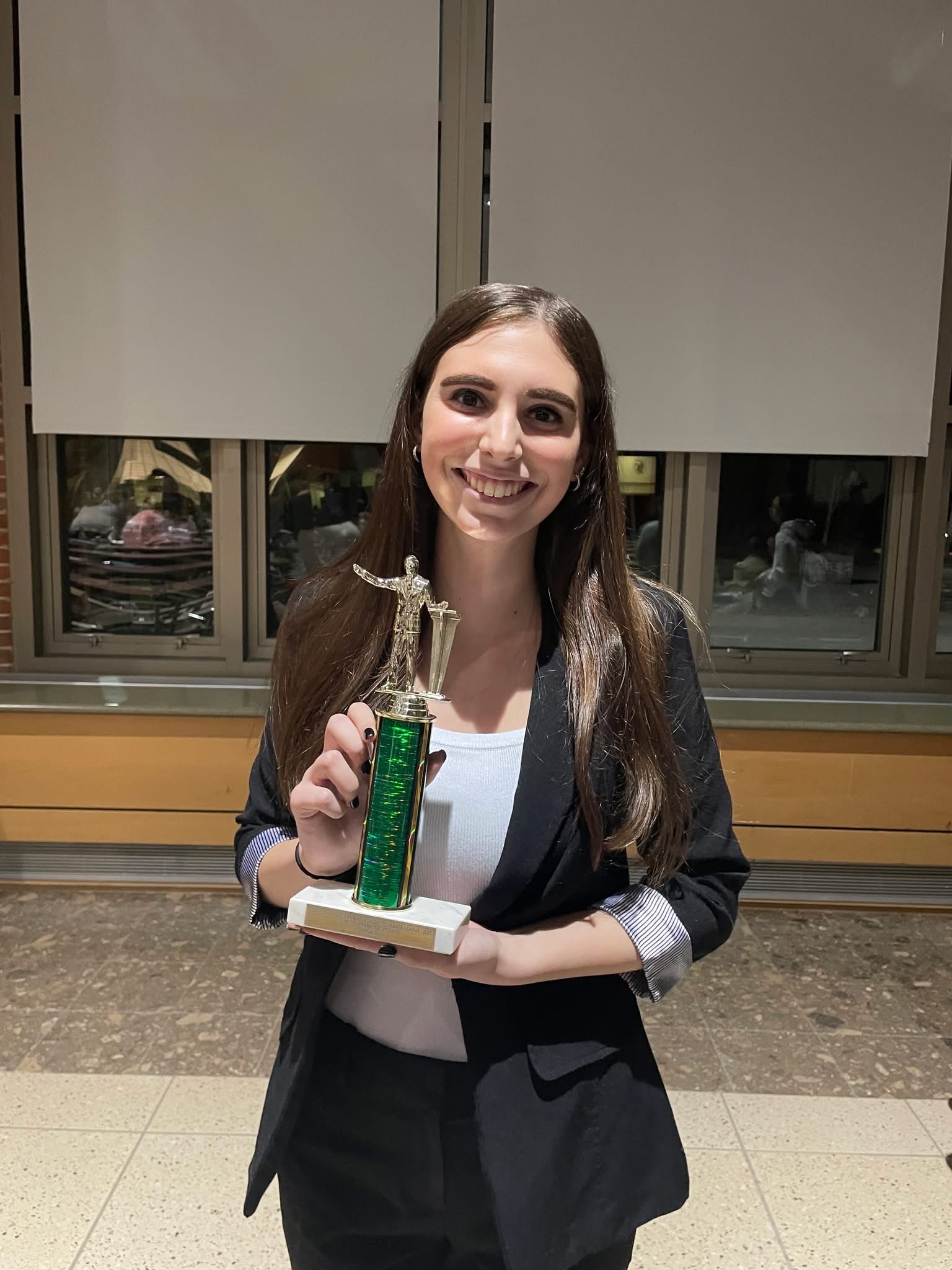
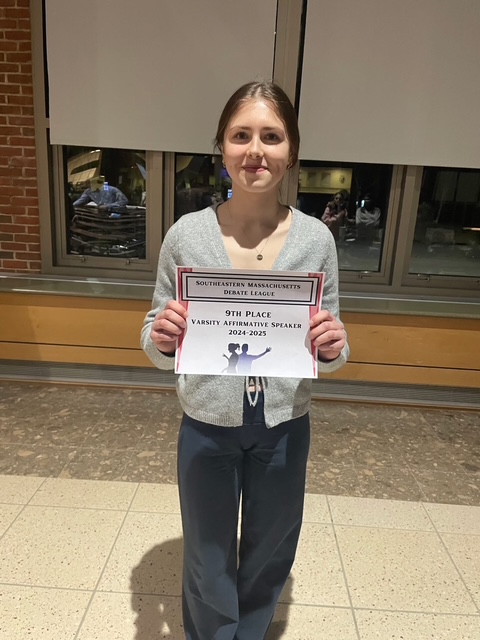
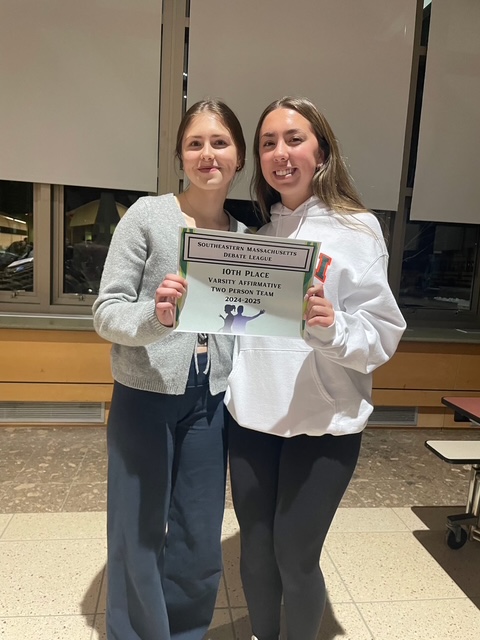
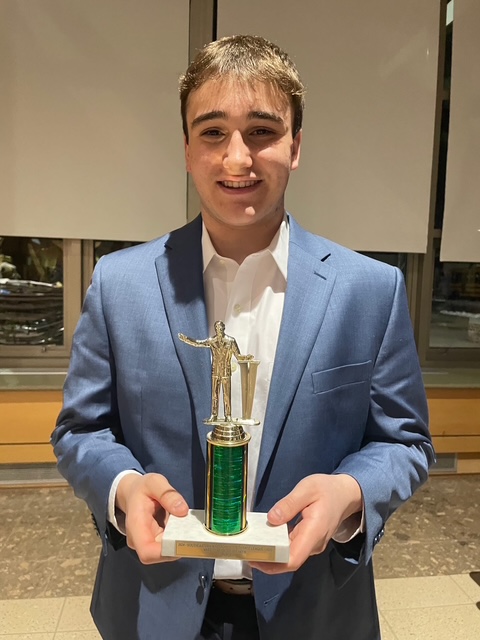
The Hanover High Debate Team racked up an impressive number of wins and awards in the Eastern Mass Debate League Competition. At the final debate and awards ceremony at Bridgewater-Raynham High School on Feb. 26, four out of five varsity debate pairs won their final rounds. Even better, several students earned league awards for outstanding performance for the entire season. Junior Alana Cole took home first place among all individual varsity speakers; junior Ava Khouri won second and junior Abbey Corbo grabbed third. Sophomore Sam Frattasio earned 5th place and Senior Ruby Telepak finished 9th. Among two-person varsity affirmative teams who scored the highest for the season, Cole and Corbo won third place and Telepak and Khouri finished 10th. The HHS team is coached by Mrs. Allyson Gately.
The Eastern Mass Debate League includes 13 schools and 48 four-person teams which this year competed in 8 rounds of debates starting in December. Teams must prepare a variety of resources in order to argue the season’s resolve. Affirmative teams create and deliver a specific argument connected to the resolve, and negative teams have to be prepared to rebut whatever argument their opponent creates. This year’s resolve was The United States federal government should significantly strengthen its protection of domestic intellectual property rights in copyrights, patents and/or trademarks.
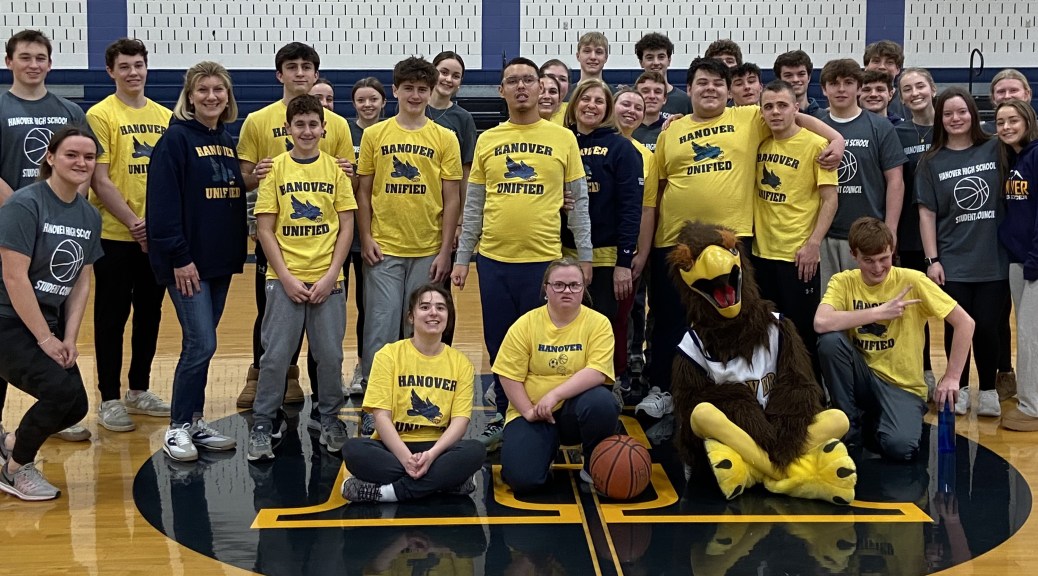
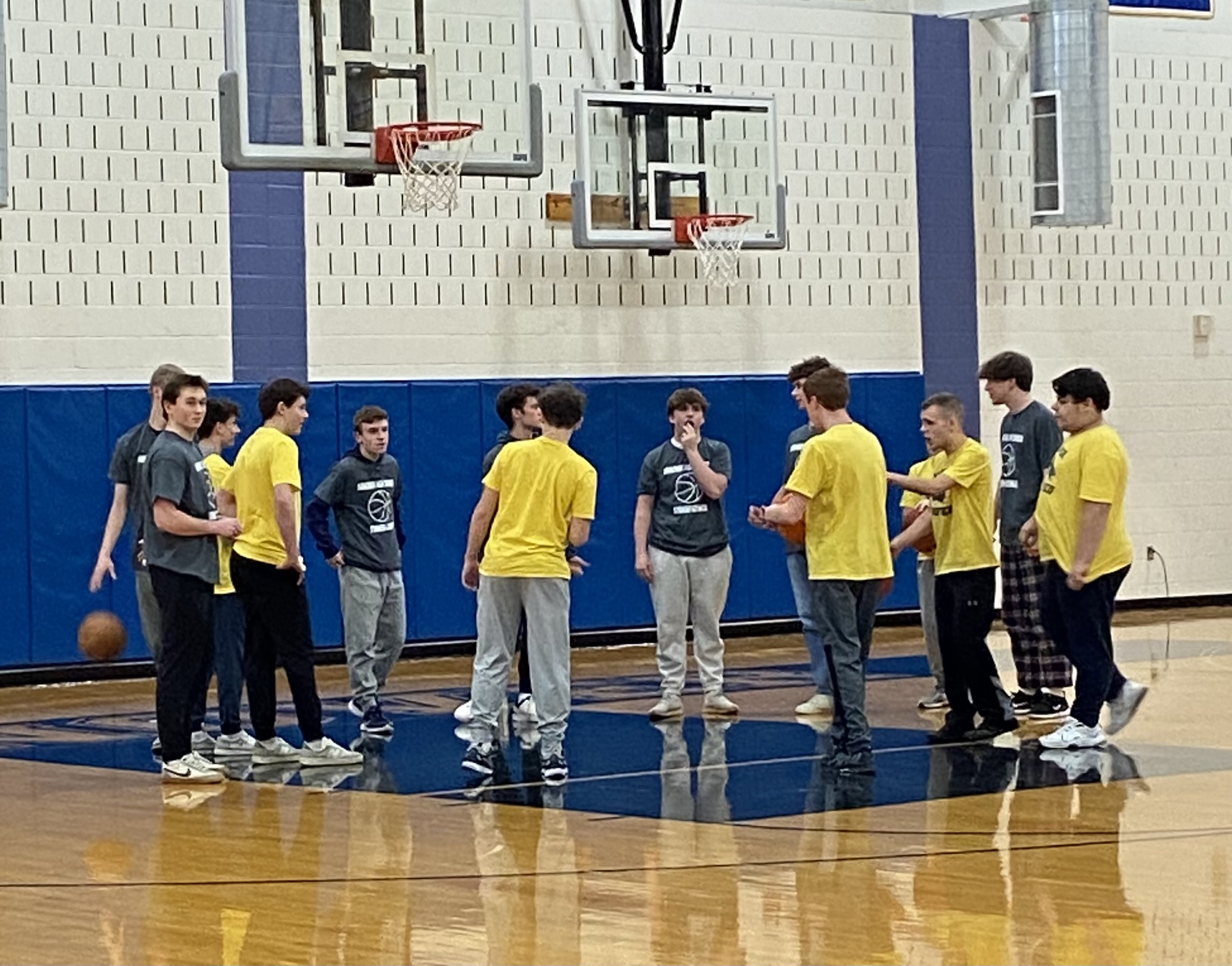
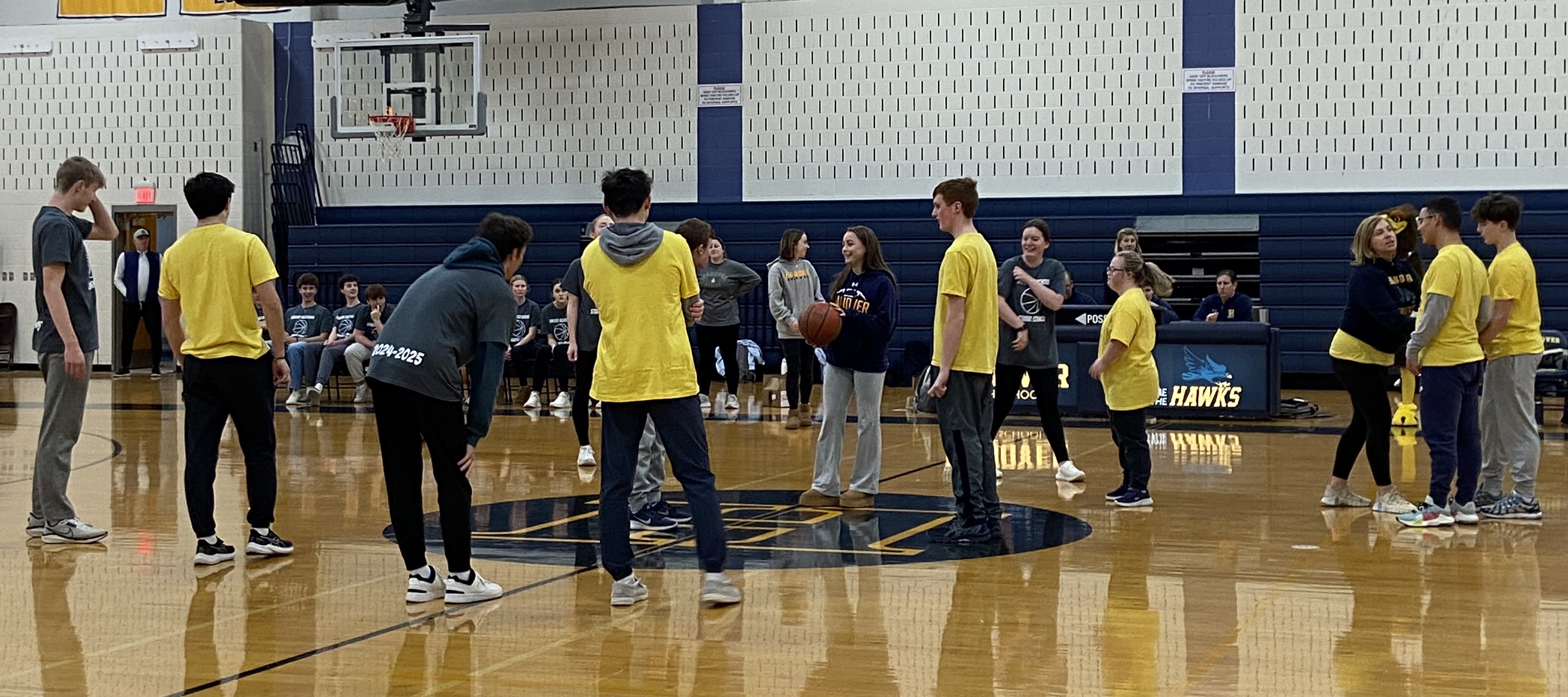
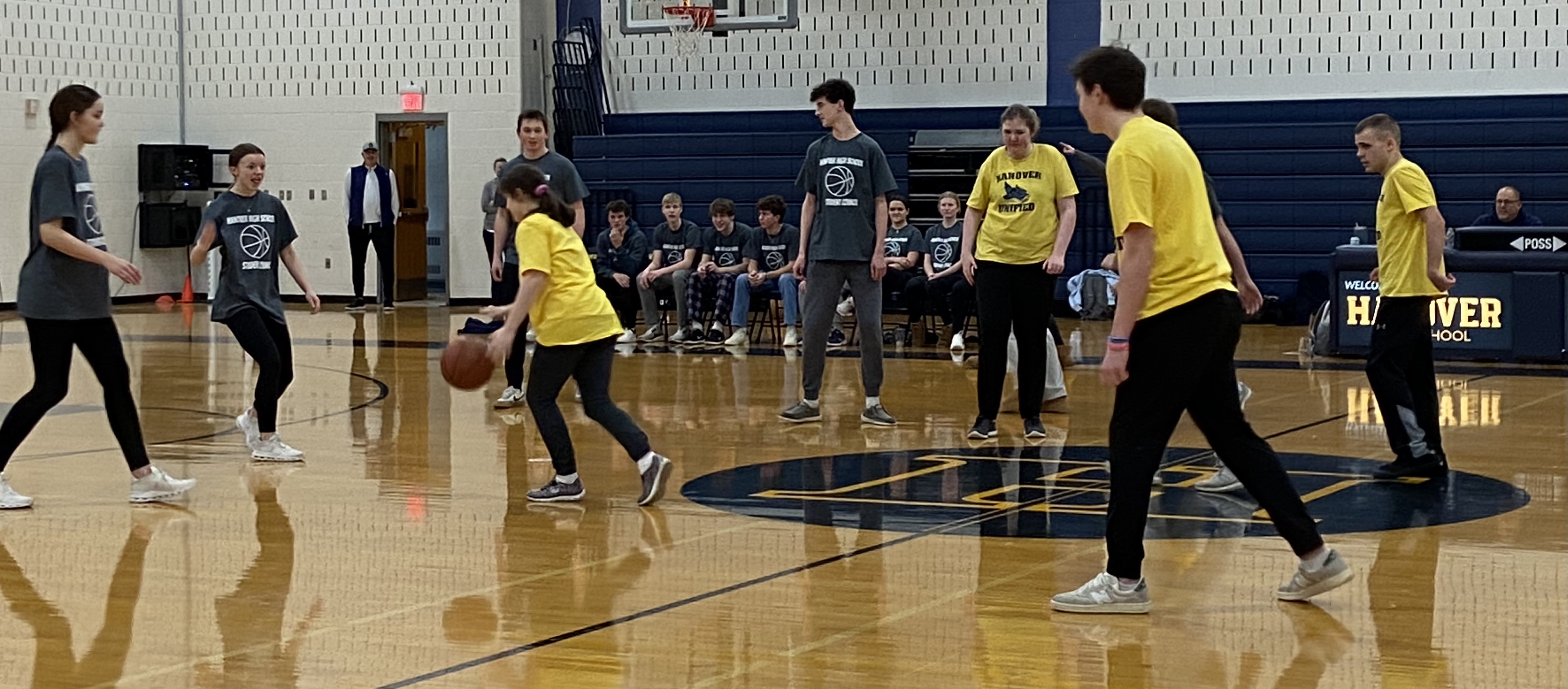
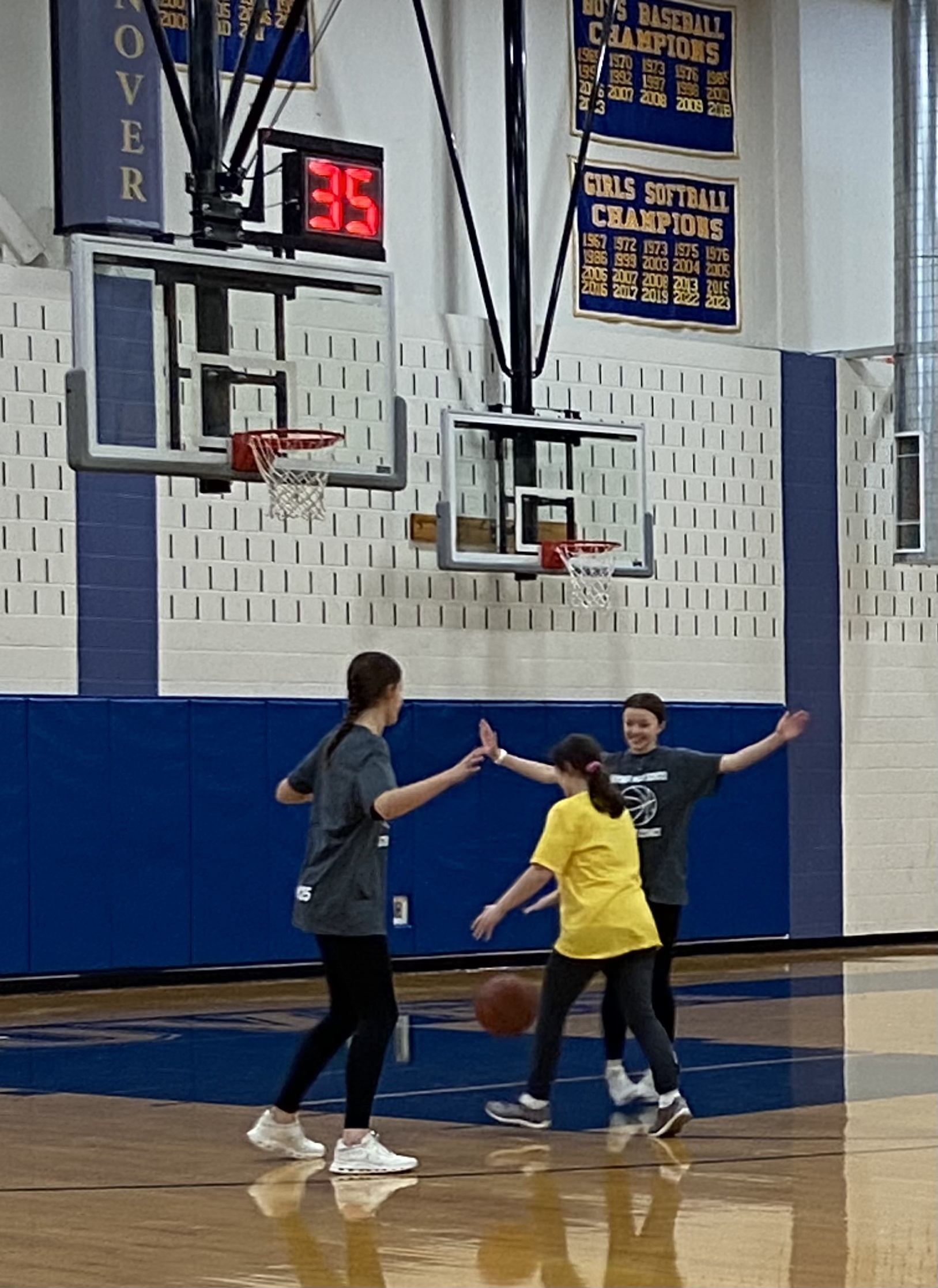
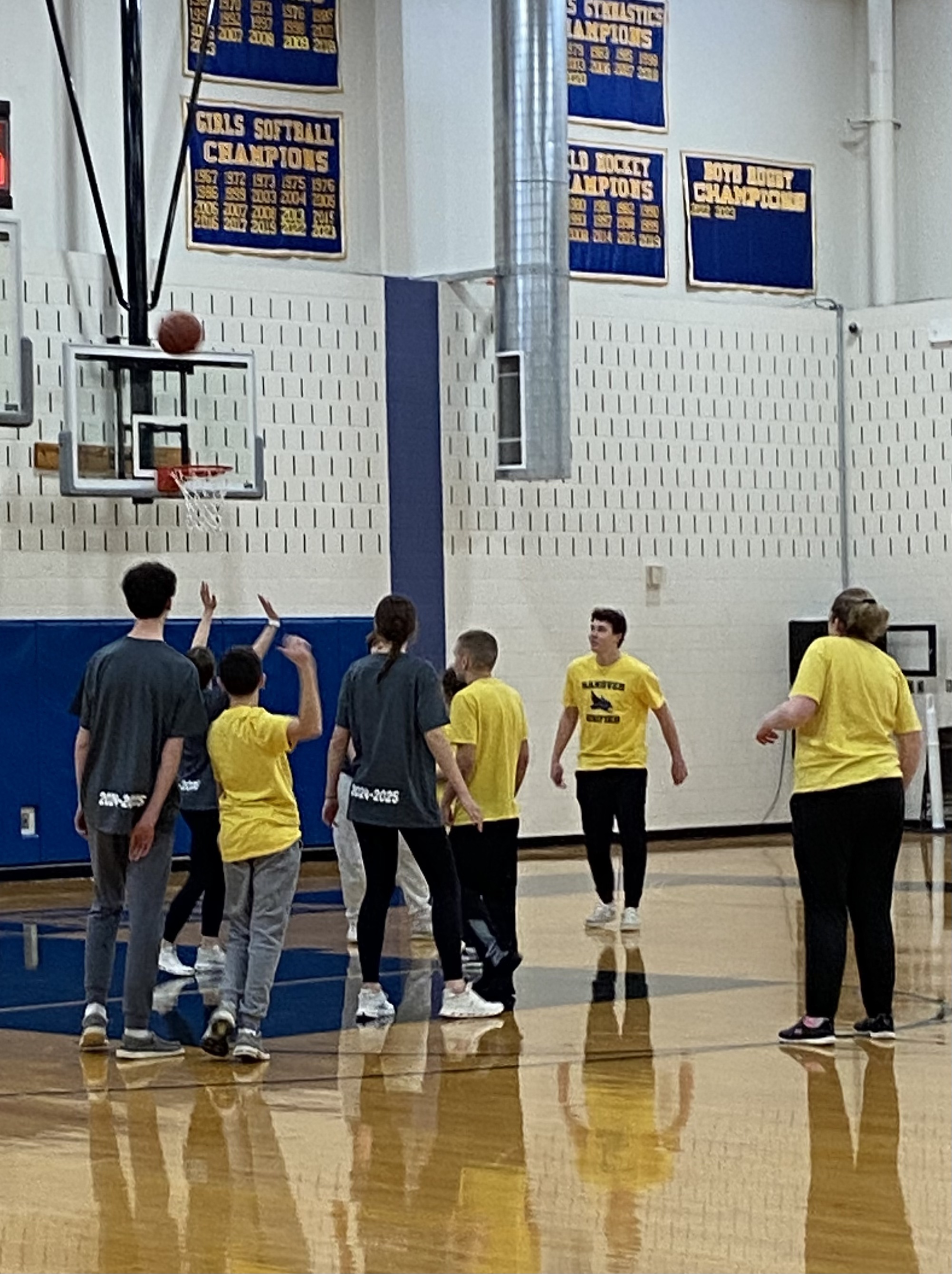
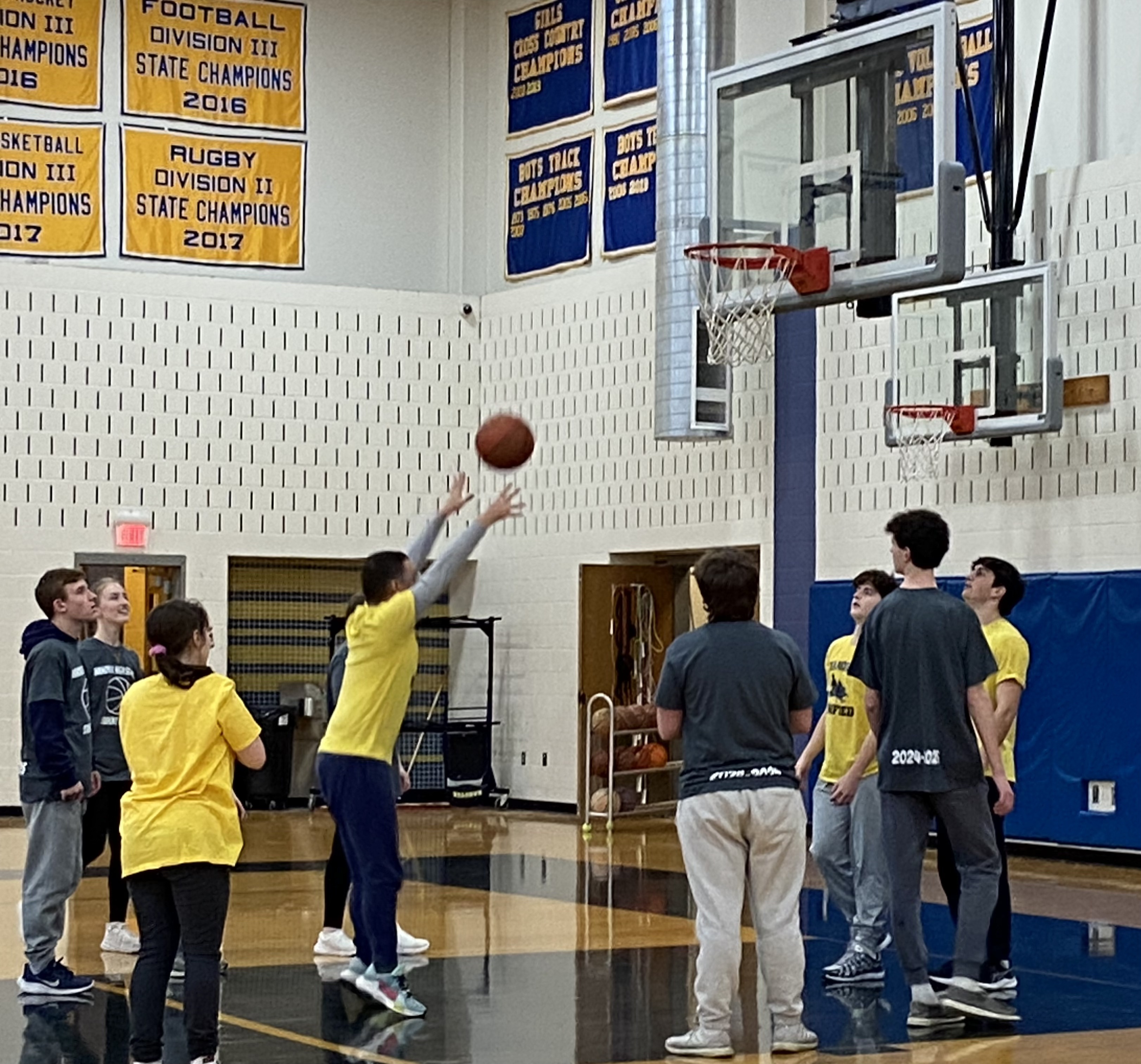
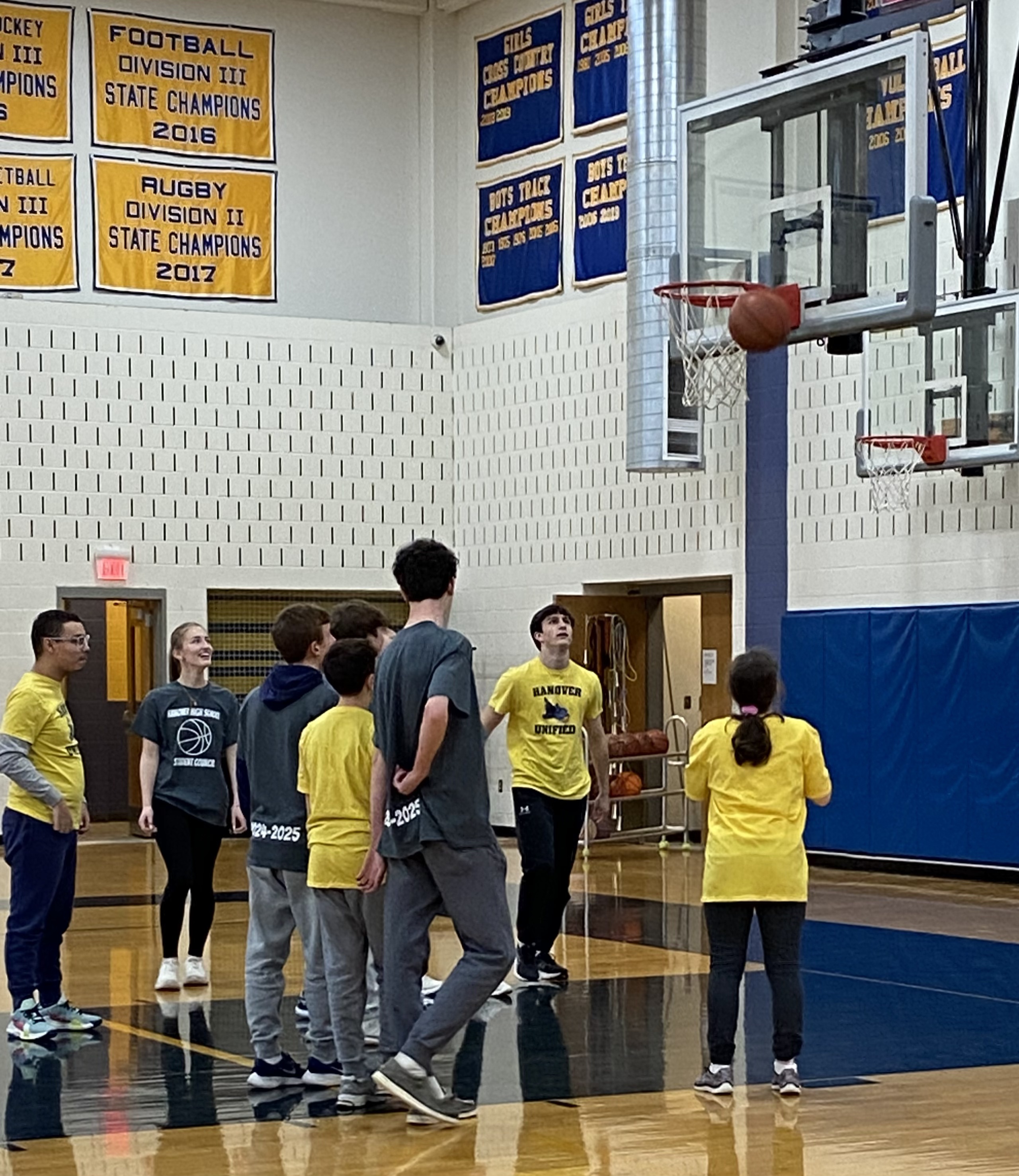
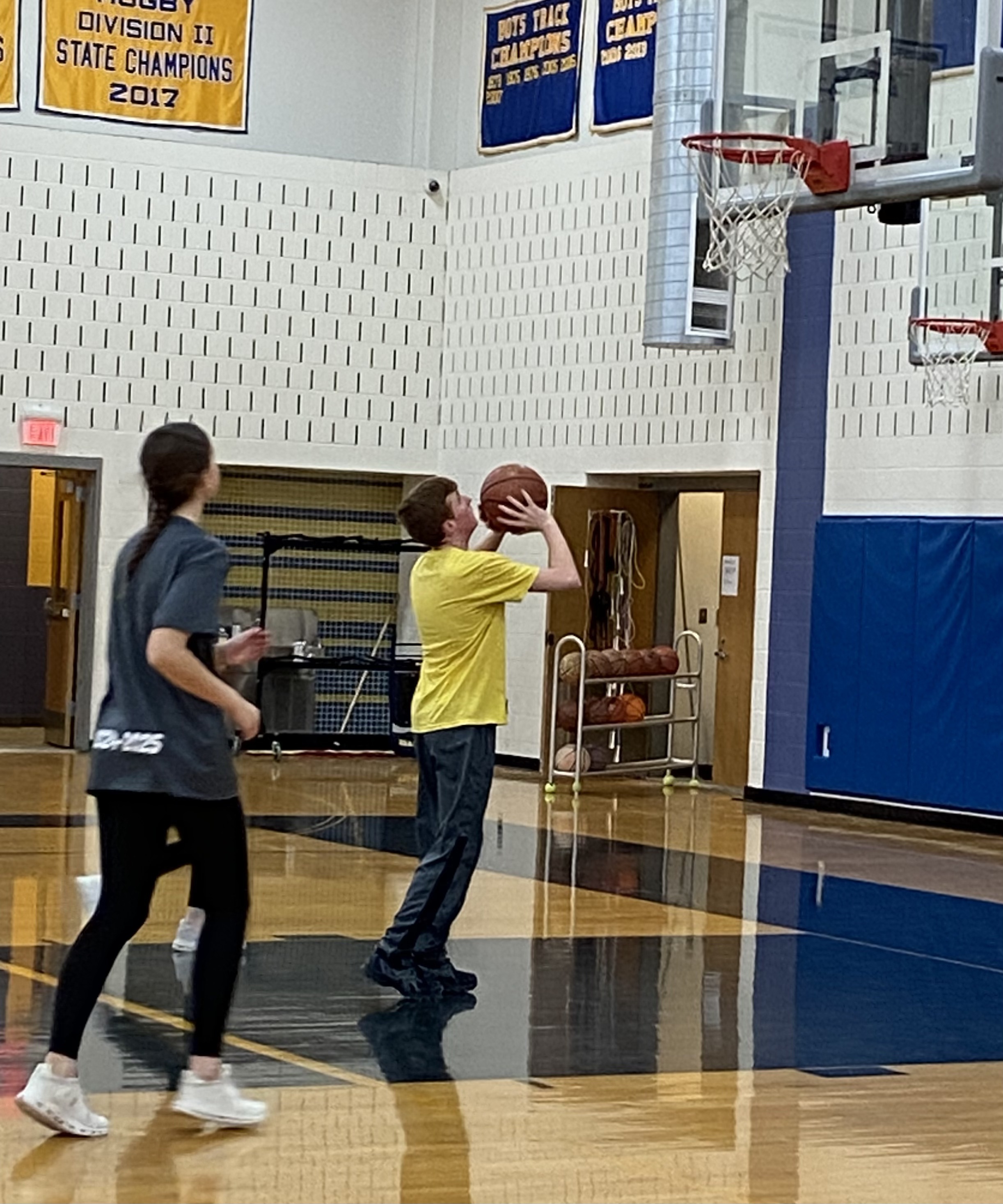
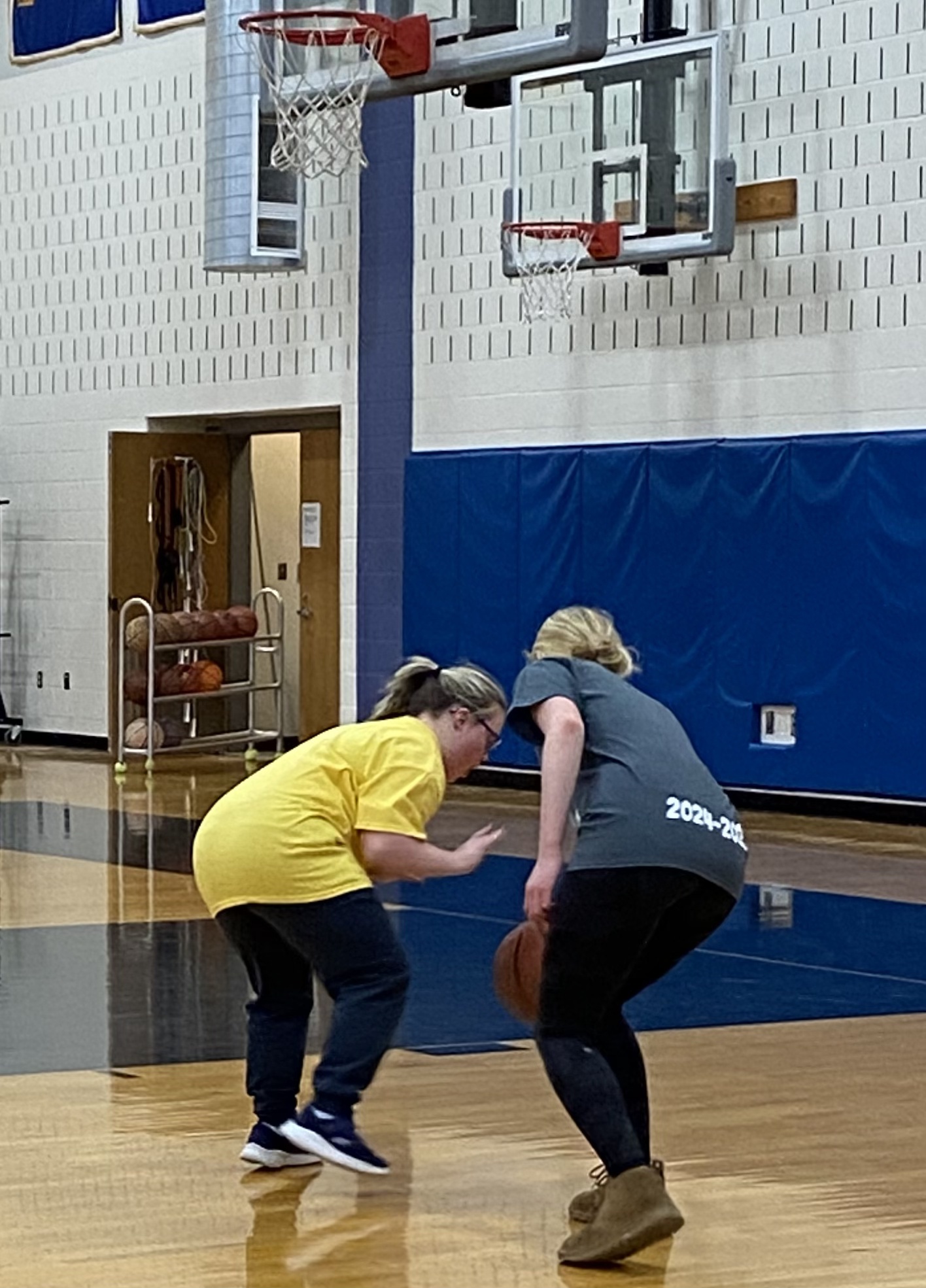
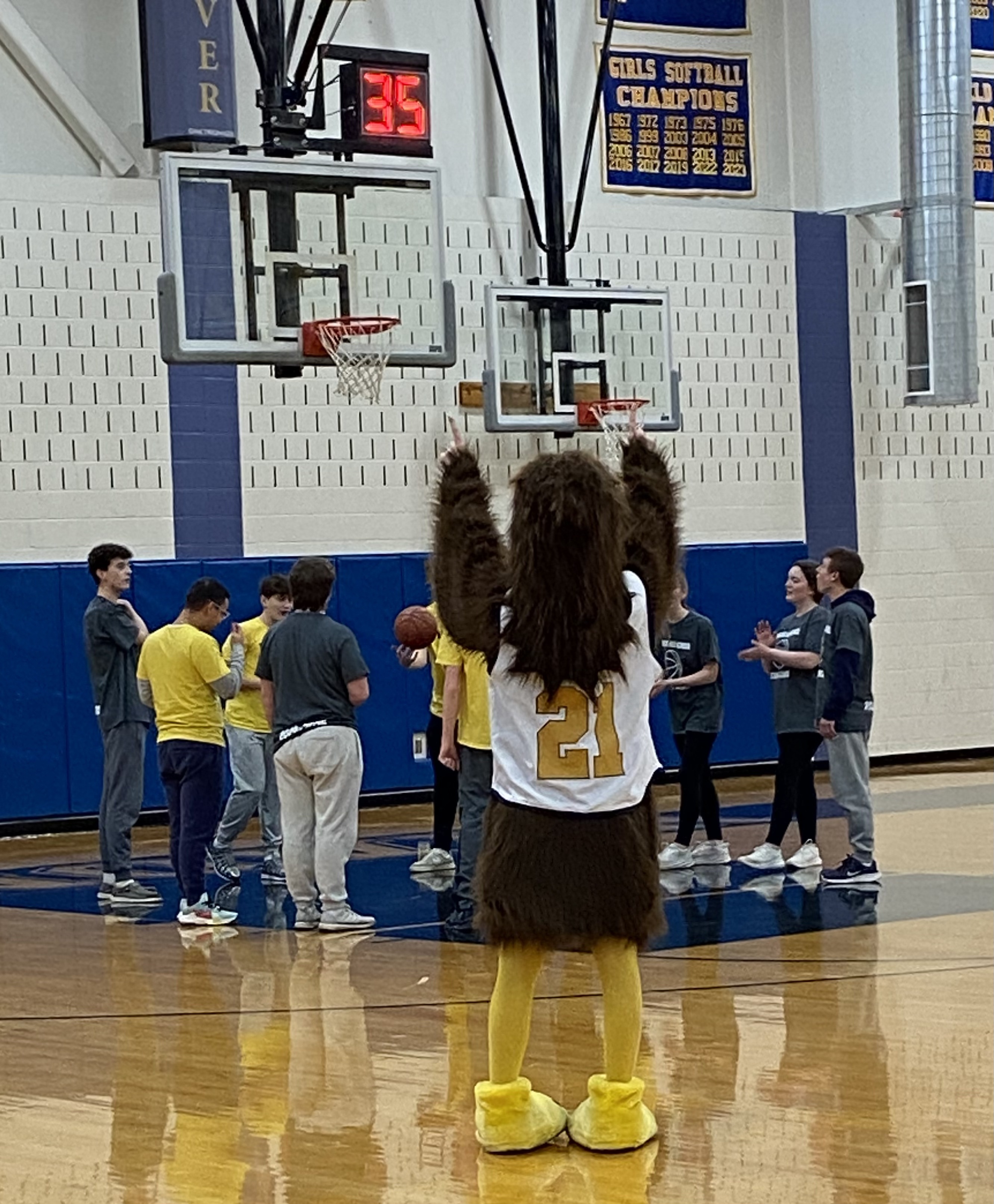
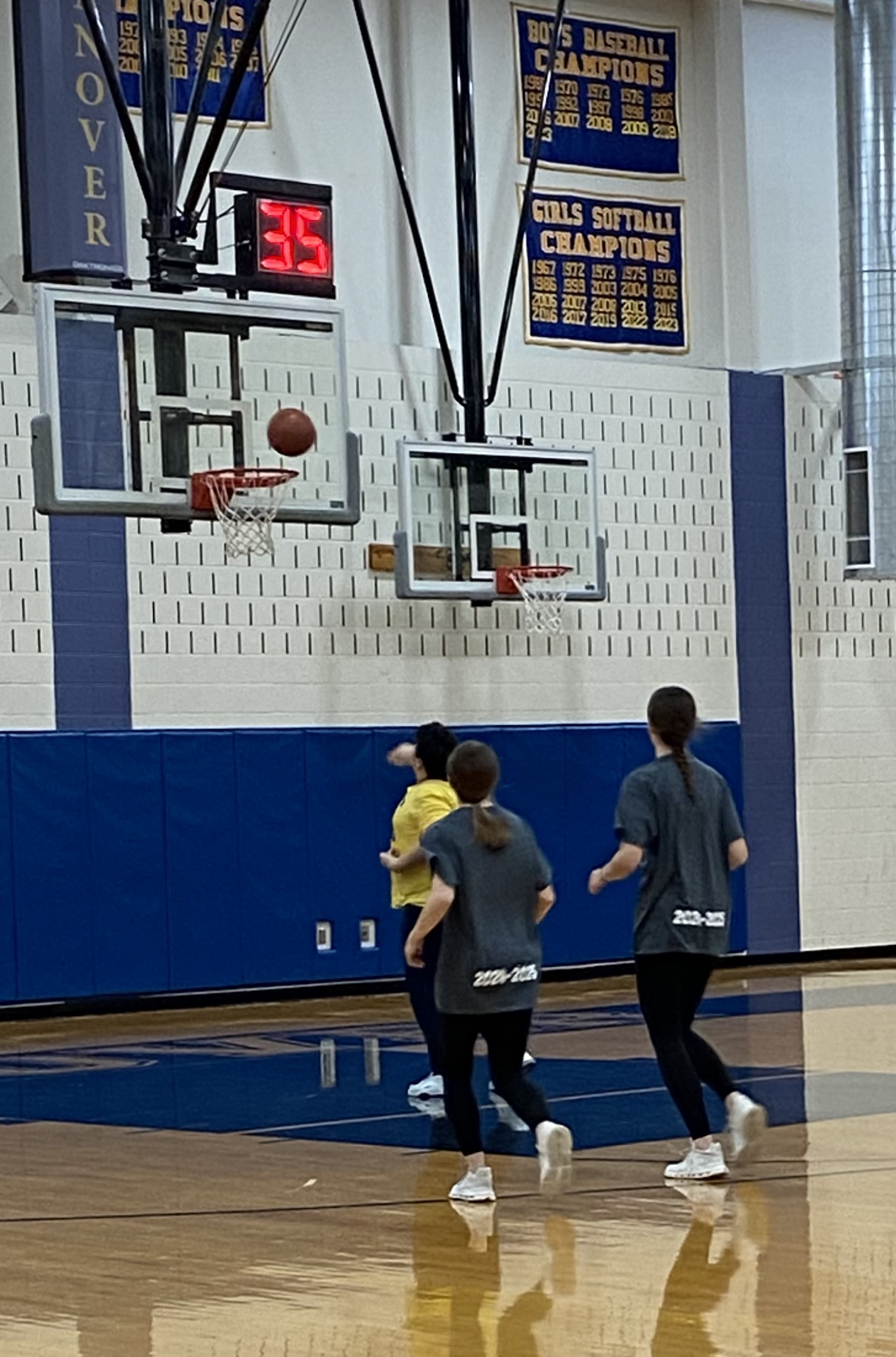
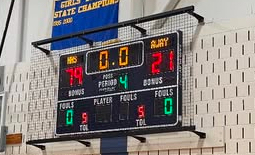
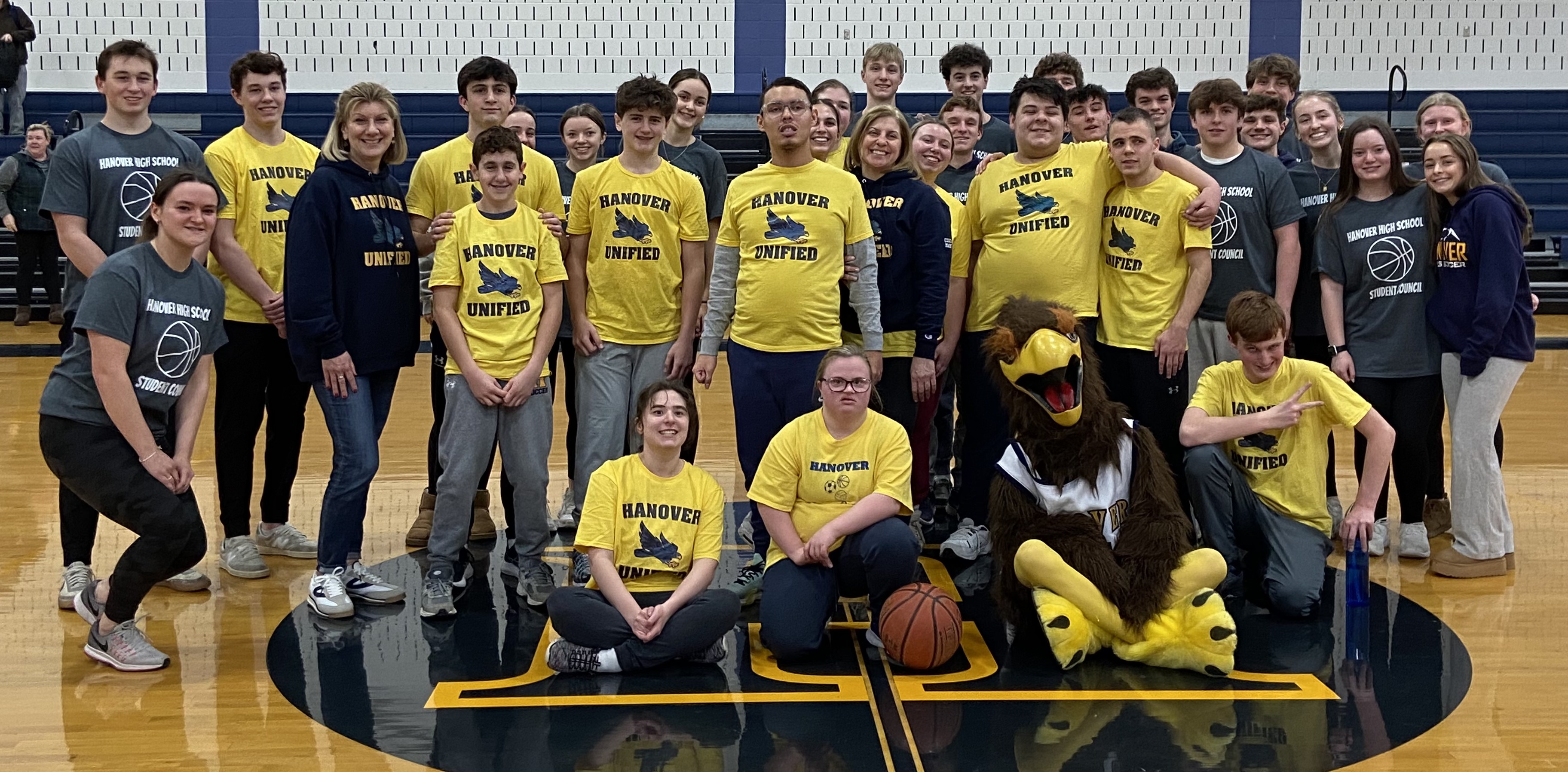
The Hanover High School Unified basketball team made a powerful statement as they took on a team fielded by Student Council in a packed gym on Feb. 6. While the final score stood at Unified 79, StuCo 21, what counted more than the many, many (many) baskets made was the teamwork, sportsmanship, and friendship on display.
For the Unified team, top scorers were Danny Campbell, Bre Thomas, Jillian Richards, JJ Molina-Para, and Adel Mustafa-Rivera. Dom Castaldini and Maeve Patten showed determination as they made passes and grabbed rebounds. Molina-Para wowed the crowd with his 360-turns before sinking several baskets, and Richards’ countless steals from StuCo players were almost criminal.
The StuCo team kept their spirits high, with several members of HHS basketball teams making impressive shots. The atmosphere was festive thanks to the play-by-play of HHS senior Thomas Perkins, and the Hanover Hawk mascot rallying the crowd. Congratulations to players from both teams! Special thanks go out to Unified Sports organizers Ms. Mann and Ms. Gately, Athletic Director Scott Hutchison and all the fans in attendance.
The HHS Unified team will take part in a Jamboree at Abington High School on Feb. 12, playing teams from Abington and Carver high schools. We wish them best of luck!
Pioneered by Special Olympics, the goal of Unified Sports is to partner people with and without intellectual disabilities on the same team. By training and playing together, Unified teams promote inclusion, friendship and self esteem, according to the Special Olympics website. An estimated 19 million young people participate in Unified Sports nationwide.
After the New England Patriots finished 4-13 in the 2024-25 season, many people demanded changes in the franchise. The former Patriots linebacker, Jerod Mayo, named coach after the departure of fixture Bill Belichick, was criticized by fans throughout the season. Many fans were upset with Mayo in Week 18 after the Patriots beat the Buffalo Bills, 23-16, causing them to give up their number one draft pick and drop to number four. Mayo was fired soon after, with Patriots CEO Robert Kraft saying, “I felt guilty” and “I put him in an untenable situation.”
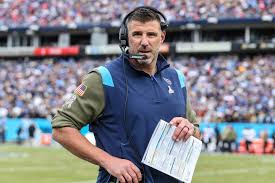
Kraft tapped another Patriots alum to replace Mayo, former linebacker Mike Vrabel. People think Vrabel has the experience for the job considering he has been the linebackers coach for the Houston Texans and the head coach for the Tennessee Titans. During his time playing as a Patriot, he became a three-time Super Bowl champion. People are also eager to see what he can do with quarterback Drake Maye’s second year with the team.
Fans have been frustrated with the Patriots and their lack of playoff success in the years since Tom Brady left. Vrabel has a good reputation for leadership, principle, and an ability to bring out the best in his players. He has strong knowledge for game management and an instinct for decision making. He is good at making important strategic calls, especially when the stakes are high.
With a new head coach, fans are feeling optimistic for the future. Now all we have to do is see how the draft in April plays out. With some good moves, hopefully next season will give fans more to cheer about.
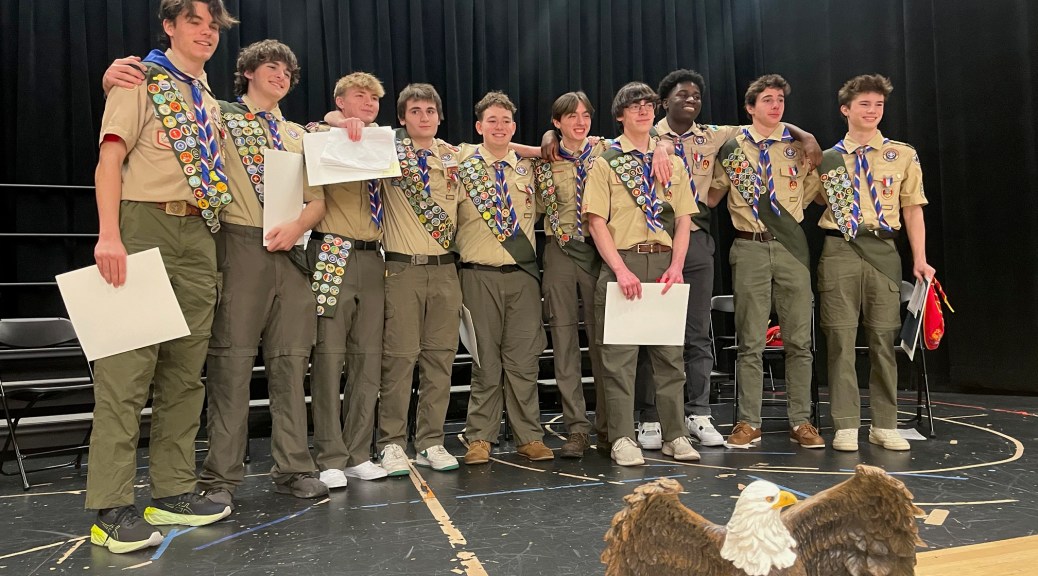
Earning the rank of Eagle Scout is no small achievement: it requires years of dedication, leadership, and service. Five scouts from Hanover High School have gone above and beyond, using their projects to make a meaningful impact on our community. From improving accessibility and transportation to preserving local history, their efforts demonstrate the values of scouting and the lasting difference one individual can make.
According to EagleScout.org, the projects these high schoolers participate in must be challenging, valuable to the community, “demonstrate leadership of others and provide service to a worthy institution.” Eagle Scout is the highest rank a scout can achieve.
After seeing how many bikes were being thrown out at the Hanover transfer station, senior Gavin Hardy organized a bike drive for his Eagle Scout project. He collected about 100 bikes from the dump in one weekend, refurbished the bikes that could be saved and donated them to schools, veterans and families in need. Spare parts were sent to Cameroon, Africa. He credits Rich Bonanno, the founder of the Scituate-based nonprofit Rolling Wave Foundation, with helping him connect with organizations and individuals in need. Gavin’s project shows how a simple idea can bring mobility and independence to others.
Drew Keith’s journey to Eagle Scout has been lifelong, filled with challenges and memorable moments. Attending the National Jamboree in West Virginia stands out as a highlight, while navigating the extensive paperwork for his Eagle Scout project proved to be his greatest hurdle. An HHS junior, Drew built a bog board to replace an old one between the middle and high schools, making the trails accessible for people and their dogs. Despite facing weather challenges, Drew’s perseverance shone through, and he credits scouting with instilling leadership, life skills, and values like good citizenship. When asked for advice, Drew shared, “Stick with it. It’s a fun experience if you go into it with the right mindset.”
Tyler Jewson’s Eagle Scout project also involved building bog boards to bridge muddy areas, improving accessibility and usability for the community. The HHS junior’s project demonstrates a hands-on commitment to solving local challenges and leaving a lasting impact.
Since joining scouting in 2019, junior Matthew Bell has held the leadership position of “historian.” For his Eagle Scout project, Matthew built paddle board racks for the Hingham Maritime Center. In addition to that, he refurbished their flagpole, built in the 1920s. His role as troop historian reflects his dedication to leadership and legacy and his project reveals a deep understanding and appreciation for the local history.
Junior Liam Anderson’s path to Eagle Scout began with a unique twist: quitting in 5th grade only to rejoin in 6th. His determination paid off as he rose to the rank of Senior Patrol Leader, managing a troop of 60 scouts. For his Eagle Scout project, Liam created portable exhibit signs for antique vehicles to support the local historical society. Communication challenges during the project taught him the importance of persistence and follow-ups. Liam credits scouting with shaping his leadership and communication skills, making him a more well-rounded individual. His advice to aspiring Eagle Scouts: “Overlook the tedious, see the light at the end of the tunnel, and imagine yourself in the future without it. You’d be pretty sad if you saw all the others and wish you had stuck through it.”
From bike drives to bog boards and historical preservation, these scouts’ projects highlight the diverse ways Eagle Scouts make meaningful contributions. Through their dedication, leadership, and resilience, they’ve not only achieved scouting’s highest rank but also left lasting marks on their communities, setting powerful examples for future generations.
Students from HHS and the area celebrate earning the rank of Eagle Scout in a ceremony Jan. 4. Photo courtesy of Kimberly Hardy.

































 The Hawk