Tag Archives: featured

Two Dystopian Classics Offer Different Reading Experiences

By Siena Oliver, ’27

Staff Writer

In English class the last two years, I’ve read 1984 by George Orwell and Fahrenheit 451 by Ray Bradbury. These two books were published four years apart in 1949 and 1953 respectively. They are both cautionary tales about the future, the use of technology, and mass censorship of a society that seems not to care that they are being manipulated.  Both books are extremely important in the literary world, but I found Fahrenheit far more enjoyable to read.

Both books follow men living in dystopian societies, who eventually start to question their ways. The protagonist of 1984, Winston, begins his story working at the “Ministry of Truth” where his job is to edit and censor all types of media and information, essentially changing history. Montag, from Fahrenheit 451, works as a fireman who burns books, which is another form of censorship. Both of these characters work in respected jobs for the government and actively take part in changing the information that is given to the public. At some point in both of the books, the protagonists each have a revelation about how they cannot stand to live under the rule of an all-powerful government that so blatantly controls the information they receive. Winston and Montag both end up rebelling, and in doing so make connections with people they otherwise would not have.  

Although the books are fairly similar in terms of content and meaning, I personally disliked 1984 but enjoyed Fahrenheit 451. In my opinion, 1984 was too long and often seemed to drone on with unnecessary and boring information, while Fahrenheit 451 was a fairly fast-paced and short read that held my attention throughout the entire story.  I found the authors’ writing styles to be a bit wordy and confusing at times, often sounding sort of like poetry. This can be a good thing or a bad thing depending on the length and excitement of the book. As a reader, I dislike stopping books in the middle, but with 1984, I nearly did because it was so hard for me to get through. 

Bob Marley Biopic Falls Short in Honoring Legend

By Sienna Lamond, ’26

Staff Writer

Like jazz was born in Louisiana, reggae was born in Jamaica; and just like jazz had stars such as Louis Armstrong, reggae had Bob Marley. A biopic called One Love about Marley was recently released in theaters. The highly anticipated film was preceded by a clip of Marley’s son, Ziggy Marley, who also works in the music industry, giving a statement on how proud the family was of this film. As I watched, though, I couldn’t help but feel like the movie was a disservice to Marley. The set design, costumes, and actors were all perfectly suited to the story, but the entire movie only captured two years of Marley’s life, accomplishments, and legacy (1976–1978). I feel that the movie failed to encapsulate just how great and impressive Bob Marley truly was and what he did, not only for music but for peace.

Bob Marley was born on February 6, 1945, the same year that World War II ended. For almost the entirety of Marley’s childhood, Jamaica was a piece of the British Empire. In 1962, Jamaica was granted independence as a nation but maintained its status as part of the British Commonwealth. However, political unrest still plagued the country. Tensions between two large political groups, the Jamaican Labor Party (JLP) and the People’s National Party (PNP), resulted in violence and danger throughout the country. 

Marley utilized his musical skills to speak on political topics, the most famous instance of which is the “One Love Peace Concert” held in Kingston, Jamaica in 1978. This is one of the most important highlights of his career, which thankfully the movie includes. Here, Marley stood as a symbol of unity as he clasped the hands of the PNP and JLP leaders, Michael Manley and Edward Seaga, in front of the roaring crowd. Marley sought more than an end to violence; he sought the betterment of his home country. Through songs like “War,” “Slave Driver,” “One Love,” “Get Up, Stand Up,” “Rebel Music,” and “Concrete Jungle,” he literally and metaphorically uses his voice and platform to provide the Jamaican people — and people globally — a sense of hope that the fight for peace will be heard and not silenced. 

To fully appreciate the mysticism of the legendary Bob Marley, one must understand the sociopolitical climate at the time he delivered his message to the world. The movie touches on the political unrest and violence in Jamaica, but Marley’s music had global implications wherever political unrest and unjust social structures existed. In his lyrics, “Rasta don’t work for no CIA,” it’s evident that Marley’s music was viewed as a pivotal motivator in elections and, thus, was threatening to various political regimes. Whether it be Cuba, Africa, or Chile, his music was viewed as destabilizing to the established structure. Ironically, Marley’s power came from remaining politically neutral even as his reach expanded globally. Despite assassination attempts and pressure from multiple sides, Marley never wavered from his philosophy: “Live for yourself, and you will live in vain. Live for others, and you will live again,” and that love is stronger than fear, hate, and violence. The movie could have included more examples of him as a symbol of peace, such as his music playing as the Berlin Wall came down in 1989 and its impact on civil rights worldwide. 

The few scenes that touched on his musical journey and the development of his songs seemed oddly placed to me. The drum circle scene does well to portray his Rasta roots and shed light on the spiritual nature of his music; however, I would have preferred a more chronological journey to understand and appreciate his early music that led to him ultimately creating his greatest hits and the sound that the world recognizes him for. I would have also liked to see the movie shed light on Marley’s legacy. Despite passing at the early age of 36 to cancer —which is another unclear aspect of the film—he had a tremendous impact on popularizing reggae music worldwide. Music tends to set the tone for an era. Think of the U.S. in the 1940s, being focused on classic stars like Frank Sinatra and Ella Fitzgerald, but then in the 50s, Elvis and Rock n’ Roll came to popularity, challenging the conformist norms of the decade. Reggae was the rock n’ roll of the 1970s. It was new and therefore alluring to younger folk, raising a generation focused on its message of peace and love. Many of Marley’s associates continued his musical journey. Others, from Eric Claypton to Lauren Hill, covered his songs. His children have had illustrious musical careers as well, such as the aforementioned Ziggy Marley, who released songs such as “Love is My Religion” and “True to Myself,”  carrying on his father’s legacy and message. His grandson (and Rohan Marley and Lauren Hill’s son), YG Marley, has recently come out with a modern reggae song called “Praise Jah in the Moonlight,” which has gained popularity through social media, namely TikTok. 

Overall, the movie does well to introduce us to Bob Marley, the man, but I attest that he deserved even more. A man whose music and message reverberate through the ages deserves more than an hour and 45-minute biopic covering two years of his life. A legend of his status deserves an epic film capturing all his trials and tribulations and the lessons he learns while overcoming them. Marley teaches the world that no matter what dire circumstance confronts you, there is love, hope, and belief in a brighter tomorrow, and he does so brilliantly through his music. I hope this is not the end of Marley’s tributes; as he says himself, “in this bright future, you can’t forget the past,” because acknowledging fault is how we progress and do better for ourselves and the world in the future.

Spring Break Spots to Chase Away the Winter Blues

By Emily Davis, ’27

Staff Writer

During the cold winter months, a lot of us can’t help but look forward to a nice, warm spring break. Because it’s been so chilly and rainy up here in the Northeast, many of us find ourselves traveling for warmer weather, or just wanting to see different places. Here are some of the best spring break destinations for different types of travelers, according to the travel website The Points Guy.

If you’re looking for hidden beaches, try Grenada. Grenada is located in the West Indies, in the eastern Caribbean sea, about 100 miles north of Venezuela. Grenada gained independence from the United Kingdom in 1974, and it now celebrates its 50th year of independence. Grenada is a hidden beach spot, with very few crowds, according to The Points Guy. It is also home to rainforests and beautiful waterfalls. 

For those who want their beaches with a side of history, The Points Guy recommends Cancun. Located in the Yucatan Peninsula of Quintana Roo, Mexico, Cancun is famous for its white sand beaches and a beautiful turquoise shoreline. Tourists also frequently visit the ancient ruins of the Mayan civilizations, north of hotels in El Meco. 

For those who still want winter, then Colorado is where to go. If you were never able to hit the local slopes this winter, Colorado has some of the best ski resorts in the country. During March and April, Colorado has warmed up a bit with spring temperatures. 

Paris, France, is said to be the best city escape on the list. Paris has just about something for everyone, from art to history to world-renowned food and fashion. Whether traveling solo, with a special someone or with the whole family, Paris is a city you don’t want to miss.

The best vacation place for nature lovers and those who like water sports, according to The Points Guy, is Roatan, Honduras Bay Islands. The Honduras are located in Central America,  bordering El Salvador, Belize, Guatemala, and Nicaragua. In Honduras, you can enjoy anything from paddleboarding and kayaking to jet skiing and parasailing. Honduras has crystal clear water and fun spots like the Gumbalimba Animal Sanctuary and Manawakie Eco Nature Park, where you can see monkeys and sloths.  

This last one is not on The Points Guy’s list, but my own recommendation: a good place to go is to visit family. A lot of us don’t have time during the rest of the year, whether because relatives live too far away or are also busy. A nice vacation with family can bring together the best of tourism and relaxation to make everybody happy. 

Tips for Today’s Solar Eclipse

By Sam Frattasio, ’27

Staff Writer

Today, the first total solar eclipse since 2017 will occur over the eastern United States, Canada, and Mexico. The 100+ mile-wide path of totality – the area where it becomes completely dark as the moon passes between the sun and the earth – encompasses many major cities such as Cleveland, Dallas, areas of New York, and Maine, as well as many provinces of Canada. All of continental United States will experience at least a partial eclipse with Massachusetts having around 90% of the moon’s coverage, according to the Washington Post.

Solar eclipses can be very dangerous if handled irresponsibly. If an individual looks at the sun without proper eye protection, the sun’s rays can seriously damage the retina and can cause ocular damage which can lead to permanent blindness. Fortunately, there are less than 100 documented cases of this happening, according to Live Science, because people take caution during these monumental occasions. 

Here is how to stay safe during a solar eclipse, according to Weill Cornell Medicine: 

  • Never look at the sun without special glasses, even briefly!
  • Don’t look at the sun through camera lenses, telescopes, binoculars, etc. while wearing solar glasses. 
  • Don’t look at the eclipse while driving
  • Don’t use old, scratched, or damaged eclipse glasses (make sure they are ISO-approved)

If these steps are followed, there is nothing to worry about. With proper protection, enjoy 2024’s solar eclipse! The next one won’t happen in our area until 2044.

Who will be Patriots QB after Mac Jones Trade?

By Jack Baldinelli, ’27

Staff Writer

The New England Patriots have traded quarterback Mac Jones to the Jacksonville Jaguars. In return they will get a sixth-round pick in the 2024 NFL Draft, scheduled to take place April 25-27 in Detroit. With this decision, the question is who are the Pats going to draft as their new quarterback for the 2024 season? With a new quarterback, and a new coach after parting ways with veteran Bill Belichick, the Patriots will look a lot different this year.

Jones was the 15th overall draft pick in the 2021 draft, leading the Patriots to the playoffs after Tom Brady left and making the Pro Bowl his rookie year. But his value fell after going 2-9 this season and 18-25 as a starter with the Patriots. Jones will be playing for his hometown in Jacksonville, where reporters believe he will be Trever Lawrence’s backup. 

The Patriots were lucky to get something for a player who is on his way out, especially with Jared Mayo preparing for his first year as head coach. Now they enter the draft with the third overall pick as well as an extra sixth-round choice. Reporters say the Patriots are most likely to draft quarterback Jayden Daniels from LSU. Daniels won the 2023 Heisman Memorial Trophy and had a combined total of 123 rushing and passing touchdowns. If they take Daniels, he will be the third quarterback the Patriots have tried since Brady.

Outreach Club Spreads Sunshine with Spring Project

The Hawk staff

It may feel rainy all the time lately, but the HHS Outreach Club is bringing sunshine to local families. Members this week put together 100 treat bags for senior citizens and veterans who receive Meals on Wheels deliveries through the Hanover Council on Aging. They also made 72 Easter baskets for children who live in shelters run by the Friends of the Homeless of the South Shore as well as clients of the Hanover Food Pantry.

It’s one of many projects done throughout the year by the club, created and led by senior Ashley Stracco. In fact, you may see club members hawking Hilliard’s candy bars around school, sales of which fund the projects along with donations from local businesses. If interested in learning more about the club, contact Ashley at astracco24@hanoverstudents.org or future president Courtney McGinnis at cmcginnis25@hanoverstudents.org.

There’s Value to Owning Your Actions & Mistakes

By Paulina Leskow, ’24

Staff Writer

Accountability is defined as the justification of actions or decisions. But why is accountability important? Accountability is taking responsibility for actions, which will increase trust between one another. Accountability is also valuing one’s work, therefore eliminating distractions and spending more time and effort on what’s important. In my life, being accountable for my decisions has benefited me, but times that I have not been accountable ended in a negative outcome.

Ever since I was a little girl, my parents always told me about accountability. They told me that I need to be responsible for my actions. I did not think accountability was anything important, just another one of those things my parents would tell me, like how I should eat my green vegetables to grow stronger. But what I did not know was that showing accountability can have positive impacts. I remember at school, I always wanted to have all A’s, the best grades in the class. That was not always the  case, though. In seventh grade, I struggled with my grades and was only hanging on by a thread. It frustrated me constantly. Why did I not get this question right? Why did the teacher take off three points for that? I would wonder angrily as I received my grades back. Then, one day in Spanish class, I got a test back. I got a 100, finally a grade I was proud of. As my teacher reviewed the test with our class, I realized that something was not right; I got a question wrong. He must have not noticed when he was grading my test. Although my first instinct was to leave the grade and forget about the incorrect question, something inside me told me that I was cheating. I knew if I did not speak up about it, the guilt would follow me for months.

So, I decided to do what was best, I told my teacher that I completed the question wrong even though he accidentally marked it correct. I will never forget what this teacher told me: “Paulina, thank you for being honest with me and being accountable for your mistake. Because you told me, I will not only keep the grade the way it is, but I will give you two more points for being truthful. Thank you.” I then realized that being responsible for my mistakes will result in a positive outcome, whether it be extra points or just releasing the guilt I felt. 

The life lesson that teacher gave me inspired me to be more accountable for my actions, but I am by no means a perfect person. There have been times where I was not accountable and my lack of honesty and responsibility did not result in the way I had hoped. I remember, one time I received a beautiful, blue $20 Lokai bracelet for Christmas. Collecting Lokais was in season and blue was the newly released color. I was so excited that I wore all five of my Lokais everywhere I went, but there was one problem: the bracelets were pretty fragile and extremely hard to remove. One day, coming back from a school concert late at night, I put on a tight jacket with the bracelet still on my arm. When we came home, I was in such a rush to take off the jacket that the bracelet broke. I felt it snap under my jacket, but I did not want my family, especially my mom, to find out. I thought she was going to scream at me and then give me that awkward conversation about honoring valuables and not being in such a rush. What did I do? I hid the bracelet in a drawer under my desk. I knew my mom would eventually ask where the bracelet was, so I had to come up with an idea to fix it quickly. At the time, I thought superglue was the cure for everything, so one night, I took the glue from my mom’s room and tried to fix my bracelet. It took about two weeks for me to lose hope. The fabric of the bracelet was not adhering with the superglue, and it only made the broken bracelet look worse. Then, I thought that I had dug myself into a deep enough hole and did not want to get into any more trouble if my mom caught me. Okay, I will tell mom, just not right now, I told myself almost everyday until she found out.

I remember the day so clearly. It was a Sunday afternoon, my siblings and dad were out playing sports and I was sitting alone on the couch. My mom entered my room and asked, “Paulina, why is there superglue on your desk?” No! I forgot to hide the superglue under the desk. I rushed into the room and tried to distract her from further investigating. That failed instantly. She soon found the completely destroyed, glue-covered bracelet and gave me a look of disappointment I had never seen before. Right at the moment, I started bawling my eyes out. The guilt, sadness and frustration I was holding in all came out in that moment. I wanted to hide under my covers and never come out again.

My mother calmly placed the bracelet and the superglue in her pocket and sat down next to me. She said, “Paulina, why did you not tell me the bracelet broke right away? We could have fixed it in the moment, before you made it worse with the glue. I understand that you did not want me to get mad, but what you did, keeping secrets, lying, hiding things, is not okay with me. And all the guilt and sadness you feel now could have all been prevented. We are a family and we tell each other everything. Be responsible for your actions. I will do my best to fix it.” Although we never did end up fixing the bracelet, the bracelet taught me something valuable: to be accountable for my actions. To tell someone if I made a mistake. To own up to my responsibility or there will ultimately be negative consequences.

Accountability is being responsible for your actions and your mistakes. Showing accountability can lead to rewards for honesty, and other positive outcomes. Not being accountable for your actions will lead to guilt, remorse, and negative results.

Featured image: https://www.goodtherapy.org/learn-about-therapy/issues/guilt

Madame Web Fails to Spin a Captivating Tale

By Abbey Kinzel, ’23

Alumni Writer

Madame Web is an absolute cinematic disaster for a multitude of reasons, but I’ll only be covering a few to save you from a 12-page review. One of the many issues starts with the budget of the film itself. Other superhero movies like Venom, Venom 2 and even Morbius had a better budget than Madame Web. Venom was allotted about $100-$116 million, Venom 2 had $110 million, and Morbius received $75-$83 million. Madame Web had a budget of $80 million. But it was more like 80 cents after paying stars Dakota Johnson and Sydney Sweeney and shelling out for the visual effects, which were the only decent aspect of the movie. 

The film, meant to be the origin story of a superhero in the Spiderman universe, was written by Matt Sazama and Burk Sharpless. The pair has worked together on several well-known films like Dracula Untold, Gods of Egypt, Power Rangers (2017) and Morbius. (Yeah Morbius, you know it’s morbin’ time, with Jared Leto, pretty bad). Most people who watched Madame Web in theaters say that Morbius is better by a landslide. Madame Web’s dialogue feels choppy and unfinished since there was a script change when Dakota Johnson signed on. The characters have absolutely no arc, no background, and no backstory; they’re almost like zombies. The characters have as much depth as a stick gum; it’s like they have no life, no soul. 

At this point, I’ll be going into spoiler territory, so if for some reason you still want to watch Madame Web, just be warned. Johnson plays Cassandra Webb, whose mom dies while trying to research a spider that gives superpowers, (how convenient). Cassandra is bitten by this spider – a big shock – but doesn’t develop superpowers right away. She grows up and becomes a paramedic, when she bumps her head and activates the power to see into the future. When she has a vision of three girls being murdered by a random guy, she vows to prevent it. (The only reason the guy wants to kill the girls is because he keeps having nightmares about the girls killing him. That’s it, that’s his reason). The girls hide out in the home of Cassandra’s friends, Ben and Mary (hmmm, I wonder who Ben is), but when Mary goes to the hospital in labor, the girls are discovered by the bad guy.

There is no action or fighting in this action movie, only the nightmare the bad guy keeps having. The only exciting thing Cassandra does is hit the bad guy with a taxi, and then throw an ambulance at him. In the end, Cassandra and the three girls just lure the bad guy to a spot where he gets crushed by a sign. At this point, Cassandra is blinded and can’t walk so she is next to useless. But now she can see into the future whenever she wants to and will help mentor the three girls who are spider-women now. 

From the movie and the tone of Dakota Johnson, it’s like Madame Web doesn’t want to be a part of the Spider-Man universe. It’s so hard for me to watch a Sony live action Spider-Man movie because they have just gotten progressively worse and worse. Just like with the Fantastic Four, it’s so hard to watch a reboot from a company that never made the source material; they’re just interested in taking your money. My biggest pet peeve is that the movie is boring, and almost made me fall asleep, which never happens.

Even having a star like Johnson didn’t do the movie any favors, as she went on the huge press tour trying to practically seduce viewers into watching it. She admitted at the premiere that she’s never watched the movie and doesn’t plan to. That’s her own issue since she avoids watching any of her movies for her self care, but maybe don’t say it to reporters and make them think that the movie is bad. 

Sony should just stick to making animated Spider-Man movies like Spider-Man: Into the Spiderverse and Spider-Man: Across the Spiderverse. The first animated spider-verse movie had a bigger budget than Madame Web and did better in theaters. So, to put it bluntly, Sony should stick to what they do best: draw.

St. Patrick’s Day: Sorting Fact from Fiction

By Emily Davis, ’27

Staff Writer

Whether you’re Irish or not, many people celebrate St. Patrick’s Day on March 17. While the holiday is associated with leprechauns, rainbows, gold and pubs, not many of us know the true origination of the day, or why it’s celebrated.

 Saint Patrick’s Day is cleverly named after St. Patrick, a patron saint of Ireland from the fifth century. But his original name was Meawyn Succat, according to “History of St. Patrick’s Day” on History.com. The man who would be St. Patrick was kidnapped as a slave from Roman Britain and brought to Ireland when he was 16 years old. He escaped slavery yet returned to Ireland, where he is credited with introducing Christianity. Some say he explained a major belief of Christianity, the Holy Trinity, through the three leaves of a shamrock.

Much of the history of St. Patrick is considered myth or legend. One popular story is that St. Patrick banished snakes from Emerald Isle. However, according to “St. Patrick’s Day Legends and Myths Debunked” on History.com, the water surrounding Ireland would have been far too cold for snakes to be able to swim and survive. 

“Water has surrounded Ireland since the end of the last glacial period, preventing snakes from slithering over,” author Jennie Cohen writes. “Before that, it was blanketed in ice and too chilly for the cold-blooded creatures.” Plus, how would one be physically capable of banishing snakes?! 

Another popular myth is that St. Patrick and Ireland are associated with the color green. Historically, the color blue was worn by St. Patrick’s knights, and not green. According to Cohen, the holiday became associated with the color green to connect it with Irish independence. 

The holiday has been celebrated for centuries, marking the day St. Patrick is thought to have died in 461. The first parade was held in 1601 in the Spanish colony of St. Augustine, Fla., where an Irish vicar lived, according to “History of St. Patrick’s Day.” While originally a religious holiday, today it is more a celebration of Irish culture. Parades are held in more than 100 cities, with Boston’s among the largest.

What about leprechauns, colorful rainbows and pots of gold? According to the “History of St. Patrick’s Day,” leprechauns come from Irish folklore, stories of magical creatures known for their mischief and treasure hunting.They have their own holiday on May 13, but over the years have become part of St. Patrick’s Day as well. 

Sources:

Cohen, Jennie. 7 St. Patrick’s Day Legends and Myths Debunked | HISTORY, 17 March 2022, https://www.history.com/news/st-patricks-day-myths-debunked. Accessed 10 March 2024.

St. Patrick’s Day: Origins, Meaning & Background | HISTORY, 27 October 2009, https://www.history.com/topics/st-patricks-day/history-of-st-patricks-day. Accessed 10 March 2024.

Music Dept Makes Magic on Vacation Trip

By Owen Pierotti, ’27

Staff Writer

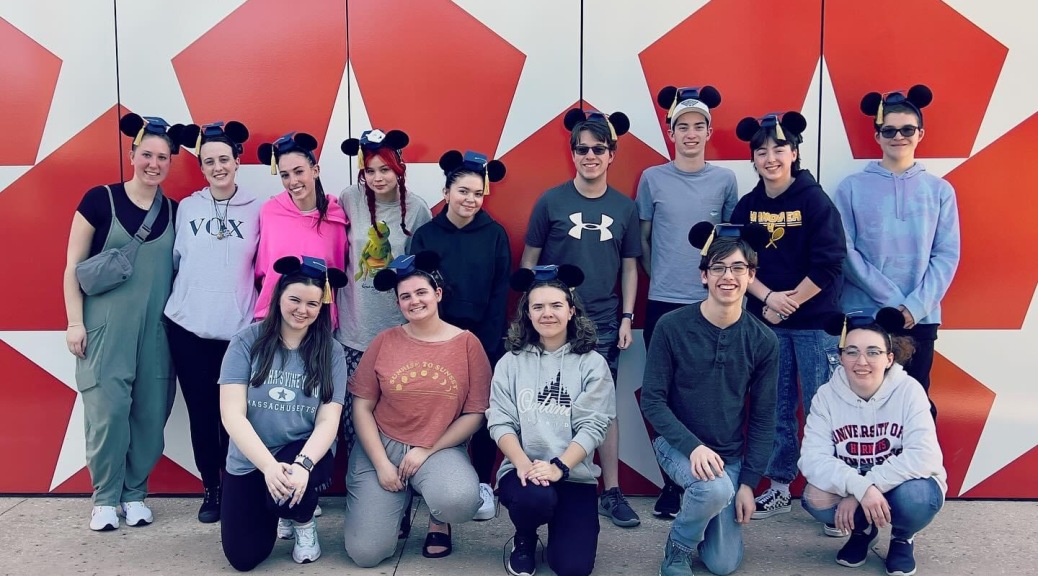
What did you do over February break? Well, the HHS band and chorus traveled to the most magical place on earth: Disney World! About 80 students fundraised for months to take part in the trip, performing live at the park, attending workshops and enjoying time together in the sun.

The castle, the lights, the air — all were magical (pun intended!). The atmosphere of Disney was beyond my expectations, since it had been 10 years since I last visited. The trip was relaxing,  very expensive (had to buy those souvenir pins and Mickey hats!), and very enjoyable. We jumped between the parks, visiting the metropolitan area of Hollywood Studios, Disney Springs and then Magic Kingdom. We spent our last day at Animal Kingdom, where I went on my favorite ride, Expedition Everest! Our workshops were led by Disney’s leading artists at its behind-the-scenes Imagination Campus, and we got to play some Disney favorites, which helped us improve our technique.

I made many memories and more friends, and learned to be on my own. I found a new love for Disney and my love of music deepened in many ways too.