
By Chloe Campbell, ’29
Guest Writer from the HHS Neuroscience Club
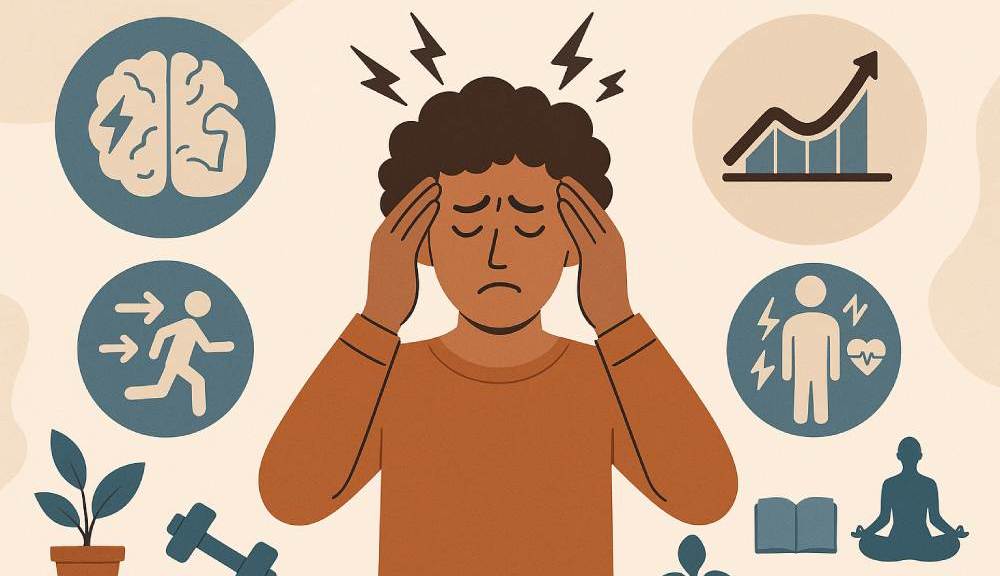
Everyone has been stressed out about something at least once in their life. Stress is a natural survival response and, in most cases, is actually healthy. Being stressed out about a test makes sure that you study for it, and being stressed out about homework makes sure that you complete it on time. However, there is a limit to how much stress can be considered healthy. The long-term effects on the brain during prolonged periods of stress can be extremely damaging to one’s mental and physical well-being.
The immediate short-term effect is the fight-or-flight response. Some examples of this response would be tensing up or running away when you see a wild fox or coyote while outside, or freezing when you get called on in class and don’t know the answer. This level of stress is healthy; it is what has kept humans alive for millions of years. In some cases, it amplifies your abilities, such as accelerated thinking and reaction time, and can even boost your immune system, making you heal faster. This is the natural and healthy level of stress to have: short, quick bursts of stress help humans survive.
However, in the modern age, stress is no longer a short burst that helps you live, but a risk that can lower your quality of life immensely. While short bursts of stress help you heal fast, prolonged chronic stress hinders your mental and physical health. An imbalance of hormones like adrenaline and cortisol can even cause severe damage to major body systems like the cardiovascular, endocrine, and digestive systems. Stress can cause irreversible mental health disorders like anxiety and post-traumatic stress disorder. Chronic prolonged stress has even been linked to diseases like dementia.
One way to prevent these terrifying side effects is to relieve stress by incorporating daily healthy hobbies into your life. Getting seven hours of sleep a night, limiting exposure to the news, getting at least three hours of exercise per week, and eating healthy whole foods are all proven ways to lower stress hormones.
Stress is needed to keep yourself healthy, but too much of it can result in even worse problems than you started out with. Maintaining a healthy lifestyle by balancing your goals and knowing when to take breaks is the key to living a long and healthy life, free of chronic stress.
The Neuroscience/Psychology Club (under the Science Club) welcomes all students who are interested in neuroscience or psychology to join. The club hosts guest speakers, discusses articles and works to raise awareness of issues through social media, articles and infographics. Meetings are every other Wednesday at 7:30 am in room 219.
featured image: https://www.centerformentalhealth.in/understanding-the-effects-of-stress-and-strategies-to-manage-it/

