By Mrs. McHugh
My house has been compared to a zoo for all the animals we’ve brought into our lives. Stop by these days and you’ll be greeted by two dogs, two cats, and an axolotl (Google it, it’s cool!). At different points in her life, my daughter has asked for a Flemish giant rabbit – which she got – and a pony, a miniature donkey and a therapy duck – which she did not get. Needless to say, we’re a family that loves animals. But one of the biggest challenges of bringing so many pets into your lives is losing them, watching them get sick, watching them grow old, having to say goodbye. We are facing that now with our 12-year-old dog Carly.
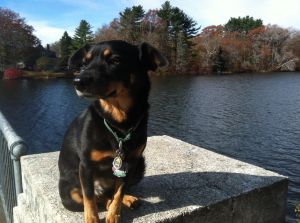 Everyone thinks their dog is the best, but Carly truly is. A terrier mix rescued from Puerto Rico, she was a year old and already a mother when we adopted her in 2010. We had been searching for a dog for months, one that would accept hugs from my daughter, then six, without biting her face off or running away to hide. We walked by Carly’s kennel in the shelter several times looking at other dogs. Finally, in frustration that other dogs weren’t the right fit, we gave her a try. She stood calmly at the kennel gate waiting for a leash, and then let us pet and play with her in the yard. We brought her home that day. Our lives were so much richer thanks to that decision.
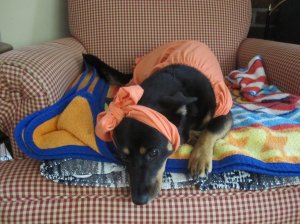 A lapdog from day one, Carly spoiled us as pet owners. Never a barker, chewer or jumper – unless a squirrel was in sight -Carly loved every dog and person she met. She wasn’t super playful and definitely didn’t care to play fetch, preferring
  more to observe from the sidelines or cuddle up to the humans. But she let my daughter dress her, carry her, and hug her for years. She put up with the cats and was kind to the rabbit. She never needed training (which made our adoption a year ago of a 16-week-old puppy a huge shock). Even when she begged for people food, she’d do it politely and calmly. How could you resist those big brown eyes?
We loved her so much, made her such a part of our lives, that my family worked for several years to get a dog park built in my town. After three years of fund-raising, rallying the community and finding grants, the Abington Dog Park opened in August 2019. Of course, imagine our surprise when Carly decided a dog park wasn’t her thing. She was 10 years old at that point, so we couldn’t really blame her. She was tolerant beyond any reasonable expectation when we brought that puppy, Natasha, home in November 2019 – when she would have been within her rights to be mad at us for bringing this loud, unruly creature into her life. But she took it in stride, as she took everything in stride.
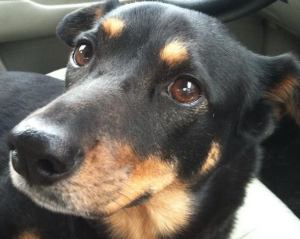 In December, after noticing that she was lethargic for a couple of days, we took her to the vet, who diagnosed her with cancer of the spleen. She needed emergency surgery and weeks of recovery. It was heartbreaking to see her so sick, and I’m grateful we could afford her care. Finally, she returned to her usual self – bouncing along on walks, taking up half the bed, waiting patiently for a pizza crust or a French fry. She even ran and played with the younger dogs. The vet recommended chemotherapy, and she was tolerating it well. Until earlier this week, when we noticed her wincing as she jumped off the couch or into the car. We took her to the vet, thinking she’d need some pain medicine for arthritis, but they found that cancer had spread to her liver. We started palliative care, which means medication to keep her comfortable, and will probably only have another month or so with her.
We’ve lost small animals before – cats and the rabbit – and that’s been hard, but losing Carly feels so much worse. We brought her home for my daughter’s 6th birthday. This April will be 11 years since that day. She’s grown up with my girl, who’s now a junior in high school and thinking about college. She’s carved a huge spot in our family and in our hearts. We’ve cried, of course. We’ve reassured ourselves that we gave her a great life, and will continue to do so until her final day. When she’s in pain, and no longer able to enjoy life, we’ll do what needs to be done. I don’t think I’ll be able to express myself then.
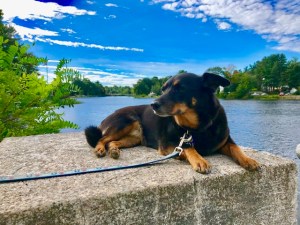 Pets bring so much joy to our lives – companionship, unconditional love, exercise, security, even therapy. The downside of the package is that, someday, we have to lose them. It breaks our hearts. But I know many of us wouldn’t give up a moment we’ve had with them, despite the inevitable outcome.
Carly has enriched my life and made me a more loving person. Because of her, I became a community activist and “dog park lady.” I found space in my heart that I didn’t know was there. The organization that rescued Carly from Puerto Rico and sent her to the Northeast Animal Shelter, where we found her, is called Save a Sato. But this “sato,” or street dog, really saved me.
Update: Carly passed away on March 3, 2021




 Sadie by Courtney Summers is a thriller about a teenaged girl who seeks revenge on the man that killed her little sister. As you learn about her quest, told from her point of view and that of a journalist investigating the case for a podcast, you see the dark impact of poverty, drug use and child abuse. It’s a mystery that highlights the dire circumstances many Americans are mired in. If you read this, let me know what you think of the ending. I hear the audiobook is pretty cool too.
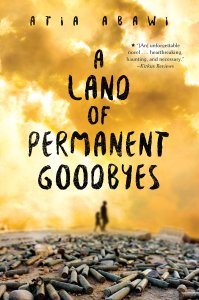 A Land of Permanent Goodbyes by Atia Abawi is a fictional story about a teenaged boy fleeing Syria after years of civil war. Written by a journalist, herself a refugee from Afghanistan as a child, the story makes real the news stories we may read – or pass by – about the thousands of people displaced by violence. These refugees lose their homes, possessions and loved ones only to trek to other places that may not let them in. If a country does accept them, they still struggle to find jobs, homes, and their place in a foreign land. This story is partially told by Destiny, similar to how The Book Thief by Marcus Zusak is narrated by Death. It’s an interesting way to make one boy’s experience more universal.
 Clap When You Land by Elizabeth Acevedo is the latest novel from the highly popular author who wrote The Poet X and With the Fire on High. She focuses on the experiences of Dominican teens in the U.S., often torn between the traditions and expectations of two very different cultures. They also face stereotypes and obstacles that come with being immigrants and people of color. Even if a reader can’t find the Dominican Republic on a map, they can still relate to teens who feel pressured to do well in school, fulfill their parents’ expectations and struggle with relationships.
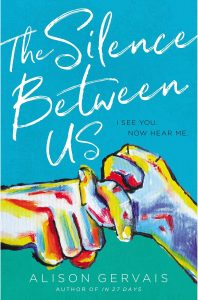 The Silence Between Us by Alison Gervais is about a deaf teen who transitions back to a traditional school when her mom’s job moves them across the country. A senior with big dreams of college, Maya struggles to fit in with her hearing peers who don’t understand that while she’s limited, she’s also very capable. This novel gives a glimpse into deaf culture, a community that relies on its own rich language (American Sign Language) and believes being deaf has qualities and benefits worth celebrating – and certainly not just fixing. It’s an enlightening perspective for many of us unfamiliar with the experiences of the hearing impaired.
 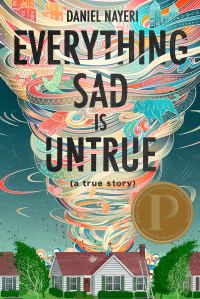 Everything Sad is Untrue (A True Story) by Daniel Nayeri is a quirky and wonderful book that I hope finds its audience. Based on the author’s life, the novel follows Khosrou and his family as they flee religious intolerance in Iran and end up in Oklahoma. The boy, highly influenced by the Arabian Nights and other stories from his homeland, spins tales for his new classmates about who he feels he is (smart, worldly, brave) versus what he seems to be (poor, smelly, weird). As a narrator, Khosrou is informal and irreverent, flipping between the present and past, with frequent tangents that have you feeling like you’re sitting beside him in conversation. Through his stories, you get a sense of his rich, complicated life in Iran, the strangeness of becoming a refugee, and the resilience needed to live through both.
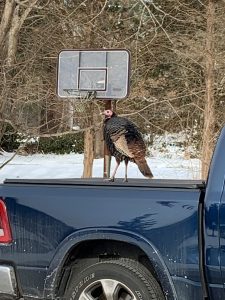 I have seen Stan many times because he is normally right in front of my house, or on top of my dad’s pickup truck. He even has been seen on the power lines like a tightrope walker.
 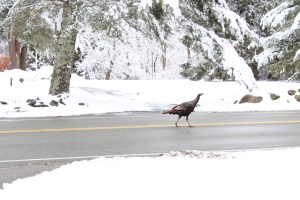 Many in Hanover have grown to love seeing Stan when they are driving home from school or work. At first, he was a pain to everyone, standing in the middle of the road annoying drivers who just wanted to get where they needed to be. But now whenever he is seen, at least for me and my family, we smile. He brings a little humor into some long COVID-19 days.
 The Hawk