
By Michael Greene, ’22
Staff Cartoonist
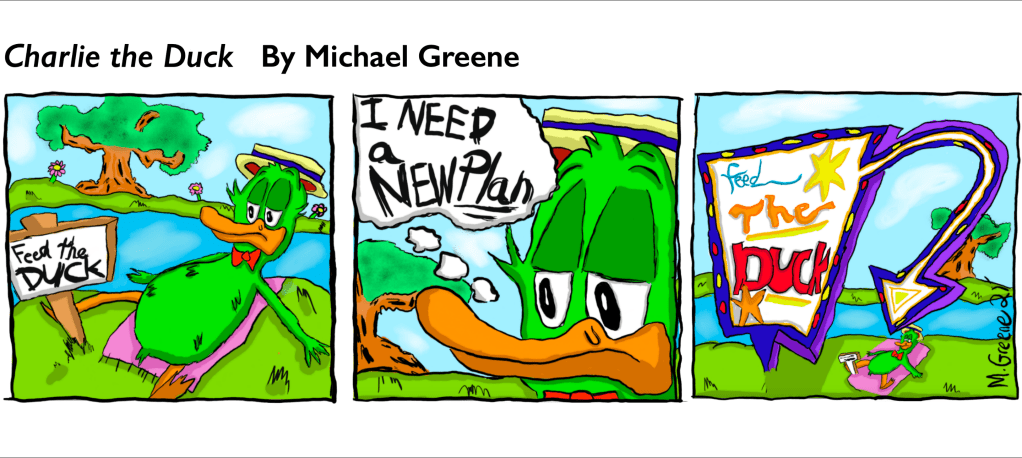
Right-click on the image to open it full-size in a new tab

By Michael Greene, ’22
Staff Cartoonist
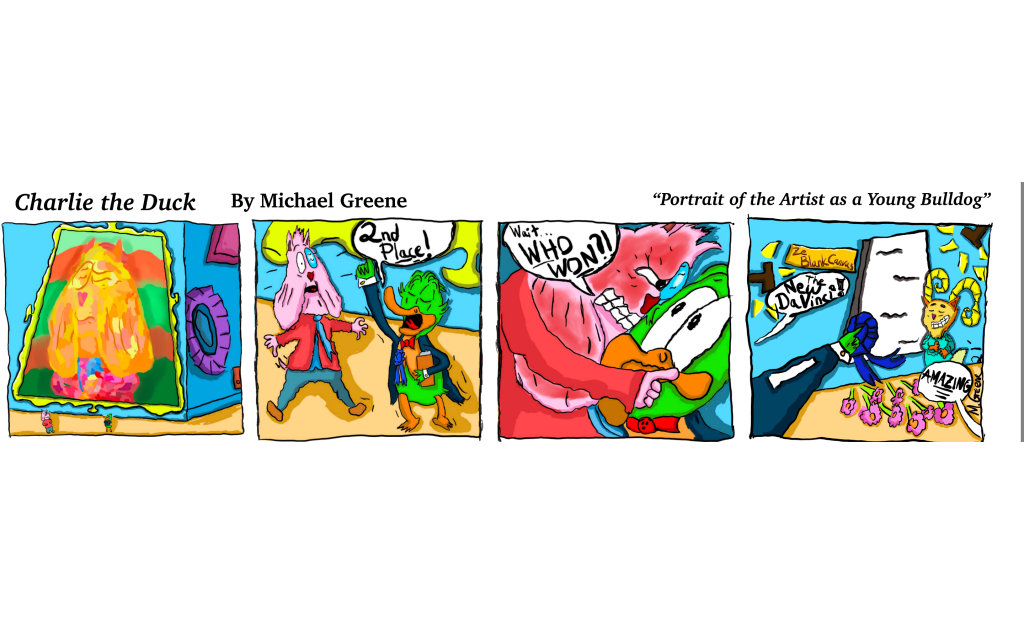
Right-click on the image to open it full-size in a new tab
By Jake Faghan, ’23
Staff Writer
“Drum majors . . . is the band ready?”
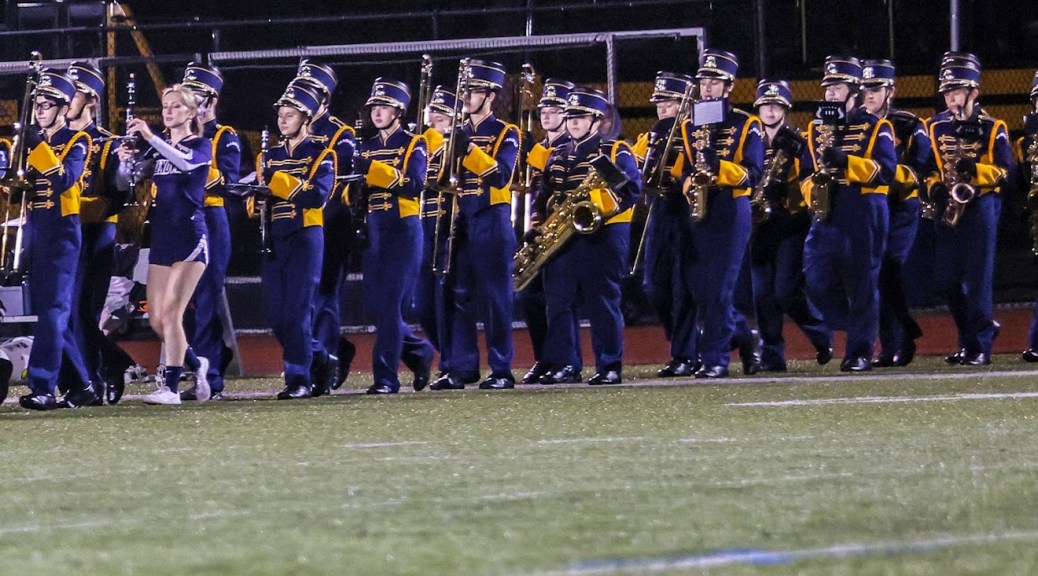
It’s often said that absence makes the heart grow fonder. And as members of the Hanover High School band felt the crisp air of a recent Friday night while standing silently in formidable formation on the field, those words rang true. There’s magic in band, and what makes it truly magical is how the HHS band has pulled through the challenge that has been COVID-19. With pride, we stand. With strength, we return.
“Please welcome back to the field, the Pride of Hanover!”
With Thanksgiving break wrapping up Autumn 2021, the marching band will finish its season with one final performance at the Hanover-Norwell football game on Thanksgiving Day. But before the band leaves in the early morning to perform that day, members will likely reflect on the hours and hours of sacrifice and strife that have led to the day’s opening notes. It all started back in March 2020, which may be scary to realize was around a year and some change ago: the era of no band.

Well, no tangible band. Band continued through remote school in spring 2020 as most of my classes did, with students turning in assignments and becoming dangerously independent. While it wasn’t the best, it was something that should be respected given the quick thinking. Our assignments from Mr. Harden focused on practicing sight-reading or even fun games like plotting a field show. However, we weren’t together, it wasn’t the same. So by the end of that year, my first of high school, I was able to see what band was like, but not get the full experience.
Coming into sophomore year, things were different, and that became clear very quickly. No band camp, and just half of the band together during outdoor classes, was a lukewarm welcome into the year, but something we took with a smile. When it got colder, our cohort moved inside to the auditorium, where there was just enough room for us with ten feet spacing. While we were spread out, we played together but we were distant. We recorded separate parts to come to a whole, played over video for virtual audiences, but we were never whole in the first place. Band 2021 was a more normal year, we had our groups, but still were stranded.
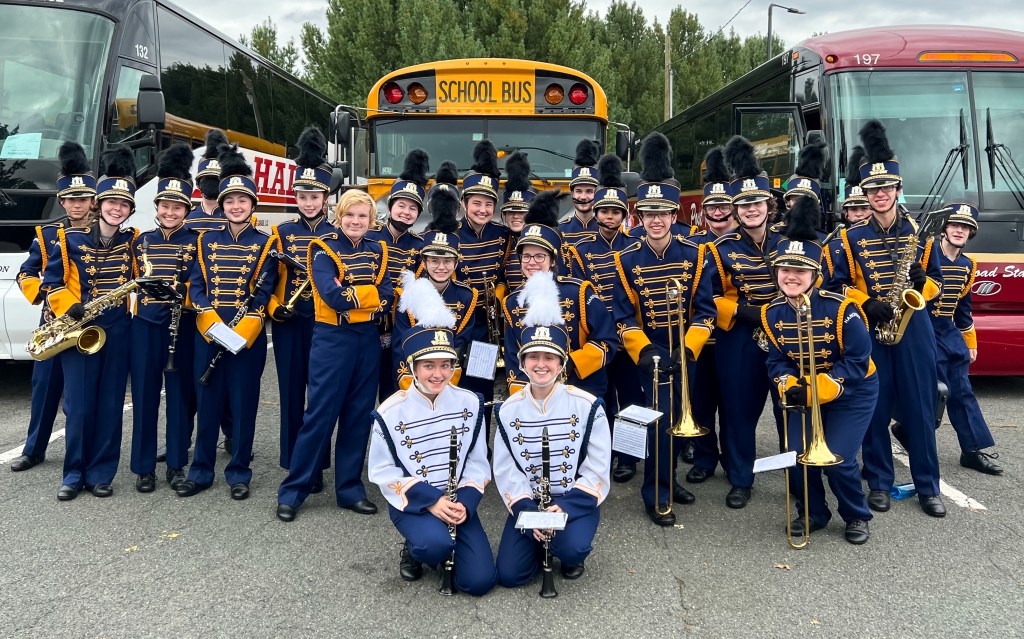
Until the calendar announced the start of the current school year, that is. This year has brought so many good opportunities. This year we were able to practice during band camp, and it was perfect. We were able to play in the band room again, together. It took what felt like ages, but we were able to perform for a crowd again with the return of Friday night football, a trip to Band Day at UMass Amherst in October, and a cabaret showcase in the HHS caf.
Our field show this year has a theme of love to it, and also a message to love life before it flies by. I believe that our show illustrates through music how we as a society can finally come together again.
That also shows through our formations for the opening song Can’t Help
Falling in Love. At the start, everyone is scattered, much like the beginning of COVID life. Then as we play, we march into sections of our instruments, similar to how we were last year, together but not whole. We found a group, but not a united family. Then moments later, the small groups unite and march together with pride. Not only is it cool and a powerful moment of the show, it also has its symbolism. Now that we march together, we do so striding forward with strength. We as a band made it through a long period of confusion, and now as we prepare for the Thanksgiving game, there is a lesson I have learned: Pride is a feeling, and it’s a magic.
To view a recording of the Cabaret showcase from October 21, which features the HHS band and a variety of student talent, click here.
By Mrs. McHugh
HHS Librarian/Advisor of The Hawk
Brynn and Mia are 13-years-old when they’re accused of killing their best friend, Summer. The brutal ritualized murder was inspired by a fantasy story the trio was obsessed with, according to police. When lack of evidence and shoddy police work allow the girls to go free, they are outcasts in their town, considered by neighbors to be evil incarnate.
Except, they claim, they didn’t do it. And five years later, they’re determined to clear their names and find the real killer.
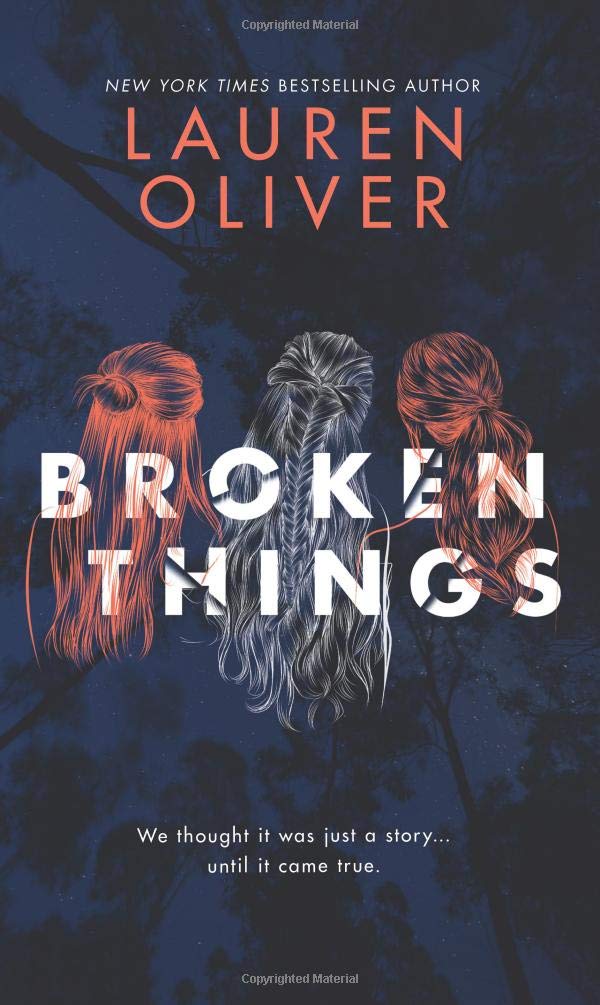
This is the plot of Broken Things by Lauren Oliver, a mystery/thriller that will keep you glued to the page. As the story alternates between then and now, you learn more about the victim Summer, whose years bouncing around foster homes left her troubled and turbulent. You get to know Mia and Brynn and why they were drawn to the exciting, but often toxic, friendship. You dive into the fantasy story the girls tried to recreate, both in their afterschool adventures and fan fiction they wrote together. You meet ex-boyfriends, bus drivers and other characters and wonder what role they played – if not in the murder then in the drama surrounding Summer’s final months.
The book leaves you guessing until the heartbreaking reveal. It is then that you realize that the book is not just a mystery, but a tragedy.
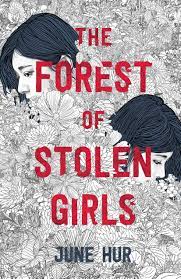
Not just one murder, but thirteen are at the heart of The Forest of Stolen Girls by June Hur. Hwani and Maewol are children when they get lost in the woods and are found, unconscious, next to the body of a dead young woman. The girls are impacted in vastly different ways and the family is torn apart. Years later, after 13 other girls are missing and presumed dead, Hwani’s detective father tries to investigate. Instead, he disappears as well. Defying the norms of a culture that require young ladies to stay hidden at home while they await marriage (it’s Korea, in the 1400s), Hwani sets out to find her father and solve the mystery of the missing girls.
While I enjoy historical fiction, I normally read books set in more recent history. I’m not usually drawn to stories of maidens and emperors. Yet the conflict at this book is timeless – girls fighting the expectations of an oppressive society – and the mystery is engaging. Whenever I thought I figured out the story, a new twist would arise.
For more mysteries, check out the Genre Lists at hhsmchugh.weebly.com
By Norah Kelley, ’24
Staff Writer
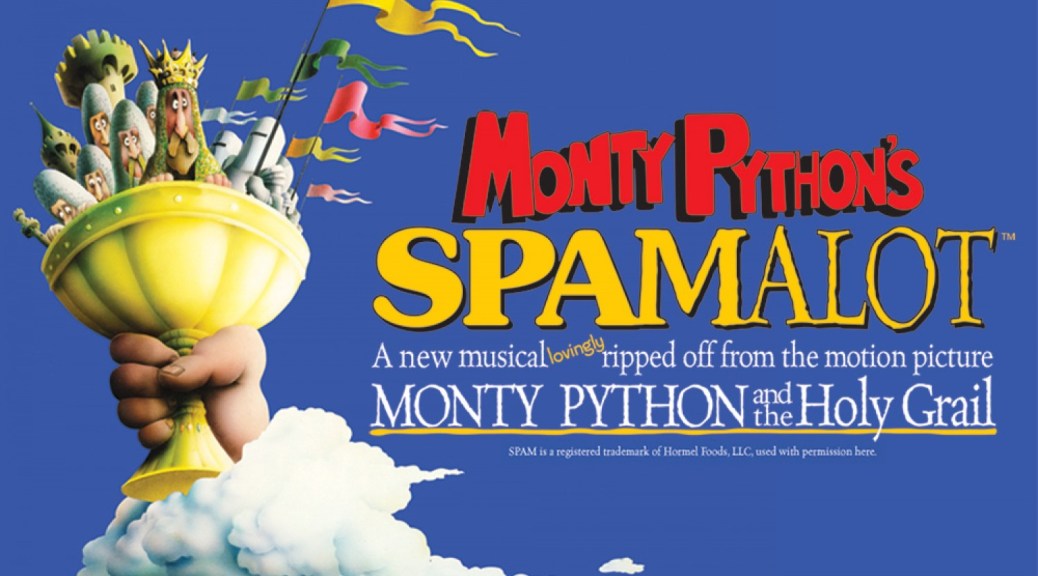
The HHS Drama Department is excited to announce that this year’s main stage musical will be Spamalot, The Musical! Spamalot is a comedic show based on the 1975 movie Monty Python and The Holy Grail, which was adapted for Broadway in 2005. This show twists the legend of Camelot and King Arthur’s journey to find the Holy Grail, a mythical cup said to grant eternal life. Arthur looks for knights who can join him on his quest, and along the way, finds groups of hysterical characters. HHS drama and music teachers – Mr. Fahey, Mr. Wade, and Mr. Harden – are looking for talented vocalists, actors, dancers, and crew members to help make this show a success!
“We chose to do Spamalot this year for a few different reasons,” Mr. Fahey said. “Spamalot has a decent size cast with flexible casting opportunities, great opportunities for technical elements, and many hilarious characters which the audience may, or may not be, familiar with. We love Monty Python and we’re very excited to bring this wacky, fun show to life this year! “
Auditions for Spamalot, The Musical will be held November 16 from 3:30-6 pm in the HHS auditorium. Callbacks will be November 17, 3:30-6 pm. Rehearsals will be Tuesdays, Wednesdays, and Thursdays from 6-8 pm and will increase as the performance date nears. Mr. Fahey expects the show will be staged in February.
For any questions or for more information, please reach out to Mr. Faherty, Mr. Wade, or Mr. Harden.
By Mrs. McHugh
HHS Librarian/Advisor of The Hawk
When you go to the library or a local bookstore, can you find books where you see a reflection of yourself? Are there books that feature characters who look and sound like you, who live where you do, whose experiences are similar to what you’ve gone through?
These books are often called “mirrors,” important to help people feel valued, understood and represented in their communities. Every library strives to include “mirrors” for diverse populations – based not just on race and ethnicity but also religion, sexual identity, learning differences, disabilities, economic factors, health issues and more. For people outside of these populations, these “mirrors” become “windows,” allowing a look into someone else’s world. While mirrors validate ourselves, windows help us build empathy and tolerance for others.
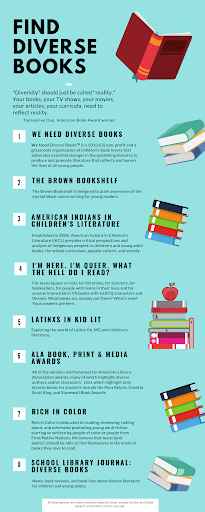
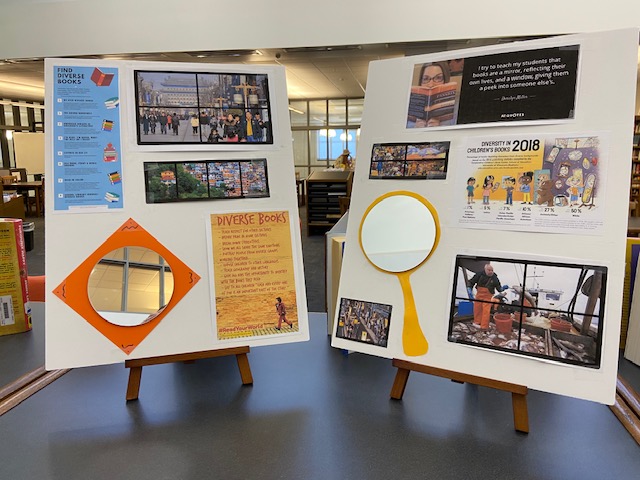
The HHS Library has a display of “window and mirror” books for Inclusive Schools Week, and has focused on adding more diverse perspectives in recent years to reflect national conversations about race, equal rights and tolerance. The publishing industry, though, still has a long way to go before it truly represents the makeup of our country. According to the Cooperative Children’s Book Center, which tracks new books each year, half of all children’s books published still feature white characters. In 2018, animals, trucks and other inanimate objects were featured more often than four other ethnicities combined. Those figures focus on race, but experts say the issues are the same with books about LGBTQ and other perspectives. As depicted in the infographic, this results in large mirrors for some populations and a sliver of representation for others.

Organizations like We Need Diverse Books are working to change the publishing industry, as are young influencers using social media such as BookTok to post reviews. You can help by stepping out of your comfort zone and trying new genres or topics, and then spreading the word about books you like. Stop by the library and check out the latest display, or explore some of the resources for diverse books in this article. When we find “mirrors” in books, we feel more connected and understood. With more “windows” into others’ lives, we can become more compassionate and accepting. And as Inclusive Schools Week reminds us, we are stronger when we celebrate our differences and come together as a community.
By Michael Greene, ’22
Staff Cartoonist
By Norah Kelley, ’24
Staff Writer
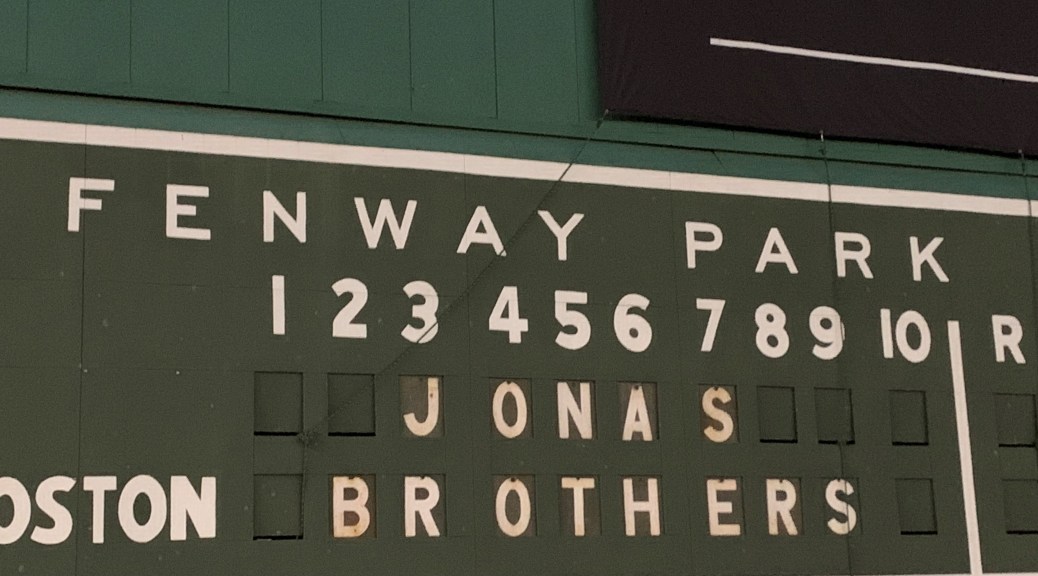
Three brothers. Fenway Park. A sold-out show.
It was a dream come true for me and a stadium filled with screaming fans who were excited to see the Jonas Brothers perform on October 1 as part of the Remember This Tour. Country singer-songwriter Kelsea Ballerini opened before Kevin, Joe and Nick took the stage.
The Remember This Tour went across the country, performing in 42 locations throughout the United States. It was a completely sold-out show, but since the venues for all 42 locations on the tour were outside, the Jonas Brothers tried to keep their fans safe from COVID-19.
I was unable to watch the entire opening act, but from the last few songs that I heard, Kelsea Ballerini sounded great. She’s famous for Half of My Hometown, with Kenny Chesney, and I Quit Drinking.
Soon after Kelsea Ballerini was finished performing, the Jonas Brothers came on and started the show! I’ve listened to all of their songs and was excited to be able to see them in concert, especially after the crazy year everyone went through.
The Jonas Brothers performed new songs that came out recently, along with some of the songs they wrote when they first became a band in 2005. The show included Remember This (their newest song), What A Man Gotta Do, Burnin’ Up, and Year 3000. Jealous and Cake By The Ocean, songs from their solo careers, were performed as well. Also, since they were in Boston, they played Sweet Caroline as a special treat just for the fans.
For me, the show was amazing and I can’t wait to go back to another one. Seeing the Jonas Brothers live in concert was so fun, and I am so glad that I had the chance to go. Now, it’s time to wait for new music to be released. Fingers crossed!
By Michael Greene, ’22
Staff Cartoonist
By Cole Gannon, ’22
Contributor
The first in an occassional series about chess strategy, written by members of the HHS Chess Club
When facing a good chess player, there is one move that will protect your king from checkmate for at least the better half of a match, if done correctly.
Your first move needs to be to move the pawn in front of your king one space forward. Then, move the bishop on your kingside in front of your king.
After that, move your kingside knight to the front of your line of pawns. Now, is when you can do something called castling. In one move you can move your king next to your rook and then flip your rook on to the other side of your king.
This will protect your king from immediate checkmate and give you time to defend.
If you are intrigued, like playing chess, or just like competition then join the Chess Club. Anyone is welcome and no experience is necessary. Meetings are Thursdays before school in room 225 at 7:15.
Questions? Ask Dylan Rice, Cole Gannon or Mrs. McCusker.
By Mrs. McHugh
HHS Librarian/Advisor of The Hawk
Who gets to decide what you’re allowed to read?
That’s the question the American Library Association asks each year during Banned Books Week. A national group of school, public and university librarians, the ALA started the program in 1982 as more and more books were being challenged by parents, religious leaders, or politicians who believe those titles should be removed from the school or public library. The challengers argue that readers, especially students, should not have access to this “dangerous” material.
What are these “dangerous” books? Why are they being challenged? According to the Banned Books Week website, the book George by Alex Gino was the most frequently challenged book in 2020. The story of a transgender student seeking acceptance in school, George comes under fire for its LGBTQIA+ content and because, critics say, it conflicts with religious or community values. In fact, books about LGBTQIA+ issues have long been among the most challenged. The picture book And Tango Makes Three by Justin Richardson, about two male penguins who adopt a chick, was among eight books on the 2019 top ten list cited for homosexual content.
In 2020, the ALA noted, challenges shifted toward many books dealing with racism and police violence. Among the 10 most challenged were Stamped: Racism, Antiracism, and You by Ibram X. Kendi and Jason Reynolds, All American Boys by Jason Reynolds and Brendan Kiely, and The Hate You Give by Angie Thomas. The books were criticized as being biased, political and anti-police.
Other arguments that critics have used to launch challenges are that the books promote witchcraft (the Harry Potter series by JK Rowling), disruptive behavior (Captain Underpants by Dav Pilkey), profanity (The Handmaid’s Tale by Margaret Atwood) or sexual activity (Looking for Alaska by John Green). Books that deal with rape, sexual abuse, alcoholism, drug use, suicide or other serious issues are often called too mature for students.
Librarians, book sellers, publishers and readers fight these challenges, sometimes in the courts. But the fear is that frequent challenges will result in self-censorship, making authors think twice before tackling sensitive topics, or librarians and teachers wary of including controversial books on their shelves.
Many of the books mentioned in this article can be found in the HHS library which, like all libraries, sets selection policies for choosing books. There are many factors considered when adding books to the library, including the age and social/emotional development of students, the needs of the curriculum, and the quality of the book. But isn’t choosing just some books for a library a kind of censorship? Librarians say the difference is that their focus is on including the varied interests and viewpoints of their communities, rather than excluding topics that are controversial or sensitive.
Some books that have been challenged end up being accepted as problematic, requiring honest discussion and reflection before being used in a classroom. To Kill a Mockingbird by Harper Lee, for example, uses racial slurs that, while appropriate for the setting of the book, can be upsetting to readers. It also has been criticized for promoting the idea of a “white savior,” where the white characters are the heroes who rescue the African Americans who are incapable of saving themselves. Educators in recent years have begun asking what other books might better address the issues of racism and discrimination. Is this the same as banning a book? Or is it an evolution of our cultural norms?
Who gets to decide what is appropriate? That’s the question at the heart of Banned Books Week. If a book upsets you, should you have the power to keep others from reading it? If you find it offensive, can you demand it be removed from the library or classroom? The American Library Association says no. By commemorating Banned Books Week, which was held this year from Sept. 26-Oct. 2, the group argues that students and adults alike should be free to read whatever interests them — no matter how dangerous somebody else thinks it is.
For more information:
https://www.ala.org/advocacy/bbooks/frequentlychallengedbooks/top10



 The Hawk