Category Archives: Entertainment

New Library Books Offer Great Stories, Diverse Perspectives

Mrs. McHugh

I’d need at least a million dollars to buy all of the books I’d like for the library. Each month, I read reviews of the latest releases, and I add to my ever-growing wishlist the titles that I think students might enjoy – or might benefit from. But even though the Hanover High library is thankfully well-funded, there’s never enough money for all of them. When I buy new books, I have to prioritize, and I’m usually drawn toward ones that are not just good stories or sources of information, but also shine a light on diverse perspectives. In recent years, I’ve purchased a lot of titles about African Americans, the LGBTQ community, immigrants and refugees. Reading can be an escape from real life, but it also can be a great way to learn about new people, places and things you haven’t experienced  If I find a book that broadens a reader’s world, while also keeping them engaged, I consider my mission accomplished. These five very different titles fit the bill.

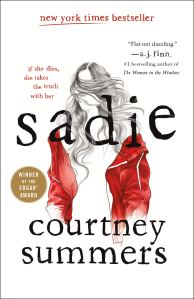
Sadie by Courtney Summers is a thriller about a teenaged girl who seeks revenge on the man that killed her little sister. As you learn about her quest, told from her point of view and that of a journalist investigating the case for a podcast, you see the dark impact of poverty, drug use and child abuse. It’s a mystery that highlights the dire circumstances many Americans are mired in. If you read this, let me know what you think of the ending. I hear the audiobook is pretty cool too.

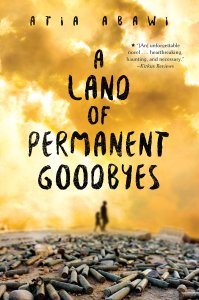
A Land of Permanent Goodbyes by Atia Abawi is a fictional story about a teenaged boy fleeing Syria after years of civil war. Written by a journalist, herself a refugee from Afghanistan as a child, the story makes real the news stories we may read – or pass by – about the thousands of people displaced by violence.  These refugees lose their homes, possessions and loved ones only to trek to other places that may not let them in. If a country does accept them, they still struggle to find jobs, homes, and their place in a foreign land. This story is partially told by Destiny, similar to how The Book Thief by Marcus Zusak is narrated by Death. It’s an interesting way to make one boy’s experience more universal.

Clap When You Land by Elizabeth Acevedo is the latest novel from the highly popular author who wrote The Poet X and With the Fire on High. She focuses on the experiences of Dominican teens in the U.S., often torn between the traditions and expectations of two very different cultures. They also face stereotypes and obstacles that come with being immigrants and people of color. Even if a reader can’t find the Dominican Republic on a map, they can still relate to teens who feel pressured to do well in school, fulfill their parents’ expectations and struggle with relationships.

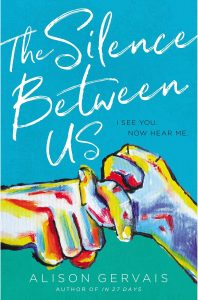
The Silence Between Us by Alison Gervais is about a deaf teen who transitions back to a traditional school when her mom’s job moves them across the country. A senior with big dreams of college, Maya struggles to fit in with her hearing peers who don’t understand that while she’s limited, she’s also very capable. This novel gives a glimpse into deaf culture, a community that relies on its own rich language (American Sign Language) and believes being deaf has qualities and benefits worth celebrating – and certainly not just fixing. It’s an enlightening perspective for many of us unfamiliar with the experiences of the hearing impaired. 

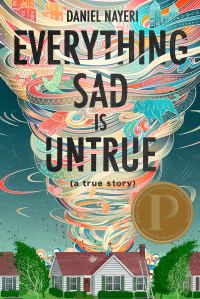
Everything Sad is Untrue (A True Story) by Daniel Nayeri is a quirky and wonderful book that I hope finds its audience. Based on the author’s life, the novel follows Khosrou and his family as they flee religious intolerance in Iran and end up in Oklahoma. The boy, highly influenced by the Arabian Nights and other stories from his homeland, spins tales for his new classmates about who he feels he is (smart, worldly, brave) versus what he seems to be (poor, smelly, weird). As a narrator, Khosrou is informal and irreverent, flipping between the present and past, with frequent tangents that have you feeling like you’re sitting beside him in conversation. Through his stories, you get a sense of his rich, complicated life in Iran, the strangeness of becoming a refugee, and the resilience needed to live through both.

The Comfort of the 2000s Teen Drama

By Callia Gilligan, ’22

Staff Writer

Anyone who knows me is well aware that my most recent television endeavor was watching the six seasons of Dawson’s Creek in all its teen drama glory. And I would not shut up about it.

Dawson’s Creek is all about – you guessed it – Dawson Leery and his friends from his tiny hometown of Capeside, Massachusetts. There’s Pacey, the sarcastic and self-proclaimed loser, Jen, the derelict daughter who was shipped off to Capeside from New York City; and Josephine, who everyone calls Joey,  whose dad is a convict and whose mom has passed away. Joey is also Dawson’s childhood best friend. The show follows them as they navigate their trivial teen problems and spend the majority of each episode talking about all the ways they’ll solve them. 

Dawson’s Creek is not the best show that I have ever seen. It isn’t even really a good show. It focuses too much on an obscure idea of soulmates when the characters are 15 years old, rather than real teen issues or the actually interesting friendships the writers have established between the teens. The characters were far too self-aware to the point where none of them were realistic. Additionally, they talked so pretentiously that asking the audience to believe that they were teenagers, let alone real people, was almost too much. 

And I noted this, several times throughout my binge-watch. But, I just couldn’t stop watching. 

In a world that is so unfamiliar right now, many of us have been using TV as a method of escape. For me, those television shows have been almost exclusively from the early 2000s. 

During quarantine, I re-watched Gilmore Girls. And then I cycled through it a total of four times. When everything was uncertain, revisiting the wacky characters of Stars Hollow as they help young mom Lorelai raise her daughter Rory was far more comforting than anything going on in the news. 

But Gilmore Girls has its own issues. By the time you reach the seventh season, Rory is unrecognizable from the sweet, book-loving, 16-year-old that we met at the beginning. Emily and Richard, Lorelai’s parents, are as stuck up as they were in season one, Lorelai has become selfish, and the townspeople’s stalker tendencies are no longer endearing. That leaves Paris, of all people – comically selfish and abrasive – as the only redeemable character. 

Yet Gilmore Girls is addicting, the same way that Dawson’s Creek was. The simplicity and “nothing really happens” style of the show is what I craved. 

Shows like One Tree Hill, The OC, 90210 and of course, Gilmore Girls and Dawson’s Creek, are some of the most famous teen dramas, and they did really well when they initially aired, continuing for six or more seasons And they do especially well on streaming services nowadays.

There could be many reasons why this is the case. Some viewers might be revisiting them out of nostalgia for the late 90s and early 2000s. But I was born in 2004, there is no nostalgia there. 

For me, what is so enjoyable about a good 2000s teen drama is its simplicity. The stakes are arguably very low in these shows but there’s enough drama to keep it interesting and engaging. One of my favorite Dawson’s Creek episodes is in season two. Dawson reads Joey’s diary and finds out that she didn’t like being a part of a movie that he was making. And then they get into an argument about how Joey wasn’t honest and Dawson invaded her privacy. That’s it. That’s the whole episode. 

In my opinion, 2000s teen dramas are the ultimate escape. If the news is too stressful or I have a lot on my plate at school, spending forty minutes watching nothing monumental really happen on the television immediately puts me in a better headspace. It’s a source of reliability when everything else isn’t. 

So, no matter how bad Gilmore Girls got towards the end, it will never not be my comfort show. 

Featured image: https://www.theguardian.com/lifeandstyle/2016/dec/10/why-i-love-dawsons-creek-tv-bim-adewunmi

Super Bowl Halftime Show Gets Mixed Reviews

By Grace Van Duyn, ’22

Staff Writer

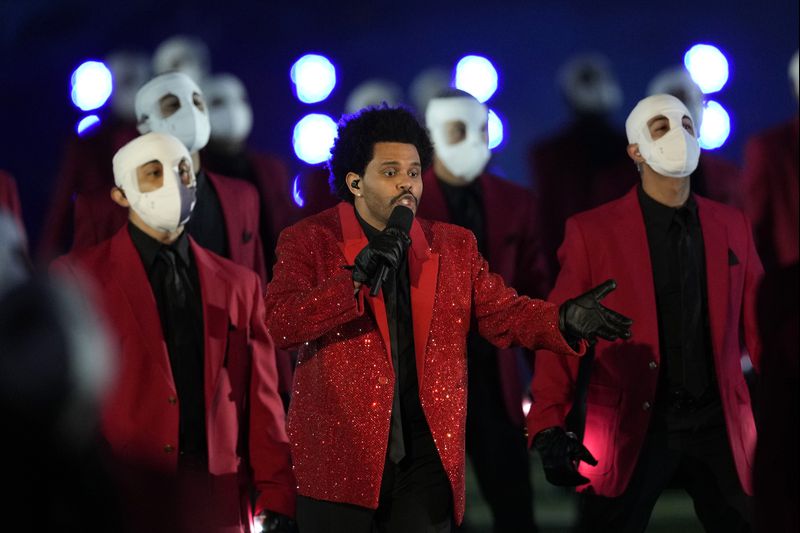
Many people watch the Super Bowl just to see the halftime show, which has over the years featured memorable, if not always enjoyable, over-the-top performances. But while many appreciated and understood Super Bowl LV’s performance by the Weeknd, many people were confused by its bizarre costumes and maze-like set. The Weeknd told Variety, “ the significance of the (dancers wearing) entire head bandages is reflecting on the absurd culture of Hollywood celebrities and people manipulating themselves for superficial reasons to please and be validated.” Super Bowl executive producer Jesse Collins explained how he and the Weeknd planned the show by saying, “instead of focusing on what we can’t do (due to the pandemic), it’s like, look at what the opportunities are because of the cards we’ve been dealt.” This same optimism is what saved the Weeknd from his difficult upbringings. 

The Weeknd, born Abel Makkonen Tesfaye in Toronto, Canada, lived in an apartment with two friends after he moved out of the house he grew up in. They shoplifted food and sold drugs in order to make enough money to survive. The Weeknd began his music career with the hope of making a small amount of money, and he has now gone on to sell award-winning albums and headline the Super Bowl. 

Even if this explanation still leaves you confused or unimpressed about his performance, we can all agree that we have been laughing at the memes and jokes about his performance. Some of the most popular memes about the Super Bowl are about the scene where the Weeknd is in the room with the mirrored walls. 

Here is what HHS students had to say about the show: 

“The halftime show was cool, but not as energetic as it should be for the Super Bowl.” – Anonymous   

“I thought it was cool and I liked the songs.” – Abby Van Duyn

“I thought the halftime show was very dizzy. I felt dizzy after watching it and thought the quality could have been better. I like the Weeknd’s music, but the halftime show was not nearly as good as I was expecting it to be -Anonymous 

“I thought it was boring.” – Maeve Sullivan

“I thought the Super Bowl halftime show was a little weird. I thought the way the dancers were dressed was kind of scary and I didn’t really understand why they were dressed like that. I also thought that the Weeknd could have sung a little bit better, I felt like he was a little off tune at times. Lastly I feel that he should have picked a few more better songs.” – Anonymous 

“I got bored and went to make myself a snack while it was on.”- Morgan Taylor 

“ I thought the concept was cool, but I didn’t really enjoy the music or the costumes they wore.” -Anonymous 

“I didn’t like the halftime show, I felt like it was a dud and there wasn’t much interaction with the audience as others did in the past. I think people like Lady Gaga and Bruno Mars were a lot better. The Weeknd just stood there.” – Abby Smith 

“I thought it was overall good! It was a little boring and I was expecting more because it is supposed to be the biggest show of the year.”- Anonymous 

“I thought it was cool and I liked the music.” – Shannon Taylor  

Featured image: https://www.chicagotribune.com/entertainment/music/sc-ent-super-bowl-halftime-review-0207-20210208-ie2smv3xwbg45l6vqxc4zrhlp4-story.html

Powerful Book Explores Racism in Quest for Better World

By Mrs. McHugh

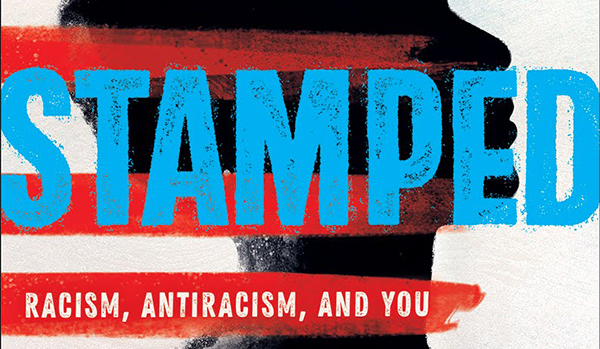
“This is not a history book. At least, not like the ones you’re used to reading in school. The ones that feel more like a list of dates (there will be some), a declaration (definitely gotta mention that), a constitution (that too), a court case or two, and, of course, the paragraph that’s read during Black History Month (Harriet! Rosa! Martin!) . . . Instead, what this is, is a book that contains history. A history directly connected to our lives as we live them right this minute. This is a present book. A book about the here and  now.”

This declaration by author Jason Reynolds, in chapter one of Stamped: Racism, Antiracism, and You, reveals quite clearly that readers will get something unexpected. Few books promise to give you a definitive history of racism, and even if they tried, you’d probably require a dictionary, thesaurus and PhD to understand it. Not so with this book. It’s a young adult version of the 2016 book Stamped from the Beginning by Ibram X. Kendi, author, activist and founding director of the Boston University Center for Antiracist Research. Kendi asked Reynolds, a fiction writer whose books include All American Boys and Long Way Down, to translate his ideas for today’s teens.

The book starts in 1415, with a chapter titled “The Story of the World’s First Racist.” Going back this far is a good reminder that Black history did not begin with slavery or the Civil Rights Movement. Black history has roots in the ancient empires of Africa including the Mali, Songhai and Great Zimbabwe. The other point this chapter drives home is that racism is deep-seated, and it’s often influenced by profit as much as hate. Racism isn’t just the thoughts or actions of an evil person, but policies that impact trade, government,  and social norms. Systemic racism is not new, and its impact on how the world has been shaped cannot be overstated. “The construct of race has always been used to gain and keep power, whether financially or politically,” Reynolds writes. “… it’s woven into people as much as it’s woven into policy that people adhere to and believe is truth.”

The book continues through history, shedding some new light on the causes of the American Revolution (Great Britain banned the slave trade, but the American colonies didn’t want to), the expansion of slavery, the Civil War (the first enslaved men who tried to fight for the North were sent back to the southern plantations they escaped from), Reconstruction and the Civil Rights Movement. It discusses well-known figures – Frederick Douglass, Abraham Lincoln, Martin Luther King Jr.,  – as well as names that might be new to you – Angela Davis, Jack Johnson, Stokely Carmichael. It breaks down some of the mythology around the people and historical events that history textbooks have simplified over the years (for example, Rosa Parks was not just a tired old seamstress when she didn’t give up her seat on that bus).

Of particular interest to me was more recent American history, including the “War on Drugs” in the 1980s that many studies have shown led to harsher penalties for Blacks than for whites, something still represented in our prison populations today.  Another was a public school policy called No Child Left Behind in the 2000s, where schools in poor, mostly Black communities had funding pulled when they failed to meet certain standards – which caused them to fall even farther behind.

The book does an amazing job tying our history together, helping us better understand the causes and effects of racism in our country so we may better understand what’s happening in our communities today. The authors do so in a way that is conversational, engaging, and even inspiring. Their hope is that young readers, equipped with this new knowledge, will not only recognize racism, but become actively antiracist – not just bystanders in the quest for a better world, but leaders of that world.

When Life is Stranger Than Fiction

By Mrs. McHugh

When schools shut down last March due to COVID-19, after I stockpiled canned goods and toilet paper,  one of the first things I did was watch Contagion. This 2011 movie, starring Matt Damon and Kate Winslet, is about a deadly pandemic that scientists are desperate to track to its source in hopes of finding a way to fight it.  And then I watched Outbreak, a 1995 movie with a similar plot.

Why would I choose these, when they so closely mirrored what was happening in real life? I’d like to think I was trying to process the scary and ever-changing news. This has happened before; a virus emerges, a cure is found, life goes on. Maybe I was looking for reassurance.

Or maybe I was just crazy.

Neither answer explains why, as the quarantine dragged on, I found myself picking up books about pandemics and plagues. There’s definitely no shortage of them, as I found when researching this article. I’ve always been drawn to dystopian fiction, stories about life after a cataclysmic event, how people go on. Often the plagues create zombies or other monsters that the remaining humans must fight. Sometimes, the true horrors come from other people. It’s the stories of resilience and endurance that draw me in. While I struggled to work from home, cut off from friends and family, afraid that a trip to the grocery store could make me sick with an illness that had terrible consequences, I guess I needed those.

Below are quick recaps of some of the books I read during the pandemic that were about a pandemic. Farther down, I list books I either read in the past or I’ve just heard good things about. If you’re like me, and looking for a story you can relate to in this crazy world, check one out.  Hopefully, someday soon, these books will be the escape from reality they were meant to be.

My Pandemic Reads

The Year of Wonders by Geraldine Brooks – This story is about the OG pandemic, the Black Plague that hit England in the 17th century. With primitive medicine and backward ideas, villages hit by the plague would be sealed from the outside world in hopes of containing the spread of death. The main character, Anna, is a housemaid when the plague hits. But as the village reels, she discovers her talent for healing. She doesn’t just survive, she grows. Based on a true story.

Afterland by Lauren Beukes – When a mysterious virus kills most of the men in the world, a woman struggles to keep her and her son alive, and out of the clutches of a government that wants to experiment on survivors in hopes of finding a cure. Meanwhile, her sister tries to capitalize on her nephew’s potential to bring her profit.

Survivor Song by Paul Tremblay – Set in Stoughton and the surrounding area, this story takes place over the span of a few hours in one terrible day. A new virus has emerged, similar to rabies and spread by saliva – but with a much shorter incubation period. That means hours after being bitten,  victims turn rabid and vicious to others. Hospitals are overrun, fights erupt at grocery stores and the military is trying to restore calm. When pregnant Natalie is bitten, she enlists her doctor friend on a longshot quest to get one of the few available vaccinations. If she can’t save herself, maybe she can save her baby.

Other Recommendations

Contaminated by Em Garner – Two years after a trendy diet drink spread a mysterious illness that turned victims into zombies, the government is trying to restore society.  They’ve placed shock collars on the infected “connies” that will either control them or kill them. Teenaged Velvet tries to keep her and her 10-year-old sister alive. When she learns that her mother is among the infected who are set to be put to death, Velvet risks everything to save her.

Quarantined by Lex Thomas – This four-book series explores a virus that makes children deadly to adults. When the students at McKinley School are infected, the building is quarantined under military rule. When gangs form and battle to survive, misfit David tries to keep him and his brother alive.

The Wall by Marlene Haushofer – An ordinary woman awakes one day to find there is a wall at the end of her property and everyone else has vanished. In extraordinary times, she must live by her wits – and anything she can find on her land – to survive.

Blindness  by Jose Saramago – When an epidemic of blindness hits a city, the residents show the best – and worst – of mankind.

Station Eleven by Emily St. John Mandel – This story explores what it means to survive. After a mysterious flu decimates the population, a traveling band of artists, actors and musicians strives to keep humanity alive.  Others, however, see the breakdown in civilization as a chance to wield brutal power.

The Stand by Stephen King – A military experiment wipes out 99 percent of the world, and the handful of survivors must choose sides. Will they follow the kind but frail Mother Abigail or the powerful and cruel Randall Flagg? Considered to be  one of King’s finest books.

Severance by Ling Ma – Candace, a millennial living in New York, practically sleepwalks through life. So she doesn’t initially notice when a plague sweeps through the city, killing everyone who doesn’t flee. When she meets a group of survivors, who promise salvation in a destination called the Facility, she must decide whether it’s safer to join them or stay on her own. This satirical novel is part science fiction, part quirky coming-of-age story.

Featured image: https://www.sciencenews.org/article/coronavirus-outbreak-who-pandemic

Will COVID Make Movie Theaters Go Extinct?

By Abby Van Duyn, ’24

Staff Writer

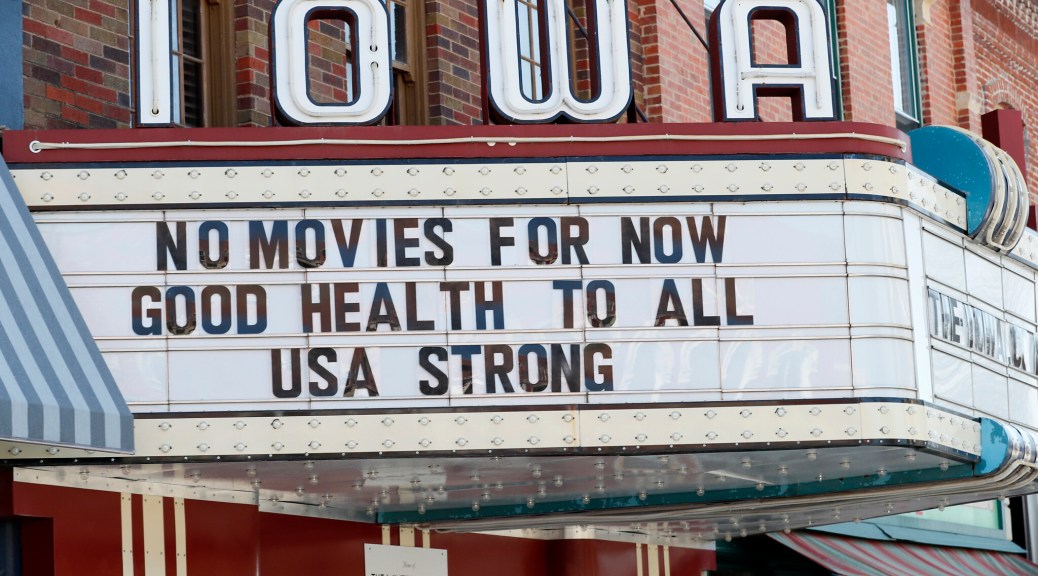
Already struggling with rising prices and competition from home entertainment options, the movie theater industry has been hit hard due to COVID-19. In response to the pandemic, theaters across the country have been mandated since March to severely restrict attendance or completely  shut down under emergency powers granted to each state. This has resulted in a myriad of inconsistent regulations imposed on the industry, which – along with the advancing technology allowing streaming services at home – are proving extremely challenging.   At this point, patrons are wondering if theaters will survive or become a relic of the past.  Will the COVID-19 pandemic prove to be the “straw that broke” the theater industry’s back?  According to marketplace.org, AMC theaters’ revenue is down 90 percent this year due to the pandemic. Many smaller  theaters, such as the Regan Theaters, have had to completely shut down.  

Hanover High School students had mixed opinions on the future of movie theaters.

“I think movie theaters will re open and be very popular again because everyone wants to leave their houses,” said sophomore Maeve Sullivan.

Freshman Izzy MacLellan agreed. “I think the theaters won’t have the same amount of fans as they used to,” she said, “but there are definitely some people who miss going to the theaters to see movies.”

Others are not so optimistic.

“Traditional movie  theaters are a doomed business model,” said Grace Van Duyn, a junior. “The pandemic along with the rise of streaming services will render them obsolete.”

“I think that people have gotten used to watching newly released movies in their pajamas and in their comfort of their own home and won’t be rushing back to the theaters,” said Sam Curtis, a freshman.

It is possible that movie theaters – losing popularity against Netflix, Hulu and other streaming services even before the pandemic – were already bound for extinction. Movie theaters were created without all the technology we have today. There is a lot more freedom in watching a streaming service like Netflix because you can choose the time, place, and occasion that you watch it. And more services are producing original movies that are just as good as what we used to find in the theaters.

Journalist Charlie Osborne from zdnet.com believes that people will be more inclined to watch from their own homes, forcing more movies to be released straight to streaming or to theaters and streaming at the same time. “I resent having to wait weeks or months if I don’t want to take a trip and pay extra to sit in a theater to watch ’em,” he said.

Johnny Oleksinski of the New York Post, though, believes that theaters will not decrease in popularity despite the pandemic. “Audiences, you may recall, had plenty of at-home options before the pandemic and still chose to go to the movies instead,” he said. “They will again.” 

For some people, they may never enter a theater again. Movie theaters can be very fun to go to, and a perfect activity to do with friends are family. But, this fun can be easily outweighed by the appeal of watching shows and movies from your home. 

Sources:

https://www.marketplace.org/2020/11/03/amc-partners-universal-stay-afloat-during-covid19-pandemic/ 

https://nypost.com/2020/12/21/cinemas-live-event-venues-to-get-15b-in-new-covid-19-relief-bill/ 

https://www.zdnet.com/article/warner-bros-to-movie-theaters-drop-dead/ 

https://nypost.com/2020/12/04/movie-theaters-are-not-dead-despite-warner-bros-streaming/ 

featured pic

TV Provides Much-Needed Escape During Quarantine

By Grace Van Duyn, ’22

Staff Writer

When quarantine hit our area in March, a lot of us found ourselves on our couches trying to find entertainment and an escape from the frightening reality on the news. As I thought about this, I wondered, what was the most popular show that people in the United States watched during quarantine and what did that say about our mentality at that time? I asked a few Hanover High students what they watched and the most popular answers were All American and Outer Banks. I also thought those television shows had to be some of the most streamed shows during quarantine. But, as I looked for information online to back up my classmates and my own opinions, I found that our guesses were wrong.

According to the Observer, an American online media company, the top three shows watched in the U.S. during quarantine were Spongebob, My Hero Academia, and Game of Thrones. I was surprised by this, but then realized that teens weren’t the only people who were looking for an escape from reality during quarantine. Many of the shows that were popular with teens weren’t even close to being the most watched in the United States.

Instead of watching regular programs, people tended to binge-watch certain shows and to try out different types of shows than they did before.  According to the Orlando Sentinel, the TV streaming search engine Reelgood analyzed its users’ viewing trends during the pandemic. Reelgood found that in May, three months into the quarantine, the top three shows that people watched for the first time were Ozark, Tiger King, and Breaking Bad. Reelgood also saw that genres such as animation, fantasy, and comedy all had a significant increase in their number of streams. In addition, Reelgood noticed that genres such as biographies, documentaries, war, and crime actually were streamed less during quarantine. Initially, I expected that all shows would have experienced an increase in their streams during the quarantine, but the data shows that generally people only chose to watch uplifting shows. Also, because so many families were together, family shows also saw a big increase in popularity. Families were spending an enormous amount of time together and these shows were very relatable. Also, for others who were separated from family and friends, these shows reminded them of feelings of unity and love. Some of these shows were Modern Family, Friends, and Schitt$ Creek.

I think television was a distraction that we needed during this difficult time. So many people were quarantined at home to protect others and themselves. If you were able to be home and healthy, television might have made your time a little easier. You might have even bonded with others over a show like Tiger King that would normally never have caught your attention. As the data that Reelgood collected proves, we all searched for shows that could make us forget about our realities and give us a needed smile or laugh. This pandemic showed us a lot about our world and even how important simple things like television can be.     

Keep the conversation going. In the comments, tell us what shows got you and your friends through the quarantine? 

Source: https://www.orlandosentinel.com/entertainment/tv/os-et-what-people-watch-during-coronavirus-20200522-a2u7h7wflfd3jn225qbb3p6cfm-story.html

featured image: https://time.com/5836749/share-tv-computer-quarantine/

2020 Drama Festival Filled with Powerful Performances

This year, Hanover High School’s Drama Club hosted the 2020 METG Drama Festival preliminary round in February. It was an excellent and long day of superb theater!

So how does festival work? Each school that attends performs a short, one act play for a judges’ panel. The school needs to place their set in five minutes, perform their show in 40 and take down their set in another five. Once a play starts, no one can enter or leave the theater. In addition, the judges should not be able to hear the name of the school performing before the play starts.

Viewing Festival is a lot for the brain. Eight pieces of theater is a lot to comprehend. However, the day flies by and the students from different schools have a chance to interact with other “theater kids” from around the area. So what was each show like? I’ll walk you through my favorite parts of the day.

Starting off the day strong was The Clark School, from Rowley, Mass., in their production of “Lila the Werewolf” by Peter S. Beagle. In the show, the character Farrell, played by Sean Bax, deals with learning his girlfriend, Lila, played by Caroline Lucey, is a werewolf. Through the show, you meet Farrell’s friend and narrator Ben, portrayed by Christian Grant, the super of the building who’s out to get Lila (Ryan Trabulsi) and Lila’s intense mother Bernice (Rose DiNoto). The show was filled with dark humor. I really enjoyed Grant’s performance as Ben. I thought he brought a level of humor to the supernatural as well as carried the show excellently with his narration. He and Bax, who played Farrell, won awards for their stellar performance. The set design, in addition, did an excellent job of blending the supernatural and the real world together with their use of shadow puppets.

The next show of the day was “Radium Girls” by D.W. Gregory performed by Southeastern Regional Vocational High School. The story follows Grace, portrayed in this production by Colleen Wood, who unveils the mystery of why all the girls who worked at the Radium Factory are getting sick. Through lawsuits and publicity, Grace needs to make a choice between doing what is easy and doing what is right. My favorite part of this production was that all of the main characters, including the male leads, were portrayed by women. Whether or not this was done intentionally, I thought it was a great way to highlight the historic significance of this tragic event. Another excellent aspect was the set and makeup design. Their set featured an interesting use of large platforms and a large clock that continued moving throughout the whole performance to highlight the mortality of the girls. The makeup in the show was fantastic. The makeup designer did an excellent job of applying prosthetics to the girls very quickly in order to make them look more sick as the show progressed. She was, rightly so, recognized by the judges. My personal favorite performance was Coleen Malley as Arthur Roeder, the factory head. She did an excellent job of portraying the wide range of emotions and stress that Arthur experiences throughout the play. I loved her performance and so did the judges!

One of the best plays of the day, and my personal favorite, was “Monster” by Don Zolidis. Performed by Weymouth High School, Monster is centered around Mary Shelley’s 19th century writing of “Frankenstein.”  Shelley formed the idea for Frankenstein from a dream she had while competing in a ghost story competition with her friends. The play takes place during this ghost story competition at Lord Byron’s summer house in Switzerland. Whilst telling the stories, there is a “Ghost ensemble” that performs them. The play touches on experiences from Mary and Percy Shelley’s life that influenced her ideas and her writing for Frankenstein. While some of it is added for theme purposes, the story is very historically accurate. While I would love to dive into Mary’s life experience, for purposes of brevity, I recommend you watch a documentary on Mary Shelley’s life. Some of the most notable performances included the ghost ensemble; Lord Byron, played by Zach Norton; and John Polidori, played by James Harmon, who were all recognized by the judges. While she was not recognized, I thought that Abigail Huard’s portrayal of Mary was fantastic. I thought she carried the show brilliantly and was exactly how I imagined Mary to be in my head. Overall, I think what brought the show to the next level was their set design and technical effects. There were black lights and strobe lights that really set the mood of tension when the ghost stories were being told. The set was fantastic.  When the actors moved to different places, it really felt like they were moving through an old house. The show was not the most funny nor emotionally powerful of the day but, combined with the superb acting, technical effects and set, the show was one of the best.

The next show was our very own Hanover High School performing, in my opinion, the funniest show of the day, “The Scheme of the Driftless Shifter” by Carolyn Lane. This show is, as one judge put it, “an intentional trainwreck.” There was a “fight” in the audience, a disgruntled cleaning lady, fake snow, lines dropped and a man playing a dog, all while a cast is trying to perform a very serious production. This show was the epitome of hilarious. I was keeling over in my seat laughing, on the verge of tears and peeing myself. The accents, for starters – notably Ben Mannings’s Scottish accent as Henry Pompington, – really added to the idea that the cast of the show was trying to put on a very serious production and failing miserably. There were many times in the show that you thought it was ending and the curtain would close, and then a new chaotic scene would start. It was hysterical and, by far, the funniest show of the day. Elise Falvey, Maia Arbia and Peter Bell were all recognized for their performances as Petunia Pompington, the Stage Manager and the Piano Player, respectively.

Picking up after lunch was Lynnfield High School performing “Brilliant Traces” by Cindy Lou Johnson. This was a two person show! The entire show was carried by Grace Mealy as Rossanah DeLuce and Greyson Wainwright as Henry Harry. In the play, Rossanah arrived at Henry’s door in the middle of an Alaskan whiteout dressed in a wedding dress. Through the course of a couple days, the two deal with the aftermath of the situation and learn about each other. I thought that the show was very impressive. However, at times it felt to me as if it was artsy and different, and flaunted it. But, that’s more a commentary on the writing and directorial direction and not on the performance. I thought that Mealy and Wainwright did an excellent job of displaying the sudden intimacy of the characters as well as the humanity the two discover within themselves through their meeting. I thought the lighting and sound design were quite bland; however, there isn’t too much to be done with a show that is so chemistry-driven. The set design was beautiful. The cabin was very realistic and utilized angles very well to create an excellent sense of space. From an audience standpoint, the use of props allowed the show to feel natural and like you were witnessing a real tender moment between two people. Overall the show was not my favorite but a very interesting experience and an opportunity to see two fabulous student actors.

“Anybody for Tea?” by C.B. Gifford was the show performed by Notre Dame Academy. This show was about six old spinsters who start to murder each other in order to lure the “very attractive” Captain Williams (Clare Kennedy) to their house. A common compliment I’ve had for festival has been the set design. Notre Dame’s set was fabulous. The house of the old ladies felt exactly what you would expect to see in a house with six old spinsters. The lighting design was interesting because it utilized lamps on the stage, but the sound was a little bland. Overall, the show was a little too slow for me. However, the six spinsters’ performances were so accurate. Their body language and style of speaking really led me to believe they where old ladies. My favorite performance was Connaught Riley as Hildegarde Hodge who (spoiler) is the one who commits the two murders. Her confession was hysterical and added to the whimsy of the darker content. “Anybody for Tea” was not my type of show, but it was a delightful mystery and a funny performance.

Everett High School performed “Augusta & Noble” by Carlos Murillo. This show brought tears to my eyes. I could neither classify it as a comedy or drama but rather a wholesome and important story to tell. The story follows Gabi Castillo, a daughter of immigrants from Mexico who is struggling with her identity. Through a blend of dreams and the real world, Gabi learns that despite being an immigrant, she belongs here. The show was sweet and shed light on real struggles of disadvantaged immigrant families. Jhalyshka Feliciano’s performance as Gabi was beautiful and I found it very easy to sympathize with her. Feliciano was awarded for her performance. The lighting design had to be my favorite part of the show. There were parts in the show where they would be in the desert or at school, and I thought the lighting design done by Bryan de Souza really made the show come together as a whole.

The most powerful performance of the day for me personally was “My Love Lies Frozen In the Ice” by The Dead Rabbits and performed by Boston Latin School. Like “Augusta & Noble,” I really couldn’t classify this show as either a comedy or a drama, but it was nothing like the show prior to it. The play follows Mathilde, played by Alexa Wong, as her brother Solomon (Ian Wright) and fiance Nils (Calvin Szulc) develop a balloon that will carry them to the North Pole. They then leave her behind, only to never return. This play was filled with audience interactions, improvisation and heart-wrenching moments. One of the coolest technical aspects of the show was that a large balloon was thrown into the audience as well as a small balloon that floated from the booth down to the stage. I applaud the technical crew for including such fun interactive moments and the actors improvising with the small mishaps. What made the show so powerful for me was Alexa Wong’s performance as Mathilde. She was able to clearly narrate and carry the story. She had these amazing moments of hilarity and many moments of sadness and heartbreak, all of which were delivered with clarity. She was lovable and relatable and one of my favorite performances of the day. She earned a performance award from the judges.

At the end of the day, I think all of these shows deserved to move on to the next round of competition, which was unfortunately delayed – and then cancelled – because of the COVID-19 pandemic. Each was so different but equally as wonderful. The three that advanced were “Monster,” “My Love Lies Frozen In the Ice” and “Augusta & Noble.” 

Latest HHS Musical was a Smash Hit!

By Tim Sullivan

You’re a Good Man, Charlie Brown was a smash hit this past week! The cast, crew, pit orchestra, and production staff put together an amazing performance that truly captivated the audience, including myself. 

I saw the show twice, once on opening night with the wonderful cast of Kyle Knight as Charlie Brown, Michelle Sylvester as Sally, Emma Gannon as Lucy, Ben Manning as Schroeder, Christopher Manning as Linus, and Julia Cross as Snoopy. I just had to go back for a second time and see the understudy cast which starred Kat Sheridan as Sally, Elise Falvey as Lucy, and Erin Foley as Snoopy. Both shows featured a colorful, cheery ensemble which included Brendan Connolly, Rosie Danehy, Kyle Donnelly, Norah Flanders, Callia Gilligan, Jordan Kennedy, Daniel Manning, Emma Massey, Anthony Pierotti, Harper Seelye, and Erin Shea.

This show delivered meaningful messages to the audience about growing up, feeling alone, and finding happiness. These messages were conveyed through the lighthearted comedy and youthful innocence that is classic for any sort of Charlie Brown production – something the cast pulled off beautifully. Each musical number was energetic and engaging, not to mention several were completely student-choreographed! The Indian’s own Callia Galligan was dance captain for the production. Callia said she has always wanted to do something like this but has never had the opportunity and this was definitely a highlight of the musical this year for her. It wasn’t too much of a challenge to translate the music into dance, she said, but it “took a lot of thought to determine what steps would translate the energy or theme of a certain song.” 

The cast’s ability to disguise themselves as younger kids who are just growing up was quite impressive. The border between being a kid and becoming mature was shown throughout the show. It was shown in Lucy’s desire to be queen and her eventual appreciation for Charlie Brown being himself. It was shown in Sally’s pursuit of adventure but also her determination. This time of growth was also shown in Linus’ need to be accompanied by his blanket in My Blanket and Me and his almost comical intelligence. I was blown away by Snoopy’s portrayal both times that I saw the show. Both Julia and Erin brought Snoopy to life as a lovable and witty character. Specifically in the number Suppertime, which was student-choreographed, It was hard to keep myself from not giving a standing ovation in the middle of the show. Although I have no idea what dogs think, somehow this felt right! 

Charlie Brown’s character highlights the innocence and fear that comes with feeling alone, having a crush, and learning to appreciate who you are. Kyle Knight, who played Charlie Brown, said it was an amazing experience!  Kyle has been doing musicals since his sophomore year and playing the title role this year was, he said, “both a big responsibility and something I was very excited to do!” Kyle was happy to be able to perform with some of his really close friends in the cast and crew. When I asked him if he felt for Charlie Brown or could relate to the character he was playing, he said, “How could you not? He’s a kid who just can’t get a break and wants the best for himself but can’t seem to figure it out and I’m sure everyone can relate to that at the very least a little bit.” \


The Pit Orchestra made the musical that much more enjoyable and brought outstanding emotion to the show. Senior Una Davenport enjoyed “making new friends, memories, and getting to play fun music” in the pit the past three years. The last three musicals at HHS have been different each year and Una was glad that You’re a Good Man, Charlie Brown had, “more room for comedic expression, which was fun to explore.” Una appreciated the constant encouragement from Mr. Wade and Mr. Harden and how much time they devoted over the short period they have to prepare for the musical each year. This year, Una played both electric and upright bass, which she hasn’t played in the pit before. “Overall, the job of the pit is to make the cast sound as good as we can and their phenomenal talent combined with the direction from Mr. Fahey made it effortless,” Una said. Now that the musical is over, it is bittersweet, she said, adding that she is grateful for the memories she made and the new meaning to the word Happiness she discovered.  

My favorite number was certainly Happiness and the powerful lyrics “Happiness is anyone and anything at all that’s loved by you.” I also loved when the cast came together in both Beethoven Day and The Book Report. Make sure to follow @hanoverhighdramaclub on Instagram to stay up to date with the drama club. I am so glad that I was able to witness such greatness put on by our talented peers this past week!  

Drama Programs are Growing; Are Budgets Keeping Pace?

By Callia Gilligan

Theater. Whether musicals or plays, theater is an art form, a way of telling a story. Theater can be colorful, sad or happy, include big dance numbers or stay simple with minimal choreography and small casts.

Some say Broadway doesn’t have the same appeal it used to, others say there has never been a better time for it. I think both are true. Playwrights and directors have steered away from the classic sound of Broadway musicals such as those written by Rodgers and Hammerstein or  Stephen Sondheim. Many new and somewhat foreign technical aspects, themes and concepts have been added to Broadway, with shows such as Hamilton, Dear Evan Hansen, Mean Girls and Be More Chill. These shows have pop-rock scores and are drawing in younger audiences. Are classic musicals fading? Yes. Is Broadway dying? No.

In addition to driving up the box office, these trends in theater have encouraged more young people to participate in their high school drama programs. As a theater kid myself, I think this is great. Drama departments are always better with bigger casts. This however, requires a bigger budget.  If you look at television shows like Glee that are set in high schools, the music and drama programs are often underfunded. But does this reflect real life? Are real high school drama programs underfunded? This got me thinking about our school. Do we have a self-sustaining drama club? What about other schools? Is high school theater on the South Shore adequately funded?

So, I took to the Internet, emailing drama teachers from schools around the South Shore and requesting interviews. Mr. Christopher Lacy, drama club adviser at Norwell High School, is very experienced, having directed 89 shows in 18 years. The budget allocated by the town to the drama program each year is $10,000,  according to Mr. Lacy. “The rest is funded from box office sales,” he said. Norwell does not perform musicals, which are often more expensive than traditional plays, but that is not because of the cost, Mr. Lacy said. “People these days really only know musicals,” he added. “We could do this but we won’t because I am first and foremost an acting coach and non-musical plays are a more effective vehicle for that purpose.”

When asked if the drama club could benefit from increased funding, Mr. Lacy replied, “Of course, more is always better.” Yet, Norwell seems to get by on its budget and box office receipts; the drama club does not conduct any independent fundraising.

Mrs. Gwen Chapman, Director of Fine and Performing Arts in the Pembroke School District, reported that the school committee budgets $9,500 to the drama program each year. This is $500 less than what Norwell is given. How much can you do with $500? A lot. Securing the rights to perform a show varies from $75-$250 per performance depending on the license. If it costs $250 and a high school chooses to perform the show three times, that’s $750 from the budget. That’s before adding in the cost of sets, costumes, pit orchestras, etc.  The majority of the drama budget is spent on the fall musical, which Mrs. Chapman said costs around $13,000 to produce. The drama club holds one large fundraiser every year that raises about $1,000-1,500 and covers 10 percent of the drama budget. Even then, the club is just barely producing one musical. The cost of putting on any additional shows must be funded by ticket sales, Mrs. Chapman said.

Mrs. Anita Levy-Sisk, the drama teacher at Hingham High School, is in a more difficult budget situation. The town does not provide a budget to the drama club, though some stipends are given. The school relies largely on the its box office sales to produce the next show. The fall musical brings in a lot of revenue ($4,000-$6,000 in profits) but they are lucky if their spring play breaks even, Mrs. Levy-Sisk said. The majority of their budget is spent on securing rights for the performances, so the school runs 3-4 fundraisers each year to supplement profits from ticket sales.

Hanover operates on a different model than these other schools. In 2015, the town created the Hanover Performing Arts Company (HPAC). Operating under the Family And Community Enrichment (FACE) department, HPAC centralized production – and funding – for musicals for grades 1-12. This move established drama programs at each of the elementary schools for the first time, and began to develop a foundation for the future of performing arts in the district, according to FACE director Kelly Lawrence.

At the high school level, the drama program is part of the curriculum, meaning, it’s funded by the school budget as other classes are in the school. The Drama Club, which puts on a festival show and spring play each year, is a separate extra curricular similar to The Indian or Robotics Club. The school provides a stipend for the adviser, and the club, like all others, is “supported mainly through fundraising efforts,” Lawrence said. The Drama Club operates independently except for the annual musical, which falls under the umbrella of HPAC. Additionally, the Drama Club receives from HPAC the assistance of a coordinator experienced in stage management and the support of its “infrastructure and resources.” Budgets for school shows are “set depending on the needs of each,” Lawrence said. HPAC is a self-funded division of FACE, Lawrence continued, supported by student fees, ticket and concession revenue and grants for resources used to support all productions. The HPAC coordinator position is funded by FACE, Lawrence said. “At this time, (HPAC) is unable to support that cost without increasing fees to student/families.”

“Our goal is to continue to develop quality programs in all areas of the performing arts to increase our overall budget for the HPAC division,” Lawrence said.

While this model has done a lot for the drama program, I’m concerned about the reliance on fundraising and grants. In fact, when comparing drama programs at the four South Shore districts, it seems that while they’re supported in some way by their towns, they would undoubtedly be able to do more with larger budgets. Concerned with paying off costs and putting on the next show, clubs must spend time planning fundraisers that may or may not make enough money to meet their needs. Theater is so magical for the people involved, and it would be disheartening to think drama teachers are struggling to give this joy to their students. I wanted to know if my friends on sports teams had to fundraise as well. I was surprised that the answer was yes. Perhaps the bigger question we need to ask is not whether drama programs are underfunded, but whether all extracurricular activities could use more support.