Category Archives: Entertainment

Fashion Club Reviews New York Fashion Week

By Mary Mancini and Sam Mitchell

Fashion Club is a great opportunity for students to share ideas, learn new things, and explore their interests in the fashion industry. This is Fashion Club’s third year at HHS and we’re already looking forward to our annual spring fashion show. We’ll be having multiple fundraisers and events throughout the year to help fund the fashion show and we all can’t wait!

This month New York Fashion week took place from September 10th-17th in the Big Apple. Featured designers like Calvin Klein, Marc Jacobs, Herve Leger, Public School and Rachel Zoe displayed their new collections. Those to walk the runway in these trendy pieces were famous models like Kendall Jenner, Gigi and Bella Hadid, Candice Swanepoel, Karlie Kloss, Lily Aldridge, Stella Maxwell, Hailey Baldwin, and Ashley Graham.

Designers seemed to branch out from their similar inspirations and created a number of new pieces which showed up more than once, signaling a roundup of trends to look forward to. Many designers channeled the vibrant shades and easygoing spirit of the Caribbean with hibiscus prints, colorful crocheted pieces, bucket hats and citrus shades. Styles taken from the ’70s were everywhere this season, models sported boho maxis, flared pants, fringed hemlines and tie-dye patterns. Palettes for this year’s Fashion Week included warm, feel-good hues such as blues, buttery yellows, and pale pinks paired with common neutrals.

Stripes and clothing that skimmed both the collarbone and shoulders were frequent along with luxurious (and expensive) pajamas. To go with the variety of outfits, the models typically sported fresh faces and a defined brow in intentions of keeping it simple.

Haunts and Hayrides: Day Trips for Fall

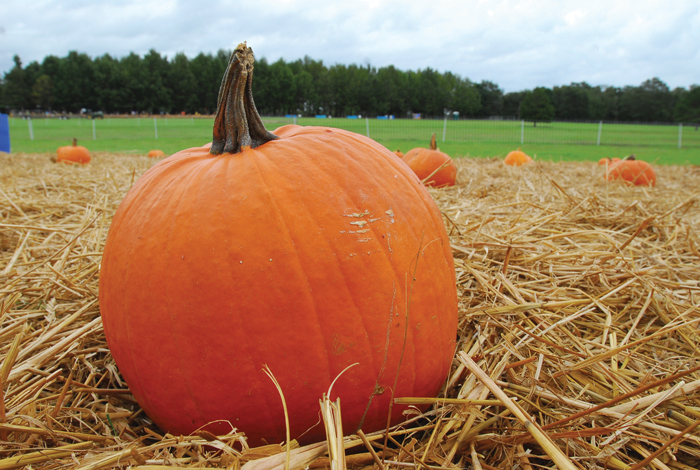
The weather is changing quickly and summer days will soon be far behind us. Before winter whisks around the corner, make sure to have some festive fun this fall with a few pumpkins, some ghosts, and maybe just a hayride or two. One of the best parts about New England is its colorful Septembers and chilly Octobers; lucky for us, our ticket to having a fall-day-out is just a few minutes down the road.

Rumor has it that one of the best apple-picking spots is right in East Bridgewater at the C.N. Smith Farm. There is truly nothing better than baking a warm apple pie with apples you pick yourself! Another excellent spot for apple collecting is Russell Orchards Farm, a beautiful farm on the North Shore with legendary cider donuts and bright orange pumpkins to bring back home.

While you’re at it, why not head over to Sauchuk Farm in Plympton? Find yourself lost in a curving corn maze with a friend at your side or on a hay ride in the warm breeze of a nice fall day.

If you’re in the mood for something spooky, you have several options at hand. The Alden Haunted House in Duxbury is local and very creepy; in other words, everything you want in a haunted house. Fall River’s Factory of Terror is another haunted house that brings daredevils from all over New England. The name says it all about this spooky site. Of course, Barrett’s Haunted Mansion in Abington is very popular this time of year and for good reason: if you’re a thrill seeker, the terrifying clowns haunting Barrett’s will give you quite a scare.

A more kid-friendly option is the Spooktacular Halloween Party & Costume Contest on October 27 at Paragon Carousel in Hull. Dress up in costume and hitch a ride on a haunted Halloween carousel

On a different note, the Norris Reservation nature trail in Norwell offers a quiet, scenic (and clown-less) trail through the autumn woods. Perfect for walking your dog or bringing a book to sit down with for awhile, the reservation will make you feel like you’ve really embraced the fall season. Another option if you’re looking to get some fresh autumn air is the Breast Cancer Walk on October 4. For an excellent cause in ending breast cancer and saving lives, the walk allows you to make some well-intended strides while enjoying a fall day in Boston.

Another family-friendly option is watching a Patriots game in Foxborough at Gillette Stadium. Bring your Patriots gear one afternoon, grab a hot dog, and cheer on the players.

Whatever you do, make sure to enjoy the fall weather while it lasts. As American journalist and author Jim Bishop said: “Autumn carries more gold in its pocket than all the other seasons.”

Pitch Perfect 2: Movie Review

It’s fair to say we missed the Bellas and the rest of the cast of Pitch Perfect when they were gone. This past Friday, however, the sequel was released in theaters and pleased fans with a new soundtrack, new faces, and more Fat Amy.

Sequels tend to be given a bad rap for not measuring up to the original, particularly if the original was universally well-liked. So, it’s always with some apprehension that the viewers prepare themselves for the second movie. In fact, the true measure of the quality of a filmmaker seems to depend on how well their second production turns out.

But the producers of Pitch Perfect 2 skillfully created a brand new plot which added to the original storyline, rather than taking away from it. Anna Kendrick returned to her role as Beca, this time a senior at Barden University. It’s the last year for the Barden Bellas, an all-girls a capella group, so the pressure’s on when they’re suspended from singing opportunities after Fat Amy accidentally bares all on stage. It’s the last wish of the Bellas to redeem themselves by winning the worldwide singing competition. However, they’re faced with some tough German rivalry—an a cappella group who call themselves Das Sound Machine. Through adversity, the girls are able to remember who they are and reestablish their harmony, which ultimately allows them to become the world champions.

Although this movie is filled with tongue-in-cheek comedy and left the audience laughing at every moment, it also taught a valuable lesson on the importance of knowing the people who you are working with and also letting them know who you are. This is a repeated theme from the first film, where Beca had a problem with pushing people away. Luckily for the Barden Bellas, they figure it out just in time to remember their roots and harmonize perfectly, wowing the fictional audience as well as the theater viewers.

Pitch Perfect 2 also offered a fresh new soundtrack of cover songs, just as catchy and uniquely done as the first movie’s soundtrack. Included in the mix were songs by Miley Cyrus, MIKA, Pitbull, Carrie Underwood, and even Elvis Presley.

Exciting, goofy, but still forcing you to keep your eyes on the screen, Pitch Perfect 2 made sure everyone leaving had one thing on their mind—when is Pitch Perfect 3 coming out?

The Day A Rental Van Swallowed My iPhone

ATTENTION: You’re about to read about a recent field trip I attended. But please note, this is NO review. This is my field trip horror story. Also please note, I LOVED the trip so please know that my story is completely irrelevant to my feelings toward and about Boston University. This is just a short story about a tiny fraction of my newspaper field trip experience.

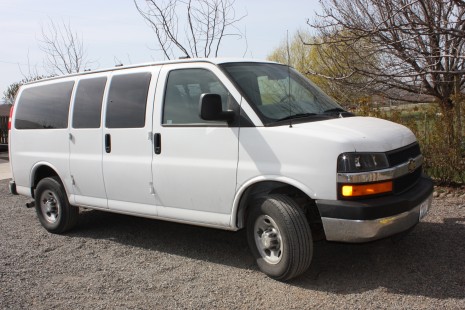
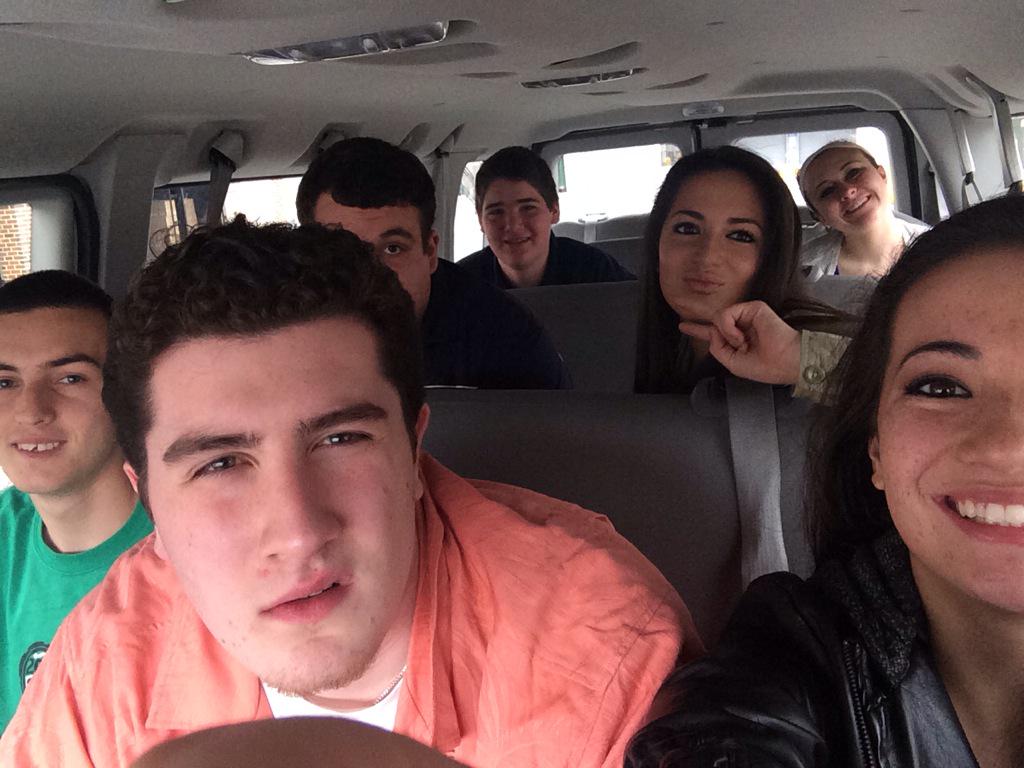
About a week ago, HHS News Club got the outstanding opportunity to take a field trip to Boston University for the New England Scholastic Press Association annual conference. Not every single club member was able to attend, but the majority of us were, and we news club1had a blast. At 7 in the morning, eight of us piled into a large white van driven by none other than Mrs. McHugh, and we went from there. Callie MacDonald, who was riding shotgun, was constantly changing the radio stations (which I truly enjoyed because I love a nice song change every so often). Overall, I was enjoying the van ride, peacefully gazing out the window. However, if I could change one thing, it would be the loud growling noise that was emanating from my stomach. On this beautiful Friday, Andrea and I had woken up late, per usual, so I wasn’t able to get the multi-grain bagel at Dunkin Donuts that I was expecting.

So anyway, here I am in the van, stomach growling, sitting with my left side pressed against the interior of the van. There was a pull-out cup holder next to me, and beside that was a little black slot which looked like what used to be a cigarette disposal. However, the plastic part was ripped out and it was just a black rectangular slot into the van. After being in the van for a while, my hands grew tired of holding my phone, and I casually looked around for somewhere to put it. I don’t know what exactly what was going on in my mind at this moment, but I had an impulse and, before you knew it, my iPhone 5s was being shot down the black “cigarette disposal” slot. I heard my phone slide down the metal “bones” of the van and then I heard it drop to the bottom. Trying to stay calm, I laughed it off and acted as though I didn’t care that my phone was gone forever. Most everyone in the van was laughing at me and teasing me because I mistook the “slot-of-no-return” for an “iPhone cubby.” Nevertheless, we were on the highway and there really was nothing we could do about my phone disappearing into the void. We all lowered our voices as I dialed my number on Andrea’s phone. I let out a sigh of relief when I could just barely hear my ringtone playing from inside the bottom of the van. To me it sounded less like a ringtone and more like crying. I like to think that my phone is my “baby” and at this moment it needed me, and i needed it.

After the rest of my iPhone-less van ride, we arrived at the parking garage for Boston University. Leaving my phone all alone while I spent a day in Boston was not ideal, but I had no other choice. Throughout the day I would reach into my purse hoping that my phone would somehow be in there, but sadly I would find nothing but gum wrappers and dirty coins. I felt a sense of emptiness. Hours had gone by with my phone still in the van. A whole day at Boston University and I had not texted, tweeted, instagrammed, snap chatted, or even taken a picture.

Fast forward a few hours, and the HHS News Club was back in the van for the drive home. We all sat in the same seats as before, again with my shoulder pressed tightly against the left side interior. For the whole ride back to Hanover, I argued with my own thoughts, telling myself to stop worrying. I pondered how I would confess to my parents that my iPhone had been swallowed by a rental van. One part of me believed I shouldn’t worry, that my phone would be back in my hands in no time, while the other part of me was already brainstorming how much money I would need for a new one. A small frown stained my face as we pulled into the high school parking lot. My phone was gone.

As everyone hopped out of the van, they wished me a good luck and waved a goodbye. “Let me check this out,”IMG_4306 said the determined Mrs. McHugh as she unbuckled her seat belt and climbed out of the driver’s seat. Mrs. McHugh came into the back of the van, looked over the area where my phone dropped, and pried open the entire side. MRS. MCHUGH SAVED THE DAY. None of us ever thought I would see my phone again. I can honestly say Mrs. McHugh saved my phone, and my whole life basically. For anybody who knows me, you know that I have a hard time going a few hours without my phone. Thank you Mrs. Mchugh! I will never forget this “interesting” day.

Epilogue, by Mrs. McHugh: About a week later, Lauren got locked out of her phone and had to reset everything. She lost her contacts, her pictures, everything. Lauren, I’m sorry that I could not save the day when you needed it again.

Mumford and Sons Without the Banjo

Whenever a band announces they are releasing a new album, fans respond with excitement that is half anticipation, half fear. These emotions were at their peak when Mumford and Sons announced Wilder Mind, their first new album since 2012. Since their last release, Babel, there had been doubt on whether or not there would be another album. Bassist Ted Dwayne had become very ill and the band took an indefinite hiatus. Needless to say, it was a very welcome surprise to hear of the new album. Like with every other band that has created great records,a new album poses the question; can they do it again? Unlike every other band, this new record is even more terrifying to fans because the band is completely dropping their acoustic instruments. For a band that has built their fame on banjos, beards, and upright basses, it is shocking to hear that Wilder Mind will be completely electric. As an avid fan myself, I shared these fears. Until, of course, I bought the album Tuesday.

There is no denying the drastic differences between Wilder Mind and their previous albums, Babel and Sigh No More. It is entirely electric, where before it was acoustic, but the changes in instrumentation do not take away from the fact that Mumford and Sons continues to create excellent music. The tracks on Wilder Mind follow a typical Mumford-theme. The majority of them begin slowly and then build up as the song goes on, with a loud and harmonized chorus, while finishing on the slow-pace of the beginning. Only this time, the rise of the songs becomes more intense with the aid of drums. A major strength of the album is its ability to have space within the songs. It no longer has the sound of folk music, but a spacious sound, like that of Led Zeppelin or the Killers.

To those who have not yet heard the album and are fearful of the change, I’d say that much of the music still holds the soul that we first heard in Sigh No More. The lyrics are equally as powerful and address the same themes of love and personal struggle. Although the album is electric, the musicianship is as evident as it ever was. It did not suddenly turn into a DJ pressing buttons, as I fearfully anticipated, but excellent music with electric guitars and keyboards. It seems to me that this is the fear of rock and roll fans today. When we hear electric, we fear the worst. We imagine overly manufactured and processed sounds that lose the heart of the music that we once fell in love with. Wilder Mind reminds us that this does not always have to be the case.

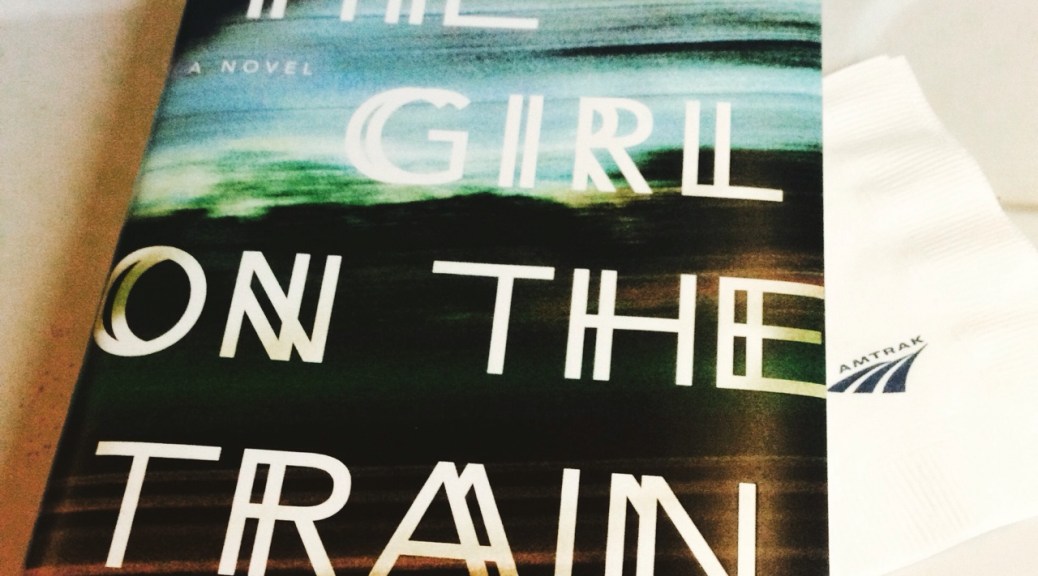
Review: Girl on the Train is Twisty Thriller for Fans of Gone Girl

This seems to be the era of buzzy fiction thrillers with very dysfunctional characters and wild plot twists. Gone Girl, written in 2012 by Gillian Flynn and released last year as a movie, started the trend with the crazy story of Nick and his “missing” wife Amy. The Dinner, a 2013 book by Herman Koch about two couples in denial about a terrible crime committed by their sons, is another one. Told by untrustworthy narrators, with whole chapters that you later realize were distorted if not outright lies, the reader is unsure what to believe for most of the book. Yet, you keep reading, even though the main characters are kind of jerks, because you just HAVE to know what’s going on. And when you finish the book, usually after a series of late nights staying up reading into the wee hours or long days of not putting down the book except to use the bathroom, you’re haunted and maybe a little disturbed.

The Girl on the Train is a similarly messed-up book. In some ways, the comparisons to Gone Girl have created a  huge fan base for this 2014 book. But in other ways, the hype has hurt, with some readers feeling that The Girl on the Train was a letdown after Gone Girl shattered expectations as well as norms of the fiction genre. I am not one of those readers. I loved both books, even as I loathed some of the characters. As I read The Girl on the Train, I ignored chores around the house, work I had brought home, even my poor daughter’s pleas for attention just so I could race to the end (Worst. Mother. Ever).

Rachel, a divorced alcoholic, fills the void in her life by imagining the lives of the people she sees outside her train window. When something terrible happens, she’s not sure what she’s seen and what she’s done, and the reader struggles along with her to piece things together. The puzzle gets even more jumbled when the author writes from the point of view of two other characters: Anna, who is the new wife of Rachel’s ex-husband, and Megan, one of the people she’d been observing whose disappearance Rachel is trying to unravel.

About three-quarters through the book, I got a sense of what was really going on and I had to go back and re-read some earlier parts. I spotted the author’s trickery then and thought it was pretty clever. The comparisons to Gone Girl are apt: very flawed characters that you are drawn to even though you don’t like them, a plot that seems to be one thing but turns out to be something else. And like Gone Girl, after I finished reading, I couldn’t exactly say it was a pleasant experience. But I did enjoy it, the way I enjoy the the combination of fear, disgust and thrill I get from riding a roller coaster. It turned my stomach at times, but it also got my pulse racing.

Book Review: Between a Rock and a Hard Place

Aron Ralston always prided himself on doing things other people would only dream about. But one day, he found himself in a situation that, for anyone, would only be the stuff of nightmares. Ralston was hiking alone in a remote canyon in Utah when he clambered over an 800 pound boulder. The boulder came loose, he and the rock fell, and when they both came to a rest, the stone had pinned Ralston’s right arm  against the canyon wall. Trapped, in excruciating pain with little food and water and no warm clothing, Ralston knew that his hopes of rescue were slim since he hadn’t left a detailed plan of his trip with anyone. After six hellish days, or 127 hours, Ralston resorted to a desperate act to save his own life. It’s not a spoiler once you see the book cover or if you’ve ever seen the James Franco movie: Ralston cut off his own arm.

Ralston, who was 27 at the time of the 2003 accident, details the entire grueling experience in his book Between a Rock and a Hard Place. Before reading the book, I could only imagine the anguish and despair Ralston went through in his ordeal — the mental and physical struggles as the days went on without rescue. After reading the book, I was amazed at his endurance, his fortitude, his ability to survive.

As Ralston recounts his days of entrapment, he also talks of his many outdoor adventures, from climbing 14,000 foot mountains, in winter, alone, to hiking miles to the bottom of the Grand Canyon and back up in record time. It’s clear he thrived on thrill seeking and pushing limits, and had more than his share of brushes with death. Because I don’t share that “need for speed” and am not exactly an adrenaline junkie (I write, as I sit here eating a candy bar), I had trouble relating to his adventures and struggled with judging him as careless — an accident waiting to happen. Still, many other readers may not be bothered by this and may be inspired or thrilled themselves by his adventures. The chapters on his adventures do contain a lot of technical language about mountain climbing and equipment, which slowed me down; the library’s version of the book includes a glossary. Regardless of what I thought of Ralston’s risk-taking, my curiosity in how he survived pushed me to keep reading and the last few chapters move at breakneck speed. I couldn’t put the book down  until he was safe and sound.

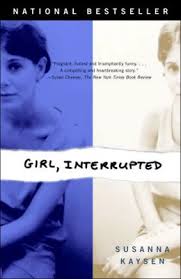
Book Review: Girl, Interrupted Reveals True Meaning of “Crazy”

I recently read this book as an outside read for my English class and devoured the short work in a matter of days. Author Susanna Kaysen uncovers the true meaning of “crazy” in her memoir Girl, Interrupted, which has also been made into a movie starring Winona Ryder. By age 18, Kaysen had attempted suicide by swallowing 50  aspirin at once, had an affair with her high school English teacher, and completely given up on school. Her parents preferred to remain happily oblivious to the pain that their daughter was in and sent her to a psychiatrist for help. The doctor, who Kaysen never acknowledges by name, suggests her admittance to McLean Mental Hospital just outside of Boston after only 20 minutes of evaluation. McLean has a history of employing modern methods for “curing” mental illness, and has treated some of America’s most influential figures including Sylvia Plath, Robert Lowell, James Taylor, and Ray Charles. Susanna complies with this request because she no longer cares the path that her life takes, in fact, there is very little that can evoke an emotional response from her.

During her almost two years spent at the hospital, Kaysen forms important bonds with her fellow patients and has her eyes opened to how many different forms that mental illness can take. One of her close friends is treated with electrotherapy once a week, and another prides herself on the number of times she has been able to escape the hospital. Most surprising to the reader is the fact that the majority of these patients are not all that different from the average teenager. Many parents during the 1960s chose to shut their children up in mental institutions and boarding schools if they exhibited any “abnormal” behavior. Rather than working with their children to get to the root of what was really going on, these parents chose to take an “out of sight, out of mind” approach that in turn just made their kids feel more isolated and helpless. As Susanna flourished with the support and organization she had so needed before, she began to realize that everyone is a little crazy in their own way, and without society’s labels and stereotypes, we are all just people trying to live our lives.


Review: Author Shares Struggle with Grief After Brother’s Death

When Alison Smith was 15, her beloved older brother Roy was killed in a car accident. She and her brother were so close growing up that their mother combined their names into the knickname “Alroy.” Grief tore her apart, shattering her deep religious faith and sending her into a physical and emotional tailspin. The memoir Name All the Animals details that struggle.

In the question-and-answer section at the end of the book, I learned that Alison was an adult when she began writing it. An aspiring novelist, she was looking for a book idea when her professor said “write about yourself.” She recalled thinking that nothing significant had ever happened to her. I share this because, after reading the book, I was haunted by Smith’s grief and couldn’t believe that she had recovered so thoroughly that she wasn’t still living with that sorrowful weight every day.

In fact, that would be my only criticism of the book: it ended too soon. After describing three years of grief so raw that she disconnected from her peers; saved half of every meal for her lost brother; and found solace in a relationship that her school and parents would never understand, let alone condone, Alison hit bottom. Believing there was no way to end the grief, she considered joining her brother. Thankfully, she did not follow through and the realization she had that day began the difficult journey toward peace. But I wanted to know more about how she carried on. We were with her for three years of sadness and despair, and I wanted to be with her for more of the healing. I feel like that would have given me more closure.

Despite that, Name All the Animals is a beautifully honest and vivid account. It’s 300 pages, but once you pick it up, it is hard to put down.

Review: ‘Into the Wild’ and ‘The Wild Truth’ Explore Young Man’s Fatal Quest

Chris McCandless was a 24-year-old college grad from an affluent family when he cut ties with everyone he knew and spent two years roaming the country. He gave away his trust fund, burned the rest of his cash, and lived as a self-described  tramp before trekking into the wilderness of Alaska. About 100 days later, in the fall of 1992, he was found starved to death in an abandoned bus.

Into the Wild, by Jon Krakauer, is the fascinating story of Chris’ fatal quest to find the simple beauty in life. As he did with his nonfiction books Into Thin Air (about climbing and dying on Mount Everest) and Under the Banner of Heaven (about the deadly extremes of Mormon fundamentalism), the author crafts a factual, yet engaging, narrative. His work often reads more like a story than a nonfiction book. For Into the Wild, Krakauer dove into research and tracked down sources across the country to create a multi-layered portrait of his subject. He brought in historical context of other people who have communed with or disappeared in nature while trying to “find themselves.”  He also described his own experiences as an outdoor adventurer to try to understand why Chris would abandon his family and a potentially secure future. He explored whether Chris was an arrogant idiot who was unprepared for the wilderness, a noble soul looking for a pure life, or a troubled escapee running from a dysfunctional family.

When I first finished the book, published in 1996, I wasn’t sure which I thought Chris was. Krakauer hinted at some troubles in Chris’ childhood, the worst being the two wives and families that his father kept simultaneously, and his parents’ obsession with materialism. But I wasn’t sure that was reason enough to justify the break that Chris made from his family and friends. I wasn’t sure until I read The Wild Truth, the 2014 book written by Chris’ sister, which gives more insight into their terrible childhood. Now I have a better understanding of what Chris was trying to leave behind.

In The Wild Truth, Carine McCandless describes the physical and emotional abuse that she and her older brother, Chris, endured growing up: the brutal fights, the endless manipulations, parents who seemed to care more about appearances than reality, confusion over their father’s two families. In some ways, this memoir of survival and recovery reminded me of A Child Called It or The Glass Castle. Writing it helped Carine deal with a lot of her own issues and also explained in more detail why her brother took off. It was his journey of healing, a way to shake off the scars of his upbringing and find peace and truth.

What I found most fascinating about Carine’s book, however, was the glimpse that it gave us into how journalists tell stories. Krakauer wrote Into the Wild twenty years earlier with a lot of help from Carine. But though she shared her family’s dark secrets with Jon at that time, she asked him not to put them in his book. She said she was trying to protect her parents in the hope of salvaging their relationship. Perhaps it is the former journalist in me, but the whole time I read Carine’s book, I wondered how Jon could write nonfiction about Chris but not include it. I understand he was respecting a source’s wishes, and that happens a lot. But what a challenge he must have faced, only being able to hint at the troubled family life that likely drove Chris on his journey. Ethically, did Krakauer do the right thing? I’m not sure. Carine said she wrote this book to set the record straight – many people thought Chris an arrogant fool for dying in the wild. This book did that for me, but also left me wanting a memoir from Krakauer about his life as an adventurer and writer.