WGBH has a TV Show called High School Quiz Show where students from across the entire state of Massachusetts compete in an academic trivia contest. About 120 high schools sent teams this year to the qualifying round held November 17 and dubbed by WGBH as “Super Sunday.” This year was the first year that HHS has sent a team to this contest. Questions can be asked really on any topic, ranging from history to math and even including spelling. Each school that participates assembles a team of four students. Hanover’s team this year comprised of: David Raab (senior), Tom O’Connor (senior), Max Bruchowski (junior), and Nick O’Hara (freshman). The team coaches were Mrs. Nixon and Mrs. Boyle.
Super Sunday occurs at the WGBH main studios and headquarters in Boston. There, high school teams complete a 100-question oral quiz by themselves (meaning no direct competition with other schools). The quiz starts off with 70 questions which can be just about anything. The last 30 questions are from categories given only when the questions are asked. There is no easy way to prepare because the questions asked can be on literally any topic. That being said, it is recommended that teams have a wide range of general knowledge and trivia. I hate to say it, but paying attention in class is what makes the difference.
If a public school team scores in the top 14 of total scores, then they advance to a head-to-head competition amongst the other schools that made it. At this point, Hanover does not know if they have made it to the taped competition. When we find out, this article will be updated. That competition occurs in February and will be aired on WGBH this spring.Overall, the team thought it was a good learning experience. Our weakest category would have to be the spelling questions. I do not think we got a single one of those right. Even if Hanover does not make it this year, the experience will be there to be able to make it next year. I certainly believe this a good tradition to start here at HHS, not the least because I was a part of it.
In AP English Language with Ms. Fay this year, a new book was introduced as part of the summer reading curriculum. Another Bullshit Night in Suck City, by Nick Flynn, is a beyond touching and eye-opening memoir of his family’s struggle and his father’s hardship due to homelessness and alcoholism. Students of the class were assigned to look into the causes of homelessness, and what someone who is struggling may suffer from. We looked into all the types of people who suffer from homelessness: teenagers, children, the elderly and veterans. The causes varied also, ranging from abusive homes to mental illness. Stemming from the research in this project, Ally Knight and I thought, what more can we do to help? Thus, the clothes drive was born.
Our clothing drive will run through Nov. 24. We are accepting any and all types of clothing! We would especially like to collect teen and adolescent clothing, but any kind and for any age or gender is still greatly appreciated and useful.
As part of our AP assignment, we looked at many types of homeless shelters and organizations that collected items for those in need. Ultimately, we chose St. Francis’ House and Mass Coalition of Boston to donate the items that we collect. It took up some time to think about publicizing and how we would go about this process, but Ms. Fay was supportive as were other staff members of the school. Mass Coalition sent us information about a teen program they launched, so we decided to make that our focus. How convenient since we are in a high school, with teens always growing in and out of clothes and forever changing styles?
“The clothes line” drive is something we hope to repeat in another holiday season and in future years, and we are hoping for a great outcome! We thank everyone for their help and encourage you to donate anything you can until the 24. Anything is appreciated!
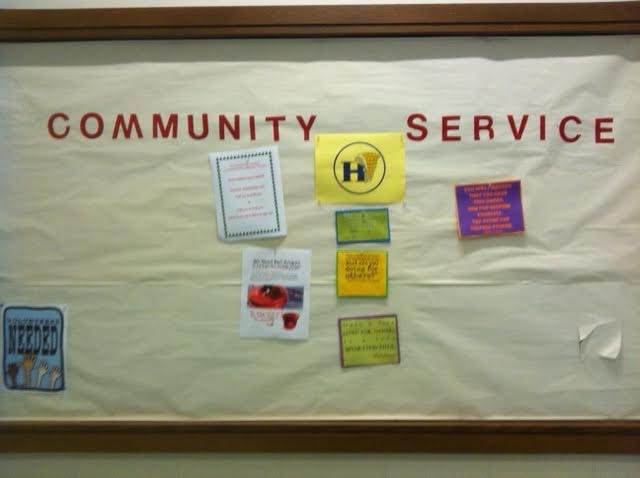
One of the big changes in the halls of HHS is the new community service requirement for graduation. On the face of it, it seems simple enough: you have to complete 10 hours of community service every year in order to be able to graduate. Ten hours are required every year so underclassmen do not try to procrastinate on the requirement until they are upperclassmen. This means the freshman this year will be required to complete 40 hours of service in order to graduate. According to Mr. Paquette, 40 hours through your four years is the average requirement of neighboring high schools with similar requirements on the South Shore.
HHS is in the middle of a transition period to a true “twenty-first century” curriculum and one of the hallmarks of that is a school-community connection. Back when the new building was being designed, a closer connection to the community at large was one of the key visions the administration wanted to implement. Mr. Paquette said that the Town of Hanover has given so many resources over the years, and this is our small way of paying it forward.
The requirement is written very broadly and basically covers any service done without pay to any worthy community organization. Coaching and refereeing HYAA sports, staffing community events and helping out with Eagle projects are just some examples of things that count toward the requirement. Mr. Paquette really emphasizes the flexibility and that there is something out there for everyone. If you ever get stuck for ideas, there is a community service bulletin board near the Music wing and Athletic hallway that is frequently updated as well.
Also, the community service requirement was envisioned as way of unify the entire school community toward a single goal. All students, from seniors down to freshman, have to complete 10 hours each year. The hope is that by giving the freshman that sort of responsibility, it helps them in the difficult transition from middle school to high school. As any student can tell you, once you’ve come to the high school, you simply cannot envision life any other way.
Mr. Paquette simply summed up the administration’s rationale for the requirement by saying, “It’s a wonderful thing. It’s an opportunity to give back.”
Many students have generally accepted the requirement as just another fact of life. Being a high school student means you just have to do certain things, with community service being one of those things in Hanover.
“It’s definitely a good thing,” said junior Alex Zwart.
“It’s good because people should do it [for the good of the community],” said Lauren Murray, a senior.
Other students do not share such an optimistic view, though. Senior Talha Kidwai said, “Since I’m a senior I only have to do 10 hours. I feel bad for the other grades [who would have to do more].”
Certainly there is a time commitment involved in the requirement that has to balanced out with other things. Most everyone has a busy schedule with extra curriculars, homework and, for some, jobs.
“I think [the requirement] would be a good idea if students had more free time,” said freshman Emily Crowley. “Teachers give us so much work that many students barely have time for anything but homework.”
Since the Sandy Hook School shooting of December 2012, the American public has dealt with 34 similar incidents in towns of different locations and affluence around the country. A total of 323 students have died in school shootings in the past 15 years. Just a single death is cause for concern, but hundreds of students being killed is a sign we need to take action.
This school year, Hanover High School adopted the ALICE protocol, which goes beyond traditional lockdowns where students hide and wait for rescue from police. ALICE stands for Alert, Lockdown, Inform, Counter and Evacuate, and presents several options for responding to an armed attacker. Students and teachers have been trained in how to communicate where the threat is and whether to evacuate, barricade their classroom doors or attempt to counter the attacker. (For more details on HHS’s plan of action, see the article published in our archives: New Security Plan Focuses on Armed Threat)
On Nov. 10, HHS students and staff participated in a drill which involved practicing the options. I found the trial run to be helpful and informative, and was curious to find out what my classmates thought of the practice and the ALICE program as a whole.
An ALICE drill in an Ohio school, image courtesy of the ALICE Training Institute
Many of my peers found it hard to believe that we live in a world where school shootings are something to expect and plan for. “It was eye-opening that these are the procedures we have to practice now, said Caroline O’Rourke, a junior.
“It was definitely necessary because (incidents) are happening more often but it was also nerve wracking,” said senior Maranda Grant.
I frequently heard how students found ALICE to be an improvement over our past practice of stay-put/lockdown drills. “It’s surprising that its taken this long to figure out that huddling in a corner is not the best way to hide from an intruder,” said junior Megan Ditullio. No one likes to feel at a loss for control, especially in a life-threatening situation. Vanessa Hanifan agreed, “I’m happy they changed to ALICE instead of just a stay-put drill.”
The drill was pretty scary if you thought about it in the context of a real life situation, but it nevertheless made the majority of my classmates feel safer. Junior Melanie Armstrong said, “I thought ALICE training was both helpful and smart. Now if something bad happens the whole school will know what to do.”
Jake McInerney, a freshman, agreed. “I never really thought about the stuff we were told about. I feel better now that I have.”
“When we watched the video, we learned what we had to do but not if we could do it,” added Erica Perry, also a freshman. “Not I feel more prepared.”
The drill also apparently did its job to make students feel like they were personally being taken care of. Annika Rowland, a junior, found the training “made me realize how real a situation like that could be but it made me feel better prepared and more confident that our safety is the school’s number one priority.”
Andrea Murphy, a senior, agreed. “Everyone was taking it seriously, going through scenarios. It made me feel safer, like we’d all come together.”
I also found that the practice made me feel that I had more power and was reassured about what would happen in the event of a gunman in the school. The day can best be summed up by junior Christian Morris, who said “Although many people had a comical look on ALICE training, it gave an educational and safe look at what could happen in the future and precautions needed to help keep students safe.”
This year the competition at the annual Lions Club Youth Speech Contest was stiffer than ever. Usually drawing good number of participants, this year six students signed up to tackle the question Respect: where has it gone? The winner of the contest is only the winner of that specific club. From there, the student goes on to compete against other local club winners in the zone competition, then the region competition, district competition, and if they make it that far, the final state competition. At that level the stakes are high, and a single winner will receive $1,500 in prize money. According to the Massachusetts division of the Lions Club International, “Each District has between 30 and 60 clubs, each of which is permitted to conduct a local Lions Youth Speech Competition. During the 2011-2012 Lions year approximately 500 students from across the state participated in our competition.” As you can see, the Lions Club Speech contest is much larger than just the preliminary rounds held at our high school.
All grades except the tenth were represented at the contest on November 5, and this year was significant because it was first time that ninth graders had the option to participate. The seniors who spoke were past winner Emily Tiedtke, Annabelle Torres, and Lindsay Glover, while Angela Mirisola and myself were the junior participants. Ninth grader Sierra Little-Gill became the first freshman competitor.
I had a great experience doing the Lions Club speech last year, so I decided to partake in it again this year. I’m really glad I decided to do it, because it was very eye-opening to hear what everyone had to say about where they think respect is today. Lindsey and Annabelle emphasized their feminist beliefs and how they felt that today women aren’t respected so don’t respect themselves. Emily cited technology as the downfall of respect, and Angela voiced her opinion on how respect is not something people even take the time to consider in this day in age. Sierra impressed everyone by relating her opinion on respect to personal experiences, and stating she was hopeful that we could save our generation from allowing respect to disappear completely.
In the words of Roy Morell, organizer of the speech contest, the event this year embodied “quality, not quantity.” As the judges tallied up the points, I truly had no idea of how the results would turn out, so I was shocked when they announced me as the winner! Sierra Little-Gill was the runner up, and all recipients received cash prizes at the generosity of the Hanover Lions Club. I am really excited to see what the next level of competition brings, and I always find it so interesting to hear about what other people my age have to say on the topic at hand. I strongly encourage anyone considering participating next year to go for it, and would also like to give a special thank you to Mr. Paquette and Mr. Barrett, who made the contest possible.
Suicide is not a sign of weakness. It is the absolute rock bottom a human can reach. The point where life itself is too much to bear and the only thing that can ease the burden is death. I used to think people who committed suicide were weak. That was the stupidest, most insensitive and immature thing that has ever crossed my mind. A bruise will heal because it is physical and the body will repair itself. The mind does not heal as fast as the body when a spirit is crushed. It takes a long time to repair. We are sensitive creatures. Admitting this is the first step to growing up.
On Oct. 29, John Halligan visited Hanover High School to share the story of his son Ryan, who committed suicide in October 2003 at the age of 13. Ryan took his life, his father told the audience of students from grades 5-9, because he was harassed and humiliated by classmates in his Vermont middle school. Ryan also could not escape from bullying online.
After Ryan’s death, his parents helped pass an anti-bullying law in Vermont. John Halligan travels across the country to tell his story in the hopes of helping other students and families deal with and prevent bullying.
Ryan Halligan’s death is a tragedy to us but for his family it is a lifetime of regret and agony. They face day after day of sorrow and anger because some people couldn’t keep their mouths shut. Imagine losing a loved because he was abused to the brink not by punches, but words. Not very appealing, is it?
Bullying another human is not alright. In fact, that is weakness. If you’re stronger, smarter, faster, or better than another human, use those gifts to help them and not taunt them over their imperfections. No one is a perfect being, no one. We are all cracked, beaten, torn up, and scarred either physically or mentally from what we have lived with, some more than others. But the scars, cracks, bumps and bruises are what make us, and to make fun of a person incessantly because of the things that make them who they are is truly vile.
If you see someone getting bullied (but I’m happy to say we have a fairly kind school all around), stop it. I don’t care how and I don’t think the person who is being bullied cares how, just put an end to it. Do not let your mind interfere, you should know it’s right to help so don’t think about the consequences. Bystanders who do nothing are almost as bad as the people doing the bullying.
If you are ever bullied yourself, talk to someone for help: a guidance counselor, a parent, a friend. Don’t give into the feelings of worthlessness that a bully tries, whether physically or emotionally, to beat into you. Hell, tell me I’ll see what I can do.
We have fleeting time on this planet. A second becomes an hour, an hour a week, a week a year. We don’t have much time. Be kind to each other, make people laugh not at the expense of others, and just don’t be a punk.
One of the hallmarks of a “21st century curriculum” (a favorite buzzword of administration) is the idea of interacting with the outside world in the process of completing coursework. The internet is supposed to give rise to a new collaborative spirit in the halls right here at HHS. Mr. Molloy’s psychology class is taking that concept to a whole new level with their participation in the nationwide “Write It Forward” project. In a nutshell, “Write it Forward” is an extension of the common chain letter but with a twist. Students have to write a positive letter thanking someone for the impact they’ve made on their own lives. It’s supposed to be handwritten as writing something out by hand is supposed to be more heartfelt.
The twist is that the person who receives the letter is supposed to write a letter of their own to a person who has had a big impact on their lives. Thus it becomes a chain letter in a classic sense. Eventually, if the system works, the letter makes it backs to right where it started: Hanover High School. Mr. Molloy’s project has already received several returned letters and gotten a lot of positive feedback on the program!
As of right now, the project has been a great success. People from all 50 states have visited the class website (writeitforward.edublogs.org). Over 100 letters have been sent as a part of their efforts. For the latest news on this project you can follow them on Twitter @writeitforwardhhs. You can also email writeitforward@hanoverschools.org or see Mr. Molloy directly.
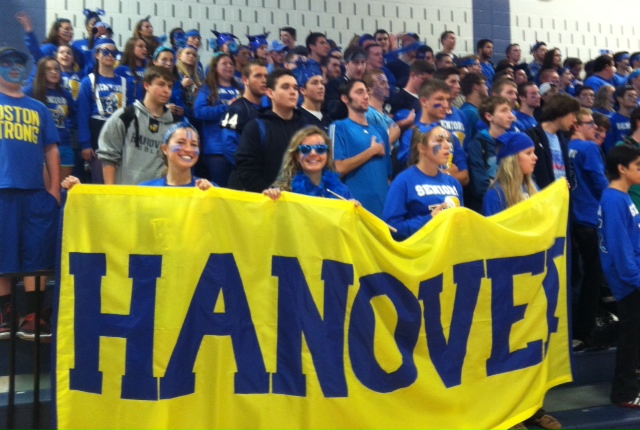
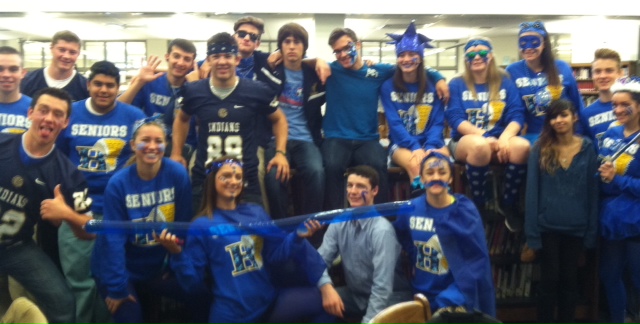
One of Hanover High School’s many traditions is a rally to get school spirit up right when school starts in the fall. For the past couple of years it has been the week of the Homecoming football game and dance. This year the rally was particularly well orchestrated by StuCo’s E-Board and Principal Paquette. All grades had fun and everyone got pumped for the football game against Middleboro Friday night. New this year, the seniors ran into the gym while the marching band played the school’s fight song. While Seniors were the spotlight of the show, everyone had fun and it was a great way to end the week. See below for pictures of the festivities. If you have any pictures please send them to hhsindian@hanoverstudents.org or reach out to us on Twitter, Instagram, or Facebook for inclusion in our gallery.
By far, this was the best Spirit Week showing I have ever seen! It was kicked off with ‘Merica Monday, where HHS students patriotically paraded around the hallways draped in American flags. Personally, I expected to see most students wearing blue jeans and a red t-shirt, but, as made clear in the pictures below, Hanover High went big. Next, pajama day was an obvious hit. The dream of wearing PJs to school was finally realized. Many got creative with the pajamas, wearing full onesies and giant slippers. Third was Wacky Wednesday, but “wacky” seemed to be a bit of an understatement. Although this seems to be an annual theme, the students were in no way tired of it and dressed weirder than anyone in their right mind could ever anticipate. Thursday we got a chance to show off our Hanover pride. The hallways were decorated with the class themes: Founding Freshman, Selfie Sophomores, Juvie Juniors and Safari Seniors. To be completely biased, the juniors’ pod was pretty excellent. However, I think the Selfie Sophomores’ creativity, detail and makeshift photo booth impressed every class. On Friday, every class wore its colors loud and proud. It was thrilling to see — and hear! — so much class spirit.
There is an incredible range of clubs here at Hanover High School, truly something out there for everyone. But if you don’t know where to look, worry no more! Here is a complete list of clubs here at HHS! As you read on, I hope you’ll be able to connect with a club you like.
Art Club
Do you like to paint, draw, or simply unleash your wild creativity? Do you want to connect with other students who also love art? If so, art club is the club for you! Art club meets with Mr. Crawford in room 108 once a week and the room is always filled with young artists at all levels of expertise, gathered in an environment where they can bring their art dreams alive. Stop by anytime and find the inspiration to create something amazing!
Chess Club
Do you enjoy playing chess? Are you interested in the game of chess and want to try your hand at it? If you’ve ever been curious about chess, whether you consider yourself a beginner or an advanced player, drop by the club and join a welcoming environment where you can play chess with those who truly know how to play! The club is advised by Mr. Plummer and meets on Fridays in the auditorium.
Debate Club
Do you like the art of persuasive speech? How about arguing topics that are relevant to today’s society? Do you want to improve your abilities in public speaking and self confidence? If so, consider joining the debate club! Debate club meets every week and is a comfortable atmosphere where students learn to nurture and flourish their talents for debate and argument. The club is advised by Ms. Pavao, and if you have questions, feel free to contact her!
Diversity Club
Do you want to help promote tolerance throughout Hanover High School? Are you interested in joining a club that discusses ideas that have a huge impact on our society? If so, definitely join diversity club. The club prides itself on raising awareness of important events such as the day of silence, and also discussing relevant political and social issues worldwide. Meetings occur each Thursday and you can contact club president Lindsay Glover with any questions about involvement.
Fashion Club
Fashion Club Display Case
Do you love haute couture, shopping for the latest styles or browsing fashion magazines? If so, the Fashion Club is for you. The club meets every other week in room 110. Members talk about trends and are planning to feature a best dressed teacher each month in the window they host near the library. They are also organizing a fashion show in March with more than 25 teacher models and town participants and vendors from Newbury Street and around the South Shore. For more information, see Mrs. Curley or seniors Bruna DaCosta and Hayley Martin.
Green Team
Are you looking for an easy way to help out the school and the environment? Do you enjoy being able to create a greener planet and better school atmosphere? Or are you even just looking for a simple way to pick up a handful of community service hours? Then Green Team is the club for you! Every Wednesday, the team disperses and spends a brief amount of time collecting recycling bins from all over the school and dumping the contents into the large recycling dumpster. Joining Green Team is taking a small step toward a big difference! If interested, meet in the guidance office after school on any Wednesday!
Junior Rotary Club Do you enjoy helping others, both in the community and internationally? Have you ever wanted to take part in creating an original fundraiser or community service project? In that case, check out the Junior Rotary Club! As the junior division of the Tri-Town rotary club, Junior Rotary Club involves planning and participating in community service events and helping people locally and globally. JRC meets Mondays after school in room 317. You can contact Mrs. Aborn or junior Mike Meads with questions about involvement.
Lemonade Stand
Do you like putting smiles on the faces of people everywhere? Are you interested in getting opportunities to help those in need? If so, check out Lemonade Stand, a club of students who strive to make people happy by visiting sick patients at hospitals, donating time to nursing homes, spending time with children going through chemotherapy, and more! If you’re interested in getting involved, contact Kate Joy or Hannah Thurston.
Literary Magazine
Do you have a passion for writing? Do you wish there was a place where you could anonymously post poetry and short stories? Or are you even just looking for a place where you can unleash your creative energy? Well LitMag is the club for you! LitMag involves little commitment, only a few short meetings a year. Other than that, students post poems, stories, and more on the club’s website, hanoverlitmag.com. Check out the site or speak to junior Angela Mirisola, senior David Raab, or Mrs. McHugh for more info.
Math Team
Are you interested in math? Are you looking for a way to connect with others who have a knack for numbers like you? If so, consider joining the math team! Students from all grades and levels of math are accepted, whether you take geometry, algebra, pre-calc, or calculus! Math team meets every Tuesday night in room 218, and is advised by Dr. Defranzo. Senior Captains are David Raab and Megan Scribner.
Movie Riffing Club Do you enjoy poking fun at bad movies? Do you love sarcasm and humor? Are you interested in criticizing film? If so, join the movie riffing club! The club has a good time laughing at bad movies every Thursday after school in room 222. Contact junior Linnea Martin with any further questions.
News Club Do you want to try your hand at journalism? Do you want to get your OWN articles published right here on hhsindian.com? Are you interested in documenting student life, and also pressing issues in today’s society, just like a real newspaper? In that case, join News Club! Meetings are held on either Wednesdays or Thursdays after school in the “News Room” adjoining the library, and every week students have a chance to sign up and publish new articles about the latest news in both the school community and greater society. We are always looking for new writers, artists, and photographers to join! Contact senior David Raab, junior Andrea Bilton, or Mrs. McHugh with questions.
Robotics Club Have you ever wanted to build a robot? Do you want to see what entering a robot competition is like? Do you like futuristic technology or computer programming? In that case, check out the robotics club! Students meet every Tuesday to build robots and program them using C code. Right now, students are also assembling a brand new 3D printer. Contact Mrs. Borgeson with questions.
SADD Do you want to be a “student against destructive decisions”? In that case, join SADD! Students meet weekly to discuss heavy topics that have an influence on students’ life and behavior. If you are interested in becoming a part of such an important conversation about how to prevent the dreadful decisions that take a toll on student life, see Mrs. Rapalje-Fitzgerald for more information.
Student Council
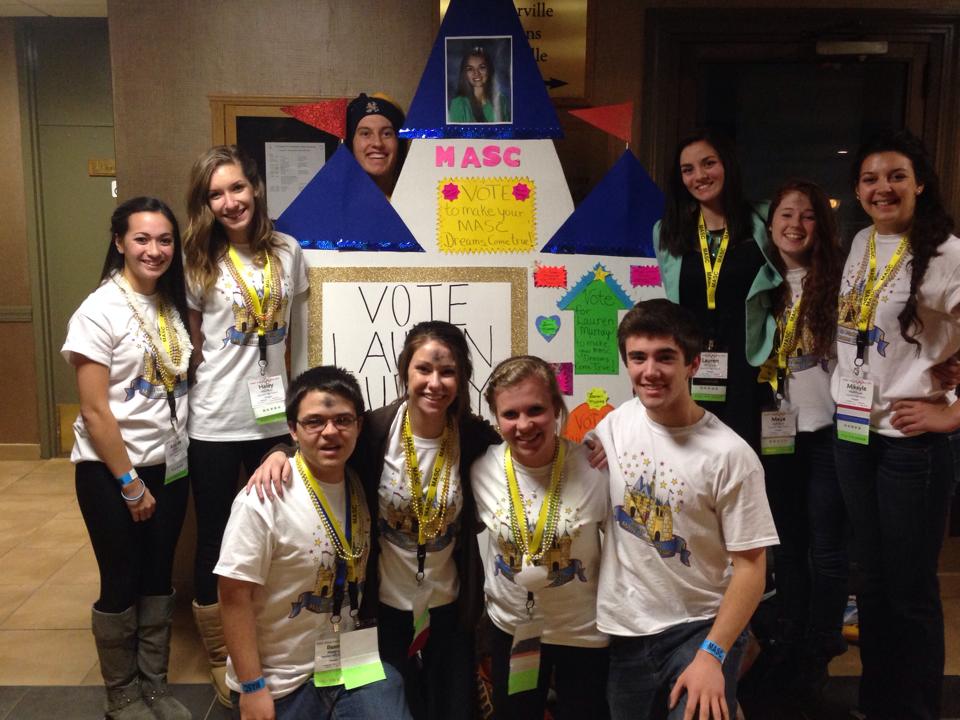
StuCo at last year’s Mass. Association of Student Councils conference. Courtesy of Lauren Murray
Do you want to get involved in important decisions made regarding student life at HHS? Are you interested in student government or strengthening leadership qualities? Do you want to simply be part of an upbeat, welcoming group of people and take advantage of many opportunities involving school spirit and Hanover pride? In that case, definitely attend a student council meeting. Student council meets about twice a month on weeknights, and they discuss and plan events occurring in the school and also get involved in a vast array of community service projects. Student council is an easy way to always know what’s going on at HHS, and have a hand in planning events and dances that occur each year. Contact Mr. Hegarty or Mr. Centorino with any questions.
Yearbook Do you want to help create everlasting memories for students at HHS? Do you like photography or designing page layouts? In that case, consider joining the yearbook committee. Yearbook meets every Wednesday and makes decisions involving the annual yearbook. The club is constantly looking for new members, especially those who like to take pictures and capture student memories as they happen. Contact Mrs. McCusker or Mrs. Coates with questions!


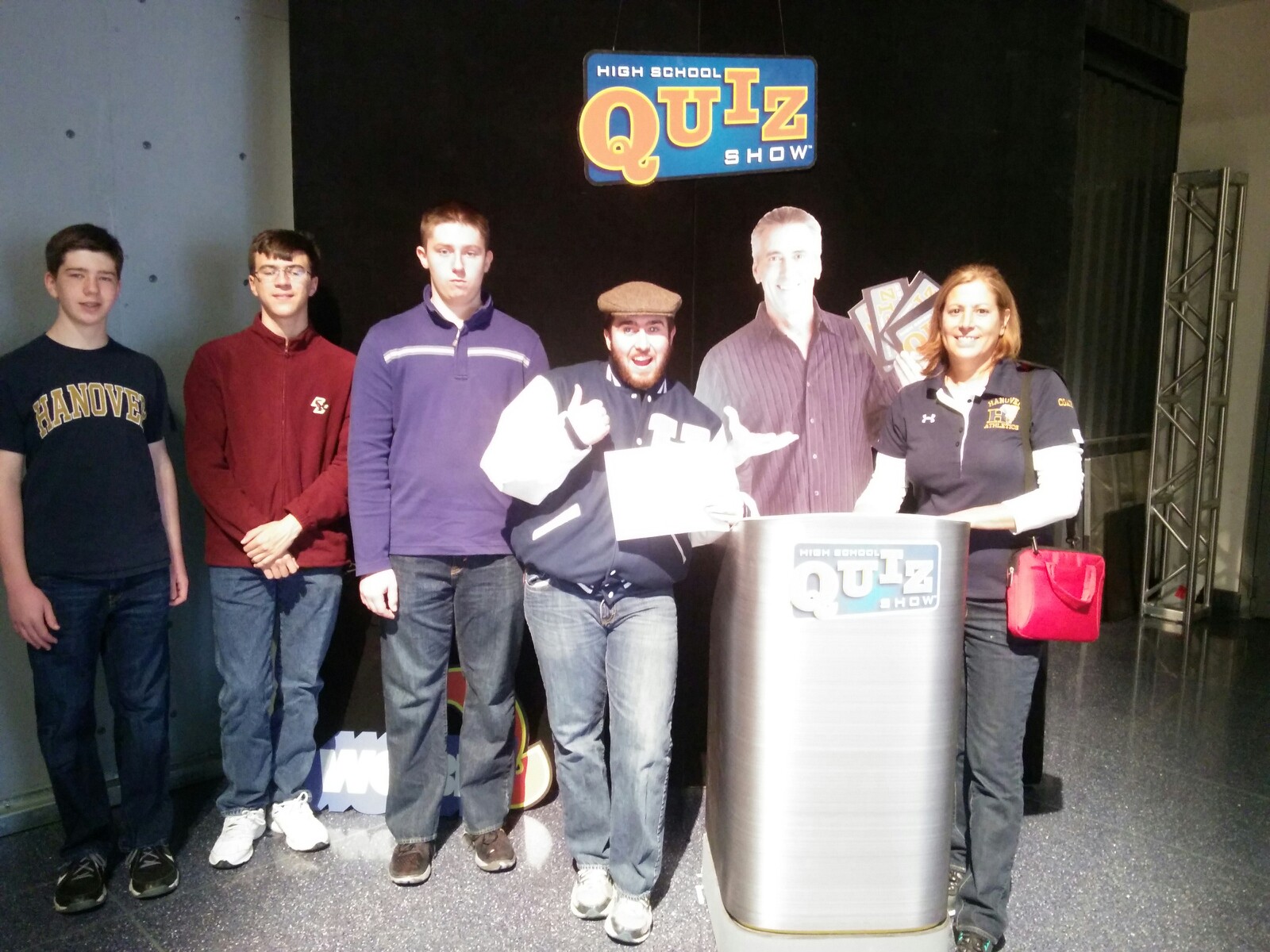 with 70 questions which can be just about anything. The last 30 questions are from categories given only when the questions are asked. There is no easy way to prepare because the questions asked can be on literally any topic. That being said, it is recommended that teams have a wide range of general knowledge and trivia. I hate to say it, but paying attention in class is what makes the difference.
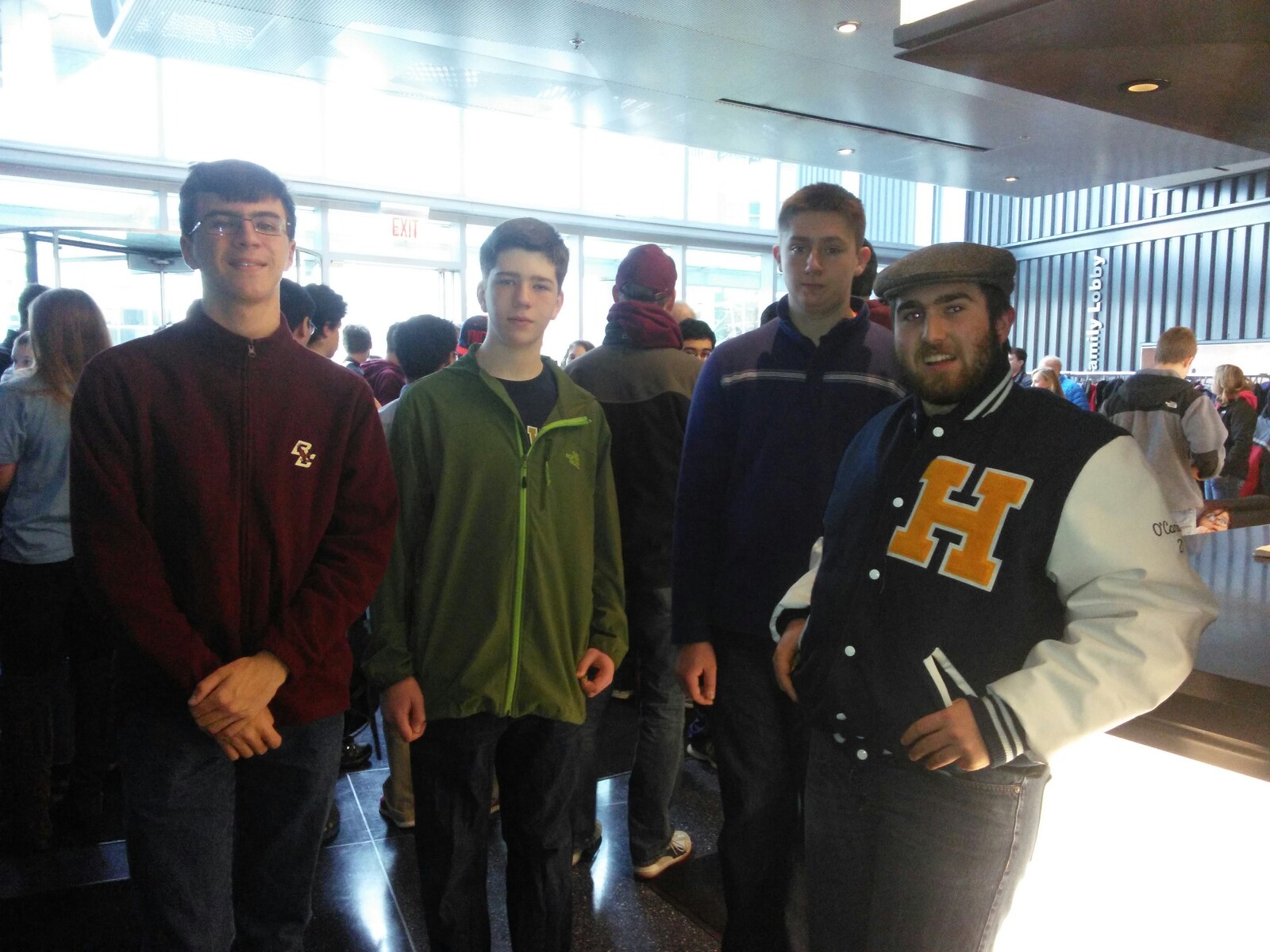 Overall, the team thought it was a good learning experience. Our weakest category would have to be the spelling questions. I do not think we got a single one of those right. Even if Hanover does not make it this year, the experience will be there to be able to make it next year. I certainly believe this a good tradition to start here at HHS, not the least because I was a part of it.








 The Hawk