Review: ‘Into the Wild’ and ‘The Wild Truth’ Explore Young Man’s Fatal Quest

Chris McCandless was a 24-year-old college grad from an affluent family when he cut ties with everyone he knew and spent two years roaming the country. He gave away his trust fund, burned the rest of his cash, and lived as a self-described  tramp before trekking into the wilderness of Alaska. About 100 days later, in the fall of 1992, he was found starved to death in an abandoned bus.

Into the Wild, by Jon Krakauer, is the fascinating story of Chris’ fatal quest to find the simple beauty in life. As he did with his nonfiction books Into Thin Air (about climbing and dying on Mount Everest) and Under the Banner of Heaven (about the deadly extremes of Mormon fundamentalism), the author crafts a factual, yet engaging, narrative. His work often reads more like a story than a nonfiction book. For Into the Wild, Krakauer dove into research and tracked down sources across the country to create a multi-layered portrait of his subject. He brought in historical context of other people who have communed with or disappeared in nature while trying to “find themselves.”  He also described his own experiences as an outdoor adventurer to try to understand why Chris would abandon his family and a potentially secure future. He explored whether Chris was an arrogant idiot who was unprepared for the wilderness, a noble soul looking for a pure life, or a troubled escapee running from a dysfunctional family.

When I first finished the book, published in 1996, I wasn’t sure which I thought Chris was. Krakauer hinted at some troubles in Chris’ childhood, the worst being the two wives and families that his father kept simultaneously, and his parents’ obsession with materialism. But I wasn’t sure that was reason enough to justify the break that Chris made from his family and friends. I wasn’t sure until I read The Wild Truth, the 2014 book written by Chris’ sister, which gives more insight into their terrible childhood. Now I have a better understanding of what Chris was trying to leave behind.

In The Wild Truth, Carine McCandless describes the physical and emotional abuse that she and her older brother, Chris, endured growing up: the brutal fights, the endless manipulations, parents who seemed to care more about appearances than reality, confusion over their father’s two families. In some ways, this memoir of survival and recovery reminded me of A Child Called It or The Glass Castle. Writing it helped Carine deal with a lot of her own issues and also explained in more detail why her brother took off. It was his journey of healing, a way to shake off the scars of his upbringing and find peace and truth.

What I found most fascinating about Carine’s book, however, was the glimpse that it gave us into how journalists tell stories. Krakauer wrote Into the Wild twenty years earlier with a lot of help from Carine. But though she shared her family’s dark secrets with Jon at that time, she asked him not to put them in his book. She said she was trying to protect her parents in the hope of salvaging their relationship. Perhaps it is the former journalist in me, but the whole time I read Carine’s book, I wondered how Jon could write nonfiction about Chris but not include it. I understand he was respecting a source’s wishes, and that happens a lot. But what a challenge he must have faced, only being able to hint at the troubled family life that likely drove Chris on his journey. Ethically, did Krakauer do the right thing? I’m not sure. Carine said she wrote this book to set the record straight – many people thought Chris an arrogant fool for dying in the wild. This book did that for me, but also left me wanting a memoir from Krakauer about his life as an adventurer and writer.
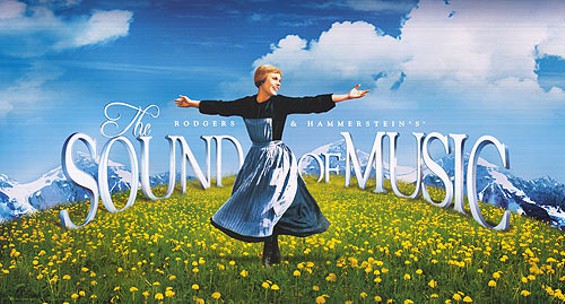

The Sound of Music…More Like the Sound of Success!

Hanover High’s production of The Sound of Music kicked off Friday night with a sold-out audience and fantastic performance. After seeing Romeo and Juliet earlier this year I was well aware that Mr. Plummer was an effective directer as well as a drama teacher, but he really out did himself this time. The costumes were amazing and very true to the movie (can you say play-clothes made of curtains?!), and senior Mary McWilliams did an amazing job as the hair and make-up extraordinaire. The sets were also very well done and allowed for a quick transition from one scene to the next…not to mention a few musical numbers that took place on the stairs.

The production began in the abbey, where the nuns sang in their angelic voices as they gathered for prayers. Madison Fitzpatrick led as the Mother Abbess singing in her beautiful operatic soprano, and her reverend posse included Katie Scott as Sister Berthe, Hannah Kirby as Sister Margaretta, and Kayla Maslow as Sister Sophia. These ladies nailed their performance of the song Maria, and as one of my favorite scenes in the movie, I knew that I was in for a treat.  Then we finally meet Maria, but let me tell you, it was definitely worth the wait. Hayley Ardizzoni was the center that this musical revolved around and she played her part like and absolute professional. Not only her vox-trained pipes but also her facial expressions and general aura contributed to making her the perfect person for this role. After her introductory solo The Sound of Music, Maria is told by the Mother Abbess that she is basically much to happy to live in the Abbey, and has even been caught singing in the gardens (oh, the horror). Instead, she will become the new governess for Captain von Trapp’s brood of seven children, a number she didn’t look too psyched about.

Despite being the cause for tears of many a governess, the von Trapp children were an immediate success from the second that they marched in when the audience broke into laughter. Maria sassily lets the Captain, played by senior Zach McAurthur, know that she, or the children for that matter, will not be summoned by a whistle, and once he has left she begins breaking the rules once again when it comes to singing. I suppose this is alright when you have a voice like Hayley’s, however, and soon she has the children in a rousing chorus of Do-Re-Mi. In the following scene on the infamous terrace, we learn a few important things: Macy Hohenleitner (who plays Liesl) would probably win best supporting role if we were at the Oscars, Brennan Taylor makes a mean Rolf and has the voice to match, and Ms. Bossong could quit her job at any time and become a successful choreographer. All is going well for the family, the children are getting over their fear if lightning storms with the help of sing-a longs in Maria’s bed, they are getting to play outside wearing curtains, when the Captain returns with his new lady, Elsa. Lindsey Glover became this role, with her slightly upturned nose and stick-straight posture, she played Elsa even better than I could have imagined. The kids like Elsa, but they like Maria more, although not as much as Captain von Trapp. Things get pretty heated when the two dance at a party, and the children’s perfect rendition of So long, Farewell has a double meaning as Maria boots it back to the Abbey to escape her feelings for the Captain.

Act two begins with Max, a friend of Georg von Trapp’s, trying to coax a Do-Re-Me out of the now depressed children. Max, played by senior Thomas O’Connor,  was one of my favorite characters with his bravado personality, quick come-backs for everything, and even perfect German mustache. The kids are overjoyed when Maria comes back and they celebrate by (can you guess?) singing My Favorite Things. The situation gets even better when Elsa and Georg (who has a pretty amazing voice himself) sing Ordinary Couple, a song I had never heard before but really enjoyed, and realize they are not an ordinary couple because they are both so stinking rich. Elsa hands over her engagement ring which soon finds a new place on Maria’s finger. Sadly, their honeymoon comes to a disastrous end upon their arrival back home, when Nazis Mike Nimeskern and Stephen Pallotta  demand Georg immediately report for duty at the army base. Thankfully, Max has entered the family in a singing festival, where they preform some of their greatest hits. Zach McArthur knocks Edelweiss out of the park, and the performance of So Long, Farewell is even better than the first time (it that’s even possible). After the festival, the family escapes to the Abbey and then on to Switzerland. The musical ends with Maddie Fitzpatrick working her magic with the the song Climb Every Mountain…she even hit The Note.

Just watching this production I could see how much time and effort had gone into it from all aspects of production. The efforts did not go to waste, for the rest of the audience shared my opinion and when the cast took their bows not a single person in the house was sitting. Of course, none of this would have been possible without the musicians who played perfectly the entire night. I can’t even imagine learning to play one song so well, let alone keep it up for hours! Congratulations to anyone involved with the play, you earned yourselves and A+ in my book.

Music Department Gets Ready for Festivals

The Instrumental and Choral groups of HHS got together for their annual Spring Collaborative Concert on March 19. This concert is meant to be a way for the community to hear what the groups will be performing at their adjudicated Festivals. The program for the concert and the video from Hanover CTV are embedded below.

Symphonic Band, Concert Chorus, Chorale, and Vox will be performing their selections at the Massachusetts Instrumental & Choral Conductors Association (MICCA) Festival the weekend of March 27-28. Jazz Ensemble participated in the Massachusetts Association for Jazz Education (MAJE) Festival and received a bronze medal.

Two weeks after MICCA, all of these groups will be traveling to Williamsburg, Virginia, during April Vacation to perform in another competition.

HHS Spring Concert from Hanover Community Television on Vimeo.

HHS 2015 Festival Concert (link to program)

Just Give Me My Food and Leave Me Alone!

For the first two weeks of February, McDonald’s restaurants ran a marketing campaign that terrified me. “Pay With Lovin’ ” promised that customers would get free food if they agreed to random stunts such as calling their mother, performing a dance or hugging a stranger. McDonald’s thought this would be hip and spontaneous and generate a lot of good neighborly feelings. Instead, social media exploded with complaints that the promotion was intrusive, obnoxious and mortifying.

I couldn’t agree more. When I go to McDonald’s, it’s to get a quarter pounder and fries, not to feel neighborly. I want a friendly, but quick, transaction. I don’t want a life-changing experience. If they asked me to call my mother, I’d either look like a jerk for saying “no thanks” or sound like a downer for telling them she’s passed away. The Grub Street website reported about a customer who called his mom and freaked her out because the call was out of the blue. McDonald’s can’t anticipate people’s issues. What they think might be a fun and harmless task can stress or offend someone. And I feel bad for the employees too, who are forced to dredge up what is most likely false enthusiasm for a job that barely pays the bills. I have to admit that I avoided McDonald’s for the duration of the promotion out of fear of being targeted.

Advertising is all about catching the public’s eye, getting attention and generating excitement — I get that. And while I see through all the manipulation and innuendo of commercials, I still enjoy them and sing the catchiest jingles (“give me a break, give me a break . . .”). But companies presume too much when they try to turn marketing into something touchy-feely. Customers want a product, not an experience. Just give me my food (or my beverage or my whatever) and leave me alone.

Another recent example of invasive and awkward marketing is Starbucks’ efforts to spark conversations between baristas and the customers they serve on the issue of race. Race, religion and politics are things I only talk about with close friends, where I know differing viewpoints will be accepted and relationships won’t be crushed in the debate. I would never talk about these things with a complete stranger for fear of offending the person, or getting trapped in a heated exchange with someone who doesn’t know how to agree to disagree. I can’t think of a topic more potentially incendiary than race. Yes, this country needs to open a better dialogue about discrimination and social ills, but that conversation doesn’t need to take place between servers and patrons during the brief, often rushed purchase of a coffee. I would argue that doing so is not only potentially uncomfortable for everyone involved, but also irresponsible. Is Starbucks giving its employees specific talking points to follow in these discussions, or giving them free reign? I’m not sure which would be worse.

I’m sure in both cases, the companies were trying to bolster their image as compassionate, socially-conscious businesses concerned with more than making a profit. But I think these efforts back-fired. Rather than encourage people to feel good about the company, these campaigns turned people off. If McDonalds, Starbucks and other companies  want to help people, they should work with reputable charity organizations and put their company’s wealth behind a good cause. Don’t hide behind a marketing gimmick — an obnoxious one, at that — and pretend it’s a way of doing good.

March Madness is Back

The NCAA tournament kicks off today after another exciting College Basketball season.  The last two days have been play-in games, where low-ranked conference champions vie for a spot in the tourney. On Tuesday, Hampton beat Manhattan in a good game. Then in an incredibly exciting game, Ole Miss came back from a 17-point deficit to beat BYU. On Wednesday, Robert Morris came back from behind to knock off Florida. Then in the nightcap it was another thriller when Dayton beat Boise State in a game that came down to the final shot. The play-in games are always in Dayton, which gave them a home court advantage.

March Madness, which deserves the name with the amount of exciting games, is a basketball junkie’s nirvana. It’s such a big deal that President Obama takes time to fill out a bracket every year, something I think he undeservedly gets too much heat for. Weeks of the top basketball teams play their best for the national championship. It doesn’t get any better. There are always a couple lower-seeded teams that knock off a top power school and become darlings of the tournament. Almost every year there is a Cinderella mid-major team that will go on a long run in the tournament, sometimes all the way to the final. It is truly a great time to be a basketball fan, trust me, I know from vast experience.

March Madness is always a great time to make some money too.  Industry estimates are that $90-$100 million are legally gambled every tournament and that the number could even be as high as $227 million. However, lots and lots of money is available illegally. Bracket pools run in offices or among groups of friends are not usually worth more than a couple hundred to one thousand bucks, but 23 years ago a nationwide FBI estimate put that number at $2.5 billion and that number has likely grown. Pregame.com, a website that analyzes world news, estimates that $12 billion worldwide, legally and illegally, was at stake during last year’s tournament. Yes, technically Bracket Pools are illegal. Right now the only state where sports betting is legal is Nevada. I like to compare it to jaywalking; everybody does it and as long as you don’t egregiously partake in it in an authority’s face, they’re not going to do anything about it. To date, no one has ever been prosecuted for friendly office pools; key word being friendly. But gambling money isn’t the only  money at stake. A report last year by outplacement firm Challenger, Gray & Christmas says, “The cost to American industry will be more than $1.2 billion, based on an average hourly wage of $24.31 and if each worker spends just one hour on their brackets.”

Like most years, the 2015 tournament has a little bit of local flavor if you’re interested. Perennial New England representative and defending national champion UConn did not manage to qualify this year. However, Harvard won the Ivy league for the fourth straight year and will look to go for their third 1st-round upset in four years. They start off with a tough University of North Carolina team. Northeastern also made the dance for the first time in awhile. They have a lowly 14 seed and start off the tournament by playing the very first game versus a hot Notre Dame team that just won the ACC championship. The expectation is their tournament experience is going to be pretty short. Providence is also in the tournament. They have had a pretty solid year and are capable of winning some games, but next year is when they’re going to have their best shot to win it all. They start off this tournament with Dayton, and if they get by them, they have been a trendy upset pick to knock off #3 Oklahoma in the second round.

If you’re looking to get involved or make some wagers, you can’t go wrong with Kentucky. They’ve been exceptionally dominant all year, and they have on their  bench Sam Malone, whose high school playing days were at Scituate High School.

Like most years, there is a lot of parity in college hoops and a lot can happen. Author’s pick: Arizona over Virginia. Happy watching!

Brawlin’ Through Time: Who Would You Fight?

I watched Fight Club recently (great movie, by the way) and Brad Pitt asks a very interesting question: “If you could fight anyone, who would it be?” After I finished staring at  Brad’s beautiful, beautiful face, I realized that this would be a great question to ask the angst-filled students of HHS. Guess what? I was right.

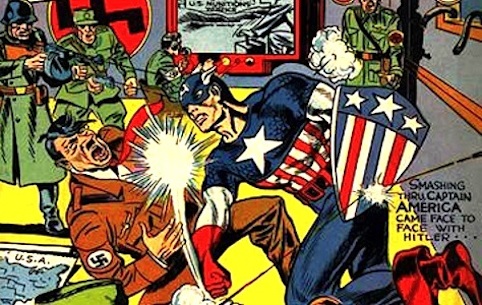
Junior Max Meallo stated that he’d fight infamous Nazi leader Adolf Hitler.  “In a World Star video,” he added. “I’d be shirtless and super ripped.” I like everything about this fight, literally everything.

Coleman Lambert, a sophomore would also take on Hitler. “But he was pretty built so I’d definitely stomp out Doctor Mengele.” Great choice, Coleman, Mengele was the definition of a mad scientist and a deadly surgeon with his knife. But I have full confidence that Coleman’s a surgeon on the wrestling mat, and will probably kill him.

Senior Steven Griffin said he’d melee with Fredrick Douglass, the  the abolitionist revolutionary. When I asked Griff why, he said, “Just because, for reasons opposite of racism.”  I guess this is not racist, even though it totally sounds like it is.

Man of peace Jake Casper, a senior, said he’d go head-to-head with Kanye West. “I’d take him out with a dropkick to the face,” he said. “I like his music, but he’s a horrible person.” That was the first time Jake sounded violent and I felt so proud of him.

Junior Noah Gattereau spat out that he would fight “all three members of Migos for dissing my boy Chief Keef, bang bang O block.” It took me three months to process this statement and I still sometimes forget that what Noah said was classified as English.

Sophomore Alex Campbell wants to fight Eve, of the Biblical power couple Adam and Eve. Well, Alex, God wouldn’t be so pissed at us if you body slammed that blonde rule-breaker into the holy earth, so go for it.

Abby  Kirby would take on magician Harry Houdini and Meaghan McGlame would fight Italian Dictator Benito Mussolini. I think they chose them because they rhyme.

Ah, I love improbable questions like these. They provide such great answers. If I had the opportunity to fight anyone, it would be Vlad the Impaler. If I beat him I get to keep his nickname and that would be metal: Eric the Impaler. Ahh . .  . how peaceful.

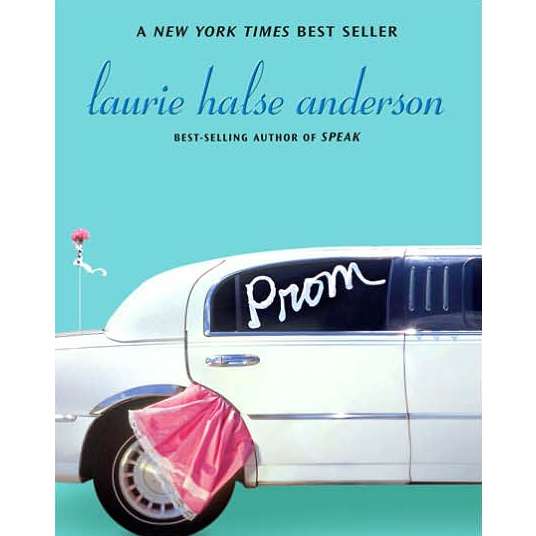
Review: Girl Who Hates Prom Tries to Save It When Teacher Steals Money

High school senior Ashley may be in the minority, but she hates the idea of prom. The thought of spending all that money and getting all decked out is – to her – not only a waste, but ridiculously fake. But to her best friend Nat and a bunch of other girls, the prom is an event they’ve been dreaming of, the one good thing in a life of crummy minimum wage jobs, dysfunctional families, and uncertain hopes for the future.When a teacher is arrested for stealing all the money raised to pay for the prom just days before the big event, Nat and her planning committee are distraught. That’s when Ashley steps up to help. Tough, no-nonsense Ashley throws herself into planning a new, cheaper prom for her class. With honesty, humor and some well-placed pastry bribes, Ashley works to save the dance. In the process, she changes her mind about the prom, her family and her future.

Written by Laurie Halse Anderson, Prom is a fun, quick read. It’s not as serious as her most well-known book, Speak, about a student who is raped at a high school party. But the characters are likeable, “normal” kids — ones who may not get straight As or want to go to college, but ones who may have a reserved seat in detention or are saving pennies from working at McDonald’s to buy a car. The plot is simple and moves fast, and the ending is a happy one (unusual for books that I read!).

I recommend this book for anyone who doesn’t like to read. I think it may change your mind.

Some Thoughts on Over-Thinking Things

You know when someone says something that resonates with you to your very core?  It can be a passing comment, a token of advice or just a statement, but it stays with you long past that person’s presence. It plays on repeat in your mind every second, it just won’t seem to get out. It’s called “over thinking” and personally, I deal with this on a daily basis. Everything that comes my way, I typically go crazy and think that if I mess this up, the entire world will go into peril. These situation can be anything from writing an essay to smearing peanut butter on my sandwich. It’s not just me who goes through these dilemmas, it seems everyone overthinks everything. Whether it’s what we think or what someone says, it affects us more than we let it show. But I, for one, am sick of it! So I decided to list several concepts that people need to stop over thinking:

Every painstaking detail of why something didn’t work out. It doesn’t matter anymore. There is a time for reflection for the sake of growth to not repeat a mistake, but other than that, overthinking the wrongness of it will just bury you in your own sadness and remorse.

Mundane social disparities that, contrary to your fears, do not mean anything. Sometimes people just don’t have the time to talk to you, or they just don’t want to hang out. We have a tendency to spiral into panic when these things happen, but in reality, more often than not, all these less-than-pleasing social cues mean nothing more than the person in question is saying they do.

Your overall performance. You will never receive constant validation that you’re doing a good job. Sometimes you just have to do your absolute best and let the other pieces fall as they may. Trying to decipher everyone’s opinion on what you do won’t make you any better at it, it will just drive you crazy

Your place in the world. The only place you belong is wherever you are right now, and if you’d like to change, where you belong next is where you want to go. There is no conflicting right and wrong when it comes to where you’re supposed to be in life. The mind may deceive you but your reality will not

How you look at any given moment. How people perceive you is a) usually a misconception of their own imagination and does not actually dictate anything about you and b) is never as in-depth as you think.

All You Need to Know About Relay for Life

Walking a mile in gym class can seem daunting on a rough morning, but walking 26 miles through the night around a track? I don’t think so! Or so I thought at first anyway. The Relay for Life is a huge undertaking but can be extremely rewarding. The good news is, you don’t actually have to walk all 26 miles, and you can stop to sleep for as long as you want, but more on that later. Let’s start with the big picture: what even is Relay for Life? In one sentence, this walk is organized by the American Cancer Society and claims the title of the world’s largest fund raiser. It generates the highest percentage of the Society’s funds, and unites people across the world. Walks are organized at the local level with just over 100 participants, but are also held at college campuses like MIT, University of Miami, and Stanford, along with huge cities including New York City, Washington D.C., and other sites around the globe. The first Relay for Life was held Tacoma in 1980, making the fundraiser older than any student at HHS! Since the very first event where just one man walked a high school track with friends who donated money to participate, Relay for Life has grown immensely. Every year, over 4 million people participate in 20 different countries!

So, how exactly does Relay for Life go? Well, the emphasis is on the relay. People form teams that fund raise as a group, with all profits going to benefit the American Cancer Society. The walks can last for up to 24 hours, but each individual team member can walk as much or as little as they would like as long as one person on the team is walking at all times. Now, you might think walking a track 104 times might get a little repetitive, but this isn’t the case; every few miles of the course is different in some way. The walk kicks off with a survivors’ lap, a time for past cancer patients to walk the track together and lead the battle against this terrible disease. After dark, a luminary ceremony is held with candles in paper bags around the track. Each candle represents a life lost to cancer. Finally, the fight back ceremony  involves personal pledges to fight back against cancer, not to mention doughnuts at 2 a.m., balloon animals, and glow sticks with blasting music!

I can’t wait for this year’s Relay for Life which will be held on Friday, June 19 through Saturday, June 20 at Pembroke High School. The walk is a local way to make a big difference, and requires just a fraction of the strength that cancer patients must constantly show. If you are interested in participating in this year’s walk, talk to Mr. Centorino or Mr. Hegarty, who have helped to coordinate the Hanover High School team.

For more information about the walk itself, visit:

http://www.cancer.org/involved/participate/relayforlife/index

To donate to the Pembroke walk, visit:

http://main.acsevents.org/site/TR/RelayForLife/RFLCY15NE?pg=entry&fr_id=65394

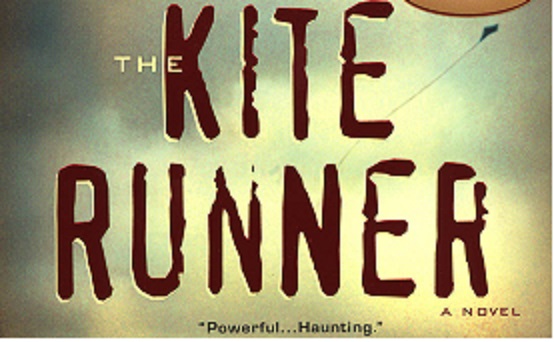
Review: “Kite Runner” is Haunting Look at Childhood in Afghanistan

The Kite Runner, written by Khaled Hosseini in 2003, is not a new book, but it’s one that I’m embarrassed to say I hadn’t gotten around to reading until now. Once I started it, though, I couldn’t put it down.

The book follows Amir, who grew up the privileged son of a successful businessman in the relatively peaceful time before the monarchy was overthrown in 1973. The ethnic and religious discrimination that tears apart the country today was strong even then, but Amir was spared. The servant boy who worked in his home, Hassan, was not. While Hassan and his father were treated like family in Amir’s home, they were mistreated in the wider community. This was a challenge for Amir, who grew up with and played daily with Hassan; their friendship was hindered by society’s expectations. When the boys are 12, a tragic incident drives a wedge in their relationship and forces Hassan and his father to leave Amir’s home. Amir is wracked with guilt for the rest of his life, through his family’s escape when the Soviets invade Afghanistan in 1979 and his adulthood in America.

Many years later, a family friend still in Afghanistan contacts Amir, now a married man and published author. That phone call forces Amir to return to modern day, war-torn Afghanistan. He must face the devastation of his childhood homeland and, if he has the courage, right the wrong he committed against Hassan.

The glimpse into the culture and history of Afghanistan was eye-opening, revealing the history and consequences of deeply rooted differences that still divide the country. The book widened my understanding of and empathy for the generation that grew up after Amir, the children who never knew life without gunfire, bombs and war. It helped me understand that no matter how long our soldiers are in the country trying to rebuild it and keep peace, the fighting and intolerance have been around longer. Those differences are not easily overcome.

But even without that historical element, the story of friendship, betrayal, courage and redemption was riveting. Amir is the main character and tells the story, and while he is not always likeable, he is very realistic. He has the petty jealousies of a child, the yearning for his father’s approval, and the cowardice of not speaking up for himself and his friend Hassan. He struggles with the transition to America and with coming to terms with his past.

The story gets its name, The Kite Runner, from the person who outruns all of his competitors to retrieve the last and most valued kite knocked out of the annual kite fighting competition. With kite strings coated in glass, the contest is painful but the winners are granted highest honors. Hassan was Amir’s kite runner, willing to do anything for the person he considered more his friend than master. As a child, Amir could not return that loyalty. To find out if he can as an adult, you have to read the book.

While the book is often heartbreaking, it ends on a hopeful note. I recommend this to anyone interested in historical fiction and global issues. I also think anyone who likes a good story about friendship, betrayal and redemption will also enjoy it. It’s 371 pages and can be a little slow at the beginning, but it’s worth sticking with it.