After a debut last year at the Massachusetts Educational Theater Guild Festival and a stupendous production of the 1930s musical Anything Goes, Hanover High School’s Drama Department is back for another great year. The department welcomes Mr. Wade, new choral director here at HHS and the music director for the fall production of Legally Blonde: The Musical.
“Mr. Wade is awesome and efficient!” said Billy Porter, Class of ‘18. “We already learned all the music and I love everyone in the cast.”
The musical takes the fall slot this year, which has previously been used for a play, a decision that was controversial among the participants of drama club. Past performances have included Romeo and Juliet and The Complete Works of William Shakespeare (Abridged) [Revised]. Students were amped to start off the year with a classic play, but faculty decided that the musical be the first production. Recent musicals have included The Sound of Music in March 2015 and Anything Goes last May. Students were upset about the change, as the fall has the highest percentage of students participating in sports (64%), thereby limiting who can participate in drama. However, the club has adjusted and is hard at work preparing for performances in mid-November.
An award-winning musical based on the popular movie, Legally Blonde follows the transformation of Elle Woods, who charms her way into law school in hopes of reuniting with the boyfriend who dumped her. Soon, and with the help of friends, she realizes her own potential and strives to overcome stereotypes and snobbery to prove herself to the world.
Spencer Kubicki, Class of ‘18, takes the male lead this yfall, after previously making his debut as the featured “always drunk” character in Anything Goes. “Legally blonde is an amazingly fun and upbeat musical with the perfect mix of serious and funny,” he said. “With catchy songs and memorable characters, this show is sure to be a hit!”
I, myself, am extremely delighted to be cast as Elle and share the stage with Spencer. I can’t wait for the duets we get to sing!
If interested in backstage crew, or potentially playing a few roles that remain unfilled, see Mr. Plummer (he’s usually in the auditorium)!
Cast List
Elle Woods–Macy Hohenleitner
Emmett Forrest–Spencer Kubicki
Paulette Buonofuonte–Katie Scott
Pilar–Siofra Carty
Margot–Mikenzie Matheson
Serena–Vanessa Gallo
Professor Callahan–Bruno Barbuto
Warner Huntington III–Billy Porter
Vivienne Kensington, Elle’s Mom–Maddy Carroll
Brooke Wyndham, Kate–Anna Harper
Leilani–Aria Duff
Kyle B. O’Boyle–TBD
Enid Hoops–James Sheridan
Elle’s Dad, Winthrop–Alex Linn
Sundeep Padamadan–Alex Light
Aaron Shultz, Court Stenographer–Peter Scriber
Dewey, Lowell–Freddy Trankels
Nikos Argitakos–TBD
Carlos–TBD
Grandmaster Chad–Bruno Barbuto
Pforzheimer–Jake Casey
Whitney–Teresa Nicotera
Chutney Wyndham–Lauren Bilton
Judge–Julia Goslin
D.A. Joyce Riley–Sean Goslin
TV Reporter–Chloe Coughlin
△N/Greek Chorus/Prisoners: Mikenzie Matheson, Vanessa Gallo, Siofra Carty, Aria Duff, Kyra Hohenleitner, Abby Cummings, Audrey Lloyd, Anna Harper
Ensemble: Jacob Casey, Erin Foley, Gage Gosule, Sean Goslin, Julia Goslin, Teresa Nicotera, Chloe Coughlin, Freddy Trankels, Juliana Gioso, Caroline Cleary, Peter Scribner, Alex Light, James Sheridan, Alexander Linn, Colleen Foley, Beth Monahan


 Out of Darkness by Ashley Hope Perez: Inspired by a true event, the 1937 explosion of an East Texas school that killed 300 people, this novel follows the experiences of a Mexican-American girl and an African-American boy whose growing love crosses racial barriers and risks another kind of eruption. Extremely well-written, riveting and heartbreaking.
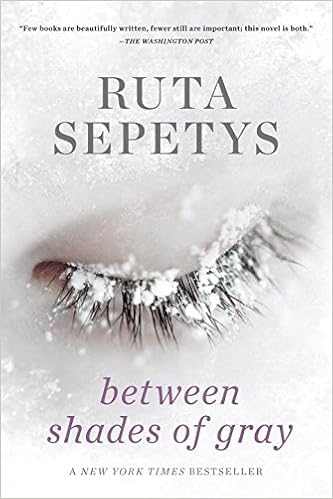 Between Shades of Gray by Ruta Sepetys: No, this is not a sequel, prequel or related in any way to the Fifty Shades of Grey series. This novel is about the killings, imprisonments and deportations of thousands committed during Josef Stalin’s “reign of terror.” When Stalin’s Soviet Union invaded the Baltic nation of Lithuania in 1939, he ordered attacks on doctors, lawyers, professors, political activists and pretty much anyone he thought could pose a threat to his rule. Lina’s family was among them, enduring hard labor, starvation and unimaginable abuse in Siberian prison camps.
 The Spirit Catches You and You Fall Down: A Hmong Child, Her American Doctors and the Collision of Two Cultures by Anne Fadiman: Don’t be embarrassed if you’ve never heard of the Hmong. I’d mistakenly grouped them with the Vietnamese refugees who came here after the fall of Saigon. They’re a different culture, from an entirely different Southeast Asian country. But the lessons learned from this book — that doctors must be culturally sensitive, that medicine is not always stronger than spiritual beliefs — could apply to any interaction between different ethnic groups. The book follows a young girl with epilepsy and how stereotypes and misunderstandings nearly cost her life.
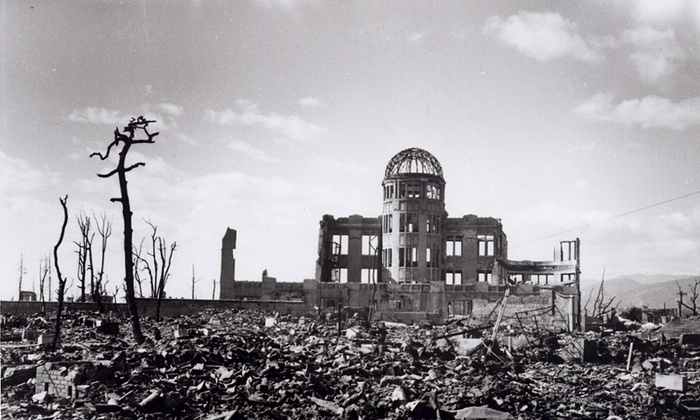
 made, there always seem to be another story to tell. To Hell and Back: The Last Train from Hiroshima by Charles Pellegrino recounts the dropping of two atomic bombs on Japan. Most of us know the basic details, which are often wrapped up in whether the US was right to unleash the nuclear age in an effort to end the war. This book doesn’t get bogged down in that debate. Instead it paints – in vivid scientific, physical and emotional detail – the impact on the cities and people devastated by them, that day and in the months and years since. The stories of Japanese survivors are heartbreaking, especially those who fled after the first bombing and sought safety in the city that became the second target. Can you imagine living through one bomb – a bomb that incinerated your family on the spot, flattened entire neighborhoods and left thousands with horrific burns and radiation poisoning – only to endure it again a few days later? For many people, survival was a matter of inches: a person shielded by a wall or tree may have survived while someone standing steps away was vaporized. The author follows a handful of survivors, much as John Hersey did in his 1946 book Hiroshima, as well as other notable participants such as the pilots who dropped the bombs. While Hiroshima is a powerful book, To Hell and Back goes farther and digs deeper. The 2015 edition uses modern language, making it feel less dated than Hersey’s book, but it also has the benefit of following up with eyewitnesses who lived into the ’90s and 2000s. It was powerful to read how the bombings continued to haunt the survivors, many fighting until old age for a ban on nuclear weapons and an end to war.

