Category Archives: News

April Snowstorms Bring May Flowers?

By: Chris Acampora & Kristen Plahn

With most people’s weather forecasts looking like something straight out of February, nobody would believe we just started spring here in Hanover.

FullSizeRender

Last week brought warm temperatures along with high winds. But over the weekend and into Monday, New England’s weather decided, “hey, I’m not feeling this temperature today… or this week, maybe I’m having another ‘off month’ so let’s have another week of winter…”

The snow Monday caused many students to wonder if school would be cancelled, or dismissed early, and if various afterschool activities would take place. Luckily (although that is debatable among students), we did finish the school day and added another tally to the 180-day requirement, instead of adding another day in June.

The storm posed a risk for drivers heading out into the weather. All drivers were advised to drive slower than usual. The snow and ice  made the roads increasingly dangerous, even to those with cars equipped with all-wheel drive. Another precaution was to make sure your roof was cleared before even pulling out of the HHS parking lot. If your roof wasn’t cleared, you risked having a snow-covered windshield as soon as you put on your brakes.

The recent weather also contradicted the saying “April showers bring May flowers.” With newly budding flowers buried under snow and ice, it might be a while before we see green lawns and blooming gardens.


Why I’m Going to Italy, and Why I’m Not Afraid

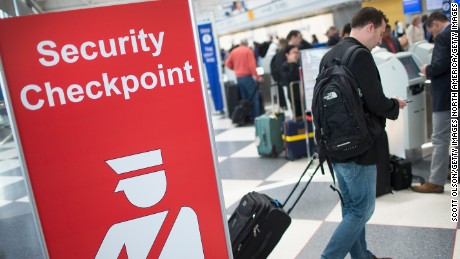
The school trip to Italy has been a popular topic of conversation among Hanover High School students lately. When the trip was called off last Thursday because of the recent bombings in Brussels – just 22 days before we were supposed to leave — students were devastated. Mr. Paquette surprised everyone once again with an email Saturday morning stating that the trip was back on with added security measures. Responses from parents and students were mixed. Some were wary of any international travel after the attacks. Others are willing to take the risk of potential terrorist activity in exchange for a life-changing trip. I completely understand that it is a tough decision whether to take part in the trip or not in light of recent events, and there is no “right” answer. In the end, it comes down to the family and what they are comfortable with. In the end, there was no question for me whether to go to Italy or not. I had been looking forward to this trip since it was first planned back in 2015 and would let nothing, not even ISIS, stand in my way. Here’s what led to my decision:

1. The government issued a travel ALERT, not a WARNING. Although these words have pretty similar definitions in every day life, they are vastly different when in comes to the safety of international travel. A travel alert, which was issued after the Brussels bombing, is basically a wake-up call to Americans that yes, the world is a dangerous place. In contrast, a warning is a much more serious and is a strong deterrent from any travel. The travel alert is definitely warranted, and there are very real threats in the world, but this is not anything new.

2. We will be constantly on the move. As part of the trip we will be covering a lot of ground. Florence, Venice, Pompeii, Capri, and Rome are all of the heavy hitters on the itinerary, but we will also be exploring some of the lesser-known Italian attractions such as the towns of Orvieto and Sorrento. These small cities are much less likely to be targeted for a terrorist attack, and the many hours that we will spend on the road will likely keep us safe as well.

3. You are just as likely to be the victim of a terrorist attack as you are to be struck by lightning. The Brussels bombings were a tragic event and nothing can justify the loss of life on that terrible day. Thirty five people were killed and hundreds of others sustained injuries. Let’s not forget, however, that there are 7 billion people on this earth. That means that your chances of being killed in a terrorist attack on that particular day were .000000005 percent. Even on the days when terrorism strikes especially hard, you still have a greater chance of winning the Powerball jackpot than you do of being a victim.

4. If I didn’t go, the terrorists would have won. Inflicting fear is the point of terrorism, after all. If I stayed home over April vacation because of a fear that I might end up the victim of a terrorist attack, I have accomplished exactly what ISIS is looking to do. If we shelter ourselves and become isolated from the world in fear of groups like ISIS, we become just as ignorant of all the beauty and goodness the world has to offer as they are.

5. I’ve never tasted Italian gelato. Seriously. There are so many delicious Italian foods I have to cross off my bucket list, monuments to see, shops to explore, and people to meet in Italy. I just could not pass up the opportunity to grow my world and take in as much of this beautiful country as I could in 10 days.

6. I’d rather take risks than have regrets. Traveling abroad always poses a threat. If it’s not ISIS you’re worried about, it could be a plane crash, the airline losing your luggage, being separated from the group, and the list goes on. For me, it is all about the pros and cons. Yes, while there is a slight chance that any of those things may happen, I know for a fact that I will have an amazing experience in Italy and will never have the chance to explore a beautiful European country surrounded by my best friends again. In the end, this is what it came down to for me. I knew that I would forever look back and regret my decision if I chose not to go to Italy, and now instead of this regret I will be left with memories I will cherish for years to come.

This Week in History…

Have you ever thought about what was happening on this very day, at this very moment, many centuries ago? Maybe a crown was being placed on Henry V at his coronation 6,000 years back, or maybe Rosa Parks was boarding a bus on a trip that would be monumental for decades to come.

Every day, we walk in the ancient footprints of those who ate, talked, and created the history that we are familiar with today. I think that it would be quite interesting if we took a look at some of these footprints and acknowledged the people who formed them. So many of these historical people partook in significant events, and thus created an endless record of events for this week, March 20-26. Still, it is fascinating to highlight just a few to think about as we go through our upcoming week.

On March 20, 1852, Harriet Beecher Stowe left her footprint in the nation after she published her book Uncle Tom’s Cabin for public viewing. Stowe’s book had national reverberations in the country as American citizens from the North reached a new level of awareness about the horrors of slavery in the South (even though critics argued her account was exaggerated). Stowe awakened the Northern public to a stronger anti-slavery effort, and thus helped to bring emancipation to blacks everywhere in the United States in the 1860s.  Now, we can skip a little over 110 years later to 1969 on the very same day, and make it in time to see The Beatles singer John Lennon tie the knot and wed Yoko Ono in scenic Gibraltar.

March 21 has been a big day for history. In Eisenach, Germany in 1685, composer Johann Sebastian Bach was born to a life in which he would compose dozens of musical works that strongly enhanced the Baroque period of classical music in Western Europe.  In 1790 on this day, Thomas Jefferson became an important part of President Washington’s cabinet as Secretary of State. About 170 years later, Attorney General Robert F. Kennedy ordered the release of prisoners from San Francisco’s Alcatraz prison for, among other reasons, the inhumanity he saw there.

Over the course of the rest of this week in history, two albums produced by The Beatles were released; RCA debuted its first color televisions in 1954; and in 1989, the largest American oil spill took place in Alaska. This Tuesday marks the day of the very first movie witnessed by an audience in Paris in 1895, along with the passing of the Stamp Act in 1765. Ten years after the passing of the Stamp Act, colonist Patrick Henry inspired revolutionary sentiment in 1775 on March 23 with his famous quote, “Give me liberty, or give me death!”
On this Thursday in history, the Tudor dynasty in England ended, finishing its line of succession of 118 years from 1485 to 1603. Then amidst World War II in 1941, on the very same day, Britain was attacked by Germany in North Africa.

This week closes with the anniversary of Maryland’s founding on March 25, 1634 and the passage of the Naturalization Act of 1790, which made it so that a United States citizenship applicant had to have lived in the nation for two years prior. This Saturday, March 26, marks a saddening day of death for Ludwig van Beethoven, a different German composer, in 1827 and for American poet Walt Whitman in 1892.

Our trip through time, of course, has only touched upon the births, deaths, and happenings of people and events of national and worldwide attention. We are missing galaxies of information and miles and miles of footprints. But thinking about even these several events is fascinating. How interesting is it to think that John Lennon would have so many milestones during this one week? Or that so many hugely influential artists have died and been born within this span of time? Even more than fascinating, the act of remembering is important, and acknowledging the people who filled the footprints that we follow every day is a wonderful and illuminating thing which we should never stop doing—that is, until we can leave our very own footprint in the world.

Drama Club Performs at Festival

Hanover High’s drama club made its debut this year in the Massachusetts Educational Theater Guild Festival at Duxbury High School on Saturday, Feb. 27. Other schools competing included Hingham, Nauset, Rising Tide Charter, Xaverian Brothers, South Shore Charter, Scituate, and Duxbury.

Under the guidance of drama teacher Jake Plummer, the cast performed Tracks by Peter Tarsi. The 40-minute, one-act play tells the story of a group of strangers who meet in a subway station and soon find out they are all dead (no spoilers here!). Trying to decide if they are waiting for a train bound for heaven or hell, they reflect on their lives, the proud moments, transgressions, happiness and regrets.

“It was a lot of work, but in the end it changed me as a person,” said Cecelia Dimitroff, a junior in the cast. “It made me think about every action I do in real life and why I do it.”

Two casts were chosen and worked hard to prepare for performance, but only the festival cast competed. Both casts and crew include (in alphabetical order):

Jacki Campbell, Justus Carney, Siofra Carty, Madison Carroll, Abby Cummings, Cecelia Dimitroff, Julia Goslin, Sean Goslin, Anna Harper, Macy Hohenleitner, Jake Laprise, Alexander Light, Alexander Linn, Audrey Lloyd, Cameron Lunetta, Cameron McAuley, Caroline MacDonald, Michael Meads, Kayla Maslow, Chloe Minnehan, Heather Nash, Mike Nimeskern, Emily Patten, Billy Porter, Peter Scribner, Katie Scott, Emily Sweeney, Fred Trankels,  Ava Whitney, Isabella Whitney

Photos by Jill Drummy

Greek Island’s Kindness Toward Refugees is an Example for the World

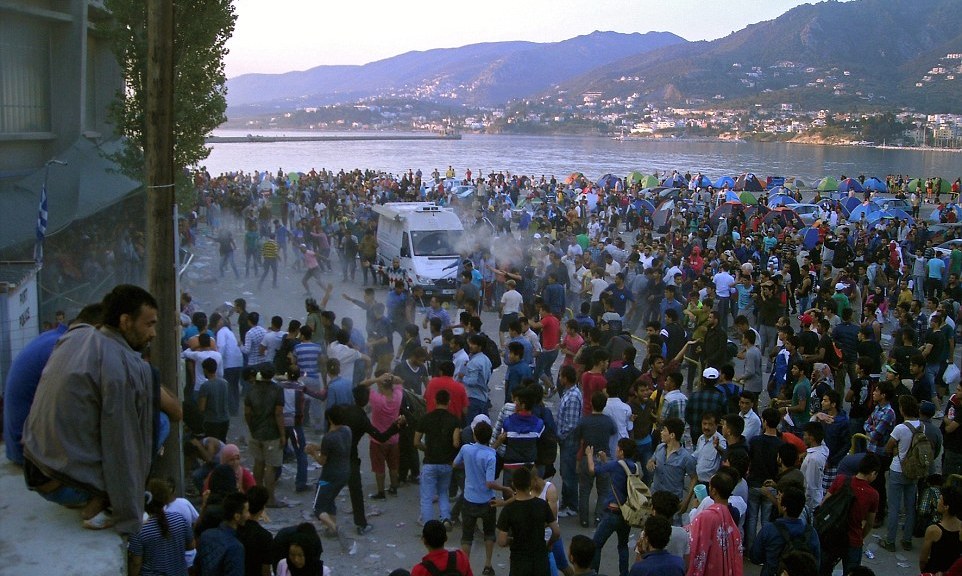
Every day on the island of Lesbos, Greece, rafts and boats carrying Middle Eastern refugees land on the rocky shore. And every day, Greek citizens welcome and care for the weary migrants that stream into their front yards.

In this past October alone, 200,000 refugees came to the island to be directed to the Moria Refugee Camp in Lesbos. The incredible kindness that the native islanders and volunteers from all over the world have shown the migrants has been showcased in the past few months. If one were to step onto the island, they might see a Dutch volunteer carrying a water tank or a representative from the Swiss-based Médecins Sans Frontières organization. CNN has captured multiple voices of compassionate Greek islanders who believe that helping the refugees in small ways, like providing them with something to eat, or big ways, like rescuing their ship at sea, is basic humanity. In fact, for their uncommon show of care and welcome to refugees, a petition to nominate the islanders for the Noble Peace Prize has garnered thousands of signatures.

Though foreign efforts to help refugees have been extremely generous, the constant influx of volunteers and aid organizations has been, perhaps inevitably, overall disruptive to Greece. Spyros Galinos, the mayor of Lesbos, commented to the Guardian newspaper on the lack of cooperation of some volunteers with the methods of the Greek island and its people. Often, volunteers might frighten incoming refugees with noisy and unneeded disturbance or provide refugees with misinformation. Lesbos resident Aphroditi Vati told the Guardian newspaper that foreign volunteers are not asking the islanders how they can help or considering how much of an ordeal the crisis has been for the island’s residents.

Though Lesbos residents have experienced chaos, and struggled with a humanitarian dilemma to welcome or not welcome the thousands of refugees needing immediate attention upon arrival, their generous hospitality has been stalwart. Hopefully, their respect and brotherly compassion for newcomers will serve as an example to foreign volunteers looking to help and to the rest of the world while Middle Eastern refugees flee to escape violence and persecution at home.

HHS Pledges to Eliminate the “R” Word

Ask yourself, do you know someone with special needs or a learning disability? Odds are, the answer is probably yes. Almost everyone knows a loved one, friend, or just someone in the school or community with developmental disabilities. The “R” word campaign was started by a partnership of more than 200 nonprofit organizations nationwide with the intent to take action against the slur “retarded.” As a high school student, I know just how often this word is used in casual conversation. Usually, people are not trying to be offensive when they use the word, but it can be very hurtful to people who have special needs. Since this popular slang sometimes seems to just slip out, the R word campaign is dedicated to reminding people to take a conscious effort to keep the word “retarded” out of their vocabulary. With slogans such as “Respect is the New R Word” and “Spread the Word to End the Word,” the creators of the campaign are encouraging people everywhere to find alternatives in their vocabulary to this offensive word.

On Wednesday, March 2, Hanover High School students will be taking the pledge to end their use of the R word. A banner will be displayed at all three lunches and students will sign a pledge stating that they will be more open-minded and careful when speaking. Mrs. Curley has taken charge of this campaign at Hanover High, and has been working tirelessly with her Partnership in Art classes to create posters and fliers to remind students that the R word is not permitted in this school. In addition, Student Council and the Parntership in Art class have paired up to design R word campaign t-shirts that will be worn by many students and teachers next Wednesday. All profits made will be donated to the Special Olympics. So, if you bought a shirt, make sure to wear it on Wednesday and remember, spread the word to end the word!

To learn more, visit http://www.r-word.org/

2016 Election Cheat Sheet

This past winter I attended at least five 18th birthday celebrations, including my own. Many HHS seniors will be reaching the age of legal adulthood in the coming months, just in time for the 2016 election. Now that I am legally eligible to vote, I wanted to learn a little bit more about each of the candidates before casting my ballot. Since it is pretty difficult to find unbiased information on the internet, here are the 2016 presidential candidates at a glance.

On the Republican side:

Donald Trump- Billionaire businessman is the leading Republican candidate and has been very controversial. He is not afraid to say exactly what he thinks and has offended women, African Americans, Muslims, immigrants, Democrats and even Republicans with his uncensored remarks. His effect has been so far polarizing: people either love his ultra-conservative attitude or hate everything he stands for.

Ted Cruz- Deputy assistant attorney general in the George W. Bush administration and Texas solicitor general in 2003. In 2012 he surprisingly beat a heavily favored Texas Republican for Senate. Cruz is a hardcore conservative which has polarized some voters, and other conservatives are now favoring Trump because he is much more of a personality.

Marco Rubio- Second-generation Cuban-American and former speaker of the Florida House also was elected as Florida senator in 2010. Rubio has the support of establishment Republicans and has described his policy on interventionist foreign policy which, he asserts, would commit the U.S. to more decisive action in world affairs. He is rising in the polls and hopes to make a strong showing in the Iowa, New Hampshire, and South Carolina caucuses. 

Jeb Bush- Definitely has experience; his father and brother were both presidents and he has already served two terms as governor of Florida. His beliefs are quite similar to his father’s and brother’s, and he is attracting the most support from Wall Street donors. He has shown a declining popularity, as it has become unclear to voters exactly where he stands on key issues.

Ben Carson- Former head of pediatric neuroscience at Johns Hopkins has the support of grassroots conservatives because of his personal rags-to-riches story. Carson grew up in poverty and persevered to achieve his dreams of becoming a neurosurgeon. The only factors working against Carson are his inexperience with politics and lack of knowledge of key issues, which has led to his dropping from second to fourth in the polls.

Rand Paul- Former Kentucky senator is much more conservative, taking stands against abortion and gay marriage. He has the support of libertarians, civil libertarians, and non-interventionist Republicans.

Chris Christie- Governor of New Jersey and former U.S. Attorney who dislikes Bush and Kasich. He is a moderate Republican in favor of big business. He gained the support of the New Hampshire Labor Union but does not have a very strong support base.

John Kasich- Current governor of Ohio who ran for president in 2000. He is very popular with blue-collar voters, his beliefs are much more moderate than Donald Trump’s and he is a steady candidate. Kasich is relying on New Hampshire voters to carry him through the election.

Carly Fiorina- A CEO of Hewlett-Packard and adviser in John McCain’s 2012 presidential campaign. Her interests are friendly to big business but she has no real experience in holding a political position herself, which is keeping some voters away. She is currently only ahead of Santorum and Gilmore in the polls.

Rick Santorum- This former Pennsylvania senator is seeking the support of social conservatives but most likely will not win the election because he does not have the support he is looking for.

Mike Huckabee- An ordained preacher, former governor of Arkansas, and Fox News host who has already run in one presidential election (2008) and placed third. Huckabee has created an image for himself as a populist but faced negative feedback from more conservative groups in his party after taxes were raised during the time he served as governor. Also, most of the Evangelical Christian voters he has been trying to impress have expressed more interest in Ben Carson.

Jim Gilmore- A former governor of Virginia and chair of the National Republican Committee. If you haven’t heard his name, it’s not surprising — he is considered a long shot.

On the Democrat side:

Hillary Clinton- Definitely well known in politics. She’s a trained attorney, former Secretary of State in the Obama administration, former senator from New York, and former first lady. She has the support of most of the Democratic Party because, while she is liberal, she is not too extreme and has had a lot of experience in politics. The polls have shown that she is most likely going to win the Democratic bid.

Bernie Sanders- Served as both a representative and senator for Vermont. He has described himself as a socialist and is extremely liberal, which has brought him support from the democrats who worry that Clinton would favor the wealthy. Sanders has been competitive with Clinton, but has had trouble establishing a support base in the south.

Martin O’Malley- Former Baltimore mayor and governor of Maryland. He is running a progressive campaign and is more conservative than Sanders. He has had a hard time gaining support because ultra-liberals support Sanders and the more conservative support Clinton.

The list of candidates will only shrink as caucus season begins, starting in Iowa on Feb. 2. During caucuses, local voters cast their support for their preferred candidate and historically, the candidate with the most caucus wins earns the presidential nomination.



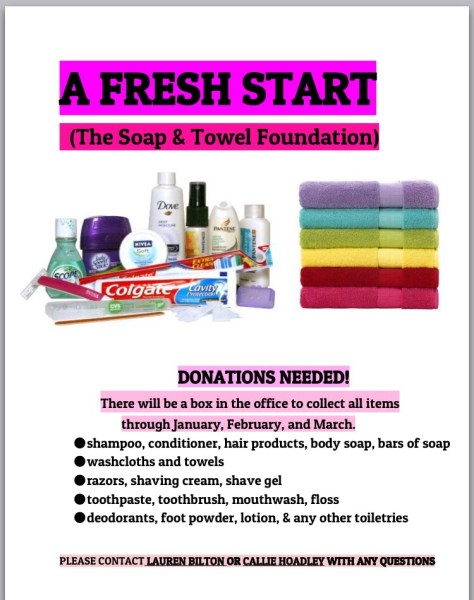
A Fresh Start (The Soap and Towel Campaign)

In September of 2007, Jazna Stannard started a project called the “Soap and Towel Campaign” with the help of student council kids at Hanover High School. The charity drive collected things like shampoo, conditioner, soap, towels, mouthwash, toothpaste, deodorant and other toiletries for people who are homeless. Although it all started in our little old town, it has since expanded across the whole state of Massachusetts as well as many areas throughout the country. Now known as “A Fresh Start,” this nonprofit organization is a huge success and seems to be expanding every day. Its partners include universities, hotels, corporations and ordinary people like us.

Many of us in Hanover (especially us teenagers) take for granted the things that we have, and never worry about not having soap, or toothpaste or towels. We may never think about how truly grateful we are to have these things because we are just so accustomed to having them at our fingertips whenever we need them. There are thousands and thousands of people all over the globe who aren’t even privileged enough to have even  a bar of soap, and that is where it is our job to work with organizations like “A Fresh Start.”

Because it all started right here at Hanover High School, we have made sure our school collects bins of toiletries every year. Some teachers like Mrs. Fay even offer their students extra credit for bringing in items to donate. This year, Callie Hoadley and I are committee heads of this campaign through Student Council. We have a donation box in the office, and flyers all over the walls, but nobody can benefit without YOUR donation. Please bring in any toiletries and towels and drop them off in the office. These small actions we take create big movements throughout the world.

To learn more about the national campaign, visit http://www.afreshstartcampaign.org/

image

Remembering the Man Behind the Holiday

Eighty-seven years ago this Friday, one of the country’s most influential civil rights activists and leaders was born in Atlanta, Georgia. Martin Luther King, Jr. was a Baptist minister and leader of the Civil Rights Movement in the mid-1950s and 1960s who helped prompt the Civil Rights Act of 1964 and the Voting Rights Act of 1965. In 2016, we remember King’s influence in rallying support for the end of segregation and associate him predominantly with his “I Have a Dream” speech. But beyond the main points we learn in school, how much do we really know about the life of this American hero whose legacy we celebrate this upcoming Monday, January 18?

Growing up, Martin Luther King, Jr. was a superior student, skipping ninth-and eleventh-grade. In 1948, King earned a sociology degree from Morehouse College and began learning ministry at Crozer Theological Seminary in Chester, Pennsylvania. As student body president and class valedictorian at the seminary, King was already making himself a distinguished leader. Perhaps most influential to King’s later life was his instruction from Morehouse College President Benjamin E. Mays, who saw Christianity as a way to bring about racial equality.

At just 25 years old, King earned a Ph.D. and became pastor at the Dexter Avenue Baptist Church of Montgomery, Alabama. He was also on his way to becoming a major civil rights activist. On the December night in 1955 when Rosa Parks was arrested for refusing to give up her bus seat for a white man, King was chosen during an NAACP meeting to lead the Montgomery Bus Boycott. King’s strong education and intelligence enlivened the boycott, and he eloquently gathered support for the cause. Eventually, Montgomery would get rid of the law requiring segregated public transportation.

In 1957, King helped to establish the Southern Christian Leadership Conference (the SCLC), which helped him to gain influence in the South and in the nation. King focused on nonviolent methods of activism, inspired by Mahatma Gandhi. King had great success with the SCLC in the Birmingham Campaign, where economic and civil segregation were boycotted. In the end, Jim Crow laws were removed and public facilities became more open to blacks.
In 1964, four years before his assassination, Martin Luther King, Jr. was awarded the Nobel Peace Prize for his numerous accomplishments and contributions to the Civil Rights Movement. King’s leadership was a symbol of nonviolent approach, and the award promoted the effectiveness of using peaceful action to obtain equity.

King’s contributions to the Civil Rights Movement were monumental, and our country is certainly a more peaceful and accepting place because of them. It is crucial to remember nonviolent leaders who provided voices of reason, and King is at the front of that group.

This Friday, let us all remember this determined and compassionate man who made the United States more of a truly united nation.

Citations
“Martin Luther King Jr. Biography.” Bio.com. A&E Networks Television, n.d. Web. 08 Jan. 2016.
Features, Vidette. “Top 5 Martin Luther King Jr. Achievements.” Videtteonline.com. N.p., 14 Jan. 2015. Web. 08 Jan. 2016.

Elementary School Switch-Up: Explained

By Kristen Plahn and Chris Acampora

Fun Fact: Sylvester School opened as a high school in 1927. It next became a junior high school, then a middle school for grades 5 and 6. The building then housed fourth graders and half of the fifth grade, before finally becoming what we have now: a school for third and fourth graders. With Center School teaching k-2 and Cedar School set up as k-4, Sylvester completed Hanover’s elementary school system.

With the aging Sylvester School becoming unfit for students, school officials had a tough decision in front of them: how to reorganize the elementary schools to best meet the needs of students. In late October, Hanover Superintendent of Schools Matt Ferron announced the new plan. In an email to parents, Mr. Ferron explained that for the next few years Center School will house grades 2-4 for the entire town while also undergoing renovations. Pre-K through first grade will be moved to Cedar.

The biggest question raised by this email is the future of the Sylvester School. “We will be working as a community in the future to determine a repurposing plan for this historic building,” said Ferron.

The switch between schools might seem complicated now, but it will benefit all parts of Hanover in the years to come.